Cat Life Stages Explained: Kitten to Senior (What Changes at Each)
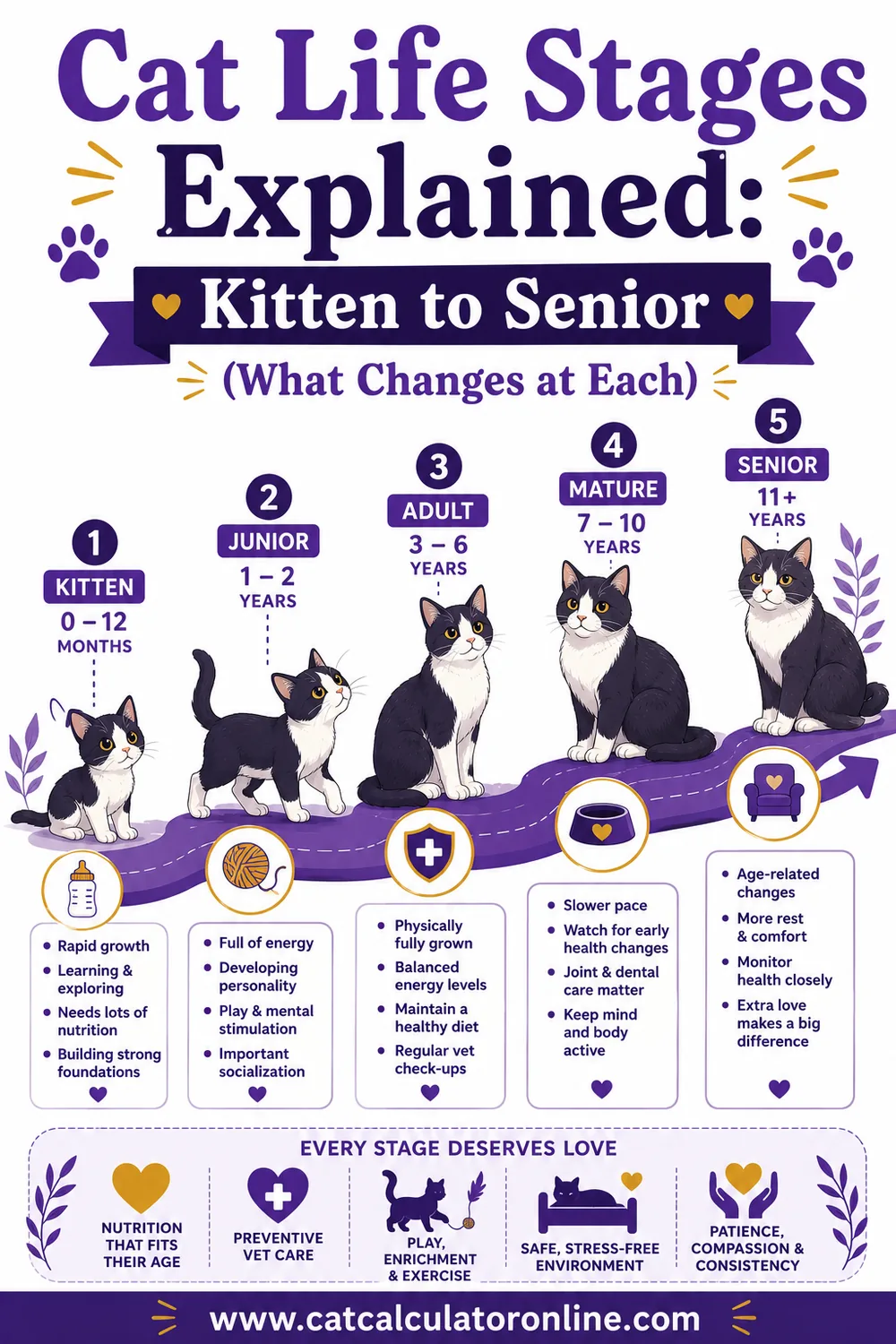
Cats move through four main life stages: kitten (0–1 year), young adult (1–6 years), mature adult (7–10 years), and senior (10 years and up). Each stage brings its own physical changes, behavior shifts, and care needs — from the round-the-clock energy of a kitten to the slower, more watchful days of a senior. Knowing which stage your cat is in helps you feed, play, and plan vet care the right way.
Want to see what stage your cat is in right now? Our free cat age calculator tells you your cat's age in human years and life stage in one tap. Below, we'll walk through all four stages — what's happening in your cat's body and mind, and exactly how to care for them at each step.
🐱 Which life stage? Tap an age
See your cat’s human-year age and life stage:
Tap an age above to see the stage.
The Four Cat Life Stages at a Glance
The American Animal Hospital Association (AAHA) and the American Association of Feline Practitioners set the feline life-stage framework that most vets use today. It replaced older, fuzzier labels with four clear stages tied to age and care needs.
| Life stage | Age range | Human-years equivalent | Care focus |
|---|---|---|---|
| Kitten | 0–1 year | 0–15 | Growth, socialization, vaccines |
| Young adult | 1–6 years | 15–40 | Weight, dental, prevention |
| Mature adult | 7–10 years | 44–56 | Watch for early aging signs |
| Senior | 10+ years | 56+ | Twice-yearly vet visits, comfort |
A quick note on the human-years math: a cat's first year is worth about 15 human years, the second adds about 9 more (so a 2-year-old is around 24), and every year after that adds roughly 4. Unlike dogs, cats age fairly uniformly — a cat's breed and size barely change the timeline. You can read more on how long cats live for the lifespan picture.
Let's go stage by stage.
Stage 1: Kitten (0–1 Year)
This is the fastest, most dramatic stretch of a cat's whole life. In twelve short months, a kitten goes from a blind, helpless newborn to a near-adult cat. Packed into that year is more growth and change than any stage that follows.
What's happening physically
Newborn kittens are completely dependent. Their eyes open around 7 to 10 days. They start walking and exploring by three to four weeks, and they're usually weaned off their mother's milk by about eight weeks. From there, growth is rapid: most kittens reach close to their adult size by 10 to 12 months. (Large breeds like the Maine Coon are the exception — they keep filling out until three or four years old.)
Sexual maturity arrives surprisingly early — often around 4 to 6 months. That's why vets recommend spaying or neutering before a kitten can accidentally start a family of its own.
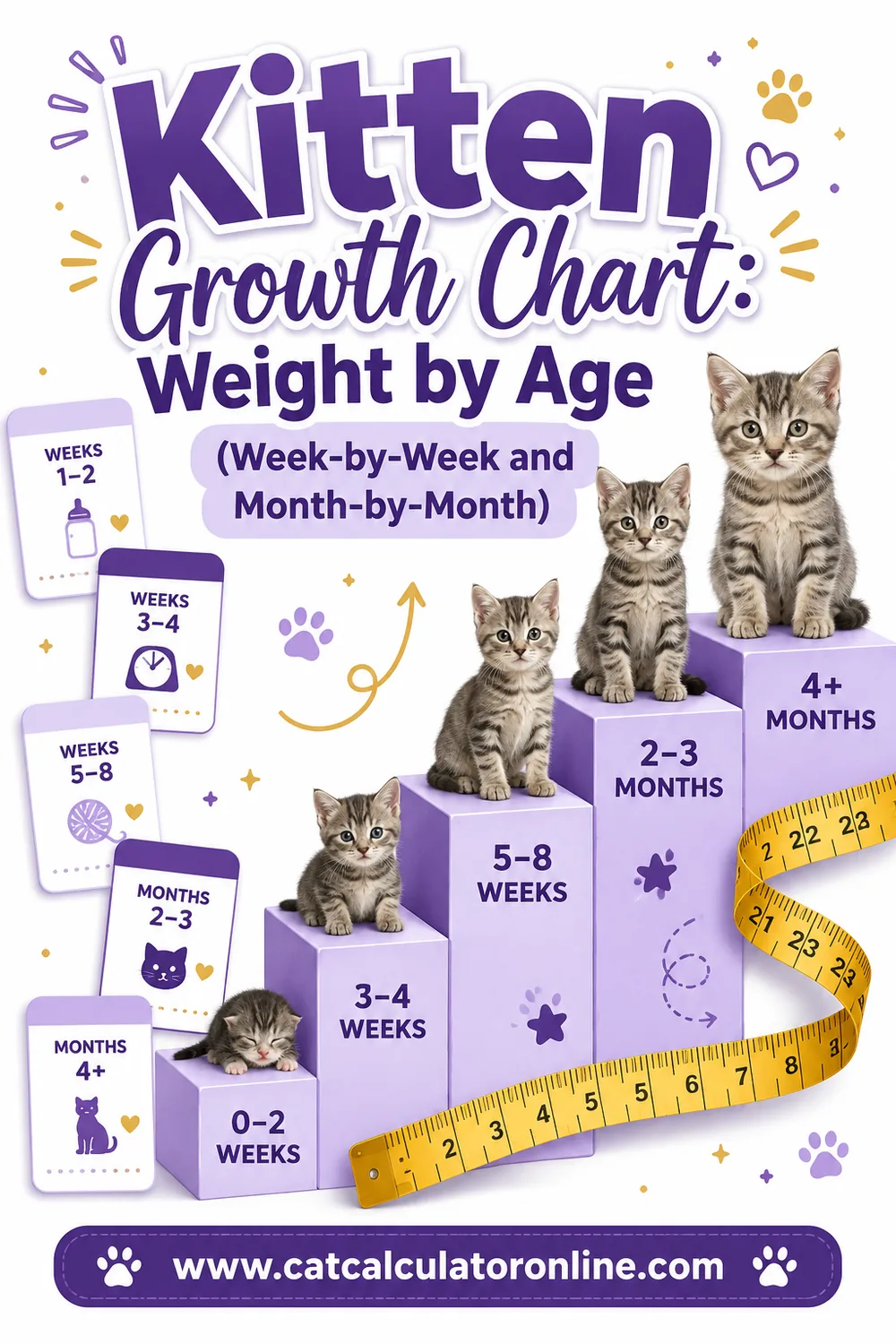
For a week-by-week and month-by-month breakdown of kitten weight and development, see our kitten growth chart.
What's happening behaviorally
Kittens are little sponges. The window between roughly 2 and 9 weeks is the prime socialization period — the time when gentle handling, new sounds, and positive experiences shape a confident adult cat. Kittens also play constantly, and that play is practice: stalking, pouncing, and wrestling are how they learn to be cats.
Care priorities for kittens
- Vaccines and vet visits. Kittens need a series of core vaccinations and checkups in their first few months, plus deworming and a spay/neuter conversation.
- Kitten-specific food. Growing bodies need more calories and protein. Feed a complete kitten formula, and feed often — small kittens eat several small meals a day.
- Socialization. Handle them gently and often. Introduce nail trims, carriers, and grooming early so they're no big deal later.
- Kitten-proofing. Secure cords, remove toxic plants, and put away small swallowable objects. Curious kittens get into everything.
- Play, play, play. Channel that energy into wand toys and puzzle feeders so it doesn't turn into ankle ambushes.
The "teenage" months: junior cats (about 7 months to 2 years)
Some vets split out a junior or adolescent phase between kittenhood and full adulthood. Your cat looks almost grown, but the brain and body are still finishing up. Expect peak energy, lots of testing of boundaries (counters, curtains, the forbidden shelf), and sudden bursts of zooming around the house. Boredom in this phase often shows up as scratching furniture or play-biting, so daily interactive play matters more than ever.
- Food switch. Most cats move from kitten food to adult food around their first birthday; large breeds may stay on growth food longer, so ask your vet.
- Watch calories after spay or neuter. Energy needs usually drop after surgery, and this is when many cats start gaining weight.
- Keep training going. Reward scratching-post use and calm behavior now, while habits are still forming.
Stage 2: Young Adult (1–6 Years)
By their first birthday, cats are essentially grown up. The young adult stage — roughly ages 1 through 6, or 15 to 40 in human years — is the prime of life. Your cat is fully sized, physically strong, and at peak energy and confidence.
What's happening physically
Growth is basically done (again, giant breeds excepted). Your cat has hit its adult weight and muscle tone. This is the healthiest, most resilient stretch of a cat's life — which makes it the ideal time to lock in good habits that pay off later.
What's happening behaviorally
Personality is settled now. Kitten frenzy mellows into a more predictable adult rhythm, though many cats stay playful for years. You'll see clear preferences — favorite napping spots, favorite people, favorite toys. A well-socialized young adult is usually a confident, affectionate companion.
Care priorities for young adults
- Guard against weight gain. This is where creeping obesity often begins, especially in indoor, neutered cats that burn fewer calories than they beg for. Measure meals, go easy on treats, and keep them active.
- Dental care. Start (or continue) brushing and get dental checks. Tartar builds quietly over these years.
- Annual vet visits. Even a healthy young cat benefits from a yearly exam to catch anything early and keep vaccines current.
- Keep enrichment high. Daily play, scratching posts, and vertical space keep a young cat's body and mind sharp.
- Parasite prevention. Stay current on flea, tick, and worm prevention as your vet advises.
It's tempting to coast during these easy years because your cat seems invincible. Don't. The lean weight and clean teeth you maintain now are what carry a cat comfortably into old age.
Stage 3: Mature Adult (7–10 Years)
Around age 7, cats enter the mature adult stage — think of it as feline middle age, roughly 44 to 56 in human years. Your cat still looks and often acts much like its younger self, but subtle changes begin under the surface. This is the stage where attentive owners start catching the first hints of aging.
What's happening physically
Metabolism slows, so weight can shift — some cats gain, and later some start to lose. Activity may dip a little. This is also when age-related conditions can quietly begin: early kidney changes, dental disease, arthritis, thyroid issues, and diabetes are all more likely to appear from middle age onward. None of these are guaranteed, but they're worth watching for.
What's happening behaviorally
Most mature cats are calmer and more set in their routines. You might notice slightly less interest in vigorous play, or a preference for lower, easier-to-reach perches. These shifts are gentle and easy to miss — which is exactly why regular vet visits matter more now.
Care priorities for mature adults
- Watch the scale. Weigh your cat regularly (a home scale works — weigh yourself holding the cat, then subtract). Steady weight loss or gain is an early flag worth a vet call.
- Consider twice-yearly exams. Many vets recommend moving from annual to semi-annual checkups as cats pass 7. Bloodwork can catch kidney and thyroid changes long before symptoms show.
- Adjust diet if needed. Some mature cats do better on food formulated for their stage. Ask your vet before switching.
- Keep them moving. Gentle daily play helps maintain muscle and a healthy weight.
- Learn the aging signs. Our guide on how to tell a cat's age covers the teeth, eyes, coat, and muscle cues that mark this transition.
Stage 4: Senior (10+ Years)
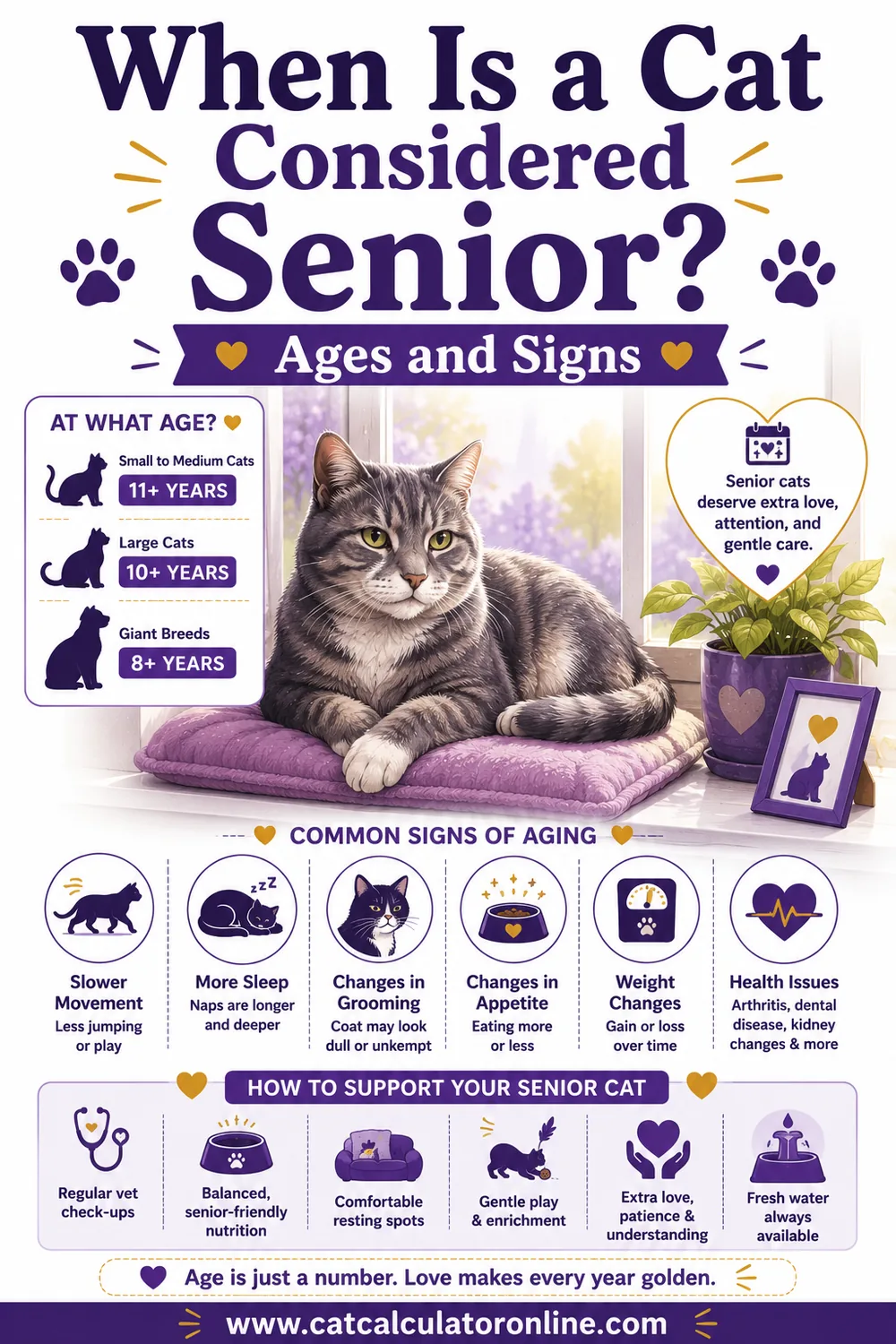
At 10 years old, a cat officially becomes a senior — around 56-plus in human years. Some vets add a "geriatric" label at about 15 and up. With good care, cats routinely live well into their late teens and beyond, so the senior stage can span a decade or more. These can be some of the sweetest, most bonded years you share.
What's happening physically
Aging becomes more visible now. Common changes include:
- Coat changes — fur may look duller or coarser, and grooming can slack off, leading to mats (especially in long-haired cats).
- Weight loss — many senior cats gradually lose muscle and weight, sometimes tied to kidney disease, hyperthyroidism, or dental pain.
- Reduced mobility — arthritis is common and often silent; you'll see it as hesitation to jump or stiffness after rest rather than obvious limping.
- Cloudier eyes and reduced senses — hearing, vision, and smell can all fade somewhat.
- Dental disease — increasingly common and a frequent cause of eating changes.
What's happening behaviorally
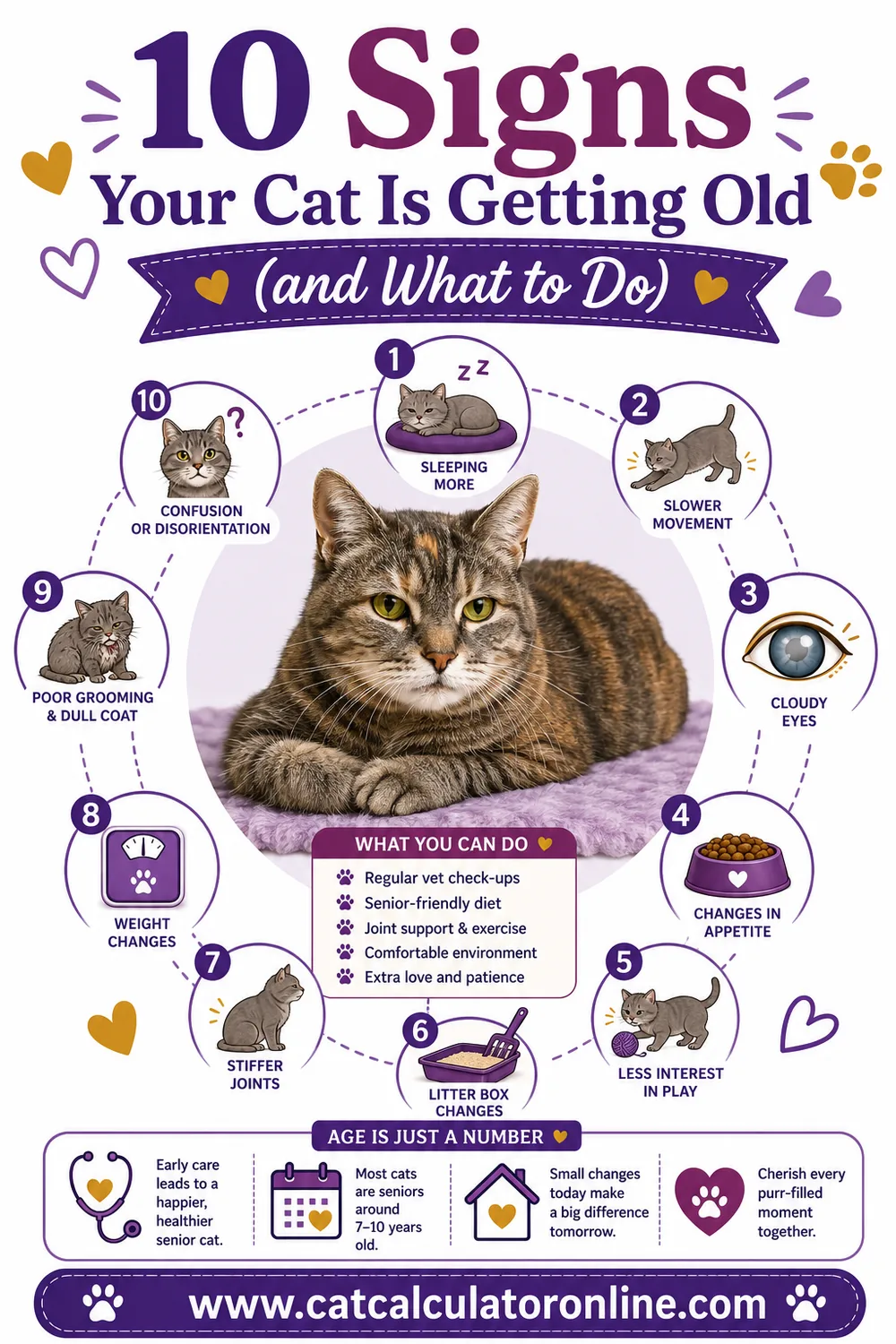
Senior cats often sleep more and play less. Some become more affectionate and clingy; others get grumpier if aches make them less tolerant of handling. A few develop feline cognitive dysfunction — a dementia-like condition that can cause nighttime yowling, confusion, or changed litter-box habits. If your cat's behavior shifts noticeably, it's a vet conversation, not just "old age." Our list of signs your cat is getting old helps you tell normal aging from something that needs attention.
Care priorities for seniors
- Vet visits every 6 months. This is the single most important senior change. Twice-yearly exams and bloodwork catch kidney disease, thyroid problems, and diabetes early, when they're most manageable.
- Make life easier. Add low-sided litter boxes, ramps or steps to favorite perches, soft warm bedding, and easy-to-reach food and water. Small adjustments spare achy joints.
- Watch eating and drinking. Increased thirst, appetite changes, or weight loss are among the most important senior warning signs. Track them and report changes.
- Keep them groomed. Help with brushing if your cat can't keep up, and check nails, which grow thicker and can overgrow in older cats.
- Gentle enrichment. Seniors still enjoy play — just softer and shorter. Mental engagement and gentle movement keep them sharp and comfortable.
For a deeper look at this stage, including exactly when and why the care shift happens, see our full guide on when a cat is considered senior.
The geriatric years (15+ years)
Cats aged about 15 and older — roughly 76-plus in human years — are often called geriatric. Many are still happy and alert, but changes tend to stack up: more muscle loss, stiffer joints, fading hearing or eyesight, and a higher chance of long-term conditions such as kidney disease, an overactive thyroid, and high blood pressure. Some cats also show signs of cognitive dysfunction, like wandering at night or forgetting where the litter box is.
- Keep routines steady. Same feeding times, same litter spots, and the same quiet resting places help a geriatric cat feel safe.
- Add night lights near food, water, and litter boxes for cats with weaker eyesight.
- Offer extra water stations around the house, and ask your vet about wet food if eating or drinking changes.
- Follow your vet's check-up plan. Many geriatric cats need visits at least every six months, sometimes more often if they have an ongoing condition.
- Track quality of life. Note appetite, grooming, mobility, and mood each week so small changes don't slip by. Our senior cat care guide covers home setup in more detail.
How Cat Life Stages Compare to Human Ages
People love translating cat years into human years, and it does make the stages click. Here's the rough map:
| Cat age | Human age | Life stage |
|---|---|---|
| 6 months | 10 years | Kitten |
| 1 year | 15 years | Kitten (nearly adult) |
| 2 years | 24 years | Young adult |
| 4 years | 32 years | Young adult |
| 7 years | 44 years | Mature adult |
| 10 years | 56 years | Senior |
| 15 years | 76 years | Senior/geriatric |
| 20 years | 96 years | Geriatric |
Remember the pattern: a big jump in the first two years, then a steady four human years for every calendar year after. It's why a "2-year-old" cat is really a twentysomething adult, not a toddler.
Kitten Development Week by Week (Where the Cat Life Cycle Begins)
The first months are the busiest part of the whole life cycle of a cat. Kittens develop at slightly different speeds, so treat these as typical ranges rather than strict deadlines:
| Age | What's happening | What you can do |
|---|---|---|
| Birth–1 week | Eyes and ears closed; kitten sleeps and nurses almost all the time | Keep mom and kittens warm, quiet, and undisturbed |
| 1–2 weeks | Eyes open around 7–10 days; vision is still blurry | Weigh kittens daily if you are caring for them yourself |
| 2–3 weeks | Ears open, first wobbly steps, baby teeth start to come in | Begin very short, gentle handling |
| 3–4 weeks | Walking, playing with littermates, curious about food | Offer a shallow litter box and soft kitten food |
| 4–8 weeks | Weaning onto solid food; play gets rougher and more confident | Lots of positive people, sounds, and safe toys |
| 2–9 weeks | Key socialization window — experiences now shape the adult cat | Introduce handling, brushing, and a carrier |
| 6–8 weeks | First vet visit and first core vaccines often start | Book the visit and ask about deworming |
| 3–6 months | Baby teeth fall out and adult teeth come in | Start getting your kitten used to tooth brushing |
| 4–6 months | Sexual maturity can arrive this early | Talk to your vet about spay or neuter timing |
| 6–12 months | Growth slows; most cats near adult size by 10–12 months | Plan the switch to adult food around one year |
Kitten vaccination and spay/neuter timeline
Every vet tailors the plan to the kitten and the local area, but the general pattern looks like this:
- Core vaccines usually start at about 6 to 8 weeks and are repeated every 3 to 4 weeks until roughly 16 weeks of age or older.
- Rabies vaccination is typically given at around 12 to 16 weeks, depending on the vaccine used and local rules.
- Deworming often begins early and is repeated during the first few visits.
- Spay or neuter is commonly recommended by about 5 months of age, before a kitten can have a litter, though your vet may suggest different timing.
For the full details, see our kitten vaccination schedule, when to neuter a cat, and kitten growth stages week by week.
Common Health Issues at Each Life Stage
Every stage of a cat's life comes with its own most likely problems. Knowing them helps you spot trouble early. This table is a general guide only — your vet will set the right plan for your own cat.
| Life stage | Common concerns to watch for | Typical vet visits |
|---|---|---|
| Kitten (0–1) | Intestinal worms and fleas, upper respiratory infections, ear mites, swallowed objects | Every few weeks during the vaccine series, then at spay/neuter |
| Young adult (1–6) | Weight gain, tartar buildup, urinary problems (especially in male cats) | Once a year |
| Mature adult (7–10) | Dental disease, weight changes, early kidney changes, diabetes, first signs of arthritis | Once or twice a year |
| Senior (10+) | Kidney disease, overactive thyroid, arthritis, high blood pressure, dental pain, weight loss | About every 6 months |
| Geriatric (15+) | All senior concerns plus muscle loss, cognitive dysfunction, and reduced hearing or vision | Every 6 months or as your vet advises |
Want to read more about a specific problem? See our guides to common cat illnesses by age, dental disease in cats, chronic kidney disease in cats, hyperthyroidism in cats, and urinary blockage in cats. If your cat suddenly stops eating, struggles to pee, or seems unwell, call your vet right away rather than waiting for the next check-up.
The Domestic Cat Life Cycle in One Timeline
Here is the whole life cycle of a cat at a glance, from first breath to golden years:
- Birth: eyes and ears closed, fully dependent on mom.
- About 2 weeks: eyes open, first look at the world.
- About 4 weeks: walking, playing, and starting to try solid food.
- About 8 weeks: weaned and full of energy; first vaccines underway.
- 4–6 months: adult teeth coming in; sexual maturity possible.
- About 1 year: close to adult size; kitten stage ends.
- 1–6 years: young adult prime — strong, settled, and confident.
- 7–10 years: mature adult — middle age and the first quiet signs of aging.
- 10+ years: senior — slower, often more cuddly, needing closer health checks.
- 15+ years: geriatric — extra comfort and care for the oldest cats.
To see where your own cat sits on this timeline, check the cat age chart or use the calculator at the top of this page.
Signs Your Cat Is Moving Into the Next Life Stage
Birthdays are only a rough guide. These clues often show a shift before the calendar does:
- Kitten to young adult: growth slows, play becomes less frantic, and your cat settles into a daily routine.
- Young adult to mature adult: slightly less interest in high jumps or long play sessions, and weight that creeps up more easily.
- Mature adult to senior: sleeping more, grooming less, eating or drinking differently, or hesitating before jumping.
- Senior to geriatric: noticeable muscle loss along the back and legs, cloudier eyes, louder meowing (especially at night), or confusion about familiar places.
Any of these changes is a good reason to book a check-up. Many age-related problems are easier to manage when they are found early.
Why Knowing the Stage Matters
A cat's life stage isn't trivia — it's a care roadmap. It tells you:
- What to feed — kitten formula for growth, adult food for maintenance, and possibly a senior or prescription diet later.
- How often to see the vet — annual for young adults, shifting toward twice a year as cats mature and age.
- What to watch for — socialization windows in kittens, weight in young adults, early disease signs in mature cats, comfort and organ health in seniors.
- How to play and enrich — matching activity to a body that changes a lot over the years.
Get the stage right and everything else — diet, vet timing, home setup — falls into place.
FAQ
What are the life stages of a cat?
There are four: kitten (0–1 year), young adult (1–6 years), mature adult (7–10 years), and senior (10+ years). Some vets add a "geriatric" label around 15 and up.
At what age is a cat fully grown?
Most cats reach their adult size by 10 to 12 months. Large breeds like the Maine Coon are the exception and can keep growing until three or four years old.
When is a cat considered senior?
At about 10 years old. Cats aged 7 to 10 are "mature adults," the stage just before senior. See our detailed guide on when a cat is considered senior.
Do all cats age at the same rate?
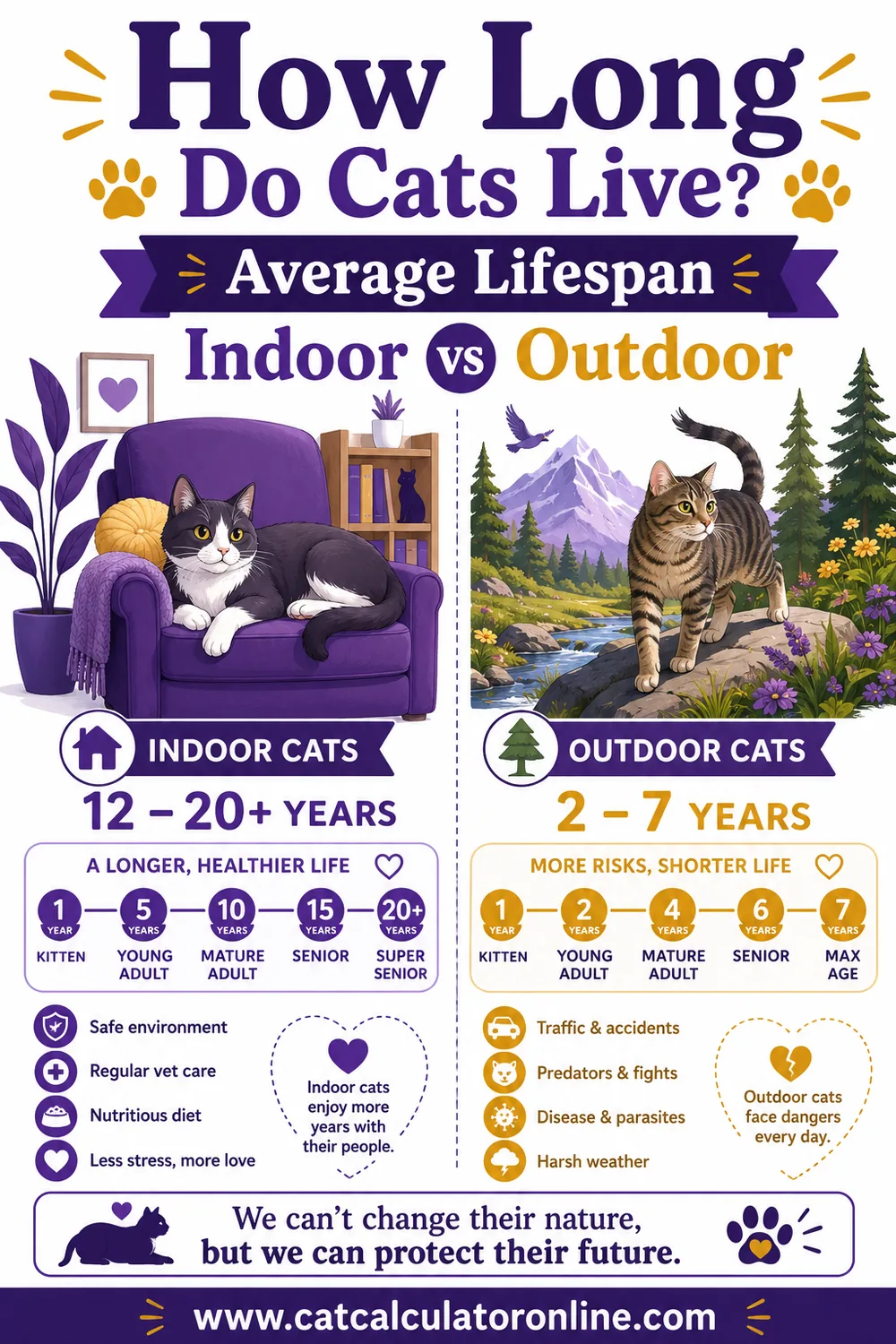
Largely, yes. Unlike dogs, where size hugely affects aging, cats age fairly uniformly regardless of breed or size. Lifestyle — especially indoor versus outdoor — matters far more than breed.
How can I tell what life stage my cat is in if I don't know its age?
A vet can estimate age from teeth, eye clarity, coat, and muscle tone. Our guide on how to tell a cat's age explains the cues owners can spot at home.
Which stage is the healthiest?
The young adult stage (1–6 years) is a cat's physical prime. It's also the best time to build the weight, dental, and vet habits that protect the mature and senior years.
How long is a cat a kitten?
A cat is considered a kitten from birth until about 1 year old. Most cats are close to their adult size by 10 to 12 months, though large breeds such as the Maine Coon keep filling out for a few more years.
What is the life cycle of a cat?
The life cycle of a cat runs from a newborn kitten (eyes open at around 7–10 days, weaned by about 8 weeks) to a young adult at 1–6 years, a mature adult at 7–10 years, a senior at 10+ years, and the geriatric years from about 15.
When should you spay or neuter a kitten?
Many vets recommend spaying or neutering by about 5 months of age, before a kitten can have a litter. Your vet may suggest a different time based on your kitten's health and size.
How often should a senior cat see the vet?
Most senior cats (10+ years) should see the vet about every six months. Twice-yearly exams and bloodwork help catch kidney disease, thyroid problems, and diabetes early.
What are the signs a cat is entering the senior stage?
Common signs include sleeping more, grooming less, changes in appetite or thirst, weight loss or gain, stiffness or hesitating before jumping, and cloudier eyes. Any of these is worth a vet visit.
The Bottom Line
Every cat travels the same four-stage path: kitten, young adult, mature adult, senior. Each stage changes what your cat needs — from vaccines and socialization early on, to weight and dental care in adulthood, to twice-yearly vet visits and gentle comfort in the senior years. Match your care to the stage and you give your cat the best shot at a long, comfortable life.
Not sure which stage your cat is in? Our free cat age calculator shows your cat's age in human years and life stage in a single tap — try it now.