How to Care for a Senior Cat: The Complete Guide
Caring for a senior cat — that's roughly age 10 and up — comes down to four things: twice-yearly vet visits with bloodwork, monthly weight checks at home, arthritis-friendly changes around the house, and a routine that stays as stable as possible. None of it is complicated, and most of it costs very little. What changes in the senior years isn't the amount of love your cat needs — it's how closely you watch, because older cats hide problems even better than young ones do.
This guide walks through every part of senior care, room by room and habit by habit. If you're not sure whether your cat has actually crossed the senior line yet, our free cat age calculator converts her age to human years and tells you her life stage in a couple of seconds — it's a useful starting point for everything below.

🐈 Senior care check
Tap a care area to see the one change that matters most after age 10:
Tap a care area above to see the senior-specific advice.
When Is a Cat Considered a Senior?
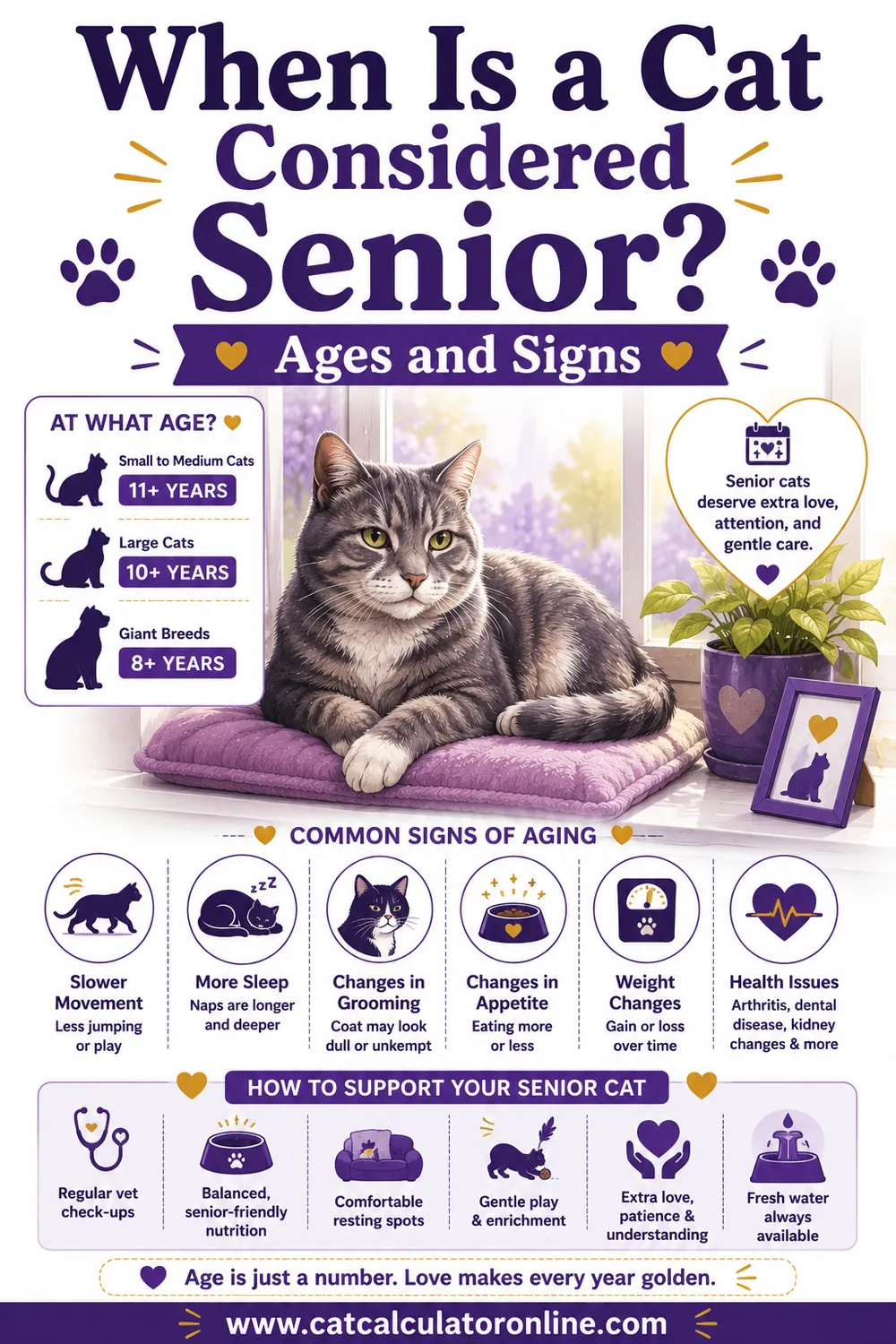
Most vets treat 10 as the start of the senior years, with ages 7 to 10 counted as "mature" — a sort of feline middle age where the groundwork for senior care gets laid.
The numbers matter less than what they signal. Somewhere in that 7-to-10 window, a cat's body starts changing in ways you can't see: kidneys filter a little less efficiently, joints accumulate wear, metabolism shifts. By 10, those quiet changes are common enough that the whole care routine deserves an upgrade.
A few useful markers:
- 7–10 years (mature): still acts young, but this is when annual checkups should start including baseline bloodwork.
- 10–14 years (senior): the focus of this guide. Twice-yearly vet visits, home monitoring, and comfort adjustments.
- 15+ years (geriatric): everything from the senior years, watched even more closely.
If you want the full breakdown of where your cat sits, when is a cat considered senior covers the stages in detail, and the cat age calculator gives you her human-age equivalent instantly.
Why Do Senior Cats Need Twice-Yearly Vet Visits?
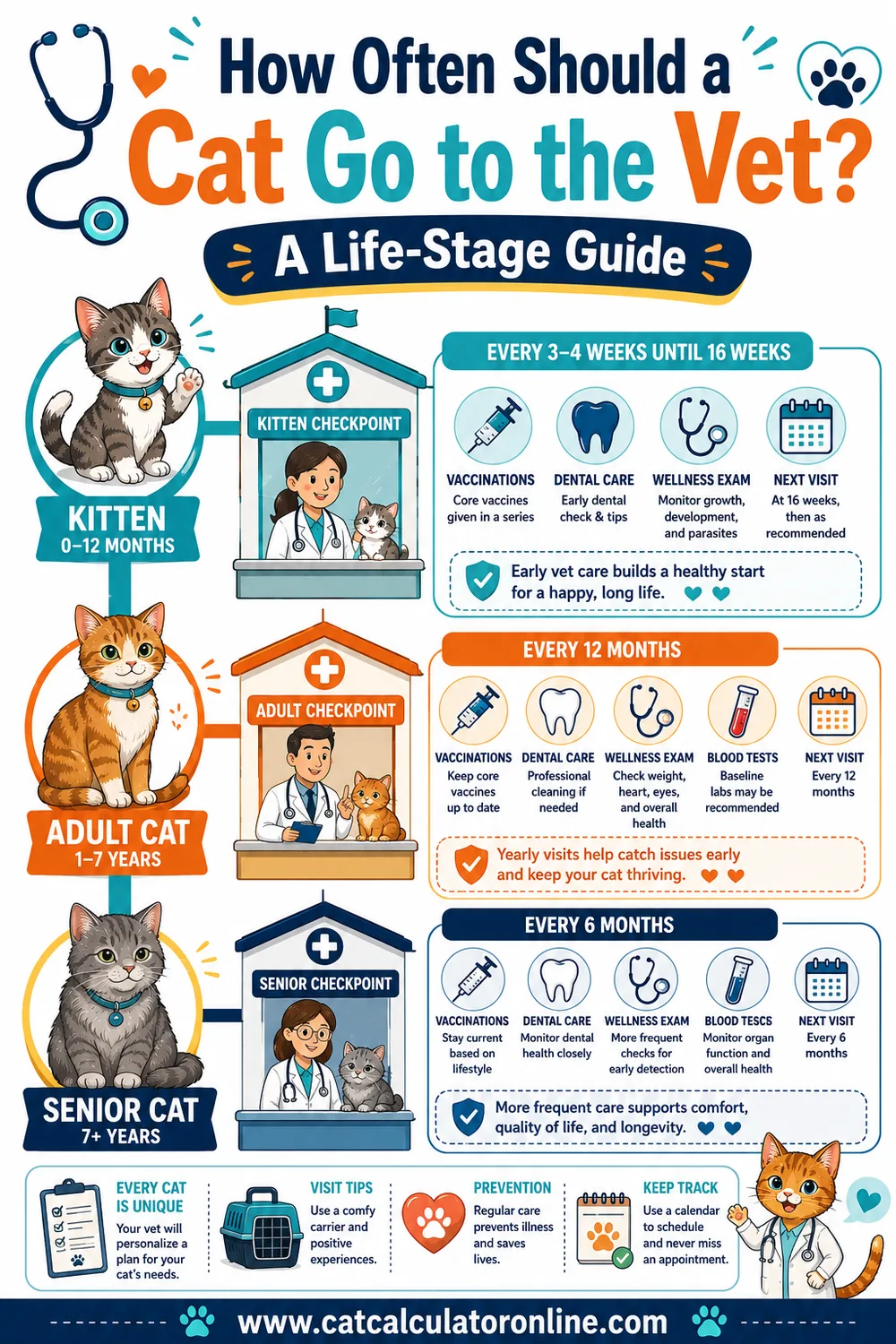
Because the diseases of old age in cats are quiet, common, and far easier to manage when caught early. A senior cat should see the vet every six months, and those visits should include more than a quick once-over: bloodwork, a urinalysis, and a blood pressure check are the core of senior screening.
Here's what that screening is looking for:
- Kidney disease — one of the most common conditions in older cats. It develops silently for a long time; blood and urine tests can flag it well before symptoms show, when diet changes and treatment make the biggest difference.
- Hyperthyroidism — an overactive thyroid, classically showing up as a cat who eats plenty but loses weight. A blood test picks it up, and it's very treatable.
- Diabetes — often signalled by increased thirst and urination. Again, bloodwork finds it early.
- High blood pressure — frequently rides along with kidney and thyroid problems, and can damage eyes and other organs if it goes unnoticed.
Six months might sound frequent, but remember the math: a year in a senior cat's life is roughly the equivalent of four human years. You wouldn't want your grandmother going four years between checkups.
Between visits, the appointment schedule in how often should a cat go to the vet is worth bookmarking — it covers every life stage, not just the senior years.
How Do I Track My Senior Cat's Weight at Home?
Once a month, weigh her, and write the number down. That's it — and it's arguably the single most valuable home-monitoring habit a senior cat owner can build.
The easiest method needs nothing but a bathroom scale:
- Stand on the scale holding your cat and note the number.
- Stand on it alone.
- Subtract. Log the result with the date — a note on your phone is fine.
Why it matters so much: gradual weight loss is a red flag in a senior cat, even when everything else looks normal. Kidney disease, hyperthyroidism, dental pain and several other common senior conditions all show up as slow, quiet weight loss long before they show up as anything else. A cat who drops weight steadily over two or three months needs a vet visit, full stop — don't wait for a second symptom.
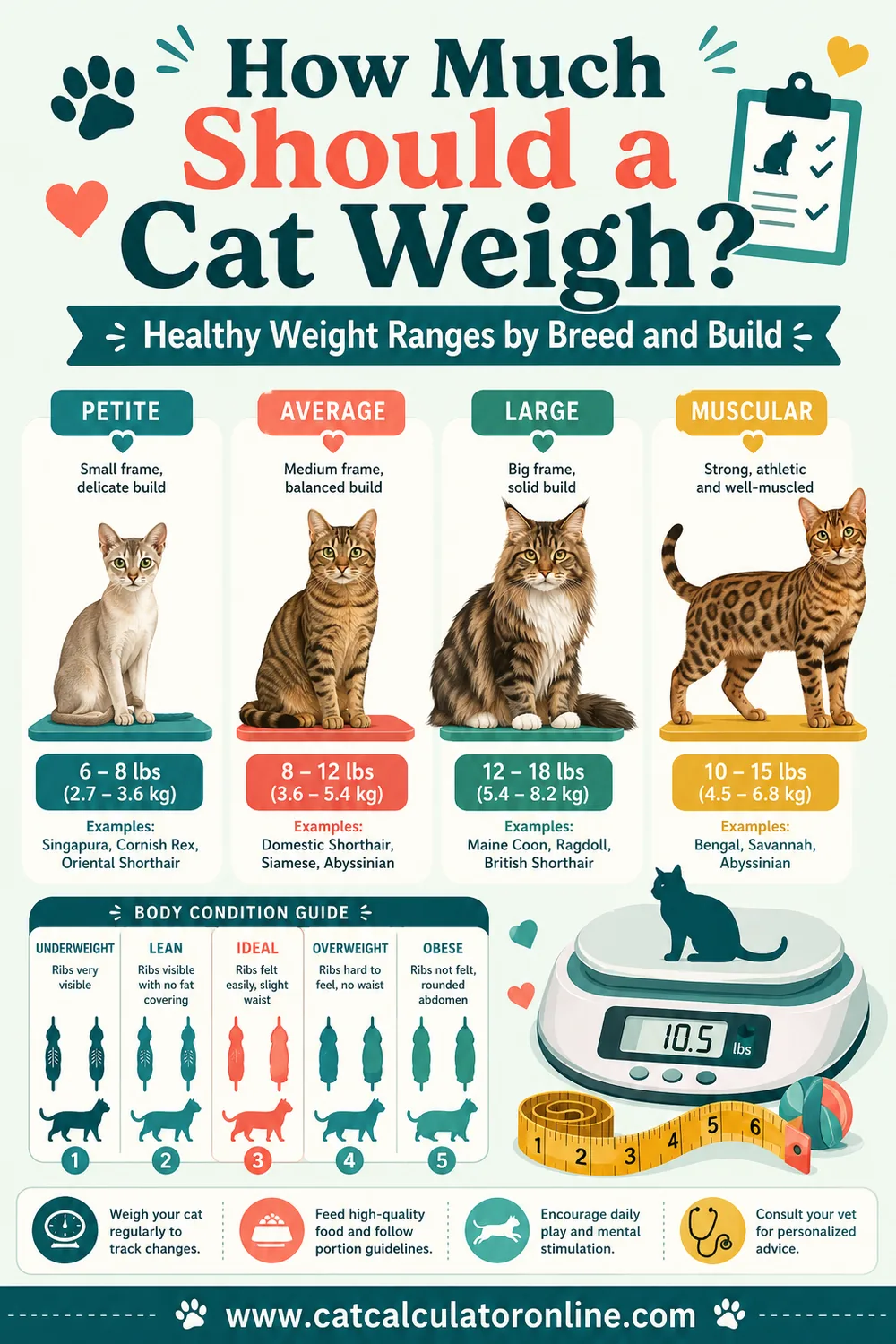
Weight gain matters too, since extra load on arthritic joints makes everything harder. If you're not sure what her target range even is, how much should a cat weigh walks through how to judge it by frame rather than a single magic number.
What Arthritis Accommodations Does an Older Cat Need?
More than most owners realize — because arthritis in cats is very common and very well hidden. Cats with sore joints rarely limp. Instead they quietly stop jumping onto the counter, hesitate at the stairs, or start missing the litter box. Owners read it as "slowing down with age," when it's often discomfort you can do something about.
The good news: the home fixes are cheap and they work.
- Low-entry litter boxes. A high-sided box that was fine at age 3 can be a genuine obstacle at 12. Choose boxes with a low cut-out entrance, or cut one side down on a cheap storage tub.
- One box on every floor she uses. A stiff cat facing a full flight of stairs to reach the box will sometimes choose the carpet instead. Make the right choice the easy choice.
- Ramps or steps to favorite spots. If she loves the sofa, the bed, or a window perch, give her a way up that doesn't require a leap. Pet stairs work; so does a sturdy box positioned as a halfway step.
- Soft, warm bedding away from drafts. Warmth soothes stiff joints. A padded bed in a draft-free corner — or near (not on) a radiator — will quickly become her favorite place.
- Raised food and water bowls. Lifting bowls a few inches spares her neck and elbows at every meal.
And one thing that isn't a home fix: if you suspect arthritis, tell your vet. There are genuine treatment options these days, and no cat should be quietly sore when she doesn't have to be. Never give human pain medication to a cat — several common ones are toxic to them.
What Should a Senior Cat Eat and Drink?
On the food side, the honest answer is: ask your vet before switching anything. Senior diets exist, and some cats genuinely benefit — particularly cats with early kidney disease, where a prescription diet can make a real difference. But "senior" on a label isn't a regulated promise, and the right food depends on her bloodwork, weight and teeth. Let the twice-yearly checkup drive the decision rather than the pet-shop shelf.
Water is a different story — there, the rule is simple and universal: make water abundant and appealing. Aging kidneys benefit from good hydration, and cats are famously unenthusiastic drinkers. Practical ways to tip the odds:
- Put out several water bowls in different rooms, not one bowl next to the food.
- Refresh them daily — cats are fussy about stale water.
- Consider a pet fountain; many cats drink noticeably more from moving water.
- Add wet food to the menu if your vet agrees — it's a meaningful source of moisture.
- Use wide, shallow bowls so her whiskers don't brush the sides.
One monitoring note that belongs here: a senior cat who starts drinking noticeably more isn't "being good about hydration." Increased thirst is a classic early sign of kidney disease, diabetes and thyroid problems. If the water bowl starts emptying faster than usual, mention it to your vet.
How Do I Help With Grooming and Dental Care?
Senior cats groom themselves less — stiff joints make it hard to reach the lower back and hips, and reduced flexibility turns a full wash into a chore. So the coat that kept itself perfect for a decade starts looking dull, greasy or matted. That's your cue to step in.
Gentle daily brushing does three jobs at once:
- It keeps the coat clean and mat-free, especially over the hips and lower back where she can no longer reach.
- It's a hands-on health check — you'll notice lumps, sore spots, or weight changes under your fingers before you'd ever see them.
- Most cats love it, and a few quiet minutes of brushing is genuinely good for the bond.
Use a soft brush, keep sessions short, and be extra gentle over the spine and hips, which may be tender. Long-haired seniors may also need occasional help with mats — work them out gently or ask a groomer; never pull.
Teeth deserve equal billing. Dental disease is extremely common in older cats, it's painful, and it's routinely missed because cats eat through the pain. Watch for bad breath, drooling, chewing on one side, or dropping food. Daily brushing is the gold standard if she'll tolerate it — how to brush cats teeth covers how to build up to it without a wrestling match — and make sure the mouth gets checked at every vet visit.
How Much Play and Routine Does a Senior Cat Need?
Gentle play, every day. Senior cats still need movement and mental engagement — it keeps joints working, weight in check, and minds sharp. What changes is the style: swap the airborne acrobatics for slow, low-to-the-ground wand games, short chase sessions, and food puzzles that make her think rather than sprint. Five to ten gentle minutes once or twice a day is plenty for most seniors. Let her set the pace, and stop while she's still interested.
Routine is the other half — and it's easy to underestimate. Senior cats genuinely dislike change. Predictability isn't boring to an old cat; it's security. Where you can:
- Keep feeding times consistent.
- Leave litter boxes, beds and bowls where they are. If you must move something, do it gradually.
- Avoid furniture reshuffles where possible — her mental map of the house matters more now.
- Keep new stressors (house guests, renovations, new pets) gentle and gradual, with a quiet room she can retreat to.
A stable routine has a monitoring bonus, too: when every day looks the same, the day something's off stands out immediately.
Which Changes Mean It's Time to Call the Vet?
With a senior cat, the standing rule is: any clear change from her normal deserves a phone call. You're not diagnosing anything — that's your vet's job — you're just refusing to explain things away as "old age." The changes that matter most:
- Thirst — drinking noticeably more (or less) than usual.
- Appetite — eating less, eating more while losing weight, or approaching food and walking away.
- Weight loss — especially the gradual kind your monthly weigh-ins catch.
- Vocalisation — a new habit of yowling, particularly at night, is worth mentioning; it shows up with several treatable senior conditions.
- Litter box changes — going outside the box, straining, or changes in frequency. Straining with nothing produced is an emergency.
- Hiding, withdrawal, or irritability — often the first sign of pain or illness.
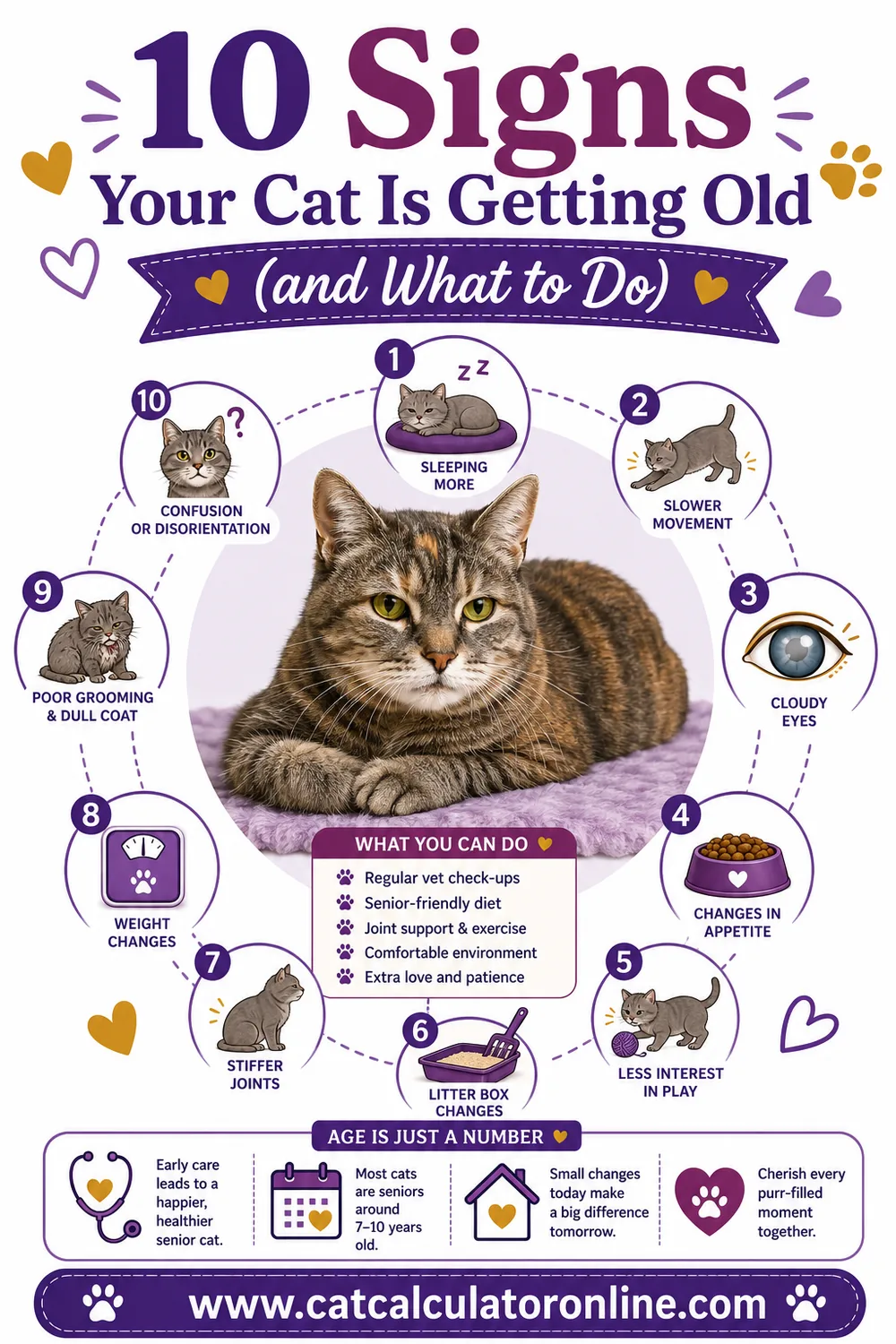
None of these automatically means something serious. All of them mean the same thing: call, describe it, and let the clinic tell you how soon to come in. Signs your cat is getting old covers what genuinely normal aging looks like, so you can tell the difference.
What Does Senior Cat Care Look Like at a Glance?
Here's the whole guide in one table — a quick reference for what to change and why.
| Care area | What to change | Why it matters |
|---|---|---|
| Vet visits | Every 6 months, with bloodwork, urinalysis and blood pressure | Catches kidney disease, hyperthyroidism and diabetes early, when they're most manageable |
| Weight | Weigh at home monthly and log it | Gradual weight loss is a top red flag for hidden illness |
| Litter boxes | Low-entry boxes, one per floor | Arthritis makes high sides and stairs a real barrier |
| Comfort | Soft warm bedding away from drafts; ramps/steps to favorite spots | Eases stiff joints and keeps her doing what she loves without jumping |
| Food | Change diet only on your vet's advice | The right food depends on her bloodwork, not the label |
| Water | Multiple fresh bowls, consider a fountain and wet food | Hydration supports aging kidneys |
| Grooming | Gentle daily brushing; help with mats | Seniors groom less; brushing doubles as a lump-and-pain check |
| Teeth | Watch for bad breath and drooling; dental checks every visit | Dental disease is common, painful, and hidden |
| Play | Short, gentle, daily sessions | Keeps joints, weight and mind in shape |
| Routine | Keep feeding times and layout stable | Seniors find change stressful; stability doubles as a monitoring baseline |
FAQ
At what age is a cat considered a senior?
Around age 10, with ages 7–10 counted as "mature." From 10 onward, twice-yearly vet checks with bloodwork and some arthritis-friendly adjustments at home become the standard of care. Our cat age calculator tells you your cat's life stage and human-age equivalent instantly.
How often should a senior cat go to the vet?
Every six months, and the visit should include bloodwork, a urinalysis and a blood pressure check — not just a physical exam. These tests catch kidney disease, hyperthyroidism and diabetes early, often before any visible symptoms.
Should I switch my senior cat to senior food?
Only on your vet's advice. Some senior cats genuinely benefit from a diet change — especially those with early kidney disease — but the right food depends on her bloodwork, weight and dental health, not the age printed on the bag.
Why is my senior cat losing weight but still eating?
Eating well while losing weight is a classic pattern for hyperthyroidism and appears with other conditions too, so it always warrants a vet visit. It's exactly the kind of change monthly home weigh-ins are designed to catch early.
How can I make my home easier for an arthritic cat?
Low-entry litter boxes with one on each floor, ramps or steps up to her favorite sleeping spots, soft warm bedding away from drafts, and raised food and water bowls. And tell your vet — feline arthritis is treatable, and cats hide the pain well.
Do senior cats still need playtime?
Yes — daily, but gentle. Five to ten minutes of slow wand play or food-puzzle time once or twice a day keeps joints moving, weight down and minds engaged. Let her set the pace and keep everything low to the ground.
The Bottom Line
Senior cat care isn't a burden — it's mostly small habits done consistently. Twice-yearly vet visits with bloodwork do the medical heavy lifting. Monthly weigh-ins, abundant fresh water, gentle grooming and a watchful eye on thirst, appetite and behavior handle the home front. And a few cheap comforts — low litter boxes, warm bedding, a ramp to the sofa — repay a decade of companionship with an old age that's genuinely comfortable.
Start with the basics: run her age through the free cat age calculator to see exactly where she is in life, read when is a cat considered senior for the stage-by-stage picture, and keep signs your cat is getting old handy so you always know the difference between normal aging and a reason to call the vet.