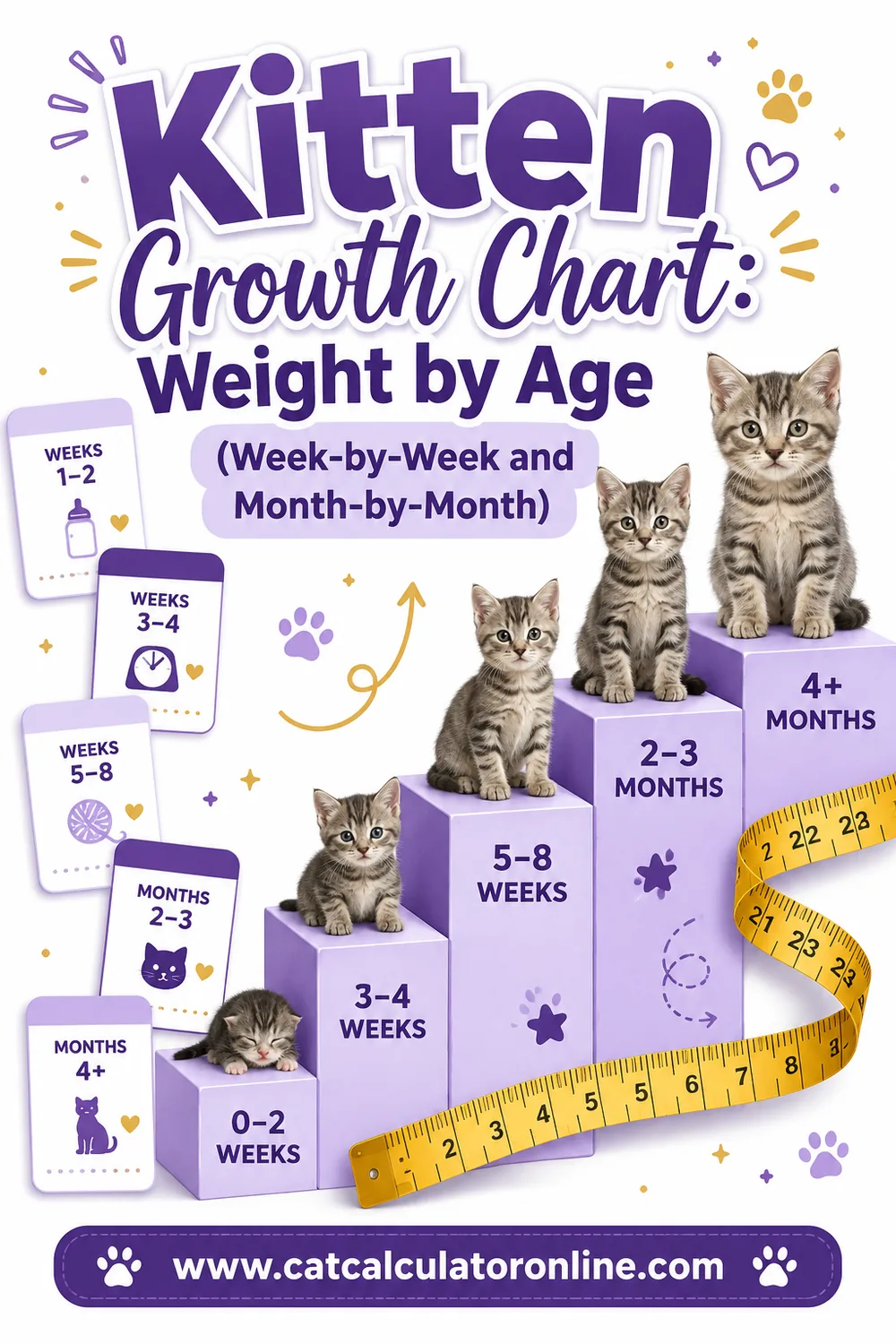
Kitten Growth Chart: Weight by Age (Week-by-Week and Month-by-Month)
A healthy kitten roughly doubles its birth weight in the first week and then gains about half a pound (around 100 grams a week) each month for the first several months. As a quick reference, a kitten weighs about 1.5–2 pounds at 8 weeks, 3–4 pounds at 3 months, 5–7 pounds at 6 months, and 8–12 pounds once it reaches adult size at 10–12 months. Every kitten is a little different, so treat these as ranges, not rules.
If you know roughly how old your kitten is and want to sanity-check its weight, the mini chart below gives you a typical range in one tap. And if you are trying to work backward — you found or adopted a kitten and want to estimate its age from its size and teeth — our free cat age calculator can help you put a number on it.
🐱 Quick kitten weight check
Tap your kitten’s age to see a typical weight range:
Tap an age to see a typical weight range.
The Kitten Growth Chart (Weight by Age)
Here is the fast reference most people are looking for. These are typical figures for an average domestic kitten. Large breeds like the Maine Coon, Ragdoll, and Norwegian Forest Cat run heavier and keep growing well past a year — sometimes to 3 or 4 years old.
| Age | Typical weight | Rough metric | What’s happening |
|---|---|---|---|
| Newborn | 3–5 oz | 85–140 g | Eyes and ears closed, nursing constantly |
| 1 week | 6–8 oz | 170–230 g | Roughly doubled birth weight |
| 2 weeks | 8–12 oz | 230–340 g | Eyes opening (~7–10 days) |
| 3 weeks | 12–16 oz | 340–450 g | Wobbly walking, first teeth |
| 4 weeks | ~1 lb | ~450 g | Starting to explore, lapping |
| 6 weeks | 1–1.5 lb | 450–680 g | Eating some solid food |
| 8 weeks | 1.5–2 lb | 700–900 g | Weaned, ready for a new home |
| 10 weeks | 2–3 lb | 0.9–1.4 kg | Playful, coordinated |
| 3 months | 3–4 lb | 1.4–1.8 kg | Growing fast |
| 4 months | 4–5.5 lb | 1.8–2.5 kg | Baby teeth falling out |
| 5 months | 5–6 lb | 2.3–2.7 kg | Adult teeth coming in |
| 6 months | 5–7 lb | 2.3–3.2 kg | Near sexual maturity |
| 9 months | 7–9 lb | 3.2–4.1 kg | Slowing down, filling out |
| 12 months | 8–12 lb | 3.6–5.4 kg | Roughly adult size |
A simple rule of thumb for the early months: a kitten gains about one pound per month until roughly 4–5 months of age, then the rate slows. If your 5-month-old is around 5 pounds, that lines up nicely — its weight in pounds is close to its age in months during that stretch.
The First Two Weeks: Fastest Growth of All
Newborn kittens are tiny and completely dependent. They can’t see, hear, walk, or regulate their own body temperature. What they can do is grow — fast.
- Birth: about 3–5 ounces, roughly the weight of a deck of cards.
- Week one: they should nearly double that birth weight. This is the single most important growth marker. A newborn that isn’t gaining is a red flag worth a same-day vet call.
- Eyes and ears: eyes open around 7 to 10 days; ears unfold and hearing sharpens over the next couple of weeks.
If you’re hand-raising orphaned kittens, weigh them on a kitchen scale in grams every day at the same time. Steady daily gains of about 10–15 grams are what you want. Grams matter here because ounces are too coarse to catch a problem early.
Newborn Kitten Weight in Grams (First Four Weeks)
For newborns, ounces are too rough — a drop of 10 grams can matter. If you are bottle-feeding or watching a new litter, use this gram chart alongside a digital kitchen scale. The figures match the main chart above, just in finer detail.
| Age | Typical weight (grams) | Expected gain | What to watch |
|---|---|---|---|
| Birth | 85–140 g | — | Nursing within the first hours; warm and plump |
| Days 1–7 | Rising toward 170–230 g | About 10–15 g per day | Should nearly double birth weight by day 7 |
| Week 2 | 230–340 g | About 10–15 g per day | Eyes opening around 7–10 days |
| Week 3 | 340–450 g | Steady daily gains | First teeth, wobbly first steps |
| Week 4 | About 450 g | Steady daily gains | Exploring, starting to lap food |
Red flags in the first weeks: no gain for a day or two, any weight loss, a kitten that feels cool to the touch, or one that cries constantly and won’t nurse. Newborns have almost no reserves, so call a vet the same day. If you are caring for kittens without a mother, our guide to caring for orphaned kittens and the newborn kitten care week-by-week guide go step by step.
Keep newborns warm
Newborn kittens can’t control their own body temperature for the first few weeks, which is why they pile on mom and each other. Without a mother cat, keep the nest warm — a commonly recommended range is about 85–90°F (29–32°C) in the first week, lowered gradually to around 75°F (24°C) by about 4 weeks. Always leave a cooler corner they can crawl to. A chilled kitten should be warmed slowly before it is fed, and that is a reason to call your vet.
Weeks 3 to 8: Weaning and Real Food
This is the stretch where a kitten transforms from a milk-drinking newborn into a small cat that eats, plays, and uses a litter box.
What changes
- Teeth arrive. The first baby teeth push through around 3 weeks, which is what makes weaning possible.
- Weaning begins (~4 weeks) and finishes (~8 weeks). Kittens move from mother’s milk or a bottle to a gruel of wet kitten food, then to solid kitten food.
- Coordination improves. By 6–8 weeks they’re running, pouncing, and climbing anything they can reach.
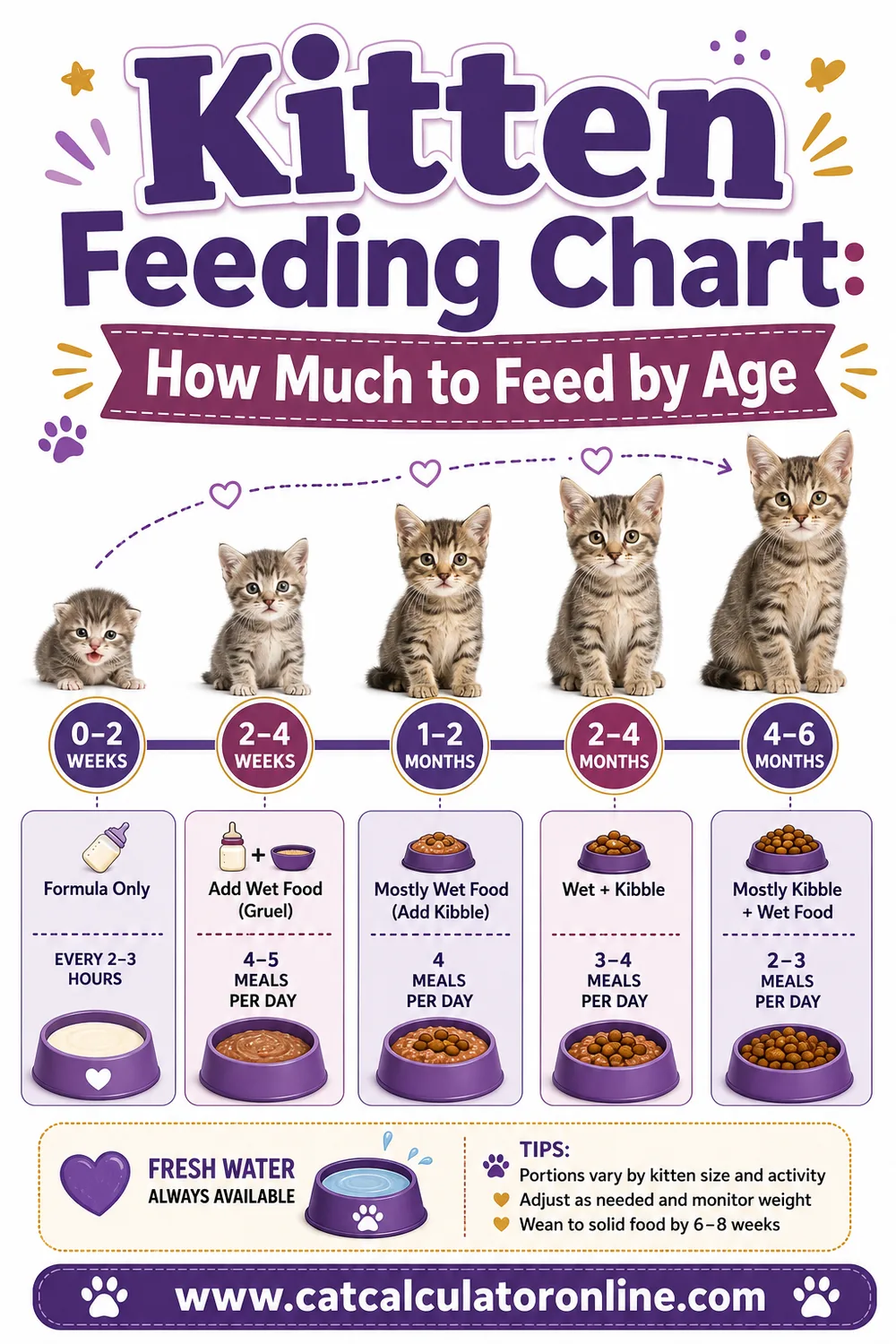
By 8 weeks a kitten should weigh about 1.5–2 pounds. This is also the earliest age most reputable breeders and shelters will let a kitten go to a new home, because it needs those extra weeks with mom and littermates to eat well and learn cat manners. For how much and how often to feed at this stage, see our kitten feeding chart.
Months 3 to 6: The Long Growth Sprint
From 8 weeks to about 6 months, your kitten does the bulk of its growing. Expect roughly half a pound to a pound of gain per month, though it varies by kitten and breed.
Key milestones in this window:
- Baby teeth fall out (~3–4 months) and adult teeth come in, usually finished around 6 months. You may find a tiny tooth on the floor — that’s normal.
- Sexual maturity (~4–6 months). Kittens can reproduce surprisingly young, which is why most vets recommend spaying or neutering around this age or by 6 months. An unspayed female can go into heat as early as 4 months — more on that in our guide to a cat in heat.
- Energy peaks. This is the zoomies era. Plenty of play and interactive toys help burn it off.
A 6-month-old kitten is typically 5–7 pounds and looks like a small adult cat, even though it isn’t finished growing yet.
Months 6 to 12: Filling Out to Adult Size
After 6 months, growth slows noticeably. Your kitten keeps gaining, but more gradually, adding muscle and a more adult body shape rather than shooting up in size.
- 9 months: typically 7–9 pounds. Play calms a bit; personality settles.
- 12 months: most cats reach roughly their adult size, 8–12 pounds for an average cat. This is the traditional line between kitten and adult, and a good time to talk with your vet about switching from kitten food to adult food.
Remember the big exception: large and slow-maturing breeds keep growing. A Maine Coon may not reach full size until 3 or 4 years old and can top 15–20 pounds. If you have one of these breeds, the chart above will look "behind" — and that’s completely normal.
Kitten Growth Chart by Breed Size
The main chart shows an average domestic kitten. Breed size changes how big a kitten ends up and how long it keeps growing. These are typical adult ranges, not targets — individual cats vary a lot.
| Breed size | Example breeds | Typical adult weight | When growth slows |
|---|---|---|---|
| Small & slender | Siamese, Devon Rex, Singapura | About 5–10 lb (2.3–4.5 kg) | Most growth done by about 12 months |
| Medium (average) | Domestic Shorthair, American Shorthair | About 8–12 lb (3.6–5.4 kg) | Roughly adult size by 10–12 months |
| Large | Maine Coon, Ragdoll, Norwegian Forest Cat | Often 10–20 lb (4.5–9 kg); males at the top end | Keep filling out until about 3–4 years |
Maine Coon and Ragdoll kittens
Large-breed kittens often run ahead of the main chart in the first months and then keep growing long after a domestic kitten has stopped. A Maine Coon or Ragdoll that looks "too big" at 6 months, or still seems to be growing at 2 years, is usually right on track for its breed. For breed-specific detail, see how big Maine Coons get and how big Ragdolls get.
Siamese and other slim breeds
Slender breeds can sit at the low end of the main chart and still be perfectly healthy. Judge them by the body condition checks below — ribs you can feel, a slight waist, good energy — rather than by the number alone. Our average cat weight by breed guide covers more breeds.
Male vs. female kittens
Male and female kittens grow at a similar pace for the first few months. The gap usually shows up later in kittenhood, and adult males of most breeds end up somewhat larger and heavier than females. If your female kitten is at the lower end of a range, that is often why. Spaying or neutering does not stop a kitten from growing; your vet can explain the best timing for your kitten.
How to Weigh a Kitten at Home
You don’t need special equipment. A digital kitchen scale that reads in grams works perfectly for kittens up to a few pounds.
- Pick a container. Use a small bowl, box, or basket the kitten fits in comfortably. Line it with a soft towel.
- Zero the scale. Put the empty container (with the towel) on the scale and press "tare" so it reads 0.
- Add the kitten. Gently place the kitten in the container. Wait a second or two for the number to settle — a treat or a soft voice helps a wiggly kitten sit still.
- Weigh at the same time each day. Before a meal is best, since a full tummy can add a noticeable amount for a tiny kitten.
- Write it down. Keep a simple log with the date and weight. The trend over several days tells you far more than any single number.
For older, bigger kittens: once a kitten outgrows the kitchen scale, step on a bathroom scale by yourself, then again holding the kitten, and subtract. It is less precise, so weigh a few times and use the average.
How often? Daily for newborns and orphaned kittens, a couple of times a week until about 8 weeks, then weekly or every other week until about 6 months. After that, a monthly check is plenty for a healthy kitten. Our kitten weight calculator can help you compare a reading against your kitten’s age.
Is My Kitten on Track? How to Tell
Numbers on a scale are only part of the picture. Use these checks alongside the weight ranges above.
1. Weigh regularly and look for steady gains
The single best sign of health isn’t hitting an exact number — it’s a consistent upward trend. Weigh weekly for young kittens (a kitchen scale works well), and note the numbers. Steady climbing is good. A plateau or a drop deserves a vet call.
2. Do a body condition check
Run your hands over your kitten:
- Ribs: you should be able to feel them under a light layer, without them sticking out sharply.
- Belly: rounded after meals is normal for kittens; consistently bloated or painfully swollen is not (it can signal worms or illness).
- Waist: as they mature, you want a slight tuck behind the ribs, not a sausage shape.
3. Watch energy, coat, and appetite
A thriving kitten is playful, curious, and eats eagerly. Its coat is soft and clean. Lethargy, a dull or patchy coat, poor appetite, or diarrhea are all reasons to check in with your vet, regardless of what the scale says.
Growth red flags worth a vet visit
- No weight gain over a week (or any weight loss) in a young kitten
- A swollen, hard belly
- Being noticeably smaller than littermates and falling further behind
- Poor appetite, vomiting, or ongoing diarrhea
Kittens have small reserves, so problems can escalate quickly. When in doubt, call — it’s better to ask early.
How Kitten Age Maps to Human Years
Kittens race through the human-equivalent years early on, which is part of why they grow so fast. Cats age uniformly (breed and size barely change the math, unlike dogs), and the widely used method looks like this:
| Cat age | Human-year equivalent | Life stage |
|---|---|---|
| 1 month | ~1 year | Newborn/infant |
| 3 months | ~4 years | Young child |
| 6 months | ~10 years | Older child |
| 12 months | ~15 years | Teenager |
| 2 years | ~24 years | Young adult |
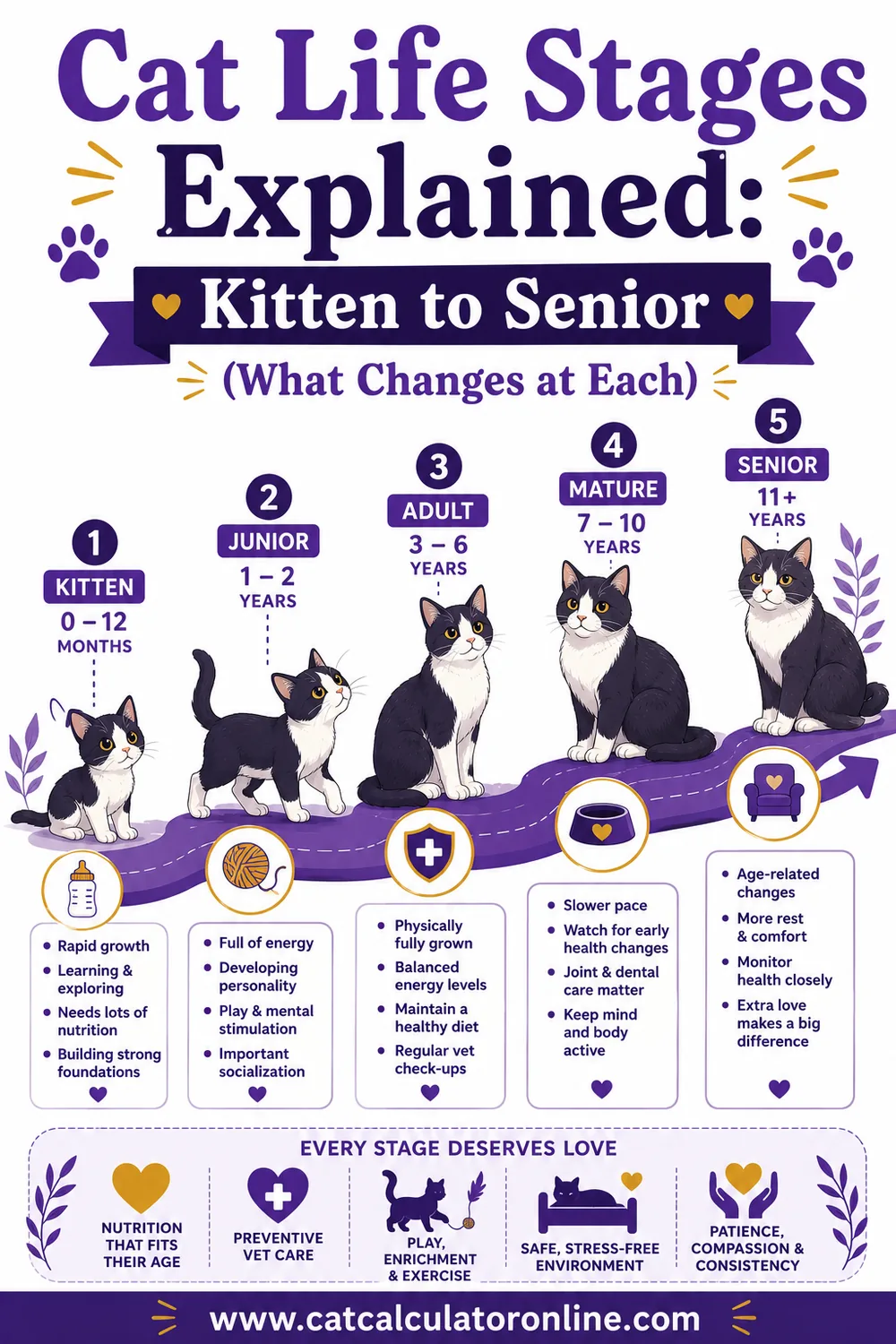
So a 6-month-old kitten is, developmentally, a lot more like a 10-year-old child than a baby — which explains the confidence and the chaos. Want the exact figure for your cat at any age? Our cat age calculator does it in one tap, and you can read the full method in our guide to cat life stages.
Weight Tips for a Growing Kitten
- Feed a food labeled for kittens (or "all life stages"). Kittens need more calories and protein per pound than adults because they’re building a whole body.
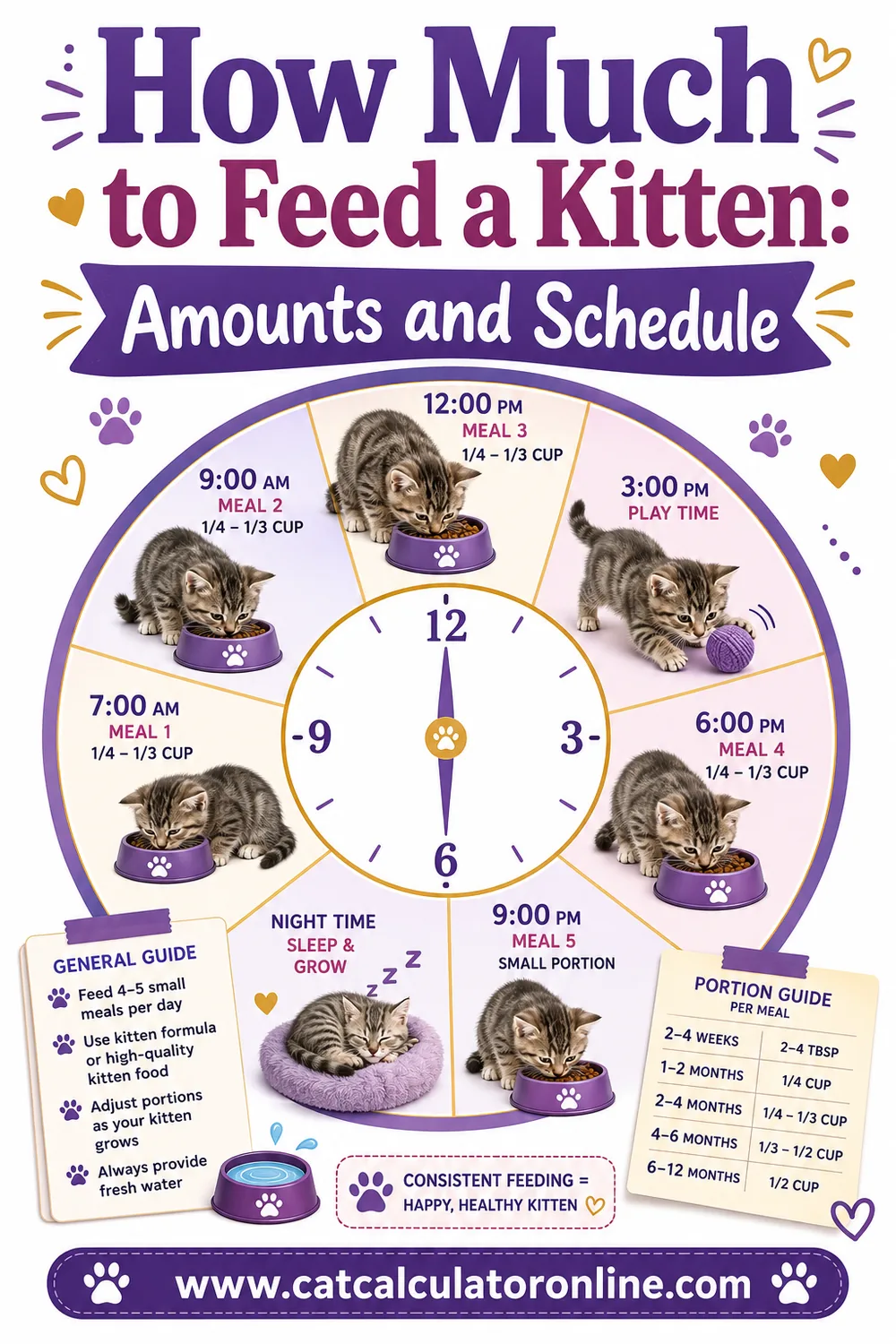
- Feed by age, not by free-guessing. Small, frequent meals suit growing kittens. Our how much to feed a kitten guide breaks down portions and schedule by age.
- Don’t crash-diet a kitten. Restricting a growing kitten to keep it small can cause real harm. Let it grow; manage weight later if needed.
- Fresh water always, and keep an eye on litter-box output as another health signal.
- Deworm and vaccinate on schedule. Parasites are a common reason a kitten looks pot-bellied but isn’t truly gaining. Your vet’s deworming plan protects growth.
FAQ
How much should a kitten weigh at 8 weeks?
Most kittens weigh about 1.5 to 2 pounds (roughly 700–900 grams) at 8 weeks. A rough guide for the early months is that a kitten weighs about one pound for each month of age until around 4–5 months.
How fast do kittens grow?
Very fast at first. A newborn nearly doubles its birth weight in the first week, then a kitten typically gains about half a pound to a pound each month for the first several months before the rate slows after 6 months.
When do kittens stop growing?
Most cats reach roughly adult size by 10 to 12 months. Large breeds such as Maine Coons, Ragdolls, and Norwegian Forest Cats keep filling out until 3 to 4 years of age.
My kitten is smaller than the chart — should I worry?
Not necessarily. Charts show averages, and breed, litter size, and individual differences all matter. What matters most is a steady upward trend in weight plus good energy, appetite, and a healthy coat. If your kitten isn’t gaining or seems unwell, call your vet.
How can I tell my kitten’s age if I don’t know it?
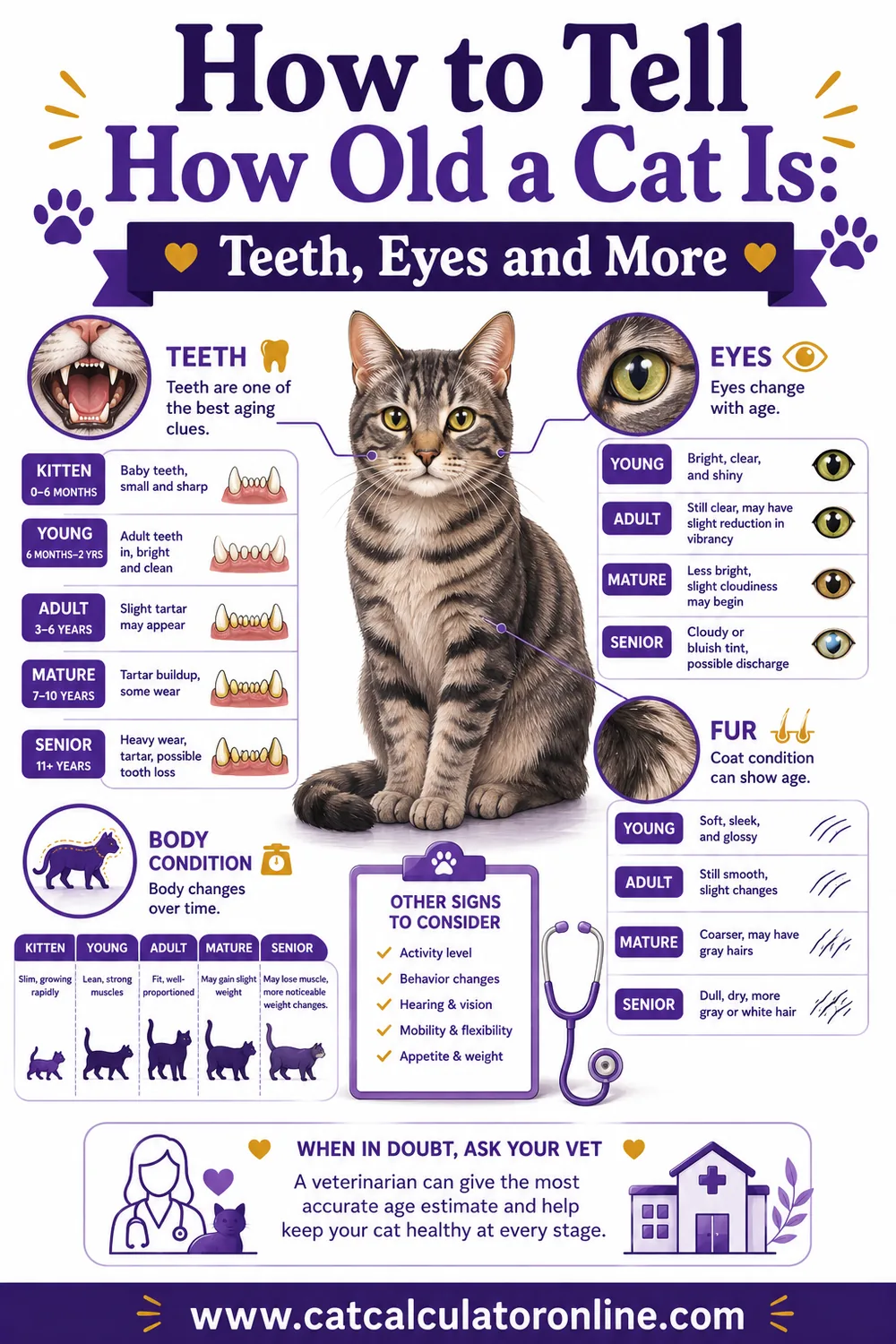
Weight, teeth, and eye/ear development are the best clues. Baby teeth appear around 3 weeks, adult teeth finish around 6 months, and eyes open around 7–10 days. Our how to tell a cat’s age guide walks through the signs, and the cat age calculator turns your estimate into human years.
Should I feed kitten food or adult food?
Feed kitten food (or an "all life stages" formula) until about 12 months, when most cats finish growing. Large breeds may stay on kitten food a bit longer — ask your vet, and always confirm portions with your food’s label.
How much should a 4-month-old kitten weigh?
Most 4-month-old kittens weigh about 4 to 5.5 pounds (roughly 1.8–2.5 kg). Large breeds such as Maine Coons may weigh more, and slim breeds less. A steady upward trend matters more than the exact number.
Do male kittens grow faster than female kittens?
In the first few months, male and female kittens grow at a similar rate. Differences usually appear later in kittenhood, and adult males of most breeds end up larger and heavier than females.
What should I do if my kitten is underweight?
First, weigh again to confirm, then check for signs like poor appetite, diarrhea, a swollen belly, or low energy. Make sure the kitten is eating a kitten formula in small, frequent meals. If the kitten is not gaining or seems unwell, call your vet — kittens can go downhill quickly, and parasites are a common cause.
Can a kitten be overweight?
It is less common than in adult cats, because kittens burn a lot of energy growing. Still, if you cannot feel the ribs under a light layer or the kitten has no waist at all, ask your vet. Never put a growing kitten on a strict diet without a vet’s advice.
The Bottom Line
A kitten grows astonishingly fast: nearly doubling its birth weight in week one, gaining roughly a pound a month early on, and reaching about 8–12 pounds by its first birthday. Use the chart as a guide, weigh regularly, and watch for a steady upward trend rather than a perfect number. If you’re unsure of your kitten’s age, our free cat age calculator turns weight, teeth, and other clues into an estimate — and tells you how old that makes your kitten in human years.