When to Neuter or Spay a Cat
The advice most owners remember — five to six months — is now considered late. Neutering at around four months is widely recommended, because a meaningful number of kittens have their first heat before six months and some as early as four, and the older worries about early surgery stunting growth or causing urinary problems were investigated in cats and not supported. The operation is routine, the recovery is usually quick, and the one consequence people are rarely warned about is metabolic: a neutered cat needs roughly 20 to 30% fewer calories almost immediately. Work out where your cat sits now with the free cat age calculator.

The Short Answer on Timing
Around four months, for both sexes. That is the recommendation from a growing number of welfare organizations and veterinary bodies, and many practices now offer it as standard.
The reason is simple arithmetic. First heats happen from about four months in some cats and commonly by six. Booking at six months means a proportion of kittens cycle, and some become pregnant, before the appointment.
Five to six months is still perfectly acceptable and remains the routine in plenty of practices. It is not wrong — it is just later than it needs to be.
Weight matters as much as age. Most vets want a kitten at around 2 lb (1 kg) or more before anaesthetic, which the great majority reach comfortably by four months.
Rescue kittens are often neutered younger still. Neutering from around eight to twelve weeks is used routinely in shelters so that kittens are rehomed already done, and it is well tolerated.
Adult and senior cats can be neutered at any age. Later is much better than never.
Why the Advice Moved Earlier
This shift is recent enough that plenty of owners were told something different, so the reasoning is worth setting out.
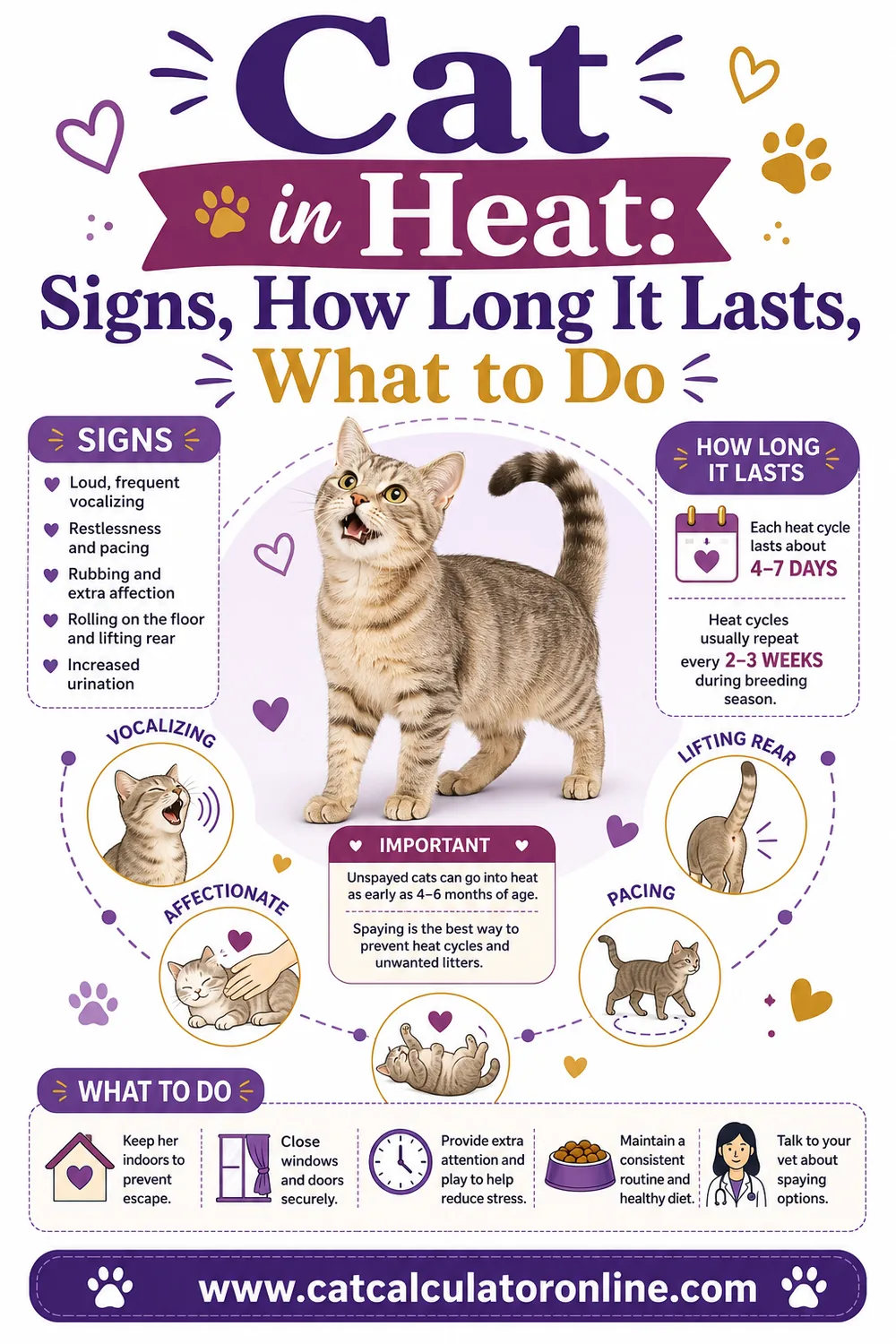
The first heat comes earlier than the old guidance assumed. The detail sits in at what age cats go into heat, but the short version is that four to six months is common and a kitten looks nothing like an adult at that point.
The growth concern did not hold up. Early neutering delays closure of the long-bone growth plates, so early-neutered cats end up very slightly taller. There is no stunting.
The urinary concern did not hold up either. The worry was that neutering a male kitten early would leave a narrower urethra and cause blockages. Studies comparing early and conventional neutering in cats did not find a higher rate of urinary obstruction.
Mammary tumour protection is greatest when it is early. Spaying before the first heat gives the largest reduction in risk, and the benefit falls away with each subsequent cycle.
Pyometra risk goes to zero. A pus-filled uterus is a genuine emergency in entire queens and it becomes impossible after a full spay.
And the population argument is real. Cats cycle every two to three weeks through a long season, so a few weeks of delay produces a great many unplanned kittens across a country.
What the Operation Actually Involves
Different procedures for the two sexes, and worth knowing which you are consenting to.
| Female (spay) | Male (castration) | |
|---|---|---|
| Procedure | Ovariohysterectomy, or ovaries only in some countries | Removal of both testicles |
| Approach | Small incision on the midline or the left flank | Two small incisions in the scrotum |
| Anaesthetic | General | General |
| Typical duration | 20 to 45 minutes | 5 to 15 minutes |
| Stitches | Dissolvable, sometimes skin glue, occasionally removable | Usually left open, no stitches |
| Home the same day? | Usually | Almost always |
| Restricted for | 10 to 14 days | 5 to 7 days |
| Fertile after | Immediately infertile | Can remain fertile for a few weeks |
That last row surprises people. A newly castrated tom can still fertilise a queen for a short period afterwards, because sperm remain in the tract. Keep him away from entire females for a few weeks.
Flank spays leave a visible shaved patch on the side and are common in some countries and rescues; midline spays are more usual elsewhere. Neither is better as a rule.
Ask what pain relief is included. Cats receive pain relief as standard at good practices, usually an injection at surgery plus a few days of oral medication to go home with.
Before the Day: The Fast
This is the one instruction that is genuinely different in cats, and where practice guidance has changed.
Follow your own practice's instructions exactly. They vary, and they are the ones responsible for the anaesthetic.
Long overnight fasts are out of favor. Current thinking favors a shorter fast — often three to six hours for an adult cat — because very long fasts offer no extra safety and are unpleasant.
Kittens are fasted very little, sometimes only an hour or two, because small animals become hypoglycaemic quickly.
Water is usually allowed until admission. Again, check.
This is the only situation in which food is withheld from a cat, and it is done under veterinary instruction for a specific reason. Never withhold food from a cat for any behavioral purpose — cats that stop eating are at real risk of hepatic lipidosis, a serious liver condition, within a few days.
Keep her indoors the night before, so there is no chance she is missing on the morning of surgery, and no chance she has eaten something outside.
Recovery, Day by Day
Most cats recover uneventfully. Knowing what normal looks like stops the unnecessary phone calls and sharpens the necessary ones.
Day of surgery. Wobbly, sleepy, possibly a little disoriented from the anaesthetic. Offer a small meal when you get home unless told otherwise, and a quiet warm place to sleep off the drugs.
Days one to three. Most cats are much brighter. This is when they try to do things they should not, like jumping onto worktops.
Keep her indoors for 10 to 14 days after a spay, and roughly five to seven days after a castration, or as your vet directs.
Keep the wound covered. A buster collar or a medical pet suit is not optional — a cat who licks an incision open can turn a routine recovery into a second operation. Suits are better tolerated by most cats than cones.
Check the wound daily. Slight redness and a small firm lump under the skin are normal. Spreading redness, swelling, discharge, a gaping wound, or a cat who is dull, off her food or vomiting are reasons to ring the practice.
Use a paper-based or dust-free litter for the first week if suggested, so grit does not get into the incision.
Do not bathe her or apply creams to the wound.
The Calorie Change Everyone Forgets
Post-neutering weight gain is common, predictable and largely preventable — and hardly anyone is warned in time.
Energy requirements drop by roughly 20 to 30%. The change begins within days of surgery, not months later.
Appetite often goes up at the same time. That combination is what produces the classic weight gain over the following year.
Adjust the portion at the time of surgery. Cutting food by around a quarter at the point of neutering is far easier than removing weight afterwards.
Weigh the food. Measuring cups and eyeballing a bowl are unreliable at the scale of a cat's daily ration, where 10 grams — a third of an ounce — matters.
Neutered cats are still growing, so a kitten needs enough to finish growing while not being overfed. Your vet can set a target, and how much should I feed my cat covers portion sizes by weight and food type.
Weigh her monthly for the first year. A 1 lb (500 g) gain on a 9 lb (4 kg) cat is more than a tenth of her body weight and is invisible to the eye. Is my cat overweight explains how to score her condition by feel.
What Neutering Does and Does Not Change
Realistic expectations prevent disappointment on both sides.
It reliably stops heat cycles in females — no more calling, rolling or seasonal chaos. The whole pattern is described in the cat in heat guide.
It sharply reduces spraying, roaming and fighting in males, usually within weeks. Where marking has become an established habit, some may persist and need behavioral work as well.
It reduces fight-related injuries and the infections they transmit, including FIV, which matters a great deal for cats with outdoor access.
It does not change her personality. Cats do not become dull or unaffectionate. What goes away is hormone-driven behavior, not character.
It does not stop play, hunting or territorial behavior in general.
It does not cause weight gain by itself. Weight gain comes from feeding the pre-surgery portion to a post-surgery metabolism.
Special Situations
A few cases that come up often enough to answer directly.
She is in heat right now. Surgery is possible, but many vets prefer to wait a week or two, because the reproductive tract is engorged and the operation is slightly more demanding. Some practices charge more for it.
She may be pregnant. Spaying can still be done, and vets do perform it, though the decision and the timing are worth an honest conversation with your practice.
She has just had kittens. Most vets wait until the kittens are weaned. Remember that a nursing queen can come back into heat and conceive again before her kittens are independent.
He has an undescended testicle. Cryptorchidism needs a larger operation to find the retained testicle, which should still be removed — a retained testicle carries a higher cancer risk.
She is elderly. Age is not a disease. Expect a pre-anaesthetic blood test and possibly intravenous fluids during surgery, both of which are sensible in an older cat.
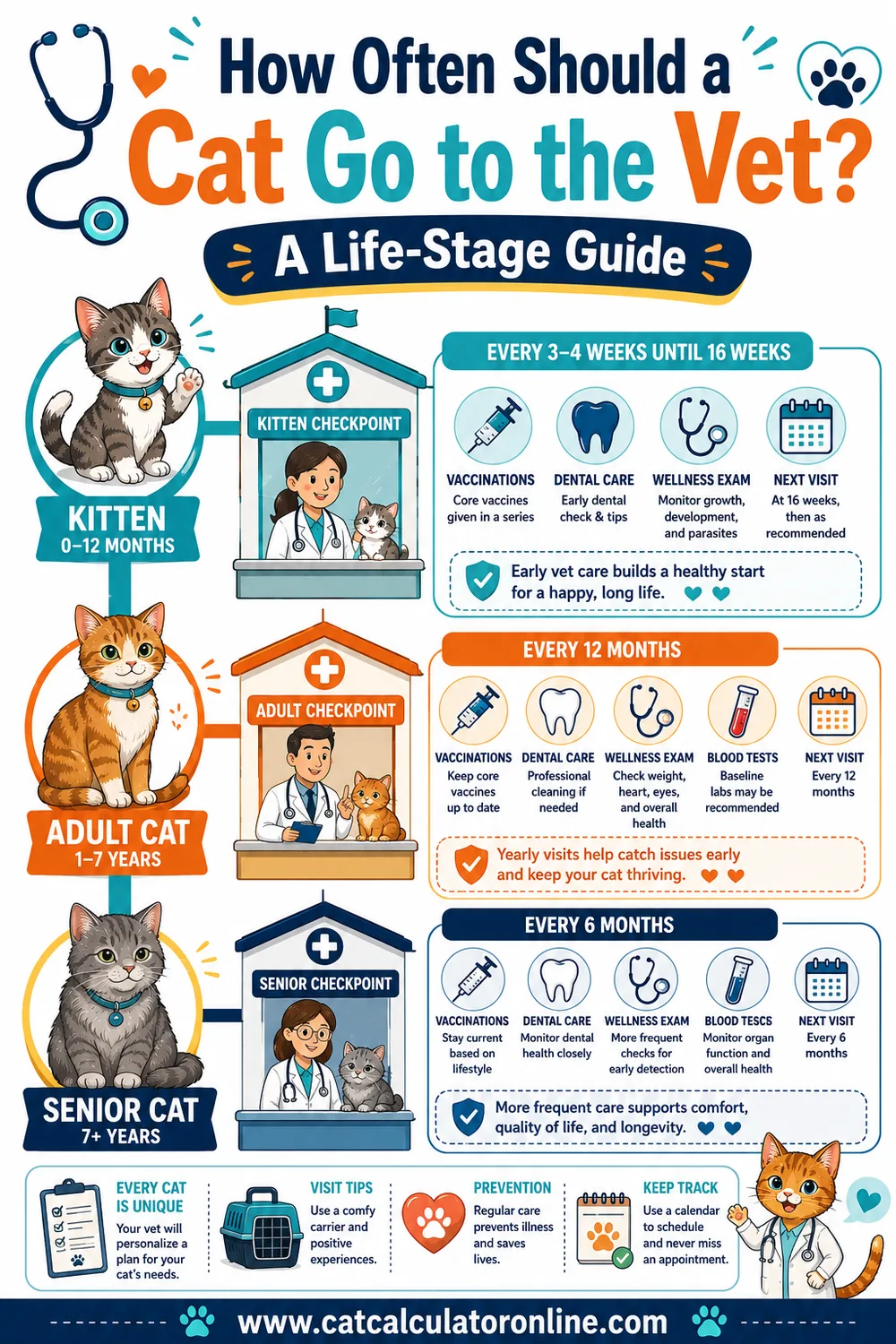
Cost varies widely by region, sex and practice, and low-cost schemes exist through welfare charities in many areas. Cat vet costs explained puts the figure in context, and how often a cat should go to the vet covers the visits that follow.
Frequently Asked Questions
What is the best age to neuter a cat?
Around four months for both sexes is now widely recommended, because it comes before the first heat in most cats. Five to six months remains common and acceptable. Shelters often neuter from eight to twelve weeks.
Is it too late to neuter an older cat?
No. Cats are neutered at any age, including into their teens. An older cat will usually have a pre-anaesthetic blood test and may receive intravenous fluids during surgery. The health benefits still apply.
Can a cat be spayed while in heat?
Yes, though many vets prefer to wait a week or two. During estrus the reproductive tract is engorged with blood, which makes surgery slightly more demanding and sometimes more expensive. It is not a reason to delay for months.
How long does a cat take to recover from neutering?
Males are usually back to normal within a few days, females within about a week. Keep her indoors and restricted for 10 to 14 days after a spay, with the wound covered by a collar or suit until your vet is happy.
Will my cat get fat after being neutered?
Only if the food stays the same. Energy needs fall by roughly 20 to 30% within weeks of surgery while appetite often rises. Reducing the portion by about a quarter at the time of neutering prevents most of it.
Does neutering change a cat's personality?
No. Hormone-driven behavior goes — calling, spraying, roaming, fighting — but affection, play and character are unchanged. Most owners report a calmer cat rather than a different one.
Four months is the practical target for both sexes, because it sits ahead of the first heat and the old concerns about early surgery in cats did not survive scrutiny. Follow your practice's own fasting instructions rather than a general rule, expect ten to fourteen days of restricted indoor recovery after a spay with the wound properly covered, and cut the daily food by roughly a quarter on the day of surgery rather than waiting for the weight to appear. Call the practice for spreading redness, discharge, a gaping wound, or a cat who is dull or off her food. Start by placing her age and stage with the free cat age calculator.