How Long Do Cats Live? Average Lifespan Indoors, Outdoors & by Breed
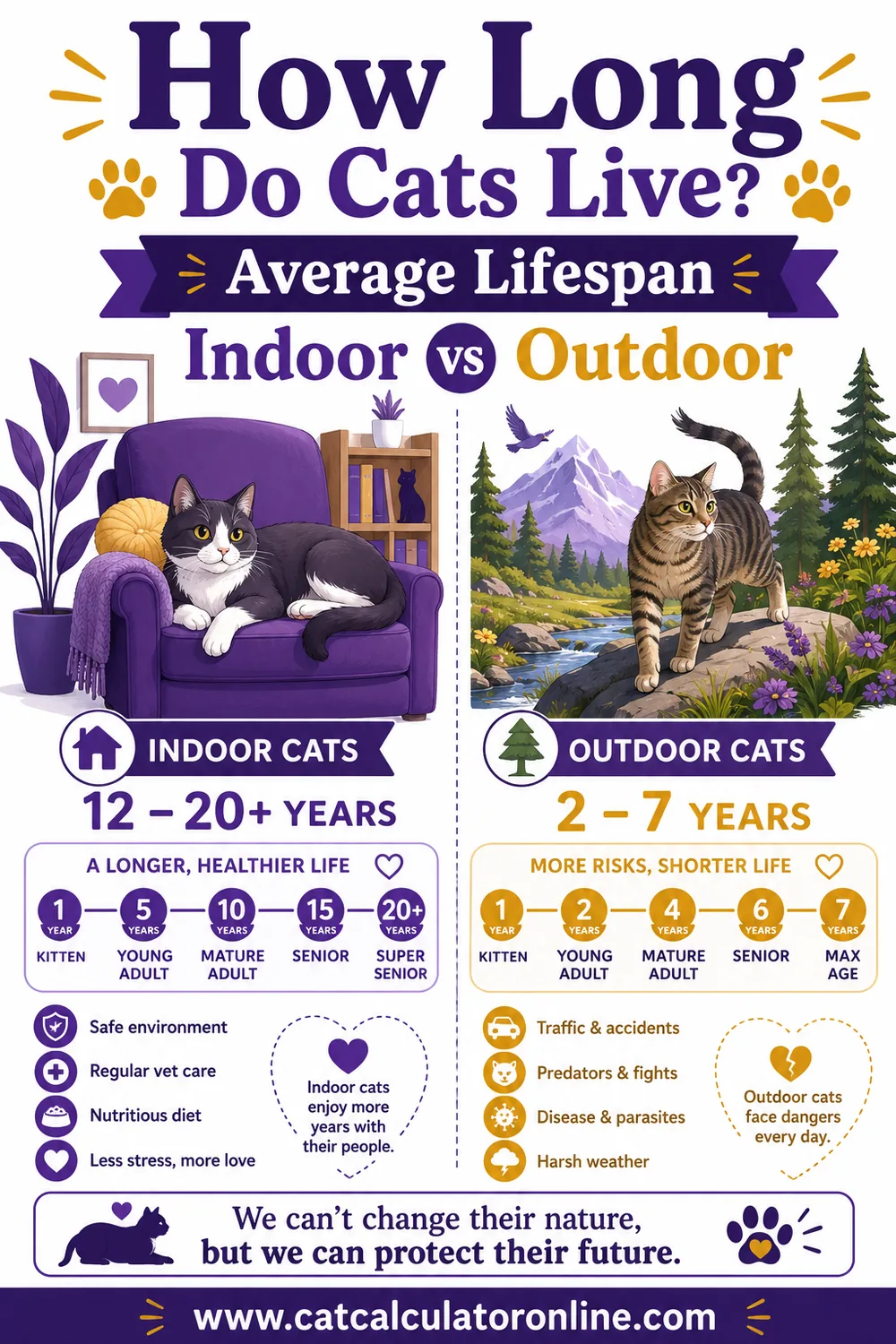
Most pet cats live 13 to 17 years on average, and reaching 20 or more is common with good care. But that number swings hugely based on one thing above all: whether your cat lives indoors or outdoors. Indoor cats average 13–17 years, while cats who live outside full-time average just 2 to 5. Breed, weight, diet, and vet care fill in the rest of the picture.
Want to know how old your cat is in human years right now? Our free cat age calculator does the math in one tap. Below, we'll break down the real lifespan numbers — indoors versus outdoors, breed by breed, the verified world record, and the specific things that shorten or stretch a cat's life.
🐱 Cat age → human years
Tap your cat’s age to see roughly how old that is in human years:
Tap an age above to see the human-year equivalent.
The Short Answer: 13–17 Years on Average
A healthy pet cat typically lives somewhere between 13 and 17 years. Plenty go further — reaching 18, 19, or 20 is common enough that no vet blinks at it. Cats in their early twenties aren't unheard of either.
That average assumes an indoor life and reasonable care. It's a wide range because so much depends on lifestyle and luck: a cat hit by illness at 8 pulls the average down, while a pampered indoor cat coasting to 21 pulls it up. Think of 13–17 as the honest middle, not a ceiling.
Here's the lifespan picture at a glance:
| Lifestyle | Average lifespan | Typical high end |
|---|---|---|
| Indoor only | 13–17 years | 20+ years |
| Indoor/outdoor mix | 10–13 years | 17 years |
| Outdoor only | 2–5 years | 8–10 years |
The single biggest lever isn't breed or diet — it's whether your cat goes outside. We'll get to why.
Indoor vs. Outdoor: The Biggest Factor
The gap between indoor and outdoor cat lifespans is one of the widest lifestyle-driven differences in any pet. Indoor cats average 13–17 years. Cats who live outdoors full-time average only 2 to 5. That's not a small nudge — it's a two- to three-fold difference in how long a cat lives.
An outdoor cat isn't a different animal. It faces a different set of odds. Living outside exposes a cat to:
- Traffic. Cars are the leading cause of death for outdoor cats. Street smarts don't beat a quiet car at dusk.
- Fights and infections. Territorial scraps lead to bite wounds that abscess and spread disease.
- Contagious viruses. Feline leukemia (FeLV) and feline immunodeficiency virus (FIV) spread mainly through bites and close contact with other cats.
- Predators. Coyotes, dogs, and birds of prey are real threats depending on where you live.
- Poisons and parasites. Antifreeze, toxic plants, rodenticides, fleas, ticks, and worms are all far more likely outdoors.
Take those hazards away and a cat's odds of a long life climb dramatically. If you want the full breakdown of why staying inside adds so many years — and how to keep an indoor cat happy — see our guide on how long indoor cats live.
The Record Holder: Creme Puff, 38 Years
The oldest cat ever verified was a cat named Creme Puff, who lived in Austin, Texas, to the astonishing age of 38. In human years, that's well past 160 by the standard math — a number so far beyond normal that it sits comfortably in the record books.
Creme Puff is the extreme outlier, not a target. But her story makes a real point: with the right genetics, a safe indoor life, and good care, cats can live far longer than most people expect. Reaching the late teens and early twenties is genuinely achievable, and that's the realistic goal worth aiming for.
Does Breed Affect How Long Cats Live?
Breed plays a role, but a smaller one than lifestyle. Most cats — including the mixed-breed "domestic shorthairs" that make up the majority of pet cats — land in that same 13–17 year range indoors. A few breeds trend notably longer or shorter.
Longer-lived breeds
Some breeds are known for their longevity and regularly reach their late teens or twenties:
- Siamese — frequently live into their late teens and beyond.
- Burmese — another famously long-lived breed, often 16–18+ years.
- Russian Blue, Savannah, and many domestic shorthairs and longhairs also tend toward the higher end.
Breeds that can trend shorter
A handful of breeds carry genetic health risks that can shorten average lifespan:
- Maine Coon — a beloved giant breed, but prone to certain heart and joint conditions.
- Persian — the flat-faced (brachycephalic) build can bring breathing and kidney issues.
- Manx and some other specialized breeds have breed-linked conditions worth knowing about.
Here's a rough guide — remember these are averages, and individual cats vary widely:
| Breed | Typical lifespan |
|---|---|
| Siamese | 15–20 years |
| Burmese | 16–18+ years |
| Russian Blue | 15–20 years |
| Domestic shorthair (mixed) | 13–17 years |
| Maine Coon | 12–15 years |
| Persian | 12–17 years |
| Ragdoll | 13–18 years |
Unlike dogs — where a Great Dane and a Chihuahua age on completely different timelines — cats age fairly uniformly regardless of size and breed. A big Maine Coon and a small domestic shorthair reach senior status at roughly the same age. Breed shifts the odds a bit; it doesn't rewrite the clock. For how that aging timeline actually works, see our cat life stages guide.
How Age Changes the Odds
Here's a comforting quirk of lifespan averages: the "13–17 years" figure is the expectation at birth. Once a cat clears the risky early stretch and reaches adulthood in good health, its outlook actually improves. A healthy 10-year-old cat isn't running out of time — plenty have a genuine shot at the high teens and beyond.
That's because the biggest threats to a cat's life are heavily front-loaded and lifestyle-driven: accidents, infectious disease, and the hazards of going outdoors. A cat who's safely reached middle age indoors has already dodged most of those. The main risks left are the slow-building conditions of older age — kidney disease, thyroid issues, dental disease, diabetes — and those are exactly the things regular vet care catches and manages.
So if you've got an older cat, don't let the average discourage you. Think of it this way:
- A kitten that survives its first year and lives indoors has a strong shot at 13–17+.
- A healthy 7-year-old is just entering middle age, with the majority of its life potentially still ahead.
- A well-cared-for 12- or 13-year-old routinely reaches 16, 18, or older.
The number to focus on isn't a fixed expiry date — it's the quality of care that pushes your particular cat toward the top of the range. For a sense of what to expect as your cat gets older, see when a cat is considered senior.
What Shortens a Cat's Life
Some lifespan factors are out of your hands — genetics and plain bad luck among them. But several of the biggest ones are things you can influence directly.
Excess weight
Obesity is the most common preventable health problem in cats, and it feeds straight into diabetes, joint disease, and a shorter life. An overweight cat carries a real, measurable lifespan penalty. You should be able to feel your cat's ribs with a light touch and see a slight waist from above; if you can't, it's worth a conversation with your vet about portions.
Dental disease
Dental problems are extremely common in adult cats and often painful. Beyond sore gums and lost teeth, chronic dental disease is linked to problems in other organs. Regular dental care — brushing where possible, plus professional cleanings when your vet recommends them — protects more than just the mouth.
Skipped vet care
Cats are experts at hiding illness; it's a survival instinct. That's exactly why routine checkups matter even when a cat seems perfectly fine. Kidney disease, hyperthyroidism, and diabetes all creep up quietly and are far more manageable when caught early.
Staying intact
Cats who aren't spayed or neutered face higher risks of certain cancers and reproductive diseases, and unspayed females who roam outdoors add all the outdoor hazards on top. Spaying and neutering nudges lifespan in the right direction.
The outdoor lifestyle
It bears repeating because the effect is so large: full-time outdoor living is the single biggest lifespan reducer, cutting the average from 13–17 years down to 2–5.
What Extends a Cat's Life
The good news is that the biggest life-shorteners are also the easiest levers to pull the other way. A handful of habits stack good years onto a cat's life:
- Keep them indoors (or provide safe outdoor time via a catio or leash). This is the foundation everything else builds on.
- Maintain a lean, healthy weight. Measure meals instead of free-feeding a full bowl all day, and go easy on treats — under about 10% of daily calories.
- Feed for the life stage. Kittens, adults, and seniors have different needs; a complete, age-appropriate food covers most of it. Ask your vet before big diet changes.
- Don't skip vet visits. Annual exams for young adults, shifting to every six months as cats pass 7–10.
- Stay on top of dental care. Brushing, dental treats, and professional cleanings when advised.
- Spay or neuter. Beyond preventing litters, it lowers several health risks.
- Enrich their world. Vertical space, daily play, scratching posts, and puzzle feeders keep a cat lean, calm, and engaged.
None of this guarantees a 20-year cat — genetics still get a vote. But together these habits are the difference between a cat that fades early and one that comfortably reaches the high end of the range.
When Is a Cat "Old"?
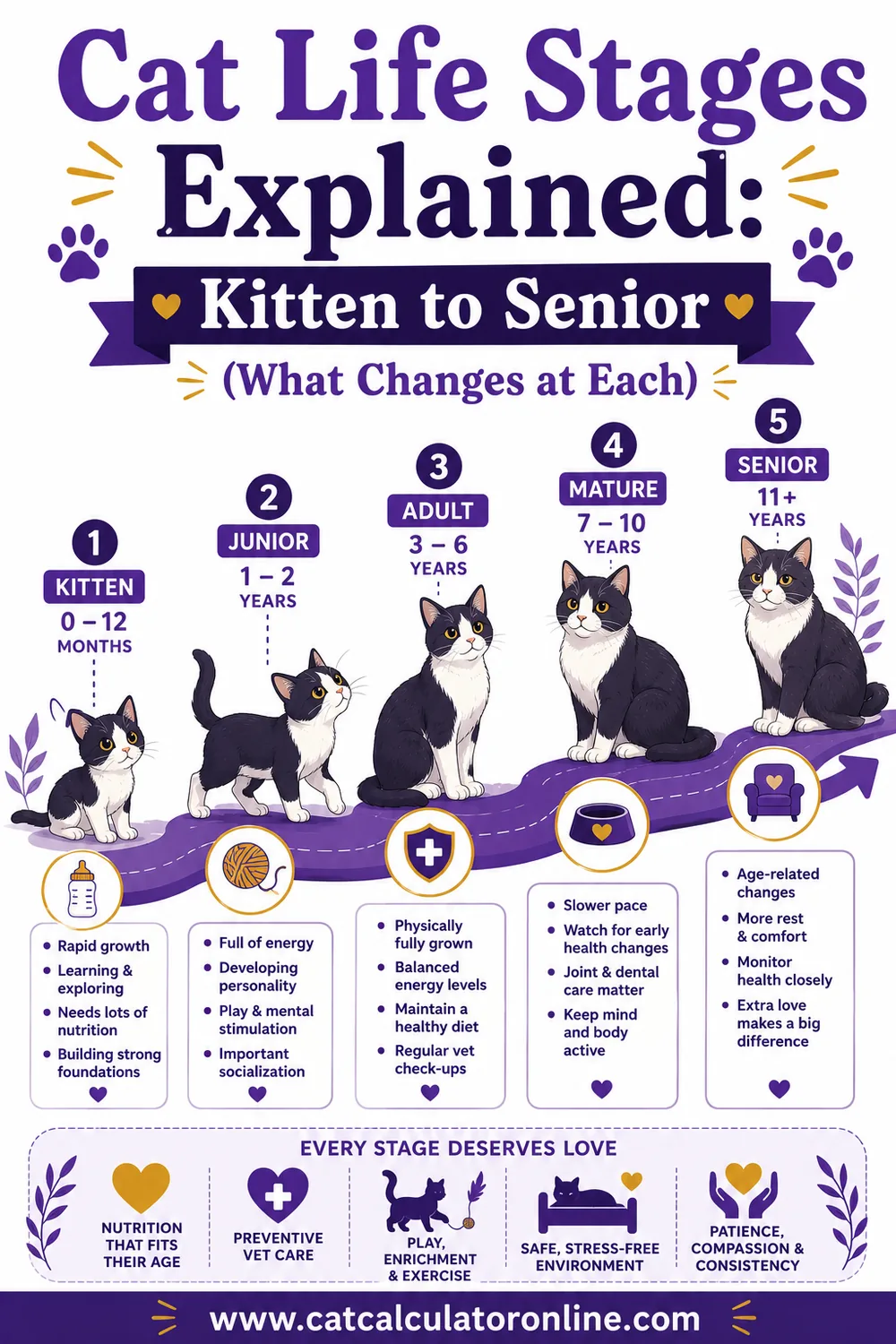
Knowing a cat's lifespan naturally raises the question of when they count as old. Here's the standard framework most vets use:
| Life stage | Age | What it means |
|---|---|---|
| Kitten | 0–1 year | Rapid growth and development |
| Young adult | 1–6 years | Physical prime |
| Mature adult | 7–10 years | Feline middle age |
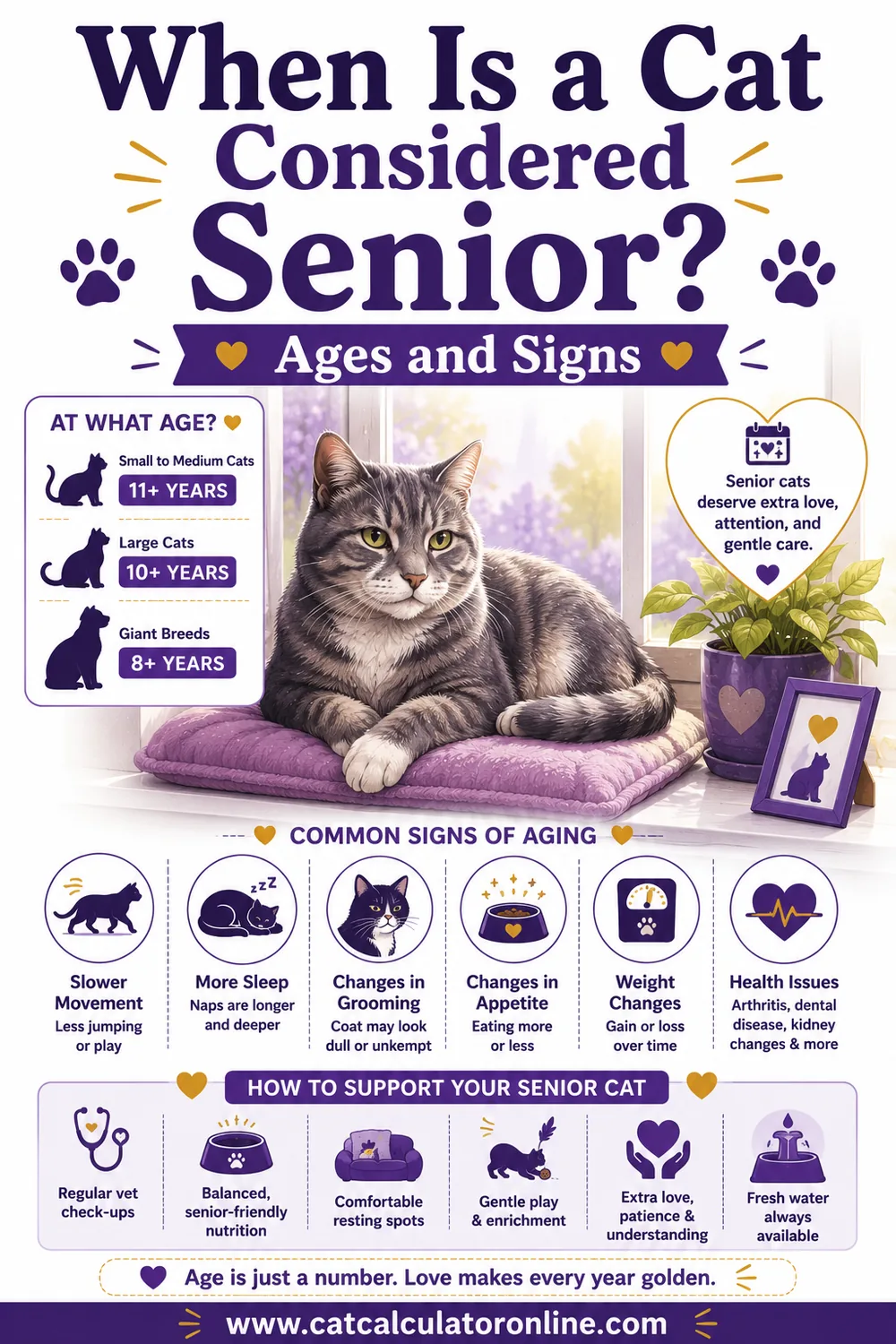
| Senior | 10+ years | Older cat; twice-yearly vet visits |
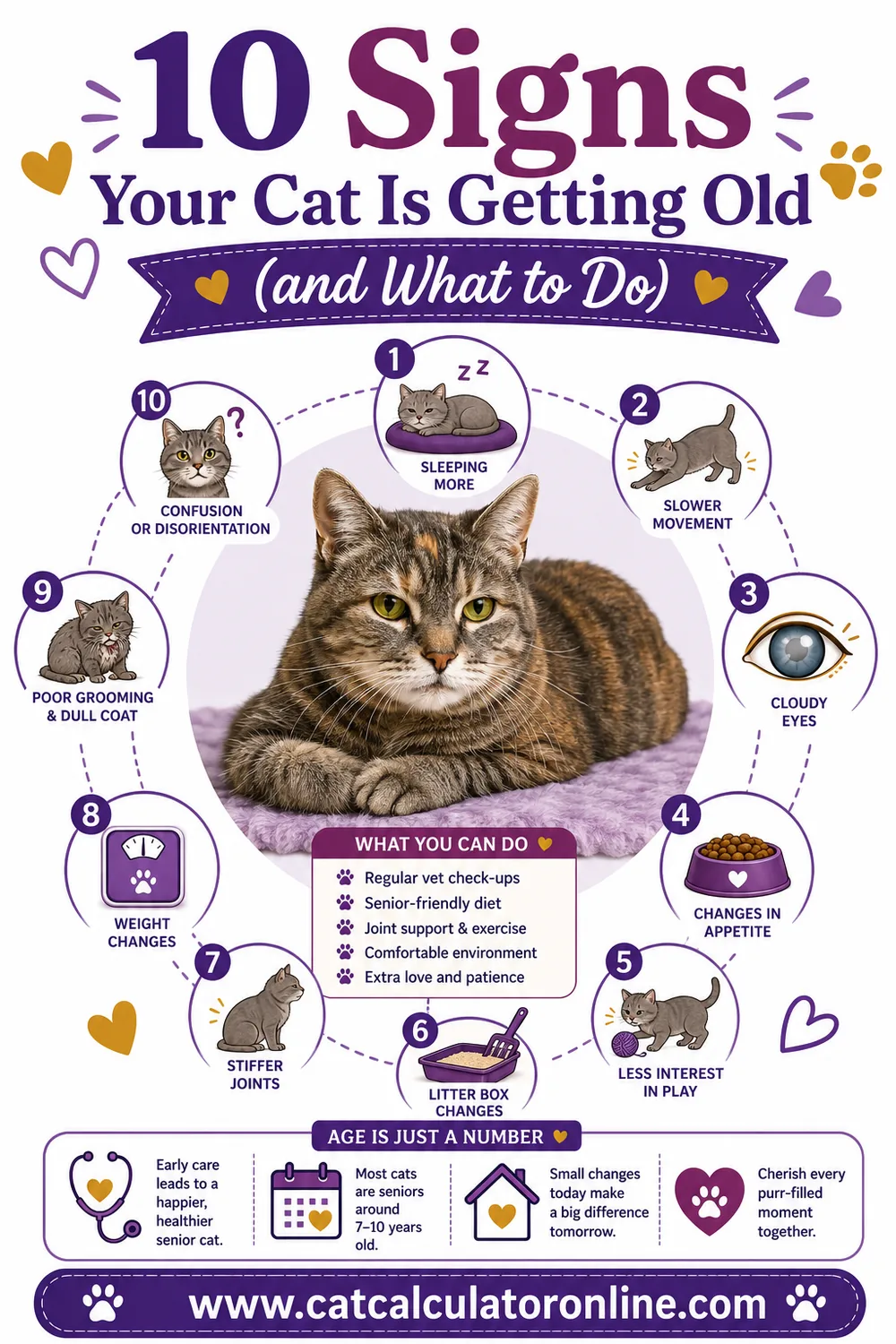
A cat officially becomes a "senior" at around 10 years old, and some vets add a "geriatric" label at about 15 and up. Because so many cats live well into their late teens, the senior stage can span a decade or more — often some of the closest, sweetest years you'll share. For more on that transition, see when a cat is considered senior and the subtle signs your cat is getting old.
FAQ
How long do cats live on average?
Most pet cats live 13 to 17 years, and many reach 20 or beyond with good care. Indoor cats average 13–17 years; outdoor cats average just 2–5.
What is the longest a cat has ever lived?
The verified record holder, a Texas cat named Creme Puff, lived to 38 years. That's exceptional — but reaching the late teens and early twenties is realistic for a well-cared-for indoor cat.
Do indoor cats live longer than outdoor cats?
Yes, and dramatically so. Indoor cats live two to three times longer on average, mainly because they avoid cars, fights, predators, and contagious diseases. See our guide on how long indoor cats live.
Which cat breeds live the longest?
Siamese, Burmese, and Russian Blues are among the longest-lived, often reaching their late teens or twenties. Mixed-breed domestic shorthairs also do well, typically 13–17 years indoors.
Does a cat's size affect how long it lives?
Not much. Unlike dogs, cats age fairly uniformly regardless of size or breed. A large Maine Coon and a small shorthair reach old age on roughly the same timeline.
What can I do to help my cat live longer?
Keep them indoors, maintain a healthy weight, feed for their life stage, stay current on vet and dental care, spay or neuter, and enrich their environment. Those habits stack real years onto a cat's life.
The Bottom Line
Cats live 13 to 17 years on average, with 20-plus well within reach for a well-cared-for indoor cat — while full-time outdoor cats average only 2 to 5. Breed shifts the odds a little, but lifestyle, weight, dental care, and regular vet visits do most of the work. Keep your cat inside and healthy, and you're playing for the high end of that range.
Curious how old your cat is in human years today? Try our free cat age calculator — enter your cat's age and get the answer in one tap.