When Is a Cat Considered Senior? (The Age and What Changes)
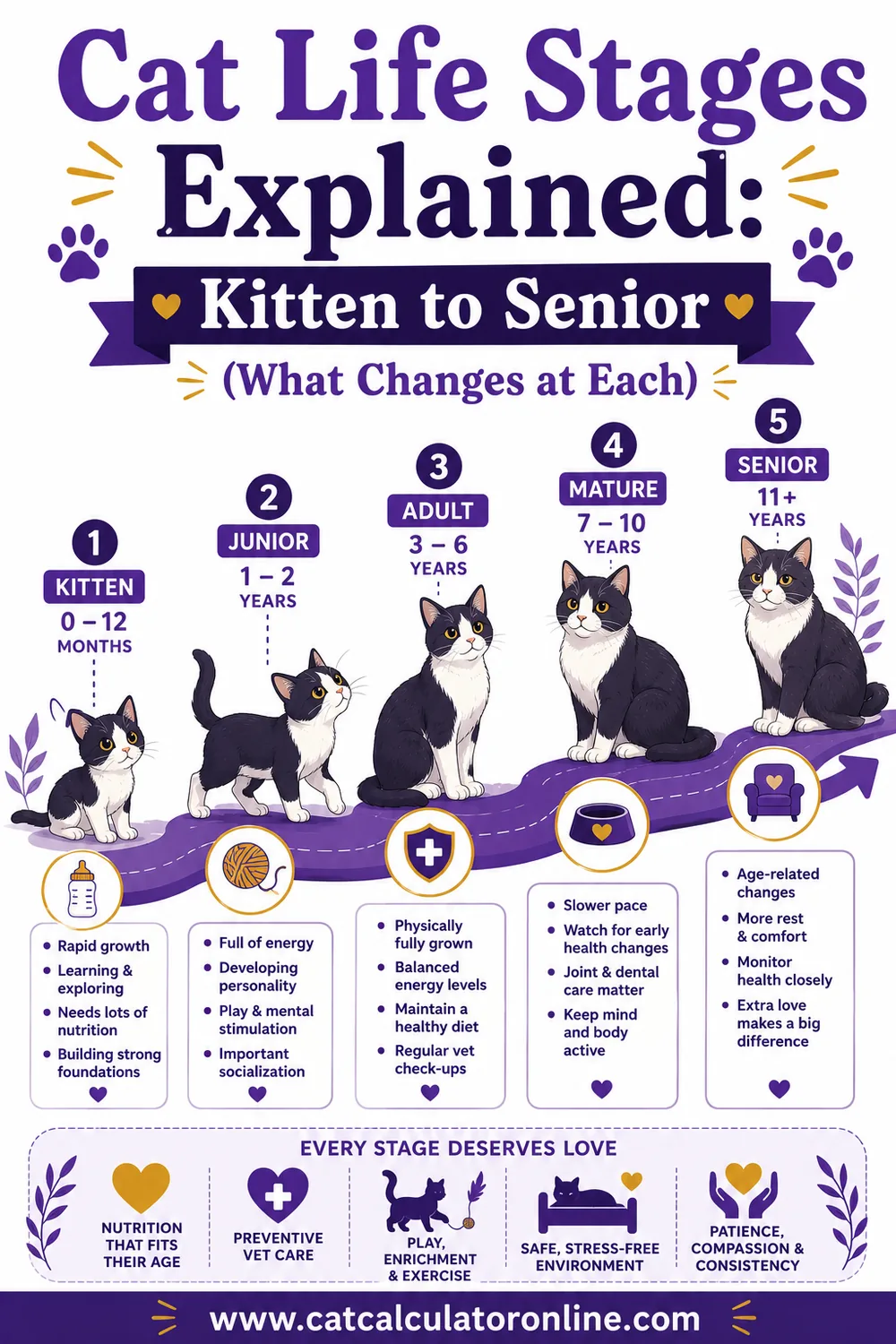
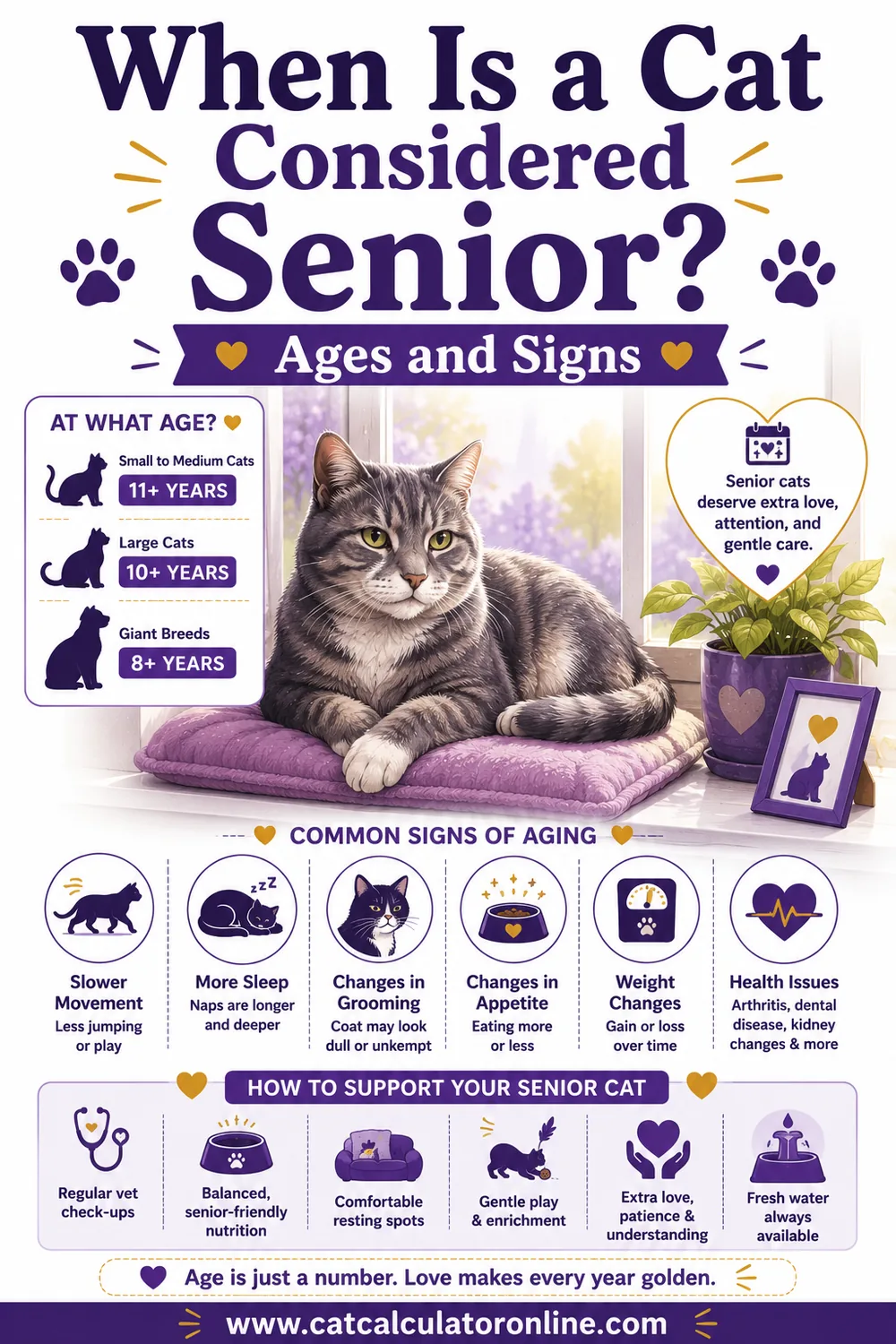
A cat is generally considered senior at about 10 years old. The stage just before that — ages 7 to 10 — is called "mature adult," feline middle age, and many vets add a "geriatric" label once a cat passes 15. So your cat crosses into senior territory around its tenth birthday, though good care means that stage can happily stretch another decade or more.
Curious where your cat lands right now? Our free cat age calculator shows your cat's age in human years and life stage in one tap. Below, we'll cover exactly when a cat becomes a senior, what changes in its body and behavior, and how to adjust care so those senior years stay comfortable.
🐱 Is your cat a senior yet? Tap an age
See your cat’s life stage and human-year age:
Tap an age above to see the stage.
The Short Answer: Senior at 10
The American Animal Hospital Association (AAHA) and the American Association of Feline Practitioners set the feline life-stage framework most vets follow. Under those guidelines, a cat is a senior at 10 years and older. Here's how the labels line up:
| Life stage | Age range | Human-years equivalent | What it means |
|---|---|---|---|
| Young adult | 1–6 years | 15–40 | Prime of life |
| Mature adult | 7–10 years | 44–56 | Feline middle age |
| Senior | 10+ years | 56+ | Officially "senior" |
| Geriatric | 15+ years | 76+ | Advanced old age (some vets) |
A quick note on that human-years math: a cat's first year is worth about 15 human years, the second adds around 9 more (so a 2-year-old is roughly 24), and every year after that adds about 4. That's why a 10-year-old cat lands near 56 in human terms — squarely retirement age. You can see the full breakdown in our cat life stages guide.
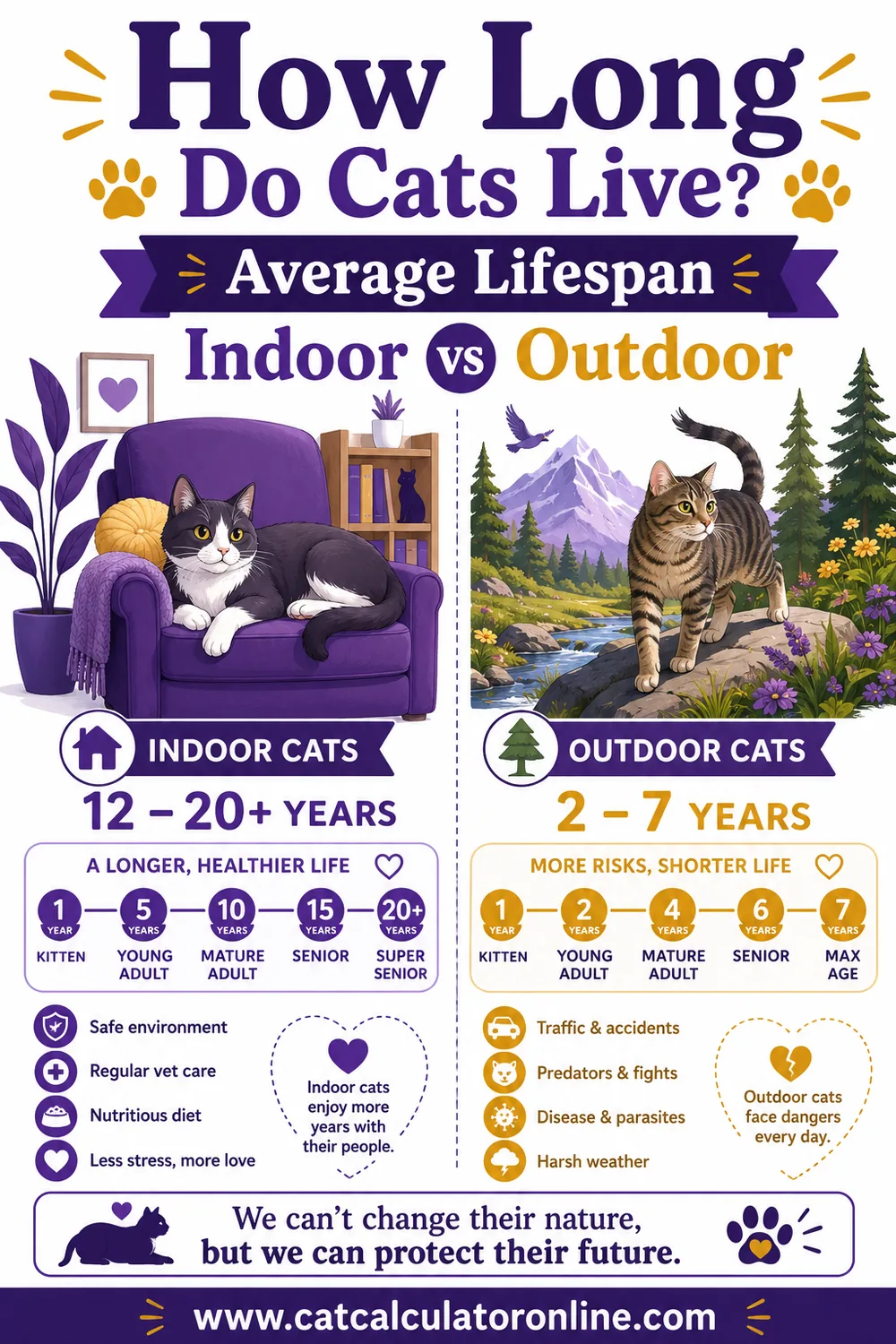
Unlike dogs, cats age fairly uniformly. A cat's breed and size barely shift the timeline, so a 10-year-old Maine Coon and a 10-year-old domestic shorthair are both seniors. What matters far more is lifestyle — especially whether a cat lives indoors or out, which you can read about in how long cats live.
Mature vs. Senior vs. Geriatric
People often use "senior" as a catch-all for any older cat, but the three labels mean slightly different things, and the distinction is useful.
- Mature adult (7–10): Think of this as middle age. Your cat still looks and acts young, but changes are starting under the surface. This is the stage to get ahead of aging, not the stage of old age itself.
- Senior (10+): The official senior label. Aging becomes more visible, and preventive care ramps up. Most cats spend many years here.
- Geriatric (15+): Not every vet uses this term, but it flags advanced old age, when cats often need the most attentive, gentle care. Plenty of cats reach it — indoor cats commonly live to their late teens.
Don't panic when your cat turns 10. "Senior" is a care category, not a diagnosis. It's a signal to adjust a few habits, not a countdown.
Why the Senior Label Matters
The point of calling a cat "senior" isn't to make you sad — it's to change how you care for them before problems appear. Cats are famously good at hiding illness, a survival instinct left over from their wild ancestors. A senior cat can feel unwell for months while still purring on your lap.
That's why the senior label is really a prompt to watch more closely and see the vet more often. The conditions that show up with age — kidney disease, hyperthyroidism, arthritis, dental disease, diabetes, and high blood pressure — are far more manageable when caught early. Catching them early is the whole game, and it's mostly about timing your vet visits right.
What Changes When a Cat Becomes Senior
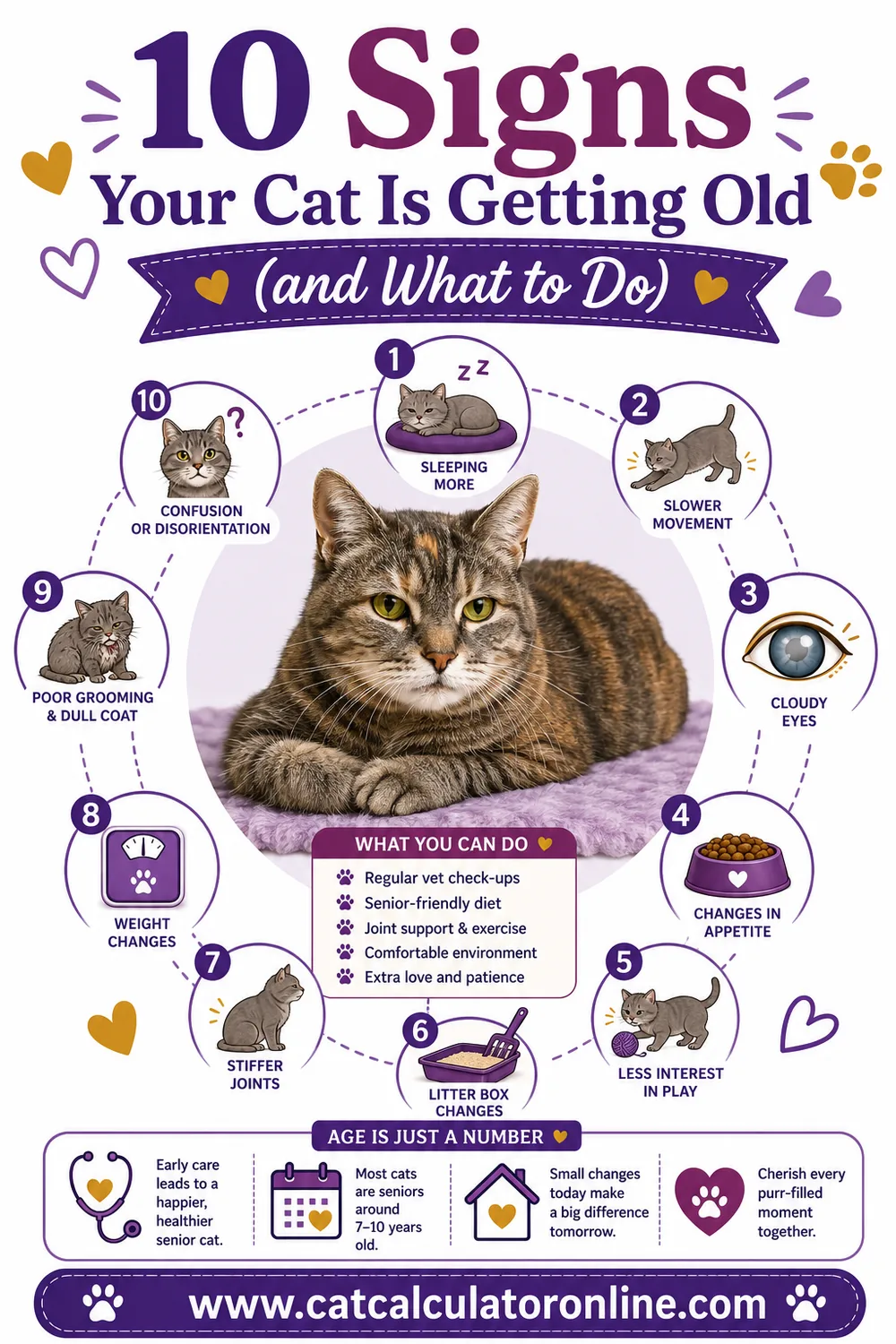
Aging is gradual, but a handful of shifts tend to appear once a cat is in its senior years. None are guaranteed, and none should be brushed off as "just old age."
Physical changes
- Weight shifts. Some cats lose muscle and weight; unexplained loss can flag kidney disease or an overactive thyroid.
- Stiffer movement. Arthritis is common and often silent — you'll see hesitation to jump or stiffness after a nap rather than an obvious limp.
- Coat and grooming changes. Fur may look duller or a bit unkempt as grooming slows, especially in long-haired cats.
- Cloudier eyes and fading senses. Vision, hearing, and smell can all dip somewhat.
- Dental disease. Increasingly common, and a frequent reason older cats change how they eat.
Behavioral changes
- More sleep, less play. Seniors nap more and pounce less, though most still enjoy gentle games.
- Personality shifts. Some cats get clingier and sweeter; others get grumpier when aches make handling less welcome.
- Confusion or nighttime yowling. A few older cats develop feline cognitive dysfunction, a dementia-like condition worth a vet conversation.
For a full checklist of what to watch for and when to worry, see our guide on signs your cat is getting old.
Why Twice-Yearly Vet Visits Matter for Seniors
If you take one thing from this article, make it this: senior cats should see the vet every six months, not once a year.
Here's the reasoning. Cats age far faster than we do. Remember that after year two, each calendar year adds about four human years. So a full year between checkups is like a person in their sixties or seventies going seven-plus "human years" between doctor visits — and doing it while hiding every symptom. A lot can develop in that gap.
Twice-yearly visits usually include:
- A full physical exam to catch weight changes, dental disease, lumps, or pain.
- Bloodwork and urine testing that can reveal kidney disease, thyroid problems, and diabetes long before you'd notice symptoms at home.
- Blood pressure checks, since high blood pressure is common in older cats and can quietly damage eyes and kidneys.
Early detection genuinely extends good years. Conditions like kidney disease and hyperthyroidism are manageable for a long time when found early, and miserable when found late. Your vet is the one who decides what testing your cat needs — your job is simply to get them in the door twice a year.
How to Adjust Senior Cat Care
Beyond the vet schedule, a few home adjustments make senior life easier and let you spot trouble sooner.
Diet
Some senior cats do better on food formulated for their stage, and some need a prescription diet for a specific condition. But this isn't one-size-fits-all — an overweight senior and an underweight one need opposite things. Ask your vet before switching foods rather than guessing.
Litter access
Stiff joints make a tall litter box a real barrier. Switch to a box with low sides, and if your home has stairs, add a box on each floor so your cat never has to climb to go. Accidents outside the box are often a mobility or medical issue, not bad behavior.
Warmth and comfort
Older cats feel the cold more and love a warm, soft spot. Add cozy bedding in their favorite napping places, ideally somewhere easy to reach without a big jump. Ramps or pet steps up to a preferred perch or windowsill spare achy joints.
Monitoring at home
You see your cat every day, so you're the early-warning system. Keep a loose eye on:
- Eating and drinking — increased thirst or appetite changes are important flags.
- Litter box output — more or less urine, or straining, is worth a call.
- Weight — weigh monthly if you can (weigh yourself holding the cat, then subtract).
- Grooming and mobility — mats, or new reluctance to jump, signal it's time to check in.
A quick senior-care checklist
| Care area | Senior adjustment |
|---|---|
| Vet visits | Every 6 months, with bloodwork |
| Diet | Vet-guided; watch weight closely |
| Litter box | Low sides; one per floor |
| Comfort | Warm bedding, ramps to perches |
| Monitoring | Track eating, drinking, weight, mobility |
None of this has to be expensive or elaborate. Small tweaks, done consistently, are what keep a senior cat comfortable.
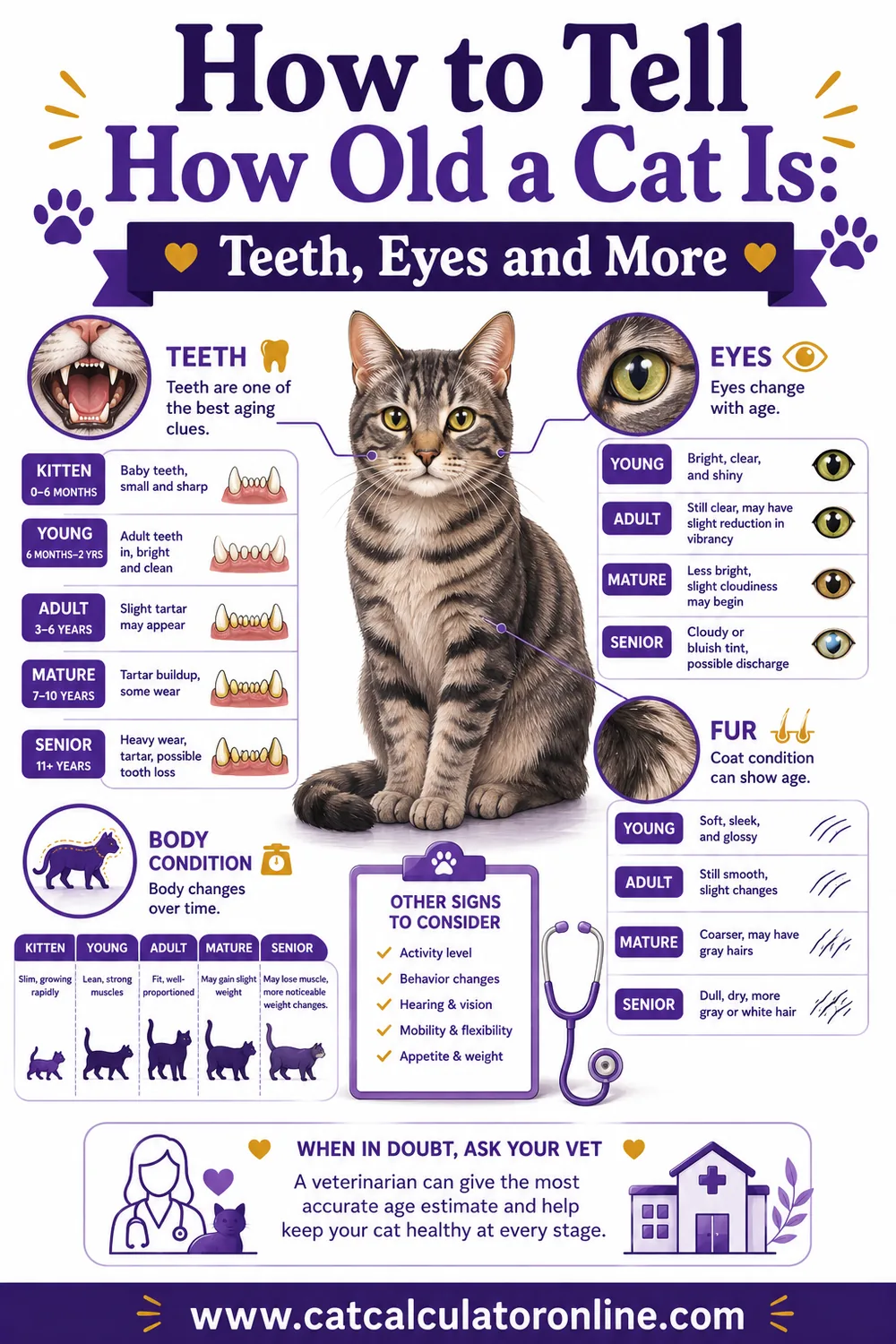
Can You Tell If an Older Cat Is a Senior?
If you adopted an adult cat and don't know its birthday, you can still estimate the stage. Vets read age from teeth (tartar and wear), eye clarity, coat condition, and muscle tone. A cat with heavy dental tartar, a slightly cloudy lens, thinning muscle over the spine, and a coarser coat is likely in senior territory. Our guide on how to tell a cat's age walks through the cues owners can spot at home — though a vet's estimate is always more reliable than a guess.
FAQ
At what age is a cat considered senior?
About 10 years old. Cats aged 7 to 10 are "mature adults" (feline middle age), and some vets label cats 15 and older as "geriatric." The senior label is a care category, not a health verdict.
Is a 7-year-old cat a senior?
Not quite — a 7-year-old cat is a "mature adult," roughly 44 in human years. It's the stage just before senior and a smart time to start twice-yearly vet visits and watch for early aging signs.
How old is a 10-year-old cat in human years?
Around 56 in human years, using the standard method: 15 for year one, 24 by year two, then about 4 human years per year after. Try our cat age calculator for your cat's exact number.
Why do senior cats need vet visits every six months?
Cats age about four human years for every calendar year and hide illness well. Six-month checkups with bloodwork catch kidney disease, thyroid problems, and diabetes early, when they're most treatable. Your vet decides the right testing.
Do indoor and outdoor cats become seniors at the same age?
The age label is the same, but lifestyle changes the odds. Indoor cats often reach and comfortably pass 10, while outdoor cats face far higher risks. See how long cats live for the difference.
What's the difference between senior and geriatric cats?
"Senior" starts around 10; "geriatric" flags advanced old age at about 15 and up. Geriatric cats usually need the most attentive care, but many cats reach that stage and live well into their late teens or beyond.
The Bottom Line
A cat is considered senior at about 10 years old, with "mature adult" covering ages 7 to 10 and "geriatric" reserved for 15 and up. The label isn't a warning — it's a cue to shift a few habits: move to twice-yearly vet visits with bloodwork, make litter and perches easy to reach, keep your cat warm and comfortable, and watch eating, drinking, and weight. Do that, and the senior years can be some of the best you'll share.
Not sure which stage your cat is in? Our free cat age calculator shows your cat's age in human years and life stage in a single tap — try it now.