12 Signs Your Cat Is Getting Old (And When to See the Vet)
The most common signs your cat is getting old are sleeping more, moving less (especially reluctance to jump), gradual weight change, increased thirst, a duller coat with less grooming, cloudier eyes, and shifts in behavior or vocalization. The tricky part is that cats hide illness well, so "just getting old" and "quietly getting sick" can look identical — which is why several of these signs are worth a vet visit rather than a shrug.
Wondering whether your cat has crossed into senior territory? Our free cat age calculator shows your cat's age in human years and life stage in one tap. Below, we'll walk through the 12 signs owners notice most, split into physical and behavioral changes — and for each one, exactly when it's normal aging versus when to call your vet.
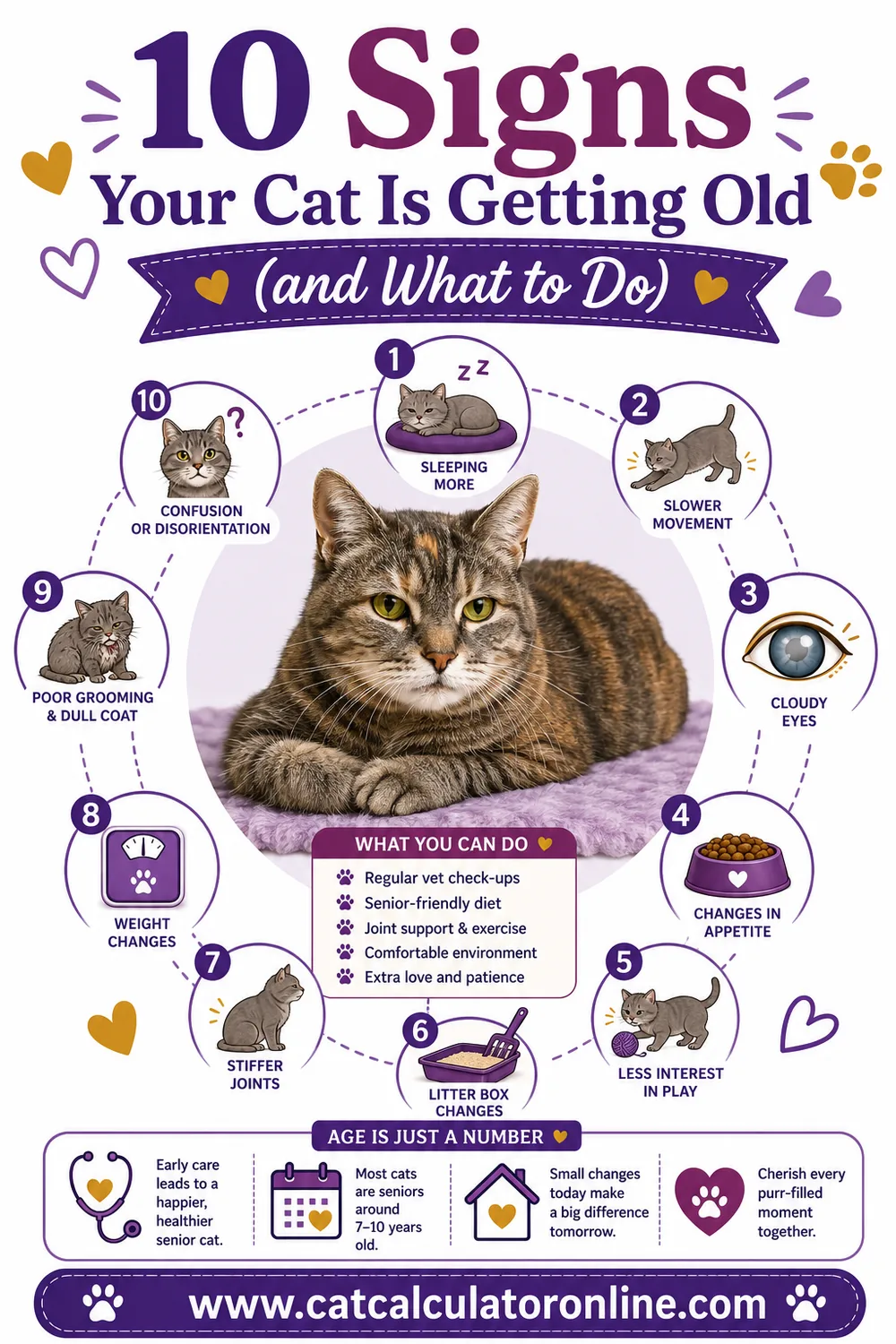
🐱 Aging signs checklist — tap the ones you see
Check each sign you’ve noticed in your cat:
Noticed a few? Any new or worsening sign is worth a vet check.
First, What Counts as "Old" for a Cat?
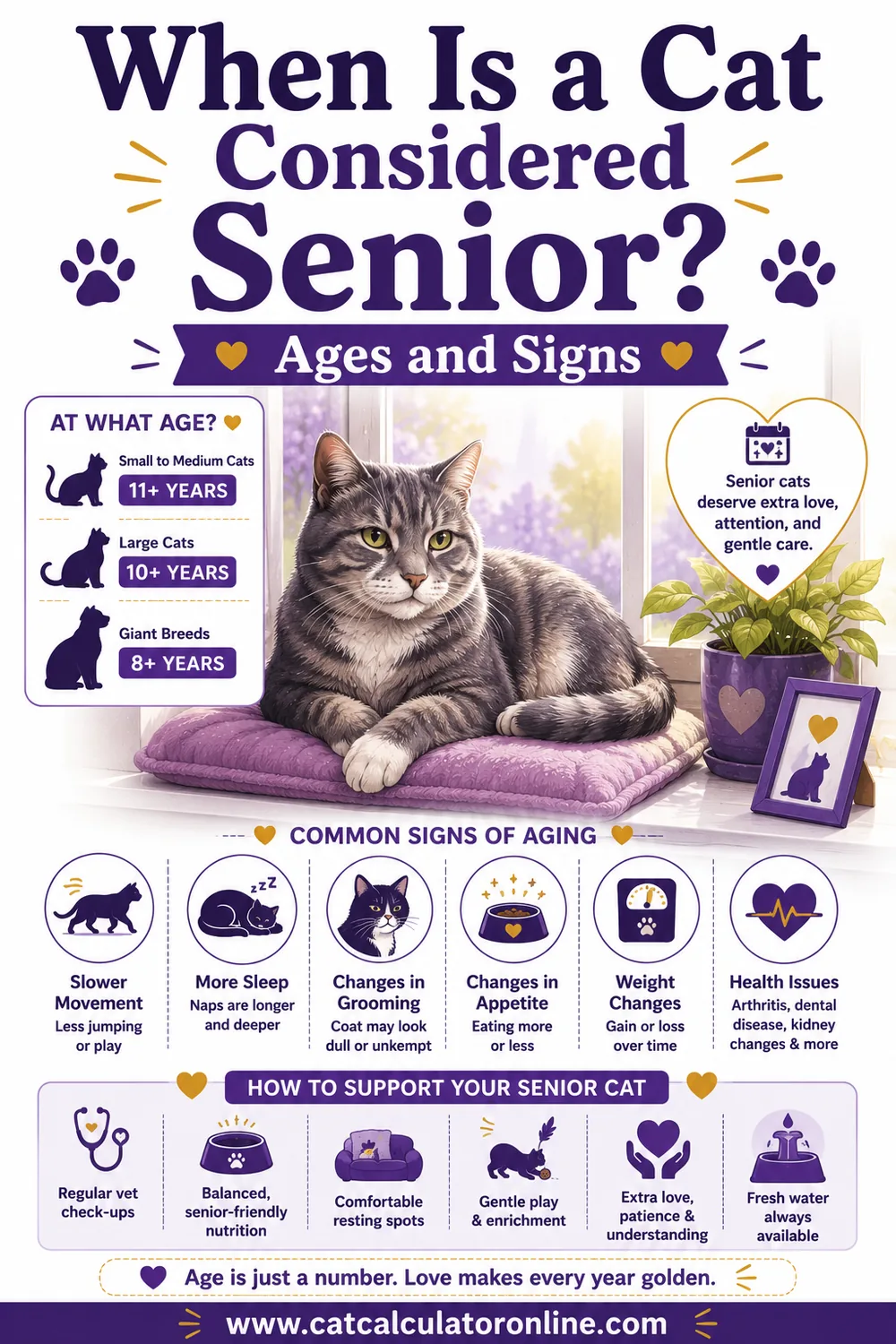
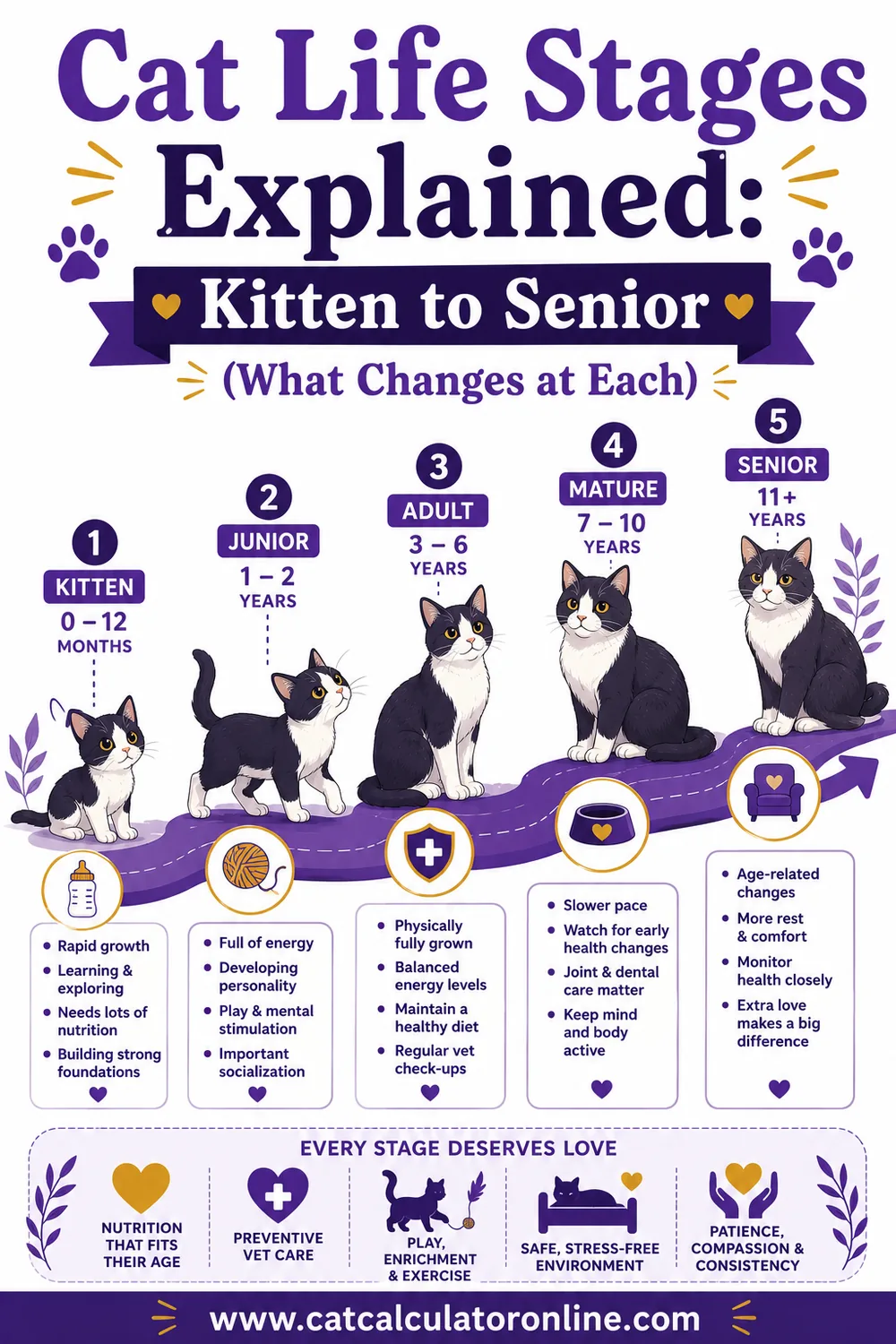
Cats are considered senior at about 10 years old, with "mature adult" covering ages 7 to 10 and "geriatric" reserved for 15 and up. In human terms, a 10-year-old cat is around 56, a 15-year-old is about 76, and a 20-year-old is near 96. So the signs below tend to appear from about age 7 onward and become more noticeable through the teens. For the full picture of when this stage begins, see when a cat is considered senior.
One theme runs through everything that follows: cats are masters at masking illness. In the wild, showing weakness is dangerous, and house cats kept the instinct. That's the single biggest reason to take aging signs seriously — by the time a cat clearly looks sick, a condition may be well along. Noticing the small stuff early is your superpower.
Physical Signs Your Cat Is Getting Old
1. Sleeping more than usual
Cats already sleep a lot, but older cats often push it further — longer naps, deeper sleep, less time up and active. On its own, more sleep is usually normal aging. See your vet if the extra sleeping comes with hiding, disinterest in food, or a cat that seems hard to rouse or genuinely lethargic rather than just cozy. A sudden jump in sleepiness is more concerning than a slow, steady drift.
2. Stiffness and less jumping (arthritis)
This is one of the most common — and most overlooked — signs of aging. Arthritis affects a large share of senior cats, but they rarely limp the way dogs do. Instead you'll notice they hesitate before jumping, take the stairs to a spot they used to leap to, miss a landing now and then, or seem stiff getting up after a nap. Some stop using high perches or the litter box if it's hard to climb into.
See your vet if you notice reluctance to jump, stiffness, or reduced activity. Feline arthritis is very treatable, and cats can't tell you they hurt — so pain often goes unmanaged for years simply because owners assume "she's just slowing down." A vet can confirm it and discuss safe pain relief. Never give human painkillers; many, including ibuprofen and acetaminophen, are toxic to cats.
3. Weight change (loss or gain)
Weight is one of the most telling health signals in an older cat, in both directions.
- Weight loss in a senior cat is never something to ignore. Gradual muscle and weight loss can be normal aging, but it can also flag kidney disease, hyperthyroidism (an overactive thyroid), diabetes, dental pain, or other conditions — all common in older cats.
- Weight gain stresses joints and raises the risk of diabetes.
Because cats are small, a loss that looks tiny on the scale is actually a big percentage of body weight. See your vet if you notice steady weight loss or gain, even without other symptoms — it's often the earliest flag of a treatable condition. Weighing your cat monthly at home (weigh yourself holding the cat, then subtract) helps you catch trends you'd otherwise miss.
4. Increased thirst and urination
If your older cat is emptying the water bowl faster, hanging around the tap, or you're scooping bigger or more frequent clumps from the litter box, pay attention. Increased thirst and urination are classic early signs of two very common senior conditions: chronic kidney disease and hyperthyroidism, and sometimes diabetes.
See your vet if you notice a real uptick in drinking or urinating. This is one of the most important senior signs to act on, because these conditions are far more manageable when caught early. A simple blood and urine test can sort it out.
5. Cloudy or changed eyes
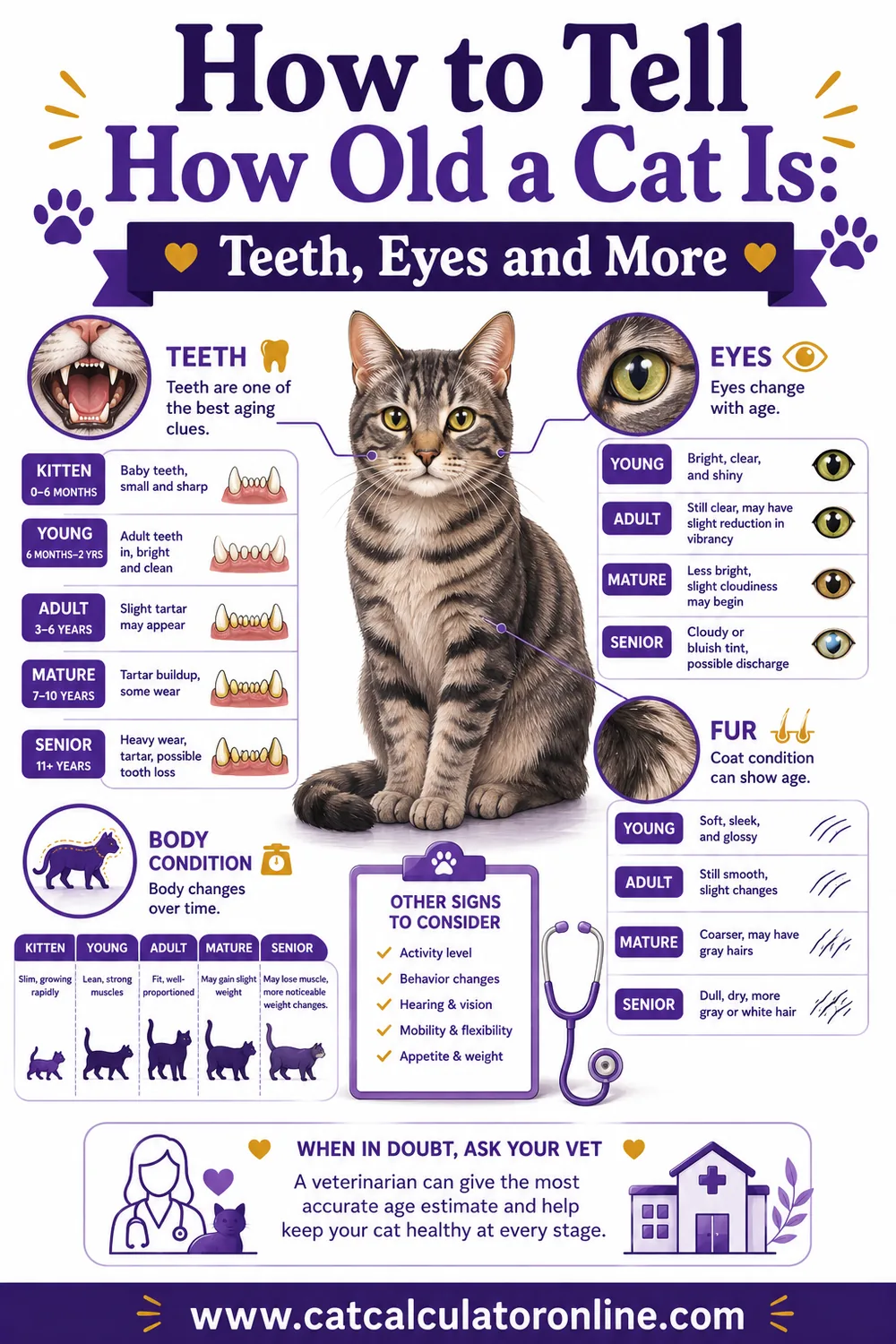
A faint bluish, hazy look to the lens is common in older cats and often just normal age-related change (a condition called lenticular sclerosis) that doesn't much affect vision. But cloudy eyes can also mean cataracts or other problems, and sudden changes matter. See your vet if the cloudiness appears suddenly, looks white or dense, comes with redness, squinting, or discharge, or if your cat starts bumping into things. Vision loss can also be a sign of high blood pressure, which is common and treatable in seniors.
6. Duller coat and less grooming
A well-groomed coat takes energy and flexibility. As cats age, you may see a coat that looks duller, coarser, or a little unkempt, with mats forming (especially in long-haired cats) where an arthritic cat can no longer twist to reach. Some older cats also groom too much in one spot, which can signal pain or skin irritation. See your vet if grooming drops off noticeably, mats appear, or there are bald patches or sores — reduced grooming often ties back to arthritis, dental pain, or feeling unwell. Meanwhile, gently helping with brushing keeps your cat comfortable.
7. Dental issues and bad breath
Dental disease is extremely common in older cats and genuinely painful. Signs include bad breath, drooling, pawing at the mouth, dropping food, chewing on one side, or eating less. A cat with a sore mouth may also stop grooming. See your vet if you notice bad breath, red or bleeding gums, or any change in how your cat eats. Dental problems are fixable, and clearing them up often gives an "old, picky" cat its appetite and energy back.
8. Thicker, overgrown claws
Older cats scratch less and shed claw sheaths less effectively, so their nails can grow thick, brittle, and overgrown — sometimes curling into the paw pad. See your vet or groomer if the claws look overgrown, and check them regularly. This one's easy to miss and easy to fix with routine trims.
Behavioral Signs Your Cat Is Getting Old
9. Less interest in play
A gentle drop in playfulness is normal — seniors nap more and pounce less. But a cat that suddenly wants nothing to do with favorite games, or withdraws and hides, may be telling you something hurts or feels wrong. See your vet if the change is sudden or comes with hiding, since cats often retreat when they don't feel well rather than showing obvious distress. Most seniors still enjoy shorter, softer play sessions, so keep offering.
10. Changes in vocalization
Some older cats get noticeably more vocal, especially at night. Increased or louder meowing — particularly loud yowling in the small hours — can stem from fading hearing or vision, high blood pressure, an overactive thyroid, or feline cognitive dysfunction. See your vet if your cat's vocalizing changes markedly, as several treatable conditions can be behind it. It's rarely "just being noisy."
11. Confusion or disorientation (cognitive changes)
A number of senior cats develop feline cognitive dysfunction, a dementia-like condition. Signs include staring at walls, getting "stuck" in corners, seeming lost in familiar rooms, disrupted sleep, forgetting the litter box, or increased nighttime yowling. See your vet if you notice confusion or disorientation — some causes are manageable, and your vet can help rule out other conditions and suggest ways to support an aging brain.
12. Litter box changes
Missing the box, straining, or going more or less often are all worth noticing. Sometimes it's mobility (a high-sided box is hard for stiff joints); sometimes it's medical (kidney disease, diabetes, or urinary issues change urination). See your vet if litter box habits change, and in the meantime switch to a low-sided box and add one on each floor so access is never the problem. Litter box "accidents" in an older cat are almost always a message, not misbehavior.
Quick Reference: Sign, Possible Cause, and When to Act
| Sign | Could be normal aging | Could also signal | When to see the vet |
|---|---|---|---|
| Sleeping more | Yes | Illness, pain | If sudden, or with hiding/lethargy |
| Stiffness, less jumping | Somewhat | Arthritis | Any reluctance to jump or stiffness |
| Weight loss | Sometimes | Kidney disease, thyroid, diabetes | Any steady, unexplained loss |
| Increased thirst/urination | Rarely | Kidney disease, thyroid, diabetes | As soon as you notice it |
| Cloudy eyes | Often (mild haze) | Cataracts, high blood pressure | Sudden, white, or with squinting |
| Duller coat, less grooming | Somewhat | Arthritis, dental pain, illness | Noticeable drop-off or mats/sores |
| Bad breath, eating changes | No | Dental disease | Any bad breath or eating change |
| Overgrown claws | Yes | — | If overgrown or curling into pad |
| Less play | Yes | Pain, illness | If sudden or with hiding |
| More/louder vocalizing | Sometimes | Thyroid, blood pressure, cognitive | Marked change, especially at night |
| Confusion, disorientation | No | Cognitive dysfunction | Any confusion or getting "lost" |
| Litter box changes | No | Mobility or medical issue | Any change in habits |
Use this as a starting point, not a diagnosis. Your vet is the one who sorts "normal old cat" from "treatable condition," and the earlier they look, the better the odds.
Why Early Vet Visits Matter So Much
Notice how many signs above trace back to the same short list of conditions: kidney disease, hyperthyroidism, diabetes, arthritis, dental disease, and high blood pressure. Here's the good news — every one of those is far more manageable when caught early, and several can be controlled for years.
That's why vets recommend twice-yearly checkups for senior cats, with bloodwork, urine testing, and a blood pressure check. Because cats age roughly four human years per calendar year and hide symptoms so well, a lot can develop between annual visits. Six-month exams close that gap and catch trouble while it's still small. Your vet decides which tests your cat needs — your job is to bring them in and share what you've been noticing at home.
If you're not sure how old your cat actually is — say you adopted an adult — our guide on how to tell a cat's age covers the teeth, eye, coat, and muscle cues that estimate it. And for the bigger picture of what each life stage brings, see cat life stages explained.
How to Help Your Aging Cat Feel Good
Spotting the signs is step one. A few simple changes keep a senior cat comfortable:
- Make everything reachable. Low-sided litter boxes, ramps or steps to favorite perches, and food and water that don't require a jump.
- Keep them warm. Older cats feel the cold; add soft, cozy bedding in easy-to-reach spots.
- Help with grooming. Gentle brushing prevents mats and gives you a weekly once-over for lumps, sores, or weight change.
- Watch the basics. Track eating, drinking, litter output, and weight — you're the early-warning system between vet visits.
- Keep play gentle. Shorter, softer sessions maintain muscle and keep an older mind engaged.
None of this is complicated or costly. Small, steady adjustments are what turn "old age" into comfortable golden years.
FAQ
What are the first signs a cat is getting old?
Usually subtle: sleeping a bit more, hesitating to jump, a slightly duller coat, and small weight changes. Because cats hide illness, these quiet early signs matter — several are worth a vet check rather than assuming it's "just age."
At what age do cats start showing signs of aging?
Cats are "mature" from about 7 and "senior" from 10, so aging signs often begin around age 7 and grow more noticeable through the teens. See when a cat is considered senior for the full stage breakdown.
Is it normal for an old cat to lose weight?
Some gradual muscle loss can be normal, but weight loss in a senior cat should never be ignored. It's a common early sign of kidney disease, an overactive thyroid, or diabetes — all more manageable when caught early. Any steady loss warrants a vet visit.
Why is my old cat meowing so much, especially at night?
Increased or nighttime yowling can come from fading senses, high blood pressure, thyroid problems, or feline cognitive dysfunction. Because several causes are treatable, a marked change in vocalizing is worth a vet visit rather than tuning it out.
How often should a senior cat see the vet?
Every six months, ideally with bloodwork, urine testing, and a blood pressure check. Cats age fast and hide illness, so twice-yearly exams catch the common senior conditions early, when they respond best to treatment.
Can I give my old cat pain medicine for stiffness?
Never give human painkillers — many, including ibuprofen and acetaminophen, are toxic and can be fatal to cats. If your cat seems stiff or sore, see your vet, who can confirm arthritis and prescribe safe, cat-appropriate pain relief.
The Bottom Line
The signs your cat is getting old — more sleep, stiffness and less jumping, weight change, increased thirst, cloudy eyes, a duller coat, dental trouble, and shifts in play, voice, or awareness — are worth noticing precisely because cats are so good at hiding illness. Many of these signs point to conditions that are very treatable when caught early. So treat each one as a prompt: adjust the home for comfort, watch the daily basics, and lean on twice-yearly vet visits to sort normal aging from something fixable.
Not sure whether your cat has reached its senior years? Our free cat age calculator shows your cat's age in human years and life stage in a single tap — try it now.