Urinary Blockage in Cats
This is the one condition on this site that needs saying first and plainly: a cat that is straining in the litter tray and producing little or no urine is a medical emergency, and needs a vet the same day — not tomorrow morning. A blocked cat can become critically ill within 24 to 48 hours. It affects male cats far more often than females because of their narrower urethra, and the classic picture is a cat going in and out of the tray repeatedly, crying, and producing nothing. Treatment runs $1,500 to $3,000, which the cat cost calculator can help you plan for — but the urgent part is recognizing it fast.

What Is a Urinary Blockage?
The urethra is the tube carrying urine from the bladder out of the body. A blockage means something is obstructing it — and urine can no longer leave.
What causes the obstruction varies. It might be a plug of crystals, mucus and cells; small bladder stones; inflammation and swelling of the urethra itself; or a spasm of the muscle. Often it's a combination.
Whatever the cause, the consequence is the same and it escalates fast. The bladder keeps filling with nowhere to go. Pressure builds back toward the kidneys. Waste products the kidneys would normally clear — including potassium — accumulate in the blood, and rising potassium affects the heart rhythm directly.
That's why this becomes life-threatening so quickly. It isn't discomfort that gradually worsens; it's a system failure with a short fuse. Most cats become critically unwell within 24 to 48 hours of a complete blockage, and some sooner.
It sits within a broader group of problems vets call feline lower urinary tract disease, or FLUTD, which also includes cystitis and infections. Those are painful but not immediately dangerous. A full obstruction is a different category entirely.
Why Are Male Cats at Higher Risk?
Anatomy, essentially. A male cat's urethra is longer and considerably narrower than a female's, particularly toward the tip. A plug of crystals and debris that would pass harmlessly in a female cat can lodge and obstruct in a male.
That doesn't mean females are unaffected — female cats get cystitis, crystals and infections at similar rates. They simply obstruct far less often.
Other factors that raise the risk:
- Being neutered, which is associated with a slightly narrower urethra
- Being overweight, which is linked to urinary problems generally
- Living indoors, partly through lower activity and less water intake
- A dry-food-only diet, because it contributes less moisture
- Stress, which is a genuine and underappreciated factor in feline urinary disease
- Previous episodes — cats that have blocked once are meaningfully more likely to block again
- Middle age, though it can happen at any age
If you have a neutered indoor male cat eating mostly dry food, that's the classic profile — not a reason to worry daily, but a strong reason to know the signs.
What Are the Signs?
Learn these. They're the most useful thing on this page.
The early and most important ones:
- Straining in the litter tray with little or nothing coming out
- Going in and out of the tray repeatedly, sometimes producing only a drop
- Crying or howling while trying to urinate
- Licking the genital area persistently
- Urinating outside the tray, often in unusual places like a bath or sink
- Blood in the urine, or urine that looks pink
The later, more serious ones — by this stage the cat is genuinely unwell:
- Hiding, lethargy, or a hunched posture
- Vomiting
- Refusing food
- A firm, painful abdomen
- Collapse or unresponsiveness
The mistake that costs cats their lives is a reasonable one: straining is easily mistaken for constipation. A cat crouching in the tray, straining, producing nothing, looks exactly like a constipated cat.
So here's the rule worth remembering: if a cat is straining and you're not sure whether it's urine or stool, assume it's urinary and call the vet. Constipation can wait a few hours. A blockage cannot. No vet will think less of you for calling about a constipated cat.
What Should You Do If You Suspect It?
Call a vet immediately — your own practice if they're open, an emergency clinic if not. Say the words "I think my cat may be blocked", because that phrase is understood universally and will get you seen fast.
Go in. This isn't a phone-advice situation. Your cat needs to be examined; a vet can feel a distended bladder in seconds.
Don't wait to see if it resolves. It won't, and every hour matters.
Don't give any human medication. Painkillers safe for people are frequently toxic to cats, and this is one of the most common ways owners accidentally cause serious harm.
Don't try home remedies. There's nothing at home that clears an obstruction.
Take a carrier and go. If your cat is collapsed or unresponsive, that's an emergency within an emergency — go straight in and call from the car if you can.
One practical thing worth doing now, before you ever need it: find your nearest 24-hour emergency clinic and save the number. Blockages have a habit of happening at 11pm on a Sunday, and looking up an out-of-hours vet while your cat is in distress is not when you want to be doing it.
How Is It Treated?
The immediate goal is relieving the obstruction and stabilizing the cat.
Assessment and stabilisation. Bloodwork checks kidney values and potassium — the potassium level is what determines how urgent things are. Cats with dangerously high potassium need treating for that before anything else.
Sedation or anaesthesia, since the procedure would be intolerable otherwise.
Catheterisation. A narrow catheter is passed to flush out and relieve the obstruction. Once through, the bladder is emptied and flushed.
Intravenous fluids, usually for a day or more, to support the kidneys and correct the imbalances that built up.
Hospitalisation, typically two to four days, with the catheter left in place initially and urine output monitored closely.
Pain relief and medication to reduce spasm and inflammation.
Most cats recover well with prompt treatment. The main complication to be aware of is that after the catheter comes out, some cats re-block within days, which is why vets often keep them in a little longer than owners expect.
For cats that block repeatedly, a surgery called a perineal urethrostomy creates a wider opening, greatly reducing the chance of future obstruction. It's a significant operation and not a first-line option, but it can be genuinely life-changing for a cat with recurrent episodes.
What Does It Cost?
| Item | Typical cost |
|---|---|
| Emergency consultation | $100–$250 |
| Bloodwork and urinalysis | $150–$350 |
| Catheterisation and unblocking | $400–$900 |
| Hospitalisation with IV fluids, 2–4 days | $800–$1,800 |
| Medication to go home | $50–$150 |
| Typical total | $1,500–$3,000 |
| Perineal urethrostomy surgery, if needed | $1,500–$3,000 |
Two honest points.
Out-of-hours costs more — often 1.5 to 2 times daytime rates. Since blockages don't respect opening hours, this is frequently an emergency-clinic bill rather than a routine one.
This is a reimbursement product, not a payment method. Even fully insured, you'll typically pay the clinic and claim it back afterward, so you need access to the money on the night. That's worth knowing before you're standing at a reception desk at midnight. General veterinary pricing is in cat vet costs explained.
Insurance covers this if the policy predated any signs. A cat that has already had an episode will find it excluded from any new policy as a pre-existing condition, which is a strong argument for insuring young male cats early if you're going to insure at all.
What Happens After Your Cat Comes Home?
The first two weeks matters, because re-blocking is a genuine risk in the days after discharge.
Watch the litter tray closely. This is your main job. You want to see normal-sized clumps, produced without straining. Using a light-colored or fresh litter for a week makes it much easier to see what's happening, and it's worth keeping a note of each visit for the first few days.
Know the re-block signs, which are the same as the original ones: straining, repeated tray visits, crying, producing nothing. If you see them, go straight back — don't wait for morning. Cats that have blocked once are at meaningfully higher risk of doing it again, and the days right after catheter removal are the highest-risk window.
Give every dose of medication. Anti-spasm and pain medication reduce the chance of re-obstruction. Stopping early because your cat "seems fine" is a common and costly mistake.
Start the prescription diet properly if one was prescribed, transitioning gradually over about a week. It only works if your cat eats nothing else — no treats, no other cat's food.
Keep things calm. Stress is a real factor in feline urinary disease, so a quiet two weeks without visitors, house moves or new pets genuinely helps recovery.
Push water intake from day one. Wet food, extra bowls, a fountain. This is the habit that persists long after the crisis and does the most to prevent a repeat.
Most cats recover completely and go on to live entirely normal lives. Some have one episode and never another. But the ones that do repeat usually do so within weeks rather than years, which is why the post-discharge two weeks deserves your attention. Twice-yearly checks from around seven, covered in the senior cat health checklist, help catch the milder urinary problems before they escalate.
How Can You Lower the Risk?
You can't eliminate it, but several things genuinely help — and they're the same things that help urinary health broadly.
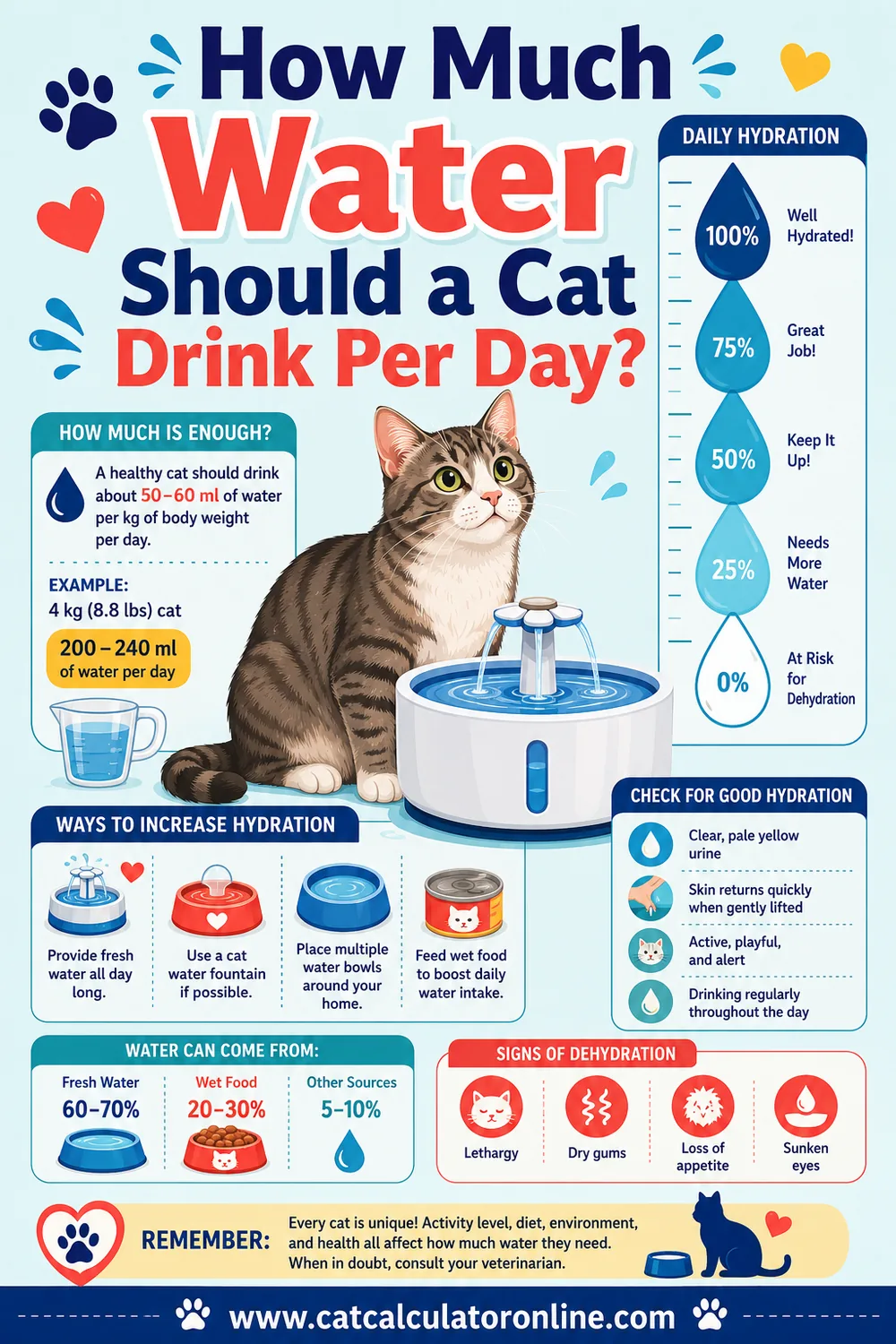
Increase water intake. The single most useful change. More dilute urine means less chance of crystals forming.
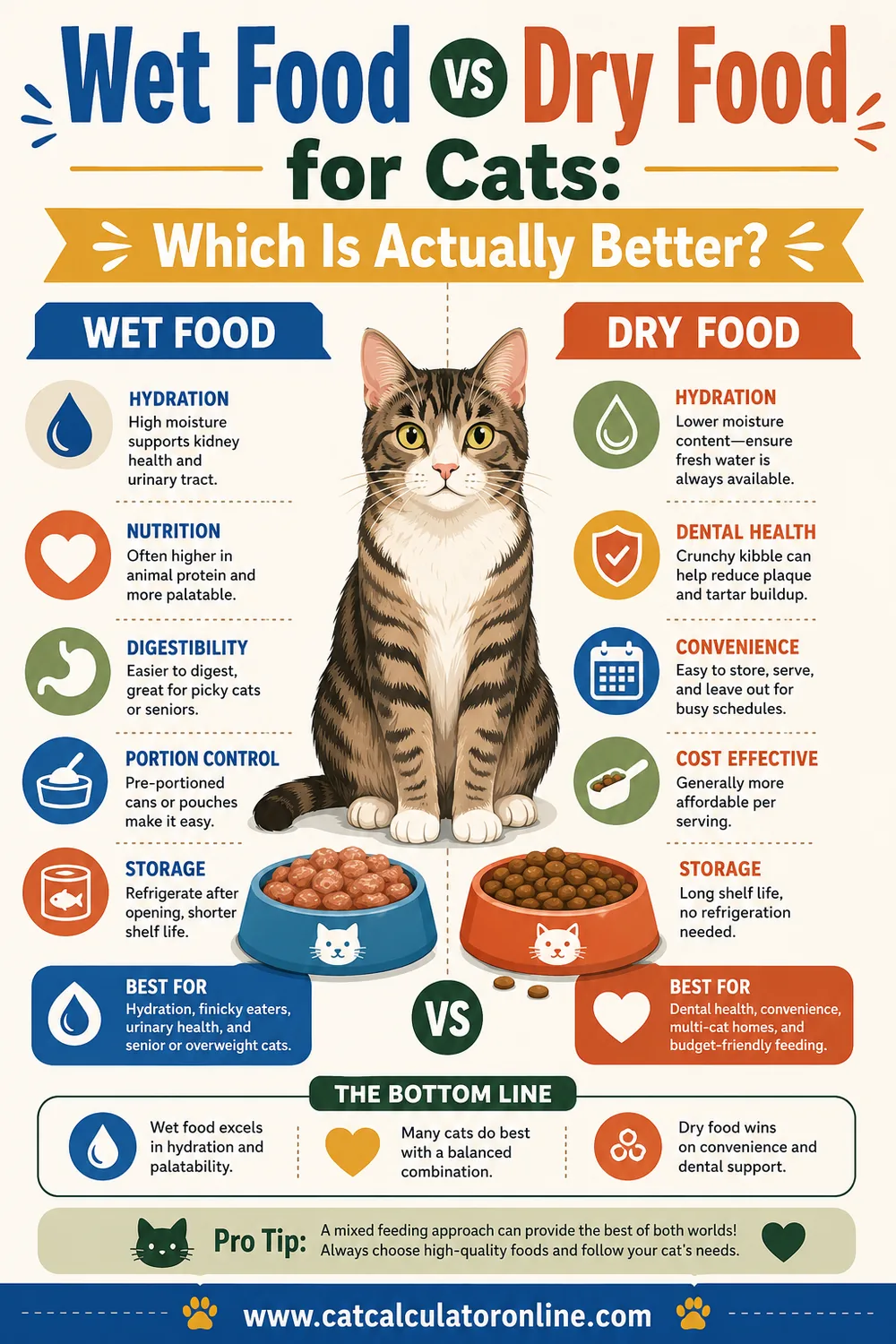
- Feed wet food, or add water to dry. Wet food is roughly 75–80% moisture against about 10% in kibble, and the difference is substantial. The comparison is in wet food vs dry food for cats.
- Multiple water bowls in different rooms, away from food and litter
- A water fountain, since many cats prefer moving water
- Wide, shallow bowls — many cats dislike their whiskers touching the sides
Detailed guidance is in how much water should a cat drink.
Reduce stress. This matters more than most owners expect. Stress is genuinely implicated in feline urinary disease, and the practical measures are unglamorous: enough litter trays (one per cat plus one), placed somewhere quiet and private; predictable routine; hiding places and vertical space; and minimising conflict between cats in the household.
Keep your cat at a healthy weight. Overweight cats are more prone to urinary problems, and less active generally.
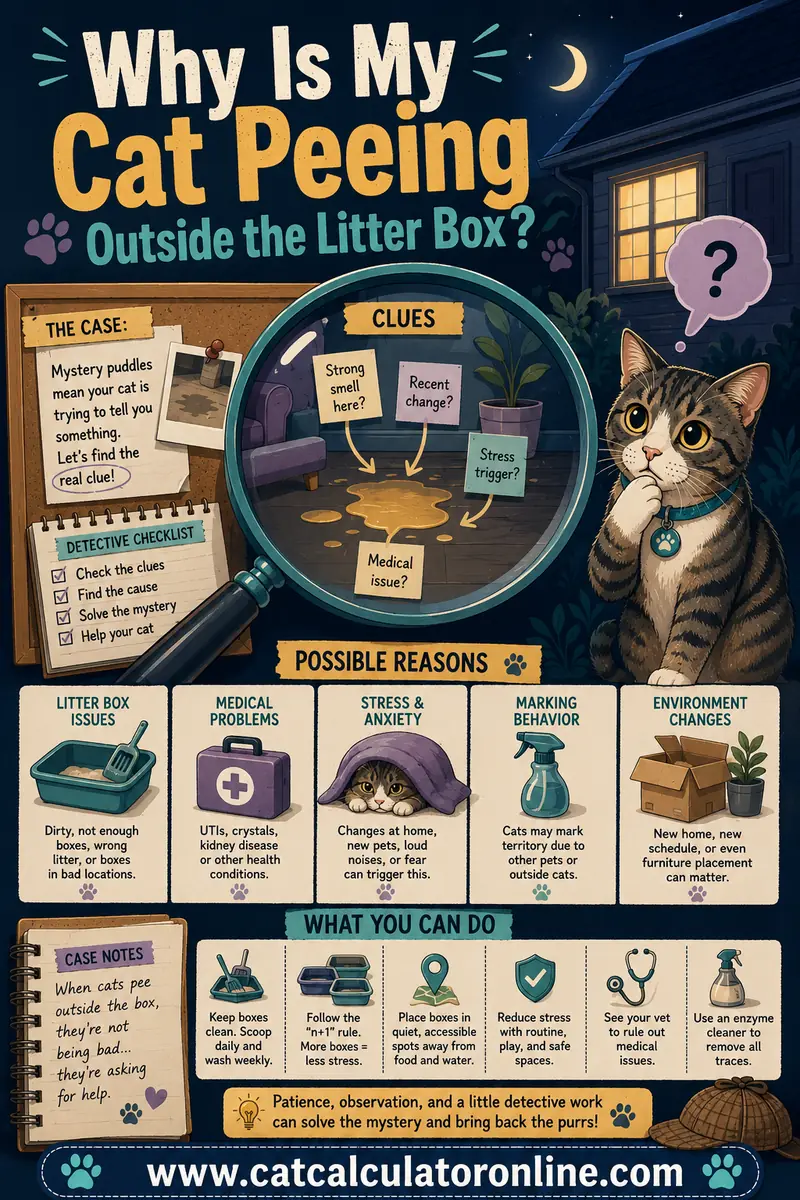
Keep litter trays clean. A cat that avoids a dirty tray holds urine longer, which doesn't help. Related issues are covered in cat peeing outside the litter box.
Follow through on prescription diets. If your cat has had an episode, your vet may prescribe a therapeutic urinary diet. These are formulated specifically to reduce crystal formation, and they only work if your cat eats nothing else.
Act early on mild signs. A cat with cystitis that's straining slightly is easier to help than one that has fully obstructed.
Frequently Asked Questions
What are the signs of a urinary blockage in a cat?
Straining in the litter tray with little or no urine coming out, going in and out of the tray repeatedly, crying while trying to urinate, and persistent licking of the genital area. Later signs include hiding, vomiting, refusing food and collapse. Any of these needs a vet the same day.
Is a urinary blockage in cats an emergency?
Yes, a genuine one. Urine can't leave the body, pressure backs up toward the kidneys, and rising potassium affects the heart. Most cats become critically unwell within 24 to 48 hours, so this needs same-day veterinary care rather than watching and waiting.
Why do male cats get blocked more than females?
A male cat's urethra is longer and considerably narrower, especially near the tip. A plug of crystals and debris that would pass harmlessly in a female can lodge and obstruct in a male. Female cats get urinary disease at similar rates but obstruct far less often.
How much does it cost to treat a blocked cat?
Typically $1,500 to $3,000, covering emergency consultation, bloodwork, catheterisation, and two to four days of hospitalisation with intravenous fluids. Out-of-hours treatment costs more. Surgery for repeatedly blocking cats adds $1,500–$3,000.
Can a cat unblock itself at home?
No, and waiting to see is dangerous. There's nothing at home that clears an obstruction, and human painkillers are frequently toxic to cats. If your cat is straining and producing nothing, that needs a vet immediately rather than any home remedy.
How can I prevent my cat from blocking?
Increase water intake — wet food, multiple bowls, a fountain — reduce household stress, keep your cat at a healthy weight, and maintain clean litter trays. If your cat has blocked before, follow any prescribed urinary diet strictly, since these cats are at higher risk of repeat episodes.
Of everything on this site, this is the condition most worth reading before you need it. The signs are specific and recognizable, the window is short, and the difference between a cat treated at hour four and one treated at hour thirty is enormous. Save your nearest emergency clinic's number tonight, and remember the one rule that matters: a cat straining in the tray with nothing coming out needs a vet today. For lowering the odds in the first place, more water is the single most effective change you can make — and you can plan the costs with the cat cost calculator.