Chronic Kidney Disease in Cats
Chronic kidney disease, or CKD, is the most common serious diagnosis in older cats — and if your vet has just mentioned it, the first thing worth knowing is that a diagnosis is not the end of the story. CKD can't be cured, but it can very often be managed, and plenty of cats live comfortably for years afterward with the right care. The kidneys lose function gradually, which is why the early signs are so easy to miss: increased thirst, more urine in the litter tray, and a slow drop in weight. Catching it early genuinely changes the outlook. Managing it costs roughly $1,000 to $3,000 a year, and the cat cost calculator can help you plan for that alongside everything else.
What Is Chronic Kidney Disease?
The kidneys do a quiet, unglamorous job: they filter waste out of the blood, balance water and minerals, help control blood pressure, and produce a hormone that tells the body to make red blood cells. Chronic kidney disease means that filtering ability is declining slowly and permanently.
The word "chronic" is doing important work there. This isn't a sudden crisis — it develops over months or years, and the kidneys are remarkably good at compensating while it happens. That's both the frustrating part and the hopeful part.
Frustrating, because cats often show no outward signs until a substantial share of kidney function is already gone. By the time your cat looks unwell, the disease has usually been quietly progressing for a while.
Hopeful, because the remaining function can often be protected. Management is about slowing the decline and keeping your cat comfortable, and that's a genuinely achievable goal rather than a consolation prize.
CKD is common in older cats — it's the condition vets see most often in the senior years, and the likelihood rises steadily with age. If you have a cat over ten, this is worth understanding even if nothing seems wrong.
What Are the Early Signs?
The two earliest signs travel together, and they're both easy to explain once you know what the kidneys do.
Drinking more. Healthy kidneys concentrate urine, holding water back in the body. As they lose that ability, more water leaves in the urine, and your cat drinks more to keep up. You might notice the water bowl emptying faster, or your cat suddenly interested in taps, glasses or the shower tray.
Urinating more. The other half of the same problem. In practice this shows up as bigger clumps in the litter tray, more of them, or a tray that needs changing more often than it used to. If you have one cat, this is one of the most reliable early signals you'll get.
Then, more gradually:
- Weight loss, often slow enough to miss entirely by eye
- Reduced appetite, or becoming picky about food that was fine before
- A duller, scruffier coat, because a cat feeling unwell grooms less
- Lower energy — sleeping more, playing less, jumping less
- Occasional vomiting or nausea
- Bad breath, sometimes with an unusual chemical smell
None of these is unique to kidney disease. Weight loss and thirst also point to hyperthyroidism and diabetes, both common in older cats and both very treatable. That's exactly why the answer to any of these signs is a vet visit rather than a guess — and why the general signs of illness are worth knowing, as set out in signs your cat is sick.
Why Is It So Easy to Miss?
Because cats are extraordinarily good at hiding illness, and because the changes are gradual.
As a species that both hunts and gets hunted, cats instinctively conceal weakness. A cat feeling genuinely unwell will often still eat, still greet you at the door, and still settle on your lap. Owners frequently say their cat seemed "completely fine until last week" when the clinical picture shows months of quiet decline.
The gradual pace makes it harder still. A cat losing half a pound over six months looks the same each morning. You'd need a photograph from a year ago, or a scale, to see it — which is exactly why monthly weighing is worth the minute it takes in any cat over seven.
There's a practical takeaway here that applies well beyond kidney disease: in older cats, subtle changes matter more than dramatic ones. Drinking a little more, hiding slightly more often, eating on one side of the mouth, a small drop in weight. Each is easy to dismiss individually, and each is worth mentioning to your vet.
The other quiet advantage: annual or twice-yearly bloodwork from around age seven finds CKD before the signs appear. That's the single most useful thing you can do, and it's covered in the wider senior cat health checklist.
How Do Vets Diagnose It?
A combination of blood, urine and blood pressure — no single test tells the whole story.
Blood tests. Your vet will look at waste products the kidneys normally clear, principally creatinine and urea. A newer marker called SDMA has become widely used because it tends to rise earlier in the disease than creatinine does, which means diagnosis can happen sooner than it once did.
Urine testing. Just as important, and sometimes more revealing. Vets look at how concentrated the urine is — dilute urine alongside raised blood values is a classic picture — and check for protein loss, which affects both treatment and outlook.
Blood pressure. High blood pressure is common alongside CKD and can quietly damage the eyes, brain, heart and kidneys themselves. It's easily measured and very treatable, so it's a standard part of the workup.
Imaging, sometimes. Ultrasound or X-ray can show kidney size and shape and rule out other causes such as stones or masses.
Your vet will likely also stage the disease using the international IRIS system, which runs from stage 1 (earliest) to stage 4 (most advanced). Staging isn't just paperwork — it directly shapes which treatments make sense and what to expect. A cat diagnosed at stage 2 has a very different road ahead from one diagnosed at stage 4.
If the diagnosis is new, it's completely reasonable to ask your vet which stage your cat is at, and what that means specifically for them.
How Is Kidney Disease Managed?
There's no cure, but there's a lot that can be done — and management is usually less onerous than owners fear.
Diet is the cornerstone. Therapeutic kidney diets are formulated with controlled phosphorus and adjusted protein, and they're one of the few interventions shown to make a real difference to how cats with CKD do over time. The catch is that cats have opinions, and a therapeutic diet only works if your cat actually eats it. Switch gradually over a week or two, try both wet and dry versions, and tell your vet if your cat refuses — there are usually alternatives.
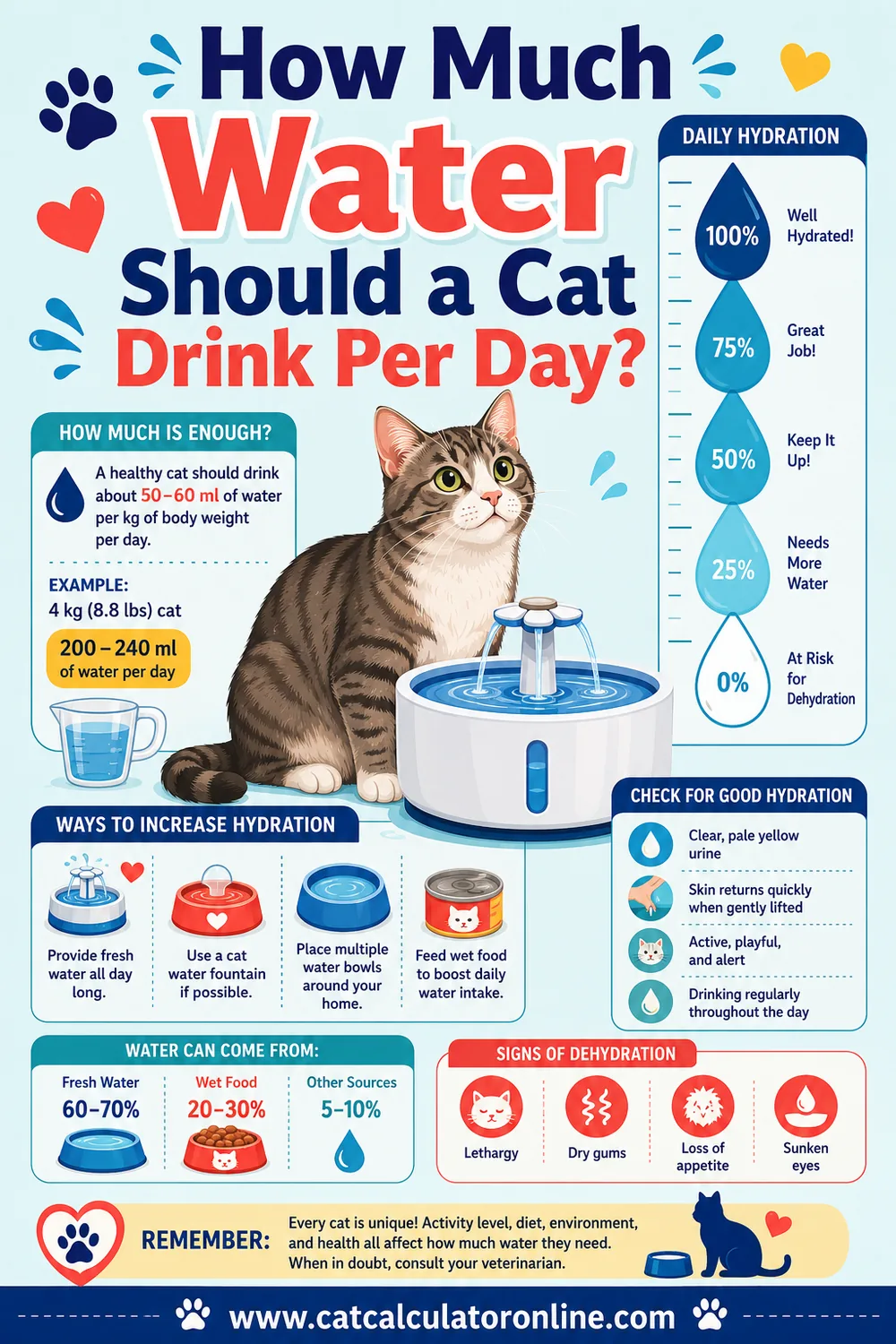
Water, water, water. Encouraging fluid intake helps enormously. Wet food, extra water bowls in different rooms, a water fountain if your cat likes moving water, and a splash of water added to food all help. More on this in how much water should a cat drink.
Fluids under the skin. For cats further along, vets often teach owners to give subcutaneous fluids at home. It sounds daunting and most owners find it far easier than expected — many cats tolerate it calmly, and it can make a striking difference to how well a cat feels.
Medication, prescribed as needed. Depending on your cat's bloodwork, this might include phosphate binders, blood pressure medication, anti-nausea treatment, appetite support or potassium supplementation. Which of these apply is entirely individual, and it's your vet's call — never medicate a cat with anything, including human medicines, without veterinary direction. Many common human drugs are dangerous to cats.
Regular monitoring. Repeat bloodwork and blood pressure checks every few months let your vet adjust the plan as things change. This is where a lot of the value sits.
What Does It Cost to Manage?
Realistically, $1,000 to $3,000 a year, though it varies a lot with stage and location.
| Item | Typical cost |
|---|---|
| Diagnosis (bloodwork, urine, BP) | $200–$500 |
| Recheck bloodwork, 2–4× a year | $120–$400 per visit |
| Therapeutic kidney diet | $50–$90 a month |
| Subcutaneous fluid supplies | $30–$80 a month |
| Medication (varies widely) | $20–$100 a month |
| Ultrasound, if needed | $300–$600 |
Two honest points about that table.
Costs rise as the disease progresses. A cat at stage 2 might need a special diet and twice-yearly bloodwork — perhaps $800 a year. A cat at stage 4 needing daily fluids, several medications and frequent monitoring is at the top of the range or beyond.
This is exactly what pet insurance is for, provided the policy was in place before any signs appeared. CKD is chronic and lifelong, which makes it the classic case for checking that a policy covers a condition indefinitely rather than for twelve months. If your cat is already diagnosed, it will be excluded from any new policy — that's universal across insurers. Typical veterinary pricing is broken down in cat vet costs explained.
What Can You Do at Home?
Quite a lot, and the small things genuinely add up.
Make water easy and appealing. Multiple bowls in different rooms, away from food and litter. Wide, shallow bowls suit cats better than deep ones — many dislike their whiskers touching the sides. Some cats strongly prefer running water, so a fountain can noticeably increase intake.
Lean toward wet food. Higher moisture content does real work here, and it's often more tempting for a cat with a reduced appetite.
Weigh monthly and write it down. A kitchen or bathroom scale and a note on your phone. Weight trend is one of the most useful things you can bring to an appointment, and far better than "he seems about the same".
Warm the food slightly. A few seconds takes food to body temperature, which lifts the aroma and often tempts a nauseous cat to start eating.
Keep things calm and comfortable. Easy access to a warm resting spot, a low-sided litter tray if joints are stiff, and a quiet place away from household bustle.
Watch for changes and report them. Increased vomiting, a sudden drop in appetite, weakness, or a cat that stops drinking all warrant a call. Cats can dehydrate quickly, and the signs are covered in signs of dehydration in cats.
What to avoid: changing the diet abruptly, giving any human medication, or adding supplements without asking. Well-meaning additions can genuinely make things worse in a cat with kidney disease.
What Is the Outlook?
Genuinely variable, and more hopeful than most people assume when they hear the word "chronic".
The single biggest factor is what stage the disease is at when it's found. Cats diagnosed early, before they're visibly unwell, often live for several years with good quality of life and fairly modest management. Cats diagnosed at an advanced stage, already losing weight and eating poorly, have a harder road.
Other things that influence it: whether there's protein in the urine, whether blood pressure is controlled, whether your cat will eat a therapeutic diet, and how the numbers respond over the first few months.
What's worth holding onto is that quality of life is the thing being managed here, and it's often good for a long time. Many cats with CKD spend their remaining years eating, sleeping in the sun and being thoroughly themselves. The disease progresses, but slowly, and there's usually plenty of room in between.
Your vet is the right person to talk to about your individual cat's outlook, and it's a completely fair question to ask directly. It's also worth having an early, unhurried conversation about what you'd want as things progress — those decisions are much easier discussed calmly in advance than in a crisis. Broader guidance on the senior years is in how to care for a senior cat.
Frequently Asked Questions
What are the first signs of kidney disease in cats?
Increased thirst and increased urination are usually first, because failing kidneys can't concentrate urine properly. Gradual weight loss, a reduced or picky appetite, a scruffier coat and lower energy tend to follow. All of these warrant a vet visit, since they overlap with other treatable conditions.
Can chronic kidney disease in cats be cured?
No, the damage is permanent — but it can very often be managed. A therapeutic diet, good hydration, blood pressure control and regular monitoring can slow the decline considerably, and many cats live comfortably for years after diagnosis.
How long can a cat live with kidney disease?
It depends heavily on the stage at diagnosis and how the cat responds to treatment. Cats found early, before they're visibly unwell, often live for years with good quality of life. Cats diagnosed at an advanced stage have a shorter outlook. Your vet can give a realistic picture for your cat.
Is a kidney diet really necessary?
Therapeutic kidney diets are one of the few things shown to make a genuine difference to how cats with CKD do over time, so they're usually strongly recommended. The practical catch is palatability — a diet only helps if your cat eats it, so tell your vet rather than struggling if yours refuses.
How much does it cost to treat kidney disease in cats?
Typically $1,000 to $3,000 a year, rising as the disease progresses. That covers recheck bloodwork, a therapeutic diet, medication and often subcutaneous fluids. Insurance covers it only if the policy predated any signs, since it would otherwise be a pre-existing condition.
Should I give my cat extra water or supplements?
Encouraging water intake is genuinely helpful — more bowls, wet food, a fountain. Supplements are a different matter and shouldn't be added without asking your vet, since some can be actively harmful in kidney disease. Never give human medication to a cat.
A CKD diagnosis is unsettling to hear, and it's worth saying plainly that it's usually not the emergency it sounds like. This is a condition that gets managed, often successfully, often for years. The things that help most are unglamorous: a diet your cat will actually eat, plenty of water, regular bloodwork, and paying attention to small changes. If you have a cat over seven, annual blood testing is the single best thing you can do — it finds this early, when there's most to gain. Plan the ongoing costs with the cat cost calculator.