How to Tell How Old a Cat Is: Teeth, Eyes, Coat & Other Age Cues
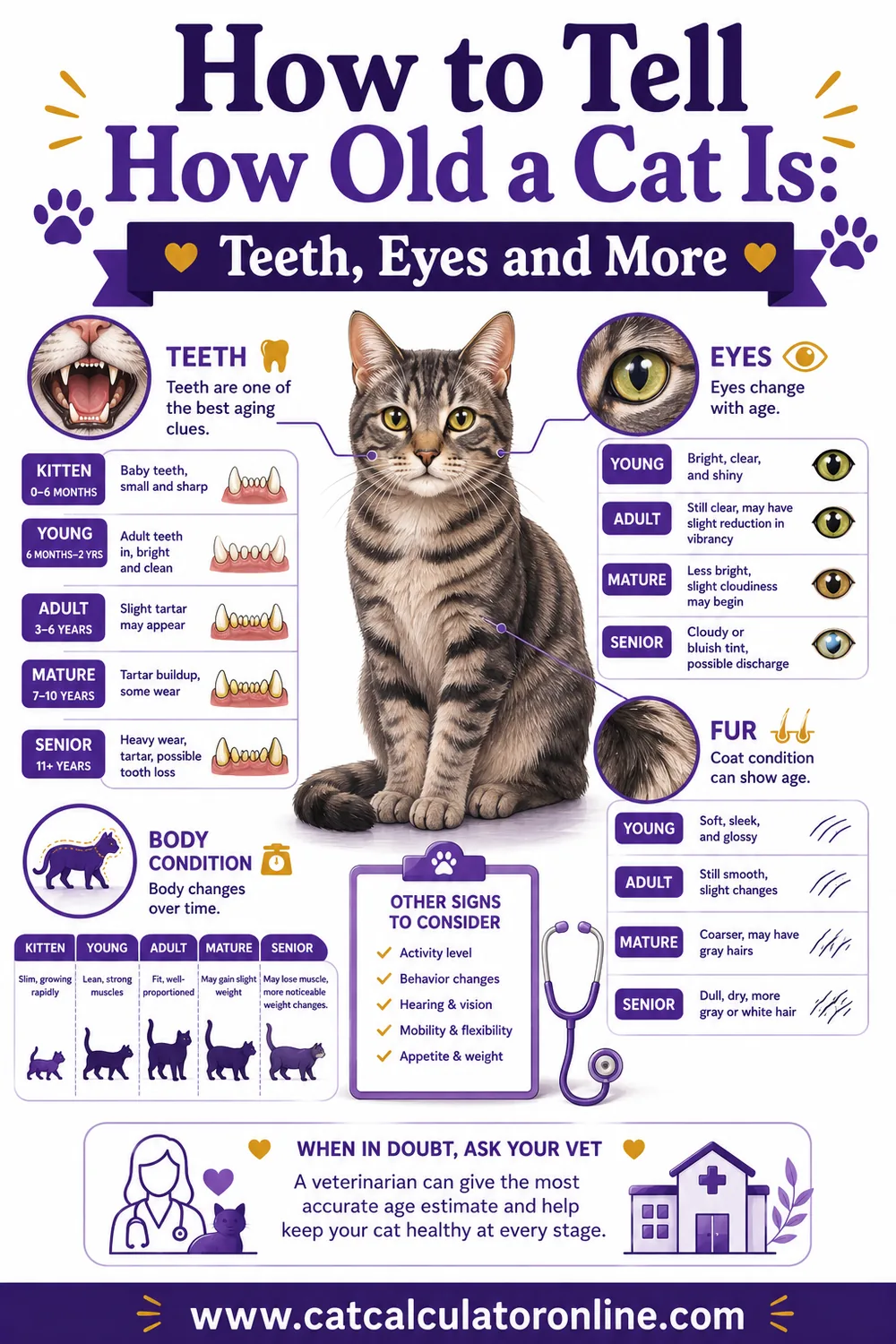
You can estimate a cat's age fairly well by checking a few physical cues: teeth, eyes, coat, and muscle tone. Kittens are the easiest to age precisely because they hit predictable milestones — eyes opening, teeth erupting, weaning — on a tight schedule. Adult cats are trickier, but tartar buildup, a cloudier lens, a coarser coat, and thinning muscle all point toward an older cat. For a real estimate, though, nothing beats a vet's exam.
Found a stray, adopted a rescue with no records, or just curious? Our free cat age calculator turns your best age estimate into human years in one tap. Below, we'll walk through each cue you can check at home — and how much to trust it.
🐱 Got an age estimate? See it in human years
Tap your best guess at your cat’s age:
Tap an age above to see the human-year equivalent.
Teeth: The Most Reliable Cue
Teeth are the single best physical clue to a cat's age, especially in kittens. A cat's mouth changes on a fairly predictable schedule early in life, and even in adulthood the buildup of tartar and wear gives useful hints.
Kitten teeth timeline
In the first months, teeth erupt like clockwork:
- 2–4 weeks: the tiny, needle-sharp baby (deciduous) teeth start coming in.
- By 6–8 weeks: all 26 baby teeth are usually in place.
- 3–4 months: baby teeth begin falling out as adult teeth push through.
- By 6–7 months: all 30 permanent adult teeth are typically in, clean and white.
So a mouth full of tiny sharp baby teeth means a young kitten, while a full set of gleaming white adult teeth points to a cat around 6 months to a year old.
Adult teeth: tartar, wear, and staining
Once a cat is grown, teeth age more gradually. Vets look at three things:
- Tartar buildup. Clean white teeth suggest a younger adult (roughly 1–2 years). Some yellowing and tartar on the back teeth points to a cat around 3–5. Heavy tartar across many teeth suggests 5-plus.
- Wear. Older cats' teeth show flattening and wear, and some may be missing.
- Staining and gum changes. Yellowed or discolored teeth and receding or inflamed gums lean older.
Here's the rough guide vets use:
| Teeth appearance | Estimated age |
|---|---|
| Tiny baby teeth erupting | 2–8 weeks |
| Full set of baby teeth | 8 weeks–3 months |
| Adult teeth coming in | 3–6 months |
| Clean, white adult teeth | 6 months–2 years |
| Slight tartar, dulling on back teeth | 3–5 years |
| Noticeable tartar, some wear | 5–10 years |
| Heavy tartar, wear, missing teeth | 10+ years |
One honest caveat: diet, genetics, and dental care throw this off. A cat that's had regular cleanings will have cleaner teeth than its age suggests, while a cat that never had dental care may look older. Teeth are the best cue, not a perfect one.
Eyes: Clarity and Brightness
A cat's eyes change subtly with age, and once you know what to look for, they're a useful second opinion.
- Young cats have bright, crisp, clear eyes with a smooth iris and no cloudiness.
- Older cats often develop a slight haziness or cloudiness in the lens. A common change called lenticular sclerosis gives the lens a faint bluish-gray tint, usually starting around age 8–10. It's normal aging and doesn't blind the cat.
Look at the iris texture, too. In young cats it's smooth and even. In older cats it can look slightly rougher or show a bit of pigment change. Some seniors also show tear staining or a duller overall eye.
One important note: real cloudiness, a milky look, or obvious eye changes can signal cataracts or other conditions rather than plain aging. If your cat's eyes look genuinely cloudy or are changing quickly, that's a vet visit, not just an age clue.
Coat: Texture and Color
Run your hand over a cat and its coat tells you something about its age.
Texture
- Kittens and young cats have soft, fine, fluffy fur.
- Adult cats develop a thicker, coarser coat.
- Senior cats often have coats that feel coarser or greasier, and grooming can slack off — leading to a slightly unkempt look or mats, especially in long-haired cats. Older cats sometimes can't groom as thoroughly because of arthritis or dental pain.
Color and graying
Some cats develop white or gray hairs as they age, particularly around the muzzle and face — much like people going gray. It's most visible on darker cats. Graying is a soft hint rather than a precise measure, since some cats gray early and others barely at all.
A patchy, dull, or poorly kept coat on an adult cat leans older. A glossy, well-groomed coat leans younger — though a healthy senior with good care can keep a lovely coat, so weigh this alongside the other cues.
Muscle Tone and Body Shape
Body condition rounds out the picture:
- Young and adult cats in their prime are lean and muscular, with good tone along the spine and hindquarters. They move with easy, springy confidence.
- Older cats often lose muscle mass, especially over the spine and hips — a change vets call muscle wasting. Some seniors get bonier along the back even if their belly stays round. Others lose weight overall.
- Extra loose skin or a saggy belly ("primordial pouch" aside) can appear in older cats.
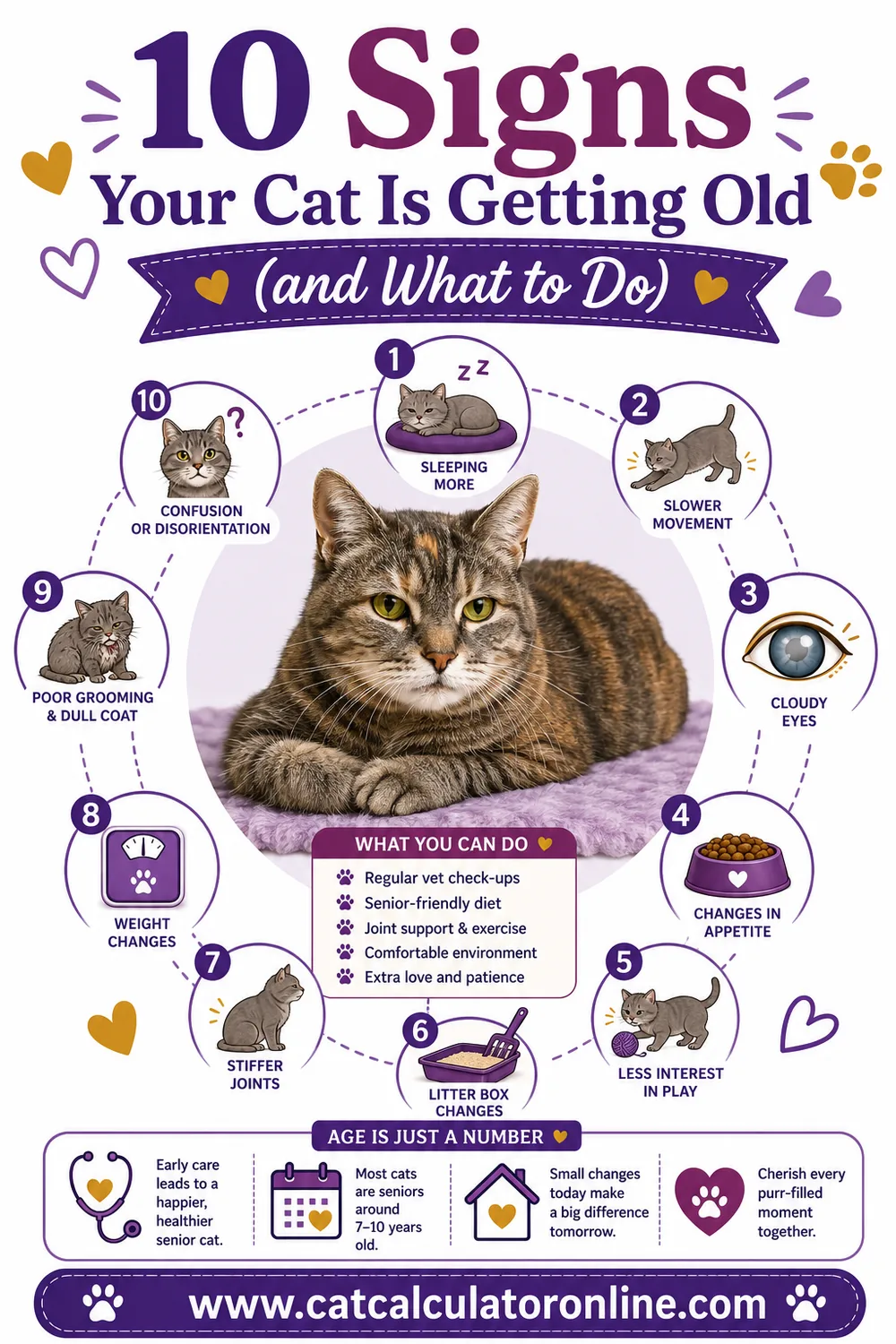
Activity level backs this up. A cat that rockets around the house, leaps to high perches, and plays hard is likely younger or in its prime. A cat that prefers low perches, sleeps most of the day, hesitates before jumping, or moves stiffly after resting is more likely a mature or senior cat — arthritis is common and often silent. For the fuller list of what aging looks like, see our guide on signs your cat is getting old.
Kitten Age by Milestone
Kittens are the easiest cats to age because development follows such a tight schedule. If you've found a young kitten, these milestones pin the age down within a week or two:
| Milestone | Approximate age |
|---|---|
| Eyes still closed | Under 7 days |
| Eyes opening (blue) | 7–10 days |
| Ears unfolding, starting to crawl | 2 weeks |
| Walking, baby teeth erupting | 3–4 weeks |
| Playing, eating some solid food | 4–5 weeks |
| Weaned from mother's milk | ~8 weeks |
| Full set of baby teeth | 8 weeks–3 months |
| Adult teeth coming in | 3–6 months |
| Sexual maturity begins | 4–6 months |
| Near-adult size | 10–12 months |
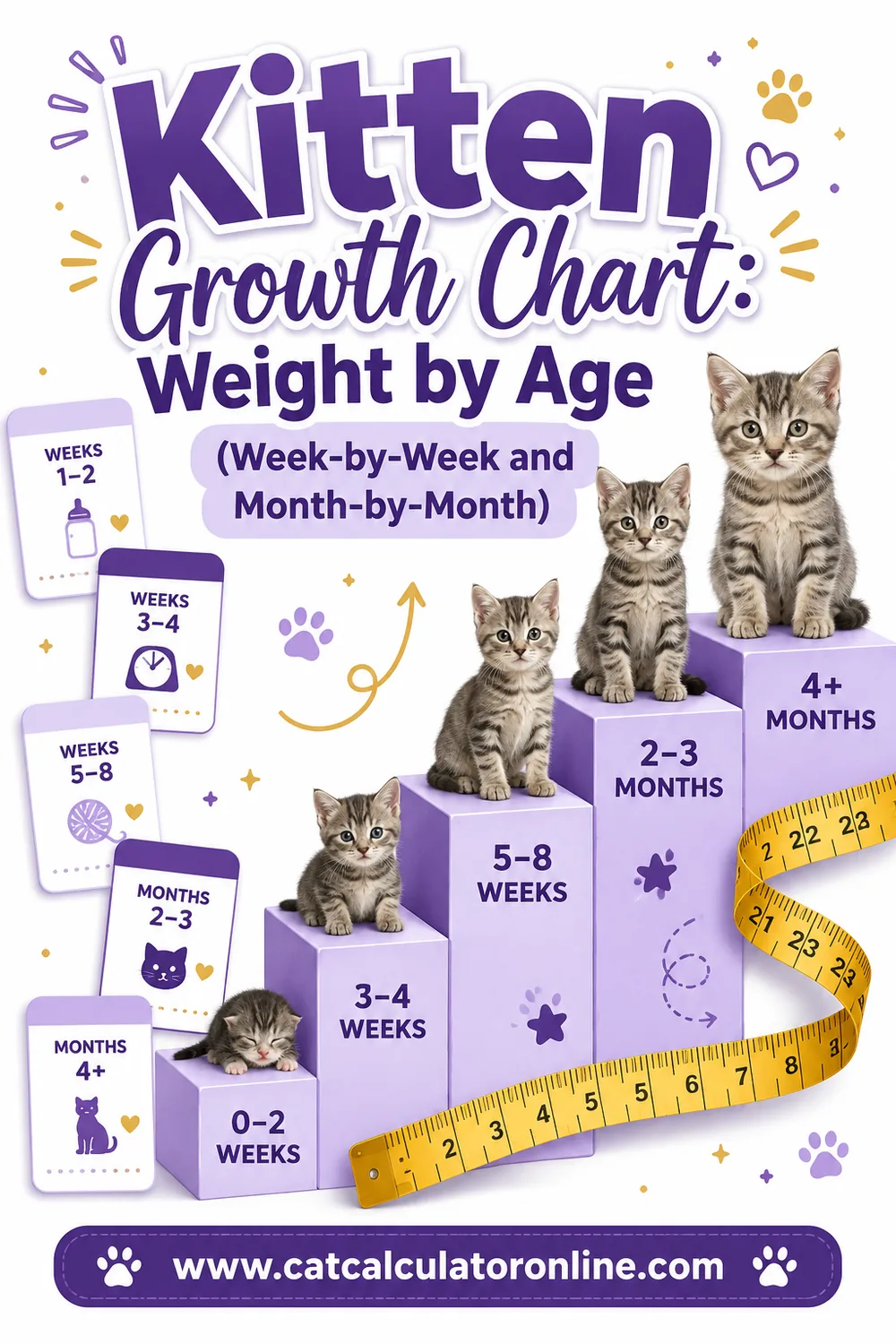
A couple of details worth knowing: all kittens are born with blue eyes, and the adult eye color settles in by around 6–8 weeks, so eye color itself isn't an age cue past that point. And large breeds like the Maine Coon keep filling out until three or four years old, so "full size" arrives later for them. For a detailed weight-by-week breakdown, see our kitten growth chart.
Putting the Cues Together
No single sign is definitive — the trick is reading them together. A cat with clean white teeth, bright eyes, a soft glossy coat, and springy muscle is almost certainly a young adult. A cat with heavy tartar, a hazy lens, a coarse coat, some graying, and thinning muscle over the spine is very likely a senior.
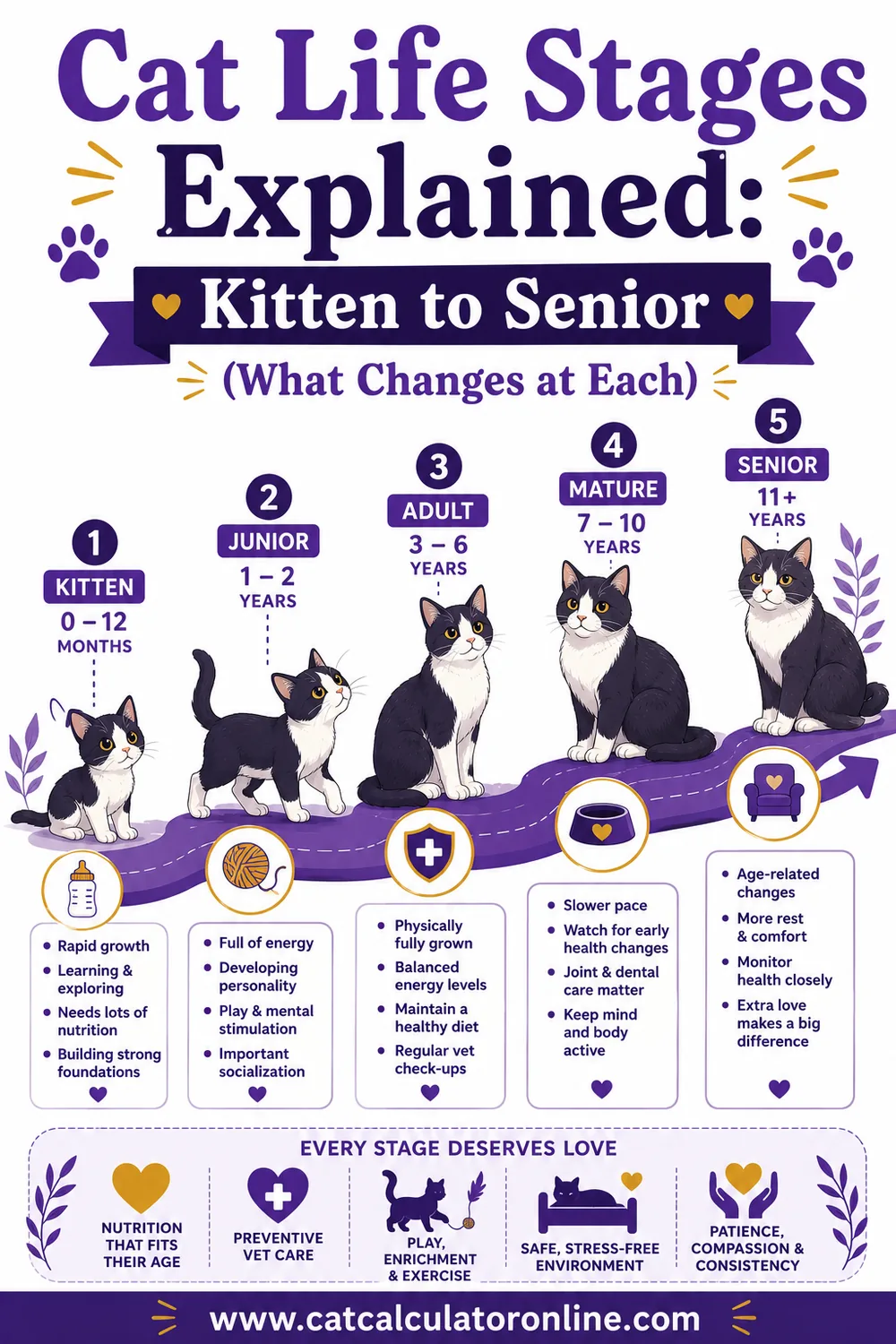
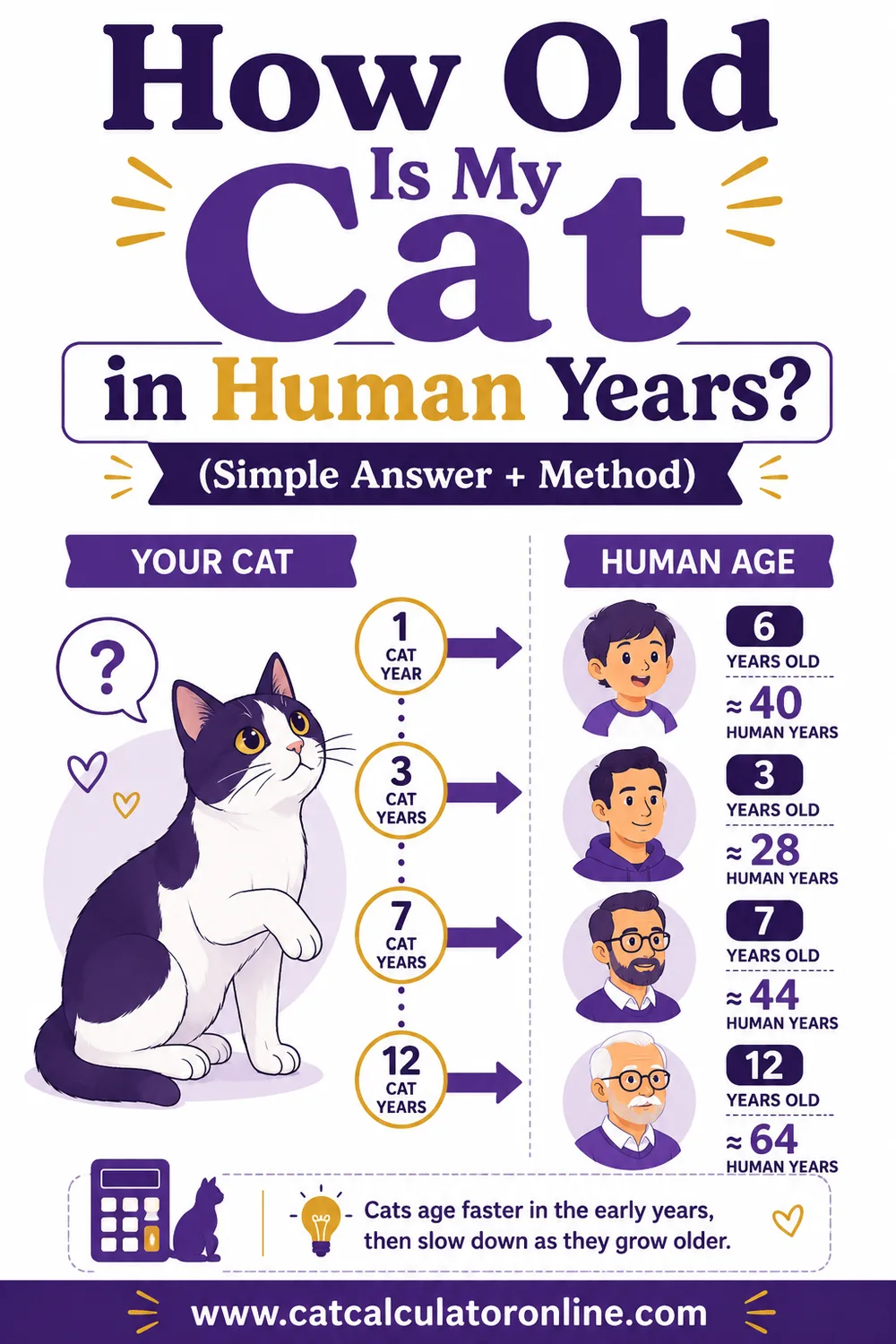
When the cues disagree — say, cleanish teeth but a hazy lens and muscle loss — lean toward the picture that most signs point to, and remember that dental care history can make teeth misleading. Then translate your estimate into human years to make it click: a cat's first year is worth about 15 human years, the second adds about 9 more, and every year after that adds roughly 4. Our guide on how old your cat is in human years walks through that math, and the cat life stages guide shows what each age actually means for care.
When to Trust a Vet's Estimate
Everything above helps you make a solid ballpark guess. But a veterinarian can do better, and for good reason:
- They examine the teeth, gums, and mouth thoroughly — the most telling area.
- They assess eye health, muscle tone, and body condition with a trained eye.
- Bloodwork and a physical exam can reveal age-related organ changes and rule out disease that might be masking (or mimicking) age.
A vet will usually give a range — "probably 6 to 9 years" — rather than a single number, because estimating an adult cat's age is genuinely imprecise. That's normal and honest. If you've adopted a cat with no history, ask your vet for their best estimate at the first checkup; it's the most reliable figure you'll get, and it sets the baseline for the right care going forward.
FAQ
How can you tell how old a cat is?
Check the teeth first (baby teeth, adult teeth, tartar, and wear), then the eyes (clear and bright in youth, hazier with age), the coat (soft in young cats, coarser and grayer in seniors), and muscle tone (lean and springy versus thinning over the spine). Together these give a solid age estimate.
What's the most accurate way to estimate a cat's age?
Teeth are the single most reliable cue, especially in kittens who hit predictable milestones. For adults, a veterinarian's full exam — including the mouth, eyes, body condition, and sometimes bloodwork — is the most accurate option.
Can I tell my kitten's exact age?
Fairly closely, yes. Kittens develop on a tight schedule: eyes open at 7–10 days, they're weaned around 8 weeks, adult teeth come in by 6 months. Matching your kitten to those milestones usually pins the age within a week or two.
Do a cat's eyes really show its age?
Somewhat. Young cats have crisp, clear eyes, while older cats often develop a faint bluish-gray haze in the lens (lenticular sclerosis), typically from around 8–10 years. But genuine cloudiness can signal a medical issue, so have obvious eye changes checked by a vet.
Can you tell a cat's age by its size?
Only roughly, and only in kittens. Cats reach near-adult size by 10–12 months, so a full-grown cat is at least that old. Unlike dogs, adult cat size doesn't reveal age, and large breeds keep growing for years.
Why does my adopted cat's estimated age keep changing?
Estimating an adult cat's age is imprecise, so different vets may give different ranges based on teeth, eyes, and overall condition. A range like "5 to 8 years" is normal and more honest than a single exact number.
The Bottom Line
You can estimate a cat's age at home by reading its teeth, eyes, coat, and muscle tone together — no single cue is perfect, but the combined picture is usually close. Kittens are easy to pin down thanks to their predictable milestones; adult cats call for more judgment and, ideally, a vet's trained eye. Once you've got an estimate, translating it into human years makes it far more useful for care.
Ready to turn your estimate into a number? Our free cat age calculator converts your cat's age into human years in one tap — try it now.