How Much to Feed a Kitten: Portions, Meals, and Wet vs. Dry
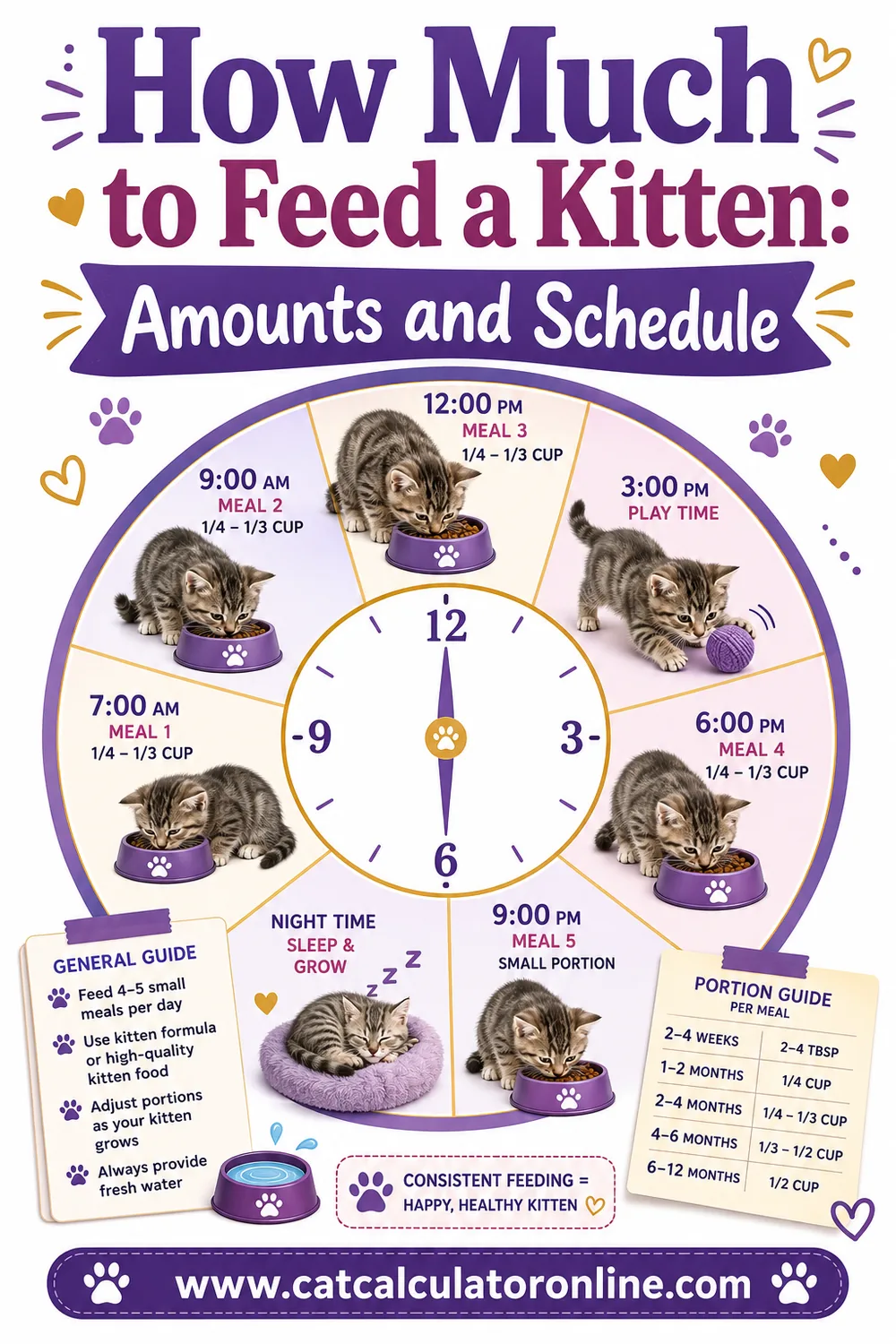
Most kittens do well on 3–4 small meals a day while they're young, tapering to 2 meals as they approach adulthood, using kitten food until about 12 months. The exact amount depends on your kitten's weight and the calories in your specific food, but a practical starting point is roughly a small can of wet food (or a third to half a cup of dry) split across the day's meals, adjusted to keep your kitten lean and growing steadily. This guide is about the how — how to run mealtimes, how to split portions, and whether to leave food out.
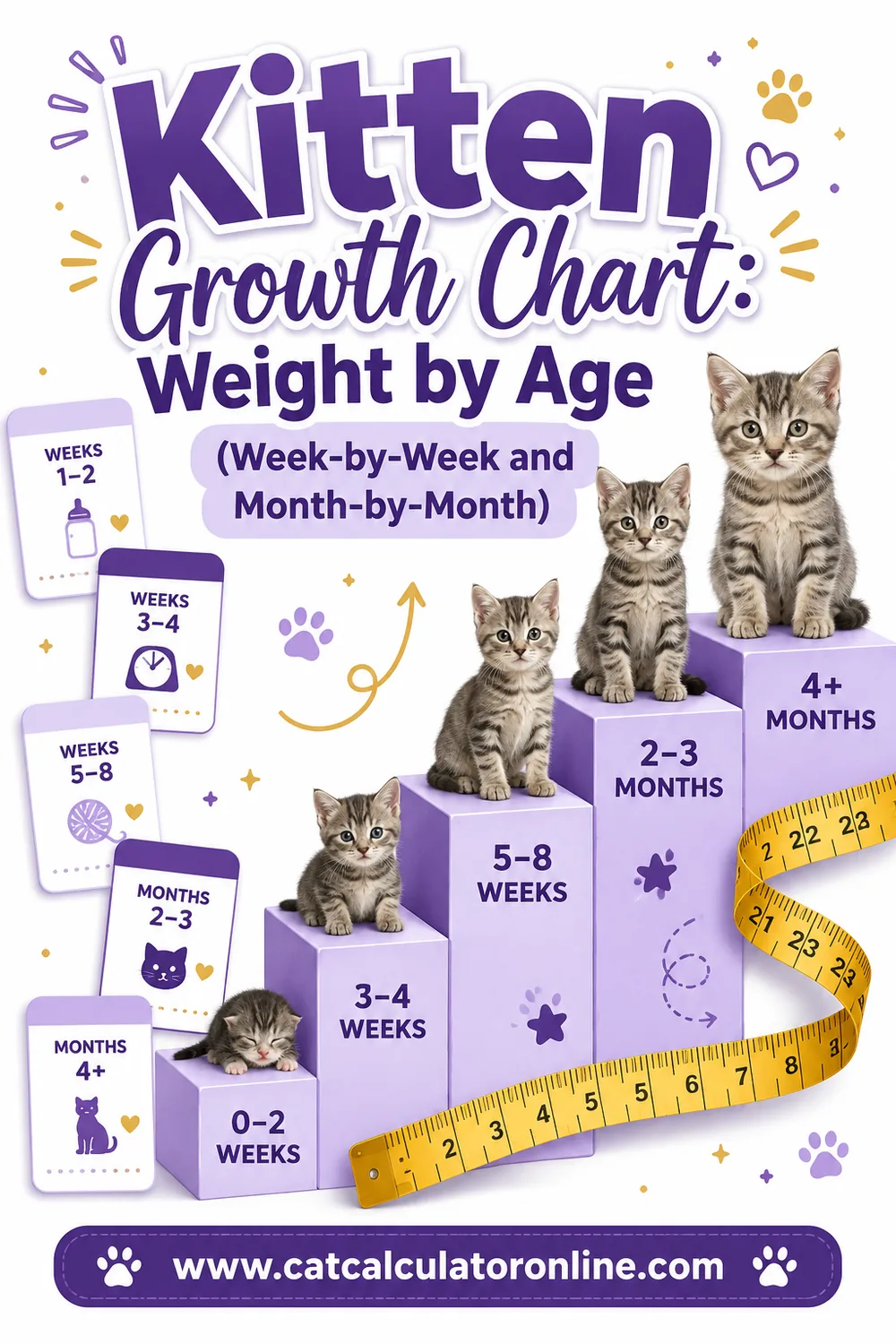
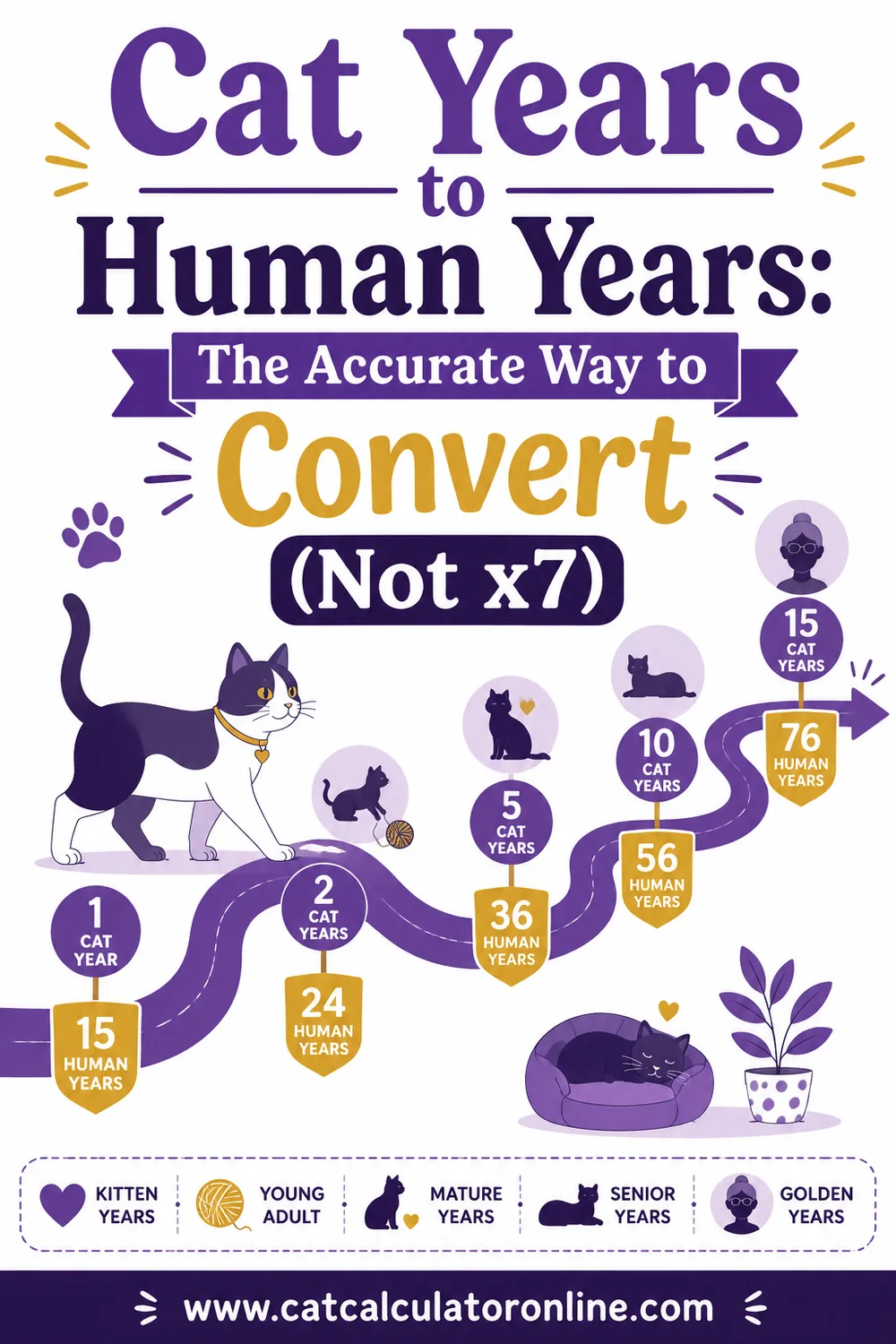
If you want the reference table of amounts by age instead, that lives in our kitten feeding chart. To sanity-check your kitten's growth, see the kitten growth chart. And if you're unsure how old your kitten is, our free cat age calculator helps you pin it down. Tap a weight below for a quick starting portion.
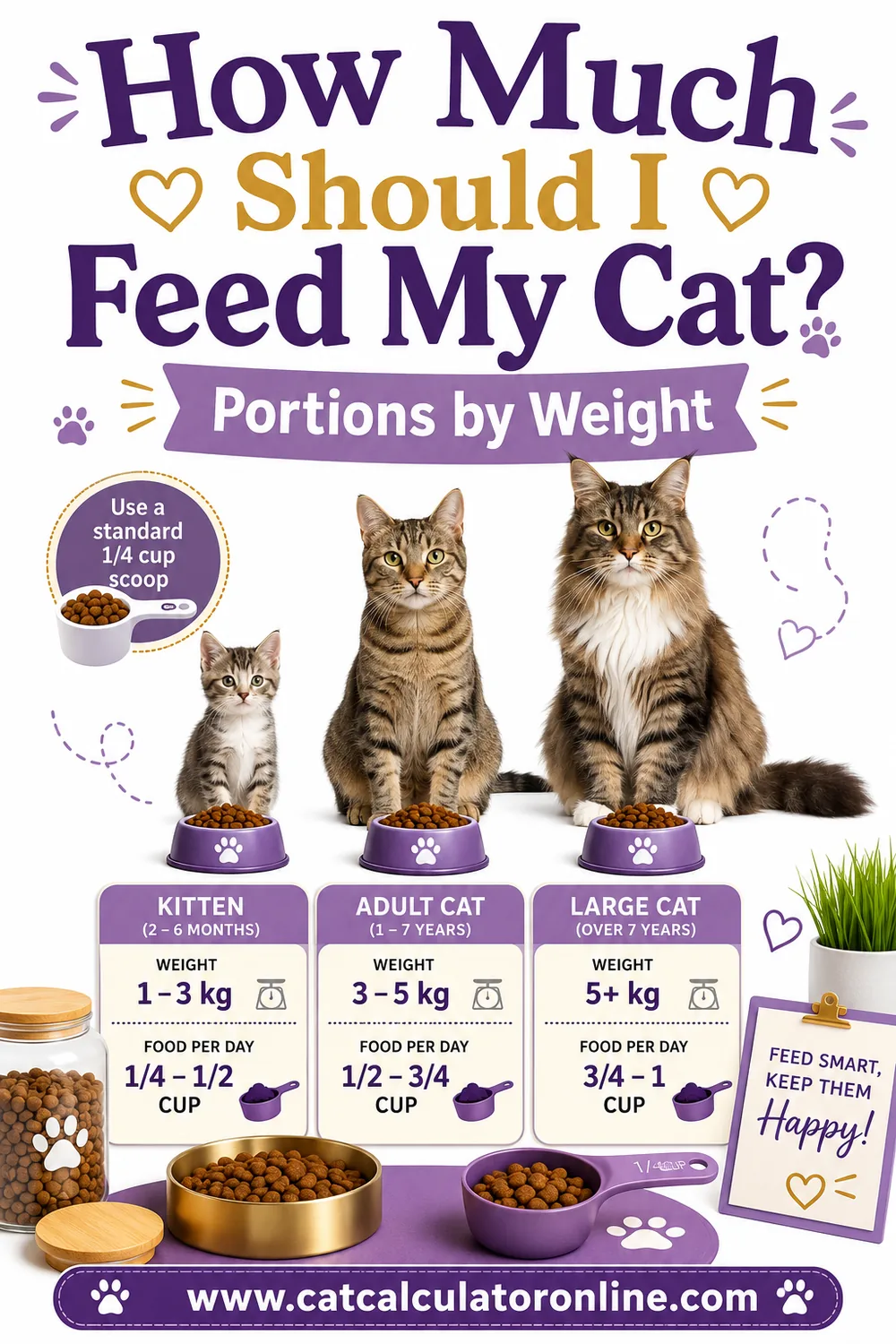
🐱 How much to feed a kitten (by weight)
Tap your kitten’s weight for a rough daily starting amount:
Tap a weight for a starting amount. Confirm the exact amount with your vet and your food’s label.
Start With the Label, Not a Generic Number
Before any rule of thumb, look at your kitten's food. Two things matter most:
- The kcal value. Every bag and can lists calories — dry kitten food runs roughly 300–400 kcal per cup, and a 3 oz can of wet is roughly 70–100 kcal. That's why "a can" and "a cup" aren't the same amount of food.
- The brand's feeding guide. The chart on the package is tailored to that food's density and is your best starting point. Treat it as a starting point, not gospel — then adjust to your kitten.
A generic "feed this much" number can be off by a lot depending on the food. The label plus your kitten's body condition beats any one-size chart.
A quick worked example
Suppose your dry kitten food lists 380 kcal per cup, and the bag says a 4 lb kitten needs about 250 kcal a day. Divide 250 by 380 and you get roughly two-thirds of a cup a day. Split across 3 meals, that's a bit over two tablespoons per meal. You don't need to do this math often — the bag's chart usually does it for you — but it shows why the same "two-thirds of a cup" would be too much on a richer food and too little on a lighter one. When in doubt, weigh or measure rather than eyeball, and let your kitten's body condition confirm you're in the right zone.
How Many Meals a Day?
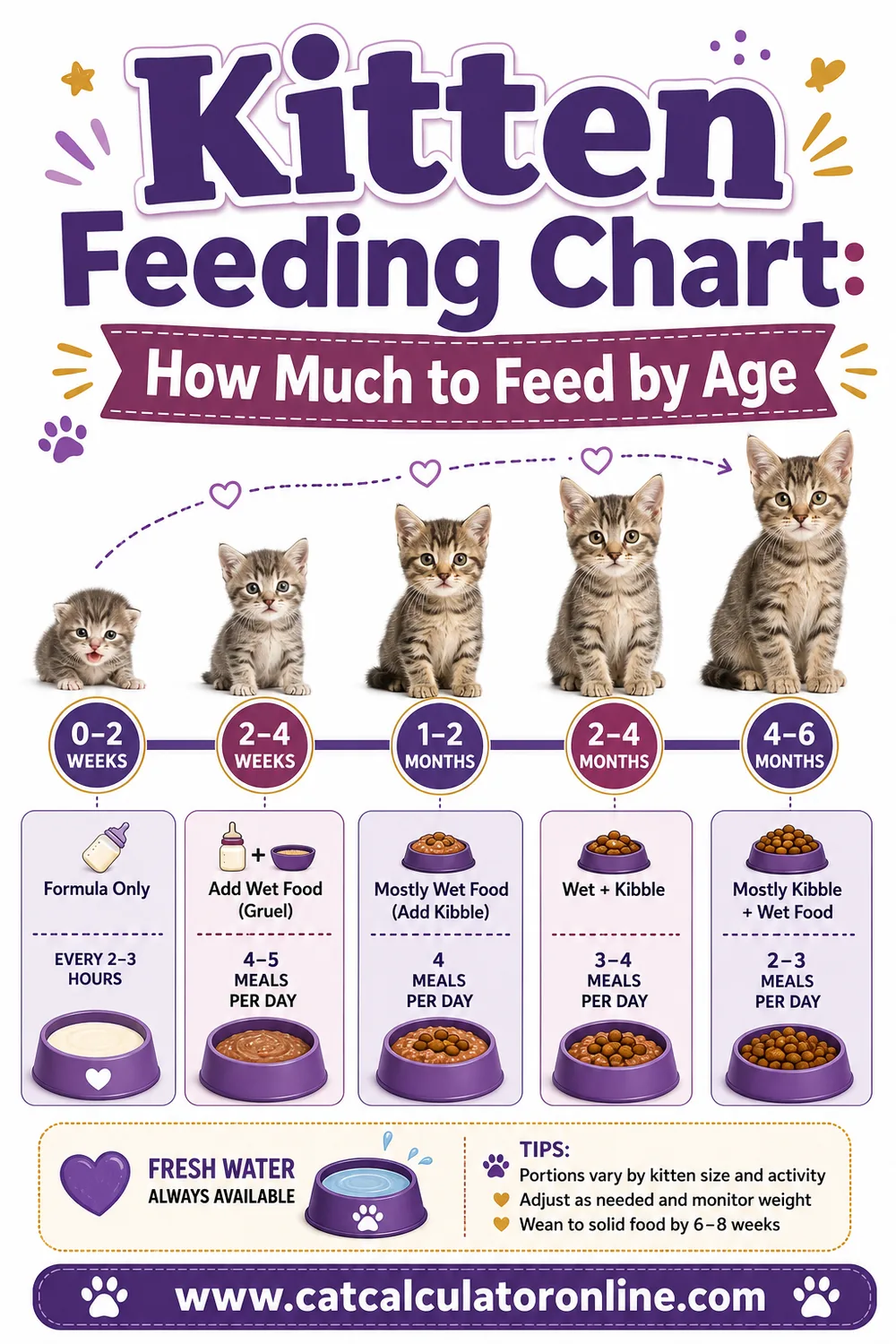
Kittens have tiny stomachs and big energy needs, so they eat little and often. The meal count drops as they grow:
| Age | Meals per day |
|---|---|
| Under 4 weeks (bottle) | Every 2–4 hours |
| Weaning to 3 months | 3–4 |
| 3–6 months | 3 |
| 6–12 months | 2–3, moving to 2 |
| 12 months+ (adult) | 2 |
Spacing meals through the day keeps a kitten's energy and blood sugar steadier than one or two big feeds. As your kitten approaches a year, two meals a day is the normal adult rhythm.
Free-Feeding vs. Scheduled Meals
This is the question most new owners actually have. There's no single right answer — it depends on the food and your kitten.
Scheduled meals (portioned meals at set times)
You put down a measured amount 2–4 times a day and pick up what's left after a while.
- Pros: you know exactly how much your kitten eats, it's easy to spot appetite changes early, and it works for wet food (which can't sit out).
- Cons: it's less flexible if you're out for long stretches.
Free-feeding (food left out)
You leave dry food available and top it up.
- Pros: convenient; growing kittens self-regulate reasonably well, and grazing suits their little-and-often nature.
- Cons: only works with dry food (wet food spoils), and it's easy to overfeed — especially once growth slows near adulthood, when free-feeding often tips cats toward overweight.
A common middle path: free-feed a measured daily amount of dry food while your kitten is young and growing hard, and serve wet food as one or two scheduled meals. That gives hydration and portion control from the wet food, plus grazing from the dry. Whatever you pick, measure the daily dry amount rather than endlessly refilling the bowl.
Wet vs. Dry Food for Kittens
Both are fine as long as they're formulated for kittens (or labeled "all life stages"). Here's the honest trade-off:
| Wet food | Dry food | |
|---|---|---|
| Hydration | High (~70–80% water) | Low |
| Convenience | Must be fed in meals, refrigerated | Can be left out, easy to measure |
| Calories | ~70–100 kcal per 3 oz can | ~300–400 kcal per cup |
| Best for | Hydration, easy for tiny mouths | Grazing, free-feeding |
Many owners feed a mix — wet meals plus some measured dry — and get the best of both. If you feed both, remember the calories add up: split the daily total between them rather than feeding a full portion of each.
A Simple Daily Feeding Schedule
Here's a realistic example for a roughly 3-month-old kitten on a mix of wet and dry, eating 3 meals a day. Adjust amounts to your food's label and your kitten's weight.
- Morning: a scheduled wet-food meal (about a third to half a small can).
- Midday: a scheduled wet-food meal (similar amount), or a measured scoop of dry.
- Evening: a scheduled wet-food meal, plus leave a small measured amount of dry available if you free-feed.
- All day: fresh water in a clean, shallow bowl.
The idea is small, regular meals, a known daily total, and water always available. As your kitten grows toward a year, fold three meals into two and shift toward adult portions.
Adjust to Your Kitten, Not the Chart
The chart gets you started; your kitten finishes the job. Check body condition every week or two:
- Ribs: you should feel them easily under a thin layer, not see them poking out or have to press through fat.
- Waist: looking down, there should be a slight tuck behind the ribs.
- Belly: rounded is normal for a kitten, but a hard, distended pot belly (especially with a dull coat) can signal parasites — worth a vet visit.
Kittens should gain weight steadily — roughly half a pound a month in the early months. If your kitten is losing weight or always frantic for food, feed a bit more and check with your vet. If it's getting soft and round as growth slows, ease back.
Common Kitten Feeding Mistakes
- Feeding adult cat food too early. Kitten food has the extra calories and protein a growing body needs. Stick with it until about 12 months.
- Giving cow's milk. Most cats are lactose intolerant. Cow's milk can cause diarrhea — use a kitten milk replacer if you need to supplement, never dairy.
- Guessing instead of measuring. "A bowl" isn't a portion. Measure the daily amount so you actually know what your kitten eats.
- Not switching off kitten food. Keeping kitten-sized portions going after growth finishes is a fast track to an overweight adult cat.
- Sudden food changes. Switch foods gradually over about a week to avoid stomach upset.
When to Ask Your Vet
Feeding is mostly straightforward, but loop in your vet if your kitten:
- Won't eat, or eats far less than usual for more than a day.
- Is losing weight or not gaining despite eating.
- Has ongoing diarrhea, vomiting, or a hard, swollen belly.
- Is a bottle-fed orphan under 4 weeks — formula, amounts, and schedule for very young kittens are genuinely medical and should be vet-guided.
Your vet can weigh your kitten, check body condition, and give an exact daily amount for your specific food. This guide gets you a solid starting point; your vet dials it in.
FAQ
How much should I feed my kitten a day?
It depends on weight and food, but a rough starting point is 2–3 oz of wet food (or ¼–½ cup dry) a day at 2 lb, up to 5.5–7 oz wet (or ⅔–1 cup dry) at 6 lb, split across the day's meals. Confirm the exact amount with your food's label and your vet.
Should I free-feed my kitten or give scheduled meals?
Both can work. Scheduled meals give you portion control and let you catch appetite changes; free-feeding dry food suits a young kitten's grazing habit. A popular mix is measured free-fed dry plus one or two scheduled wet meals. Once growth slows near a year, lean toward measured meals to avoid overfeeding.
Is wet or dry food better for a kitten?
Neither is "better" — wet adds hydration and is easy for small mouths, dry is convenient and can be left out. Many owners feed a mix. Just make sure it's formulated for kittens or labeled "all life stages," and count the total calories if you feed both.
How often should a kitten eat?
Very young kittens feed every 2–4 hours. From weaning to 3 months, 3–4 meals a day; 3–6 months, 3 meals; from 6 months on, taper toward 2 meals a day.
Can kittens eat as much as they want?
Growing kittens self-regulate fairly well, so free-feeding a measured daily amount of dry food is common. But "as much as they want" without any measuring often leads to overfeeding, especially once growth slows. Measure the daily total and watch body condition.
When do I switch my kitten to adult food?
Most cats switch around 12 months, when they finish growing. Large breeds like the Maine Coon may stay on kitten food to 2 years or more. Transition gradually over about a week.
The Bottom Line
Feed your kitten kitten food in small, regular meals — 3–4 a day while young, tapering to 2 as it grows — and let the food's label plus your kitten's body condition set the exact amount. Whether you free-feed, do scheduled meals, or mix wet and dry is up to your routine; measuring the daily total is what keeps a kitten lean and growing well. Confirm the exact amount with your vet and your food's label.
For the age-by-age amounts in table form, see our kitten feeding chart — and use our free cat age calculator if you need to figure out how old your kitten is.
<a href="/">See all our cat tools →</a>