How Big Do Ragdolls Get? Size, Weight and Growth by Age
Male Ragdolls typically weigh 15–20 pounds, and females 10–15 pounds — which makes the Ragdoll one of the largest domestic cat breeds, matching or even outweighing the famous Maine Coon on the scale. They earn that size slowly: a Ragdoll isn't fully grown until around 4 years old, roughly four times longer than an average cat takes. So if your Ragdoll still looks like a work in progress at two, that's because she is.
Raising a Ragdoll kitten and wondering if she's on track? Our free kitten weight calculator shows the typical weight range for her age in seconds.

🐾 Ragdoll size by age
Tap an age to see a typical Ragdoll weight range:
Tap an age above to see the typical weight range.
How Big Do Ragdolls Get Compared to Other Cats?
Ragdolls are genuinely big cats — not just fluffy-big, actually big. Here's the breed next to some familiar reference points.
| Cat | Typical male weight | Typical female weight |
|---|---|---|
| Ragdoll | 15–20 lb | 10–15 lb |
| Maine Coon | 13–18 lb (some 20+) | 8–12 lb |
| Siberian | 10–17 lb | 8–12 lb |
| Average domestic cat | 9–11 lb | 8–10 lb |
Two things stand out. First, a male Ragdoll can weigh twice what an ordinary house cat does — when he drapes himself across your lap, you'll know it. Second, the male–female gap is wide in this breed. A 12-pound female Ragdoll is perfectly normal, not undersized, so don't measure her against the 20-pound males in the breed group photos.
Where the Maine Coon wins on sheer nose-to-tail length, the Ragdoll carries its size differently: a broad chest, heavy hindquarters, a plush semi-longhair coat and a general impression of substance. Pick one up and the "solid" is not an illusion.
The look that comes with the size
The Ragdoll package is distinctive: striking blue eyes (every purebred Ragdoll has them), a pointed coat — darker color on the ears, face, legs and tail over a lighter body, like a Siamese in a winter coat — and silky semi-longhair fur that mats less than you'd fear. Kittens are born almost white, with the point color developing over the first weeks and the coat and color continuing to deepen for a couple of years. So a Ragdoll isn't just growing in size until age four — she's growing into her looks, too.
When Do Ragdolls Stop Growing?
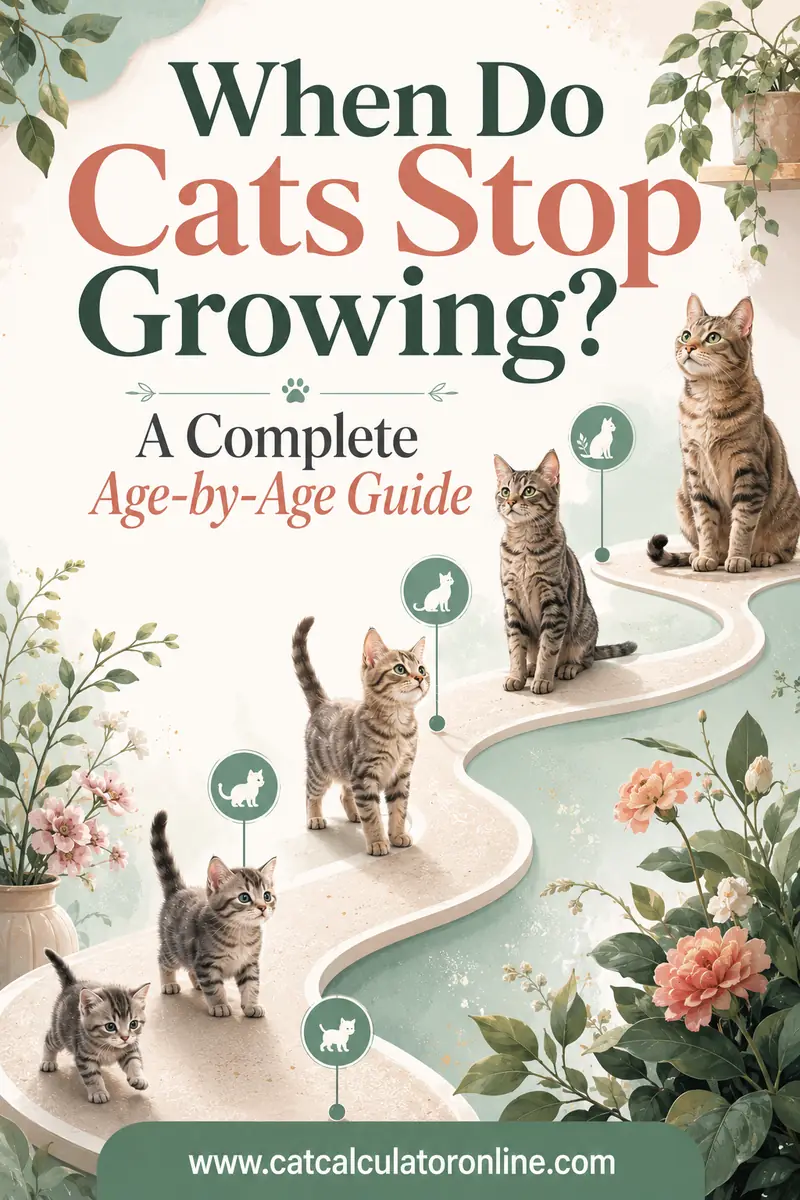
Around age four. Most cats finish growing at about one year old; Ragdolls, like a handful of other large breeds, take the scenic route.
The growth isn't evenly spread. The first year does most of the visible work — a Ragdoll at twelve months already looks like a big cat. What continues after that is the slow filling-out: broader chest, heavier muscle, that characteristic solid feel, plus the coat and color still maturing. Owners often report a Ragdoll who "suddenly got huge" between two and three; nothing sudden happened — the breed just wasn't done.
Practical implications while you wait:
- Don't judge final size at one year. A 10-pound yearling male can still become an 18-pound adult.
- Keep growth-stage feeding on your vet's radar. An extended growth window changes when to switch from kitten food — ask rather than guess.
- Expect the personality to finish first. The famously relaxed temperament is fully installed long before the body is.
For how this compares across breeds, see when do cats stop growing.
What Does a Ragdoll Growth Chart Look Like?
Rough, healthy ranges by age — males toward the top of each range, females toward the bottom, and plenty of normal cats outside these bands entirely:
| Age | Typical weight range | What's happening |
|---|---|---|
| 3 months | 3–5 lb | Outpacing ordinary kittens; born white, points now showing |
| 6 months | 5–8 lb | Nearly average-adult-cat size at half a year |
| 9 months | 7–10 lb | Long and rangy; frame ahead of muscle |
| 12 months | 8–12 lb | Looks adult, isn't — roughly two-thirds of final weight |
| 2 years | 9–15 lb | Chest and hindquarters filling out; coat deepening |
| 3 years | 10–18 lb | Nearly there; males still adding substance |
| 4 years | Males 15–20 lb, females 10–15 lb | Full adult size |
The honest caveat that belongs under every chart like this: there's no official registry of Ragdoll growth data, so these ranges blend breeder records and owner reports. Your kitten's own curve is the better guide — steady gains month over month matter more than hitting any particular number. Track her against the general kitten growth chart, or just enter her age into the kitten weight calculator whenever you weigh her.
Why Do Ragdolls Go Limp When You Pick Them Up?
You can't write about this breed without covering the party trick that named it. Many Ragdolls, when picked up, simply… flop. Muscles loose, body draped over your arm like a warm towel. It's not universal — some individuals never do it — but it's common enough that a 1960s California breeder named the whole breed after it.
The flop is one expression of the temperament that defines the breed: Ragdolls are placid, trusting, people-oriented cats. They tend to follow their owners around, greet visitors instead of hiding, tolerate handling that would earn you claws from other cats, and generally treat life as a low-stakes affair. It's a wonderful personality to live with — and it comes with one serious caveat.
That docility makes the outdoors genuinely dangerous for them. A cat with a soft flight response, limited wariness of strangers and dogs, and a trusting nature is poorly equipped for traffic, predators and unkind humans. Ragdoll breeders and rescues are near-unanimous: this is an indoor breed, full stop. Given that indoor cats broadly live 13–17+ years while outdoor cats average far less, the indoor rule is doing double duty here — see how long do indoor cats live for the numbers. A window perch, a catio or harness walks cover the fresh-air needs safely.
Is My Ragdoll Overweight or Just Big?
This is the breed-specific trap. A Ragdoll's big frame and plush coat can hide a lot of extra weight, and "Ragdolls are just huge" makes a convenient excuse right up until the vet says obese. Meanwhile the breed's mellow, low-zoomies energy level means many burn fewer calories than livelier cats. Big frame + calm temperament + fluffy camouflage = weight creep that nobody notices for a year.
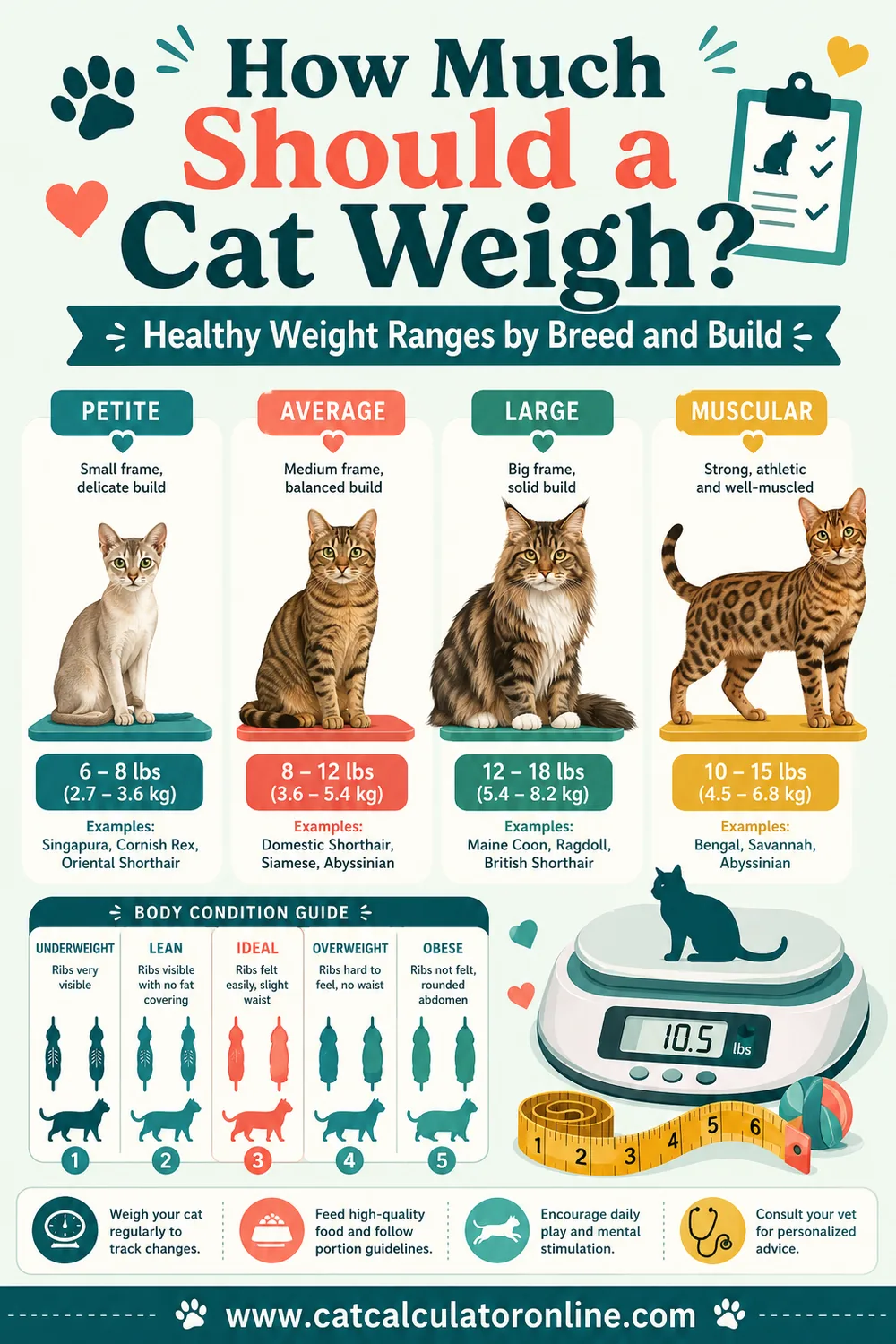
So ignore the scale-versus-breed-chart comparison and go hands-on:
- Ribs: run your hands along her sides. You should feel ribs under a light fat layer without digging. Can't find them? Time to talk portions.
- Waist: viewed from above — and you'll need to mentally subtract the fur — there should be an inward curve behind the ribs.
- Profile: a slight belly tuck-up is ideal. A low, rounded swing that's more than the normal primordial pouch is a flag.
A healthy 18-pound male Ragdoll feels solid and muscular. An overweight 18-pound female feels soft and rounded — same scale reading, opposite verdicts. That's why body condition beats weight every time; our guide to how much should a cat weigh walks through the full check. If you're unsure, your vet can score her body condition in seconds — ask at the next visit.
What Health Notes Should Ragdoll Owners Know?
Ragdolls are a generally healthy, long-lived breed — typically reaching 15–18 years — but two items belong on every owner's radar.
- Hypertrophic cardiomyopathy (HCM). The breed has a recognized association with this heart condition, in which the heart muscle thickens. A genetic test exists for a variant found in Ragdolls, and reputable breeders test their breeding cats — if you're kitten-shopping, ask the breeder directly what HCM testing they do and expect a clear answer. If you already have a Ragdoll, mention the breed to your vet and ask whether any heart monitoring makes sense for your cat.
- Weight-related strain. Not genetic, just physics: extra pounds on an already-heavy frame stress joints and heart. Keeping a Ragdoll lean is the single cheapest thing you can do for her old age.
That's the whole list of headline items — this isn't a fragile breed. The pattern to follow is the same as with any pedigree cat: ask the breeder about health testing before you buy, and let your vet guide screening afterward.
FAQ
How big do Ragdoll cats get?
Males typically reach 15–20 pounds and females 10–15 pounds, making Ragdolls one of the largest domestic breeds — on the scale, they match or beat Maine Coons, though Maine Coons are longer-bodied.
At what age is a Ragdoll full grown?
Around 4 years old. The first year covers most of the visible growth, but chest, muscle and coat keep developing for another three. An average cat, for comparison, finishes at about one year.
Are male Ragdolls much bigger than females?
Yes — the gap is wide in this breed. A 20-pound male and a 10-pound female can both be perfectly healthy Ragdolls. Judge each cat by body condition, not by the breed's famous top-end numbers.
Do all Ragdolls go limp when you hold them?
Many do — it's the trait the breed is named for — but not all. Some individuals flop dramatically, others just relax, and a few never do it. All of it is normal.
Can Ragdolls go outside?
It's strongly discouraged. Their docile, trusting temperament leaves them poorly defended against traffic, predators and strangers, which is why breeders and rescues call this an indoor breed. Harness walks or a catio are the safe compromise.
Is a 20-pound Ragdoll healthy?
It can be — for a large male with a lean, muscular build. The same weight on a female or a smaller-framed male usually means excess fat. Use the rib-and-waist check rather than the number, and ask your vet to confirm with a body condition score.
The Bottom Line
Ragdolls get big — 15–20 pounds for males, 10–15 for females — and they take a leisurely four years to get there, growing into their size, coat and color in slow motion. Enjoy the process, keep her indoors where that famously floppy temperament stays safe, and watch body condition rather than the scale, because a big frame hides weight creep better than any other breed's.
Weighing a Ragdoll kitten this month? Check her against the typical range for her age with the free kitten weight calculator — and keep the kitten growth chart bookmarked, because with this breed, you'll be using it for a while.