Kitten Feeding Chart: How Much and How Often by Age
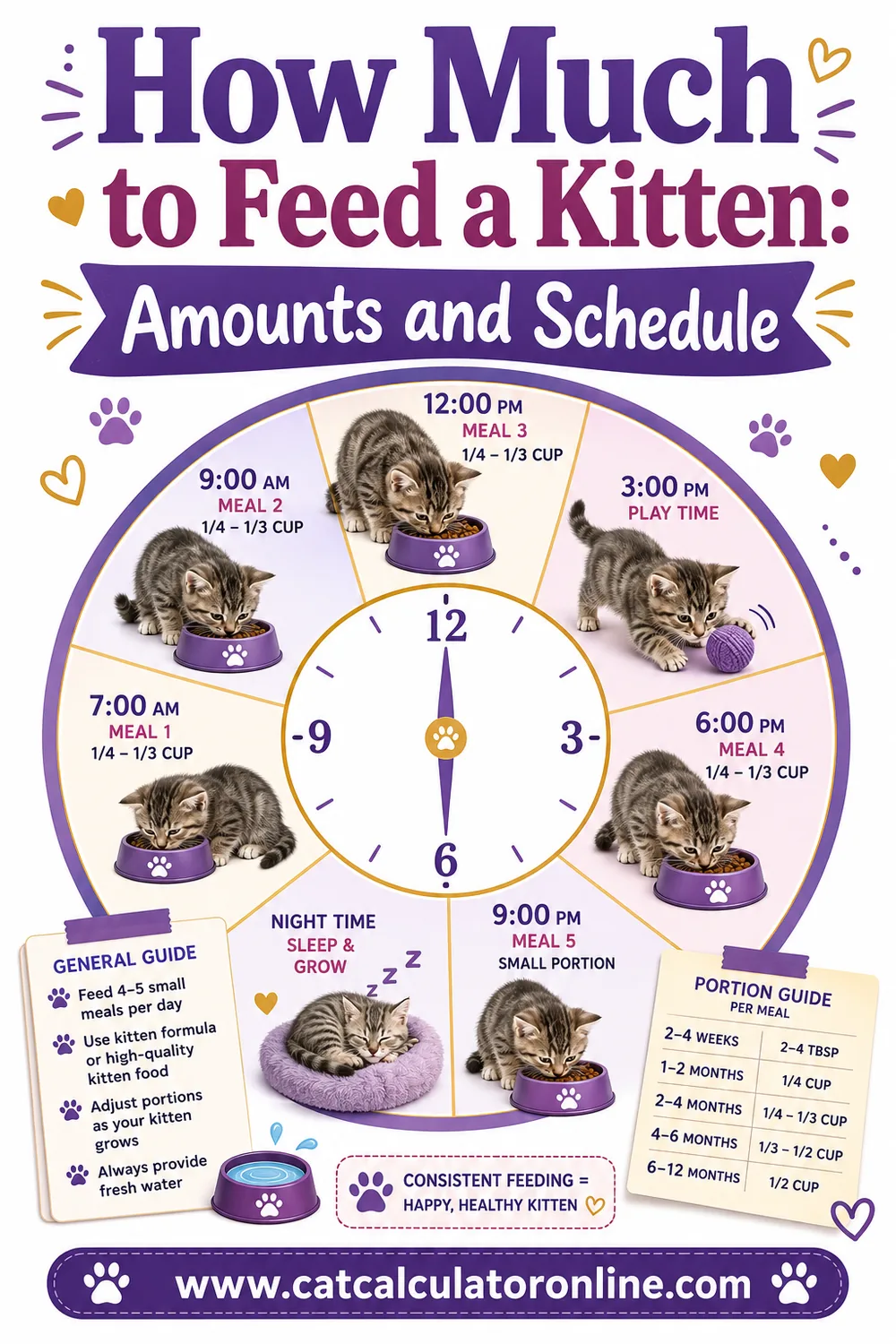
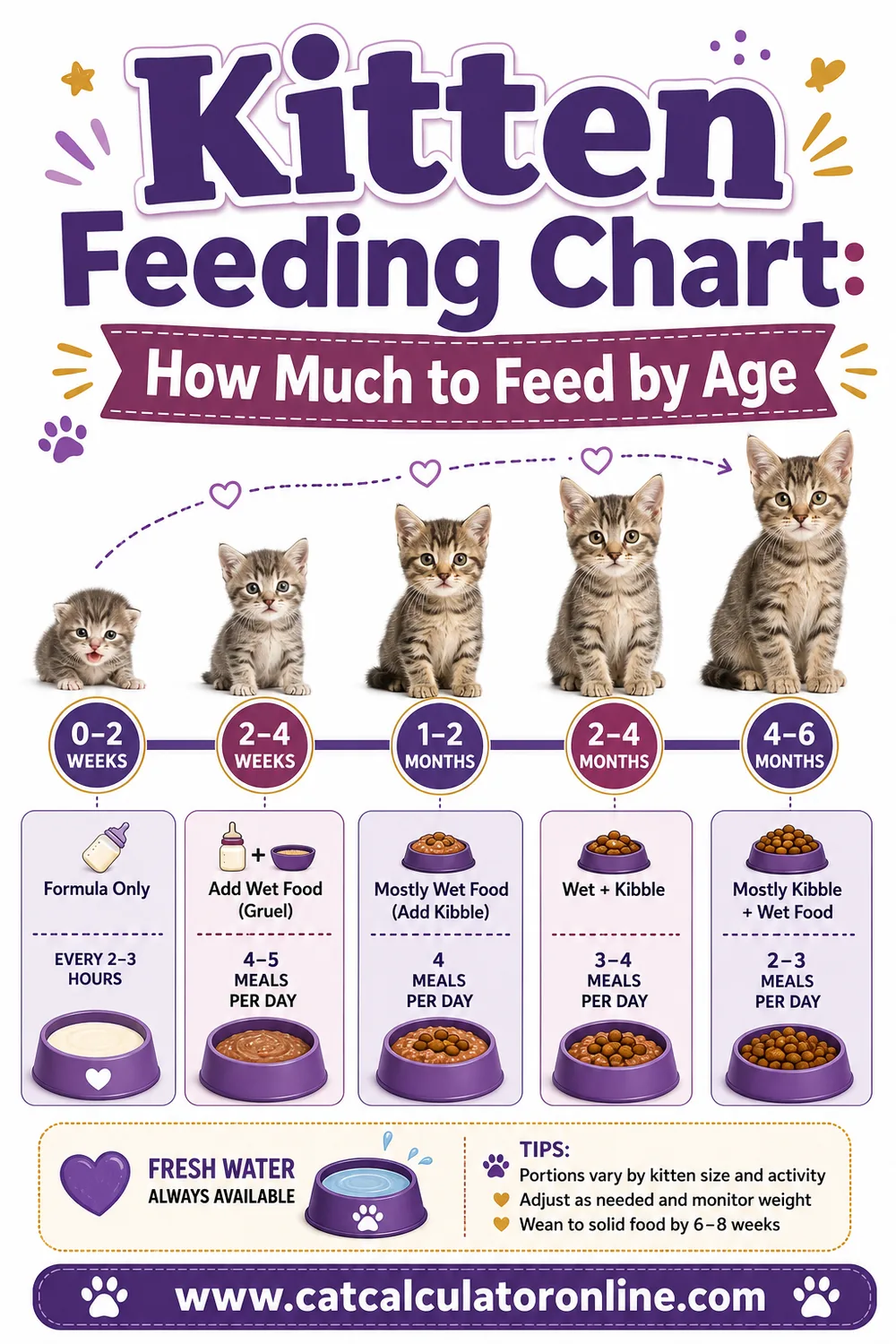
Here's the short version: very young kittens (under 4 weeks) feed on milk or formula every few hours, kittens 4–8 weeks start moving to solid food across 3–4 meals a day, and from about 2 months to a year they eat kitten food 3 meals a day tapering to 2. Kittens need roughly twice the calories per pound that an adult cat does because they're growing fast, so they eat a lot for their size. The chart below lays out the amounts and meal counts age by age.
If you just want a starting portion for your kitten's weight, tap it in the mini chart below. For the practical "how do I actually run mealtimes" side of things — free-feeding versus scheduled meals, wet versus dry — see our companion guide on how much to feed a kitten. And our free cat age calculator helps if you're not sure how old your kitten is in the first place.
🐱 Kitten feeding starting point
Tap your kitten’s age to see a typical amount and meal count:
Tap an age to see a starting amount. Always confirm the exact amount with your vet and your food’s label.
How to Read This Chart
Every number here is a starting point, not a fixed prescription. Food brands differ a lot in how many calories they pack per cup or per can, so the single most important number isn't in any generic chart — it's the kcal value printed on your kitten's food and the feeding guide on that specific bag or can.
A few things shape how much your kitten actually needs:
- Growth rate. Kittens grow fastest in the first few months, so their appetite is huge relative to their size.
- Wet versus dry. A 3 oz can of wet kitten food is roughly 70–100 kcal; a cup of dry kitten food is roughly 300–400 kcal. So the volume looks wildly different for the same calories.
- Body condition. A kitten should be lean but not bony — you want to feel ribs under a light layer, with a small waist. Adjust portions to keep them there.
Use the chart to get in the right ballpark, then let your kitten's weight and shape fine-tune it.
The Kitten Feeding Chart by Age
This is the reference most people come here for. Amounts are total per day, before you split them into meals. Kittens should eat kitten-specific food (higher calories and protein than adult food) until about 12 months.
| Age | Food | Meals per day | Rough amount per day |
|---|---|---|---|
| 0–4 weeks | Queen's milk or kitten formula | Every 2–4 hours | Per formula label, by weight |
| 4–5 weeks | Formula + wet food gruel (weaning starts) | 4–5 | Small amounts; mostly still nursing |
| 6–8 weeks | Wet/dry kitten food (weaning finishing) | 4 | ~2–3 oz wet or ¼–½ cup dry |
| 2–3 months | Kitten food | 3–4 | ~3.5–5 oz wet or ½–⅔ cup dry |
| 4–5 months | Kitten food | 3 | ~4.5–6 oz wet or ⅔–¾ cup dry |
| 6–8 months | Kitten food | 2–3 | ~5.5–7 oz wet or ⅔–1 cup dry |
| 9–12 months | Kitten food, transitioning to adult | 2 | ~6–8 oz wet or ¾–1 cup dry |
The wet and dry amounts are two ways to hit similar calories, not amounts you'd feed together at full size — if you feed both (many people do), split the total between them. Always cross-check against your food's own feeding guide, because a rich, calorie-dense kibble means smaller portions than a lighter one.
Why the amounts are given as ranges
You'll notice every row is a range, not a single number. That's on purpose. A petite 8-week-old and a chunky future Maine Coon of the same age genuinely need different amounts, and no chart can see your specific kitten. The range keeps you in a safe zone; your kitten's body does the final tuning.
How to Split the Daily Amount Into Meals
The chart gives a daily total. To turn that into meals, just divide it by the number of meals for that age. It doesn't have to be exact — kittens aren't calculators — but roughly even portions keep their energy steady.
Say your 3-month-old kitten's daily total works out to about 4 oz of wet food, and you're feeding 3 meals. That's a little over 1 oz per meal — easy. If you're mixing wet and dry, decide the split first (for example, two small wet meals plus a measured amount of dry across the day), then portion each part.
- More meals, smaller portions. Younger kittens eating 4 times a day get smaller plates than an older kitten eating twice.
- Keep the daily total the same. Adding a meal doesn't mean adding food — it means dividing the same amount into more servings.
- Pick up uneaten wet food. Wet food shouldn't sit out for hours. If your kitten regularly leaves some, the portion may be a touch big.
If you free-feed dry food, "meals" matters less — measure the day's dry allowance into the bowl in the morning and let your kitten graze, rather than topping up endlessly.
Weaning: From Milk to Solid Food
Weaning is the bridge between "all milk" and "all solid food," and the chart above straddles it. Here's the typical timeline:
- ~4 weeks — start. Offer a gruel of wet kitten food mashed with a little kitten formula or warm water. Kittens lap and mush more than eat at first.
- 5–6 weeks — thicken it. Use less liquid so the food gets more solid. Kittens start eating more and nursing less.
- ~7 weeks — mostly solids. Most kittens are eating solid kitten food and drinking water from a bowl.
- ~8 weeks — fully weaned. By eight weeks, a healthy kitten is usually off milk entirely and on kitten food.
Two rules that matter during weaning:
- Fresh water, always. Once solids start, kittens need a shallow, clean water bowl available at all times.
- No cow's milk. Most cats are lactose intolerant, and cow's milk can cause diarrhea. If you're supplementing, use a proper kitten milk replacer, never dairy from the fridge.
Bottle-Feeding Very Young Kittens
If you're caring for orphaned kittens under 4 weeks, they can't eat from the chart yet — they need kitten formula (milk replacer) on a schedule.
- Newborn to ~2 weeks: feeding roughly every 2–3 hours, around the clock.
- ~2–4 weeks: stretch toward every 3–4 hours as they grow.
- Amount: follow the exact directions on your kitten milk replacer, which are set by the kitten's weight.
Bottle-feeding is genuinely medical territory — get a vet's guidance on formula, amounts, and technique, especially for very young or weak kittens. Never feed a chilled kitten; warm them first.
Kitten Calorie Needs vs. Adult Cats
Why do kittens eat so much for their size? Because they're building a body. A growing kitten needs roughly double the calories per pound that a resting adult cat needs. That flips once they finish growing — an adult (especially an indoor, neutered cat) often needs surprisingly little, which is why the switch off kitten food matters.
| Life stage | Rough calorie need | Food type |
|---|---|---|
| Growing kitten | ~2× per lb vs. adult | Kitten food |
| Young adult cat | Baseline (~20 kcal/lb, less if indoor/neutered) | Adult food |
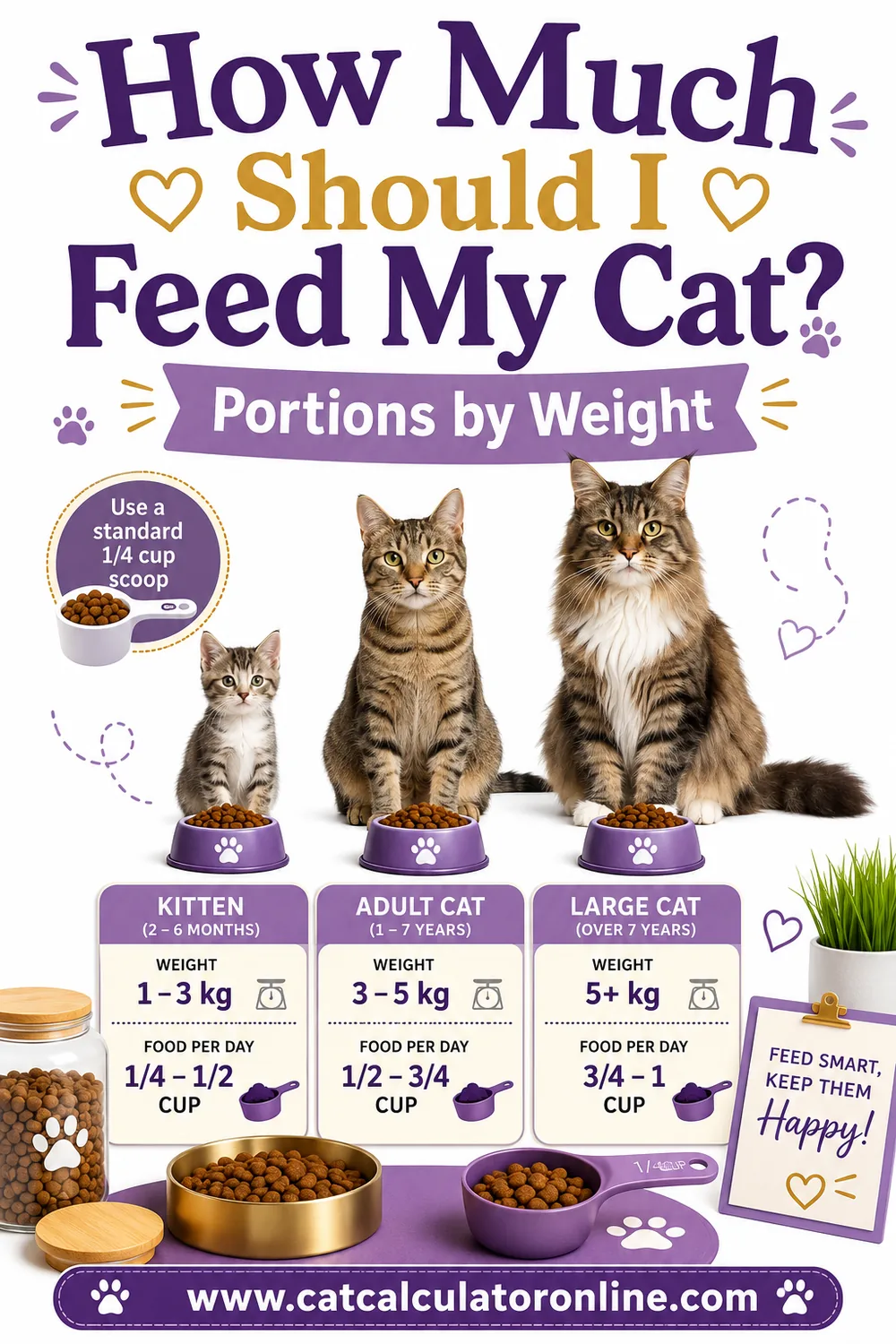
For the adult side of that math, see how much should I feed my cat. The takeaway: don't keep feeding kitten-sized portions once your cat stops growing around a year, or you'll head straight toward an overweight adult.
When to Switch From Kitten Food to Adult Food
Most cats move to adult food around 12 months, when growth finishes. Large breeds — Maine Coon, Ragdoll, Norwegian Forest Cat — keep growing to 2–4 years and often stay on kitten food longer; ask your vet about timing for those.
Make the switch gradually over about a week to avoid stomach upset:
- Days 1–2: ~75% kitten food, 25% adult
- Days 3–4: 50/50
- Days 5–6: 25% kitten, 75% adult
- Day 7+: all adult food
Signs You're Feeding the Right Amount
You don't need to obsess over grams. Watch the kitten instead:
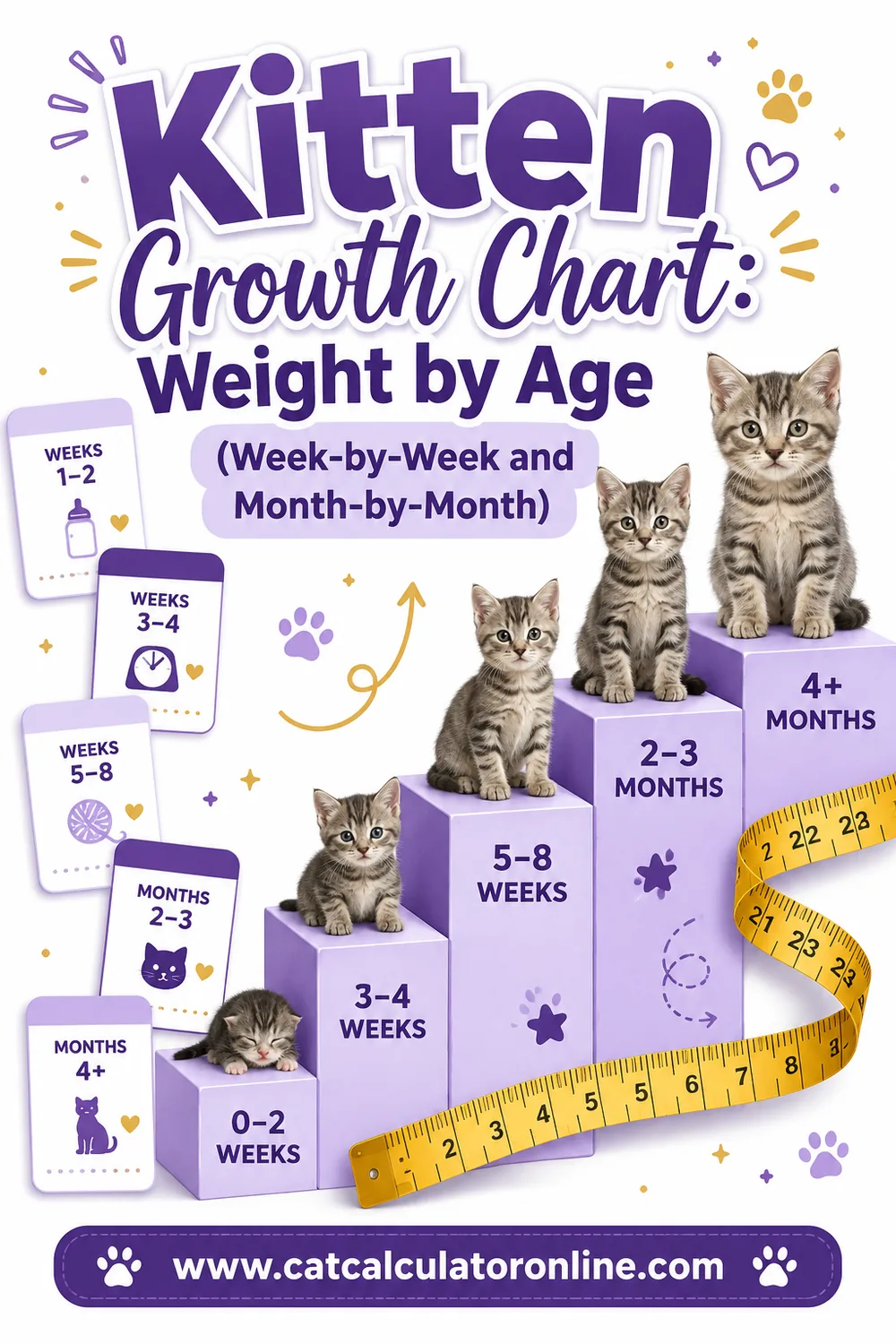
- Steady weight gain. Kittens should gain roughly half a pound a month in the early months. Cross-check against a kitten growth chart.
- Lean, not bony; rounded, not pot-bellied. You should feel ribs easily, with a slight waist.
- Good energy and firm stools. A kitten eating well plays hard and poops normally.
If your kitten is losing weight, always ravenous, or getting round and soft, adjust the amount and check in with your vet.
FAQ
How much should I feed a kitten by weight?
As a rough guide, a kitten needs about twice the calories per pound that an adult cat does. In practice that's roughly 2–3 oz of wet food (or ¼–½ cup dry) a day at 8 weeks, rising to 6–8 oz wet (or ¾–1 cup dry) by 9–12 months. Confirm the exact amount with your food's label and your vet.
How often should kittens eat?
Very young kittens feed every 2–4 hours. From weaning to about 3 months, feed 3–4 meals a day. From 3–6 months, 3 meals; from 6 months on, taper toward 2 meals a day.
Can I free-feed dry food to a kitten?
Many people leave dry kitten food out because kittens self-regulate fairly well while growing. Wet food can't be left out safely, so it's fed in meals. Our how much to feed a kitten guide walks through free-feeding versus scheduled meals in detail.
When do kittens stop eating kitten food?
Around 12 months for most cats, when they finish growing. Large breeds may stay on kitten food to 2 years or more. Transition to adult food gradually over about a week.
Should kittens eat wet or dry food?
Both work. Wet food adds hydration and is easy for tiny mouths; dry is convenient and can be left out. Many owners feed a mix. Whatever you choose, make sure it's labeled for kittens or "all life stages."
Is my kitten eating too much?
If it's gaining weight steadily, staying lean with a slight waist, and has good energy and firm stools, the amount is probably right. Persistent roundness, a pot belly, or loose stools are cues to adjust and ask your vet.
The Bottom Line
Kittens eat a lot for their size because they're growing — roughly double an adult's calories per pound, split across 3–4 meals a day early on, tapering to 2 by the time they're grown. Use the chart as your starting point, feed kitten food until about 12 months, and let your kitten's weight and body shape guide the fine-tuning. Always confirm the exact amount with your vet and your food's label.
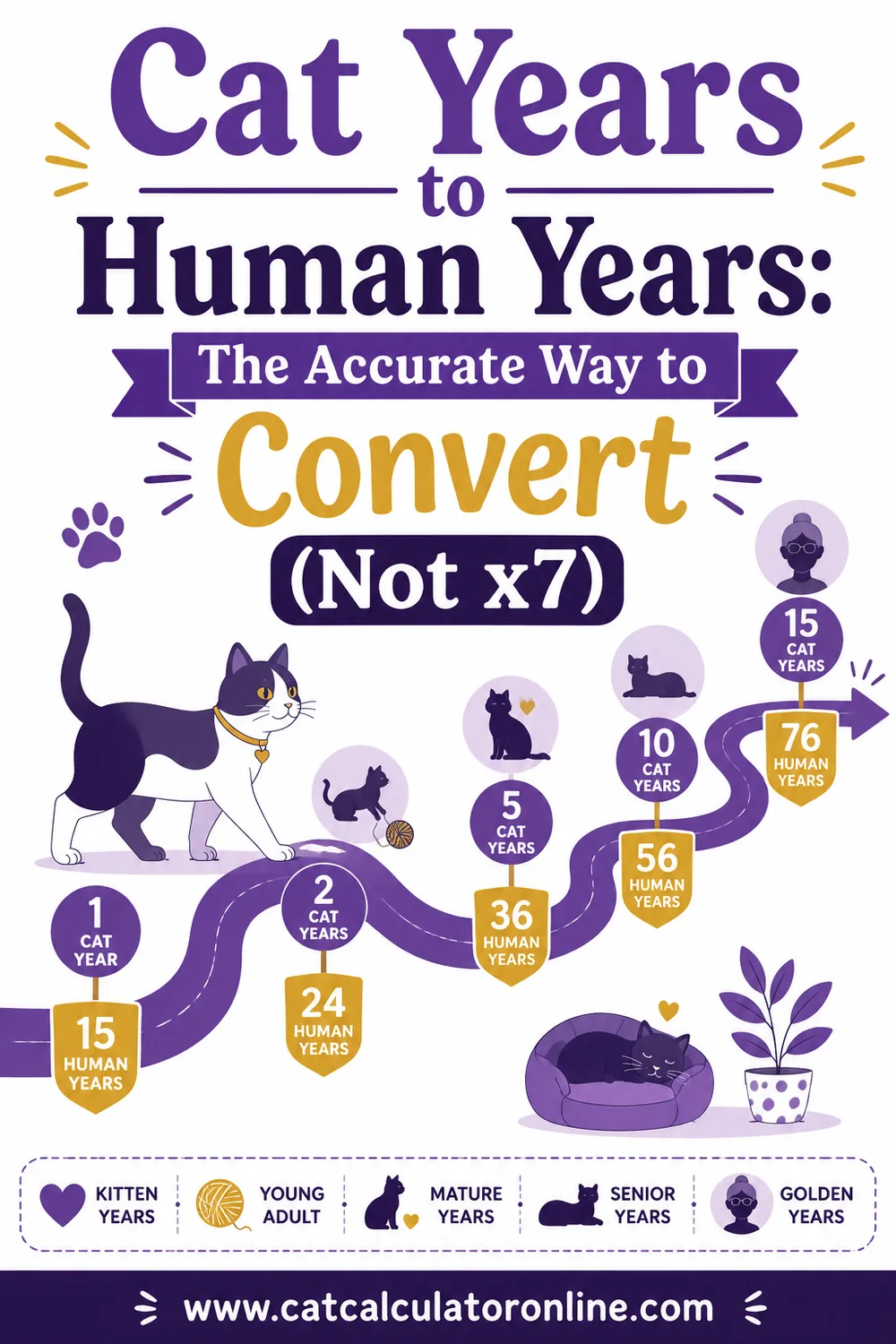
Not sure how old your kitten actually is? Our free cat age calculator can help you estimate it, so the chart above lands on the right row.
<a href="/">See all our cat tools →</a>