Why Is My Cat Throwing Up? Causes, Colors & When to Worry
An occasional hairball or a single one-off vomit can be minor, but vomiting is a symptom, not a diagnosis — and frequent or repeated vomiting is not normal for a cat. The common causes range from harmless (a hairball, eating too fast) to serious (parasites, an obstruction, or in older cats kidney disease, hyperthyroidism, diabetes, IBD, pancreatitis or cancer). Only your vet can sort out which one it is, so if your cat is vomiting more than very occasionally, book a visit.
This guide is informational only. It'll help you tell a probably-minor episode from a red-flag emergency and give you the right things to note before you call, but it can't diagnose your cat. If your cat is an older one, our free cat age calculator will confirm her life stage — useful, because several of the more serious causes below are far more common in senior cats.
🐱 What might be going on?
Tap what best matches what you’re seeing:
Tap an option above to see how urgent it usually is.
Is It Normal for a Cat to Throw Up?
Here's the honest answer that a lot of cat owners never hear: no, regular vomiting is not normal, even though it's extremely common. Because so many cats do it, "cats just throw up sometimes" has become accepted wisdom. It shouldn't be.
A genuinely one-off vomit — your cat brings up a meal once, then goes right back to eating, playing, and using the litter box normally — is usually nothing to panic about. The same goes for the very occasional hairball. But a cat who vomits every week, or several times in a week, or who vomits and then seems off, is telling you something is wrong.
The reason this matters is that vomiting is one of the earliest signs of several treatable feline conditions. Owners who wave it off as "just a fussy tummy" often miss the window where the underlying problem is easiest to manage. So the useful mindset is: an occasional episode, watch and note it; anything frequent or paired with other symptoms, call the vet.
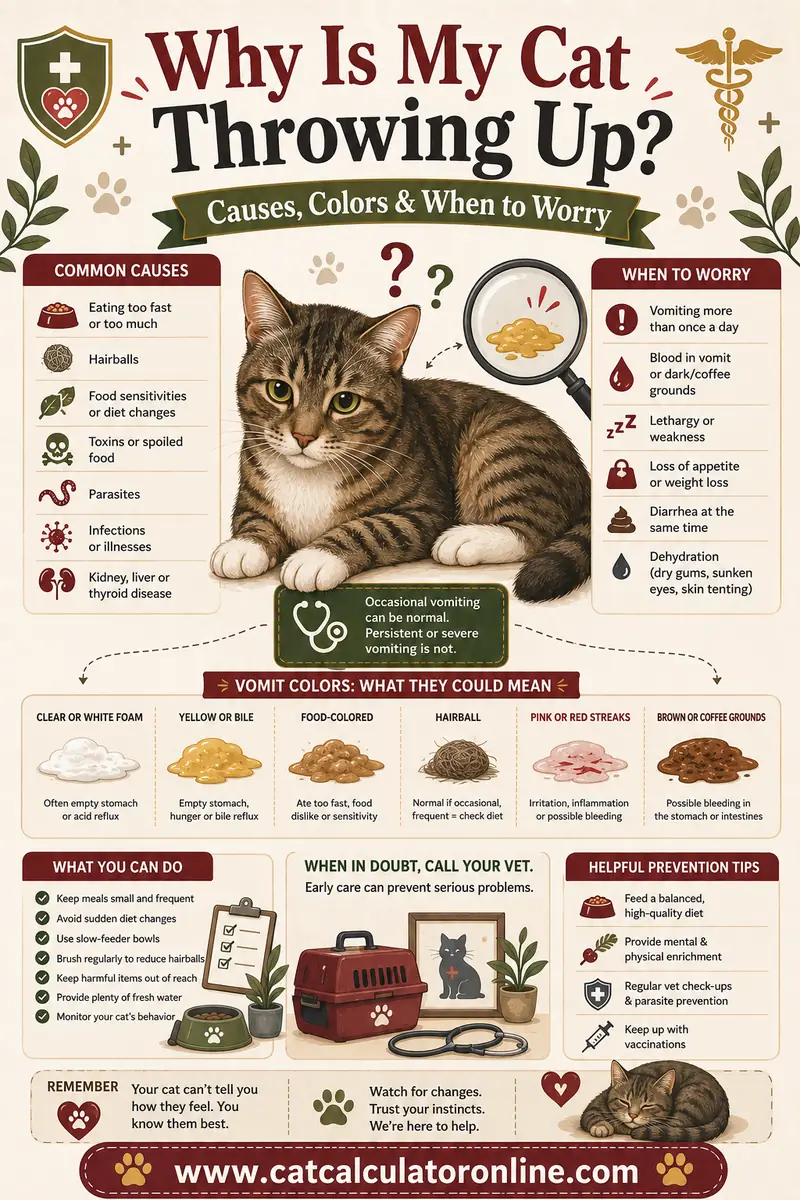
Common Causes of Vomiting in Cats
Vomiting has a long list of possible causes, and you genuinely can't tell them apart at home. Below are the common ones — think of this as "here's what your vet will be considering," not a menu to diagnose from.
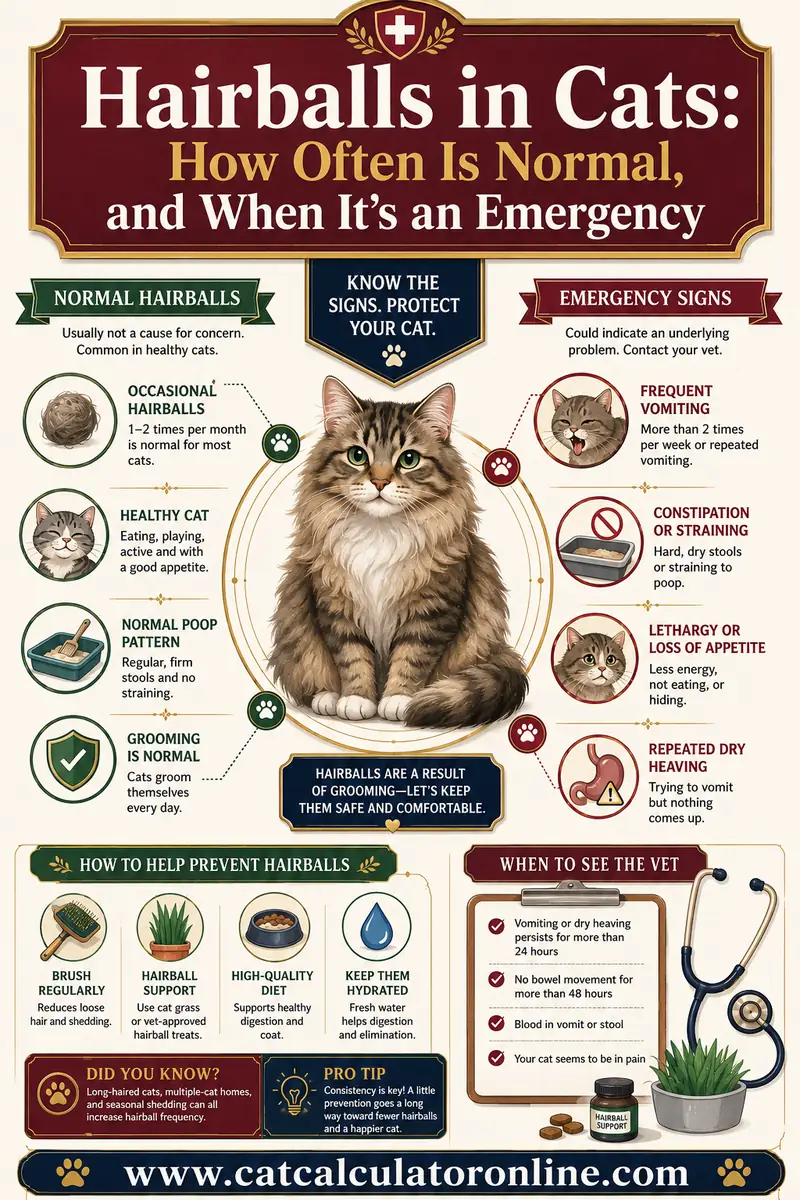
- Hairballs. Cats swallow hair when grooming, and normally it passes through. Sometimes it comes back up as a damp, tube-shaped plug. The odd one is normal; frequent hairballs can point to over-grooming or a gut that isn't moving hair through properly. Our guide to hairballs in cats goes deeper.
- Eating too fast ("scarf and barf"). A hungry cat who inhales a meal can bring it straight back up, undigested, minutes later. A slow feeder bowl and smaller, more frequent meals often fix this.
- A sudden diet change. Switching food abruptly can upset the stomach. New foods should be mixed in gradually over a week or so.
- Dietary indiscretion. Cats eat things they shouldn't — a bit of houseplant, a bug, string, food from the bin, a scrap of something rich.
- Food intolerance or allergy. Some cats react to an ingredient (often a protein) with chronic, low-grade vomiting.
- Intestinal parasites. Worms and other parasites are a common cause, especially in kittens and outdoor cats.
- An obstruction. A hairball that won't pass, or a swallowed object or piece of string, can block the gut. This is serious and often surgical.
- Older-cat diseases. In cats over about seven, vomiting is a classic early sign of kidney disease, hyperthyroidism, diabetes, inflammatory bowel disease (IBD), pancreatitis, or cancer. These need proper diagnosis and ongoing care.
The takeaway from that list: the causes span from "buy a slow feeder" to "this needs treatment for life." That gap is exactly why a vet — not a web page — has to be the one to sort it out.
What the Color of Cat Vomit Can Mean
Owners always want to read the tea leaves in the color, and it can be a useful clue to bring to the vet. But color alone does not diagnose anything — a vet interprets it alongside your cat's history, exam, and often bloodwork. Use this to describe what you saw, not to decide it's fine.
| What you see | Possible clue | What to do |
|---|---|---|
| Undigested food, soon after eating | Ate too fast, or ate then vomited before digesting | Try a slow feeder / smaller meals; vet if it repeats |
| Clear or white foam | Empty, irritated stomach | Note frequency; vet if repeated |
| Yellow or greenish foam (bile) | Stomach empty too long, or an underlying issue | Vet if more than a one-off |
| A firm, tube-shaped hair plug | A hairball | Occasional is normal; frequent = vet |
| Brown, granular, or "coffee-ground" look | Possible digested blood | Same-day vet |
| Red streaks or fresh blood | Bleeding somewhere in the upper gut | Emergency — vet now |
| Bright or unusual color you can't explain | Possible dye from a swallowed substance or toxin | Emergency — vet now |
Two practical notes. First, snap a quick photo before you clean it up — it's far more useful to your vet than a description. Second, don't over-read a single normal-looking episode; the color chart earns its keep when vomiting is repeated or paired with other signs.
When Cat Vomiting Is an Emergency
Some situations don't wait for a routine appointment. Get to a vet or emergency clinic straight away if you see any of these:
- Repeated vomiting in a single day — throwing up several times over a few hours risks fast dehydration.
- Vomiting plus lethargy, or vomiting plus refusing to eat — the combination is more worrying than vomiting alone.
- Blood in the vomit — whether fresh red streaks or dark "coffee-ground" material.
- A bloated, hard, or painful belly — especially if your cat reacts to being touched there.
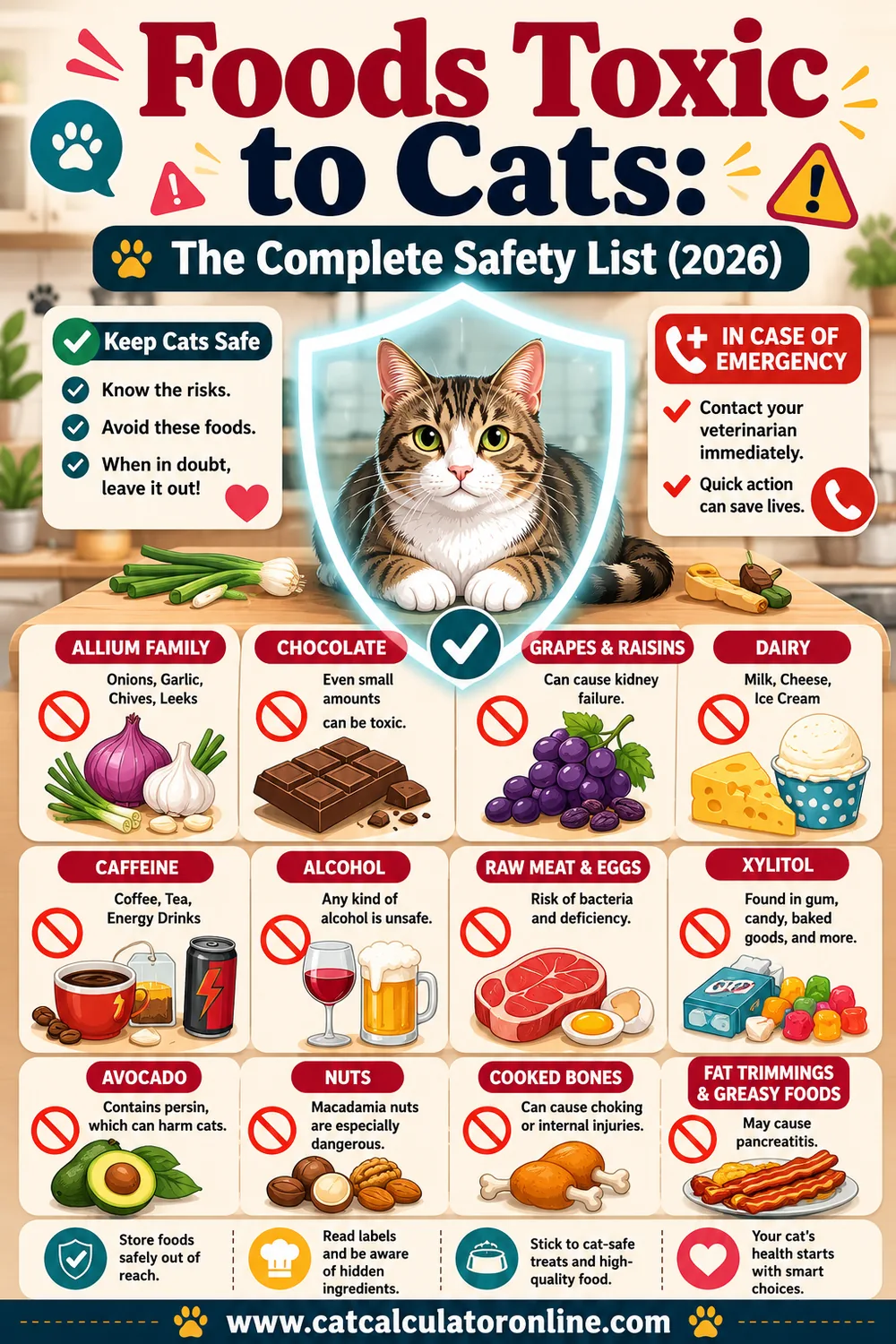
- Suspected poisoning — if there's any chance she ate a toxic plant (lilies are extremely dangerous), a human medication, antifreeze, or another toxin. See foods toxic to cats.
- A swallowed string or object — string, thread, tinsel, and hair ties can cause a life-threatening blockage. Never pull on a string you can see; get to a vet.
- A kitten or a senior cat vomiting — the very young and the very old dehydrate fast, so their margin for "wait and see" is much smaller.
One firm rule: never give your cat a human anti-nausea or anti-sickness medicine. Many human medications are toxic to cats, and even a "safe" one at the wrong dose can do harm. If you think she needs medication, that's a vet's call.
What to Watch and Note Before You Call
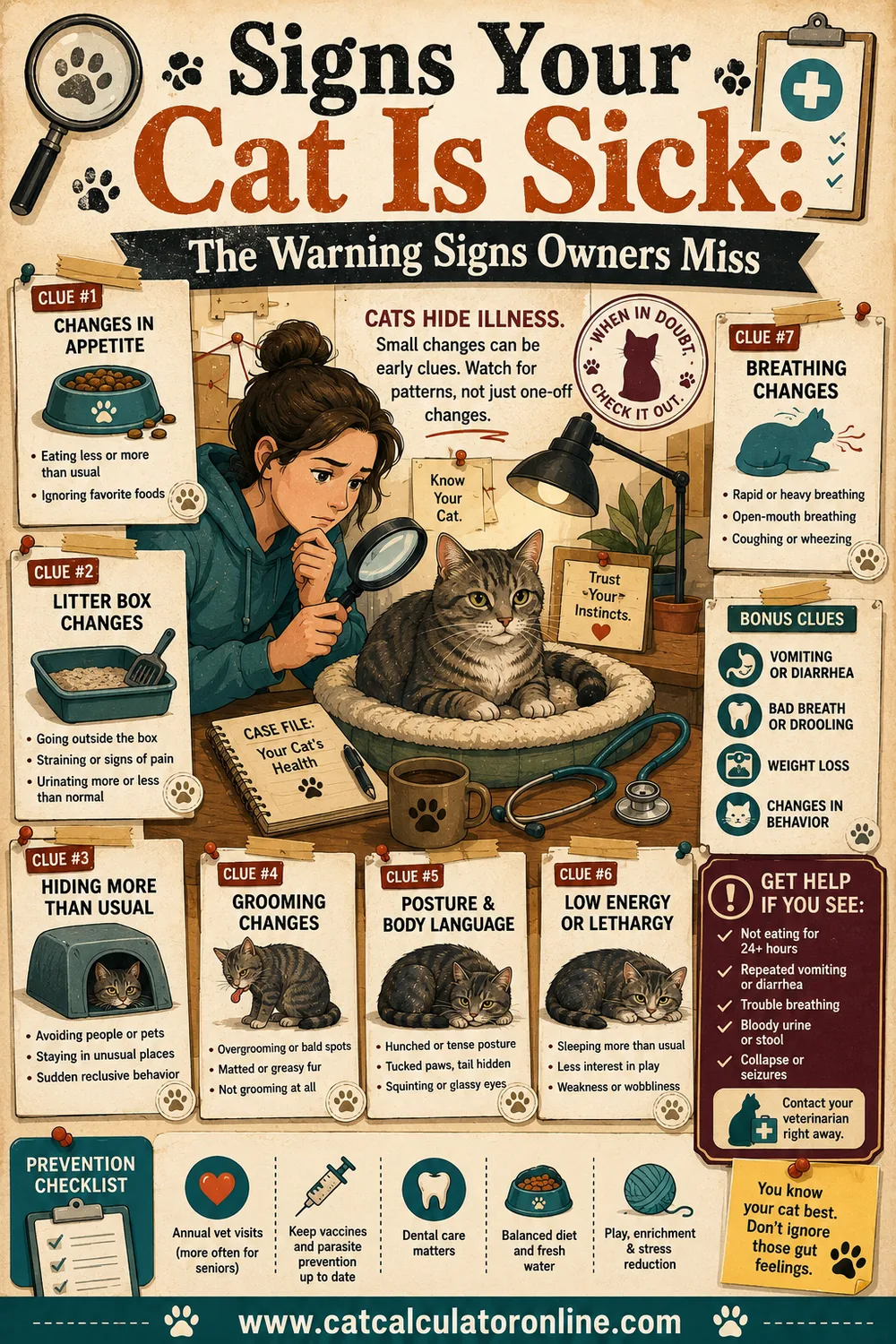
When you do phone the vet, a few specifics turn "she's been sick" into something they can actually triage. Jot these down:
- How many times she's vomited, and over how long.
- What it looked like — food, foam, bile, hair, blood (a photo is ideal).
- Timing around meals — right after eating, or on an empty stomach.
- Other symptoms — appetite, energy, litter box, drinking, hiding.
- Anything she might have gotten into — new food, plants, string, an open bin, medications.
- Whether she's still drinking — and whether that stays down.
This is also the moment to think about hydration, because repeated vomiting is a fast route to dehydration in cats. Our guide on how much water should a cat drink covers normal intake and the signs she's running low.
How to Help Prevent Vomiting
You can't prevent the medical causes — those need a vet — but you can remove some of the everyday triggers.
- Slow down fast eaters. A slow feeder bowl, a puzzle feeder, or spreading food on a flat plate stops the gulping that causes scarf-and-barf.
- Feed smaller, more frequent meals. Two or three modest meals sit better than one big one, and they help with the empty-stomach bile vomiting too.
- Change foods gradually. Mix new food into the old over 7–10 days rather than switching overnight.
- Manage grooming and hair. Regular brushing removes loose hair before she swallows it, which cuts down hairballs.
- Keep string and small objects away. Hair ties, thread, ribbon, and tinsel are common swallow-and-obstruct culprits.
- Feed the right amount. Overfeeding contributes to both weight problems and tummy upset. Our cat food calculator helps you land on a sensible daily portion, and how much should I feed my cat explains the reasoning.
- Stay current on parasite prevention. Routine deworming, on your vet's schedule, takes one common cause off the table.
If you've tidied up all of these and your cat is still vomiting, that's your answer: it's not the food bowl, it's something that needs a vet.
FAQ
Should I worry if my cat throws up once?
Usually not, if it's a genuine one-off and she's otherwise bright, eating, and acting normal. Keep an eye out for a repeat and note what it looked like. If vomiting happens again soon, or comes with any other symptom, call your vet.
How often is too often for a cat to vomit?
There's no "normal" number, but vomiting more than about once or twice a month is worth a vet conversation, and vomiting weekly or several times a week is not normal. Frequent vomiting is a symptom to investigate, not a quirk to accept.
Why does my cat throw up yellow liquid?
Yellow or greenish liquid is usually bile, which can show up when the stomach has been empty for a while. An isolated episode may be minor, but repeated bile vomiting should be checked by a vet, as it can signal an underlying issue.
My cat vomits right after eating — why?
Eating too fast is the classic reason: the food comes straight back up, undigested, within minutes. A slow feeder and smaller meals often solve it. If it keeps happening despite that, or she's losing weight, see your vet.
Can I give my cat medicine to stop vomiting?
No — never give human anti-nausea or anti-sickness medicine to a cat. Many human drugs are toxic to cats. If your cat needs anti-nausea treatment, only a vet can prescribe and dose it safely.
When is cat vomiting an emergency?
Go to a vet immediately for repeated vomiting in a day, vomiting plus lethargy or not eating, blood in the vomit, a bloated painful belly, suspected poisoning, a swallowed string or object, or any vomiting in a kitten or senior cat.
The Bottom Line
An occasional hairball or a single vomit in an otherwise happy cat is often minor. But vomiting is a symptom, not a diagnosis, and frequent or repeated vomiting is not something to accept as "just how cats are." The causes run from a bowl that's too tempting to gulp from, all the way to kidney disease or an obstruction — and you can't tell which from home.
So note what you're seeing, remove the everyday triggers, and let your vet do the diagnosing. If there's blood, lethargy, a painful belly, a possible poison or swallowed string, or it's a kitten or senior, go now. To put the more serious causes in context for your cat's age, start with our free cat age calculator, and read signs your cat is sick for the other changes worth catching early.