Hairballs in Cats: How Often Is Normal, and When It's an Emergency
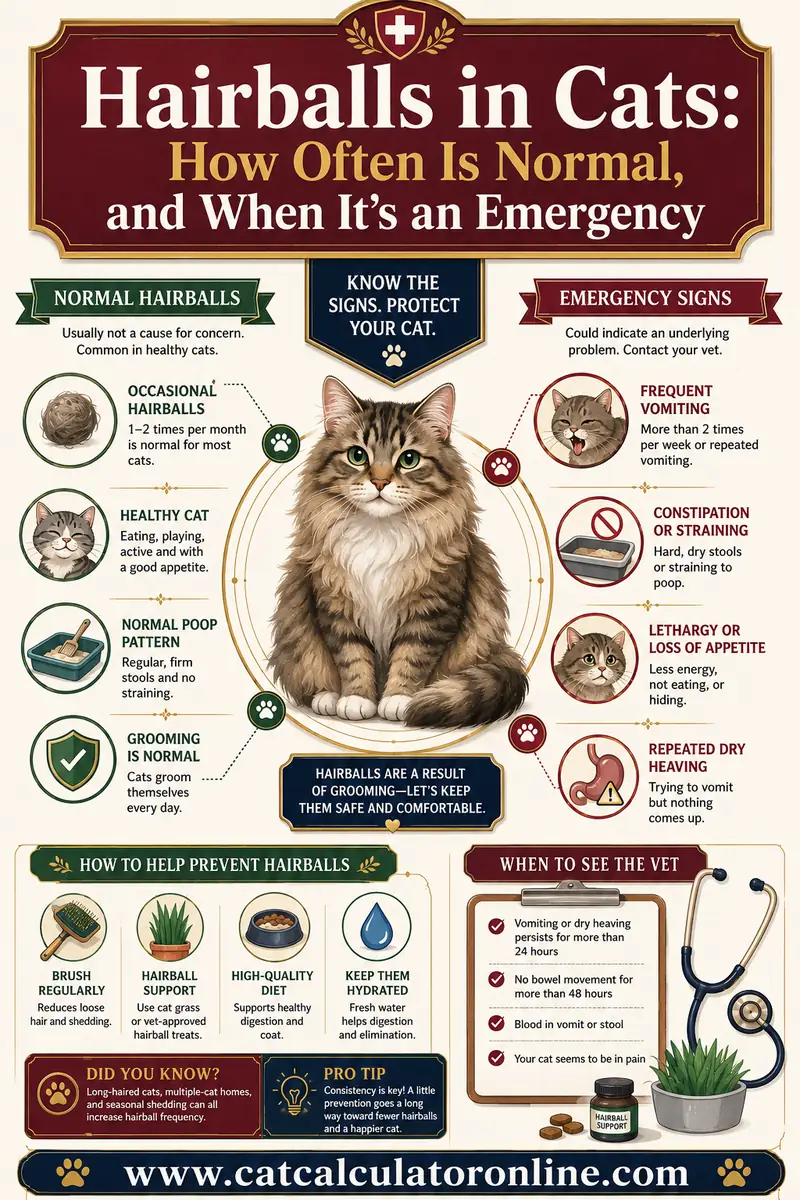
A hairball is swallowed hair that didn't make it through the digestive tract, collected into a damp cylindrical plug and brought back up. An occasional one — think a few times a year — is common and generally nothing to panic about. Frequent hairballs are not "just a cat thing," and they're worth a vet conversation, because they often mean your cat is grooming more than she should be.
And there's one situation that isn't a hairball problem at all: a cat retching over and over without producing anything, going off her food, or acting flat. That can mean a blockage, and blockages are life-threatening. We'll cover exactly what to watch for.
Curious how old your cat is in human terms? Grooming habits and gut motility both shift with age, so our free cat age calculator is a useful starting point.
🐾 Hairball check: normal, or call the vet?
Tap what your cat is actually doing:
Tap an option above to see whether it’s routine or needs a vet.
What a Hairball Actually Is
A cat's tongue is covered in tiny backward-facing barbs. They work like a comb — brilliant for grooming, terrible for letting go of anything. Once hair is on the tongue, the only direction it can really travel is down.
So every grooming session, your cat swallows hair. Most of it behaves itself: it moves through the stomach, into the intestines, and out in the litter tray. You'd never know it happened.
Sometimes hair lingers in the stomach instead. It tangles with more hair, mixes with fluid and mucus, and packs down into a mass. When the mass gets big enough to irritate, the cat brings it back up.
The medical name for one is a trichobezoar — literally a hair mass. And here's the detail most people notice second: a hairball isn't a ball. It comes out as a cylinder, roughly sausage-shaped, because it takes the shape of the oesophagus on the way up. If what your cat produced is round and looks like food, it probably isn't a hairball at all.
How Often Is Normal?
This is where a lot of well-meaning advice goes wrong. Hairballs got so normalised that people stopped questioning them, and cats went undiagnosed as a result.
Here's the more accurate framing:
| How often | What it usually means | What to do |
|---|---|---|
| A few times a year | Common. Ordinary grooming turnover, especially in long-haired cats or during a shedding peak | Brush more, keep watching |
| Once a month or more | Not simply normal | Book a vet chat — look for over-grooming or a motility issue |
| Weekly | Definitely not normal | Vet appointment; something is driving it |
| Suddenly starting in a cat who never had them | Notable change | Vet appointment |
| Retching repeatedly with nothing produced | Possible obstruction | Emergency — contact a vet now |
Frequent hairballs almost always mean one of two things. Either your cat is swallowing more hair than usual — because she's grooming excessively — or her gut isn't moving hair through the way it should.
Excessive grooming has real causes: fleas, food or environmental allergies, skin infection, pain somewhere (cats often over-groom over a sore joint or bladder), and stress or anxiety. None of those are fixed by a hairball paste. They're fixed by finding the trigger, which needs a vet.
Which Cats Get Them Most
- Long-haired breeds. Persians, Maine Coons, Ragdolls and Norwegian Forest Cats swallow more hair per grooming session, simply because each hair is longer.
- Meticulous groomers. Some cats are just fastidious. It's a personality trait as much as a breed trait.
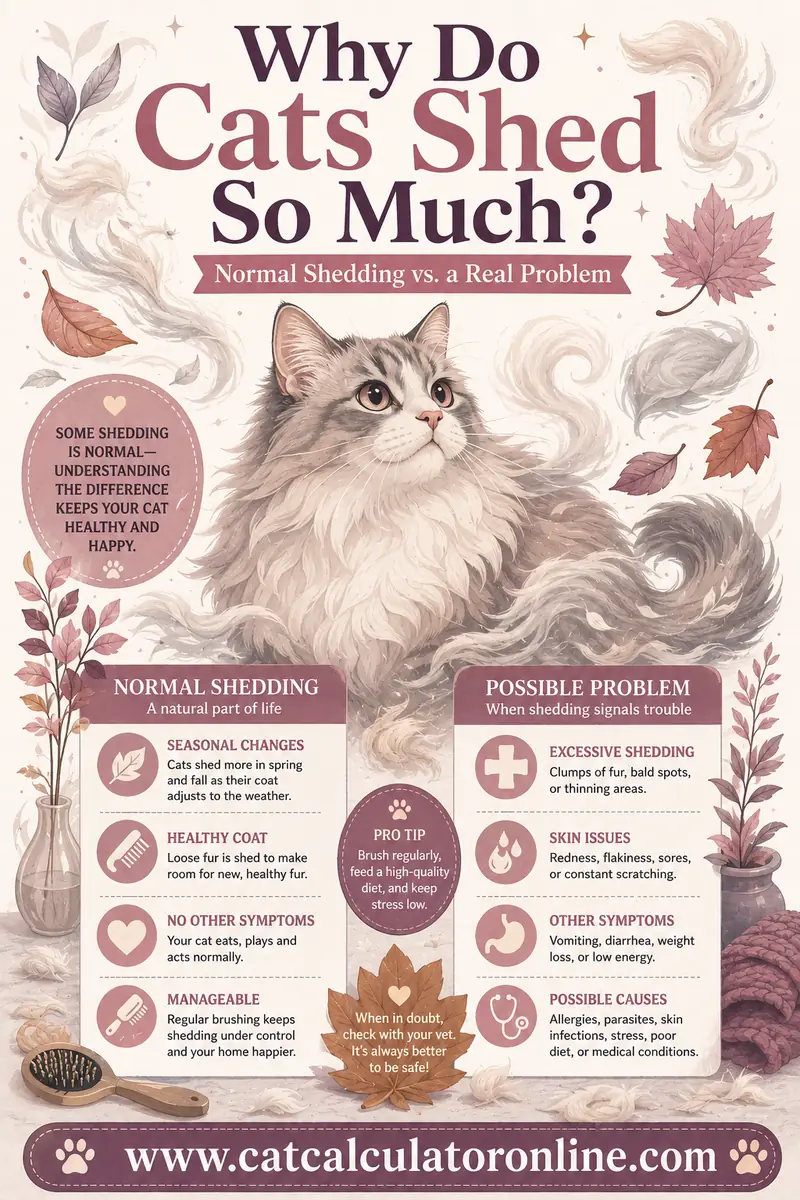
- Cats in a shedding peak. More loose hair on the coat means more hair on the tongue. Our guide to why cats shed so much covers why indoor cats shed steadily all year.
- Multi-cat households. Cats who groom each other swallow each other's hair too.
- Anxious or bored cats. Over-grooming is a self-soothing behavior, and a stressed cat can strip fur without you ever seeing her do it.
- Adults more than kittens. Very young kittens rarely get hairballs. If a kitten is bringing up hair regularly, mention it to your vet — that's unusual enough to check.
What Actually Prevents Hairballs
Some of this genuinely works. Some of what you'll read online doesn't. Here's the honest ranking.
1. Brushing — the single most effective thing
Hair you remove with a brush is hair that never reaches your cat's tongue. Nothing else on this list comes close for impact-per-effort.
Short-haired cats do well with a brush once or twice a week. Long-haired cats really do need most days, both for hairballs and to prevent painful mats. Keep sessions short and end them while your cat is still enjoying it — two calm minutes several times a week beats one long struggle.
If your cat hates brushing, try a grooming glove or a soft rubber brush, work in short bursts around her favorite spots (cheeks, chin, along the spine), and pair it with something good happening afterwards.
2. Hydration and wet food
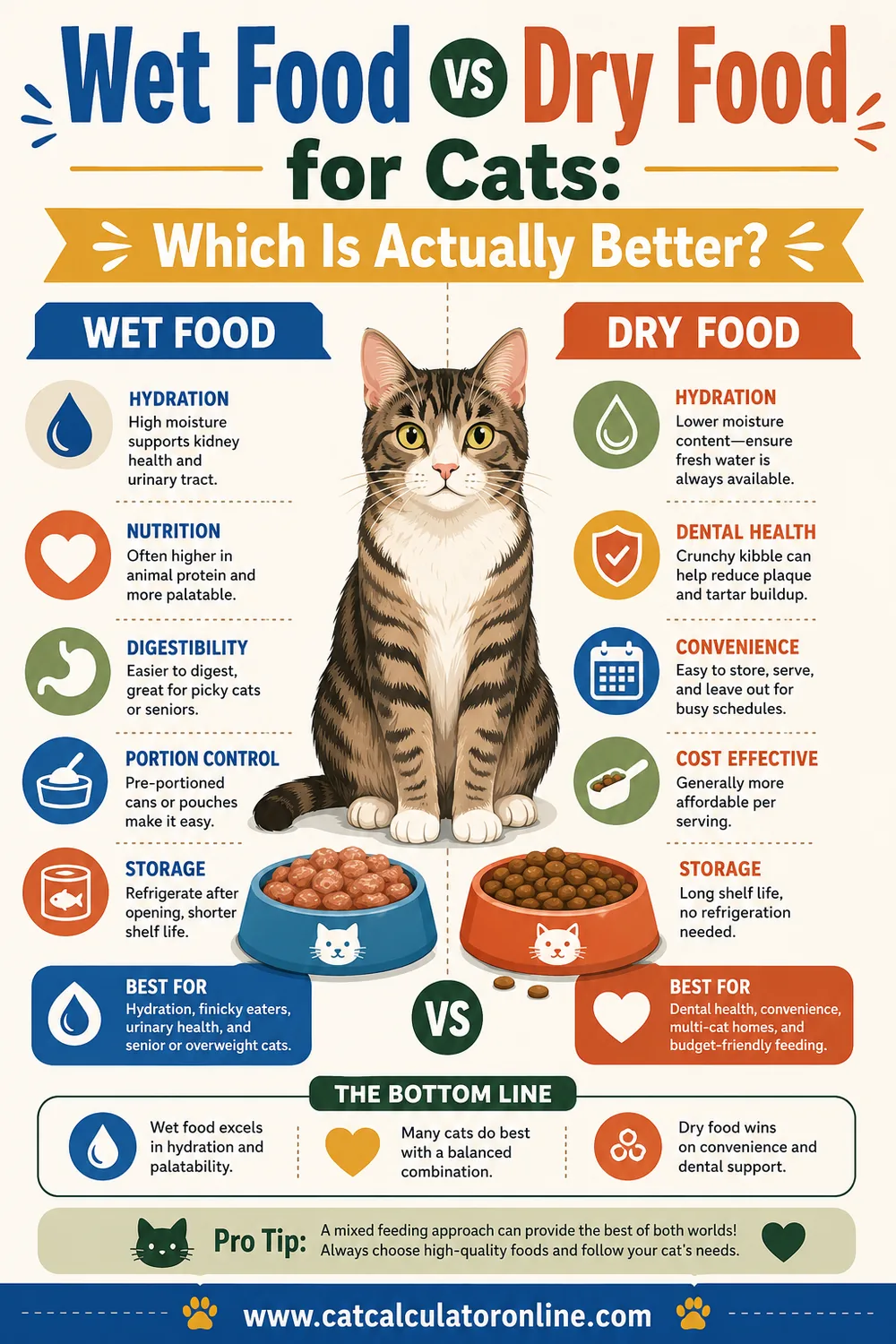
A well-hydrated gut moves things along better, and dry stools make everything harder. Feeding some or all wet food is one of the easiest ways to add water without a fight, and multiple water bowls in different rooms genuinely increase intake. Many cats also drink more from a wide, shallow bowl or a fountain. See wet food vs dry food for cats and how much water should a cat drink.
3. Fiber and "hairball formula" diets
Hairball-control foods generally work by adding fiber to help move swallowed hair through the intestines instead of letting it accumulate. They're a reasonable option for a cat who gets hairballs more than occasionally — but they're a management tool, not a diagnosis. If your cat needs hairball food to be comfortable, she still needs a vet to look at why.
Getting portions right matters here too, since fiber-added foods often have a different calorie density. Our cat food calculator gives you a sensible starting amount.
4. Plain canned pumpkin
A small spoonful of plain canned pumpkin (not pie filling, which contains sugar and spices) is a gentle fiber source many owners use successfully. Introduce it slowly, keep the amount small, and check with your vet first if your cat has any existing digestive or kidney condition.
5. Vet-approved lubricant pastes
Malt or petroleum-based hairball gels help hair slide through rather than clump. Used occasionally and as directed, they're a normal part of hairball management. Ask your vet before starting one, especially if your cat is on medication or has a health condition.
Never give mineral oil at home. If a cat inhales even a small amount of oil while swallowing, it can cause a serious and difficult-to-treat pneumonia. This is a genuine risk, not a technicality — leave oil-based treatments to your vet.
6. Reduce the reason for over-grooming
If the hairballs are frequent, treat the cause rather than the symptom: year-round flea prevention, a vet workup for allergies or skin disease, pain assessment in older cats, and enrichment plus routine for anxious ones — more play, more vertical space, more predictable feeding times, safe hiding spots.
What doesn't help
Shaving a cat to prevent hairballs is rarely the answer and can be stressful and hard on the skin. Random supplements bought without advice can interfere with a balanced diet. And "it's just a hairball" is not a treatment plan when it's happening every month.
The Emergency: When a Hairball Blocks the Gut
This is the part of the article that matters most. A hair mass that can't come up and won't pass through can obstruct the stomach outlet or the intestine. An obstruction is a surgical emergency and can be fatal if it's left.
Contact a vet immediately if you see any of these:
- Repeated, unproductive retching. Gagging and heaving over and over with nothing coming up is the classic warning sign.
- Vomiting without producing anything, or vomiting repeatedly over a short period.
- Loss of appetite. A cat who won't eat is always serious. Cats can develop liver problems from even a couple of days without food.
- Lethargy. Flat, hiding, unwilling to move, not greeting you.
- Constipation or straining in the litter tray, or no stools for a day or more.
- A swollen, hard or painful abdomen, or a cat who reacts when you touch her belly.
- Diarrhea, weight loss, or a cat who seems generally unwell alongside any of the above.
Don't try a home remedy first in any of these situations. Don't wait until morning to see if it passes. Don't give oil. Call your vet or an emergency clinic and describe exactly what you're seeing — how many times she retched, when she last ate, when she last used the litter tray.
Your vet may examine her, take X-rays or an ultrasound, run bloodwork, and treat with fluids and medication — or with surgery or endoscopy if there's a genuine obstruction. Getting there early is what makes the difference.
When It Isn't a Hairball At All
Plenty of vomiting gets blamed on hairballs when the hair is incidental. A few things to keep in mind:
- Shape is a clue. A hairball is cylindrical. Round, food-filled vomit right after a meal is more likely eating too fast, and should be a separate conversation.
- Frequent vomiting is not normal in cats, hair or no hair. Chronic vomiting can relate to inflammatory bowel disease, food intolerance, pancreatitis, thyroid disease, kidney disease and more.
- Hair can be a passenger. A cat vomiting for another reason will bring up whatever's in her stomach, and that often includes hair. Finding hair in it doesn't prove hair caused it.
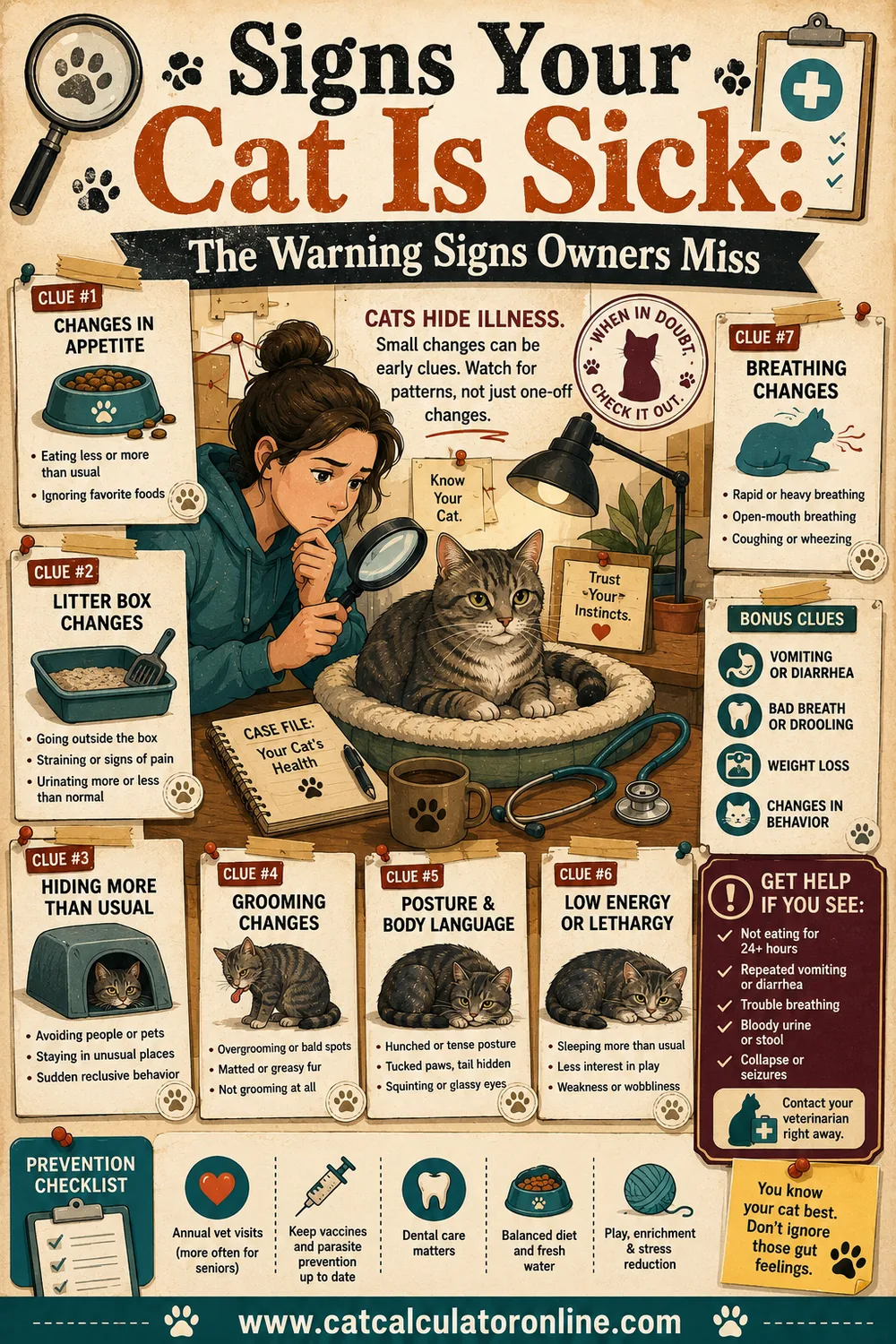
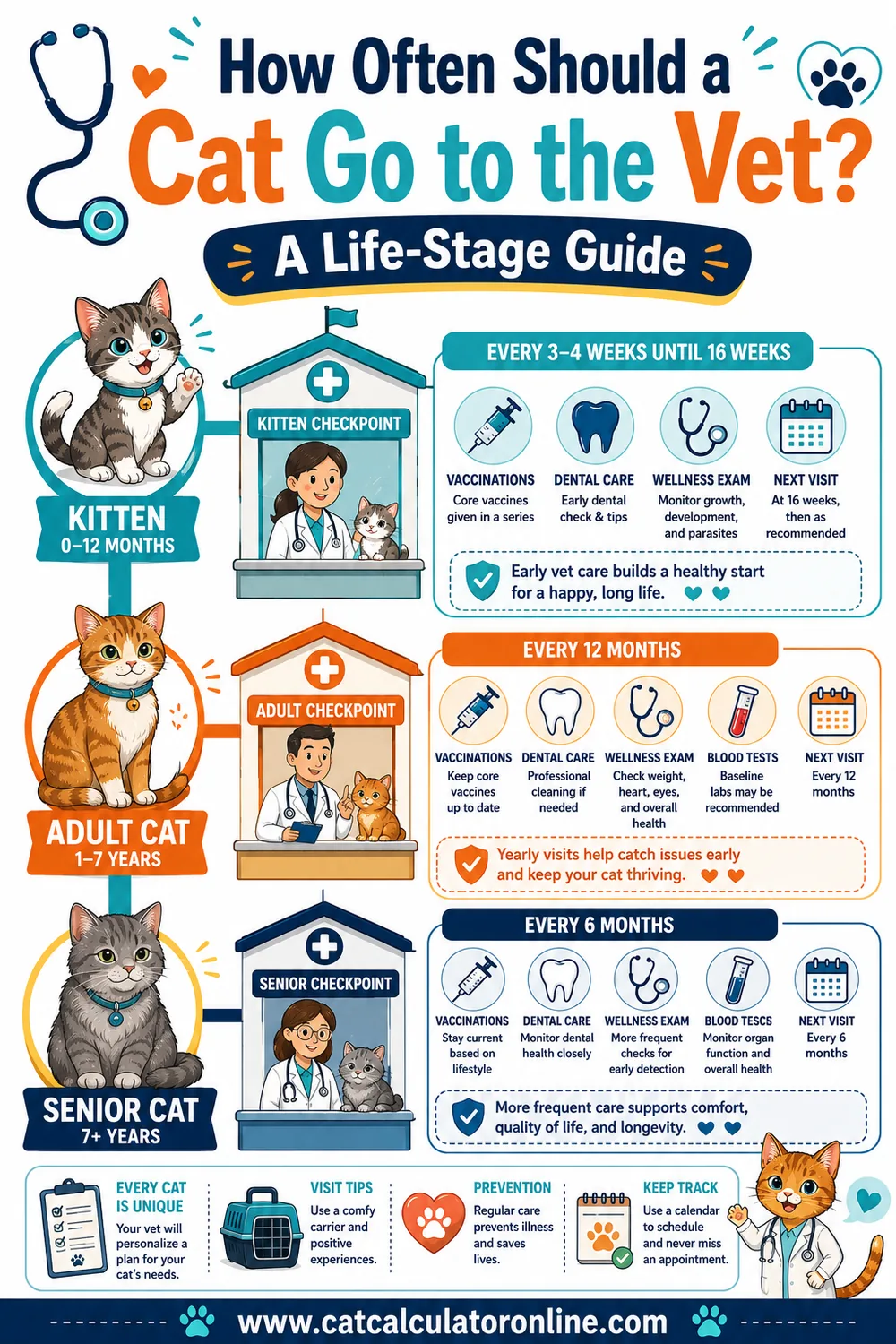
If your cat is vomiting more than very occasionally, ask your vet to look at the bigger picture rather than assuming grooming. Signs your cat is sick covers the other changes worth flagging, and how often should a cat go to the vet explains the check-up rhythm by age.
A Simple Hairball Routine
If your cat gets the occasional hairball and is otherwise healthy, this is a reasonable everyday plan:
- Brush her on a schedule — a couple of times a week for short coats, most days for long coats.
- Keep flea prevention going year-round, even for indoor-only cats.
- Add water to the diet through wet food and extra water stations.
- Feed a complete, balanced diet in the right portions, and consider a fiber-added formula if hairballs are recurring.
- Log the episodes. A note on your phone with the date takes five seconds and turns "she gets them sometimes" into real information your vet can use.
- Know the red flags above, and act on them without waiting.
That log is more valuable than it sounds. "Four in the last six weeks" gets a very different response from a vet than "occasionally."
FAQ
How often are hairballs in cats normal?
A few times a year is common in an otherwise healthy cat, especially a long-haired one. Once a month or more is not simply normal and deserves a vet conversation, because frequent hairballs usually mean over-grooming or a gut motility problem rather than bad luck.
What does a hairball look like?
Damp, matted hair packed into a cylindrical, sausage-shaped plug, often with fluid or a little food mixed in. It takes that shape from the oesophagus on the way up. Round, food-shaped vomit is generally something else and worth mentioning to your vet if it repeats.
How do I stop my cat getting hairballs?
Regular brushing is by far the most effective step, because hair captured by a brush is never swallowed. Add hydration through wet food and extra water bowls, consider a fiber-added hairball diet, and keep flea prevention going year-round to reduce itch-driven over-grooming.
When is a hairball an emergency?
When your cat retches repeatedly without producing anything, vomits without bringing anything up, stops eating, becomes lethargic, strains or stops passing stools, or has a swollen or painful abdomen. Those can indicate an intestinal obstruction, which is life-threatening and needs a vet straight away.
Can I give my cat oil or butter for a hairball?
Don't give mineral oil at home — if a cat inhales any while swallowing, it can cause a severe pneumonia. Vet-approved lubricant pastes exist for exactly this purpose and are the safer route. Ask your vet before starting any hairball remedy, particularly if your cat has a health condition.
Do kittens get hairballs?
Rarely. Very young kittens don't groom as thoroughly and haven't built up much loose hair, so regular hairballs in a kitten are unusual enough to mention to your vet. In adults, hairballs become more common with longer coats and more meticulous grooming habits.
The Bottom Line
Hairballs happen because a cat's tongue can't let go of hair. The occasional one — a few times a year — is a normal by-product of grooming. Regular hairballs are a signal, not a quirk: they usually mean your cat is grooming too much or her gut isn't clearing hair properly, and both have causes worth finding.
Brush her regularly, keep her hydrated, feed a complete diet, stay on top of fleas, and know the emergency signs cold: repeated unproductive retching, no appetite, lethargy, constipation, or a swollen belly means call a vet now.
Want more on keeping your cat comfortable as she ages? Try our free cat age calculator to see her age in human years, then read why do cats shed so much for the grooming side of the same story.