How Much Should I Feed My Cat? Portions by Weight (and Why the Bag Overfeeds)
Most healthy adult cats need roughly 20 calories per pound of ideal body weight per day — so about 100 calories for a 5-pound cat, 160 for an 8-pound cat, and 200 for a 10-pound cat. Indoor, neutered, or laid-back cats often need less than that (closer to 15–20 calories per pound), while active or underweight cats need more. Split that into two meals a day, and don't be surprised if it's less food than the bag suggests — most feeding guides run high.
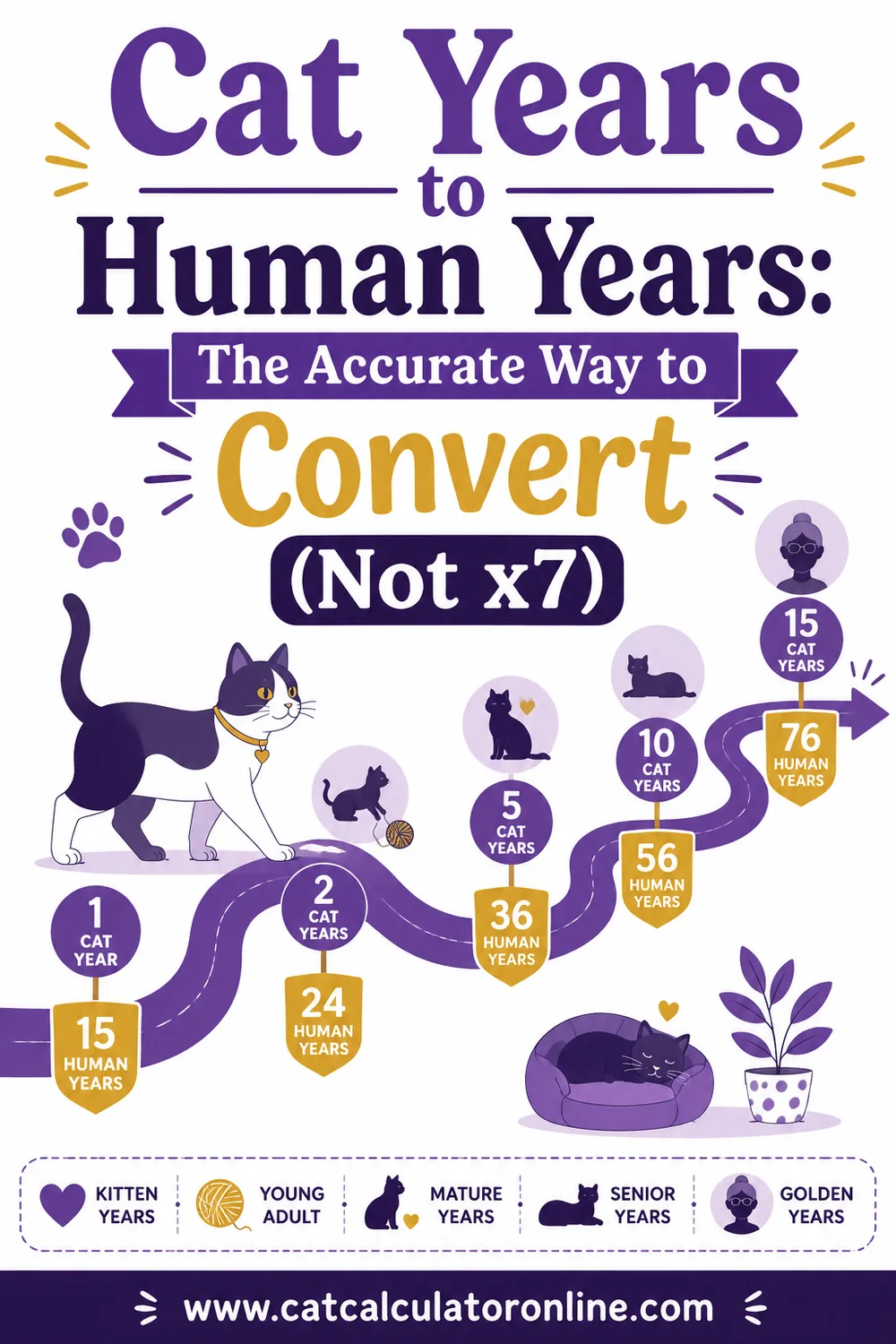
Want a quick starting portion for your cat's weight? Tap it in the mini-tool below, then use our free cat age calculator to check your cat's life stage, since kittens and seniors have different needs. Always confirm the final number with your vet and your food's own calorie label.
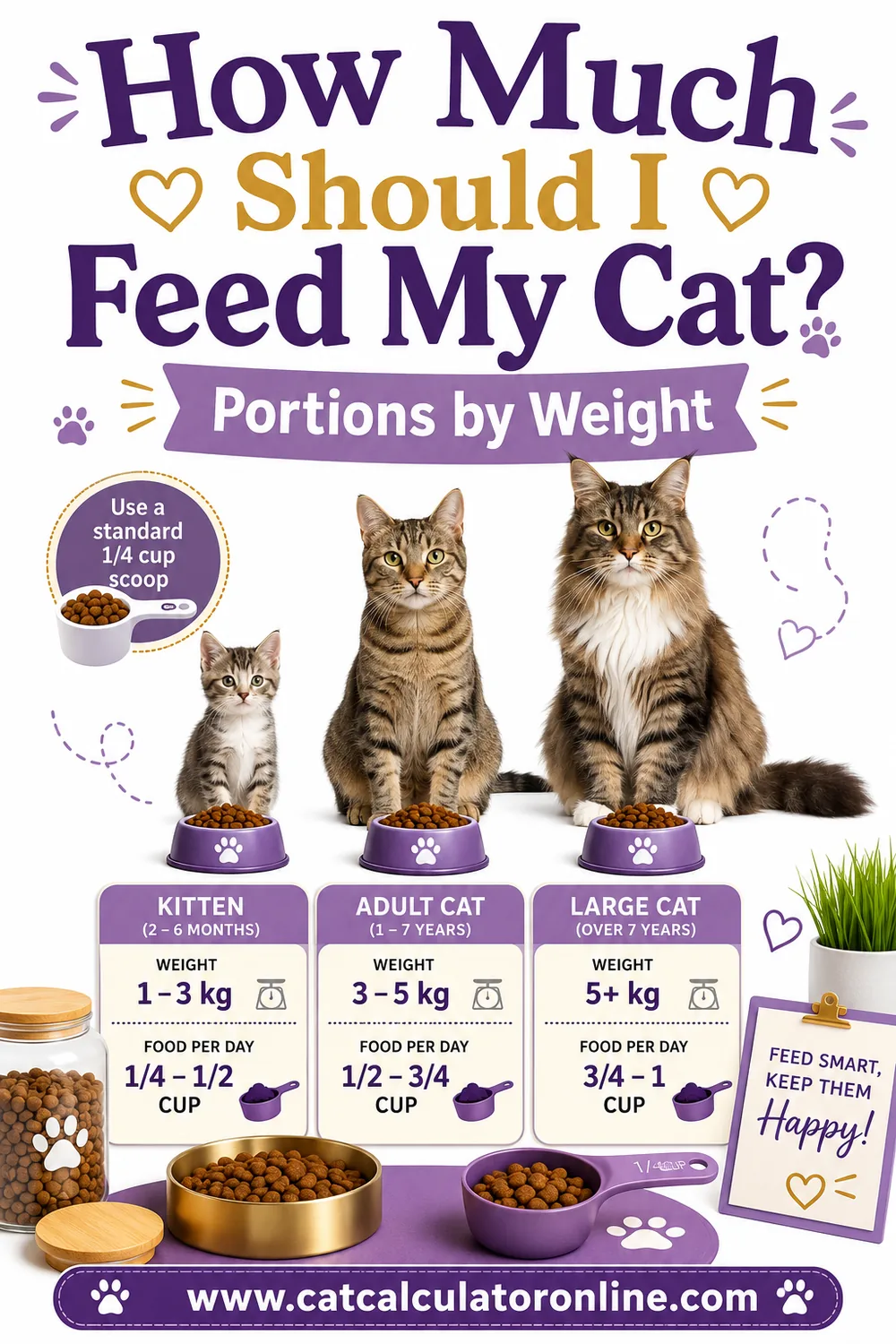
🍽️ How much to feed your cat (adult, per day)
Tap your cat’s healthy weight for an estimated daily range:
Tap a weight above for an estimated daily portion.
The Simple Rule: About 20 Calories Per Pound
Feeding a cat is really about calories, not cups or cans. The rough starting point most vets use for a healthy adult cat is around 20 calories per pound of ideal body weight per day. That's the number to build on.
But "ideal" and "20" both come with caveats:
- Indoor and neutered cats burn less. Many spend most of the day napping, so they often do better at 15–20 calories per pound. Feeding the full 20 to a couch-loving indoor cat is a common cause of slow weight gain.
- Active, young, or underweight cats need more. An outdoor hunter, a lanky adolescent, or a cat recovering from illness may need well above 20 per pound.
- Use ideal weight, not current weight. If your cat is overweight, feeding for the number on the scale just keeps it there. Feed for the weight your cat should be, and ask your vet what that target is.
So a 10-pound cat at a healthy weight lands around 150–200 calories a day. A chunky 14-pound cat whose ideal weight is 11 pounds should be fed for 11 — roughly 165–220 calories — not for 14.
Cat Feeding Chart by Weight
This chart assumes a typical, moderately active adult cat at a healthy weight. Treat the calorie column as the real target and the food columns as rough conversions — your specific food's calorie density changes the amounts.
| Ideal weight | Daily calories (approx.) | Wet food (3 oz cans ≈ 70–100 kcal) | Dry food (≈ 300–400 kcal/cup) |
|---|---|---|---|
| 5 lb | 75–100 | ~1 can | ¼–⅓ cup |
| 6 lb | 90–120 | 1–1.5 cans | ⅓ cup |
| 8 lb | 120–160 | 1.5–2 cans | ⅓–½ cup |
| 10 lb | 150–200 | ~2 cans | ½–⅔ cup |
| 12 lb | 180–240 | 2–3 cans | ⅔–¾ cup |
| 15 lb | 225–300* | 3+ cans | ¾–1 cup |
\*A 15-pound cat is large; unless it's a big breed like a Maine Coon at a lean weight, feed for a lower goal weight and ask your vet.
Because wet and dry foods vary so much, the single most accurate move is to read your own label (more on that below). Two dry foods that fill the cup identically can differ by 100 calories.
Why the Bag Almost Always Overfeeds
If you've ever followed the feeding chart on the bag and watched your cat slowly round out, you're not imagining it. Package guidelines tend to run generous for a few reasons:
- They assume an active, intact cat. Most house cats are neutered and indoor, which lowers calorie needs by a noticeable margin.
- Broad weight bands. A single row might cover "9–13 lb," and the amount usually skews toward the top of the band.
- Bigger portions sell more food. It's not a conspiracy, but a generous chart empties the bag faster.
The fix isn't to distrust the label entirely — it's to use the label's calorie content number (not its portion suggestion) and do the quick math yourself. Start at the lower-to-middle of your cat's range, then let body condition fine-tune it.
Wet Food vs. Dry Food
The portions above list both because plenty of cats eat a mix. Here's how they compare:
- Wet food is mostly moisture, so it's less calorie-dense by volume. A standard 3-ounce can usually runs 70–100 calories. It helps with hydration, which matters for a species that evolved to get most of its water from prey.
- Dry food is calorie-dense — commonly 300–400 calories per cup — which is exactly why free-feeding kibble leads to weight gain so easily. It's convenient and good for dental crunch, but it's easy to overdo.
- Mixing is fine. Just count both toward the same daily calorie budget. If your 10-pound cat needs about 180 calories, one 90-calorie can plus a scant ¼ cup of 350-kcal dry gets you there.
Whatever you feed, the daily calorie total is what matters — not whether it came from a can or a bag.
How to Read Your Cat's Food Label
Every complete cat food sold in the US lists a calorie content statement, usually as "kcal/can" or "kcal/cup." That's the number that makes feeding accurate:
- Find your cat's daily calorie target (chart above or your vet's number).
- Look up your food's calories per can or per cup.
- Divide to get how many cans or cups per day.
Example: your cat needs 180 calories a day, and your dry food is 360 kcal/cup. 180 ÷ 360 = ½ cup per day. Switch to a richer 400-kcal food and the same cat needs a bit less. This one habit — feeding by calories, not by scoop — prevents most slow weight creep.
How Often Should You Feed a Cat?
For most adult cats, two meals a day works well — morning and evening, roughly 12 hours apart. It suits their digestion, keeps hunger steady, and makes portions easy to control.
- Two meals a day: the standard for healthy adults.
- Three or more small meals: great for cats that beg or vomit from eating too fast, and closer to how cats naturally eat (many small "meals").
- Free-feeding (bowl always full): convenient but the top cause of feline obesity, because cats will graze past their needs. If you free-feed, measure the day's full portion into the bowl rather than topping it up.
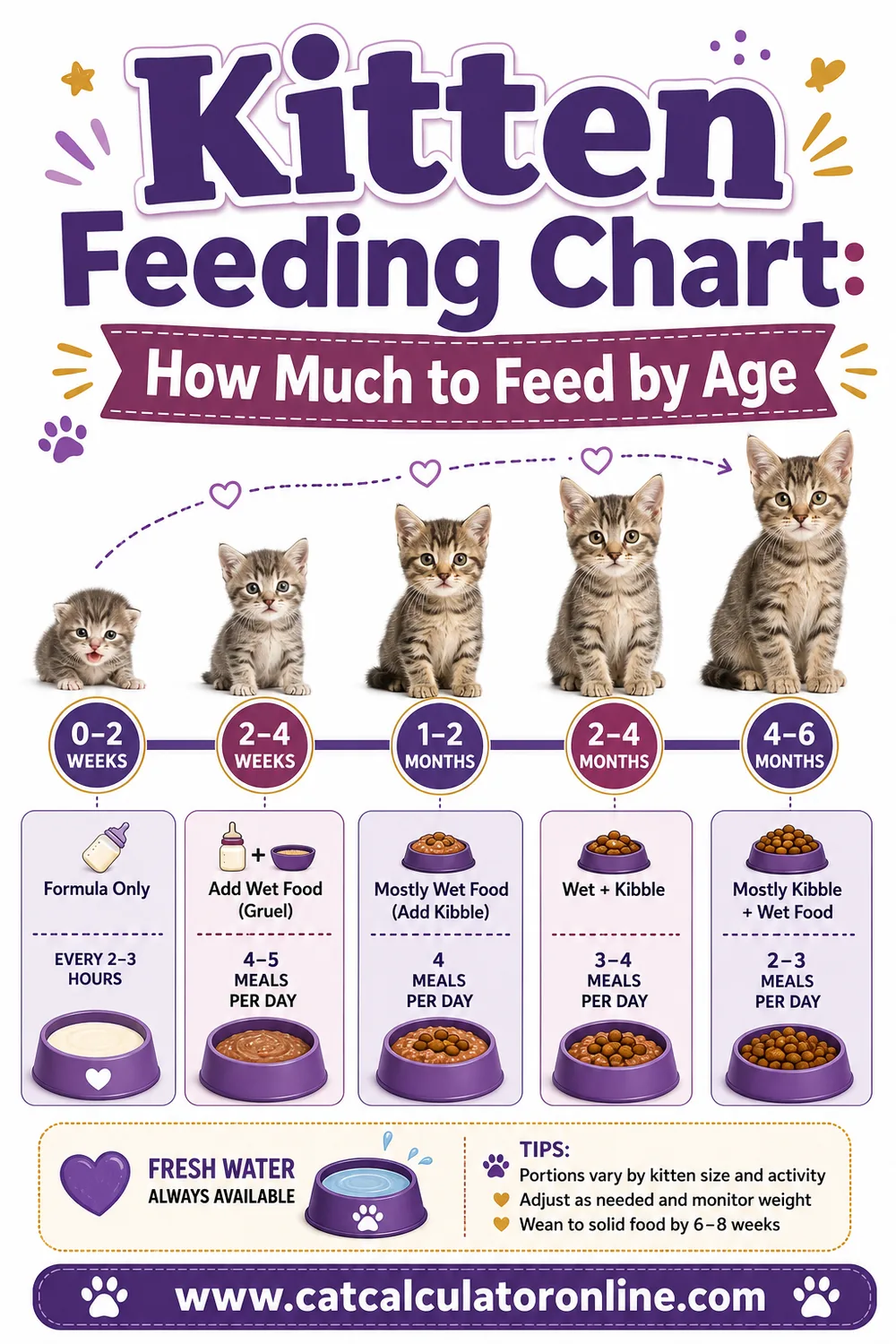
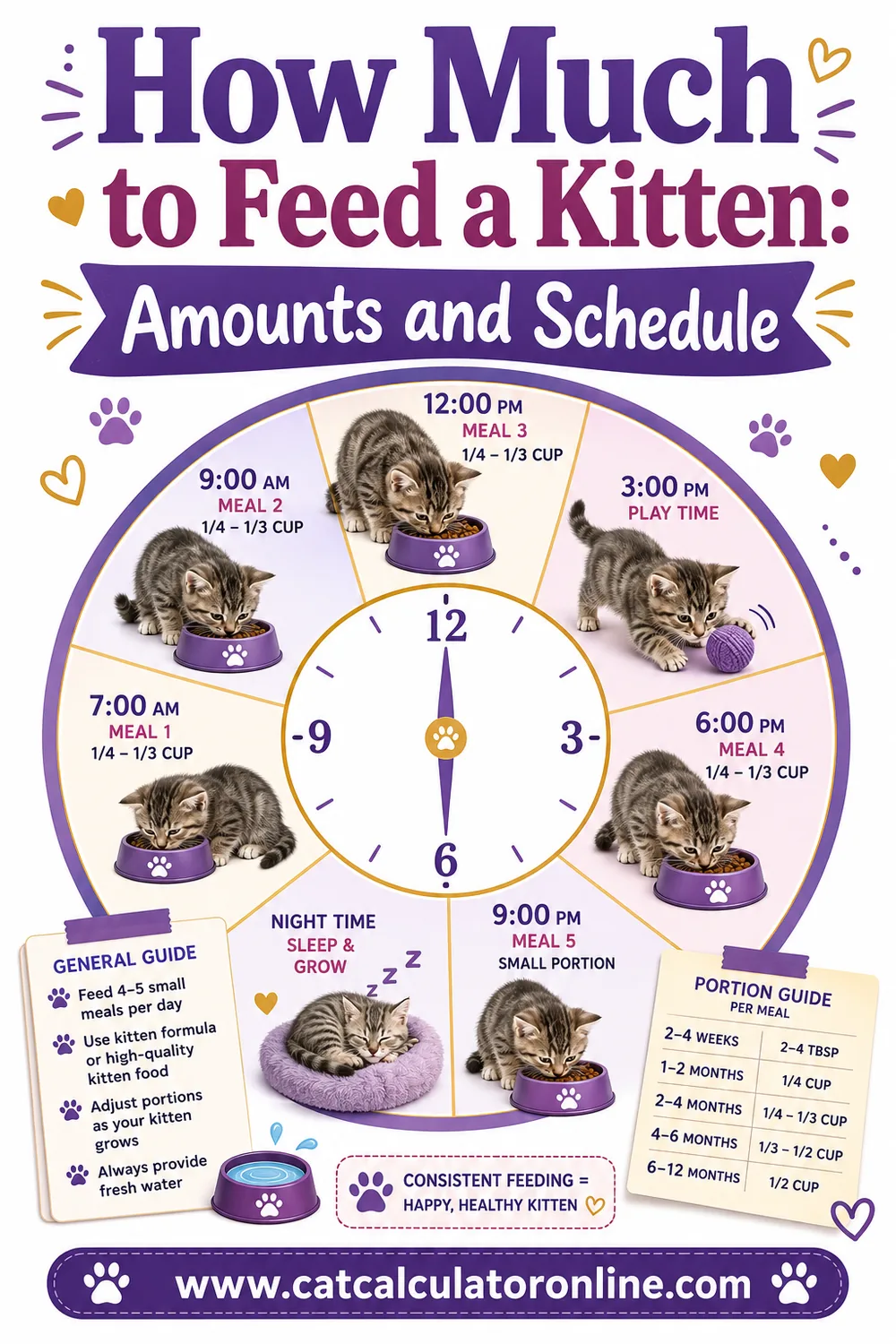
Kittens are the big exception — they need more frequent meals and more calories per pound. See our kitten feeding chart and how much to feed a kitten for age-based amounts.
Body Condition: The Number That Never Lies
Charts get you close; your cat's body confirms it. Run this quick check every couple of weeks:
- Ribs: you should feel them easily with light pressure, like the back of your hand — not have to press through padding.
- Waist: looking down from above, there should be a slight tuck behind the ribs, not a straight or bulging line.
- Belly: a small primordial pouch (the loose flap of skin along the belly) is normal and not fat. What you don't want is a firm, rounded, all-over heaviness.
If your cat is carrying extra weight, adjust portions down by about 10% at a time and recheck in two to three weeks. Never crash-diet a cat — rapid weight loss in cats can trigger a serious liver problem called hepatic lipidosis. Slow and steady, guided by your vet, is the only safe way.
Special Cases: Kittens, Seniors, and Weight Loss
The 20-calories-per-pound guide is for healthy adults. Adjust for these:
- Kittens. Growing cats need roughly double the calories per pound and several small meals a day. Use kitten-specific amounts, not the adult chart.
- Seniors. Older cats vary a lot. Some slow down and need less; others lose muscle and need more protein and easy calories. Watch weight closely and involve your vet — unexplained weight loss in a senior cat is a reason to get checked.
- Overweight cats. Feed for the goal weight, cut gradually, and lean toward wet food (more filling, fewer calories per bite). Get a target weight and pace from your vet.
- Pregnant or nursing cats. Needs climb sharply, especially while nursing a litter. This is a vet-guided situation, not a chart one.
Common Cat Feeding Mistakes
- Free-feeding kibble. The easiest path to an overweight cat. Measure meals instead.
- Eyeballing the scoop. Use an actual measuring cup or, better, a kitchen scale in grams.
- Forgetting treats. They count. Keep treats under about 10% of daily calories and subtract them from meals.
- Feeding the bag's suggestion by default. Start lower and adjust to body condition.
- Not cutting back after neutering. Neutered cats need fewer calories; keep the old portion and weight creeps up.
FAQ
How much should I feed my cat per day?
Roughly 20 calories per pound of ideal body weight for a healthy adult — about 100 calories for a 5-pound cat and 200 for a 10-pound cat. Indoor and neutered cats often need a bit less. Confirm the exact amount with your vet and your food's calorie label.
Should I feed my cat wet or dry food?
Either can be complete and balanced; many owners do a mix. Wet food adds hydration and is less calorie-dense, while dry is convenient and good for dental crunch. What matters most is hitting the right daily calorie total and keeping your cat lean.
How many times a day should I feed my cat?
Two meals a day suits most adult cats. Some do better with three small meals, especially if they eat too fast. Kittens need more frequent feeding.
Why does my cat always act hungry?
Cats are natural grazers and often "ask" for food out of habit or boredom, not true hunger. If body condition is good, resist the extra scoop — try play or a puzzle feeder instead. Sudden, dramatic appetite changes are worth a vet visit.
Is my cat overweight?
Feel for the ribs and look for a waist from above. If you can't easily feel the ribs and there's no tuck, your cat is likely carrying extra weight. Your vet can assign a body condition score and set a safe target.
How do I get my cat to lose weight safely?
Reduce portions gradually (about 10% at a time), feed to a goal weight, and favor filling wet food. Never crash-diet a cat — fast weight loss can cause a dangerous liver condition. Always plan a weight-loss diet with your vet.
The Bottom Line
Feed your adult cat by ideal weight, starting from about 20 calories per pound (often 15–20 for indoor, neutered cats), split into two meals a day. Read your food's calories-per-can or per-cup, count treats, and let the one thing that never lies — body condition — fine-tune the amount. If the bag says more than the chart, trust the chart and your cat's ribs.
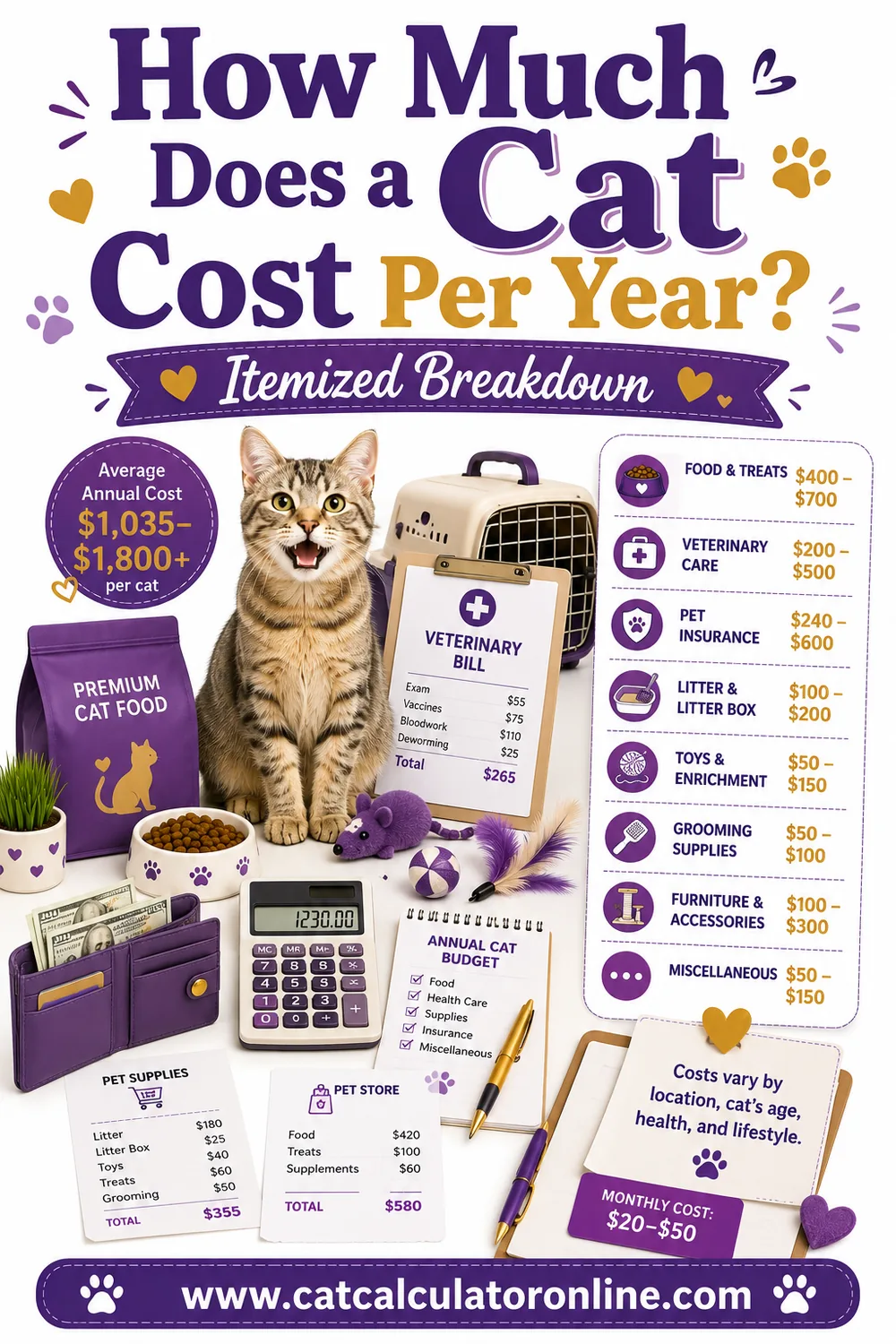
Not sure what life stage your cat is in? Our free cat age calculator turns your cat's age into human years and life stage in one tap. Feeding a kitten instead? Jump to the kitten feeding chart or how much to feed a kitten. Curious what all that food costs over a year? See how much a cat costs per year.