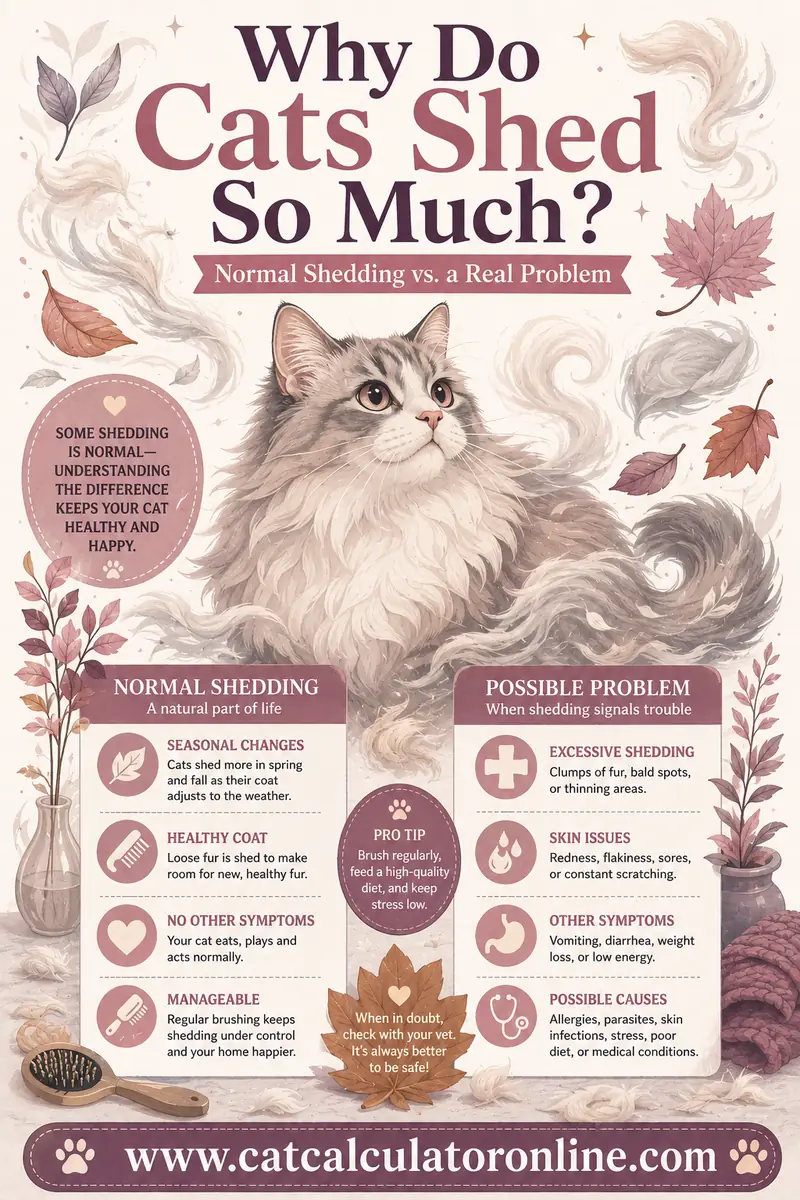
Why Do Cats Shed So Much? Normal Shedding vs. a Real Problem
Cats shed because hair grows, dies, and gets pushed out on a constant cycle — it's maintenance, not malfunction. Every healthy cat sheds year-round, and a cat living indoors under artificial light and steady heating often sheds fairly evenly all twelve months instead of in two big seasonal dumps. What's not normal is bald patches, scabs, redness, obsessive licking, or a coat that suddenly changes texture. That's a vet conversation, not a lint-roller problem.
So if you're finding fur on everything in July, your cat is almost certainly fine. Below you'll find what actually reduces shedding, what doesn't, and the exact signs that mean stop-and-call-the-vet. While you're here, our free cat age calculator will tell you how old your cat is in human years — coat quality changes a lot as cats age, so it's useful context.
🐾 Is this shedding normal or worth a vet call?
Tap what you’re seeing on your cat:
Tap an option above to see whether it’s normal shedding or worth a vet check.
Why Cats Shed at All
Each hair on your cat sits in its own little follicle running its own private schedule. The hair grows for a while, stops, rests, and then gets pushed out by the new hair coming up behind it. Multiply that by tens of thousands of follicles all on slightly different timers and you get a steady drizzle of loose fur.
That's the whole mechanism. Shedding isn't the coat wearing out — it's the coat replacing itself, the same way your own hair does. A cat that never shed would be carrying around dead, damaged hair that couldn't insulate or repel water properly.
Most cats also have more than one hair type. There are the longer guard hairs that form the visible outer coat, and a softer, denser undercoat underneath doing the insulating. The undercoat is usually what you find in drifts under the sofa, because it's fine, plentiful, and comes out in clumps.
Why Indoor Cats Shed All Year Round
Here's the part that confuses most owners. You've heard cats "blow their coat" in spring and autumn — so why is yours producing tumbleweeds in November?
Seasonal shedding is triggered mainly by day length, not temperature. As daylight hours stretch out in spring, an outdoor cat's body reads that signal and drops the thick winter undercoat. As days shorten in autumn, it grows a denser one back. Outdoor and indoor-outdoor cats follow that rhythm closely, with the heaviest shedding in spring and a second wave in autumn.
An indoor cat lives under lamps that stay on until midnight and a thermostat that doesn't care what month it is. The seasonal cue gets blurred. Instead of two dramatic peaks, many indoor cats shed at a moderate, fairly constant rate every single week of the year — which can add up to feeling like more fur, even though the total isn't higher.
So "my cat sheds constantly" is usually a description of indoor living, not a symptom.
How Much Shedding Is Normal?
There's no gram-per-day number that separates fine from not fine, and any site that gives you one is guessing. What matters is the pattern, not the pile.
| What you're seeing | Likely normal? | What it usually is |
|---|---|---|
| Loose hair all over the house, skin underneath looks healthy | Yes | Ordinary hair-cycle turnover |
| Heavier shedding in spring and autumn (outdoor access) | Yes | Seasonal coat change driven by day length |
| Steady shedding every month (indoor cat) | Yes | Artificial light and stable temperature blunting the seasonal cue |
| Big visible tufts from a long-haired cat | Yes | Same hair count, much longer hairs, so far more visible |
| Extra fur for a few days after a stressful event | Often | Short-term stress shedding; should settle quickly |
| A patch of skin you can see through | No | Needs a vet — parasites, allergy, infection or over-grooming |
| Hair loss that mirrors on both sides of the body | No | Needs a vet — can be hormonal or behavioral |
| Scabs, crusts, redness, or a smell | No | Needs a vet — infection, fleas or allergic skin disease |
| Coat texture change over weeks (greasy, dull, matted) | No | Needs a vet — a general health signal, especially in seniors |
The simple test: part the fur and look at the skin. Normal shedding leaves the skin covered, calm, and evenly colored. If you can see bare skin, broken skin, flakes or angry pink patches, that's a different problem wearing a shedding costume.
What Actually Reduces Shedding (and What Doesn't)
You can't stop a cat shedding, and you shouldn't want to. You can absolutely control how much of it ends up on your black trousers.
Brushing is the single most effective thing you can do. It collects dead hair before gravity and furniture do. It's also the best hairball-prevention step there is, because hair you capture in a brush is hair your cat doesn't swallow while grooming.
- Short-haired cats: once or twice a week is usually plenty, more during a seasonal peak.
- Long-haired cats: aim for most days. Long coats mat, and mats pull on skin and hurt.
- Senior or arthritic cats: they often groom themselves less because twisting hurts, so they need more help from you, not less.
- Keep sessions short and pleasant. Two calm minutes beats ten minutes of wrestling. Stop before your cat wants you to.
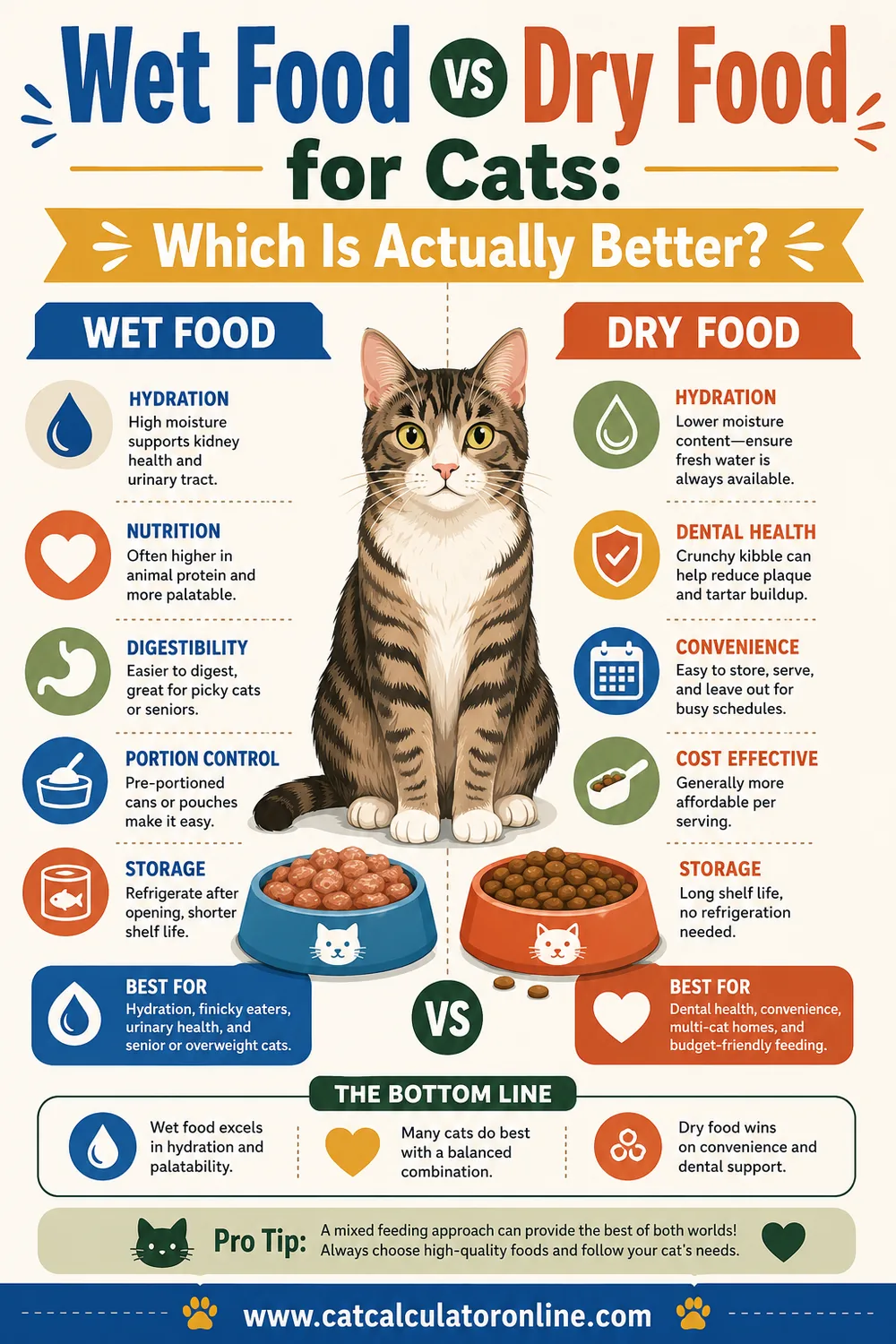
Diet matters more than most people expect. Hair is largely protein, and a cat's coat is expensive to maintain. A complete, balanced food with quality animal protein and adequate omega-3 fatty acids supports a healthier, less brittle coat. Underfeeding or a poorly balanced homemade diet shows up in the coat quickly. If you're not sure your portions are right, our cat food calculator gives you a sensible starting point, and wet food vs dry food for cats covers the trade-offs.
Hydration helps. Dry, dehydrated skin sheds and flakes more. Wet food carries a lot of water with it, and multiple water stations around the house genuinely increase how much a cat drinks. See how much water should a cat drink for the practical version.
Flea prevention is non-negotiable. Fleas are one of the most common causes of itchy, over-groomed, patchy cats — including indoor-only cats, since fleas travel in on shoes and other pets. Use a vet-recommended product; never use a dog flea product on a cat.
What doesn't work: shaving a cat "so it sheds less" (it doesn't reduce shedding, removes natural insulation, and can distress the cat), random supplements bought on a hunch, and bathing a cat frequently, which strips oils and can leave skin drier than before.
Do Some Breeds Shed Less?
Yes, though not in the way the marketing suggests.
- Barely shed: the Sphynx has almost no coat to lose, and Cornish Rex and Devon Rex have short, fine, curly coats that shed very little visibly.
- Shed less visibly: short single-coated cats like the Siamese and Burmese drop less noticeable fur simply because there's less undercoat and the hairs are short.
- Shed a lot: dense double-coated and long-haired breeds — Maine Coon, Norwegian Forest Cat, Persian, Siberian, Ragdoll — produce the dramatic tufts. Persians and other flat-faced long-hairs also need daily grooming to avoid mats.
- The ordinary domestic shorthair sits comfortably in the middle and does just fine with a weekly brush.
One important correction while we're here: no cat is truly hypoallergenic. The main cat allergen is a protein called Fel d 1, produced in saliva and skin secretions. Cats spread it over their coat when they groom, so it travels on hair and dander — but the hair isn't the allergen, it's the delivery vehicle. That's why a hairless Sphynx can still trigger allergies, and why "low-shedding" and "low-allergen" aren't the same claim. Some individual cats produce less Fel d 1 than others, which is why allergic people sometimes tolerate one specific cat.
When Shedding Means See a Vet
Normal shedding thins nothing. If your cat is actually losing coverage, something else is happening. Book a vet appointment for any of these:
- Bald patches or visibly thinning areas. Especially on the belly, inner thighs, flanks or base of the tail.
- Symmetrical hair loss. Matching thin areas on both sides often point to a systemic or behavioral cause.
- Scabs, crusts, redness, sores or a musty smell. These suggest fleas, infection or allergic skin disease.
- Over-grooming. Licking, chewing or pulling at one area repeatedly. Cats groom to self-soothe, so this can be pain, itch or stress — sometimes all three.
- A sudden change in coat quality. Greasy, dull, dry, clumped or matted fur that wasn't like that a month ago.
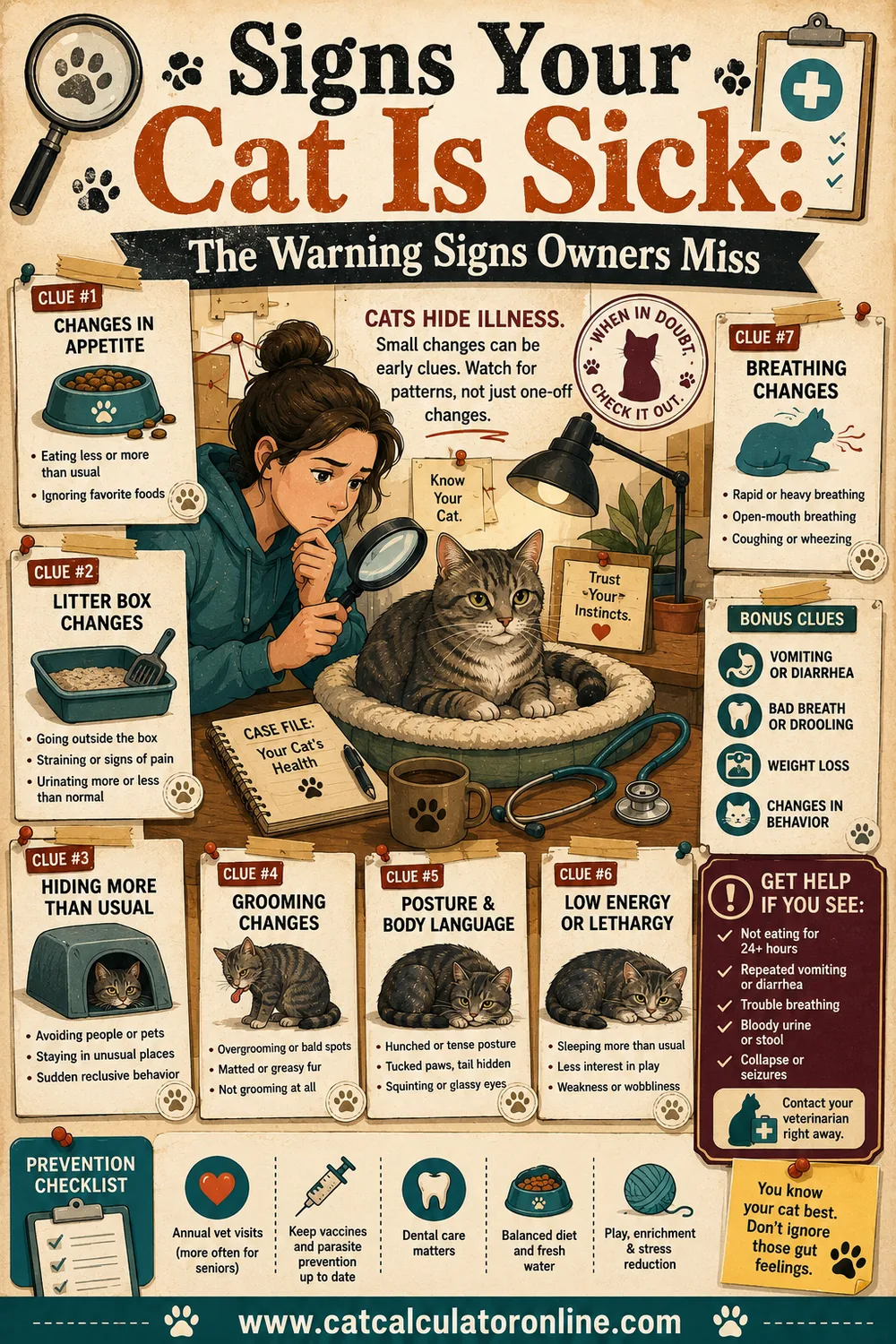
- Shedding plus anything else. Weight change, increased thirst, appetite changes, vomiting, hiding or low energy alongside coat changes makes the appointment more urgent. Our guide to signs your cat is sick lists the changes worth acting on.
Common causes a vet will consider include fleas and other parasites, food or environmental allergies, ringworm (a fungal infection, and one that can spread to people), stress-related over-grooming, thyroid disease, and other internal illness. Only a vet can sort those out — several look identical from the outside.
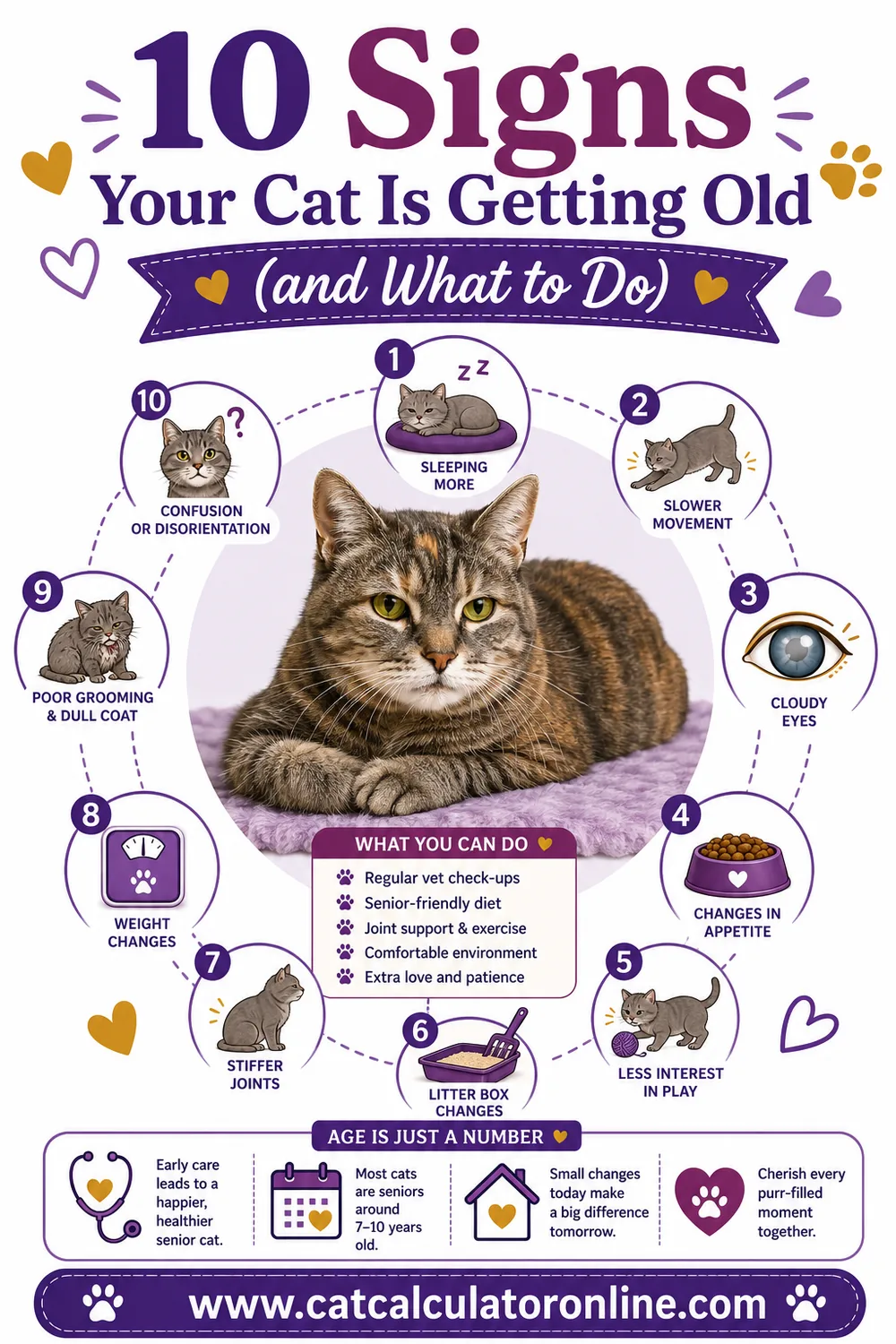
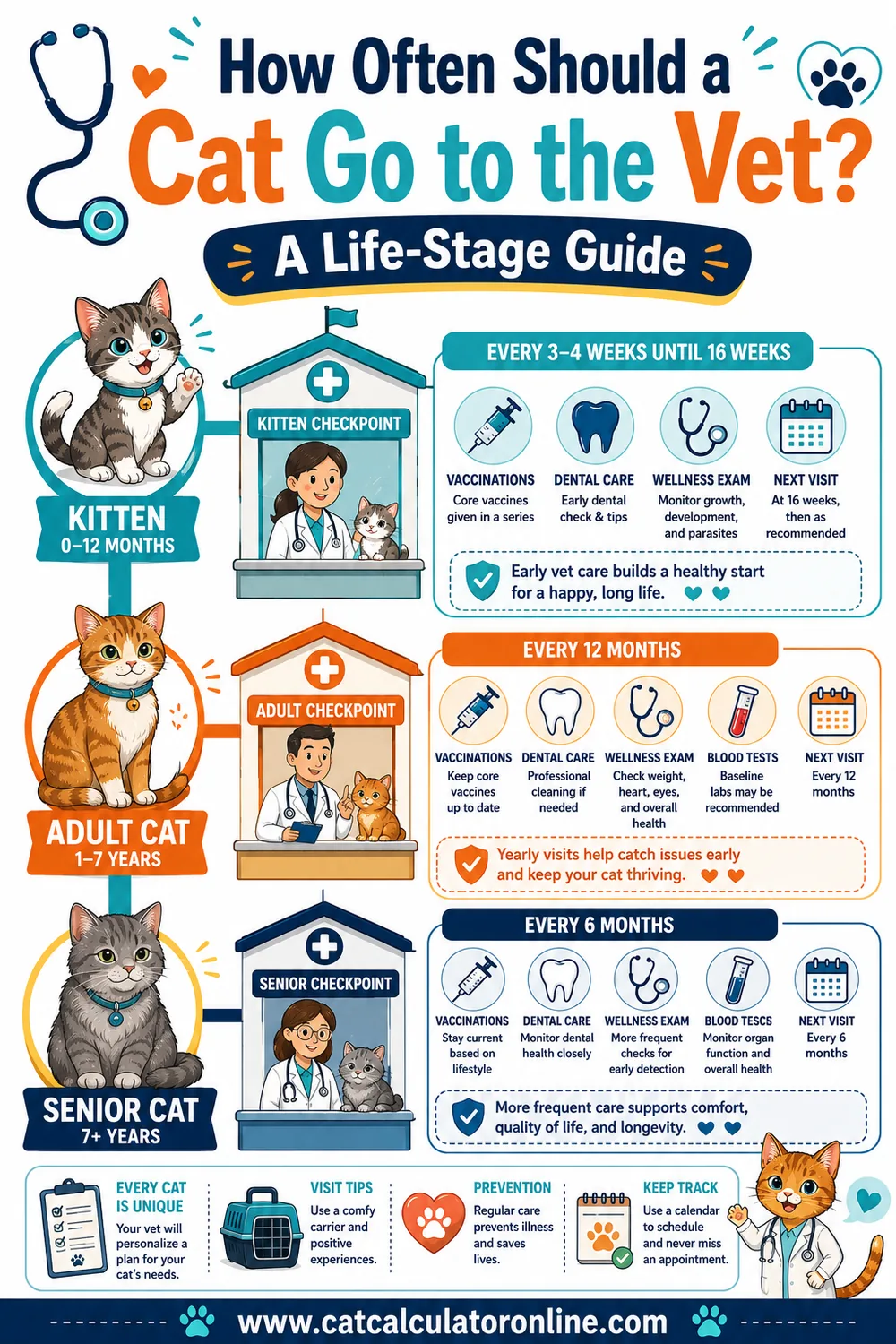
One more note for older cats: a senior who stops grooming, develops a matted or greasy coat, or has dandruff along the spine is often struggling to reach, or feeling unwell. That's worth mentioning at the next check-up. See signs your cat is getting old and how often should a cat go to the vet.
Living With the Fur
Assuming your cat's shedding is normal, the goal shifts from prevention to management. A few things that genuinely help:
- Brush over a towel or outside so the hair you collect never enters circulation.
- Give her one great blanket. A washable throw on her favorite spot concentrates most of the fur in one launderable object.
- Vacuum on a schedule, not on impulse. Twice a week beats one heroic Saturday.
- Rubber glove trick. A damp rubber glove dragged over upholstery gathers embedded hair better than most lint rollers.
- Wash bedding weekly. It also helps if anyone in the house is allergy-prone, since it removes dander along with the hair.
- Keep up flea prevention year-round. It removes the most common itch trigger before it starts.
FAQ
Why does my indoor cat shed all year instead of seasonally?
Because seasonal shedding is driven mainly by day length, and indoor lighting plus stable heating blurs that signal. Outdoor cats shed heaviest in spring and again in autumn, while indoor cats often shed at a fairly steady rate all year. The total amount isn't necessarily higher, it's just spread out.
Is there a cat that doesn't shed or cause allergies?
Sphynx, Cornish Rex and Devon Rex shed very little, but no cat is truly hypoallergenic. The main allergen is the Fel d 1 protein in saliva and skin secretions, not the hair itself, so even a hairless cat can trigger symptoms. Some individual cats simply produce less of it than others.
Does brushing really reduce shedding?
It doesn't reduce how much hair your cat loses, but it captures that hair before it lands on your sofa — and before your cat swallows it while grooming. That makes brushing the single most effective step for both loose fur and hairballs. Short-haired cats do well with once or twice a week, long-haired cats with near-daily brushing.
Can food change how much my cat sheds?
An incomplete or low-quality diet can produce a dull, brittle, poorly maintained coat that sheds more and breaks more. A complete, balanced food with good animal protein and adequate omega-3s supports healthier hair. It won't turn a Maine Coon into a Sphynx, but it makes a real difference to coat condition.
When is shedding a sign my cat is sick?
When it comes with visible skin: bald patches, symmetrical thinning, scabs, redness, or constant licking and chewing at one area. A sudden change in coat texture also counts. Any of those need a vet, because fleas, allergies, ringworm, stress and thyroid disease can all look similar from the outside.
Should I shave my cat to stop the shedding?
Generally no. Shaving doesn't reduce shedding, removes insulation that helps with both cold and heat, and can be very stressful. Clipping is sometimes necessary for severe mats, but that's a decision for your vet or a professional groomer rather than a shedding fix.
The Bottom Line
Shedding is your cat replacing her coat, continuously and on purpose. Indoor cats usually shed at a steady rate year-round rather than in two seasonal waves, long-haired cats shed more visibly than short-haired ones, and no cat is genuinely hypoallergenic because the allergen is Fel d 1 in saliva and skin, not the hair. Brush regularly, feed a complete diet, keep her hydrated, and stay on top of flea prevention — that covers almost everything you can control.
Bald patches, scabs, over-grooming or a sudden change in coat quality are a different story, and they belong with your vet.
Want more context on your cat's health as she ages? Try our free cat age calculator to see her age in human years, then read signs your cat is getting old to know what to expect next.