How Often Should a Cat Go to the Vet? A Life-Stage Guide
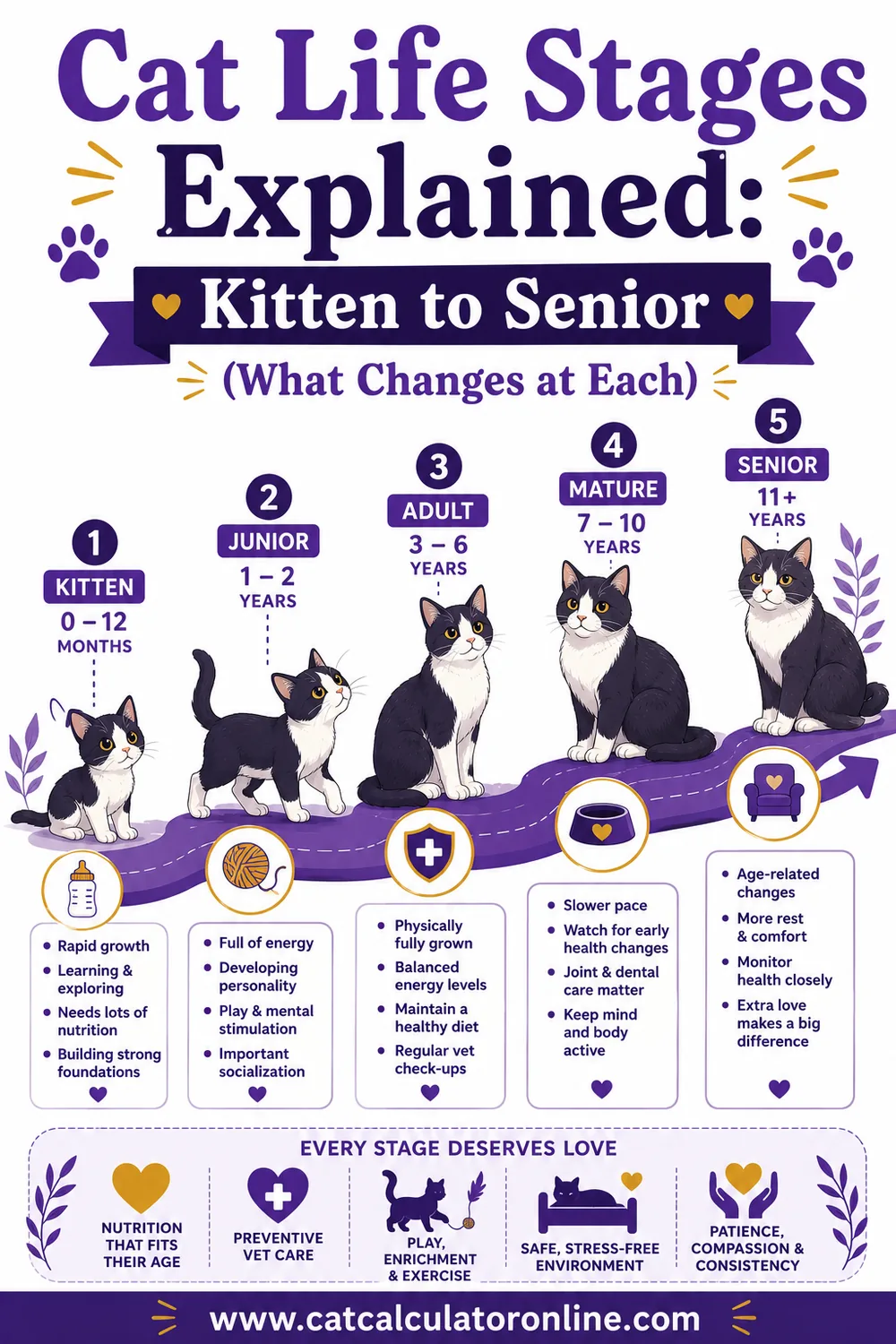
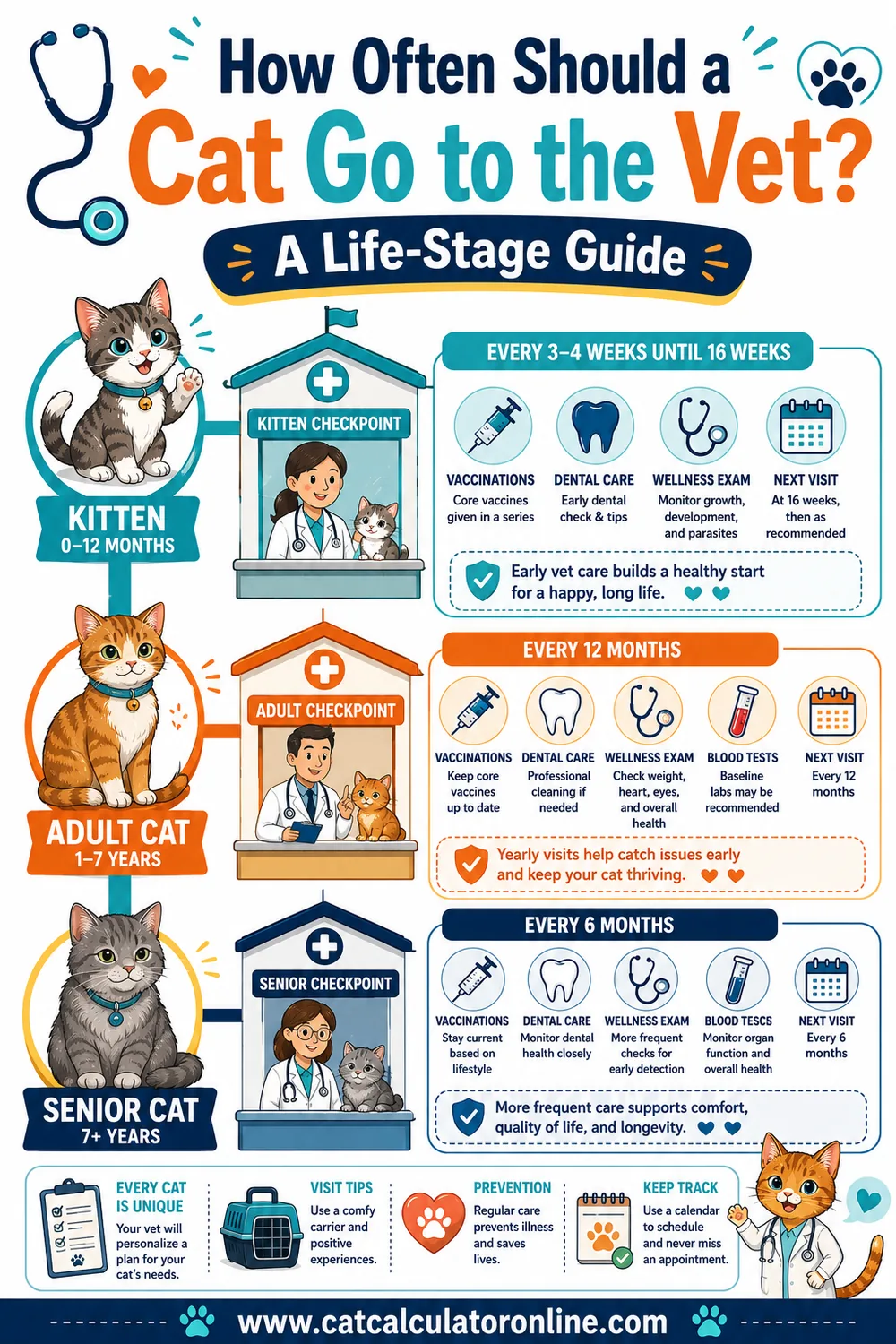
It depends entirely on her age. Kittens need a series of visits every three to four weeks until about 16 weeks old, young adult cats (1–6 years) go once a year, mature adults (7–10) go annually and often twice a year, and senior cats (10+) should be seen every six months. The schedule tightens as cats age because cats hide illness so well that routine screening is often the only way problems get caught early.
Not sure which stage your cat is actually in? Our free cat age calculator converts her age to human years and tells you her life stage in one tap — which is the fastest way to know what her vet schedule should look like right now.
🩺 How often does YOUR cat need the vet?
Tap your cat’s age:
Tap an age above to see the recommended visit frequency.
The Quick Answer: Vet Visits by Life Stage
The American Animal Hospital Association (AAHA) and the American Association of Feline Practitioners (AAFP) publish joint feline life-stage guidelines, and this is the schedule they point to. It's the same framework most vet clinics use.
| Life stage | Age | How often | What it usually includes |
|---|---|---|---|
| Kitten | 0–1 year | Every 3–4 weeks until ~16 weeks | Vaccine series, deworming, weight checks, spay/neuter ~4–6 months |
| Young adult | 1–6 years | Once a year | Full physical, dental check, weight, parasite prevention, boosters as due |
| Mature adult | 7–10 years | Annually, often twice yearly | Everything above plus baseline bloodwork, closer weight tracking |
| Senior | 10+ years | Every 6 months | Bloodwork, urinalysis, blood pressure, thyroid, dental, joint assessment |
| Any age, unwell | — | As soon as you notice a change | Whatever the symptoms call for |
That last row matters most. Every schedule here is for wellness visits — a healthy cat, no complaints. If something seems off, you don't wait for the next appointment on the calendar.
Why Cats Need More Visits Than You'd Think
Here's the thing that catches most owners off guard: cats hide illness. It isn't stubbornness or stoicism. It's a survival instinct. In the wild, an animal that visibly limps or looks weak becomes a target, so cats evolved to mask pain and sickness until they genuinely can't anymore.
The practical result is that by the time a cat looks sick, the condition has often been building for months. A cat with early kidney disease will eat normally, play normally, and sit on your lap normally. The only thing that changes early is her bloodwork.
That's why regular screening isn't fussiness. It's the only reliable window into a species that's very good at pretending everything's fine.
The conditions routine screening catches
The four conditions that most shape how a cat's later years go are all things that can be caught early with routine testing:
- Chronic kidney disease — extremely common in older cats and much more manageable when caught before symptoms show.
- Hyperthyroidism — an overactive thyroid, usually in cats over 10, often first noticed as weight loss despite a good appetite.
- Diabetes — linked to weight, and often reversible in cats if caught early enough.
- Dental disease — widespread, painful, and easy to miss because cats keep eating through it.
None of those announce themselves. All of them show up on a routine senior panel.
Kittens: The Busiest Year
The first year is front-loaded, and it isn't optional. A kitten's immunity from her mother fades over the first few months, so the vaccine series is given in a sequence rather than one shot.
Expect roughly this:
- First visit around 6–8 weeks. Physical exam, weight, first vaccines, deworming, and a check for fleas and ear mites.
- Follow-ups every 3–4 weeks until about 16 weeks. Each visit continues the vaccine series and confirms she's growing on track.
- Spay or neuter, usually around 4–6 months. Timing varies — your vet will advise based on her size and development.
- A one-year checkup that transitions her into the adult schedule.
Between visits, keep an eye on her weight — it's the clearest signal that a kitten is thriving. Our kitten weight calculator shows you whether she's tracking where she should be for her age.
Young Adults (1–6 Years): Once a Year, Really
This is the easy stretch. A healthy young adult cat needs one wellness exam a year, and it's tempting to skip it when she seems perfectly fine.
Don't. A yearly visit does three things a home check can't:
- Establishes a baseline. Knowing what your cat's normal weight, heart sounds, and bloodwork look like at 3 makes an abnormal result at 9 obvious instead of ambiguous.
- Catches dental disease early. Dental problems start young and progress quietly. Vets find them by looking in the mouth, which most cats will not allow at home.
- Tracks weight. A pound of gain on a 10-pound cat is a 10% jump — the equivalent of a 150-pound person putting on 15 pounds. It's easy to miss visually.
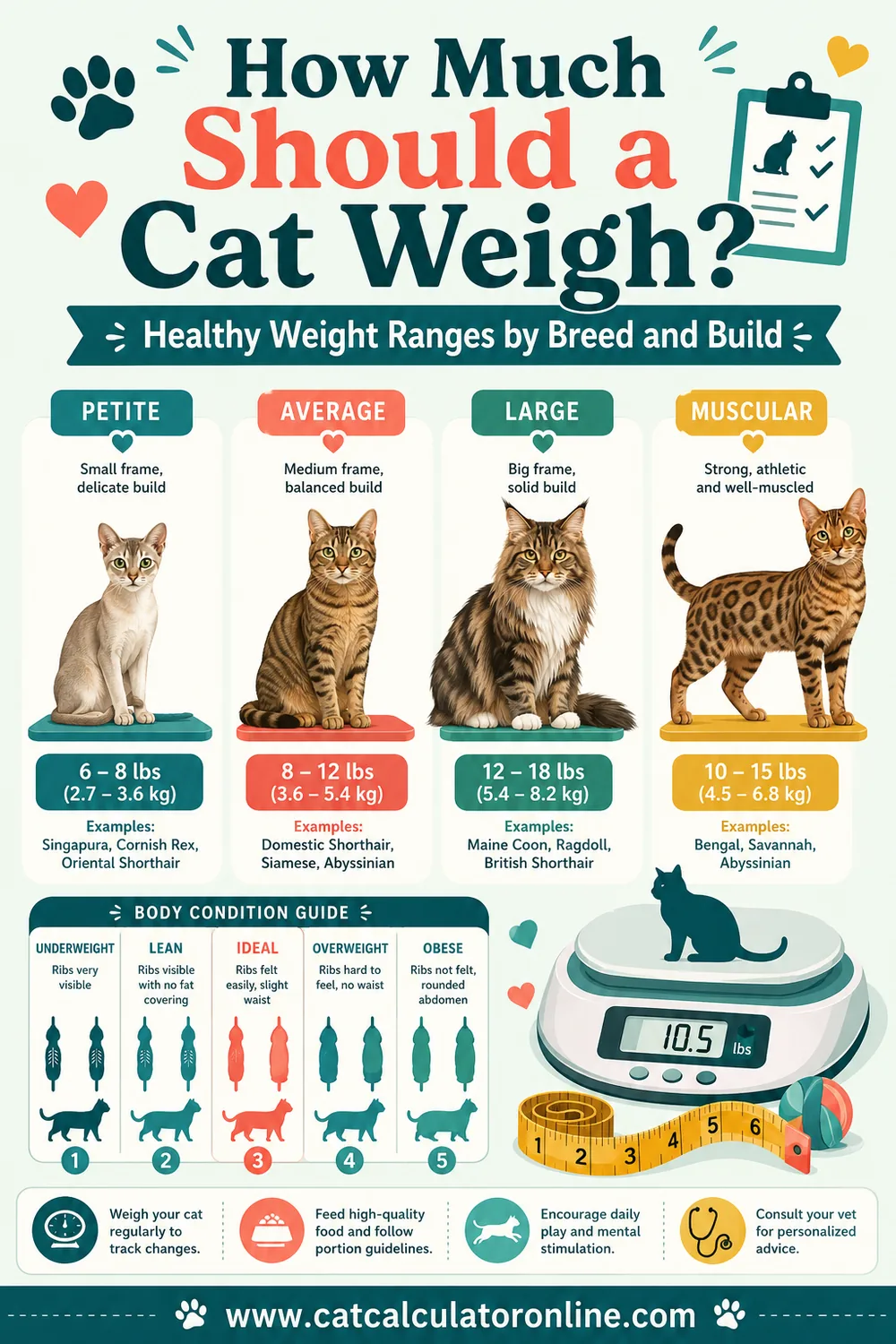
Weight is worth watching between visits too. Our cat ideal weight calculator gives you a target range for her frame, and how much should I feed my cat covers portion sizes.
Mature Adults (7–10 Years): Time to Step It Up
A 7-year-old cat is roughly 44 in human years — solidly middle-aged. This is the stage where "annual" starts becoming "annual, plus a second check."
Many vets recommend twice-yearly visits from age 7 onward, and the reasoning is straightforward: six months is a long time in a cat's life. A twice-yearly rhythm means nothing goes unnoticed for more than half a year.
This is also when baseline bloodwork becomes genuinely valuable. Running a panel on a healthy 8-year-old gives your vet a personal reference point, so a subtle shift at 11 is recognizable as a shift rather than just a number in a range.
Senior Cats (10+): Every Six Months
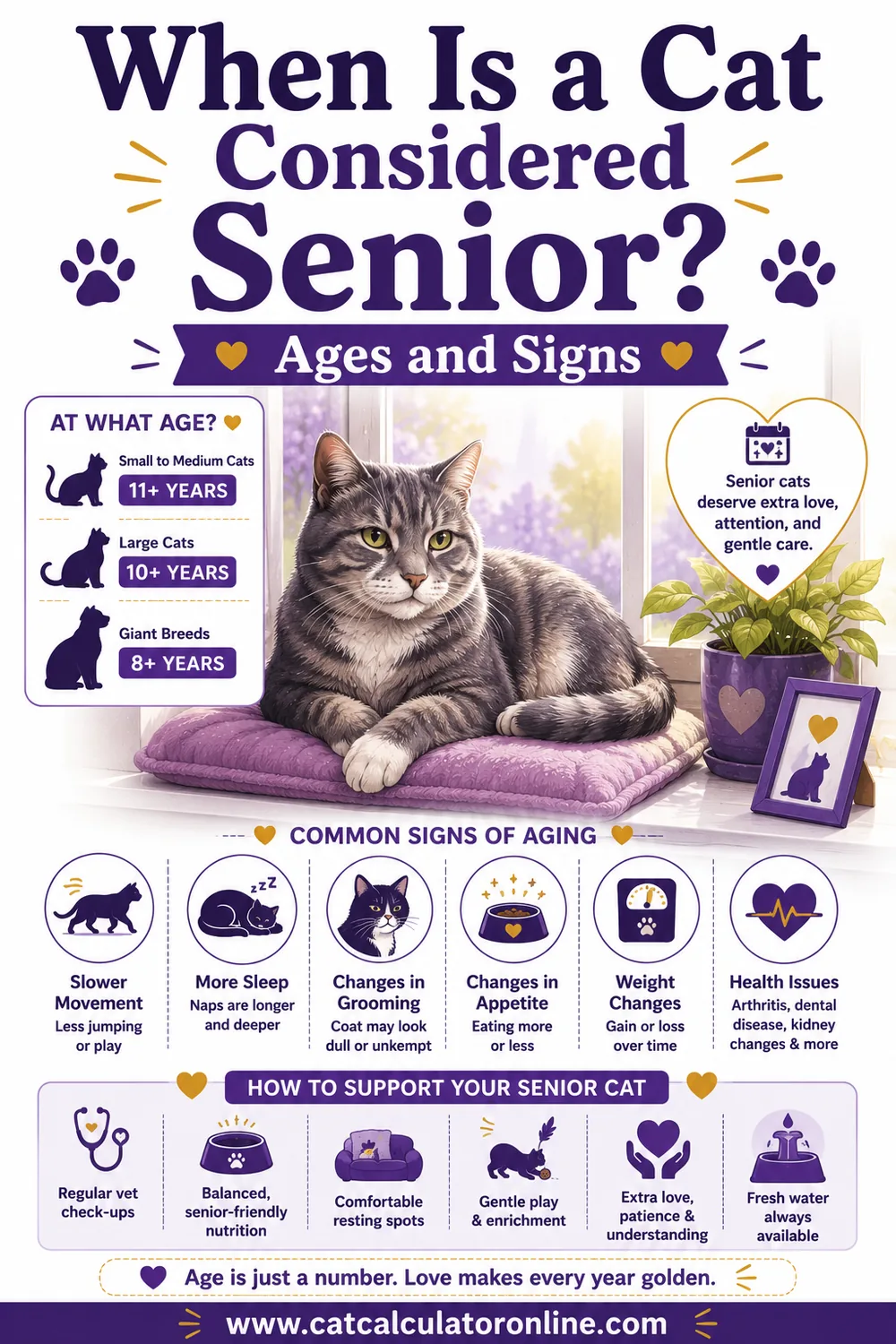
At 10, a cat is about 56 in human years and officially a senior. The recommendation here is firm: a wellness visit every six months.
What senior screening usually covers
A senior visit is more thorough than a young-adult checkup. Expect most of these:
- Full physical exam — heart, lungs, abdomen, lymph nodes, joints, coat and skin.
- Weight and body condition score — gradual weight loss is one of the earliest signs of trouble in older cats.
- Bloodwork — kidney values, liver values, blood sugar, red and white cell counts.
- Thyroid testing — hyperthyroidism is common after 10.
- Urinalysis — often catches kidney changes before bloodwork does.
- Blood pressure — high blood pressure in cats can damage eyes and kidneys silently.
- Dental assessment — and a discussion of whether a cleaning under anesthesia is warranted.
- Mobility check — arthritis is far more common in older cats than most owners realize.
Your vet will also ask a lot of questions about behavior at home: appetite, water intake, litter box habits, sleep, vocalizing at night. Those answers are data. Come prepared with them.
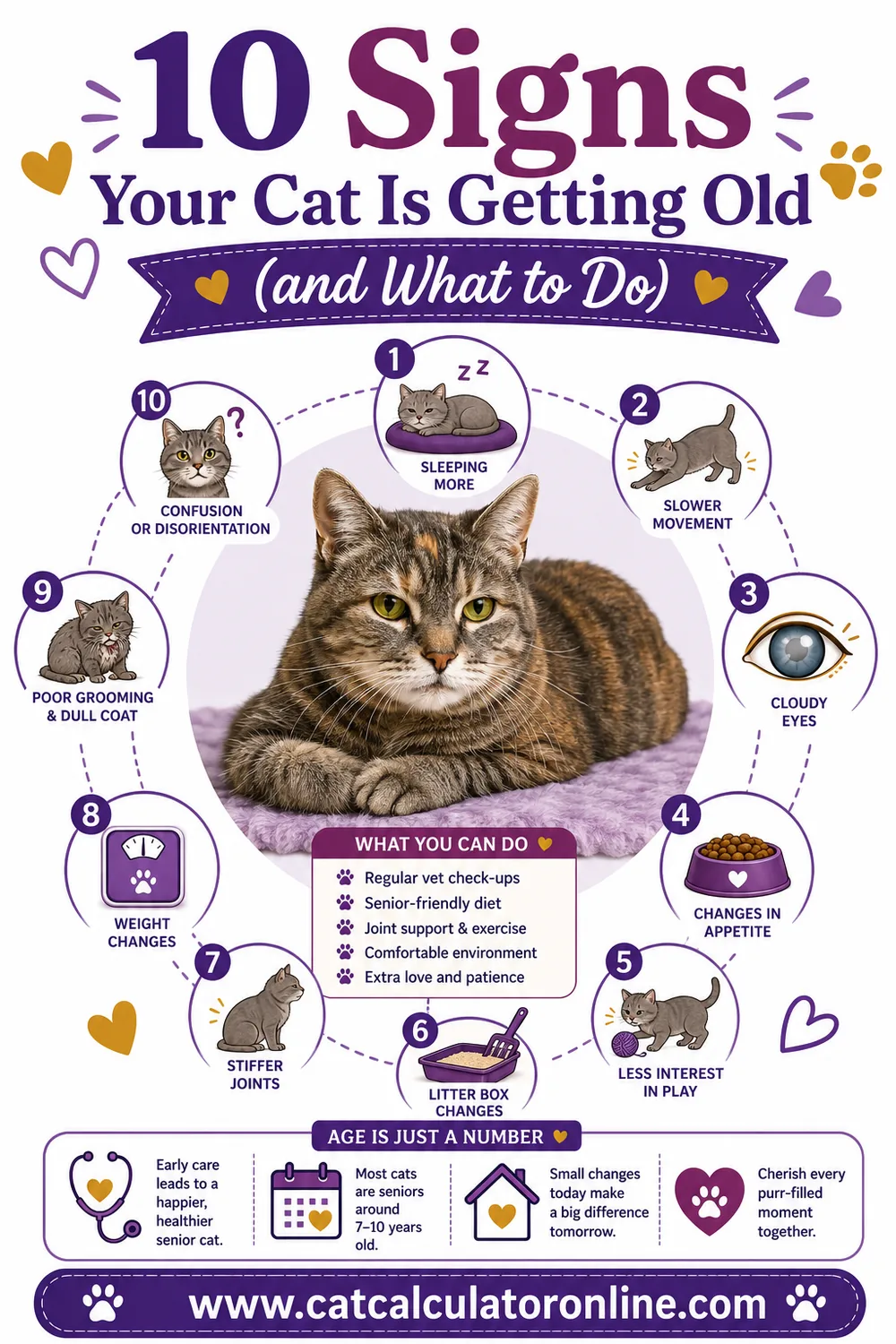
For more on what changes at this stage, see signs your cat is getting old and when is a cat considered senior.
What About Indoor-Only Cats?
Indoor cats still need the full schedule. They're at lower risk of trauma, fights, and some infectious diseases, so vaccine protocols may differ — that's a conversation with your vet.
But indoor cats get kidney disease, hyperthyroidism, diabetes, dental disease and arthritis at the same rates. Living inside doesn't protect against aging. If anything, indoor cats live longer (13–17 years on average, many reaching 20), which means more years in the age range where these conditions appear.
When Not to Wait for the Next Appointment
Call your vet outside the schedule if you notice hiding or withdrawal, a change in appetite or thirst, weight loss, litter box changes, repeated vomiting or diarrhea, lethargy, a cat who's stopped grooming, bad breath or drooling, limping, lumps, or any clear change in behavior.
Some things need same-day emergency care rather than an appointment:
- Straining in the litter box producing nothing — especially in a male cat. A urinary blockage is life-threatening and hours matter.
- Labored or open-mouth breathing.
- Collapse or sudden weakness.
- Suspected poisoning.
- Not eating for 24+ hours — cats can develop serious liver problems from a short period without food.
If you're seeing any of those, stop reading and call. Everything else on this page can wait; those can't.
Budgeting for Vet Care
Vet visits are the part of cat ownership people underestimate. A routine wellness exam is modest; a senior panel with bloodwork and urinalysis costs more, and twice a year adds up.
Planning for it beats being surprised by it. Our cat cost calculator breaks down the yearly total including vet care, and how much does a cat cost per year itemizes where the money actually goes. If you're weighing coverage, is pet insurance worth it for cats walks through the math honestly.
One practical note: routine wellness care is usually not covered by accident-and-illness insurance policies. Budget for checkups as a regular expense and treat insurance as protection against the big unexpected bill.
FAQ
How often should cats go to the vet if they seem perfectly healthy?
Once a year for young adults (1–6), annually or twice yearly for mature adults (7–10), and every six months for seniors (10+). "Seeming healthy" is exactly why these visits exist — cats hide illness by instinct, so screening catches what observation can't.
Do indoor cats need to go to the vet?
Yes, on the same schedule. Indoor living reduces some risks but does nothing for kidney disease, thyroid problems, diabetes, dental disease or arthritis. Vaccine protocols may be adjusted for indoor cats — ask your vet.
At what age does a cat need twice-yearly vet visits?
At 10, twice yearly is the standard recommendation. Many vets suggest moving to that rhythm as early as 7, when cats enter the mature adult stage.
What happens at a senior cat checkup?
A full physical exam plus bloodwork, urinalysis, blood pressure, thyroid testing, a dental assessment and a mobility check. Your vet will also ask detailed questions about appetite, thirst, litter box habits and behavior at home.
Is it too late to start regular vet visits if my cat is already 12?
No. Starting now still catches things earlier than not starting. Your vet will likely run a fuller workup at the first visit to establish a baseline, then settle into the six-month rhythm.
How do I know what life stage my cat is in?
Kitten 0–1, young adult 1–6, mature adult 7–10, senior 10+. Our cat age calculator tells you her stage and her human-year equivalent instantly.
The Bottom Line
The schedule scales with age: every few weeks as a kitten, once a year through young adulthood, twice a year as she matures, and every six months once she's a senior. The reason it tightens isn't that older cats are fragile — it's that cats hide illness, and screening is the only way to see past that.
Check where your cat sits right now with our free cat age calculator, then look at cat life stages explained to see what else changes at her stage. If you're planning the year ahead, the cat cost calculator will help you budget for it.