Wet Food vs Dry Food for Cats: Which Is Actually Better?
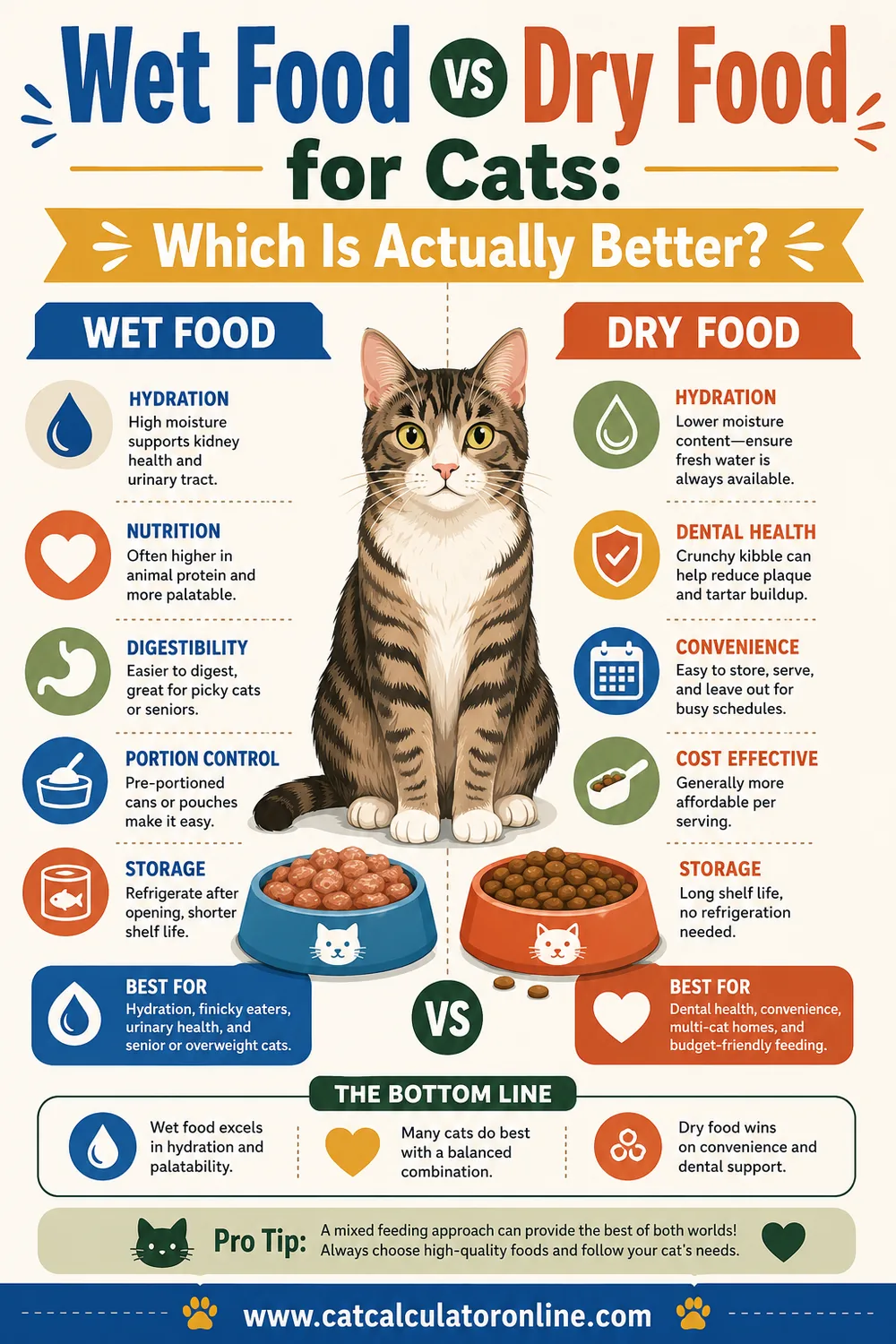
Wet food wins on hydration and usually on carbohydrate content, while dry food wins on cost and convenience. Both can be complete and balanced if the label says so for your cat's life stage, so there's no single right answer — the better choice depends on your cat's health, your budget, and your schedule. Plenty of owners land on a combo of both, and that's a perfectly good outcome.
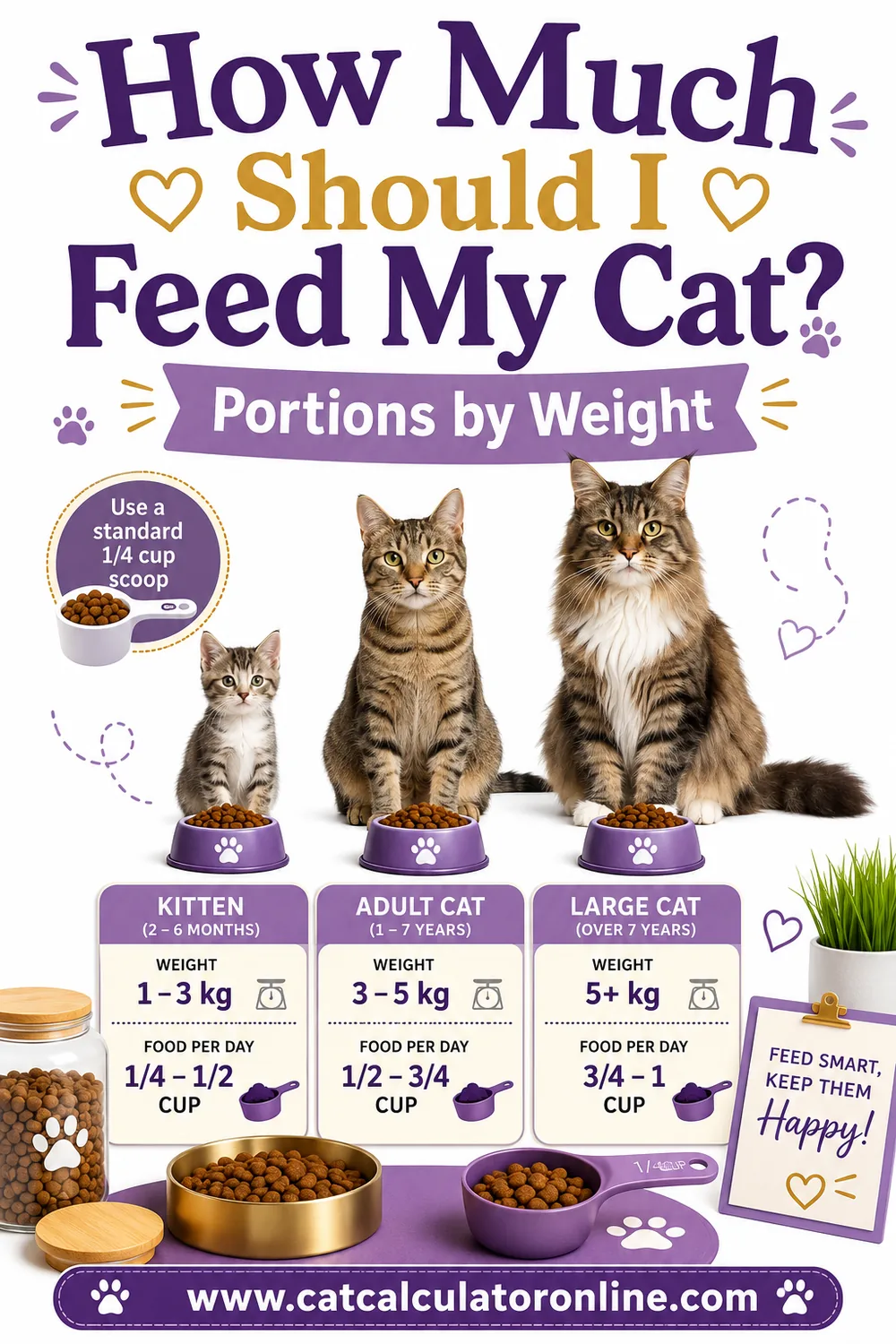
Whichever way you go, the amount matters more than the format. Our free cat food calculator turns your cat's weight into a daily calorie target and shows you what that looks like in cans and cups, so you're not guessing off the back of the bag.
🐾 Wet or dry? See what a day of food looks like
Tap your cat’s healthy weight to see roughly how much of each format covers a day:
Tap a weight above. Estimates assume roughly 20 kcal per lb, ~80 kcal per 3 oz can and ~350 kcal per cup of dry — always check your own label.
The Short Answer, Before the Details
If you want one sentence: most cats do well on wet food or a wet-heavy combo, but a good dry food fed in measured portions is not a failure.
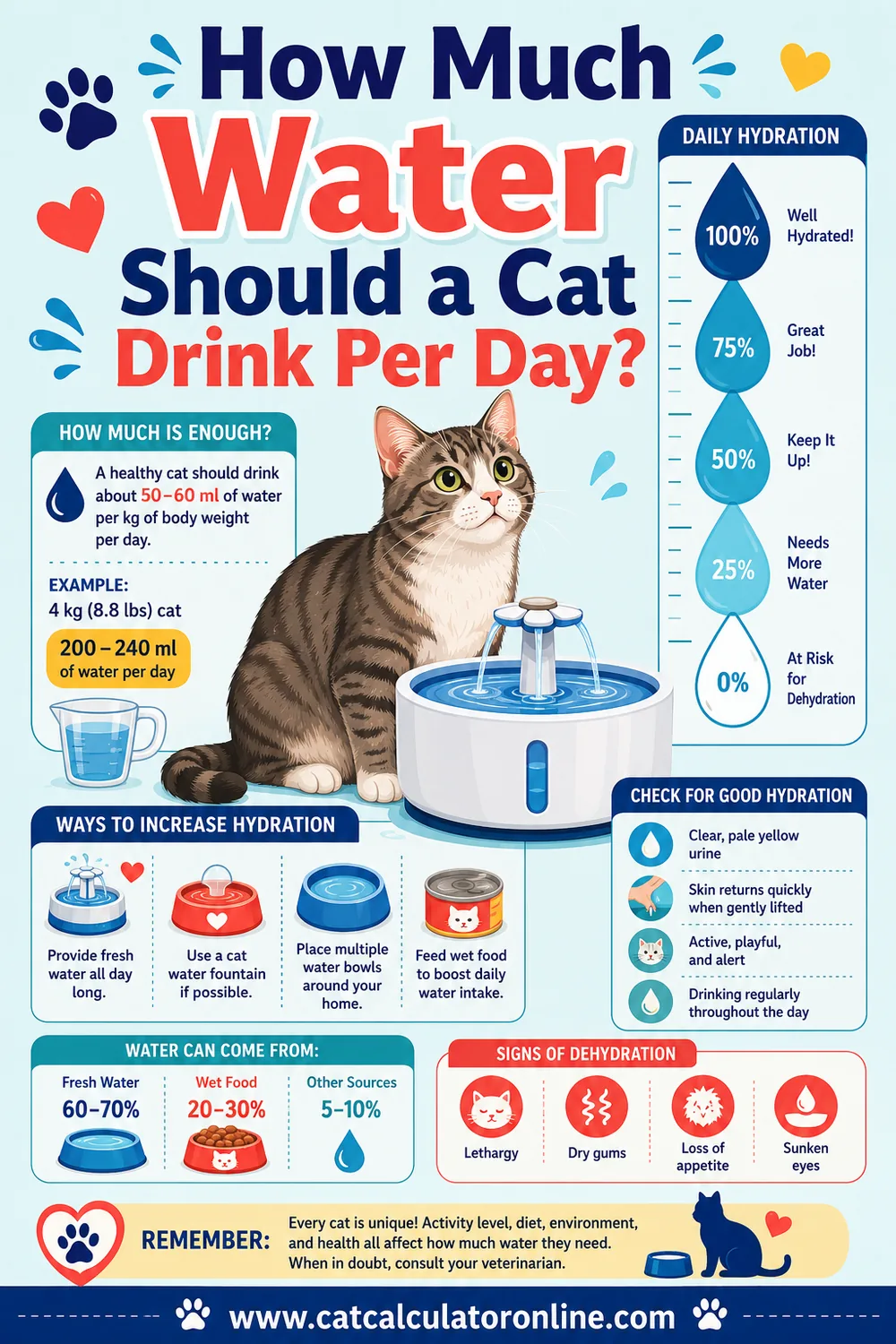
Here's the honest version of the debate. Cats evolved from desert-dwelling ancestors and have a famously weak thirst drive. In the wild they got most of their water from prey, which is roughly 70% moisture — almost exactly what canned food gives you. Dry kibble sits around 10% moisture, so a dry-only cat has to make up the difference at the water bowl, and many don't drink quite enough to do it comfortably.
That's the core of the argument for wet food. Everything else — cost, convenience, storage, calories — is a practical trade-off you get to weigh for your own household.
Wet vs Dry Cat Food: The Full Comparison
| Factor | Wet (canned/pouch) | Dry (kibble) |
|---|---|---|
| Moisture | ~70–80% water | ~10% water |
| Hydration | Big win — supports urinary and kidney health | Cat must drink enough on its own |
| Typical calories | ~70–100 kcal per 3 oz can | ~300–400 kcal per cup |
| Calorie density | Low — hard to overfeed by accident | High — a small scoop adds up fast |
| Carbohydrates | Usually lower | Usually higher (starch binds the kibble) |
| Cost per day | Higher, often 2–4× dry | Lowest cost per calorie |
| Convenience | Open, serve, refrigerate leftovers | Scoop and go |
| Leaving it out | Spoils in a few hours | Safe out all day |
| Portion control | Easy — a can is a unit | Easy to eyeball wrong; needs a measuring cup or scale |
| Dental benefit | None | Also essentially none (see below) |
| Storage | Fridge space; opened cans last ~2–3 days covered | Sealed bin, room temperature |
| Picky eaters | Warmer, stronger smell — often more tempting | Crunch appeals to some cats |
| Travel/boarding | Awkward | Easy |
| Puzzle feeders | Limited options | Works with most puzzle toys |
The Dental Myth: Dry Food Doesn't Clean Teeth
This is the single most repeated claim about kibble, and it doesn't hold up.
The idea is that crunching kibble scrapes plaque off the way a brush would. In practice, most cats either crack a piece once and swallow it, or swallow small kibble whole. There's very little scrubbing happening, and what contact there is happens at the tips of the teeth — not at the gum line where dental disease actually starts.
What genuinely helps your cat's teeth:
- Brushing. Daily is ideal, a few times a week still helps. Use a cat-safe toothpaste — never human toothpaste.
- Professional cleanings. Your vet can scale under anesthesia and spot problems below the gum line.
- Dental-specific diets and treats. These exist and some are designed with larger, fibrous kibble that fractures instead of shattering. They're a different product from ordinary kibble, and your vet can tell you whether one's worth it.
- Regular mouth checks. Bad breath, red gums, drooling or dropping food are all reasons to book a visit.
So if you're choosing dry food, choose it for cost, convenience or your cat's preference — just don't choose it for teeth.
The Case for Wet Food
Hydration you don't have to nag about
A cat eating mostly canned food takes in a large share of its daily water without ever visiting the bowl. That matters because cats aren't reliable drinkers. Higher total water intake supports the urinary tract and is often recommended for cats prone to urinary issues or living with kidney disease.
If you want the actual numbers on what your cat needs, our how much water should a cat drink guide breaks it down by body weight.
Harder to overfeed
Calorie density is the quiet reason so many cats are overweight. A cup of dry food can carry 300 to 400 calories — more than a whole day's worth for an average cat. Add "just a small extra scoop" a couple of times a day and you've built a weight problem without noticing.
Wet food comes in pre-measured units. A 3 oz can is roughly 70 to 100 calories, so it's much easier to keep the day's total straight in your head.
Usually lower in carbohydrates
Cats are obligate carnivores — they're built to run on protein and fat. Dry food generally needs starch to hold its shape, so kibble tends to be higher in carbs than canned food. Whether that matters for a healthy cat is genuinely debated, but for diabetic cats especially, vets often lean toward lower-carb wet diets.
Often more tempting
Wet food smells stronger, especially warmed slightly. That helps with picky eaters, cats recovering from illness, and older cats whose sense of smell has faded.
The Case for Dry Food
Dry food gets treated as the villain in a lot of online arguments. It doesn't deserve that.
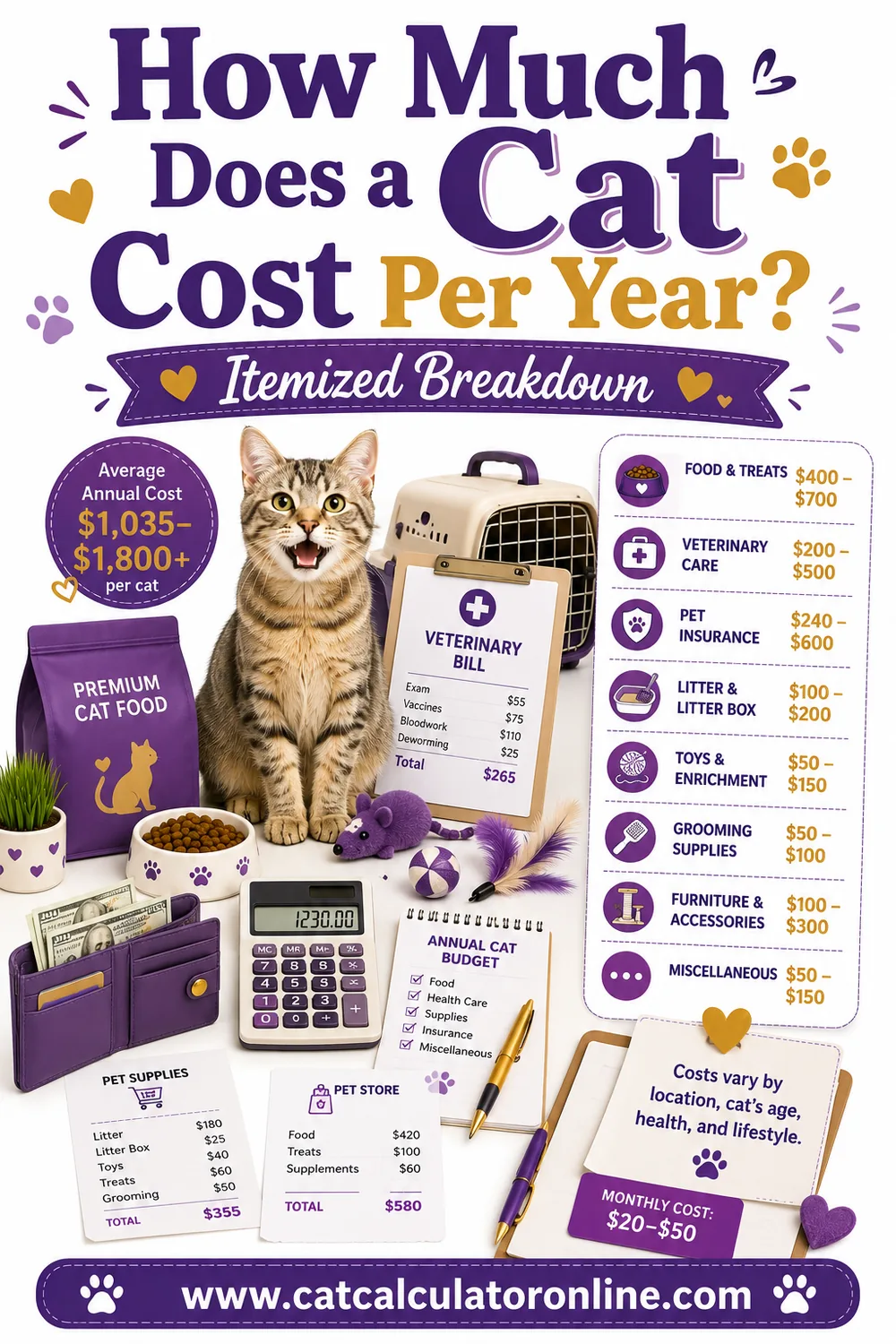
- It's affordable. For multi-cat households, the cost gap between wet and dry is not a small thing. A cat fed a quality dry food in correct portions is far better off than a cat fed too much of anything expensive.
- It's practical. Long days, shift work, a pet sitter for the weekend — dry food can sit out safely.
- It works with enrichment. Puzzle feeders, treat balls, and foraging toys almost all need kibble. Making a cat work for food is genuinely good for indoor cats.
- It stores easily. No fridge space, no half-cans, no waste.
- A complete dry food is complete. If the label carries an AAFCO statement for your cat's life stage, it meets nutritional requirements. Format isn't the same thing as quality.
The honest limitation: dry food makes overeating easy and contributes almost nothing to hydration. Both are manageable — you just have to manage them.
The Combo Approach (What a Lot of Owners Actually Do)
Combo feeding is the practical middle ground, and it's what many vets suggest when an owner can't or doesn't want to go all-wet.
A common pattern looks like this:
- Wet food at meals — one can in the morning, one in the evening. This is where the hydration comes from.
- A measured portion of dry — the rest of the day's calories, either in a bowl or, better, in a puzzle feeder.
- Count everything together. This is the part people skip. The wet and dry both count toward the same daily calorie target, so you split the total rather than feeding a full portion of each.
Say your 10-pound cat needs about 200 calories a day. Two 3 oz cans at 80 calories each covers 160, leaving roughly 40 calories — about an eighth of a cup of a 350 kcal/cup dry food. That's a much smaller scoop than most people picture, which is exactly why running the numbers helps. Our cat food calculator does that split for you.
Reading the Label (The Part That Actually Decides It)
Format matters less than what's in the can or bag. A few things to look for:
The AAFCO statement
Somewhere on the packaging you'll find a nutritional adequacy statement — something like "formulated to meet the nutritional levels established by the AAFCO Cat Food Nutrient Profiles for maintenance" or "for all life stages." That's what makes a food complete. A food labeled for "supplemental feeding" or "intermittent" use is a topper, not a meal.
Kilocalories per can or per cup
This is the number that actually matters for portioning, and it's the one people never look at. Wet foods vary a lot — a 3 oz pate can be 90 calories while a similar-sized shredded-in-gravy option is 65. Dry foods swing between roughly 300 and 400 calories a cup. Two foods that look identical on the shelf can be 30% apart in calories.
The bag's feeding guide overfeeds most cats
Feeding charts on packaging are built around a broad average that tends to assume an intact, active cat. An indoor, neutered, mostly-napping housecat usually needs less — sometimes noticeably less. Treat the bag guide as a ceiling, not a target, and use your cat's healthy body weight as the starting point instead. Our how much should I feed my cat guide walks through the math.
Life stage
Kitten food is deliberately calorie-dense because growing kittens need roughly twice the calories per pound that adults do. Senior formulas vary widely in what they're actually doing, so ask your vet whether switching is worthwhile for your cat.
Which Should You Choose? A Quick Decision Guide
Lean toward wet food if:
- Your cat has had urinary problems or is prone to crystals or blockages
- Your cat has kidney disease or is a senior
- Your cat is diabetic (ask your vet — low-carb wet diets are commonly recommended)
- Your cat is overweight and you want easier portion control
- Your cat rarely drinks from the bowl
- Your cat is a picky or reluctant eater
Lean toward dry food if:
- Budget is a real constraint, especially in a multi-cat home
- Your schedule means food may sit out for hours
- You want to use puzzle feeders for enrichment
- Your cat genuinely prefers it and is at a healthy weight
- You travel or board your cat often
Do a combo if: you want the hydration benefit without the full cost, or your cat likes both. Just count the calories together.
Switching Foods Without a Hunger Strike
Cats have strong opinions about food and can be stubborn about change. Two rules matter here.
Go slowly. Transition over 7 to 10 days: start at about 25% new food, move to 50%, then 75%, then all new. Fast switches cause stomach upset and outright refusal.
Never let a cat go without food for more than 24 hours. This is the serious one. When a cat stops eating, especially an overweight cat, the body starts mobilizing fat to the liver faster than the liver can process it. That can lead to hepatic lipidosis — fatty liver disease — which is dangerous and can develop quickly. If your cat refuses new food, go back to the old food and try again later. Missing meals is never worth winning the argument. If your cat won't eat for a day, call your vet.
Some practical tricks for a stubborn switch:
- Warm wet food slightly — it releases the smell
- Sprinkle a little of the old food on top of the new
- Offer new food when your cat is genuinely hungry, not right after a treat
- Use a wide, shallow dish so whiskers aren't crowded
- Change one thing at a time, not brand and format at once
FAQ
Is wet food better than dry food for cats?
For hydration, yes — wet food is roughly 70–80% moisture versus about 10% in dry, and that helps support urinary and kidney health. For cost and convenience, dry wins. Both can be nutritionally complete if the label says so for your cat's life stage, so the best choice depends on your cat's health and your circumstances.
Does dry food clean a cat's teeth?
No, not meaningfully. Most cats crunch kibble once or swallow it whole, so there's little scrubbing at the gum line where dental disease starts. Brushing and professional cleanings are what actually protect your cat's teeth. Specific dental diets are a separate product and may help — ask your vet.
Can I feed both wet and dry food?
Yes, and many owners do. The key is counting both toward the same daily calorie target rather than feeding a full portion of each. A common setup is wet food at two meals plus a small measured amount of dry.
How much wet food should a cat eat per day?
A rough guide is about 20 calories per pound of healthy body weight per day for an adult. Since a standard 3 oz can runs about 70–100 calories, a 10-pound cat needing roughly 200 calories lands around two to three cans a day. Check your specific can's kcal, and confirm with your vet.
Is dry food bad for cats with kidney disease?
It's not automatically off-limits, but hydration matters a lot with kidney disease, so vets often recommend wet or prescription renal diets. This is a decision to make with your vet, not off a chart.
Why does my cat only want dry food?
Cats form texture preferences early, and a kibble-raised cat can find canned food genuinely strange. Slow transitions, warming the food, and trying different textures (pate versus shreds versus chunks) all help. Never starve a cat into eating — the fatty-liver risk isn't worth it.
The Bottom Line
Wet food gives you hydration and easier portion control. Dry food gives you cost and convenience. Neither one is a mistake, the dental argument for kibble is a myth, and a thoughtful combo is a legitimate answer.
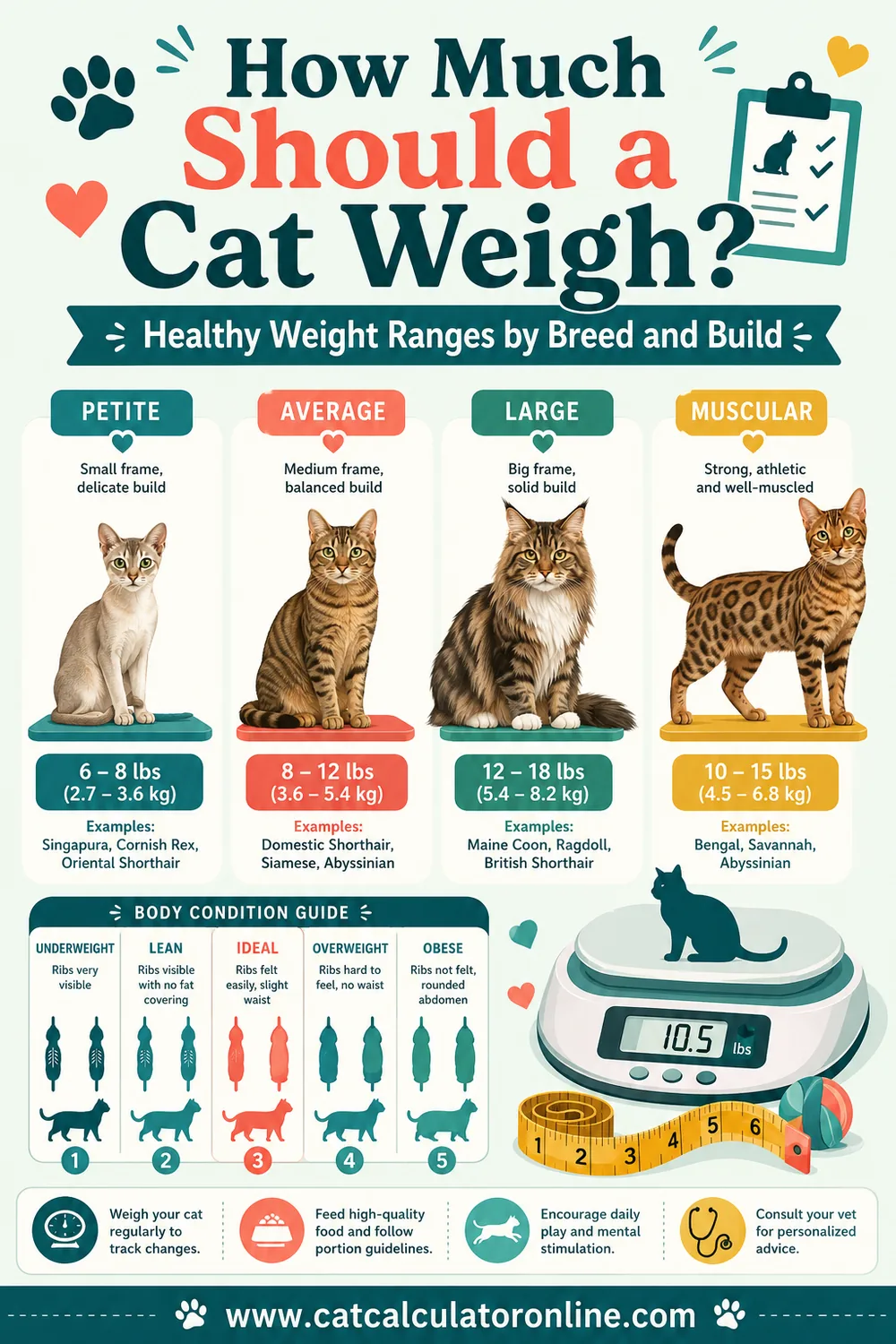
What matters far more than the format is the amount. Get the daily calories right and you've solved most of the problem. Run your cat's numbers through our free cat food calculator, then check whether your cat is actually at a healthy weight — those two together do more for your cat's health than any wet-versus-dry debate ever will.