How Much Does a Cat Cost Per Year? A Real, Itemized Breakdown
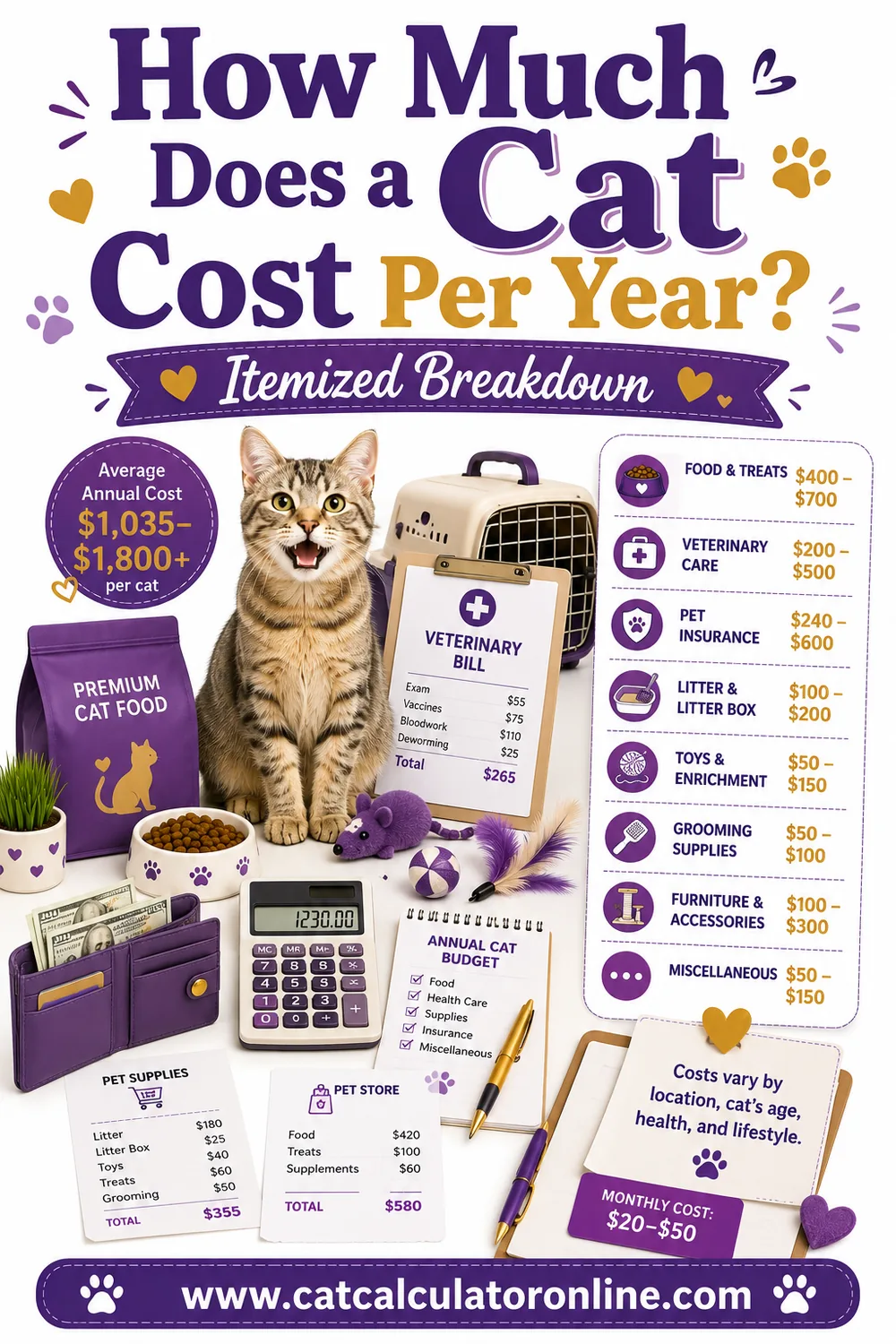
Most US cat owners spend about $700 to $1,300 per year on an established indoor cat, with food, litter, and routine vet care as the three steady line items. The first year runs higher — roughly $1,000 to $2,000 — because of one-time setup costs like spaying or neutering, the initial vet workup, and gear like a carrier and litter box. Below is the honest category-by-category breakdown, and our free cat age calculator and cost tools help you plan around your own cat's stage of life.
The Annual Cost of a Cat at a Glance
Here's the full picture for a typical year of established cat ownership — year two onward, once the setup costs are behind you:
| Category | Typical annual range | Notes |
|---|---|---|
| Food | $200–$500 | Wet vs. dry and food quality are the drivers |
| Litter | $150–$300 | More boxes and premium litter push it up |
| Routine vet care | $150–$400 | Exam, vaccines, parasite prevention |
| Pet insurance | $300–$450 | Or self-funded emergency savings instead |
| Toys, treats, supplies | $50–$200 | Scratchers, toys, treats, the odd replacement |
| Typical total | $700–$1,300 | Before boarding, grooming, or surprises |
Cats are meaningfully cheaper to keep than dogs — smaller portions, no daily walks to pay for, and lower insurance premiums. The numbers above assume a healthy indoor cat. A cat with a chronic condition, a taste for prescription food, or a long-haired coat that needs professional grooming will land higher.
Food: $200 to $500 Per Year
Food is where most owners have the most control. The spread comes down to two choices: dry versus wet, and standard versus premium.
- Mostly dry food: roughly $200–$300 a year on a mid-range brand. Dry food is cheaper per calorie and easy to store.
- A wet-and-dry mix: roughly $300–$450, the most common real-world setup.
- All wet or premium/fresh diets: $450–$700+, since canned and fresh foods cost far more per calorie than kibble.
The cheapest way to save on food isn't buying the cheapest bag — it's not overfeeding. Portion creep is common and quietly expensive, and it's the leading cause of feline obesity. Our guide to how much you should feed your cat covers portions by weight and activity so you're not pouring money (and pounds) into the bowl.
Litter: $150 to $300 Per Year
Litter is the cost people forget to budget for, and it's a genuine monthly line item. A single cat typically goes through enough litter to run $150–$300 a year, depending on:
- Litter type. Basic clumping clay is the cheapest. Premium clumping, crystal, and natural plant-based litters cost noticeably more.
- Number of boxes. The standard guidance is one box per cat plus one extra, and more boxes mean more litter.
- How often you scoop and replace. Daily scooping and regular full changes use more litter but keep things sanitary — and keep a finicky cat using the box.
An automatic litter box is an optional upfront splurge ($150–$700) that can cut the mess but doesn't reduce litter use much.
Routine Vet Care: $150 to $400 Per Year
A normal, healthy-cat year of vet care is cheaper than most people expect. It usually includes an annual wellness exam ($50–$100 in most areas), core vaccine boosters ($40–$100), and year-round parasite prevention — fleas and worms — which runs another $50–$150 depending on your cat and region.
Add occasional extras that most cats hit every few years: a dental cleaning ($200–$600, more if teeth need to be pulled) and bloodwork as your cat ages ($100–$250). Senior cats climb into the higher end of the routine-care range because vets recommend twice-yearly visits and more frequent screening once a cat passes 10.
Big-city vet prices can run 30–50% above small-town prices for identical services. If a quote surprises you, calling a second clinic is completely normal.
The Emergency Question: Insurance vs. Savings
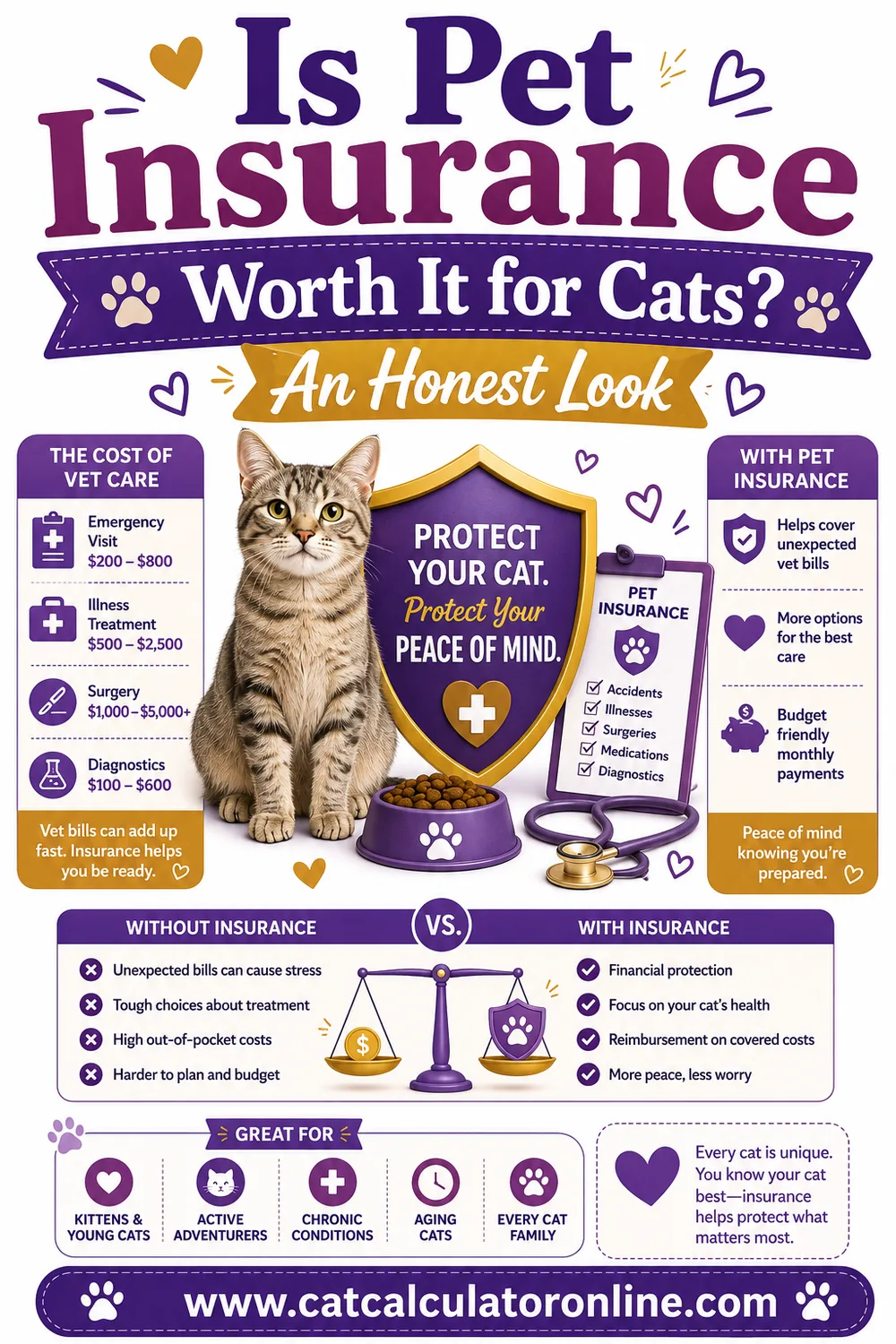
Here's the part of the budget that separates calm owners from panicked ones. Sooner or later, many cats have at least one expensive medical event — a urinary blockage, a swallowed string, a bad kidney or thyroid problem. Common emergency-level bills in the US:
- Urinary blockage treatment: $1,500–$3,000
- Swallowed-object surgery: $1,500–$4,000
- Emergency hospitalization: $1,000–$3,000+
- Cancer treatment: $3,000–$5,000+
You have two honest ways to prepare:
- Pet insurance — accident-and-illness coverage for cats averages about $25–$35 per month ($300–$450 a year), cheaper than the equivalent dog plan. It converts a possible four- or five-figure disaster into a predictable monthly cost.
- Self-insuring — putting that same $25–$35 a month into a dedicated savings account. This works well if you fund it consistently and your cat stays lucky in the early years, before the fund has grown.
Neither answer is universally right — it depends on your cash cushion and your tolerance for financial surprises. We walk through the whole decision in is pet insurance worth it for cats.
The First Year Costs More
If you're budgeting for a new kitten or an adopted adult, year one carries setup costs that never repeat:
| One-time cost | Typical range |
|---|---|
| Adoption fee | $50–$200 (shelter) |
| Spay/neuter | $50–$300 (often included in adoption) |
| Initial vet exam + vaccine series | $100–$300 |
| Microchip | $25–$50 |
| Carrier | $20–$60 |
| Litter box(es) + starter litter | $20–$80 |
| Food and water bowls | $10–$40 |
| Scratching post + starter toys | $30–$100 |
| Bed + basic supplies | $30–$80 |
Add those one-time costs to a normal year of food, litter, and vet care and realistic first-year totals land between $1,000 and $2,000 for most households. A purebred kitten from a breeder can push far past that on purchase price alone. Our new kitten checklist covers what's genuinely worth buying — and what isn't.
What a Cat Costs Over a Lifetime
Multiply a mid-range year by a 13–17 year indoor lifespan, add the first-year setup and a couple of medical events, and the honest lifetime figure for a US cat lands around $12,000 to $25,000. Cats that reach 20 — and many do — sit at the top of that range simply because there are more years to fund, and the senior years are the most expensive stretch.
That number isn't meant to discourage anyone. It's meant to be known in advance, because the owners who struggle are almost always the ones surprised by it. Costs aren't spread evenly: the first year spikes with setup, the middle years are the cheapest, and the senior years climb again with more frequent vet visits, screening, and sometimes prescription food. Owners who bank a little during the easy middle years feel the senior years far less.
Two Real-World Budgets
Ranges are useful; examples are clearer. Here's how the same categories play out for two different cats.
The budget-friendly profile — healthy adult domestic shorthair, dry food, low-cost area:
Food on mid-range kibble ($240), basic clumping litter ($180), routine vet and prevention ($200), toys and supplies ($80), self-funded emergency savings ($360). Total: about $1,060 a year. This is close to the practical floor for responsible ownership.
The comfortable profile — insured adult cat, wet-and-dry diet, suburban:
Food ($400), premium litter with two boxes ($260), routine vet and prevention ($300), insurance at $30/month ($360), toys and scratchers ($150). Total: about $1,470 a year. This is the most common shape for owners who want the emergency question already answered.
Same animal, a real difference in spend — which is why a personalized estimate beats any national average.
How to Lower the Annual Cost (Without Shortchanging Your Cat)
- Prevent instead of treat. Keeping your cat lean, staying current on dental care, and not skipping annual exams genuinely avoids four-figure bills later. Obesity-related problems are among the most common — and most preventable — feline vet expenses.
- Buy food and litter smart. Larger bags cost less per pound, and autoship discounts of 5–10% are easy money. Just measure food portions honestly.
- Adopt, don't shop. Shelter adoption fees usually bundle spay/neuter, first vaccines, and a microchip — hundreds of dollars of first-year costs handled at once.
- Keep your cat indoors. Beyond adding years of life, indoor cats avoid the injuries, fights, and infections that drive emergency bills.
- Pick an emergency plan — either one. Insurance or a dedicated savings account. The expensive choice is having neither when a $2,500 bill lands.
FAQ
How much does a cat cost per month?
An established indoor cat typically costs about $60–$110 per month across food, litter, vet care, insurance, and supplies. Cats on premium diets or with medical needs sit higher.
Are cats cheaper than dogs?
Generally, yes. Cats eat less, don't need paid walks or daycare, and their insurance premiums average lower. The one cost dogs don't have is litter, but it rarely closes the gap.
What is the biggest yearly expense for cat owners?
In a normal year it's the food-plus-litter combination. But in any year with a medical emergency, that single event usually dwarfs everything else — which is why the insurance-or-savings decision matters most.
How much should I save for cat emergencies?
A common target is $1,000–$2,000 as a starter emergency fund, building toward $3,000–$5,000 — enough to cover most single major events like a urinary blockage or a swallowed object. If that savings pace isn't realistic, insurance is the more protective choice.
Does an indoor cat cost less than an outdoor cat?
Over a lifetime, indoor cats are usually the better financial bet. They avoid the injuries, fights, and infections that generate emergency bills, and they live far longer, which spreads fixed costs across more good years.
How can I estimate costs for my specific cat?
Start with your cat's life stage and diet, then layer in your local vet prices. Our free cat calculators help you plan feeding and care around your cat's age, and this guide's category ranges give you the rest of the picture.
Know Your Number
A cat's love may be priceless, but the litter isn't — and knowing your real annual number is what keeps surprises from becoming crises. Budget the steady categories, pick your emergency strategy, and enjoy your cat with the money question already answered. Start by figuring out exactly where your cat is in life with the free cat age calculator.