Signs of Dehydration in Cats: Home Checks & When to Worry
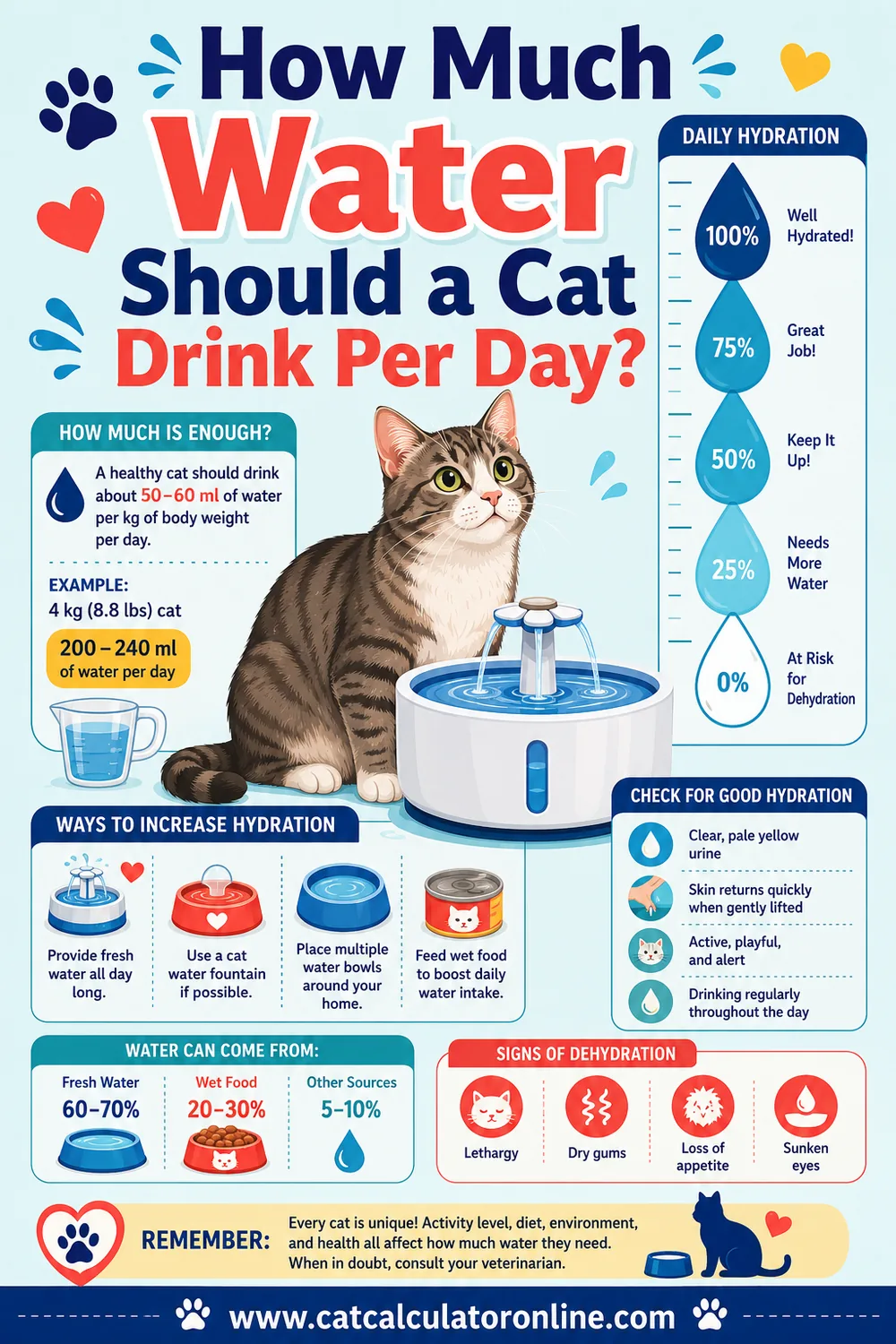
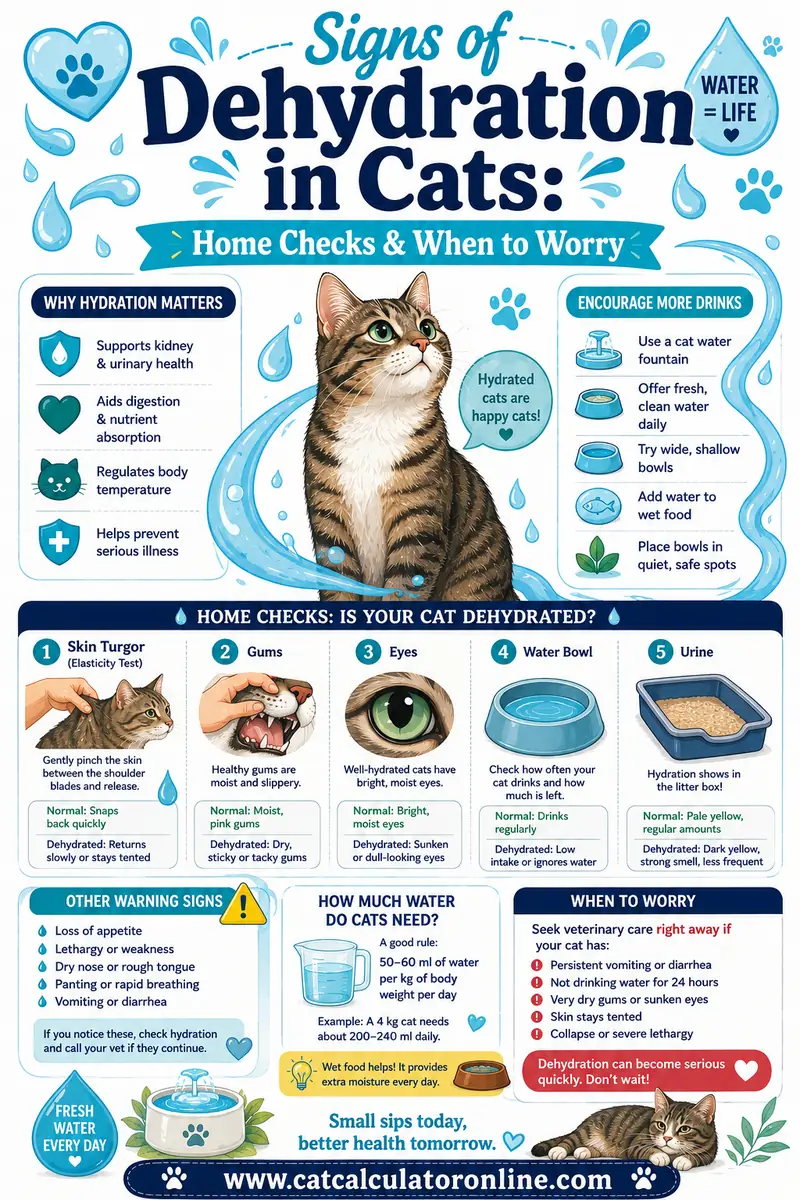
The clearest signs of dehydration in cats are a slow skin-tent test (skin lifted at the scruff is slow to snap back), tacky or dry gums, sunken eyes, lethargy, and loss of appetite. Cats have a naturally weak thirst drive thanks to their desert ancestry, so they often run low — especially on a dry-only diet or when they're unwell. A few quick home checks can raise the alarm, but they don't replace a vet: moderate-to-severe dehydration needs fluids from a vet, not just a full water bowl.
This guide is informational only. It'll show you how to check your cat at home and spot the warning signs, but it can't diagnose the cause — and dehydration is usually a sign of an underlying problem rather than the whole story. If your cat is older, our free cat age calculator will confirm her life stage, which matters because several of the conditions behind dehydration are more common in senior cats.
💧 Quick dehydration check
Tap what you’re seeing on your cat:
Tap a check above to see what it means and how urgent it is.
Why Cats Get Dehydrated So Easily
Cats descend from desert-dwelling ancestors, and it shows. They evolved to get most of their water from the prey they ate — small animals that are around 70% water — so they never developed a strong drive to drink from a bowl. Left to their own devices, many cats simply don't drink enough.
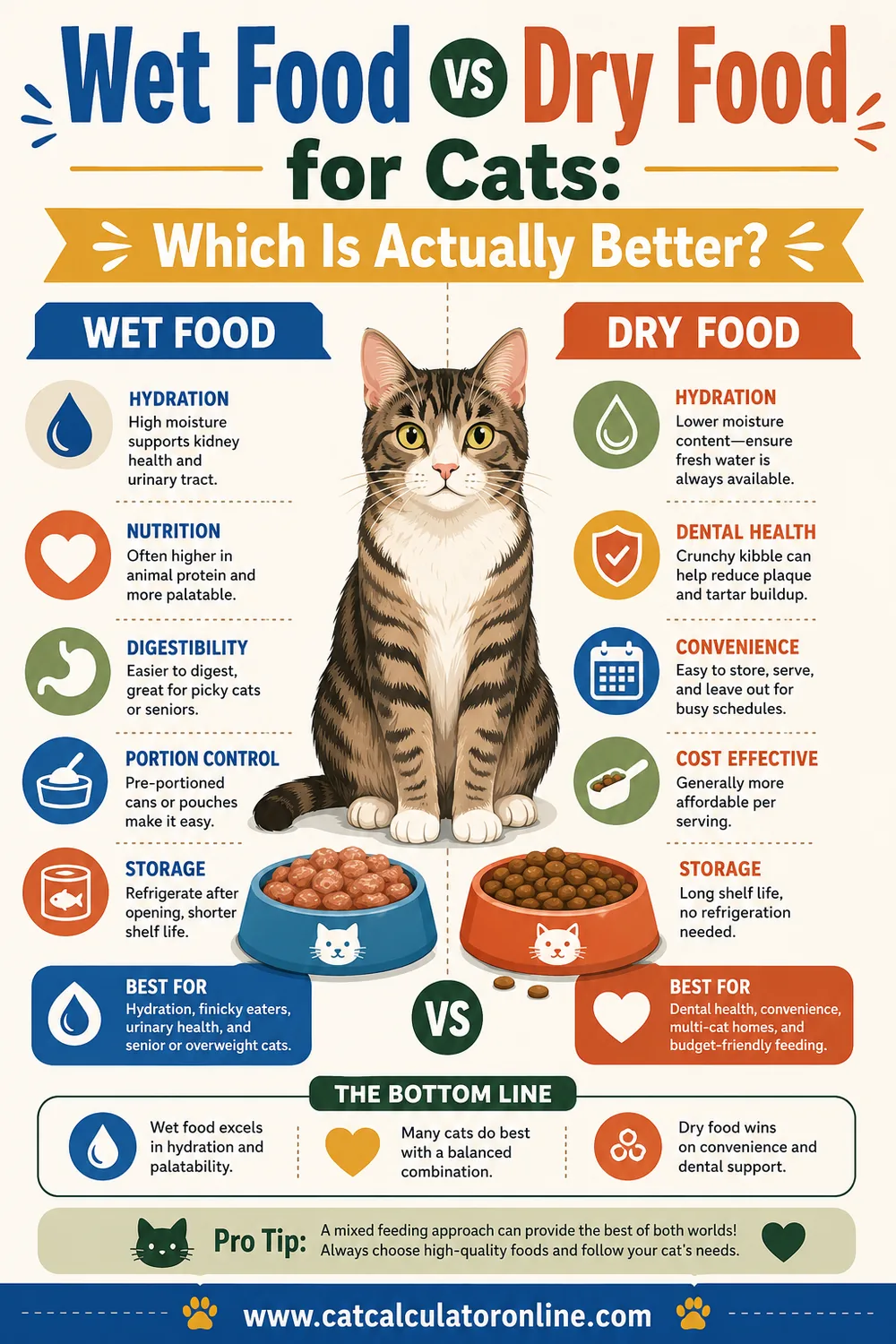
That built-in tendency to run low gets worse under a few common conditions. A dry-food-only diet is the big one: kibble is roughly 10% moisture, compared with around 70–80% in wet food, so a dry-fed cat is starting from a much lower water baseline. Illness makes it worse still — any cat who's vomiting, has diarrhea, is off her food, or has a fever loses fluid fast and often won't drink to replace it.
So dehydration in cats isn't a rare, dramatic event. It's a slow, quiet problem that a lot of cats live on the edge of. That's why knowing the home checks — and doing them when something seems off — genuinely matters.
Home Checks for Dehydration
You can get a useful read on your cat's hydration in under a minute with two simple checks. Neither is a substitute for a vet, but both are good early-warning signals.
The skin-tent (scruff) test
Gently pinch and lift the loose skin over your cat's shoulders or the back of the neck, then let go. In a well-hydrated cat, the skin springs back into place instantly. If it goes back slowly, or stays "tented" for a moment before flattening, that suggests dehydration. The slower and more sluggish the return, the more concerning it is.
A caveat: this test is less reliable in very thin, very old, or overweight cats, whose skin elasticity is already off. Treat a slow snap-back as a reason to call, not a final verdict.
The gum check
Lift your cat's lip and look at (and gently touch) her gums. Healthy gums are moist, slick, and glossy. If they feel tacky, sticky, or dry under your finger, that's a warning sign of dehydration. While you're there, note the color — healthy gums are a bubblegum pink; very pale, white, blue, or bright-red gums are a separate emergency and mean a vet now.
Do both of these when your cat is calm, and do them again on a healthy day so you know her normal. Baselines make the "off" days obvious.
The Full List of Dehydration Signs
Beyond the two home checks, here are the signs worth watching for. Any one of them is a reason to pay attention; several together mean call your vet.
| Sign | What you'll notice | Urgency |
|---|---|---|
| Slow skin-tent | Scruff skin slow to snap back | Vet call |
| Tacky / dry gums | Gums sticky, not slick and moist | Vet call |
| Sunken eyes | Eyes look dull or set back | Same-day vet |
| Lethargy | Low energy, sleeping more, withdrawn | Same-day vet |
| Loss of appetite | Eating little or nothing | Vet call (same-day if 24h+) |
| Reduced / dark urine | Smaller, less frequent, or dark clumps | Vet call |
| Constipation | Hard, dry, infrequent stools | Vet call |
| Panting | Open-mouth breathing (not normal in cats) | Emergency — now |
| Collapse / severe weakness | Unsteady, can't stand, very flat | Emergency — now |
A note on panting: cats don't pant like dogs. Open-mouth breathing in a cat is always urgent, whether or not dehydration is part of the picture.
What Causes Dehydration in Cats
Here's the part that matters most: dehydration is usually a symptom, not the root problem. A cat doesn't normally get dehydrated for no reason — something is either causing extra fluid loss or stopping her from drinking. Common drivers include:
- Not drinking enough on a dry diet. The everyday, low-grade version — a kibble-fed cat who simply runs low.
- Kidney disease. Very common in older cats, and a leading cause of chronic dehydration.
- Diabetes. Increases urination, which drains fluid.
- Hyperthyroidism. Another common senior-cat condition that affects hydration and appetite.
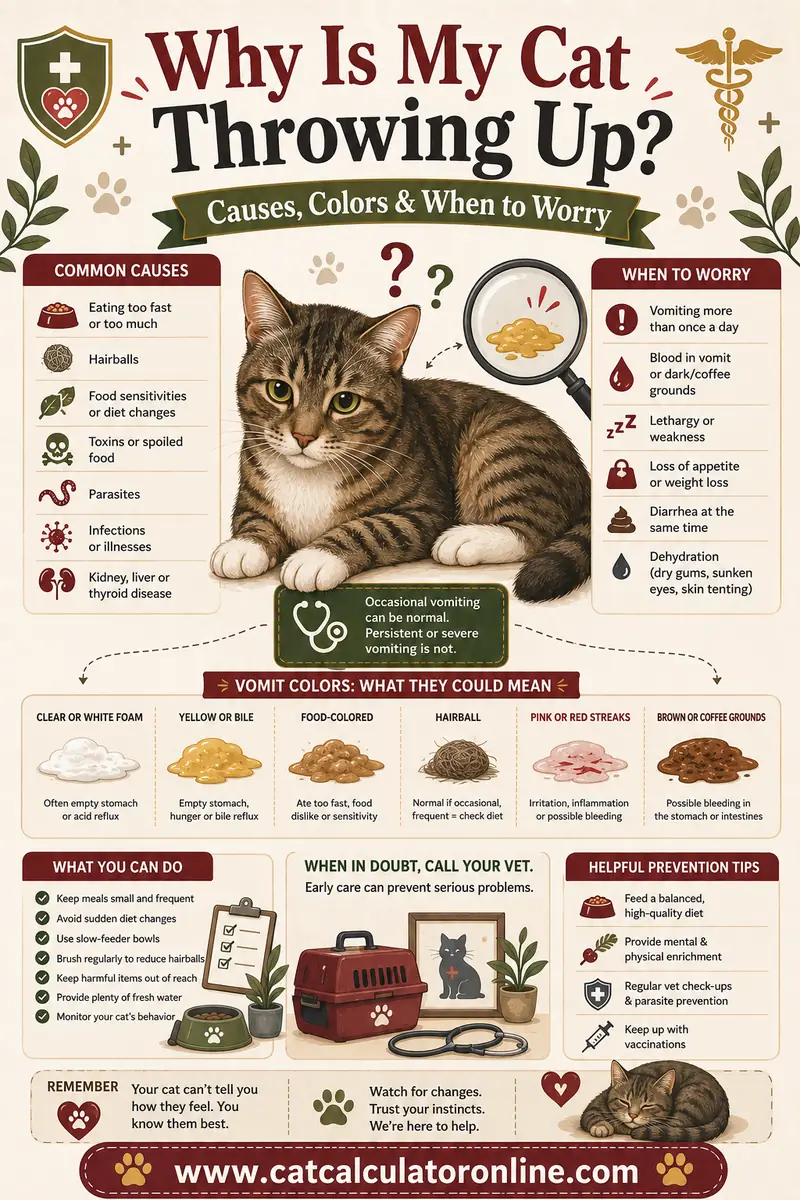
- Vomiting and diarrhea. Fast, heavy fluid loss — see why is my cat throwing up.
- Fever or infection. Raises fluid needs and often kills the appetite at the same time.
- Heat. Hot weather or a warm, stuffy room increases losses.
Because several of these are serious and treatable, the dehydration itself is often the clue that gets the real problem diagnosed. That's exactly why you don't just top up the water bowl and move on — you find out why she got dry.
How to Keep Your Cat Hydrated
For everyday, low-grade under-drinking (not a medical emergency), you can genuinely move the needle at home:
- Feed wet food. At ~70–80% moisture, wet food does a lot of the hydration work for you. Our wet food vs dry food for cats guide weighs up the trade-offs.
- Add water to meals. A splash of water (or a little unsalted, onion-free broth) stirred into wet or dry food bumps up intake.
- Offer multiple water stations. Several wide, shallow bowls around the home, away from the food and the litter box, get more cats drinking.
- Try a pet fountain. Many cats strongly prefer moving water and will drink far more from a fountain than a still bowl.
- Use wide, non-plastic bowls. Some cats dislike having their whiskers touch the sides; a wide ceramic or glass bowl helps.
- Keep it fresh. Change the water at least daily — cats are fussy about stale or dusty water.
For the full picture on normal intake and how to tell if she's drinking enough, see how much water should a cat drink. And if she's overweight or you're unsure about portions, our cat food calculator and how much should I feed my cat can help you get the whole diet on track.
Important limit: these tips help a mildly under-hydrated, otherwise-well cat. They do not fix moderate-to-severe dehydration, and they won't treat the underlying disease. If your cat is showing several of the signs above, or already seems unwell, she needs a vet — not just a better bowl.
When Dehydration Is an Emergency
Some situations need a vet the same day or immediately, because dehydration at that level can't be reversed with a water bowl:
- Collapse, or severe lethargy — a cat who's very flat, unsteady, or won't get up.
- Not drinking while also vomiting — fluid going out with nothing going in is a fast downward spiral.
- A clearly slow, sluggish skin-tent paired with sunken eyes and low energy.
- Any dehydration in a kitten or senior cat — both dehydrate quickly and have little reserve.
- Panting or open-mouth breathing — always urgent in a cat.
Moderate-to-severe dehydration is typically treated with fluids given by a vet, alongside working out and treating whatever caused it. That's not something to attempt at home. When in doubt, call your clinic and describe what you're seeing — phone triage is free, and they'd far rather hear from you early.
FAQ
How can I tell if my cat is dehydrated at home?
Do two quick checks. Lift the skin at the scruff and let go — it should snap back instantly, and a slow return suggests dehydration. Then feel the gums, which should be moist and slick; tacky or dry gums are a warning sign. If either looks off, call your vet.
What does the skin-tent test tell me?
It's a rough gauge of hydration. Well-hydrated skin springs back at once; dehydrated skin returns slowly or stays tented. It's less reliable in very thin, elderly, or overweight cats, so treat a slow result as a reason to call your vet, not a diagnosis.
Why is my cat dehydrated?
Dehydration is usually a sign of another problem. Common causes include a dry-only diet, kidney disease, diabetes, hyperthyroidism, vomiting or diarrhea, fever, and heat. Because several are serious, the dehydration is often the clue that gets the real issue diagnosed by a vet.
Can I rehydrate my cat myself?
For mild, everyday under-drinking you can help with wet food, added water, extra bowls, and a fountain. But you cannot fix moderate-to-severe dehydration at home — that needs fluids from a vet — and topping up water won't treat the underlying cause. If she seems unwell, see the vet.
Do dry-food cats get dehydrated more easily?
Yes. Kibble is only around 10% moisture versus roughly 70–80% in wet food, so a dry-fed cat starts from a lower water baseline and relies more on drinking. Adding wet food, water bowls, or a fountain helps close that gap.
When is cat dehydration an emergency?
Go to a vet immediately for collapse or severe lethargy, not drinking while also vomiting, panting, or a clearly slow skin-tent with sunken eyes. Any dehydration in a kitten or senior cat is urgent, since both dehydrate fast with little reserve.
The Bottom Line
Cats are built to run low on water, so dehydration sneaks up quietly. The home checks — a slow skin-tent and tacky gums, backed up by sunken eyes, lethargy, or reduced urine — are your early warning. But they're a prompt to act, not a diagnosis, and the real question is always why she got dry, because dehydration is usually a sign of something underneath.
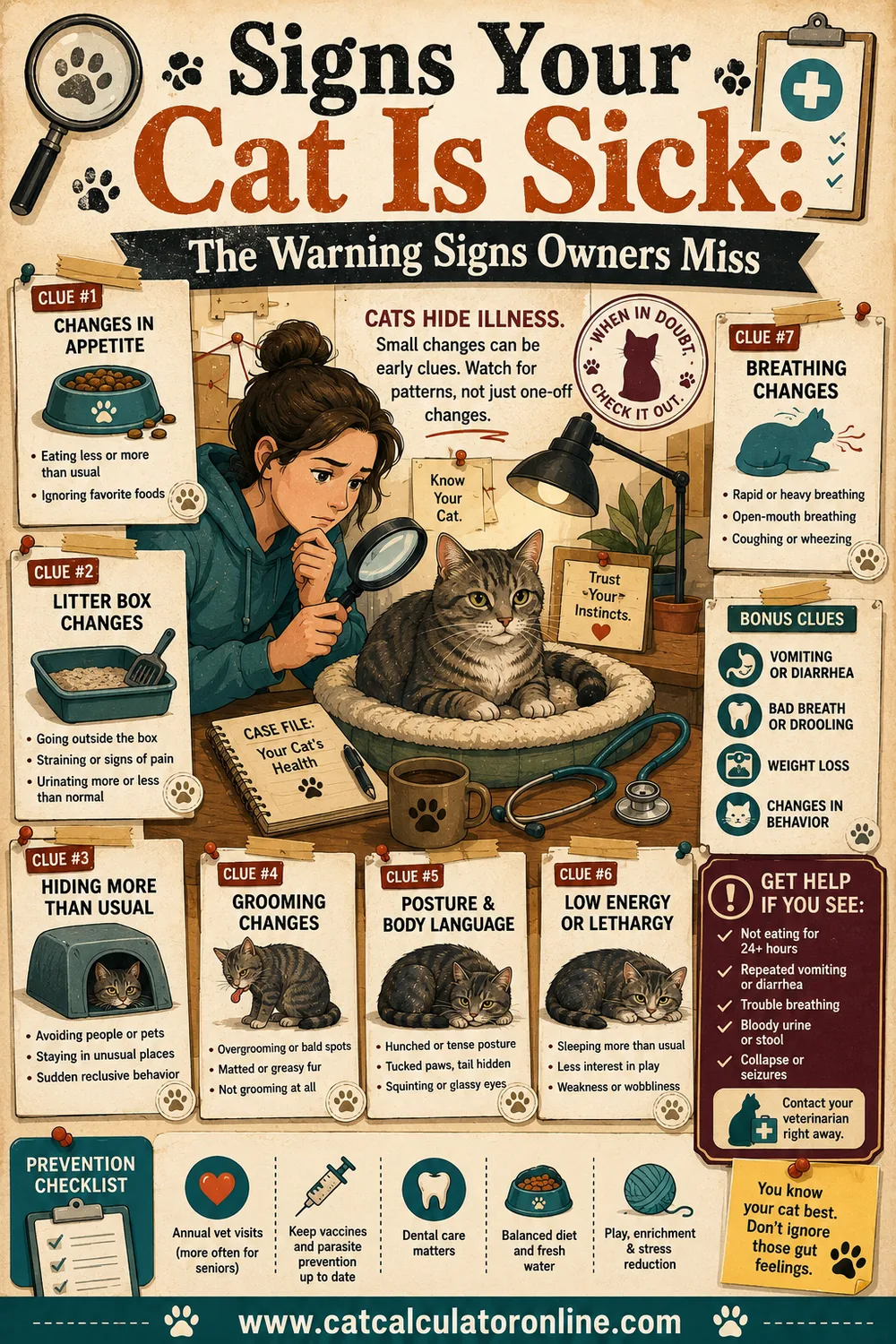
You can help a mildly under-drinking cat with wet food, more bowls, and a fountain. Anything more than mild — and certainly collapse, non-stop vomiting, or a kitten or senior looking flat — means the vet, today. To frame it for your cat's age and stage, start with our free cat age calculator, then read how much water should a cat drink and signs your cat is sick.