Is Fish Actually Good for Cats?
"Cats love fish" is a cultural habit, not a nutritional fact. The domestic cat descends from a desert-dwelling hunter of rodents and birds, and there is nothing in her design that points at the sea. What is true is that fish smells extraordinarily strong, and cats are led almost entirely by smell — so fish is appealing, which is not the same as good. A small piece of plain cooked fish once or twice a week is fine. A fish-based diet is a different proposition: it carries a real risk of vitamin B1 deficiency, oily fish in quantity can inflame body fat, and fish is one of the commoner things cats become allergic to. There are also places where fish genuinely helps. Here is the honest ledger. For portions, use the free cat food calculator.
Where "Cats Love Fish" Actually Came From
This is the fun part, and it explains why the assumption is so stubborn.
The domestic cat's ancestor is the African wildcat, a small desert and scrubland hunter whose diet is rodents, birds, lizards and insects. Water is something it avoids, not fishes in.
Cats came into human settlements for the rodents, not the fish. What they got fed, once they were there, was whatever people had spare.
In fishing towns and ports, that meant fish scraps — and it meant them for centuries, which is long enough for a cultural image to set hard.
Smell is the reason it stuck. Cats have a poor sense of taste compared to us — around 470 taste buds against our 9,000 — and rely heavily on smell to decide whether something is food. Fish, particularly oily fish, releases far more volatile aroma compounds than chicken or beef. It is simply louder.
Cats also cannot taste sweetness at all, so the flavors they respond to are savory, meaty and fatty ones. Fish hits all three.
None of that makes fish nutritionally appropriate. A food being irresistible and a food being suitable are separate questions, and this is a case where they come apart.
And it explains the fussiness problem. A cat who is regularly given something that smells this strong can start finding her ordinary food underwhelming, which is a genuinely common route into a picky eater.
The Real Risk: Thiamine Deficiency
This is the most serious thing on the list, and the one worth understanding properly.
Thiamine is vitamin B1, and it is essential for the nervous system to metabolise energy. Cats need proportionally more of it than dogs, and they store very little.
Many fish species contain thiaminase, an enzyme that destroys thiamine. It is present in raw fish and is destroyed by cooking, which is one of the strongest arguments for cooking any fish you give.
A fish-heavy diet can therefore run a cat short, particularly a diet of raw fish or one built around tinned fish rather than complete cat food.
The signs are neurological and quite specific. Loss of appetite first, then wobbliness, a hunched posture with the neck bent downwards (ventroflexion — the head held low and tucked), dilated pupils, poor balance and, in severe cases, seizures.
It develops over weeks, not days, so it typically appears in cats fed an unbalanced diet for some time rather than after one fishy meal.
It is treatable if caught early, with thiamine supplementation, and cats often improve markedly within days. Left untreated it can be fatal.
The escalation point is clear: a cat who is wobbly, holding her head unusually low, has dilated pupils or is having seizures needs a vet immediately, whatever she has been eating. That is an emergency, not a morning appointment.
Steatitis: The Oily Fish Problem
Less common, but a genuine and painful condition with a direct dietary cause.
Steatitis is inflammation of body fat, sometimes called yellow fat disease.
It happens when a cat eats a lot of unsaturated fat without enough vitamin E to go with it. The unsaturated fats oxidise, and the damaged fat tissue becomes inflamed.
Oily fish is the classic cause — a diet heavy in tuna, sardines, mackerel or pilchards, especially tinned fish intended for people, which is not supplemented with vitamin E the way cat food is.
Affected cats are in real pain. They become reluctant to move or be touched, particularly around the abdomen and back, run a fever, go off their food and may develop lumpy, firm fat deposits under the skin.
It needs veterinary treatment, and it responds to vitamin E supplementation and a corrected diet, though recovery can take weeks.
Prevention is simply not feeding fish as a staple. Complete cat foods that contain fish are formulated with enough vitamin E to balance the fat, which is exactly what a tin of sardines is not.
The Nutrients Fish Brings, and What It Misses
An honest column-by-column look, because fish is not nutritionally empty.
| What fish provides | The catch |
|---|---|
| High-quality animal protein | So does chicken, without the specific risks |
| Taurine | Present, but degraded by prolonged cooking and not guaranteed by amount |
| Omega-3 fats (EPA and DHA) | Genuinely useful, but the dose in a treat-sized piece is small |
| Vitamin D | Useful; cats cannot make it in skin the way we do |
| Iodine | Plentiful — which is not always a good thing |
| Phosphorus | High, and a problem for kidney patients |
| Magnesium | Moderate; relevant for some urinary conditions |
| Vitamin E | Low relative to the unsaturated fat content |
| Vitamin B1 | Undermined by thiaminase in raw fish |
| Calcium | Very low unless bones are included |
Fish is not a complete food for a cat. Nothing on that list changes it: a cat needs a formulated diet, and fish is a topping.
Where fish genuinely earns its place is in formulated products. Marine-sourced omega-3 fats (EPA and DHA) have real supporting evidence in feline joint disease, skin conditions and kidney disease, and they appear in therapeutic diets for exactly those reasons. That is a controlled dose in a balanced food, not a fillet.
Fish-flavored complete food is not the same as feeding fish. A tin of complete cat food with fish in it has been balanced for vitamin E, phosphorus, taurine and everything else. A tin of tuna for humans has not. How to tell the difference is covered in how to choose canned cat food.
Mercury, Iodine and the Thyroid Question
Three topics where the honest answer is "less certain than the internet suggests", and it is worth saying so.
Mercury accumulates up the food chain. Large, long-lived predatory fish — tuna especially, and swordfish and shark — carry more of it than small short-lived fish like sardines and anchovies.
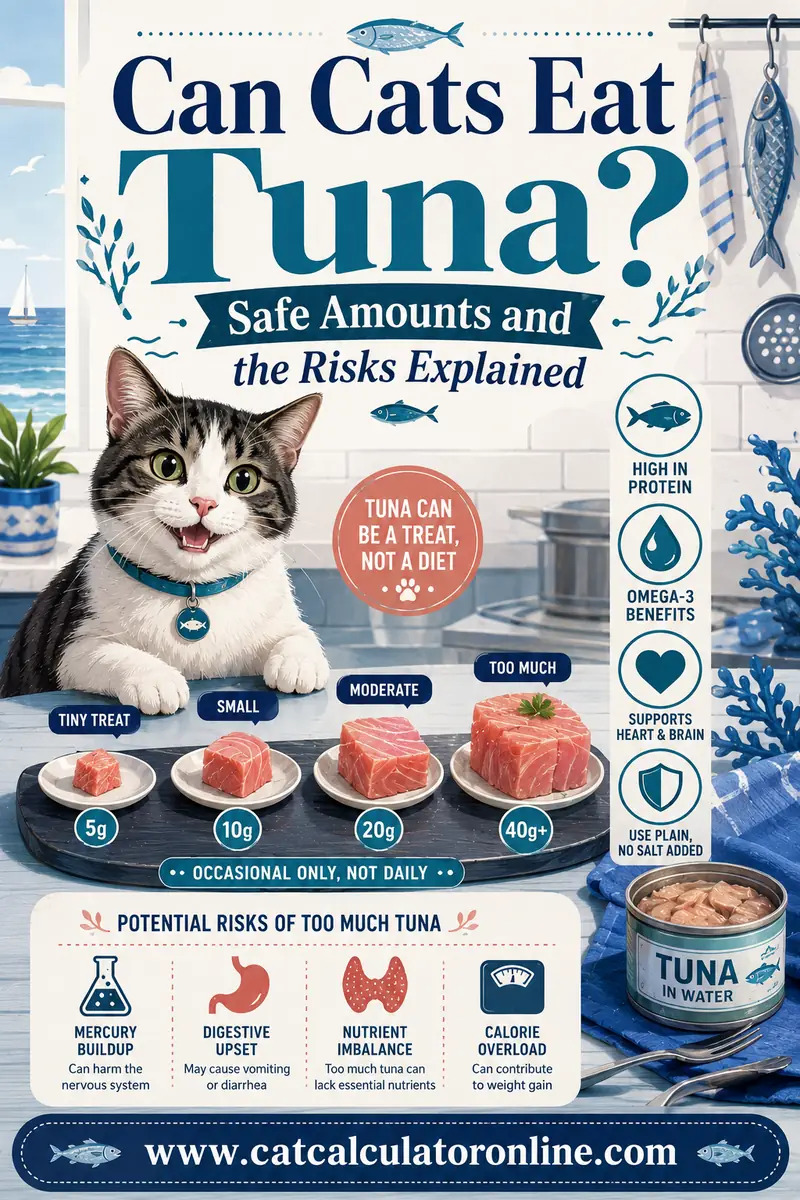
Documented mercury poisoning in pet cats is rare. The famous historical episodes involved severe industrial contamination, not tinned tuna. The sensible conclusion is to limit tuna rather than to fear it, which is the position taken in can cats eat tuna.
Fish is very high in iodine, and the thyroid gland uses iodine to make thyroid hormone.
Hyperthyroidism is common in older cats, and some studies have found an association between fish-flavored or offal-flavored tinned food and increased risk. Others have not.
Association is not causation, and the cause of feline hyperthyroidism remains unknown. Flame-retardant chemicals, can linings, iodine variability and simply cats living longer have all been proposed. Nobody has settled it.
So the fair statement is: there is a possible link between heavy fish-based tinned food and thyroid disease in cats, it is unproven, and moderation is a reasonable response to an unproven risk with an easy avoidance. If your cat is losing weight, eating ravenously, drinking more or seems restless and vocal at night, that is a vet visit — see hyperthyroidism in cats.
Kidneys, Urinary Health and Phosphorus
Where fish stops being a question of preference and becomes a clinical one.
Fish is high in phosphorus. For a healthy cat with working kidneys, that is unremarkable.
For a cat with chronic kidney disease, phosphorus control is one of the main levers that slows progression. Renal diets are specifically restricted in it, and a fishy treat can undo a portion of that work.
Kidney disease is common in older cats, so this is not a niche caveat — it is the single most likely reason a middle-aged or senior cat should not be having fish. The condition is covered in chronic kidney disease in cats.
Magnesium matters for some urinary conditions. Cats prone to certain bladder crystals may be on a diet designed around mineral content, and unmeasured fish sits outside it.
Salt is a separate issue with tinned and smoked fish, and cats with heart or kidney disease have very little margin for it.
If your cat is on any prescription diet, ask before giving fish. It is a two-minute question that can protect months of careful management.
Fish and Fussiness
The everyday problem that affects far more cats than any of the diseases above.
Fish creates strong preferences. Its smell is so much louder than ordinary cat food that a cat who gets it regularly can start holding out for it.
Holding out works, which is why it continues. If refusing dinner reliably produces tuna, a cat learns that quickly. This is one of the commonest routes into a genuinely fussy eater.
The fix is boring and effective: feed her complete food on a schedule, give fish only as an occasional separate treat on a different plate, and do not offer an alternative when she refuses a meal.
Never let a cat go without food for long, though. A cat who eats nothing for more than about 24 hours risks a serious liver condition called hepatic lipidosis, and that risk is higher in overweight cats. Fussiness has a hard limit.
A cat who suddenly stops eating is not being fussy. Sudden appetite loss in a cat who normally eats well is a medical sign — dental pain, nausea, kidney disease and many other things — and it deserves a vet call rather than a fancier flavor. Why won't my cat eat works through it.
If you do need to tempt a sick cat, warming her usual food gently to release its aroma often works as well as switching to something new, and it does not build a habit you will have to undo.
So Where Does That Leave Fish?
The practical summary, because the balance is easy to lose in a list of risks.
A small piece of plain cooked fish once or twice a week is fine for a healthy adult cat with no kidney, thyroid, urinary or allergy issues.
Keep it inside 10% of daily calories. For a typical 9 lb (4 kg) adult cat eating around 200–250 kcal a day, that is roughly 20–25 kcal for all treats combined — about half an ounce (15 g) of plain white fish.
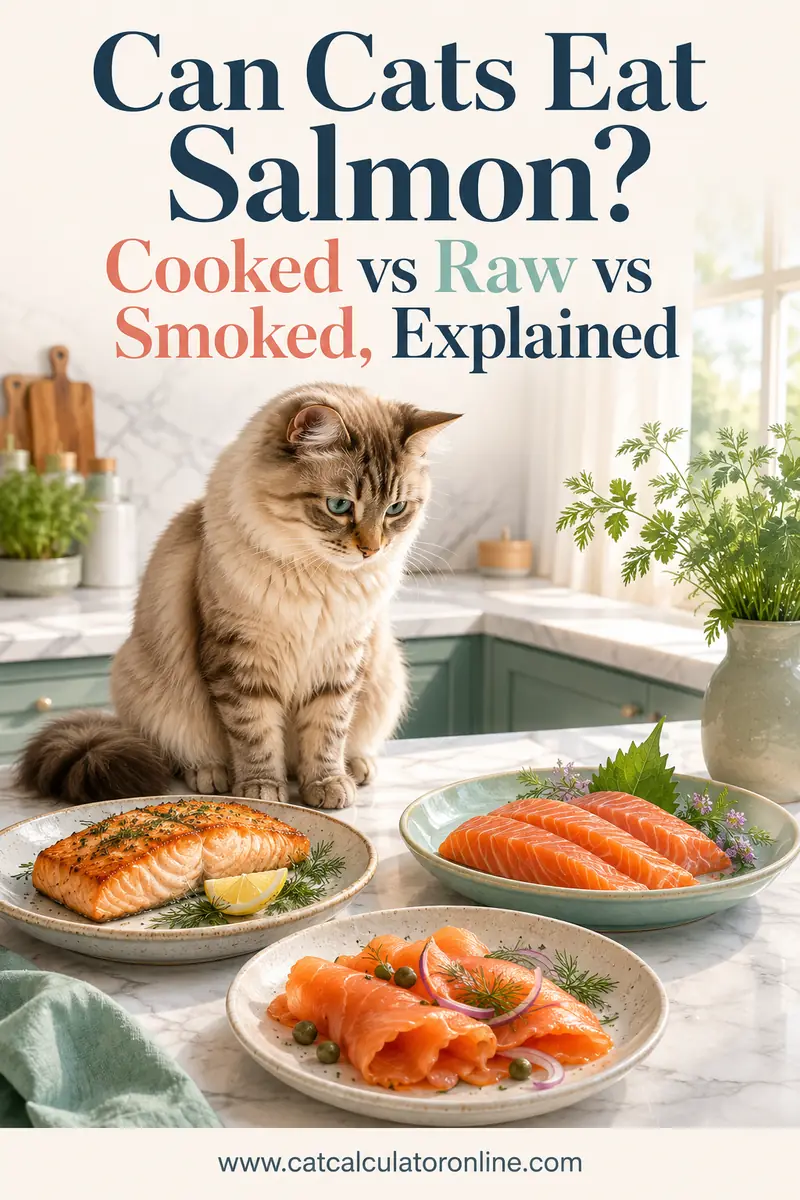
Cook it, debone it, and skip the smoked, brined, battered and raw versions. The preparation detail is in can cats eat fish, and salmon specifically in can cats eat salmon.
Vary the protein. Chicken, turkey and white fish in rotation is better than fish every time, both for allergy risk and for preventing fixation.
Let complete food do the nutritional work. If you want the omega-3 benefits, a formulated diet or a vet-recommended supplement delivers a controlled dose; a fillet does not.
And drop the guilt about the myth. Feeding a cat fish because you thought she needed it is one of the gentlest mistakes in pet care, and it is easily corrected.
Frequently Asked Questions
Is fish good for cats?
Fish is a safe occasional treat for healthy adult cats but is not a natural or necessary part of their diet. The domestic cat descends from a desert hunter of rodents and birds, and the "cats love fish" idea is cultural. A fish-heavy diet risks thiamine deficiency, steatitis and allergy problems.
Can cats live on a fish-only diet?
No. Fish is not a complete food: it lacks sufficient calcium and vitamin E, it is high in phosphorus, and raw fish contains thiaminase, which destroys vitamin B1. Cats fed mainly fish can develop a neurological thiamine deficiency and painful inflammation of body fat called steatitis.
Why do cats love fish so much?
Fish releases far more volatile aroma compounds than chicken or beef, and cats choose food largely by smell — they have only around 470 taste buds compared with about 9,000 in humans. The preference is a response to intensity of smell rather than to any nutritional need for fish.
Does fish cause hyperthyroidism in cats?
It is unproven. Some studies have found an association between fish-flavored tinned food and hyperthyroidism in older cats, and others have not. The cause of feline hyperthyroidism is still unknown. Moderation is a sensible response, but fish has not been shown to cause the disease.
Should cats with kidney disease eat fish?
Generally no, unless your vet says otherwise. Fish is high in phosphorus, and restricting phosphorus is one of the main ways renal diets slow the progression of chronic kidney disease. A fishy treat can offset part of that benefit, so check before giving any to a cat on a prescription diet.
Is fish oil good for cats?
Marine omega-3 fats, EPA and DHA, have supporting evidence in feline joint disease, skin conditions and kidney disease, and appear in therapeutic diets for that reason. Dose matters, and too much unsaturated fat without enough vitamin E causes problems, so ask your vet rather than supplementing at home.
Fish is genuinely appealing to cats and genuinely unremarkable for them nutritionally, and holding both of those at once is the whole answer. It is a fine treat — plain, cooked, boneless, about half an ounce, once or twice a week — and a poor diet, because a fish-heavy diet risks a vitamin B1 deficiency that shows up as wobbliness and a low-held head, and oily fish in quantity can inflame body fat painfully. Skip fish for cats with kidney disease, a fish allergy or an elimination diet in progress, and ask your vet before giving any to a cat on a prescription food. If you want the omega-3 benefits, get them from a formulated diet with a controlled dose rather than from a fillet, keep the protein varied so she does not fixate, and see a vet promptly if she is wobbly, holding her head low, or has stopped eating. Set the rest with the free cat food calculator.