Can Cats Eat Fish?
Yes — plain, cooked, boneless fish is safe for cats as an occasional treat. The word doing the work is "occasional". A thumbnail-sized piece of poached cod or plain baked salmon once or twice a week is a perfectly good thing to give a cat, and most cats are delighted by it. What causes problems is fish as a habit: a fish-only diet can cause a genuine vitamin B1 deficiency, oily fish in quantity can cause a painful fat inflammation, and fish is one of the commoner things cats become allergic to. Smoked, battered, brined and raw fish all fail for their own separate reasons. Here is how to serve it properly, which types are worth using, and how much is sensible. To keep it inside her calorie budget, use the free cat food calculator.
The Short Answer
Everything most people need, in six lines.
Plain cooked fish is safe. Poached, steamed or baked with no oil, butter, salt, seasoning, marinade or sauce.
Boneless, always. Fish bones are thin, sharp and genuinely easy to overlook. Flake the fish apart with your fingers and check as you go.
Small portions. A thumbnail-sized piece, roughly half an ounce (about 15 g), is plenty for an adult cat.
Occasional, not daily. Once or twice a week keeps fish comfortably in the treat category, where it belongs.
Never smoked, cured, battered, breaded, in brine or in sauce. Salt, fat and additives make these unsuitable regardless of the fish underneath.
And fish is a treat, not nutrition. It is not a complete food, and a cat living on it runs into real deficiency problems — the nutritional side of that argument is in is fish actually good for cats.
How to Prepare Fish for a Cat
The preparation matters more than the species, and it is quick once you have the habit.
Cook it plainly. Poach in plain water, steam, or bake in foil with nothing added. No oil, butter, lemon, salt, pepper, herbs, garlic or stock.
Cook it through. Fish should be opaque and flake easily. Undercooked fish keeps the parasite and thiaminase problems that make raw fish a poor idea.
Cool it fully before serving. Cats will burn their mouths on food they are keen on, and warm fish smells strong enough to make them careless.
Flake it with your fingers, not a fork. Fingers find bones; a fork does not. Work through the whole piece rather than spot-checking.
Take the skin off. It holds most of the fat and, on farmed fish, most of the concentrated contaminants.
Serve a small amount on a saucer, not in her main bowl — otherwise you teach her that the bowl sometimes contains fish, and she starts refusing what is actually in it.
Set the piece aside before you season the family's portion. That single habit is what makes sharing food with a cat safe, and it applies to every meal, not just fish.
Which Fish, Ranked
| Fish | Verdict | Why |
|---|---|---|
| Cod, haddock, pollock, coley (cooked) | Best choice | Lean, mild, low in fat, easy to debone |
| Plaice, sole (cooked) | Good | Delicate, low fat; watch for fine bones |
| Salmon (cooked, plain) | Good, small portions | Rich and oily; keep the piece small |
| Trout (cooked, plain) | Good, small portions | As salmon |
| Tinned tuna in spring water | Occasional only | Drained; not a meal, and easy to become fixated on |
| Tinned sardines in spring water | Occasional only | Bones are soft but still worth mashing; oily |
| Shrimp and shrimp (cooked, plain) | Occasional | Peeled, deveined, no seasoning; some cats react |
| Mackerel, herring (cooked, plain) | Small amounts | Very oily; easy to overdo |
| Tinned fish in oil or brine | Avoid | Far too much fat or salt |
| Smoked salmon, kippers, anchovies | Never | Extreme salt content |
| Battered or breaded fish | Never | Fat, salt, and usually onion or garlic in the coating |
| Fish pie, fishcakes, fish in sauce | Never | Dairy, onion, salt, sometimes wine |
| Raw fish of any kind | Avoid | Thiaminase, parasites and bacteria |
| Fish bones | Never | Sharp, and a genuine choking and perforation risk |
Lean white fish is the safest default. It is low in fat, mild, and the least likely to cause an upset stomach.
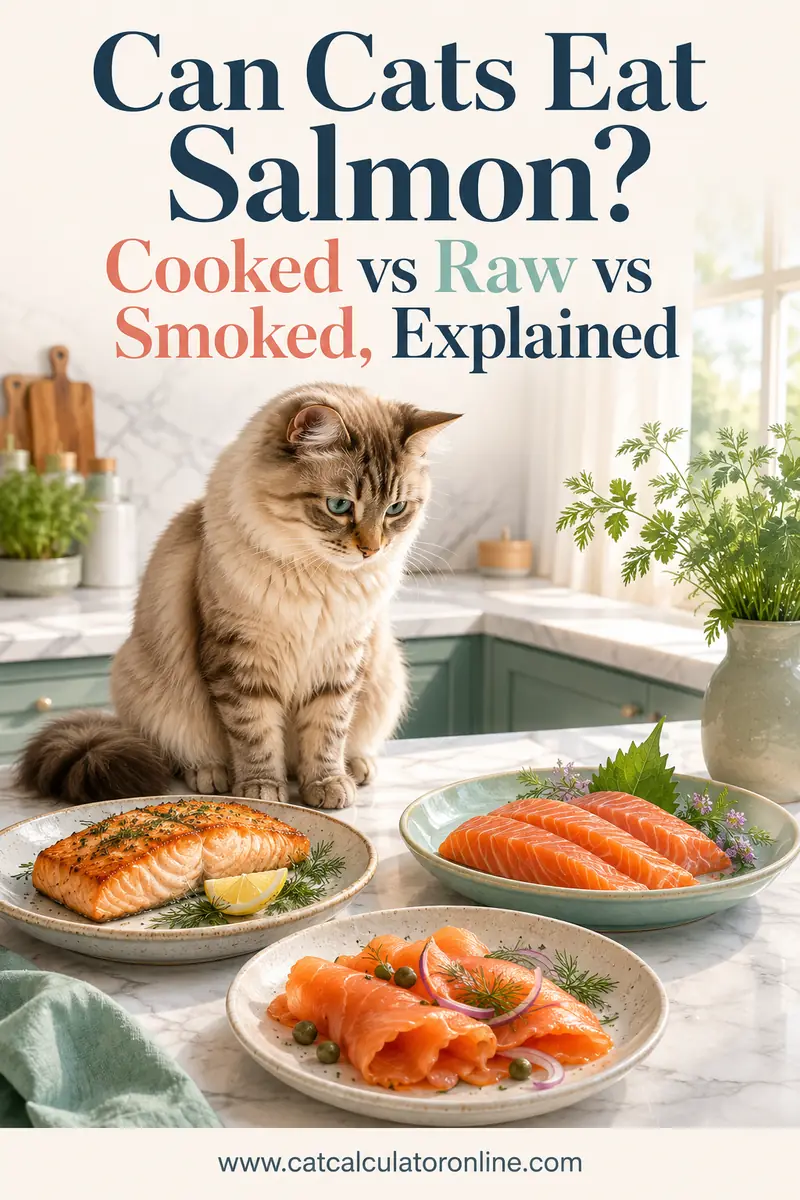
Oily fish is not off limits, just richer. Salmon, mackerel, sardines and trout carry useful omega-3 fats but far more calories, so the portion has to be smaller. The specifics for salmon are in can cats eat salmon.
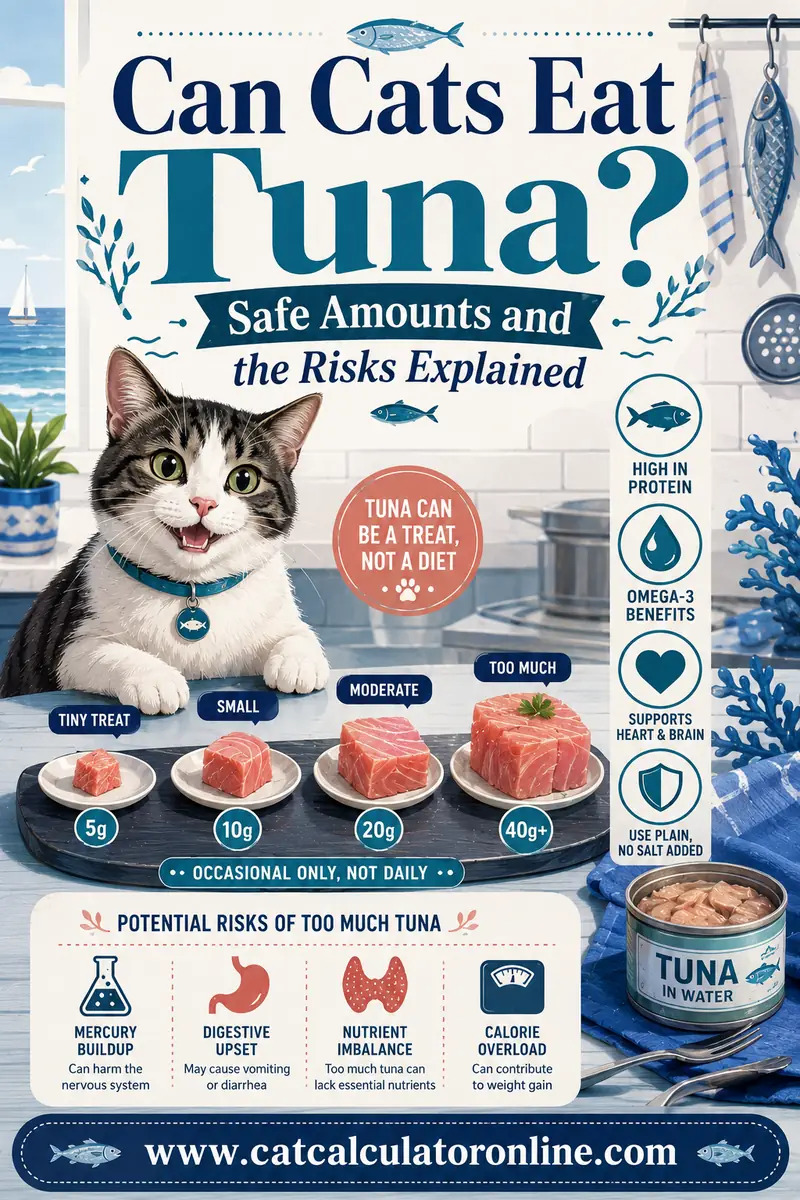
Tuna gets its own article for a reason. Cats develop strong preferences for it and can start refusing balanced food, and it accumulates more mercury than smaller fish — the full picture is in can cats eat tuna.
Raw Fish: Two Separate Problems
Raw fish comes up constantly because cats obviously eat raw prey in the wild. Two specific things make raw fish different.
Thiaminase is the first. Several fish species contain an enzyme that destroys thiamine — vitamin B1 — and it is destroyed by cooking. A cat eating raw fish regularly can develop a genuine thiamine deficiency, and thiamine deficiency in cats is a neurological illness: wobbliness, a head held oddly low, dilated pupils, and in severe cases seizures. It is treatable if caught, and it is entirely avoidable by cooking the fish.
Parasites and bacteria are the second. Raw fish can carry tapeworms, flukes and salmonella, and an infected cat sheds organisms that can reach the people in the household.
Sushi-grade is not a safety category for cats. It refers to handling and freezing standards for human consumption, and it does nothing about thiaminase.
Freezing helps with parasites, not with thiaminase. The enzyme survives freezing perfectly well.
Cooking solves both problems at once, which is why the recommendation is simply to cook it.
If you feed a raw diet already, fish is the one protein where the case for cooking is strongest — the wider trade-offs are set out in can cats eat raw meat.
Bones: The Hazard That Actually Sends Cats to the Vet
Of everything in this article, bones cause the most acute problems, and they are the easiest to prevent.
Fish bones are fine, sharp and flexible, which is exactly the combination that lodges in soft tissue.
They can wedge across the roof of the mouth, stick in the gums or tongue, lodge in the throat or esophagus, or perforate the gut wall further down.
Cooked fish bones are no softer than raw ones in any way that helps.
Tinned sardine and salmon bones are the exception people cite. They are pressure-softened and generally crumble, but mash them thoroughly rather than assuming.
Signs of a bone problem: sudden gagging or retching, drooling, pawing at the mouth, an inability to swallow, repeated unproductive vomiting, or a cat who goes suddenly quiet and hunched. Any of those is a ring-your-vet-now situation.
Never try to make a cat vomit at home, here or for anything else. There is no safe household method in cats, and with a sharp fragment it risks doing damage on the way back up. Call your vet and let them decide.
Tinned Fish: Water, Oil or Brine
Tinned fish is what most people actually have in the cabinet, so it is worth being specific.
In spring water is the only version worth using, and drain it well. Even "in water" tins often carry added salt.
In oil adds a large fat load. A cat is a 9 lb (4 kg) animal; a tablespoon of oil is a substantial share of her day's calories and can upset her stomach.
In brine is the worst option. Very high sodium, and no benefit whatsoever.
In tomato or other sauce brings onion, garlic and salt with it, and alliums damage feline red blood cells — see foods toxic to cats.
Rinse it if you are unsure. A quick rinse under the tap removes a surprising amount of the salt and oil.
Cat-specific tinned fish products are formulated as complementary treats and are portioned sensibly, which makes them easier to keep control of than a human tin.
How Much, and How Often
Concrete numbers, because "in moderation" is useless on its own.
Treats should be no more than 10% of daily calories. For a typical 9 lb (4 kg) adult cat eating around 200–250 kcal a day, that is roughly 20–25 kcal of everything extra combined.
Half an ounce (about 15 g) of plain cooked white fish is roughly 10–15 kcal. That fits comfortably inside the budget.
The same weight of cooked salmon is closer to 20–30 kcal, because oily fish is far denser in energy, so the portion should be smaller.
Once or twice a week is a sensible ceiling for fish specifically, separate from the calorie math. This is about avoiding the deficiency risks of a fish-heavy diet, not about weight.
Take the calories out of her meal, rather than adding them on top — the counting method is in cat treats: how many are too many.
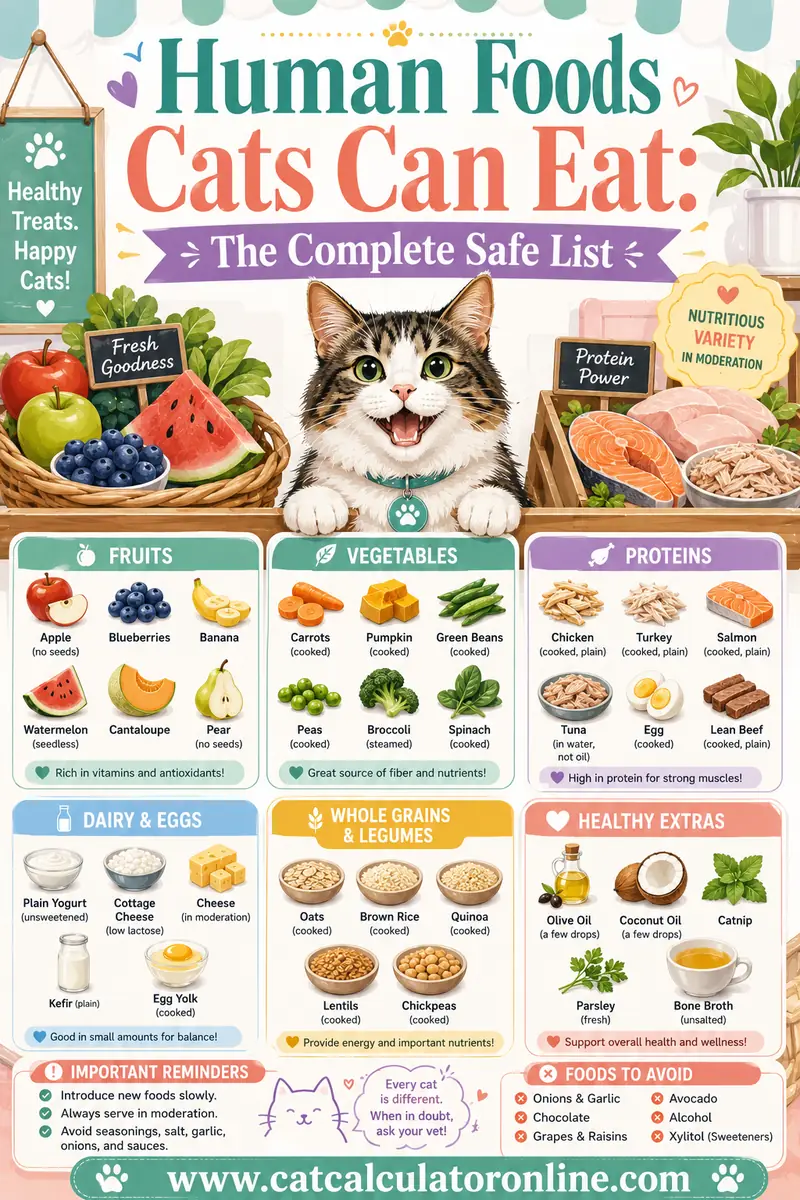
And keep the whole treat picture in view. If she is also getting cheese, chicken and a dental stick, the fish has to share the same 20–25 kcal. The full safe list is in human foods cats can eat.
Cats Who Should Skip Fish
Not every cat should have it, and these are the groups where it genuinely matters.
Cats with a diagnosed fish allergy. Fish is one of the commoner feline food allergens, alongside beef, chicken and dairy. Signs are usually itching, over-grooming, ear inflammation and chronic soft stools rather than dramatic reactions.
Cats on an elimination diet. A single fish treat can invalidate weeks of a food trial, so give nothing at all without asking your vet first.
Cats with kidney disease. Fish is high in phosphorus, and controlling phosphorus is one of the main levers in managing kidney disease.
Cats with urinary or bladder problems, where mineral content and hydration both matter and your vet may have a specific diet in place.
Cats with hyperthyroidism, or being investigated for it — the relationship between fish, iodine and thyroid disease is unsettled but worth discussing with your vet.
Kittens, whose diet should be almost entirely a complete growth food. A tiny taste is harmless, but there is no room in a kitten's day for treats that displace balanced calories.
Any cat already refusing her proper food. Adding fish to tempt her often makes the fussiness worse, because it teaches her that holding out produces something better.
Frequently Asked Questions
Can cats eat cooked fish?
Yes. Plain cooked white fish such as cod, haddock or pollock, poached or baked with nothing added and all bones removed, is a safe occasional treat for a healthy adult cat. Keep the portion to about half an ounce (15 g) and offer it once or twice a week rather than daily.
Is raw fish safe for cats?
No, avoid it. Several fish species contain thiaminase, an enzyme that destroys vitamin B1 and can cause a neurological deficiency in cats fed raw fish regularly. Raw fish also carries parasites and bacteria that infected cats can pass to people. Cooking destroys thiaminase and most pathogens.
Can cats eat tinned fish?
Occasionally, if it is in spring water and drained. Avoid tins in oil, which add a heavy fat load, and tins in brine or sauce, which are far too salty and often contain onion or garlic. Keep it to once a week at most and never as a meal replacement.
How much fish can a cat eat?
Treats should stay within 10% of daily calories, which is around 20–25 kcal for a typical 9 lb (4 kg) adult cat. That works out at roughly half an ounce of plain cooked white fish. Limit fish specifically to once or twice a week, since a fish-heavy diet carries its own risks.
Can cats eat fish bones?
No. Fish bones are thin, sharp and flexible, and they can lodge in the mouth, throat or gut. Remove every bone by flaking the fish with your fingers. If your cat gags, drools, paws at her mouth or cannot swallow, call your vet immediately and never try to make her vomit at home.
Why should fish only be an occasional treat for cats?
Fish is not a complete food, so it cannot supply everything a cat needs. A fish-heavy diet risks thiamine deficiency, and oily fish in quantity can cause a painful inflammation of body fat. Fish is also a common feline allergen and can make cats fussy about their balanced food.
Fish works well for cats when it is treated as what it is: a small, plain, boneless treat rather than a meal. Cook it in plain water or bake it with nothing added, cool it, flake it with your fingers so you actually find the bones, and give about half an ounce once or twice a week. Lean white fish is the safest default, oily fish should come in smaller pieces, tinned fish should be in spring water and drained, and smoked, battered, brined and raw fish are all best skipped for their own separate reasons. Skip fish entirely for cats with kidney disease, a fish allergy, or an elimination diet in progress, and call your vet straight away if she gags, drools or cannot swallow after eating any. Keep the whole lot inside 10% of her daily calories with the free cat food calculator.