Can Cats Eat Tuna? Safe Amounts and the Risks Explained
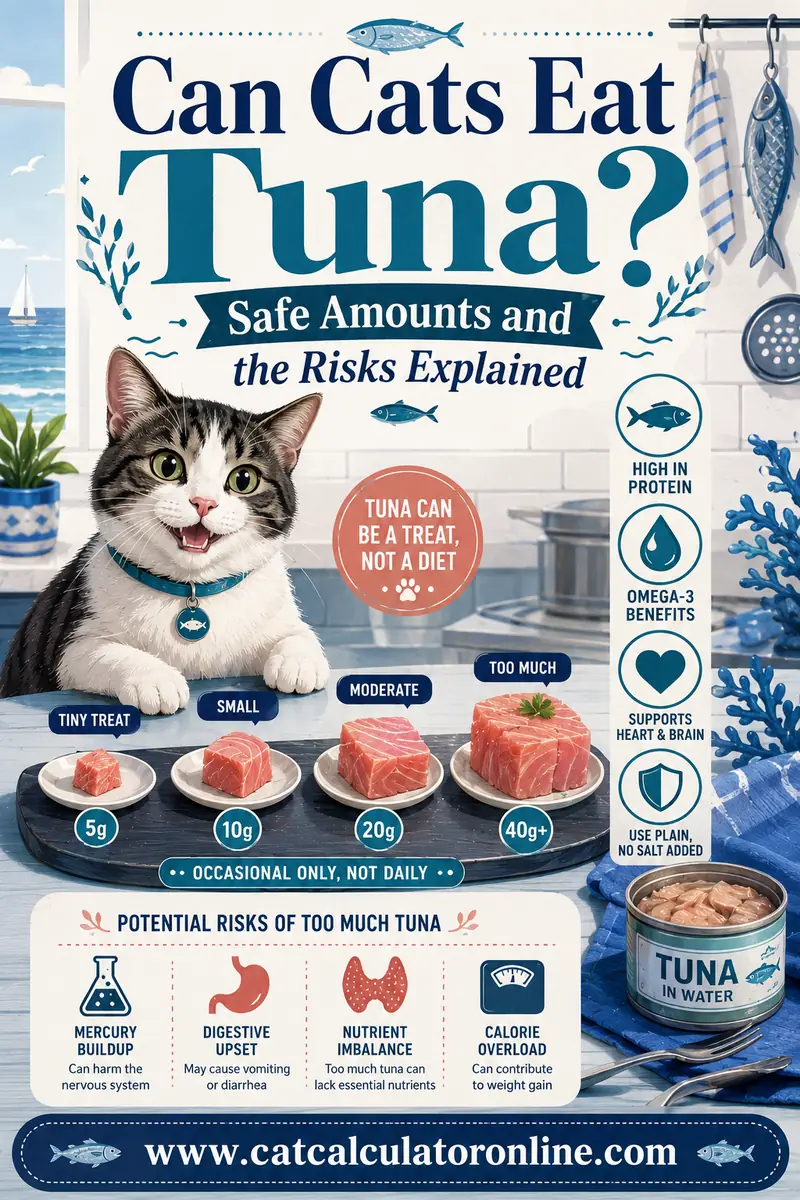
Yes — plain cooked tuna or tuna canned in water is safe for most cats as an occasional treat, but it should never be a regular meal or a diet. Tuna isn't nutritionally complete for cats, and a heavy tuna habit brings real risks: mercury build-up, a painful fat-related condition called steatitis, and cats who go on strike and refuse balanced food.
The practical rule is the 10% rule: treats of all kinds, tuna included, should make up no more than 10% of your cat's daily calories. Our free cat food calculator works out that daily number for you in about ten seconds, so you know exactly how much wiggle room a spoon of tuna fits into.
🐟 Is this kind of tuna okay for my cat?
Tap an option to see the verdict:
Tap a tuna option above to see whether it’s safe, unsafe, or fine in moderation.
Is Tuna Safe for Cats?
Plain tuna, on its own, isn't toxic. It's protein-rich, cats find the smell irresistible, and a small amount now and then does no harm to a healthy adult cat.
What makes tuna risky is frequency, not the fish itself. The problems all come from tuna as a habit: eaten daily, eaten as a meal replacement, or eaten in the oil-and-salt versions meant for human sandwiches.
Three conditions have to be met for tuna to be a safe treat:
- Plain. No seasoning, no sauce, no flavor packets. Many flavored pouches contain onion or garlic powder, both of which damage a cat's red blood cells.
- Cooked or canned in water. Not oil, not brine, not raw.
- Small and occasional. A treat-sized portion, a couple of times a week at most.
Tick those three boxes and tuna is a perfectly reasonable now-and-then indulgence. Miss them and you're stacking up avoidable risks.
Why Tuna Can't Be Your Cat's Diet
This is the part most owners are surprised by. A cat who eats mostly tuna is a cat who's slowly being malnourished, no matter how much she loves it.
It isn't nutritionally complete
Cats are obligate carnivores with unusually specific requirements. Canned tuna is muscle meat and water — it delivers protein, but it's imbalanced in several things cats can't do without:
- Taurine. An essential amino acid cats can't make enough of themselves. Chronic shortage causes heart disease (dilated cardiomyopathy) and irreversible retinal degeneration leading to blindness.
- Vitamin E. Tuna is low in it while being high in unsaturated fat — a combination that's actively harmful (more on that below).
- Calcium and the calcium-to-phosphorus ratio. Muscle meat is high in phosphorus and low in calcium. Over time, that imbalance pulls calcium from the bones.
- Vitamin A, B vitamins and other micronutrients that complete cat foods are formulated to supply in the right ratios.
Complete cat food is built to meet all of these at once. Tuna wasn't built to do anything except taste good to humans.
Steatitis — "yellow fat disease"
This is the specific, well-documented risk of an all-tuna diet, and it's genuinely nasty.
Tuna is high in polyunsaturated fat. When a cat takes in a lot of unsaturated fat without enough vitamin E to go with it, that fat oxidises inside the body and the fatty tissue becomes inflamed. The condition is called steatitis, or yellow fat disease.
Cats with steatitis are in real pain. Signs include:
- Extreme sensitivity to being touched, especially around the belly and back
- Reluctance to move, jump or be picked up
- Lumpy, firm fat deposits under the skin
- Fever, lethargy and loss of appetite
- A greasy, unkempt coat
It's treatable when caught, but it takes weeks of vitamin E supplementation and a full diet change under veterinary supervision. It's also completely preventable — it essentially only shows up in cats fed a diet dominated by oily fish.
Mercury
Mercury accumulates up the food chain, and large predatory fish sit at the top of it. Tuna — particularly albacore, bigeye and yellowfin — carries more mercury than small fish like sardines or the skipjack used in most "light" canned tuna.
A cat who eats a spoonful of tuna twice a week isn't accumulating a meaningful amount. A cat who eats a can a day for years is a different story. Mercury toxicity in cats affects the nervous system and can show as loss of coordination, unsteady walking and behavior changes.
If you're going to feed tuna occasionally, light/skipjack tuna in water is the lower-mercury choice over albacore or "white" tuna.
Tuna junkies
Tuna is intensely palatable — the smell is far stronger than most cat food. Cats fed tuna regularly can develop a fixed preference and start refusing their balanced food, holding out for the good stuff.
This becomes a genuine problem when your cat needs a prescription diet later in life, for kidney disease or urinary issues or weight management, and simply won't touch it. Keeping tuna occasional and unpredictable protects your future options.
And it matters for another reason: a cat who won't eat is in danger fast. Cats that go without food for more than a couple of days risk hepatic lipidosis, a serious liver condition. Fussiness isn't harmless.
Water vs. Oil vs. Brine: Which Canned Tuna Is Best?
If you're buying tuna with your cat in mind, the packing liquid matters more than the brand.
| Type | Verdict | Why |
|---|---|---|
| Canned in spring water | Best choice | Lowest fat and salt. Drain well before serving |
| Canned in olive/sunflower oil | Avoid | Very high fat; causes diarrhea and adds hundreds of empty calories |
| Canned in brine / salted water | Avoid | High sodium, which small kidneys don't need |
| Flavored pouches (lemon, herb, chilli, "Mediterranean") | Not safe | Frequently contain onion or garlic powder, both toxic to cats |
| Fresh tuna steak, plain cooked | Occasional treat | Fine unseasoned; no butter, oil, salt or garlic in the pan |
| Raw tuna | Not recommended | Bacterial risk plus thiaminase, an enzyme that destroys vitamin B1 |
| Tuna-flavored complete cat food | Fine as a regular meal | Formulated to be balanced — completely different from canned tuna |
That last row is worth underlining. "Tuna cat food" and "canned tuna" are not the same thing. A tuna-flavored wet food from a reputable brand is a complete diet with taurine, vitamin E and the right mineral ratios added. A can from the supermarket aisle is not.
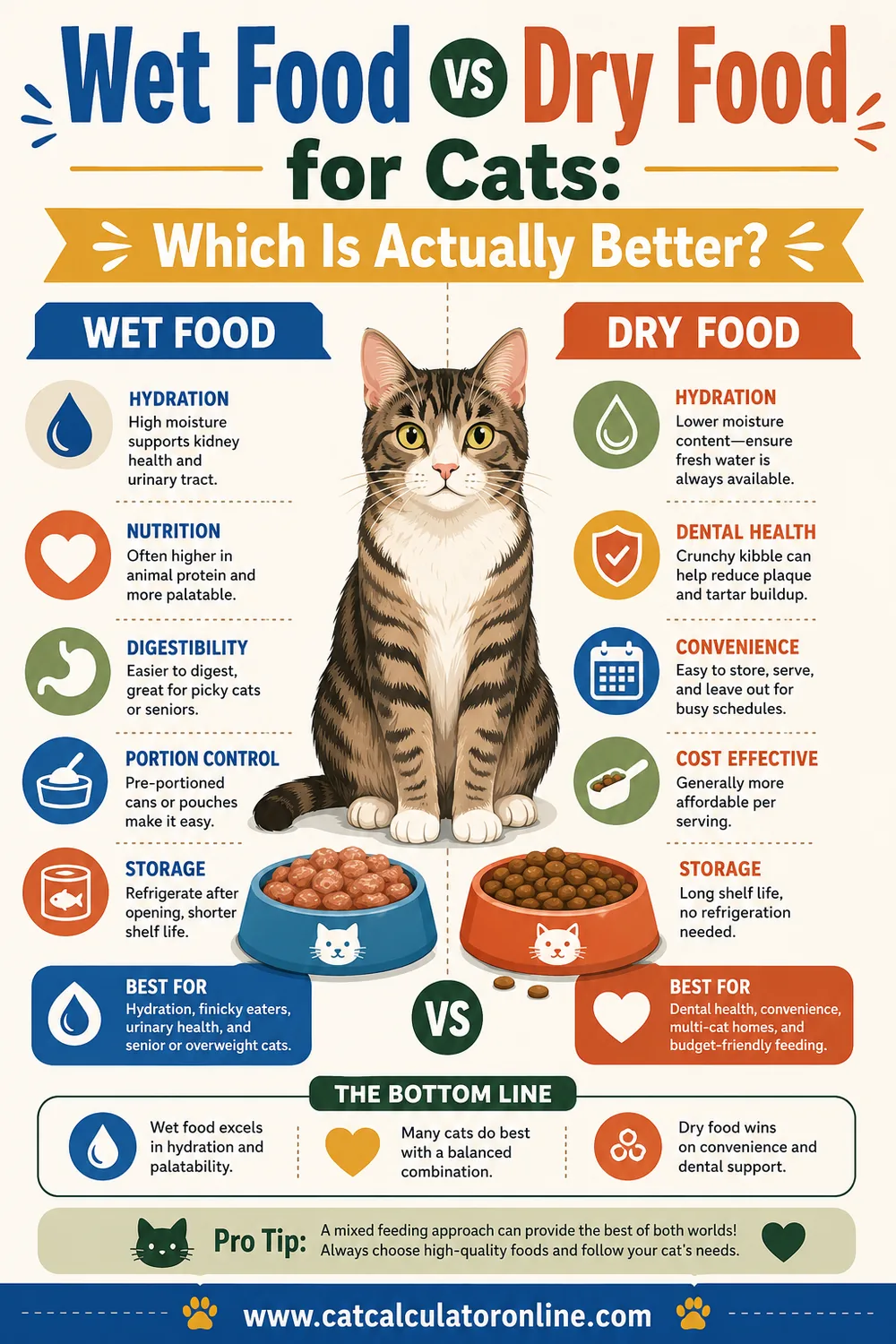
If you're weighing up wet versus dry for everyday meals, our guide to wet food vs dry food for cats breaks down the trade-offs.
How Much Tuna Can a Cat Eat?
Start with the 10% rule: all treats combined should be no more than 10% of your cat's daily calories.
A typical 4–5 kg (9–11 lb) indoor adult cat needs somewhere around 200–250 calories a day, depending on age, activity and body condition. That means roughly 20–25 calories a day for treats, total, across everything.
For context, a standard 5 oz (142 g) can of tuna in water contains somewhere around 150–190 calories — well over half a cat's entire daily requirement. A whole can is a meal-and-a-half, not a snack.
What that works out to in practice:
- A treat portion is about one tablespoon of drained tuna, or roughly 15 g.
- Offer it no more than once or twice a week, not daily.
- Count it. If tuna is today's treat, skip the dental sticks and the cheese.
- Kittens, seniors and cats on prescription diets should get less, or none — check with your vet first.
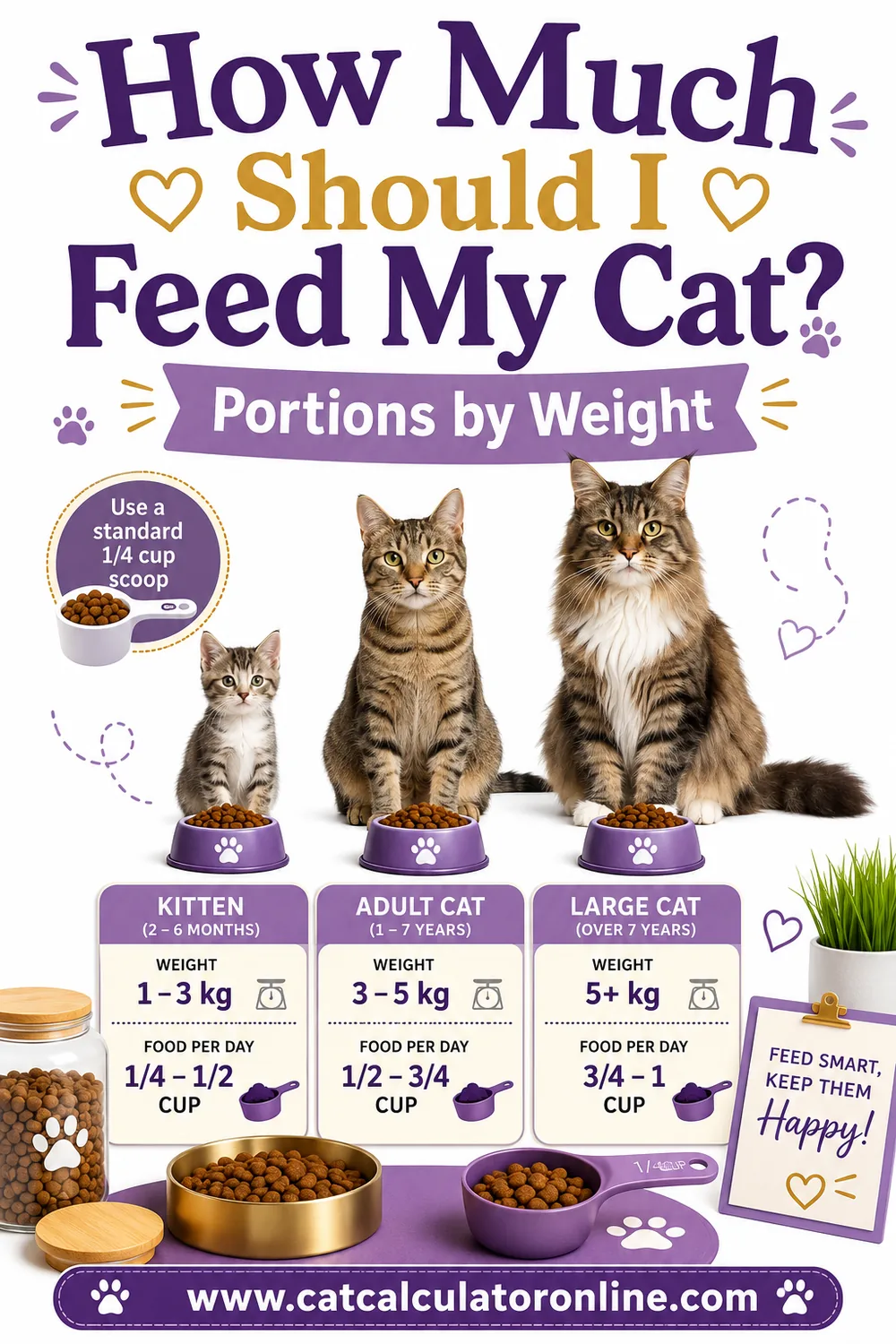
Your cat's exact number depends on her weight and life stage, and guessing tends to run high. Our cat food calculator gives you a daily calorie target in seconds, and how much should I feed my cat explains how to split that across meals.
If you're not sure whether your cat is at a healthy weight to begin with, how much should a cat weigh has body-condition guidance that's more useful than the number on the scale alone.
How to Serve Tuna Safely
A few small things make the difference between a harmless treat and a stomach upset.
- Choose tuna canned in spring water, light/skipjack rather than albacore.
- Drain it thoroughly. Pour off the liquid rather than tipping the whole tin into the bowl.
- Rinse it if it's brine-packed and it's all you have — running water removes a good chunk of the surface salt.
- Serve it plain. No mayonnaise, no oil, no salt, no herbs, no lemon.
- Give a tablespoon, not a tin. Use a small dish so the portion looks generous.
- Serve it at room temperature. Fridge-cold food is less appealing and harder on some cats' stomachs.
- Refrigerate leftovers in a sealed container and use within 1–2 days. Don't leave tuna sitting out — it spoils quickly and the smell will drive your cat to the counter.
- Introduce it slowly. A teaspoon the first time, then watch for 24 hours before offering more.
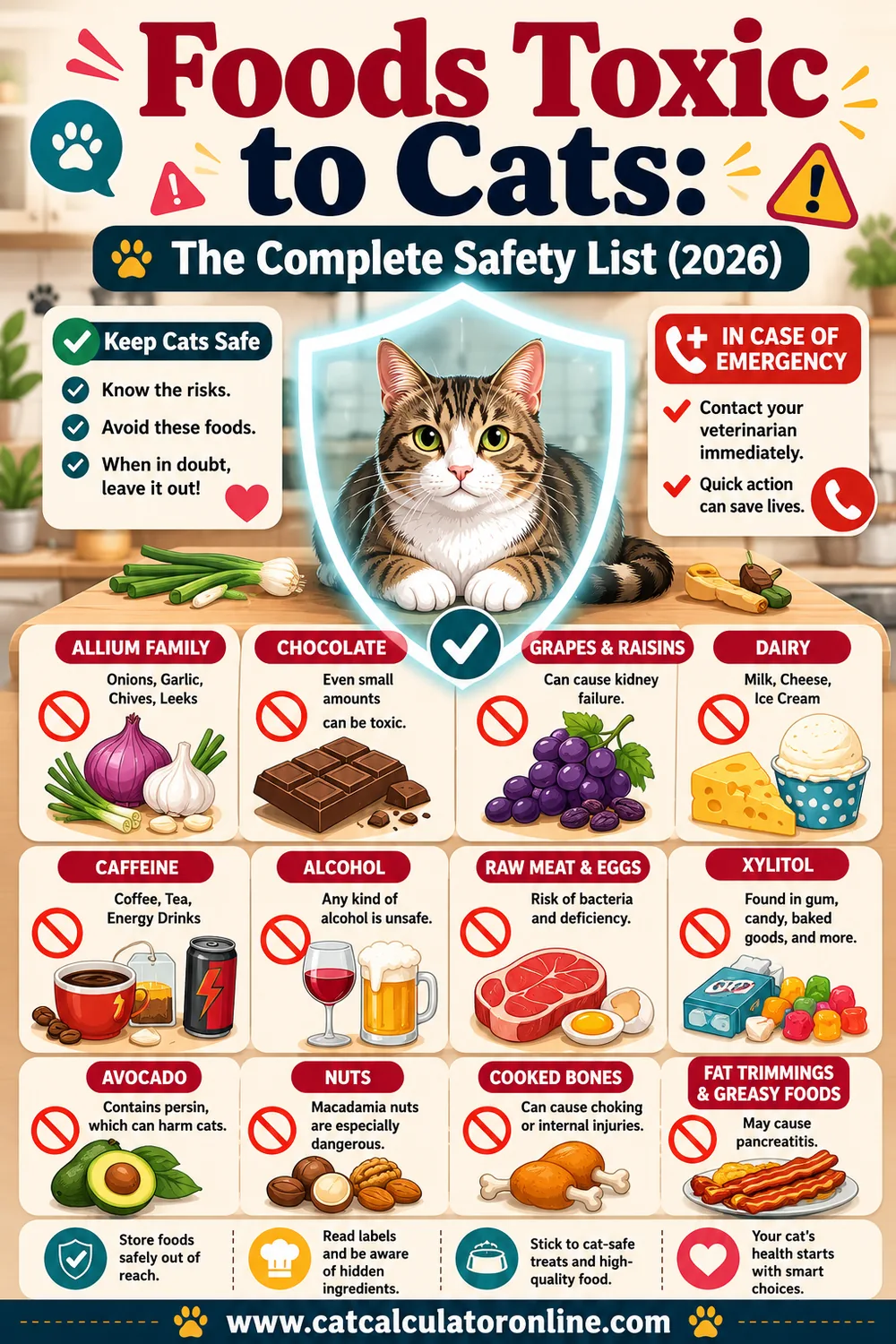
Check for bones if you're using fresh tuna steak, and never serve it cooked in a pan with garlic, onion or butter. Those seasonings are on the list of foods toxic to cats for good reason.
Which Cats Should Avoid Tuna Entirely?
Some cats shouldn't have tuna at all. Talk to your vet before offering it if your cat:
- Has kidney disease. The phosphorus and sodium load matters, and most CKD cats are on prescription diets for a reason.
- Has a history of urinary problems — FLUTD, crystals or blockages. Diet consistency is part of the management.
- Is overweight. Tuna is calorie-dense and easy to over-serve.
- Has a fish allergy. Fish is one of the more common feline food allergens; itching, over-grooming and recurring ear problems can all be signs.
- Is a kitten under six months. Growing cats need every calorie to come from a complete, balanced growth food.
- Is on a prescription or elimination diet. One treat can undo weeks of a diagnostic trial.
- Has had pancreatitis. High-fat foods, especially oil-packed tuna, are a risk.
There's also the simple case of the cat who reacts badly: vomiting, diarrhea or gas after tuna means it doesn't agree with her, and that's reason enough to stop.
Signs Tuna Is Causing a Problem
Watch for these, especially if tuna has crept into being a regular thing:
- Refusing normal food while still eating tuna eagerly — the classic tuna-junkie pattern
- Vomiting or diarrhea within a day of eating it
- Pain or flinching when touched, particularly along the belly and back — a possible sign of steatitis
- Lethargy, reluctance to jump, a hunched posture
- A dull, greasy or unkempt coat
- Wobbliness or loss of coordination in a cat with a long-term all-tuna diet
- Weight gain from the extra calories
Any of these deserve a vet visit rather than a wait-and-see. Cats mask discomfort well — our guide to signs your cat is sick covers the subtle tells that often come first.
Better Everyday Treat Options
If tuna is your go-to because it's the one thing she reliably loves, there are plenty of alternatives that carry none of the same baggage:
- Plain cooked chicken or turkey — boneless, skinless, unseasoned. Easily the best everyday treat.
- A small piece of plain cooked white fish like cod or pollock — lower in fat and mercury than tuna.
- Sardines in water, occasionally — small fish, far less mercury, and rich in omega-3s. Still a treat.
- A little plain cooked egg — excellent complete protein.
- Freeze-dried meat treats — pure protein, easy to portion.
- A spoon of her own wet food as a topper, which costs you nothing nutritionally.
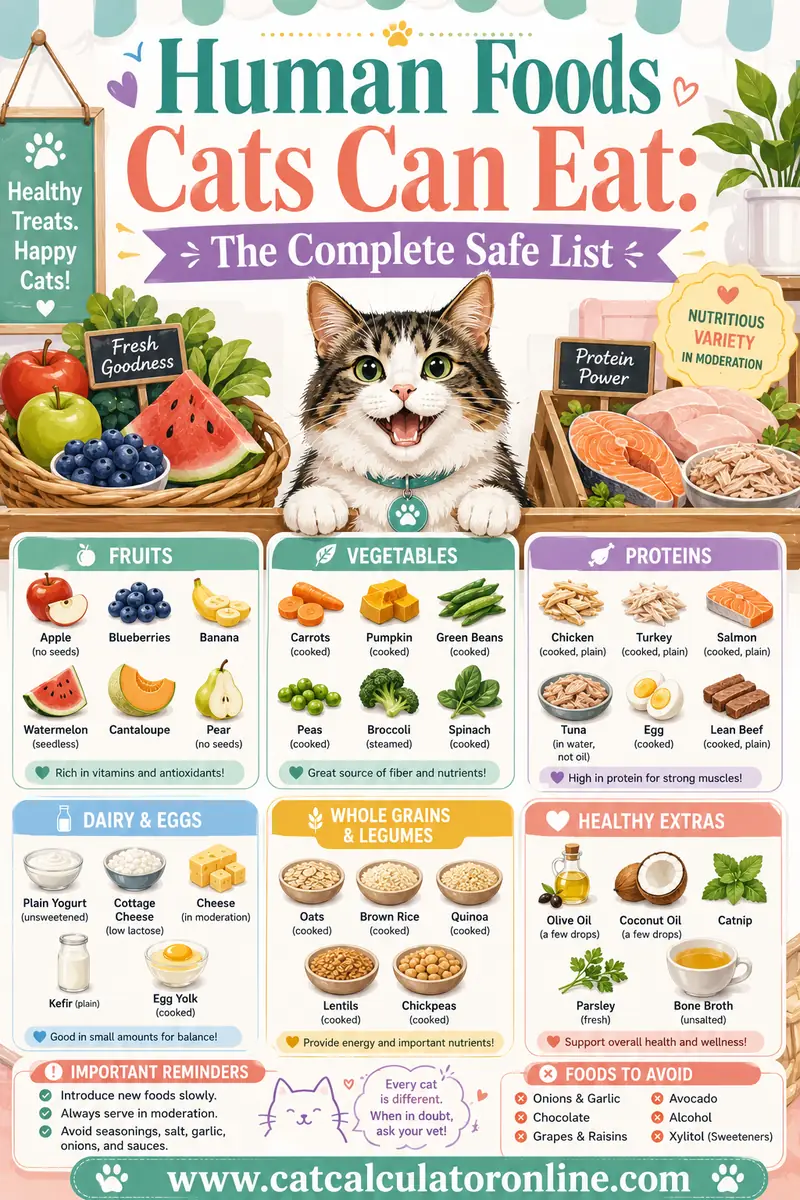
For a wider list of what's genuinely shareable from your kitchen, see human foods cats can eat.
FAQ
Can cats eat tuna every day?
No. Daily tuna is linked to mercury accumulation and to steatitis (yellow fat disease), which happens when high unsaturated fat isn't matched by enough vitamin E. Canned tuna also isn't nutritionally complete — it's imbalanced for taurine, calcium and vitamin E. Keep it to an occasional treat once or twice a week.
How much tuna can I give my cat?
About one tablespoon of drained tuna, no more than once or twice a week, is a reasonable treat for a healthy adult cat. Treats of all kinds should stay under 10% of daily calories, which is roughly 20–25 calories a day for a typical 4–5 kg indoor cat. A whole 5 oz can is more than half a cat's daily calorie needs.
Is tuna in oil or brine safe for cats?
Neither is a good choice. Oil-packed tuna is far too high in fat and commonly causes diarrhea, while brine is high in sodium. Tuna canned in spring water, thoroughly drained, is the safest option if you're feeding it as an occasional treat.
Can kittens eat tuna?
It's best to skip it for kittens under six months. Growing kittens need every calorie to come from a complete, balanced kitten food to support bone, brain and eye development. A tiny taste won't hurt a healthy older kitten, but it shouldn't become a habit.
Why do cats love tuna so much?
Tuna has an unusually strong smell, and cats rely heavily on smell to decide what's worth eating. It's also high in protein and fat, which reads as high-value food to an obligate carnivore. That intensity is exactly why cats fed tuna regularly can start refusing their balanced food.
Is raw tuna safe for cats?
Raw tuna isn't recommended. It carries a risk of bacterial contamination, and raw fish contains thiaminase, an enzyme that destroys thiamine (vitamin B1). A long-term raw-fish diet can cause thiamine deficiency, which affects the nervous system. Cooking deactivates the enzyme.
The Bottom Line
Cats can eat tuna — plain, cooked or canned in water, drained, in treat-sized portions, once or twice a week. That's the whole safe zone.
What tuna can't be is a diet. It's not nutritionally complete, an all-tuna habit is linked to steatitis and mercury build-up, and it turns cats into fussy eaters who refuse the balanced food they actually need. Skip oil and brine, avoid flavored pouches with onion or garlic, and remember that tuna-flavored cat food is a completely different (and perfectly fine) thing from a can off the supermarket shelf.
Keep treats to 10% of the day's calories and let complete cat food do the other 90%. Not sure what that 90% adds up to? Our free cat food calculator gives you a daily target based on your cat's weight and life stage — and how much should I feed my cat shows you how to split it across the day.