Human Foods Cats Can Eat: The Complete Safe List
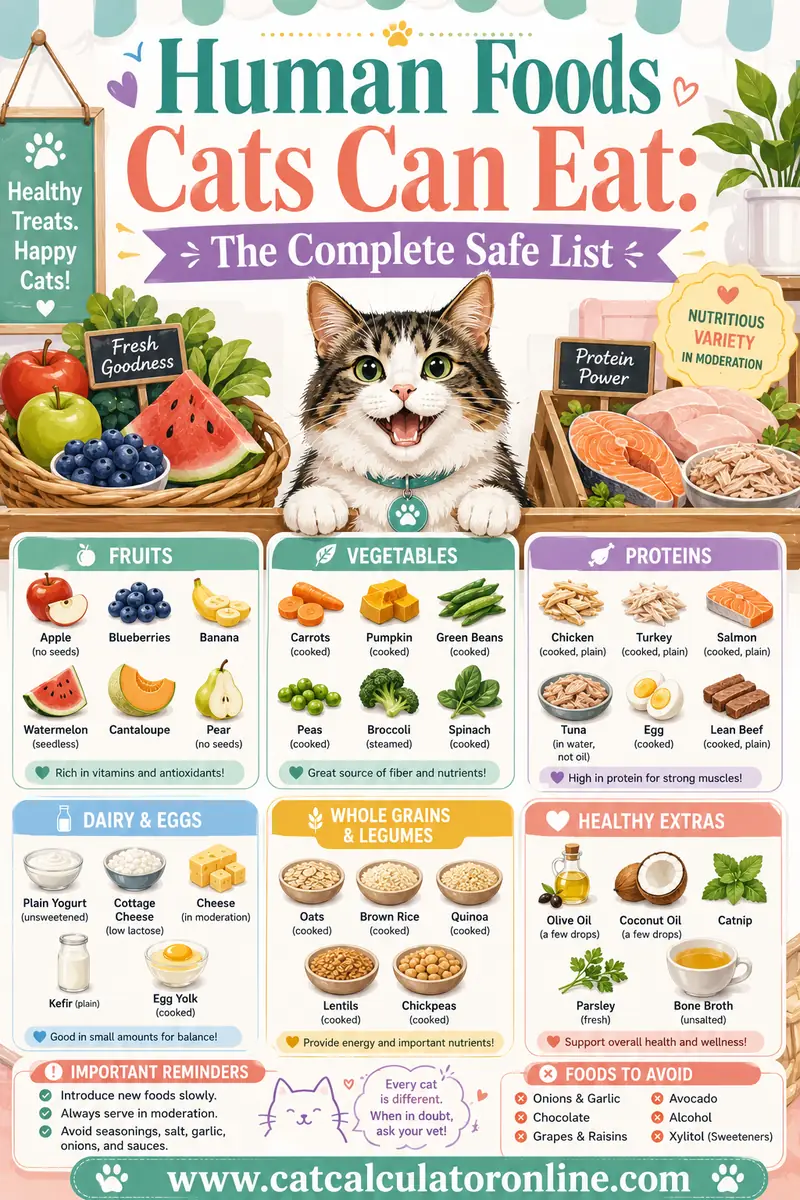
The human foods cats can safely eat are plain, cooked and unseasoned: chicken, turkey, lean beef, cooked eggs, cooked salmon or white fish, plain canned pumpkin, and small amounts of cooked carrot, green beans or peas. Foods to give only occasionally include tuna, cheese, plain yoghurt and a few bits of melon or banana.
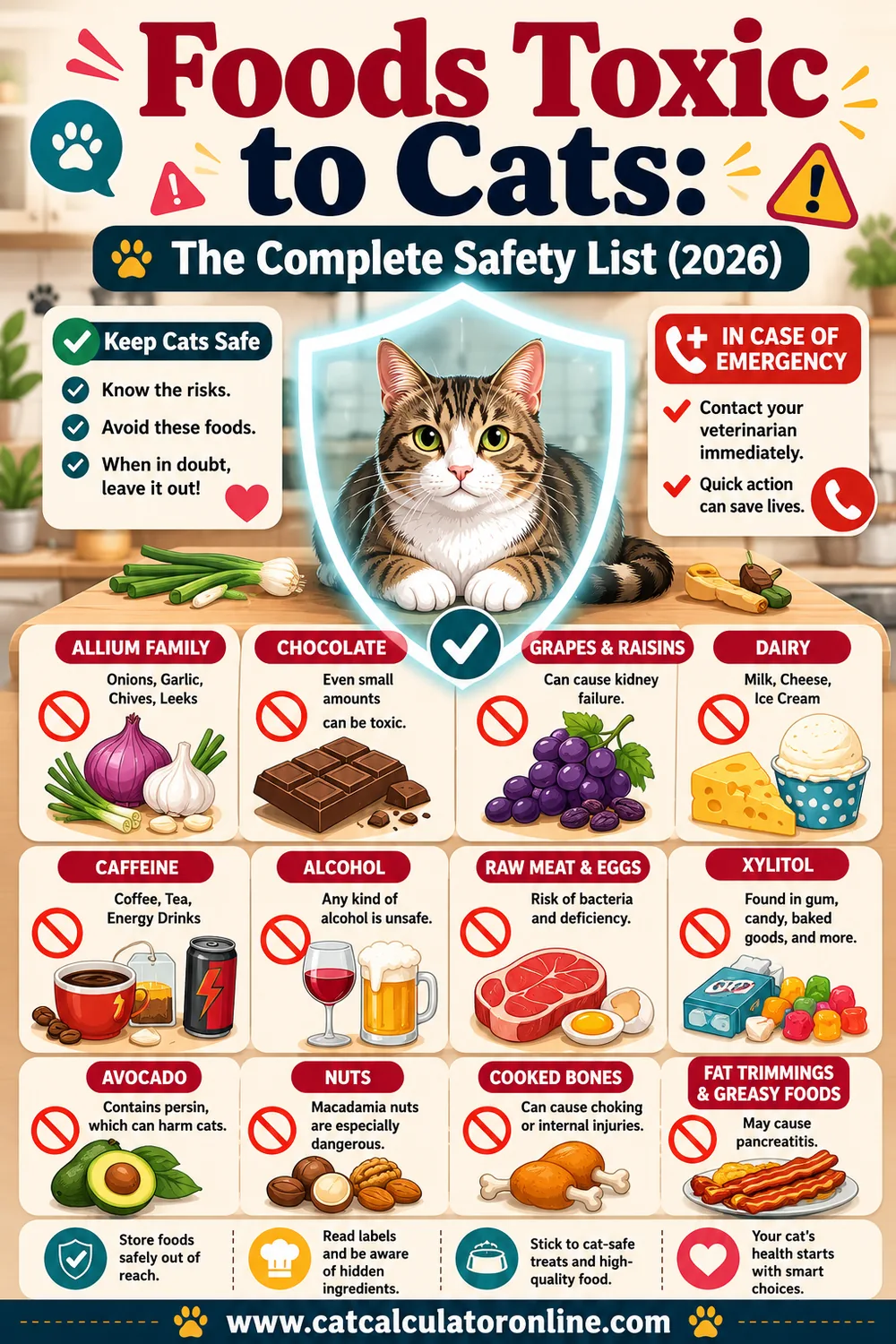
The absolute never list is short and important: onion, garlic, chives and leeks; chocolate; caffeine; alcohol; grapes and raisins; xylitol; macadamia nuts; raw dough; raw egg white; cooked bones; and large amounts of liver.
One rule ties it all together — the 10% rule. Treats and human food should make up no more than 10% of your cat's daily calories. The other 90% has to come from a complete, balanced cat food, because cats are obligate carnivores with nutritional needs that no plate of leftovers can meet.
To know what 10% actually looks like for your cat, start with our free cat food calculator — it gives you a daily calorie target based on weight and life stage.
🐱 Can my cat eat this?
Tap a food to see the verdict:
Tap a food above to see whether it’s safe, okay in moderation, or off limits.
The Complete Safe / Moderation / Never Table
Screenshot this or stick it on the fridge. It covers the foods people ask about most.
| Food | Verdict | Notes |
|---|---|---|
| Cooked chicken | Safe | Plain, boneless, skinless, unseasoned |
| Cooked turkey | Safe | Same rules as chicken; skip the skin |
| Lean cooked beef | Safe | Well cooked, no seasoning, trim the fat |
| Cooked egg | Safe | Scrambled or boiled, nothing added |
| Cooked salmon | Safe | Boneless, plain; not smoked or cured |
| Cooked white fish (cod, haddock) | Safe | Plain and boneless, occasional |
| Plain canned pumpkin | Safe | Fiber; helps mild constipation and hairballs |
| Cooked carrot | Safe | Soft-cooked, small pieces, plain |
| Cooked green beans | Safe | Low-calorie, plain, no salt or butter |
| Cooked peas | Safe | Small amounts, plain |
| Canned tuna (in water) | Moderation | Occasional treat only, not a meal |
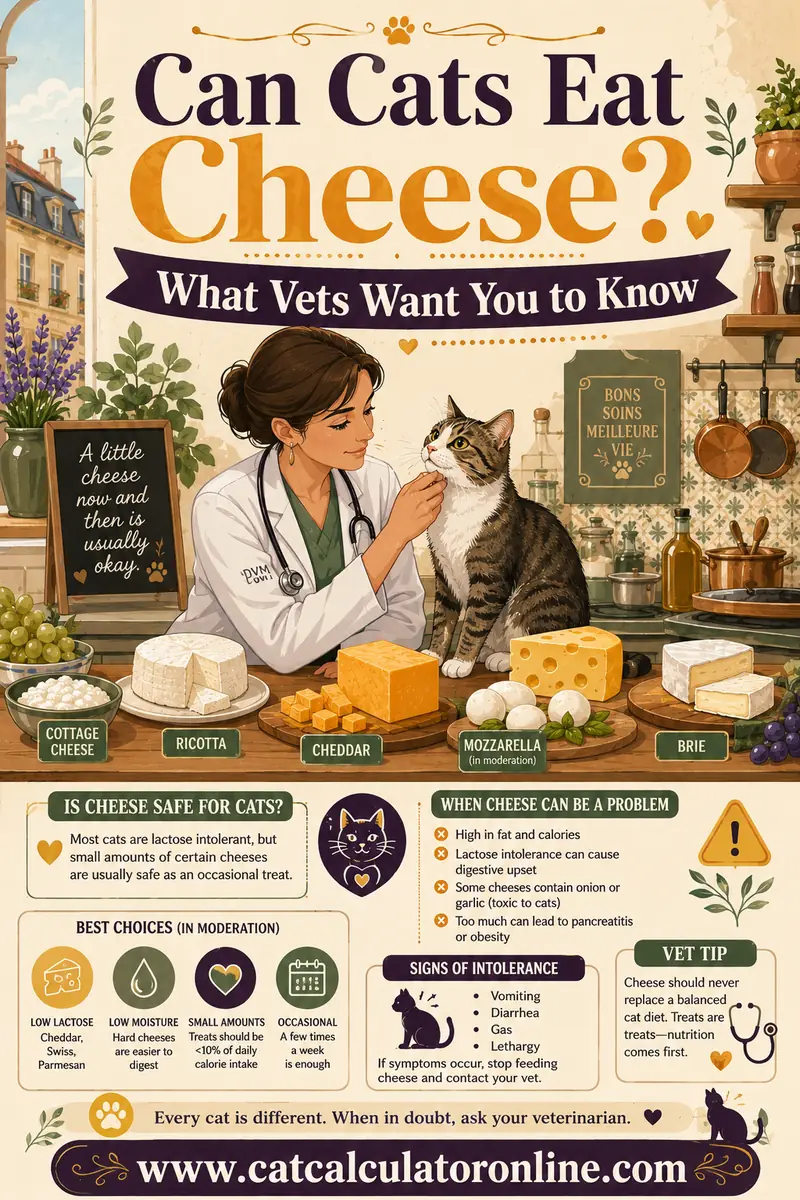
| Hard cheese | Moderation | Most cats are lactose intolerant; tiny piece |
| Plain yoghurt | Moderation | Live cultures lower the lactose; a lick at most |
| Melon, banana | Moderation | Harmless bits; most cats aren't interested |
| Blueberries | Moderation | Safe, but rarely wanted |
| Cooked liver | Moderation | Tiny amounts; excess causes vitamin A toxicity |
| Bread, plain cooked | Empty calories | Not toxic, just useless |
| Onion, garlic, chives, leeks, shallots | Never | Damage red blood cells; can cause anemia |
| Chocolate | Never | Theobromine and caffeine |
| Coffee, tea, energy drinks | Never | Caffeine |
| Alcohol | Never | Dangerous at tiny doses in a small body |
| Grapes, raisins, currants | Never | Kidney injury risk; no known safe dose |
| Xylitol / birch sugar | Never | Sugar-free gum, mints, some peanut butters |
| Macadamia nuts | Never | Documented toxicity in dogs; avoid for cats |
| Raw bread or yeast dough | Never | Expands in the stomach and produces alcohol |
| Raw egg white | Never | Avidin binds biotin; also Salmonella risk |
| Cooked bones | Never | Splinter; can perforate the digestive tract |
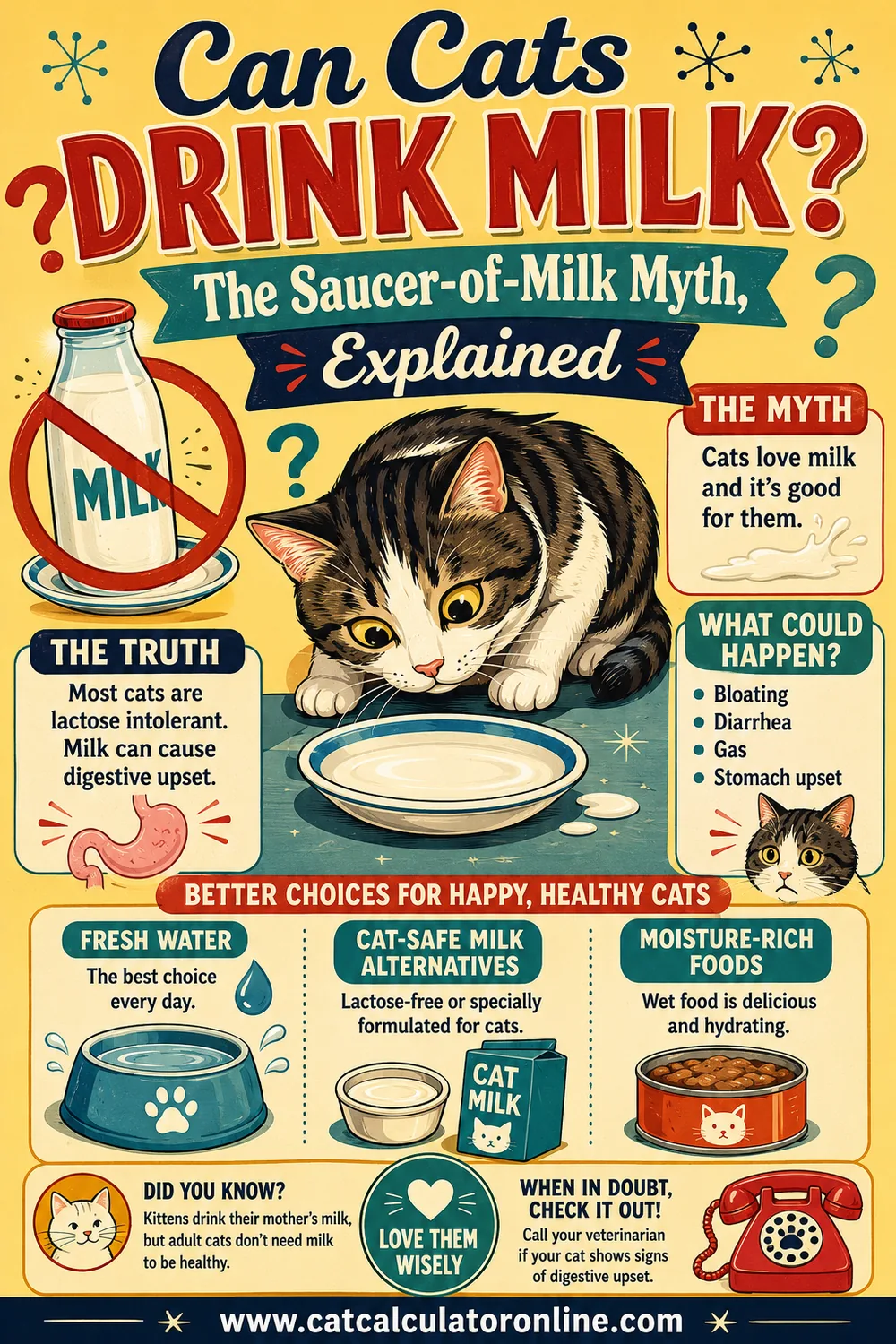
| Cow's milk and cream | Skip it | Most adult cats can't digest lactose |
| Excessive liver | Never | Vitamin A toxicity affects bones and joints |
The rest of this guide explains the why behind each group, because knowing why something is off limits helps you spot the hidden versions — the onion powder in the gravy, the xylitol in the peanut butter.
The 10% Rule: The Only Portion Rule That Matters
Vets use a simple guideline for treats and human food: no more than 10% of daily calories. Everything else — the other 90% — should be a complete and balanced cat food that meets AAFCO or FEDIAF nutrient profiles.
That 90% isn't arbitrary. Cats are obligate carnivores and need nutrients they can't make for themselves, including taurine, preformed vitamin A, arachidonic acid and vitamin B12. Complete cat food is formulated to deliver those at the right levels every single day. Human food, however good, isn't.
Here's what the 10% actually works out to:
| Cat weight | Rough daily calories | 10% treat budget | Real-world example |
|---|---|---|---|
| 6 lb (2.7 kg) | ~150 kcal | ~15 kcal | 1/2 oz cooked chicken |
| 8 lb (3.6 kg) | ~180 kcal | ~18 kcal | 1/2 oz cooked chicken |
| 10 lb (4.5 kg) | ~210 kcal | ~21 kcal | 2/3 oz cooked chicken |
| 12 lb (5.4 kg) | ~240 kcal | ~24 kcal | 3/4 oz cooked chicken |
| 15 lb (6.8 kg) | ~270 kcal | ~27 kcal | 1 oz cooked chicken |
Those are rough starting figures. Actual needs shift with age, neuter status, activity level and body condition — an indoor senior needs far less than a young outdoor cat. Get a proper number from the cat food calculator, then use how much should I feed my cat to split it into meals.
One more thing worth saying plainly: if you feed treats, take the calories out of the regular food. Treats on top of full meals is how indoor cats quietly gain a pound a year.
Safe Meats: Chicken, Turkey and Beef
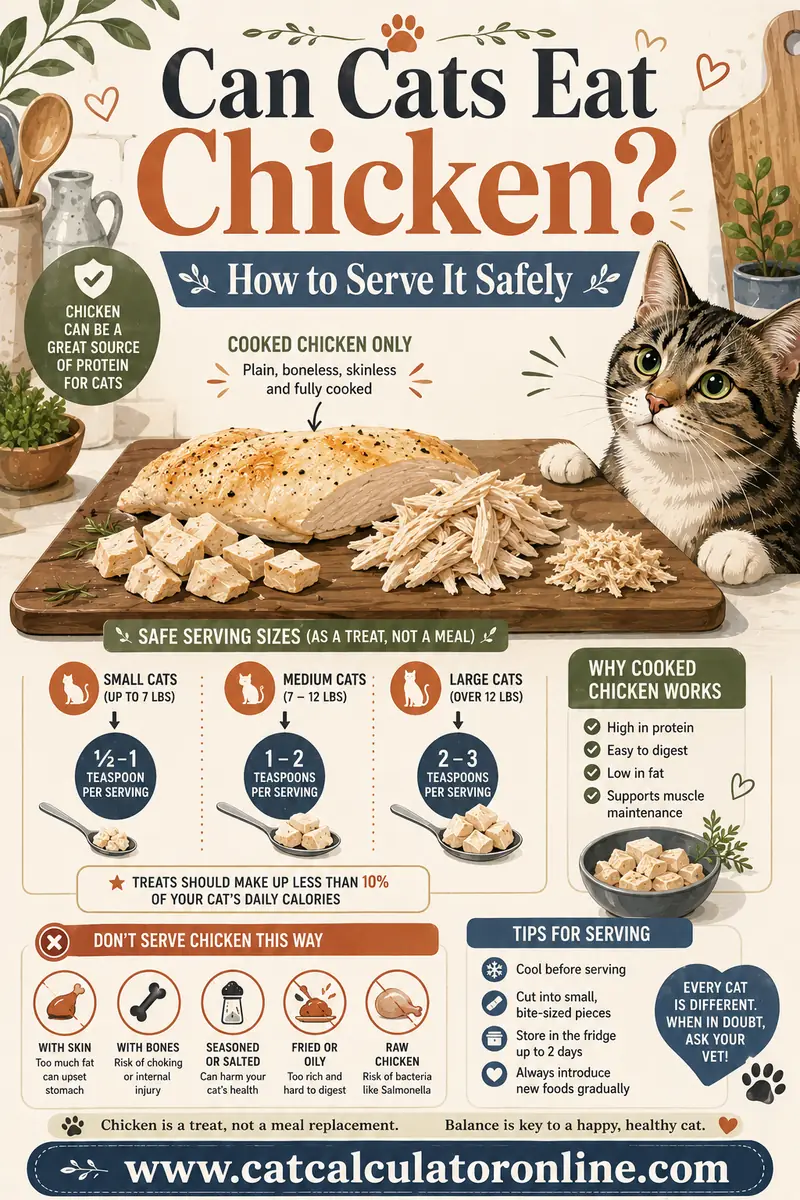
Meat is where cats belong, nutritionally speaking. Plain cooked poultry and lean beef are the easiest wins on the whole list.
How to prepare them
- Boil, poach, bake or steam. No oil, no butter, no salt, no stock cube.
- Cook them through. Poultry to 165°F (74°C), beef well done for a cat.
- Remove all bones, including the small ones. Cooked bones splinter.
- Remove skin and visible fat. Fat is a common trigger for vomiting, diarrhea and pancreatitis.
- Cool it, then dice or shred into pea-sized pieces.
Chicken is the standout — highly digestible, packed with usable protein, and appealing to almost every cat. Our full guide covers this in depth: can cats eat chicken.
Turkey follows the same rules. Beef should be lean and thoroughly cooked; skip processed forms like bacon, ham, sausage and deli meat, which are very high in salt and often contain garlic or onion powder.
Never share seasoned meat off your plate. Rotisserie chicken rubs, marinades, gravy and pan drippings nearly always contain onion or garlic powder, and powdered alliums are more concentrated than fresh ones.
Fish and Eggs
Fish
Plain cooked salmon, cod, haddock and other white fish are safe as occasional treats. Cook them plain, remove every bone, and serve small amounts.
What to avoid:
- Smoked salmon and cured fish — extremely high sodium
- Fish in oil, brine or sauce — too much fat and salt
- Raw fish — parasite and bacteria risk, and some raw fish contains thiaminase, an enzyme that destroys vitamin B1
- Fish as a daily staple — a fish-only diet is unbalanced, and heavy long-term fish feeding raises concerns about mercury and about steatitis from too much unsaturated fat without enough vitamin E
Canned tuna deserves its own note. Most cats adore it, and a small amount now and then is fine. But tuna is not complete nutrition, it can make cats picky about their real food, and larger predatory fish accumulate more mercury. Treat it as a garnish, not a meal.
Eggs
Cooked egg is genuinely good for cats. Scrambled with nothing added, or hard-boiled and chopped, it's a compact source of highly digestible protein and amino acids.
Rules:
- Always cooked, never raw. Raw egg white contains avidin, a protein that binds biotin and can cause deficiency over time. Raw egg also carries Salmonella risk.
- Nothing added. No milk, butter, oil, salt, cheese or seasoning.
- Small portions. A teaspoon or two of cooked egg is plenty for most cats.
Fruit and Vegetables Cats Can Have
Here's the honest truth: most cats don't want fruit. Cats lack functional sweet taste receptors — they physically can't taste sweetness the way we do. A cat who licks ice cream is after the fat, not the sugar.
Still, some cats enjoy a bit of crunch or a novel texture, and a few vegetables are useful.
Genuinely useful
Plain canned pumpkin is the standout. A teaspoon of pure canned pumpkin (100% pumpkin, no spices, no sugar) adds soluble fiber that can help with mild constipation and hairball passage. Never use pumpkin pie filling — it contains sugar and spices, sometimes including nutmeg.
Cooked green beans, peas and carrot are low-calorie and harmless in small plain amounts. Some owners use a few green beans to bulk out meals for a cat on a weight plan, though a proper diet food does the job better.
Harmless but pointless
Small pieces of melon, banana, blueberry, strawberry and cooked squash are all safe. They're low-value for a carnivore, so offer them only if your cat genuinely wants them.
Vegetables to avoid entirely
- Onion, garlic, chives, leeks and shallots — toxic in every form, including powder
- Grapes and raisins — no known safe dose
- Raw potato and green potato skin — solanine
- Tomato leaves, stems and unripe tomato — solanine
- Mushrooms from the garden or wild — some species are deadly
- Avocado — the flesh is low risk but the pit is a choking and obstruction hazard, and the plant contains persin
Dairy: Why "Cats Love Milk" Is a Myth
A saucer of milk is one of the most common well-meaning mistakes in cat care. Kittens produce lactase to digest their mother's milk, but most cats stop producing much of it after weaning. Undigested lactose ferments in the large intestine, causing gas, bloating and diarrhea — usually 8 to 12 hours later.
The full explanation is in our guide to cats and milk.
Where dairy sits on the list:
- Cow's milk and cream — skip entirely. Water is the only drink your cat needs.
- Hard aged cheese — lower in lactose, so a pea-sized nibble is usually tolerated, but it's fatty and salty. Details in can cats eat cheese.
- Blue cheese — never. The mold can produce roquefortine C, which is toxic to pets.
- Plain unsweetened yoghurt — live cultures pre-digest some lactose, so a small lick is often tolerated. Never flavored or sweetened, and never anything containing xylitol.
- "Cat milk" products — lactose-reduced and safe, but they're liquid calories with no real benefit.
The Never List, Explained
These are the ones worth memorising. Our deep-dive on foods toxic to cats covers each in more detail, including emergency steps.
Onion, garlic, chives, leeks and shallots. Alliums damage feline red blood cells and can cause haemolytic anemia. Powdered forms are the most concentrated, so the risk usually comes from gravy, stock, seasoned meat and savory baby food rather than raw bulbs. Signs often appear days later: weakness, pale gums, rapid breathing, reddish-brown urine.
Chocolate and caffeine. Both contain methylxanthines, which cats process slowly. Dark chocolate, cocoa powder and baking chocolate are the most dangerous. Coffee grounds in an open bin, tea bags, energy drinks and pre-workout powder are all real sources.
Alcohol. A cat's body weight is a tenth of yours or less. Beer, wine, spirits and alcohol-soaked desserts are all off limits.
Grapes, raisins and currants. Firmly linked to acute kidney injury in dogs with no identified safe dose. Reported cases in cats are rare, but the consequence is severe enough that avoidance is the only sensible call.
Xylitol (birch sugar). A sugar substitute in sugar-free gum, mints, some peanut butters, protein bars and baked goods. Treat anything labeled sugar-free as off limits and check peanut butter labels before offering a lick.
Macadamia nuts. Well-documented toxicity in dogs; the cat data is limited and avoidance is the sensible position. Most nuts are also high in fat and salt.
Raw bread or yeast dough. It keeps rising in a warm stomach, causing painful bloating, and fermenting yeast produces alcohol that gets absorbed into the blood. This one is an emergency call.
Raw egg white. Contains avidin, which binds biotin and can cause deficiency with regular feeding. Plus Salmonella risk.
Cooked bones. Cooking makes bone brittle. Fragments can lodge in the throat, block the intestine or puncture the gut wall.
Excessive liver. Liver is rich in preformed vitamin A, and too much over time causes hypervitaminosis A, which affects bones and joints. A tiny piece occasionally is fine; liver as a staple isn't.
How to Introduce Any New Food
Even safe foods can cause a wobble if you go too fast. A simple approach:
- One new food at a time. If something disagrees, you'll know what it was.
- Start tiny. A pea-sized piece is enough for a first taste.
- Wait 24 hours and watch the litter box before offering more.
- Increase slowly over several days, always inside the 10% budget.
- Reduce regular food to compensate if the treat becomes a habit.
- Stop if you see vomiting, diarrhea, itching, over-grooming or a drop in appetite.
Some cats are genuinely allergic to specific proteins — chicken, beef and fish are among the more common feline food allergens. Signs are usually skin-related (itching, over-grooming, ear inflammation) or chronic soft stools. That's a vet conversation, not a trial-and-error one.
Cats who should get no human food at all without vet approval: kittens, cats on prescription or elimination diets, cats with kidney or heart disease, cats with a history of pancreatitis, and any cat currently being investigated for food allergies.
Practical Kitchen Habits
Most accidental poisonings come down to access, not intent. A few habits close the door:
- Set aside a plain piece before you season. That's how your cat shares dinner safely.
- Use a lidded, latched bin. Bones, onion skins, coffee grounds and wrappers all live in there.
- Treat the counter as reachable. Cats jump. Put food away rather than just out of reach.
- Read every label on anything sugar-free or savory.
- Don't leave dough rising on an accessible surface.
- Keep an emergency number saved — your vet and a pet poison helpline.
- Feed the right amount of proper food. A satisfied cat scavenges less.
FAQ
What human foods can cats eat safely?
Plain, cooked, unseasoned chicken, turkey, lean beef, salmon and white fish; cooked eggs; plain canned pumpkin; and small amounts of cooked carrot, green beans or peas. All of these should stay within 10% of your cat's daily calories, with complete cat food making up the rest.
Can cats live on human food alone?
No. Cats are obligate carnivores and need taurine, preformed vitamin A, arachidonic acid and a precise calcium-to-phosphorus balance that home-prepared meals rarely hit. Only a complete, balanced cat food — or a home diet formulated by a veterinary nutritionist — meets those requirements reliably.
What is the 10% rule for cat treats?
It means treats and human food should account for no more than 10% of your cat's daily calorie intake, with the other 90% coming from complete cat food. For a typical 10-pound cat eating around 210 calories a day, that's roughly 21 calories of treats — about two-thirds of an ounce of cooked chicken.
Can cats eat fruit?
Small pieces of melon, banana, blueberry or strawberry are safe, but most cats have no interest because they can't taste sweetness — cats lack functional sweet taste receptors. Grapes and raisins are the exception and must be avoided entirely because of kidney injury risk.
What human foods are toxic to cats?
Onion, garlic, chives, leeks and shallots; chocolate; caffeine; alcohol; grapes and raisins; xylitol; macadamia nuts; raw yeast dough; raw egg white; cooked bones; and large amounts of liver. Alliums are the most common culprit because onion and garlic powder hide in gravy, stock and seasoned meat.
How do I introduce a new human food to my cat?
Offer one new food at a time in a pea-sized portion, then wait 24 hours and check for vomiting, diarrhea or itching before offering more. Increase slowly over several days and keep the total within the 10% treat allowance.
The Bottom Line
The safe list is simple and short: plain cooked meat, plain cooked fish, cooked egg, plain pumpkin and a few plain cooked vegetables. Tuna, cheese, yoghurt and fruit bits sit in the occasional column. Onion and garlic, chocolate, caffeine, alcohol, grapes, xylitol, macadamia nuts, raw dough, raw egg white and cooked bones never make the cut.
Everything else is portion control. Keep human food at or under 10% of the day's calories, take those calories out of the regular meals, and let complete cat food do the nutritional work it was built for.
Start with the number: run your cat through our free cat food calculator to get a daily target. Then dig into the specifics with can cats eat chicken, can cats eat cheese, and the full list of foods toxic to cats.