Can Cats Eat Chicken? How to Serve It Safely
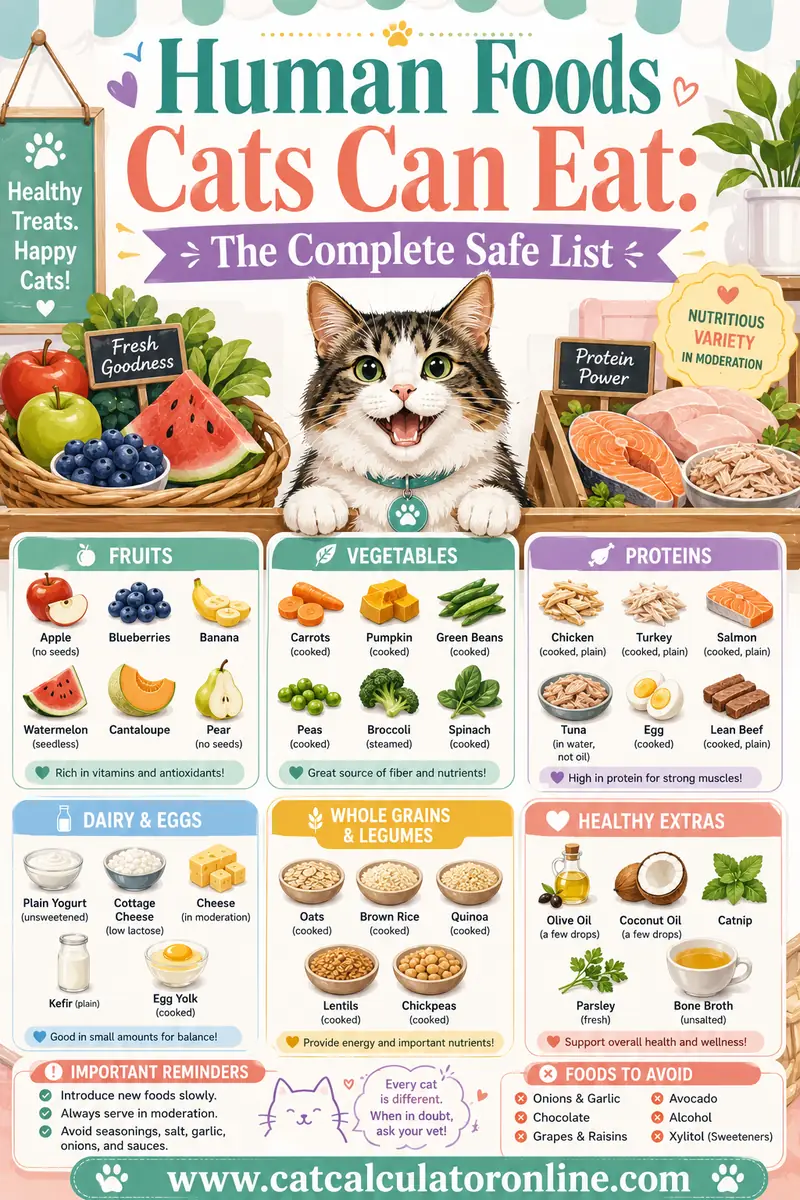
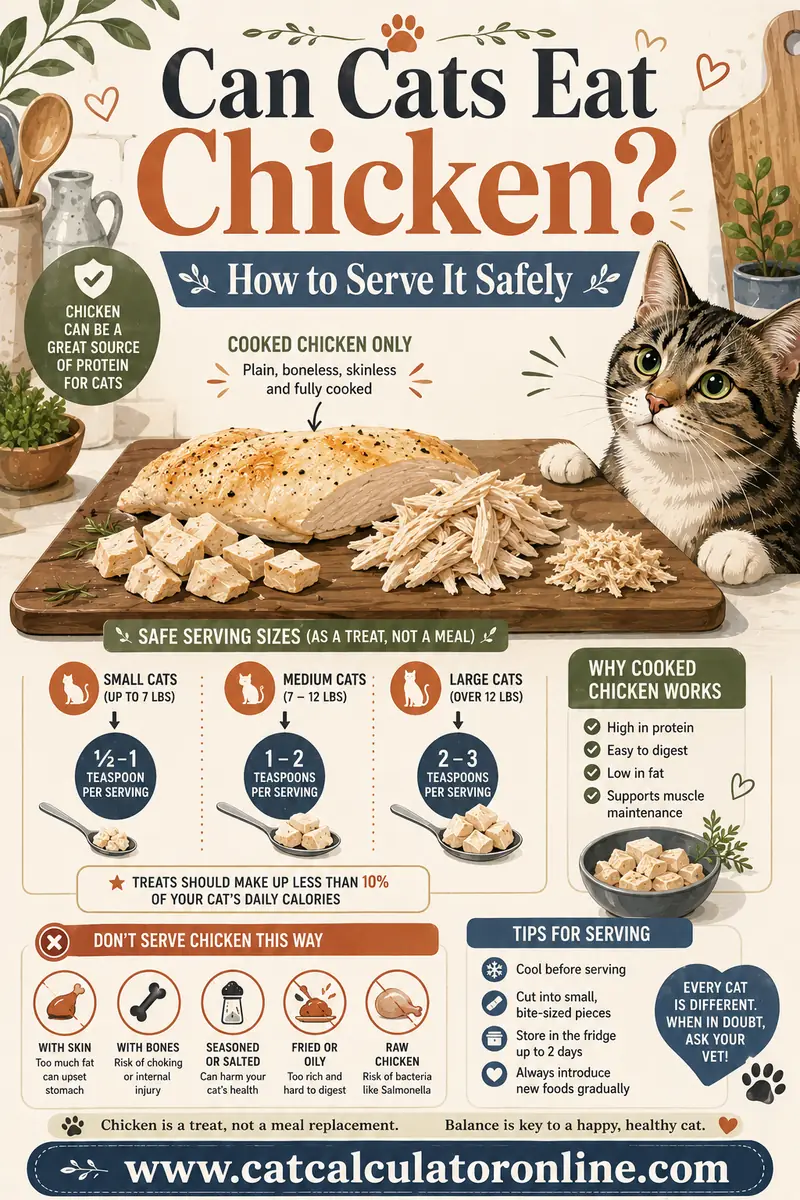
Yes — chicken is one of the best human foods you can give a cat, as long as it's plain, cooked, boneless, skinless and completely unseasoned. Cats are obligate carnivores, and chicken is a highly digestible source of complete animal protein that most cats find irresistible.
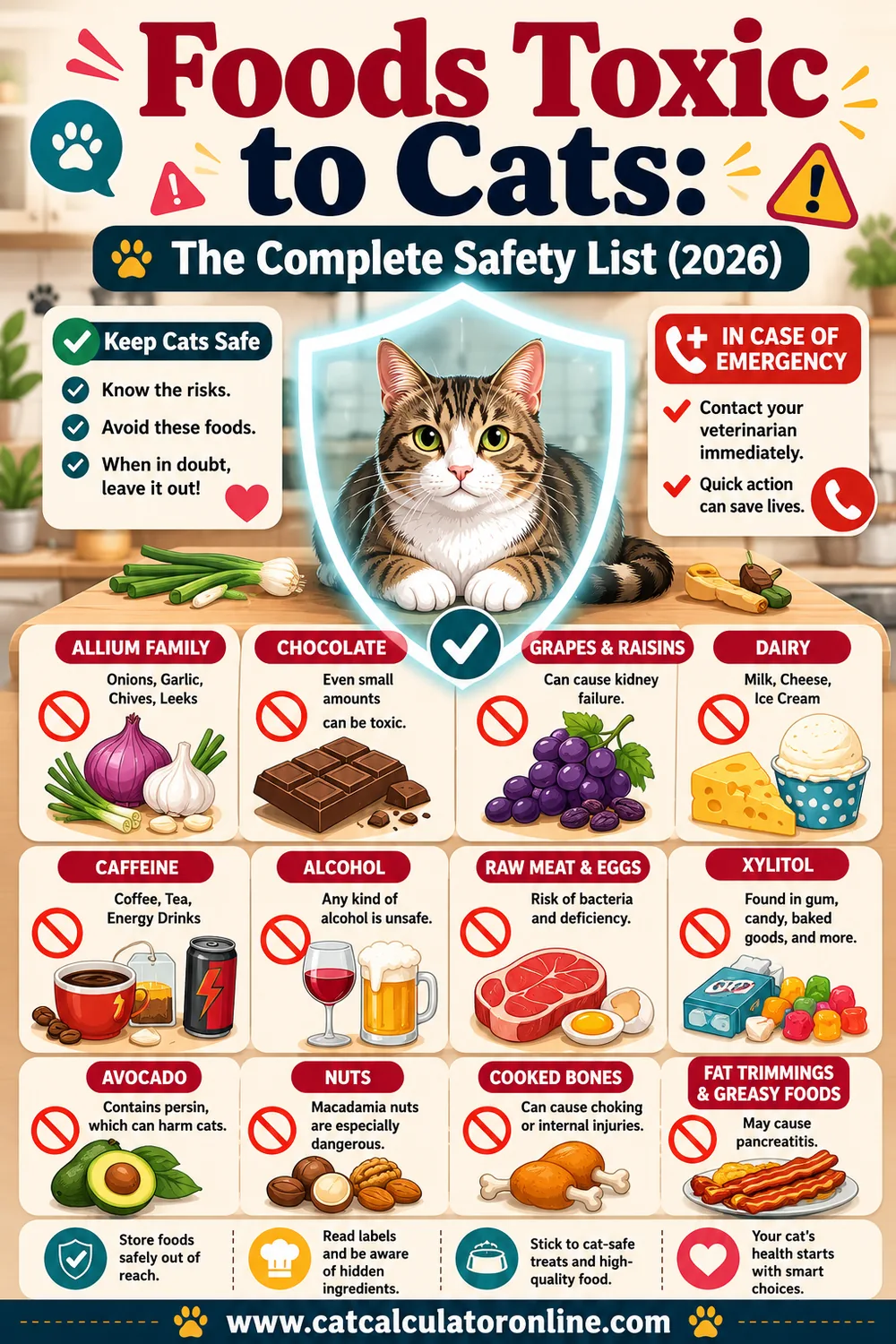
Three things turn a good treat into a bad one: cooked bones (they splinter and can perforate the gut), seasoning (onion and garlic are toxic to cats even as powder), and skin or fat (a common trigger for stomach upset and pancreatitis). Plain chicken also isn't nutritionally complete on its own, so it can't replace your cat's regular food.
Before you start adding chicken toppers, it's worth knowing your cat's daily calorie target so the extras don't quietly cause weight gain. Our free cat food calculator will give you that number in a few seconds.
🍗 Is this chicken safe for my cat?
Tap a version to see the verdict:
Tap an option above to see whether it’s safe, unsafe, or okay in moderation.
Why Chicken Suits Cats So Well
Cats are obligate carnivores. Unlike dogs or people, they can't thrive on plant protein — their bodies are built to run on animal tissue, and several nutrients they can't manufacture themselves come almost exclusively from meat.
Chicken delivers on that in a few ways:
- High-quality, complete protein. Chicken contains all the amino acids cats need, including taurine, which cats must get from food and which is critical for heart and eye health.
- Very digestible. Lean poultry is gentle on the gut, which is why vets often suggest plain boiled chicken for cats recovering from a stomach upset.
- Low in fat when you use breast meat. That makes it a decent treat for cats watching their weight, as long as portions stay small.
- Highly palatable. A finicky cat who's off her food will often eat warm shredded chicken when she'll eat nothing else.
That last point is why chicken is such a useful tool for owners. A cat who won't eat is a cat with a problem, and a few grams of warmed chicken stirred into her regular food can restart her appetite. If your cat has refused food for more than 24 hours, though, call your vet — cats can develop serious liver problems from going without food.
How to Cook Chicken for a Cat
The method matters less than what you leave out. No oil, no butter, no salt, no stock cube, no herbs, no spice rub.
Step by step
- Start with plain boneless, skinless breast or thigh. Breast is leaner; thigh is a little richer.
- Boil, poach, bake or steam it. Plain water is all you need. No oil in the pan.
- Cook it through completely. Poultry should reach an internal temperature of 165°F (74°C). No pink, no clear-ish juices.
- Let it cool fully. Cats will burn their mouths on food that's too hot, and many prefer food at around body temperature anyway.
- Check for bones. Run your fingers through it. Even boneless cuts occasionally hide a fragment.
- Shred or dice into small pieces. Cat-sized bites, roughly pea-sized, reduce choking risk and slow gulping down.
- Serve as a topper or a treat, not as the meal.
Leftover cooked chicken keeps in the fridge for about three days. Store your cat's portion separately from the seasoned family portion so nobody mixes them up.
What to leave out — every time
| Add-in | Why it's a problem |
|---|---|
| Onion or onion powder | Toxic to cats; damages red blood cells |
| Garlic or garlic powder | Same family as onion, more concentrated |
| Salt | No dietary need; bad for heart and kidney cases |
| Butter, oil, cooking spray | Extra fat, stomach upset, pancreatitis risk |
| Stock cubes and broth | Almost always contain onion and heavy salt |
| Marinades and BBQ sauce | Sugar, salt, garlic, sometimes xylitol |
| Skin | Very high fat |
| Bones (cooked) | Splinter; can perforate the digestive tract |
The full picture on which seasonings are actually dangerous is in our guide to foods toxic to cats.
Why Cooked Chicken Bones Are So Dangerous
Cooking dries bone out and makes it brittle. A cooked chicken bone doesn't crush — it snaps into sharp shards. Those shards can lodge in the mouth or throat, tear the oesophagus, block the intestine, or puncture the gut wall, which can lead to peritonitis.
Cats are small, so it doesn't take a big bone to cause a big problem. Wing tips, rib fragments and the thin bones in a thigh are all hazards.
Practical rules:
- Never give cooked bones of any size or type.
- Don't leave a carcass on the counter or in an open bin — a determined cat will find it.
- Use a bin with a lid that latches.
- If your cat swallows a cooked bone, call your vet immediately. Don't wait for symptoms and don't try to make her vomit at home — a sharp fragment can do more damage coming back up.
Signs of trouble include drooling, pawing at the mouth, gagging, refusing food, repeated vomiting, straining without producing stool, a tense or painful belly, or lethargy.
Rotisserie, Fried and Deli Chicken
This is where most accidental problems happen, because it's the chicken that's already in your house.
Rotisserie chicken is coated in a seasoning rub, and onion powder and garlic powder are nearly always in it. That rub soaks into the meat and drips down into it, so even a piece from the middle isn't reliably safe. Read the ingredient label if you can; assume no if you can't.
Fried chicken brings batter, frying oil, salt and seasoning together. It's high-fat and high-sodium, and the coating adds nothing your cat can use.
Deli chicken slices and lunch meat are heavily salted and often contain garlic powder and preservatives. Skip them.
Chicken nuggets are breaded, fried and salted. Not cat food.
If you want your cat to share the roast dinner, the trick is to set aside a plain, unseasoned piece before anything touches it. Cook that piece separately in plain water.
What About Raw Chicken?
Raw chicken carries a genuine risk of Salmonella and Campylobacter. That risk runs two ways: your cat can get sick, and she can also shed those bacteria in her stool and saliva, which puts everyone in the household — especially young children, older adults and anyone immunocompromised — at risk.
Raw feeding is a real practice with real advocates, and some cats do well on properly formulated commercial raw diets that are balanced and often high-pressure processed for safety. But there's a big difference between that and tossing your cat a piece of supermarket chicken breast.
If you're considering raw, do it with your vet's input. What matters:
- A complete and balanced formulation, not just muscle meat
- Correct calcium-to-phosphorus balance
- Proper cold-chain handling, separate boards and utensils, thorough hand washing
- Not appropriate for kittens, pregnant cats, senior cats or any cat with a compromised immune system
- Not appropriate in households with vulnerable people
Plain cooked chicken carries none of these complications, which is why it's the default recommendation.
Why Chicken Can't Be Your Cat's Whole Diet
This is the part people most often get wrong. Chicken is excellent as part of a diet — it is not a diet.
Plain chicken breast is muscle meat. It's missing or short on several things a cat needs every day:
- Calcium. Muscle meat is high in phosphorus and very low in calcium. An all-chicken diet throws that ratio badly out of balance, and over time that can cause serious bone problems, especially in growing kittens.
- Taurine in reliable amounts. Chicken contains taurine, but levels vary by cut and drop during cooking. Deficiency causes dilated cardiomyopathy and irreversible retinal damage.
- Vitamin A in a usable form. Cats can't convert beta-carotene from plants; they need preformed vitamin A, which comes mostly from organ meat.
- Vitamin E, vitamin D, trace minerals and essential fatty acids at the levels a complete diet provides.
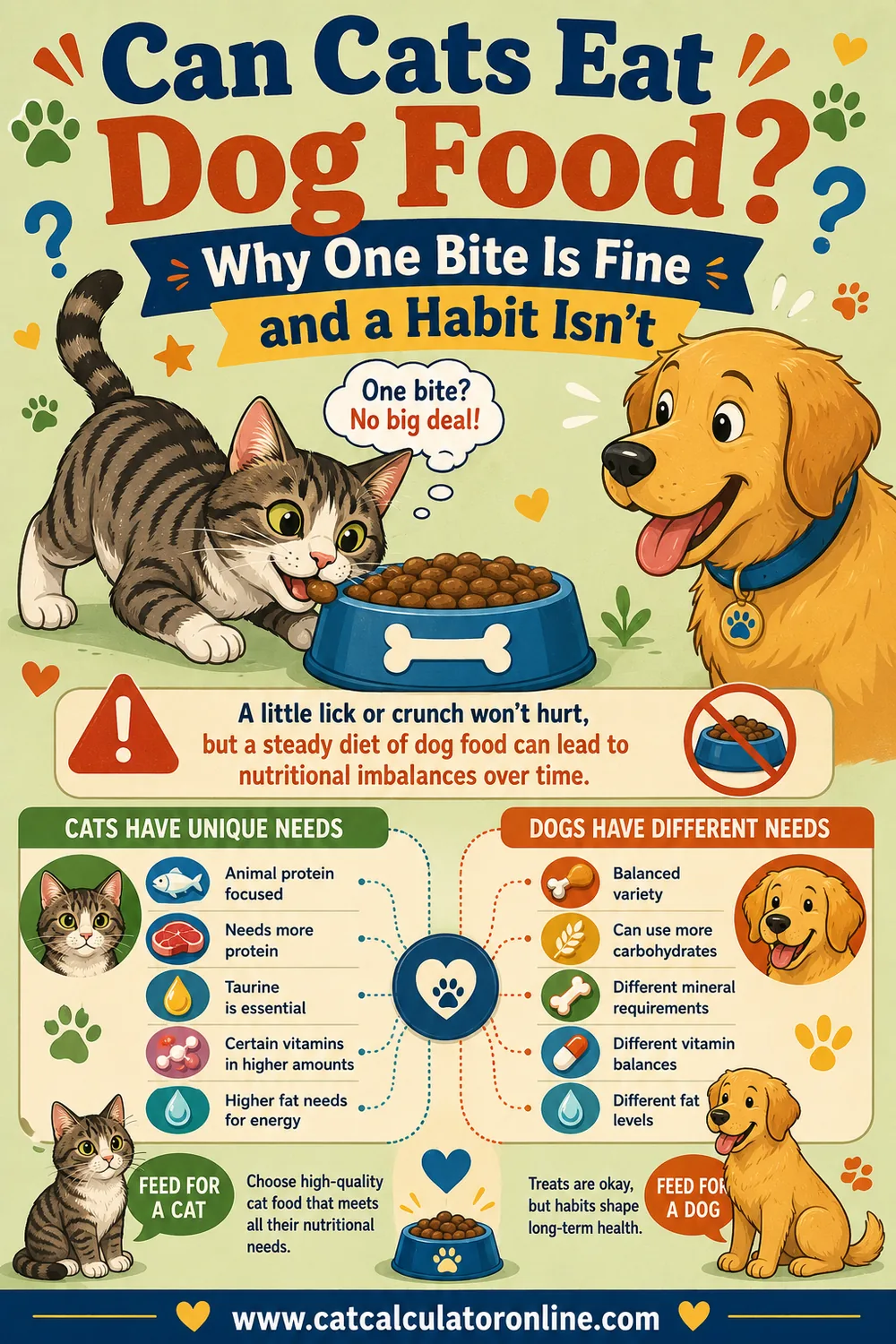
A cat fed mostly chicken can look fine for months and then develop problems that are hard or impossible to reverse. Complete commercial cat food is formulated to meet these targets — that's the whole point of it. This is also why cat food isn't interchangeable with dog food: the nutrient profiles are built for different animals.
The 10% rule
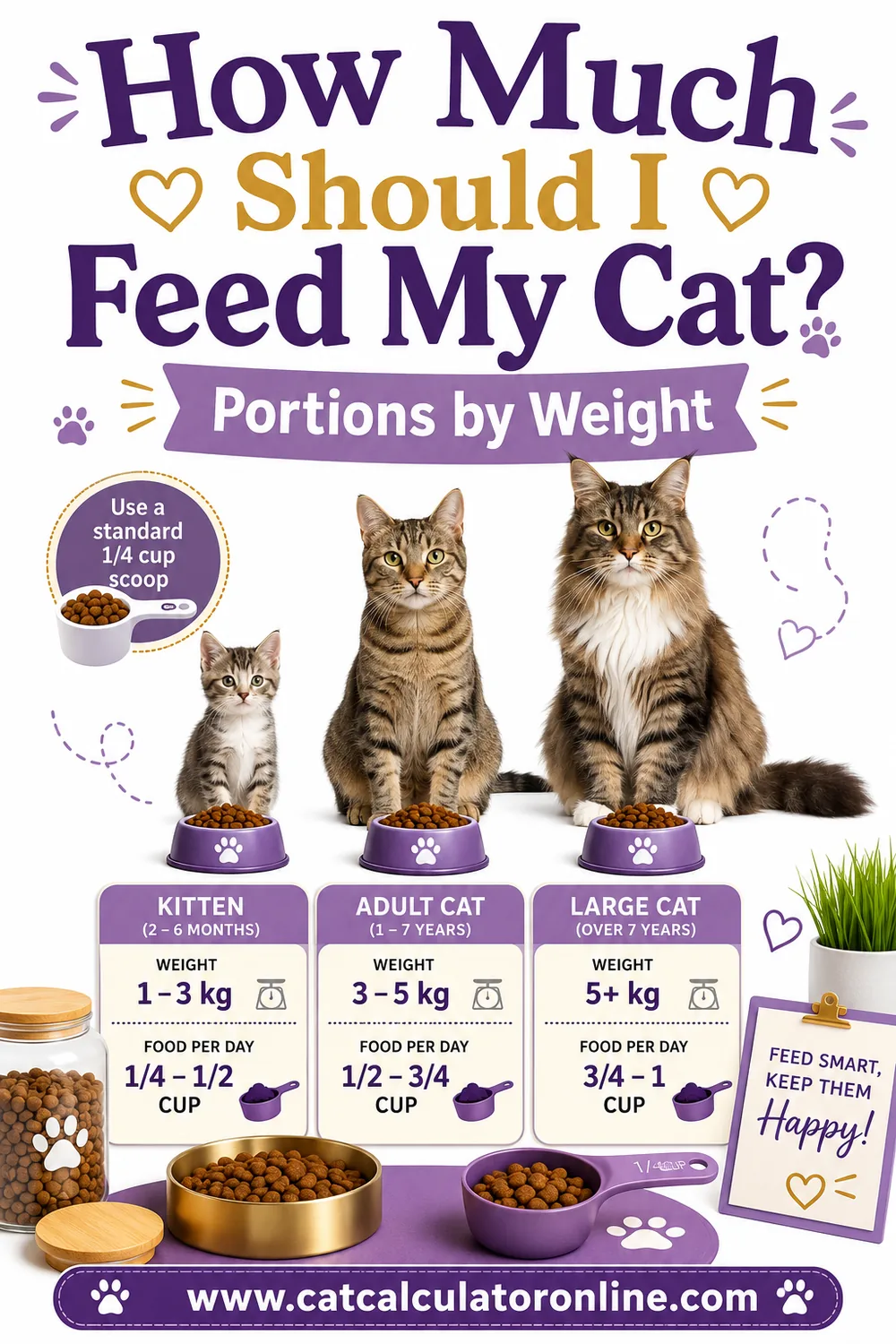
Treats and human food — chicken included — should stay at or under 10% of your cat's daily calories. The other 90% comes from complete cat food.
| Cat weight | Rough daily calories | 10% treat budget | Cooked chicken breast |
|---|---|---|---|
| 8 lb (3.6 kg) | ~180 kcal | ~18 kcal | About 1/2 oz (15 g) |
| 10 lb (4.5 kg) | ~210 kcal | ~21 kcal | About 2/3 oz (18 g) |
| 12 lb (5.4 kg) | ~240 kcal | ~24 kcal | About 3/4 oz (21 g) |
| 15 lb (6.8 kg) | ~270 kcal | ~27 kcal | About 1 oz (25 g) |
Cooked skinless chicken breast runs roughly 30 calories per ounce, so those portions are small — a couple of shredded strips, not a plateful. Get a personalized number from the cat food calculator, and see how much should I feed my cat for splitting the day's food into meals.
Introducing Chicken Without Upsetting Your Cat's Stomach
Any new food can cause a wobble, even a good one. Go slowly:
- Start with a single small piece — pea-sized — and wait 24 hours.
- If all's well, offer a slightly larger portion the next day, still within the treat budget.
- Watch the litter box. Loose stools mean back off.
- Don't add chicken and something else new on the same day — you won't know which caused a reaction.
- Reduce the regular food slightly if you're feeding chicken often, so the calories still add up correctly.
Cats with food allergies are sometimes reactive to chicken specifically — it's one of the more common feline food allergens, alongside beef and fish. Signs include itchy skin, over-grooming, ear inflammation and chronic soft stools. If you see those, talk to your vet before continuing.
FAQ
Can cats eat cooked chicken every day?
Small amounts of plain cooked chicken daily are fine as long as they stay within about 10% of your cat's daily calories and the other 90% is complete cat food. Chicken alone lacks the correct calcium balance and reliable taurine levels, so it can't be the main diet.
Can cats eat chicken bones?
No. Cooked chicken bones become brittle and splinter into sharp fragments that can lodge in the throat, block the intestine or puncture the gut wall. If your cat swallows one, call your vet right away rather than waiting for symptoms.
Is rotisserie chicken safe for cats?
Usually not. Rotisserie seasoning rubs almost always contain onion powder and garlic powder, both toxic to cats, plus a lot of salt. Cook a plain unseasoned piece separately instead.
Can cats eat raw chicken?
Raw chicken carries Salmonella and Campylobacter risk for both your cat and your household, and plain raw muscle meat isn't nutritionally balanced. If you want to feed raw, use a properly formulated commercial product and talk it through with your vet first.
How much chicken can I give my cat?
For a typical 10-pound cat, roughly 2/3 of an ounce (about 18 grams) of plain cooked chicken breast fits inside a 10% treat allowance. That's a couple of shredded strips, not a bowl.
Can kittens eat chicken?
A tiny amount of plain cooked chicken is fine for a weaned kitten as an occasional treat, but kittens have high, precise nutritional needs for growth. The vast majority of their intake should be complete kitten food formulated for that life stage.
The Bottom Line
Plain, cooked, boneless, skinless, unseasoned chicken is one of the best treats you can hand a cat. Skip the bones, skip the skin, skip anything that came out of a seasoning packet, and keep raw chicken for a properly formulated diet discussed with your vet.
Just remember chicken is a topping, not a meal. Complete cat food does the nutritional heavy lifting. Work out exactly how much your cat should be eating with our free cat food calculator, and browse the wider list of human foods cats can eat for other safe options.