Can Cats Eat Cheese? What Vets Want You to Know
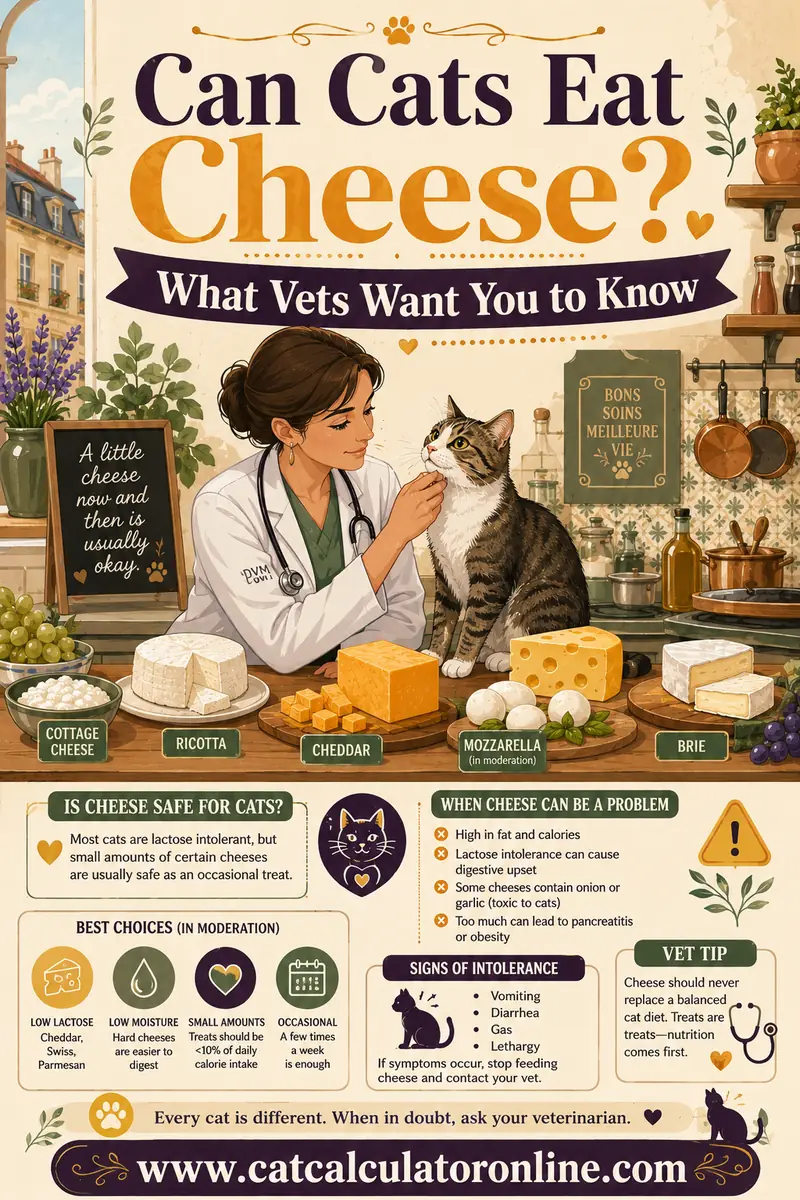
Cheese isn't toxic to cats, but it isn't good for them either. Most adult cats are lactose intolerant, so dairy commonly causes gas, diarrhea or vomiting — and cheese is high in fat and sodium on top of that. A pea-sized nibble of a hard aged cheese like cheddar or parmesan is usually tolerated by a healthy adult cat, but cheese offers nothing your cat's regular food doesn't already provide.
The one cheese to treat as a hard no is blue cheese. The mold used to make it produces a compound called roquefortine C, which is toxic to pets. That one isn't a "small amount is fine" situation.
If you're weighing up treats, it helps to know how many calories your cat actually needs in a day first. Our free cat food calculator gives you a daily starting number, and every treat should fit inside it.
🧀 Can my cat have this cheese?
Tap a cheese to see the verdict:
Tap a cheese above to see whether it’s safe, unsafe, or okay in moderation.
Why Cheese Upsets So Many Cats
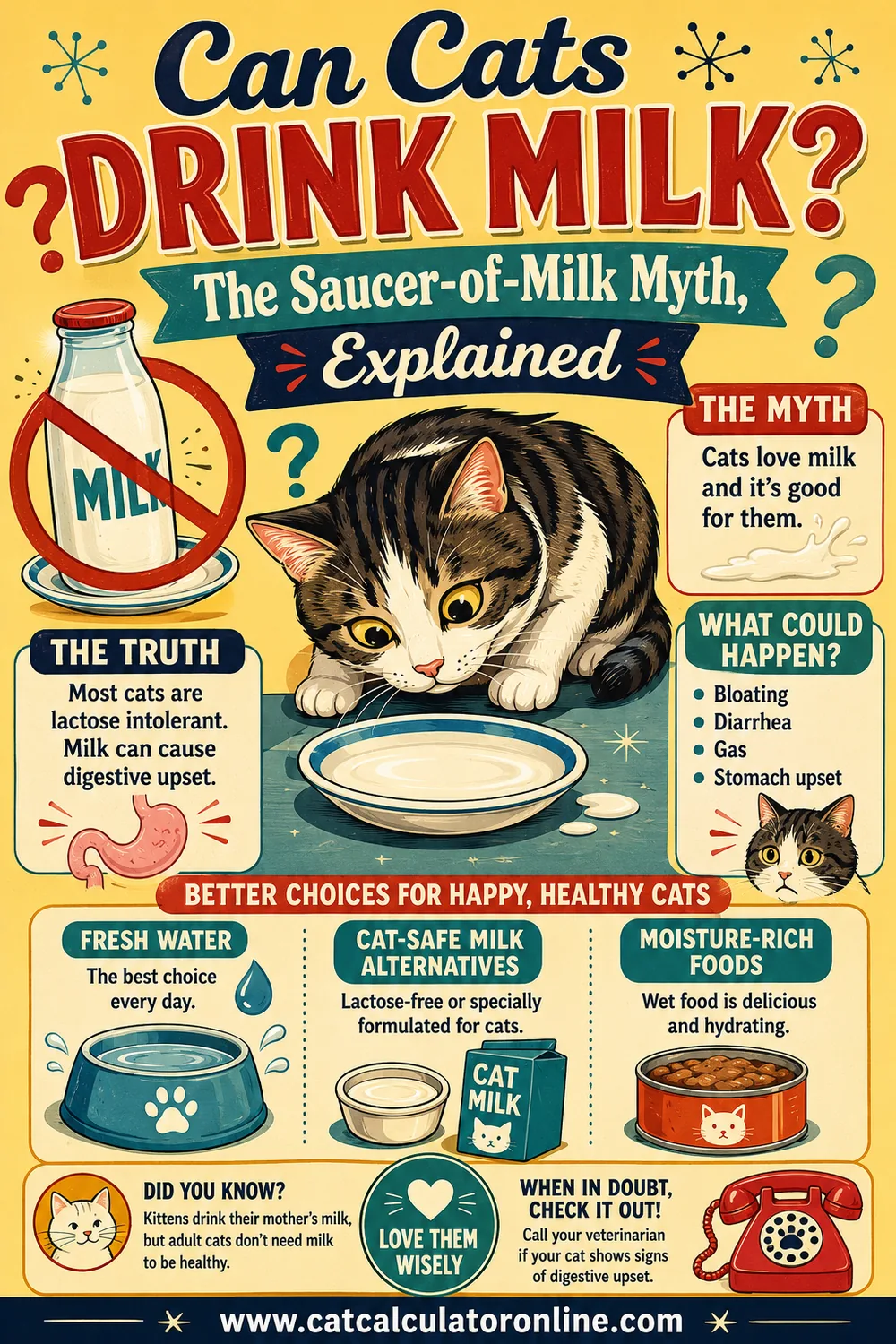
Kittens are born able to digest milk. They produce an enzyme called lactase that breaks down lactose, the sugar in their mother's milk. After weaning, most cats stop producing much lactase — they simply don't need it anymore.
That's the whole problem. When an adult cat eats dairy, the undigested lactose travels into the large intestine, where bacteria ferment it. The result is gas, bloating, loose stools or outright diarrhea, usually 8 to 12 hours later.
Cheese is lower in lactose than milk because much of the lactose is drained off with the whey and further broken down during ageing. That's why a nibble of cheddar is less likely to cause trouble than a saucer of milk. "Less likely" isn't the same as "good for them," though. The same logic applies to cats and milk, which is a far more common mistake than cheese.
The fat and salt problem
Even setting lactose aside, cheese is calorie-dense. A single 1-inch cube of cheddar is roughly 70 calories. A typical 10-pound indoor cat only needs somewhere around 200 to 250 calories a day, so that one cube can be a quarter of everything she should eat.
Cheese is also salty. Cats have small bodies and no dietary need for added sodium, and high-salt snacks are a poor idea for any cat with heart or kidney concerns.
Hard Cheese vs. Soft Cheese: The Lactose Difference
Not all cheese behaves the same way in a cat's gut. Ageing and draining remove lactose, so the harder and older the cheese, the less milk sugar is left.
| Cheese | Lactose level | Verdict for cats |
|---|---|---|
| Parmesan (aged) | Very low | Crumb-sized at most — very salty |
| Cheddar (aged) | Low | Pea-sized occasional nibble, usually tolerated |
| Swiss / Gouda | Low | Occasional tiny piece, high in fat |
| Mozzarella (fresh) | Moderate | Skip — moist, higher lactose |
| Cottage cheese | Moderate–high | Skip — fresh, poorly tolerated |
| Cream cheese | Moderate–high | Skip — high fat and lactose |
| Ricotta | High | Skip |
| Processed cheese slices | Varies | No — high sodium and additives |
| Blue cheese, Roquefort, Gorgonzola | Irrelevant | Never — mold toxin risk |
The practical takeaway: if you're going to offer cheese at all, a crumb of a hard aged cheese is the least bad option. Soft, fresh, spreadable cheeses are the worst offenders.
Why Blue Cheese Is a Firm No
Blue cheeses — Roquefort, Gorgonzola, Stilton, Danish blue — are made with Penicillium roqueforti. That mold can produce roquefortine C, a compound that's toxic to pets and can trigger tremors, vomiting and, in bad cases, seizures.
There's no "small amount is fine" version of this. Keep blue cheese, and anything made with it (dressings, dips, sauces, blue-cheese burgers), away from your cat entirely.
The same caution applies to any moldy cheese rind or a forgotten block at the back of the fridge. Moldy food in general is a bad idea for pets — some molds produce tremorgenic mycotoxins. If your cat has eaten blue cheese or anything visibly moldy, call your vet.
How Much Cheese Is Too Much?
The rule vets use for any treat is the 10% rule: treats and human food should make up no more than 10% of your cat's daily calories. The other 90% needs to come from a complete, balanced cat food that covers taurine, vitamin A, arachidonic acid and everything else an obligate carnivore can't make for itself.
Here's what 10% looks like in practice:
| Cat weight | Rough daily calories | 10% treat budget | Cheddar equivalent |
|---|---|---|---|
| 8 lb (3.6 kg) | ~180 kcal | ~18 kcal | About a 1/4-inch cube |
| 10 lb (4.5 kg) | ~210 kcal | ~21 kcal | About a 1/4-inch cube |
| 12 lb (5.4 kg) | ~240 kcal | ~24 kcal | Slightly bigger cube |
| 15 lb (6.8 kg) | ~270 kcal | ~27 kcal | Still under half a cube |
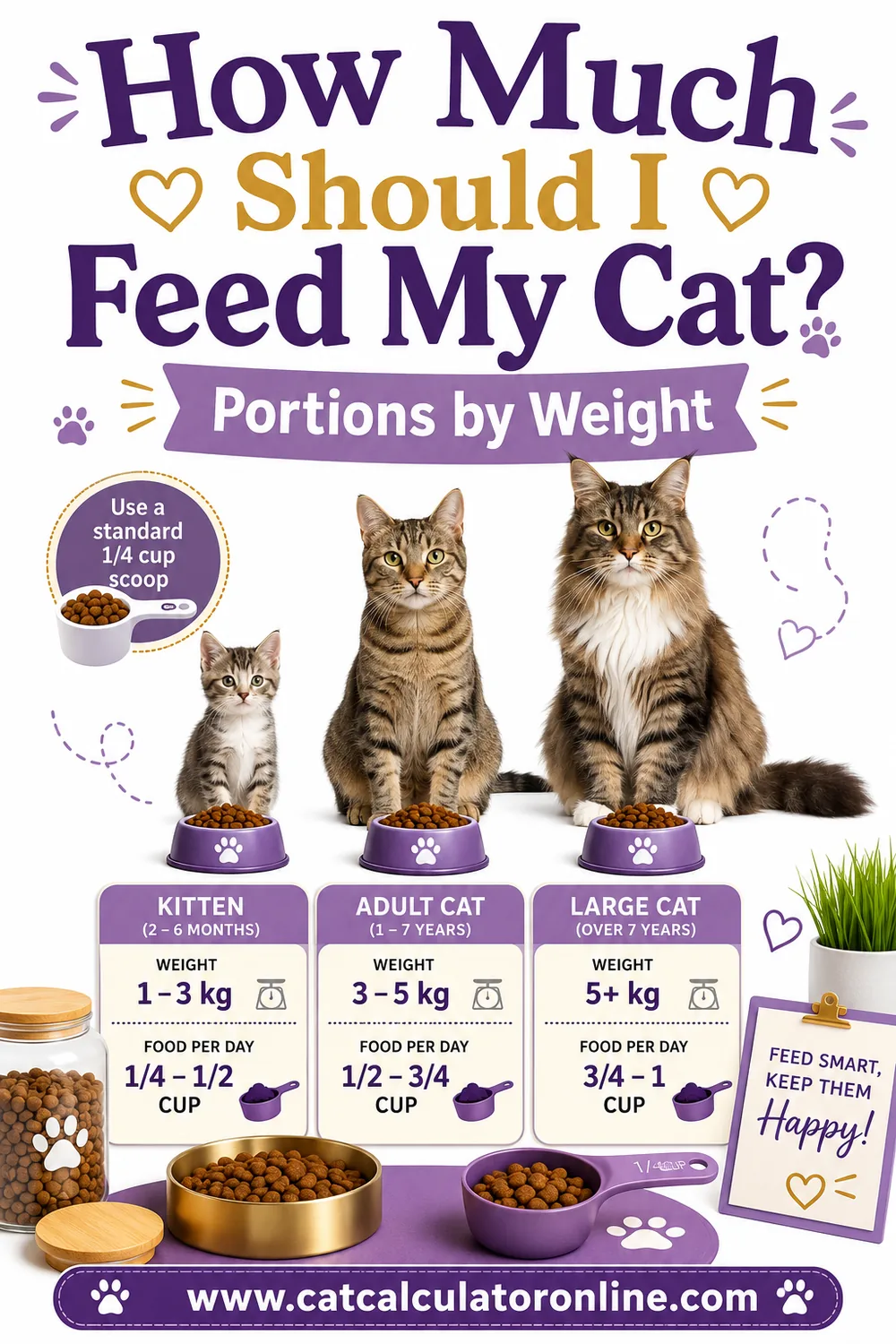
These are rough starting figures — actual needs vary with age, activity, neuter status and body condition. Run your cat's numbers through the cat food calculator for a proper daily target, then read how much should I feed my cat to divide it into meals.
Notice how small the numbers are. That "tiny piece" of cheese is much bigger relative to a cat than it feels in your hand.
Cats who should get no cheese at all
- Cats with a known dairy sensitivity (loose stools after any dairy)
- Cats with pancreatitis or a history of it — fat is the trigger
- Overweight cats, or any cat on a weight-loss plan
- Cats with heart or kidney disease, because of the sodium
- Kittens under about 12 months, who need every calorie to come from growth food
- Any cat on a prescription or elimination diet
Please Don't Use Cheese to Hide Pills
This is the most common reason people offer cats cheese, and it's one of the weakest tricks in the book.
Cats aren't dogs. They rarely swallow food whole — they chew, they taste, and a cat who detects a bitter pill inside a lump of cheese will spit it out, foam at the mouth, and become permanently suspicious of both cheese and you. Some medications also shouldn't be given with dairy at all, because calcium can interfere with absorption of certain antibiotics.
Better options:
- Vet-approved pill pockets made for cats — soft, mouldable, designed to be swallowed
- A pill dispenser or piller if your cat tolerates handling
- Ask your vet about a liquid or transdermal version — many common cat medications come in flavored liquid or gel form
- Ask about compounding — a pharmacy can often turn a tablet into a chicken-flavored liquid
Whatever you do, check with your vet before crushing or splitting any tablet. Some are coated or time-released and must be given whole.
Better Treats Than Cheese
If the goal is a small, high-value reward your cat will actually love, cheese is a mediocre choice. Cats are obligate carnivores. They're wired for meat, not dairy.
Try these instead:
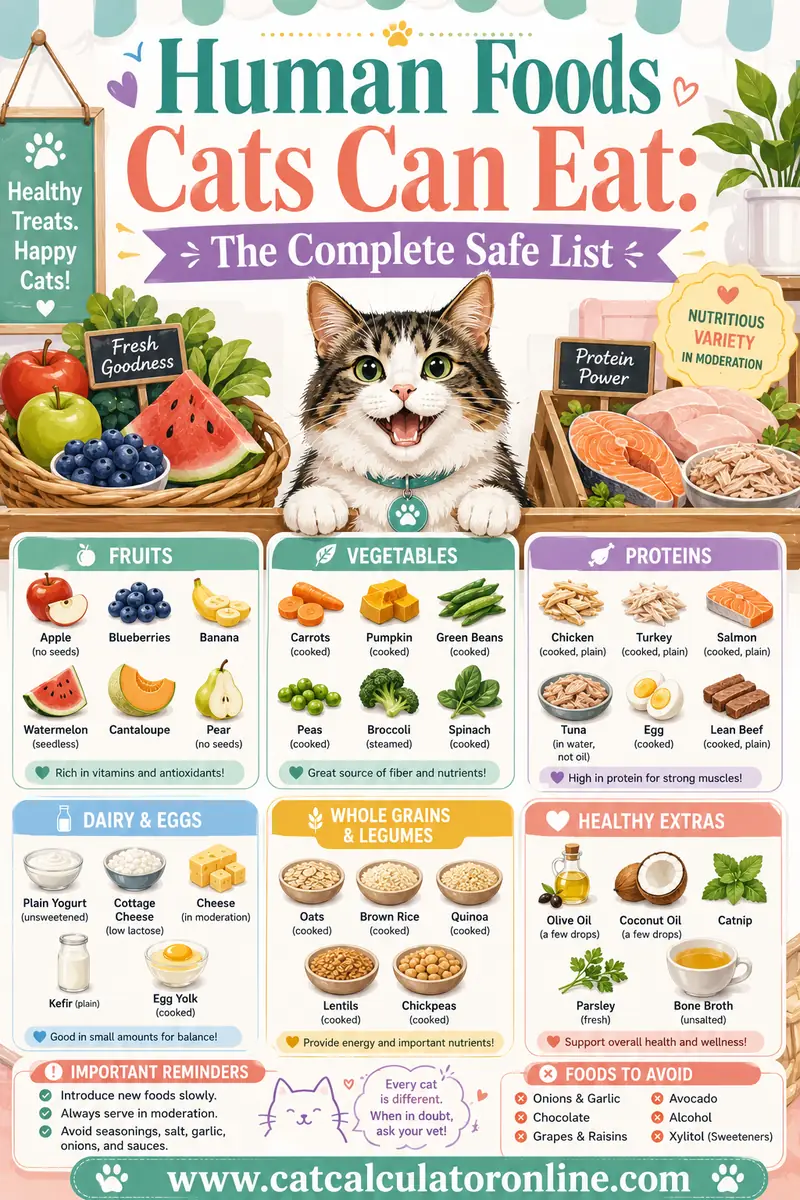
- Plain cooked chicken — boneless, skinless, unseasoned. Highly digestible and genuinely appealing to almost every cat.
- Plain cooked turkey — same rules, same appeal.
- A flake of plain cooked white fish or salmon — occasional, not daily.
- A small piece of plain scrambled or boiled egg — good protein, never raw.
- Freeze-dried meat treats — single-ingredient, portion-controlled, no lactose.
- A spoonful of the water from a can of plain tuna — a few licks, and it adds hydration.
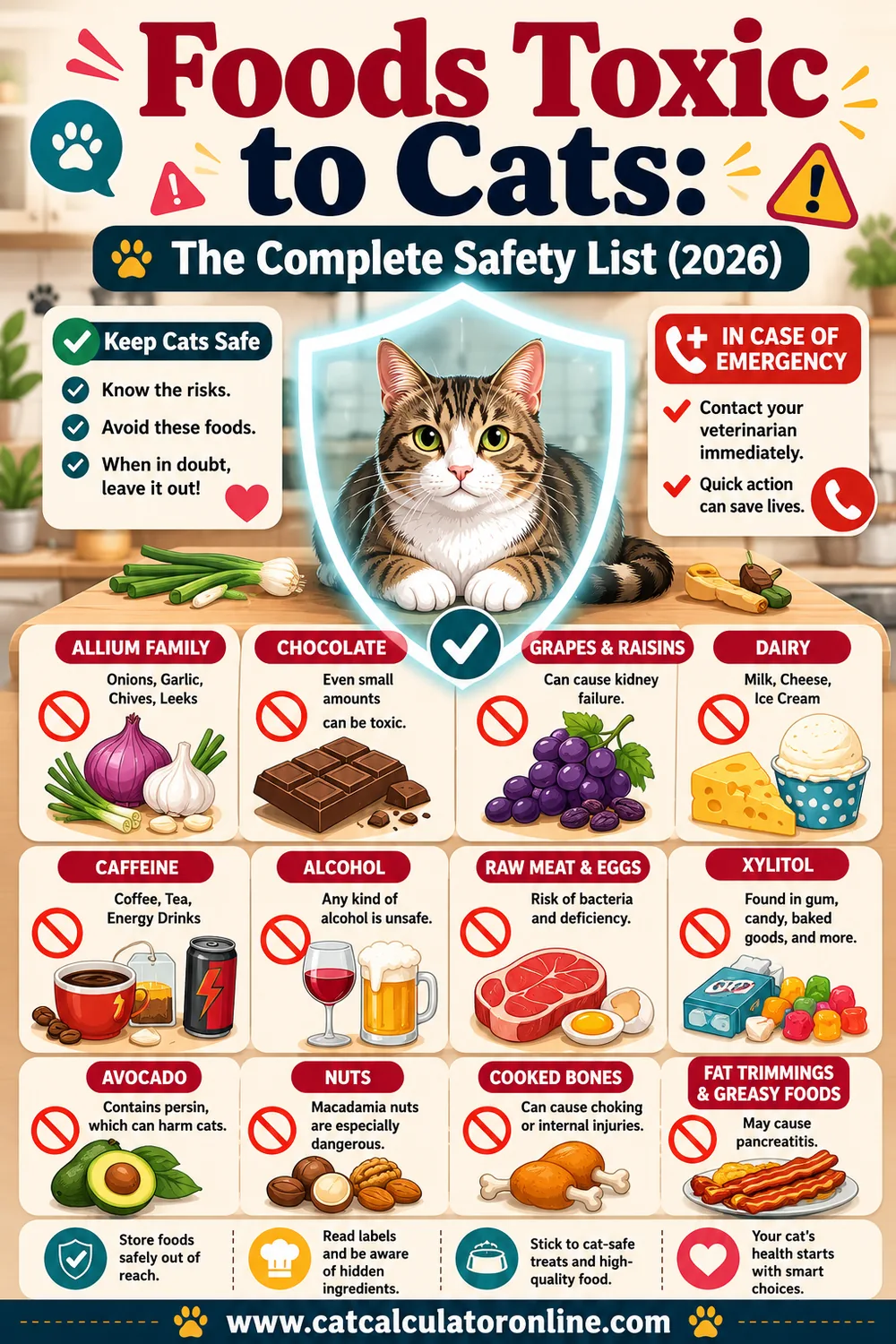
Always avoid anything seasoned. Onion and garlic are toxic to cats even in powder form, which rules out most leftovers straight off your plate. The full rundown is in our guide to foods toxic to cats, and a wider list of what is allowed sits in human foods cats can eat.
What to Do If Your Cat Ate a Lot of Cheese
A stolen corner of cheddar from the counter isn't an emergency. Here's the sensible order of operations:
- Work out what kind and roughly how much. Blue cheese changes the answer entirely — call your vet straight away in that case.
- Make sure fresh water is available. Diarrhea causes fluid loss.
- Skip the next treat, not the next meal. Don't fast a cat; cats shouldn't go without food.
- Watch for 24 hours. Mild gas or one soft stool usually settles on its own.
- Call your vet if vomiting repeats, diarrhea lasts more than a day, your cat stops eating, seems painful in the belly, or becomes lethargic.
Repeated vomiting plus a very high-fat snack can point toward pancreatitis, which needs veterinary care. Don't give any human medication to a cat — many are toxic. Our guide to signs your cat is sick covers the subtler symptoms worth taking seriously.
FAQ
Can cats eat cheese safely?
Cheese isn't toxic to cats, but most adult cats are lactose intolerant and can get gas, vomiting or diarrhea from dairy. A pea-sized piece of hard aged cheese like cheddar is usually tolerated by a healthy adult cat, though it provides no nutritional benefit and adds fat and salt.
What kind of cheese is safest for cats?
Hard, aged cheeses such as parmesan, aged cheddar, Swiss and Gouda contain the least lactose, so they're least likely to upset a cat's stomach. Soft fresh cheeses like cream cheese, ricotta, cottage cheese and fresh mozzarella have more lactose and are more likely to cause problems.
Is blue cheese dangerous for cats?
Yes. The mold used to make blue cheese can produce roquefortine C, a compound toxic to pets that may cause vomiting, tremors or seizures. Never give blue cheese to a cat, and call your vet if some was eaten.
How much cheese can a cat have?
Treats of any kind should stay under 10% of daily calories, which for a typical 10-pound cat is roughly 20 calories — smaller than a 1/4-inch cube of cheddar. The remaining 90% should be complete, balanced cat food.
Can I use cheese to give my cat a pill?
It's a poor method for most cats. Cats chew rather than gulp, so they usually detect and reject the pill, and dairy can interfere with the absorption of some antibiotics. A vet-approved pill pocket, a piller, or a liquid or transdermal version of the medication works far better.
Can kittens eat cheese?
Kittens should stick to kitten food and, if they're still nursing, their mother's milk or a proper kitten milk replacer. Their calorie needs are high and every bite matters for growth, so cheese and other human foods just displace nutrition they actually need.
The Bottom Line
Cheese sits in the "not toxic, not necessary" category. Most cats can't digest lactose well, cheese is dense in fat and salt, and blue cheese is genuinely dangerous. If your cat adores it and tolerates it, a crumb of hard cheese now and then won't hurt — just count it against the 10% treat budget.
For a treat your cat will love more and digest better, plain cooked chicken wins every time. And to know exactly how much food your cat should be eating in a day, run the numbers through our free cat food calculator.