Cat Breeds That Live the Longest (And Why Lifestyle Matters More)
Siamese and Burmese cats are the classic long-lived breeds — both frequently reach their late teens and sometimes pass 20. Russian Blues, Ragdolls, Savannahs, Bombays, Balinese and ordinary domestic shorthairs also do very well. But here's the part most breed lists skip: whether your cat lives indoors, stays at a healthy weight, and sees a vet regularly matters far more than her pedigree.
Curious how your own cat's years stack up? Our free cat age calculator converts her age into human years and shows her life stage, which is a more useful reference point than any breed average.
🐱 Breed longevity lookup
Tap a breed to see its typical lifespan:
Tap a breed above to see its typical lifespan.
The Longest-Living Cat Breeds
Breed lifespan figures are averages drawn from breeder records, veterinary data and owner surveys, so treat them as ranges rather than promises. With that caveat, here's how the well-known long-lived breeds compare.
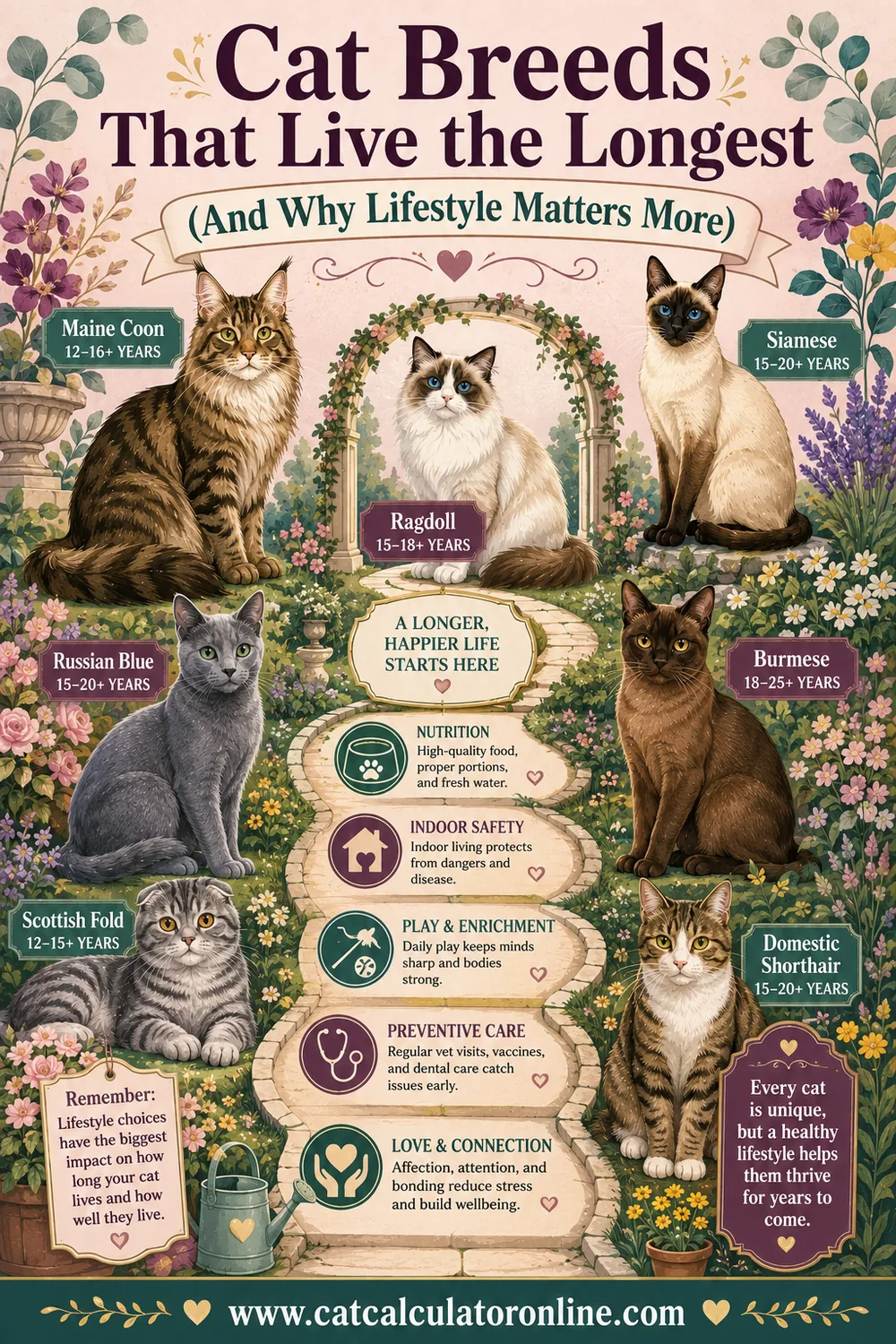
| Breed | Typical lifespan | Worth knowing |
|---|---|---|
| Burmese | 16–18 years, often 20+ | Frequently cited as the longest-lived pedigree breed |
| Siamese | 15–20 years, some 20+ | The classic long-lived cat; vocal, social, very people-oriented |
| Balinese | 15–20 years | Long-haired Siamese variant; shares the same longevity |
| Russian Blue | 15–20 years | Notably healthy breed with few inherited issues |
| Bombay | 15–20 years | Sturdy build, generally robust health |
| Savannah | 15–20 years | Hybrid heritage; active, needs a lot of stimulation |
| Ragdoll | 15–18 years | Long-lived but carries HCM risk — screening matters |
| Domestic shorthair / mixed | 13–17 years, many reach 20 | Genetic diversity is a real advantage |
| Maine Coon | 12–15 years | Large and slow-maturing; HCM risk in the breed |
| Persian | 12–15 years | PKD and flat-face breathing issues shorten some lives |
Two things jump out of that table. First, the top of the list is dominated by Asian-origin breeds with lean builds and long histories. Second, the ordinary mixed-breed cat sits right in the middle of the pack — not behind the pedigrees.
Why Siamese and Burmese Top the List
Both breeds share a few traits that seem to correlate with long life:
- Lean, athletic builds. Neither breed tends toward heaviness, and obesity is one of the strongest negative predictors of feline lifespan.
- Long, well-documented breed histories. Both have been bred for a very long time with reasonably large gene pools, which reduces the concentration of inherited problems.
- Highly social temperaments. Siamese and Burmese cats are famously attached to their people, which tends to mean they live indoors, get more attention, and have subtle changes noticed sooner.
That last point is underrated. A cat who follows you room to room is a cat whose owner notices when she stops. Given that cats hide illness by instinct, an owner who's watching closely is a genuine longevity advantage.
There's a caveat with Siamese in particular. The breed does have some documented inherited conditions in certain lines, and very old show-type breeding produced some extreme head shapes that aren't ideal. Modern Siamese from careful breeders are generally robust, but "Siamese" covers a lot of ground — ask about the specific line rather than assuming the breed name guarantees the average.
What about Persians, Maine Coons and the big personalities?
Some of the most popular breeds sit lower on the longevity table, and it's usually for structural reasons rather than bad luck. Maine Coons are enormous and slow to mature — they keep growing until three or four years old — and large body size tends to correlate with slightly shorter lifespans across many species. Persians carry the double burden of an inherited kidney condition and a face shape that makes breathing harder.
Neither breed is a bad choice. A Maine Coon at 14 has had a full life. It just means going in with realistic expectations and a vet who knows what to watch for.
Why Mixed-Breed Cats Do So Well
If you have a plain tabby from a shelter, you have not drawn a short straw. Domestic shorthairs and longhairs average 13–17 years, and indoor ones routinely reach 20.
The reason is genetic diversity. Pedigree breeds are, by definition, bred from a limited pool to keep specific traits consistent. That consistency can also concentrate harmful genes. Mixed-breed cats draw from a much wider pool, so a single bad variant is far less likely to end up doubled.
This isn't a knock on pedigree cats — plenty live long, healthy lives. It just means "purebred" is not a synonym for "healthier," and anyone shopping for a long-lived cat shouldn't assume a price tag buys extra years.
There's a second, quieter advantage too. Mixed-breed cats tend to have moderate body proportions — normal-length muzzles, normal-sized frames, normal coat lengths. A lot of breed-linked health problems trace back to selecting hard for an extreme, and the average tabby has been selected for nothing at all. That turns out to be a reasonable design.
Worth saying clearly: if you adopt a shelter cat of unknown parentage, you haven't compromised on longevity. You've picked from the middle of the pack with a genuinely good shot at 20.
Breed-Linked Health Risks Worth Knowing
Some breeds carry documented inherited risks. Knowing about them isn't a reason to avoid the breed — it's a reason to screen, and to talk to your vet early.
Hypertrophic cardiomyopathy (HCM)
Maine Coons and Ragdolls both have a recognized association with HCM, a heart condition where the heart muscle thickens. Genetic tests exist for specific variants in these breeds, and responsible breeders screen their lines. If you have either breed, mention it to your vet — heart monitoring may be recommended.
Polycystic kidney disease (PKD)
Persians and Persian-derived breeds have a well-documented association with PKD, an inherited condition affecting the kidneys. Screening programs have reduced its frequency, but it's still worth asking a breeder about.
Flat-faced breathing problems
Persians and other brachycephalic (flat-faced) cats can have breathing difficulty, tear duct problems and dental crowding as a direct consequence of face shape. The more extreme the muzzle flattening, the more likely the issues.
What to do with this information
Nothing dramatic. If your cat belongs to a breed with a known risk:
- Tell your vet the breed at the first visit.
- Ask whether any breed-specific screening is worth doing.
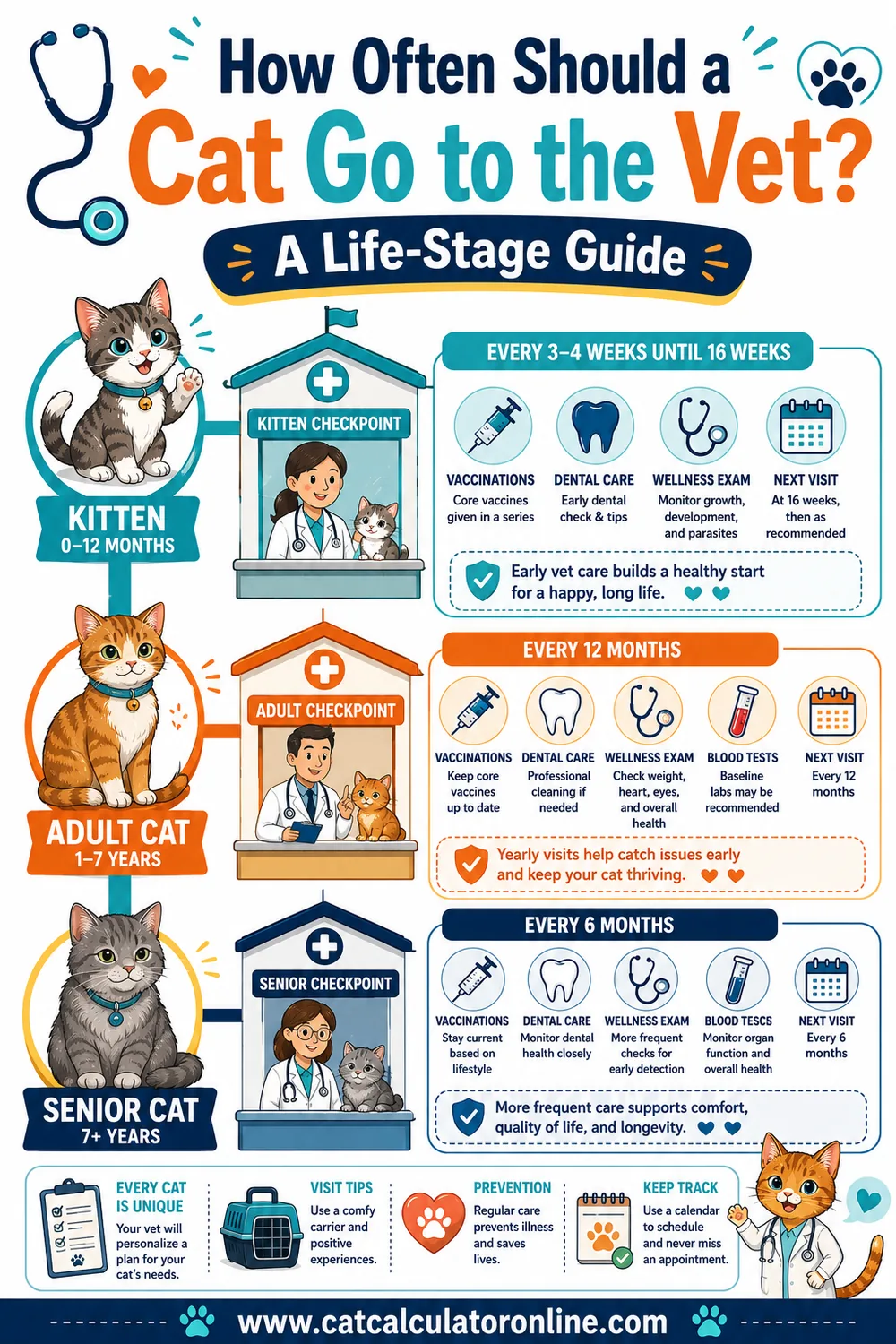
- Keep to the regular checkup schedule — see how often should a cat go to the vet.
- If you're buying from a breeder, ask what health testing they do. A good breeder will have answers ready.
Lifestyle Beats Breed — By a Lot
Here's the number that puts every breed chart in perspective:
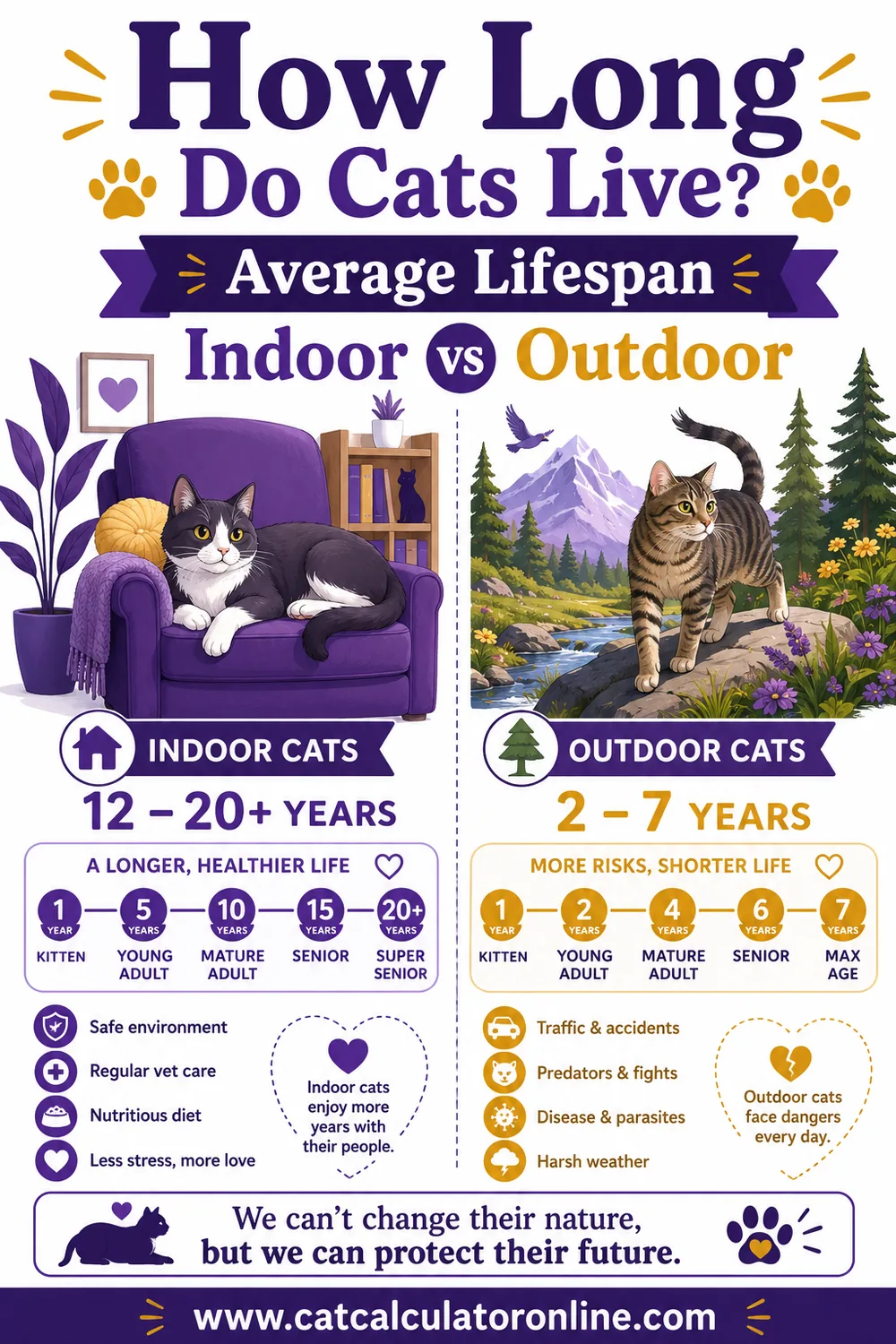
Indoor cats average 13–17 years. Outdoor cats average 2–5.
That's not a small difference. It dwarfs the gap between the longest- and shortest-lived breeds on this page. A Burmese who roams outside is statistically far worse off than a mixed-breed tabby who stays in.
| Factor | Effect on lifespan |
|---|---|
| Indoor vs. outdoor living | Enormous — the single biggest lever |
| Healthy weight | Very large; obesity is a major, preventable risk |
| Regular vet care | Large; early detection changes outcomes |
| Spay / neuter | Meaningful; reduces several cancer and infection risks |
| Dental care | Meaningful over a lifetime |
| Breed | Real but modest compared to the above |
If you want more years with your cat, the levers are all in your hands. See how long do indoor cats live for the full comparison.
The Oldest Cat Ever Recorded
The verified record holder is Creme Puff, who lived to 38 years. That's more than double the average indoor lifespan and roughly the human equivalent of 168.
Creme Puff was a mixed-breed cat. Not a Siamese, not a Burmese — just an ordinary cat with, presumably, extraordinary genes and very good care. Which is a reasonable summary of this entire article.
Records like that are outliers and shouldn't set expectations. But they do make the point that no breed has a monopoly on long life.
For context on what a really long feline life looks like in human terms: a cat's first year is worth about 15 human years, the second adds roughly 9 more, and every year after that adds about 4. That puts a 20-year-old cat at around 96 — genuinely remarkable, and reached far more often than most owners expect. Our cat age calculator will run the numbers for any age you give it.
How to Give Any Cat Her Best Shot
Whatever breed you have, the same short list applies:
- Keep her indoors, or supervise outdoor time with a catio or harness. This is the biggest single decision.
- Keep her at a healthy weight. If you can't easily feel her ribs, talk to your vet. Our cat ideal weight calculator gives a target range, and how much should I feed my cat covers portions.
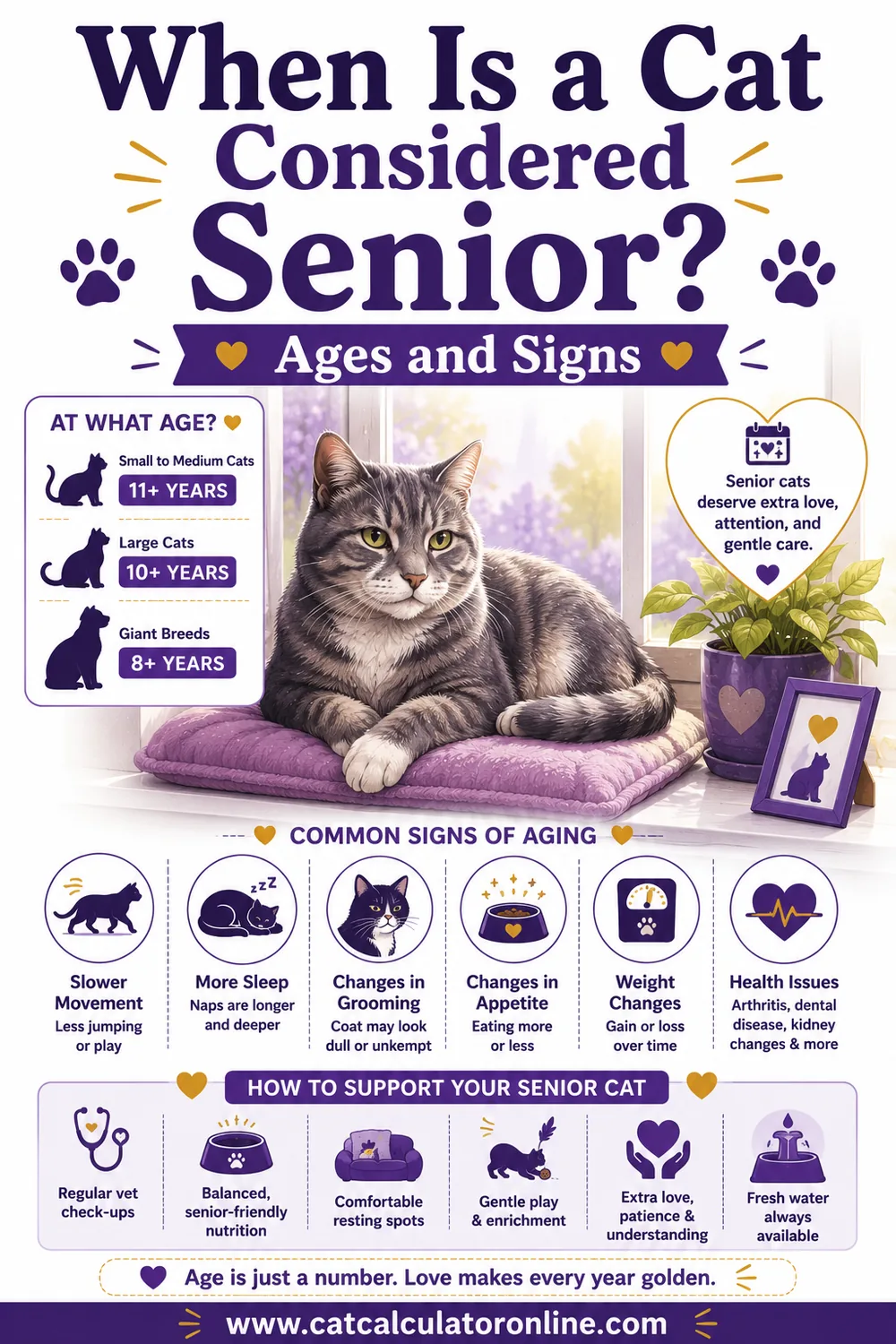
- Stick to the vet schedule. Yearly through young adulthood, every six months once she's 10+.
- Don't neglect teeth. Dental disease is common, painful, and easy to miss.
- Provide enrichment. Vertical space, play, puzzle feeders. A bored indoor cat overeats.
- Know what "off" looks like. Learn the early warning signs in signs your cat is sick, and call your vet when you see them.
None of these are exotic. Together they're worth more than any pedigree.
What Breed Longevity Numbers Don't Tell You
A few honest caveats about breed lifespan data:
- The data is uneven. There's no central registry of cat lifespans. Figures come from breed clubs, insurance records and surveys, all of which have their own biases.
- Averages hide huge spread. A breed averaging 15 years will have individuals who reach 22 and individuals who don't reach 10.
- Breeding lines differ. Two Ragdolls from different breeders can carry very different health risks depending on how carefully each line was screened.
- Owner behavior is baked into the numbers. Breeds that attract dedicated, indoor-keeping owners will look longer-lived partly because of how they're kept, not just their genes.
Use breed figures as loose context, then focus on the cat actually in front of you.
FAQ
What is the longest living cat breed?
Burmese and Siamese are the two most consistently cited. Both frequently reach their late teens and it's not unusual for individuals to pass 20. Russian Blues, Balinese, Bombays and Savannahs also rank high.
Do mixed-breed cats live longer than purebreds?
Often, yes. Mixed breeds average 13–17 years and benefit from wider genetic diversity, which reduces the odds of inheriting a concentrated genetic problem. Several pedigree breeds still match or beat that range.
Which cat breeds have the shortest lifespans?
Breeds with known inherited conditions tend to sit lower — Persians (PKD and flat-face breathing issues) and some large breeds like the Maine Coon (HCM risk) commonly average 12–15 years rather than 15–20.
Does breed matter more than whether a cat lives indoors?
No, not close. Indoor cats average 13–17 years and outdoor cats average 2–5. That gap is much larger than any difference between breeds.
How old was the oldest cat ever?
Creme Puff, at 38 years — the verified record. She was a mixed-breed cat, not a pedigree.
Can I make my cat live longer?
You can meaningfully improve her odds: keep her indoors, keep her at a healthy weight, stay on the vet schedule, look after her teeth, and act quickly when something seems off. Those factors matter more than genetics for most cats.
The Bottom Line
Siamese and Burmese lead the breed longevity lists, with Russian Blues, Balinese, Bombays, Savannahs and Ragdolls close behind — and ordinary mixed-breed cats holding their own thanks to genetic diversity. But breed is a minor factor next to the big three: indoor living, healthy weight, and regular vet care.
See where your cat is on her own timeline with our free cat age calculator, then read how long do cats live for the full lifespan picture and when is a cat considered senior to know when her care should shift.