How Long Do Indoor Cats Live? (And How to Add Good Years)
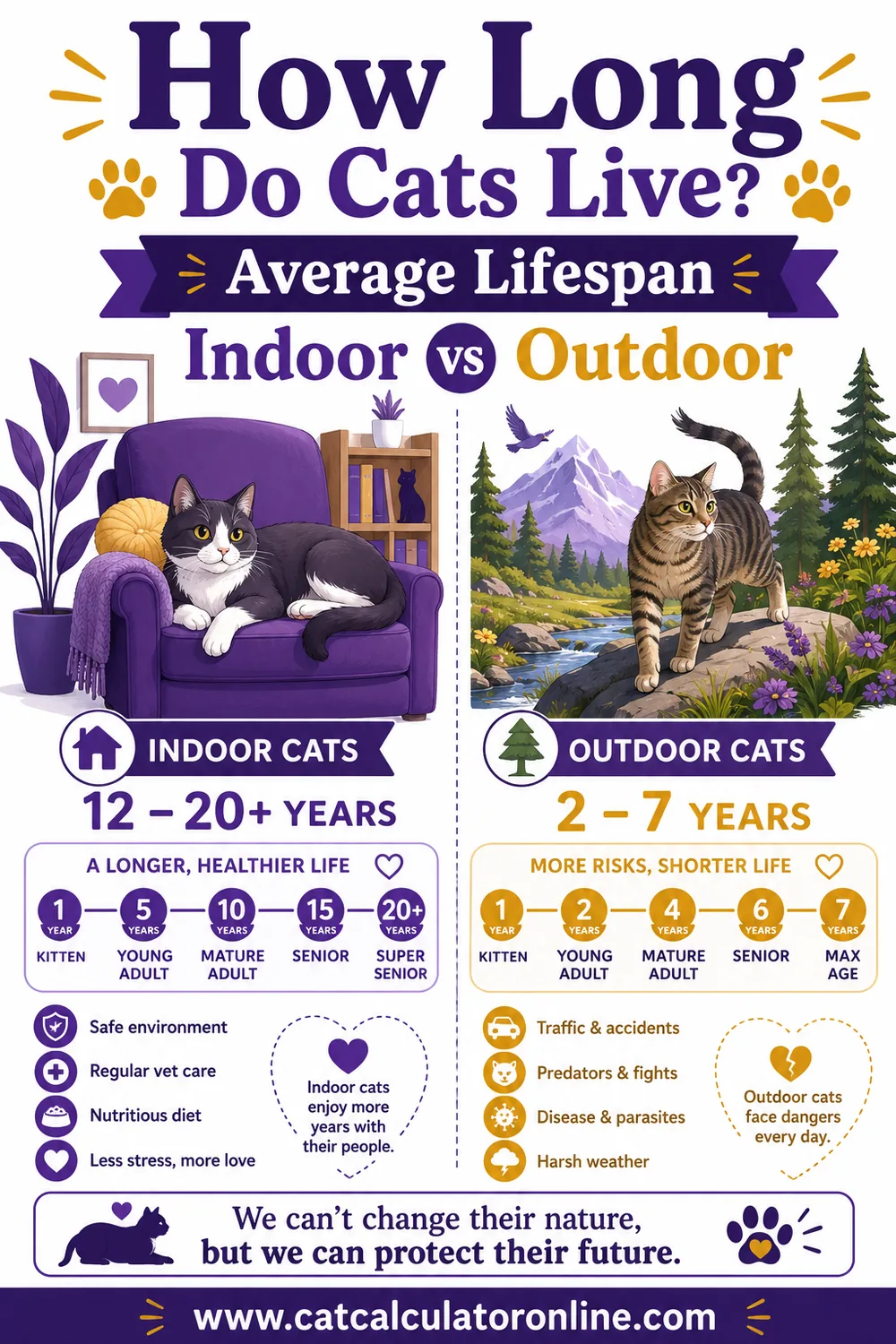
Indoor cats live about 13 to 17 years on average, and many reach 20 or beyond with good care. That's roughly two to three times longer than cats who live outdoors, who average just 2 to 5 years. The single biggest thing you can do to protect your cat's lifespan is simply keeping them inside — everything else builds on that head start.
Curious how old your indoor cat is in human years right now? Our free cat age calculator does the math in one tap. If you want to understand why indoor cats live so much longer — and the everyday habits that push a cat toward the high end of that range — keep reading.

🐱 Indoor cat age → human years
Tap an age to see roughly how old your indoor cat is in human years:
Tap an age above to see the human-year equivalent.
The Short Answer: 13–17 Years, Often More
Most healthy indoor cats live somewhere between 13 and 17 years. Plenty sail past that. Reaching 18, 19, or 20 is common enough that no vet is surprised by it, and the verified oldest cat on record — a Texas cat named Creme Puff — lived an astonishing 38 years.
Compare that with cats who live outdoors full-time, who average only 2 to 5 years. That gap isn't small. It's one of the widest lifestyle-driven lifespan differences you'll find in any pet.
Here's the range at a glance:
| Lifestyle | Average lifespan | Typical high end |
|---|---|---|
| Indoor only | 13–17 years | 20+ years |
| Indoor/outdoor mix | 10–13 years | 17 years |
| Outdoor only | 2–5 years | 8–10 years |
The takeaway is blunt but true: where your cat spends its days matters more than almost anything else.
Why Indoor Cats Live So Much Longer
An indoor cat isn't genetically different from an outdoor one. The difference is exposure. Living inside removes a long list of the things that cut feline lives short.
Fewer accidents
Cars are the leading killer of outdoor cats. A cat can be the most street-smart animal on the block and still lose to a quiet driver at dusk. Falls, getting trapped in sheds or engines, and other everyday hazards add up too. Indoors, those risks nearly vanish.
Fewer fights and injuries
Outdoor cats defend territory. Bite wounds and scratches from other cats abscess easily and spread infections. Indoor cats — especially in single-cat homes — simply don't get into those brawls.
Fewer diseases
Two of the most serious feline viruses, FeLV (feline leukemia) and FIV (feline immunodeficiency virus), spread mainly through bites and close contact with infected cats. Keeping a cat inside dramatically lowers exposure. Indoor cats also pick up fewer parasites and are less likely to encounter poisons, antifreeze, or toxic plants.
No predators
Depending on where you live, outdoor cats face coyotes, dogs, birds of prey, and other predators. Indoors, that threat is off the table entirely.
Easier to monitor
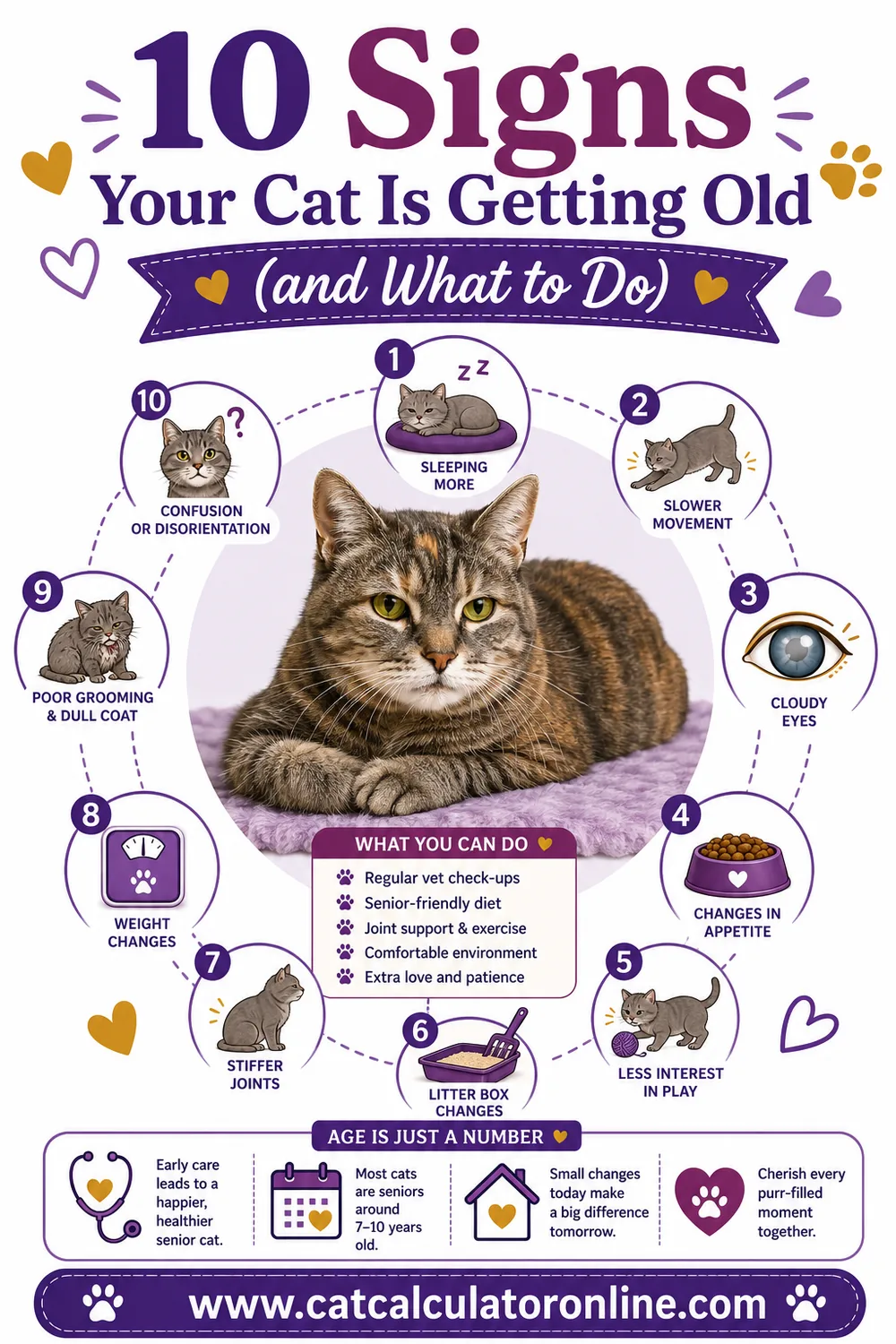
When your cat lives with you, you notice things: a dip in appetite, a limp, a change in litter-box habits, weight creeping up or dropping off. Early noticing means early vet visits, and early treatment is where a lot of good years are quietly saved. If you want a sense of what to watch for as your cat ages, our guide on signs your cat is getting old walks through the subtle stuff.
How to Help Your Indoor Cat Reach the High End
Staying inside gives your cat the long-life head start. These habits help cash it in.
1. Keep them at a healthy weight
Obesity is the most common preventable health problem in indoor cats, and it feeds directly into diabetes, joint disease, and a shorter life. Indoor cats burn fewer calories than they think they need, so free-feeding a full bowl all day often leads to a chunky cat.
You should be able to feel your cat's ribs with a light touch and see a slight waist from above. If you can't, talk to your vet about portions. Not sure how much to put in the bowl? Measure meals instead of eyeballing them.
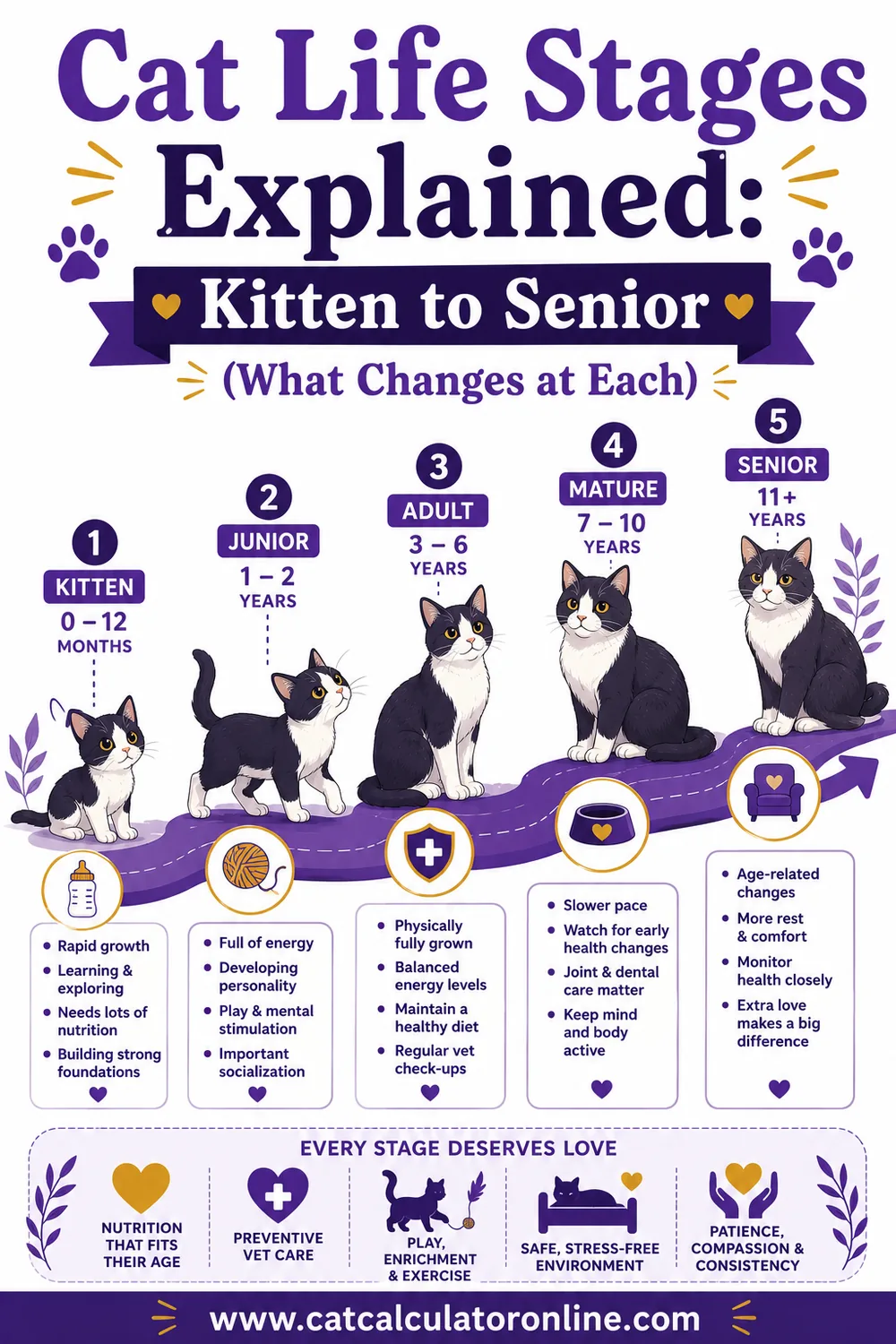
2. Feed for the life stage
A kitten, a five-year-old, and a fifteen-year-old have very different nutritional needs. Feed a complete, age-appropriate food, keep fresh water available, and don't overdo treats — they should stay under about 10% of daily calories. Ask your vet before any big diet change.
3. Don't skip vet visits
Cats hide illness well; it's a survival instinct. That's exactly why routine checkups matter, even when your cat seems perfectly fine.
| Life stage | Suggested vet visit frequency |
|---|---|
| Kitten (0–1 yr) | Series of visits for vaccines/checks |
| Young adult (1–6 yr) | Once a year |
| Mature adult (7–10 yr) | Once a year, sometimes twice |
| Senior (10+ yr) | Every 6 months |
Twice-yearly visits for older cats catch kidney disease, thyroid issues, and dental problems early — the conditions that most often shape how a senior cat's final years go.
4. Stay on top of dental care
Dental disease is common and painful, and it's linked to problems elsewhere in the body. Brushing (yes, some cats tolerate it), dental treats, and professional cleanings when your vet recommends them all help.
5. Enrich the indoor world
The one real downside of indoor life is boredom, which can lead to stress, overeating, and inactivity. Give your cat things to do:
- Vertical space — cat trees, shelves, window perches. Cats love to climb and survey.
- Play — a couple of short daily sessions with a wand toy keeps muscles and minds working.
- Scratching posts — natural, healthy behavior that also keeps claws in shape.
- Puzzle feeders — make your cat "hunt" for kibble to slow eating and add mental work.
- A window view — bird feeders outside a favorite window are cat television.
A busy, engaged indoor cat is a leaner, calmer, longer-lived one.
6. Spay or neuter
Beyond preventing litters, spaying and neutering lowers the risk of certain cancers and reproductive diseases, and tends to reduce roaming urges and stress — all of which nudge lifespan in the right direction.
Do Indoor Cats Get Bored or Unhappy?
They can, but it's fixable. A bare apartment with no toys and no attention is a dull place for a curious animal. The solution isn't to send them outside into danger — it's to make inside interesting. Vertical perches, daily play, rotating toys, and a bit of your time cover most of it. Some owners add a secure catio (an enclosed outdoor patio) or leash-train their cat for supervised time outside, getting the enrichment without the risks.
Does Breed Affect How Long Indoor Cats Live?
A little, but far less than lifestyle. Most cats — mixed-breed "domestic shorthairs" included — fall into that same 13–17 year range indoors. Some breeds are known for longevity (Siamese and Burmese often live into their late teens or twenties), while a few large or specialized breeds trend a bit shorter. But breed is a minor factor next to weight, diet, vet care, and — above all — staying indoors. For the bigger lifespan picture across all cats, see how long do cats live.
Can You Move an Outdoor Cat Indoors — and Add Years?
Yes, and it's one of the most meaningful upgrades you can give a cat who's been living outside. The trick is to make the switch gradual so it feels like a gain, not a loss.
- Go room by room. Start your cat in a single calm room with a litter box, food, water, and a cozy hiding spot, then open up the house over days or weeks.
- Replace the outdoors indoors. The things a cat loved outside — climbing, watching, hunting, sunbathing — all have indoor stand-ins: a tall cat tree, a window perch, wand play, and puzzle feeders that let them "catch" their food.
- Add a safe taste of outside. A secure catio, a leash and harness, or a screened porch gives supervised fresh air with none of the traffic-and-predator risk.
- Be patient with the yowling. A cat used to roaming may protest at the door for a while. Redirect with play and stay consistent; most settle within a few weeks.
An older outdoor cat won't magically gain a decade, but pulling them out of the 2–5 year risk zone and into a safe, enriched home genuinely tilts the odds toward a longer, healthier life.
FAQ
How long do indoor cats live on average?
About 13 to 17 years, and many reach 20 or more. That's roughly double or triple the 2–5 year average for outdoor cats.
What's the longest an indoor cat has lived?
The verified record holder, Creme Puff, lived to 38. That's exceptional — but reaching 18 to 20 is genuinely common for well-cared-for indoor cats.
Do indoor cats really live longer than outdoor cats?
Yes, and it's not close. Removing exposure to cars, fights, predators, and contagious diseases is the biggest single lifespan boost a cat owner can provide.
At what age is an indoor cat considered senior?
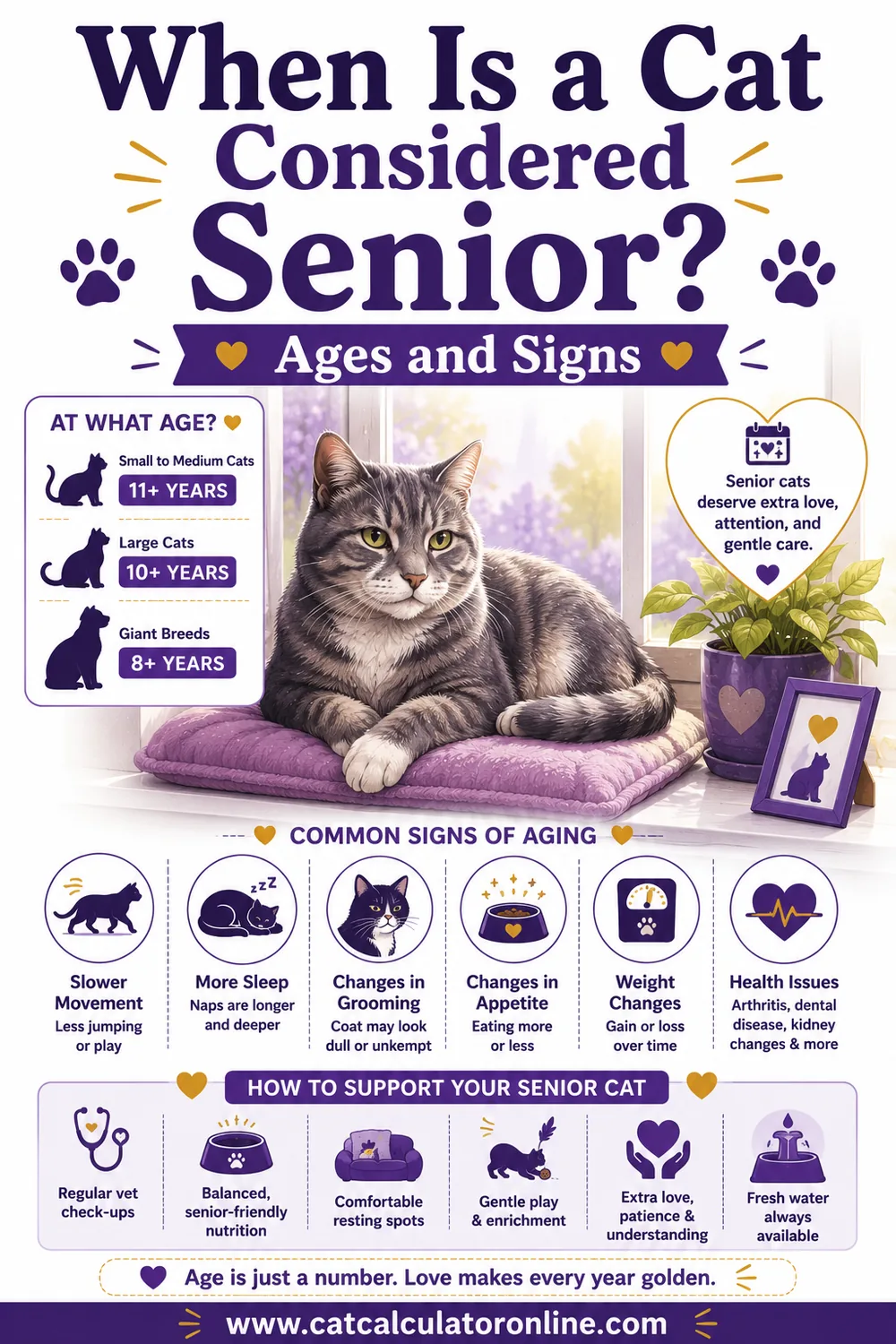
Around 10 years old. Cats aged 7–10 are "mature adults," and 10-plus is "senior." Learn more in our guide on when a cat is considered senior.
Is it cruel to keep a cat indoors?
Not if you enrich their environment. With vertical space, daily play, scratching posts, and a window view, indoor cats live full, safe, contented lives — and much longer ones.
How can I tell if my indoor cat is aging well?
Watch weight, appetite, activity, and litter-box habits, and keep up regular vet visits. Our cat life stages guide covers what's normal at each age.
The Bottom Line
Indoor cats live 13 to 17 years on average, with 20-plus well within reach — two to three times longer than cats who roam outside. Keeping your cat inside is the foundation; a healthy weight, life-stage feeding, regular vet care, dental attention, and an enriched environment stack more good years on top.
Want to know exactly how old your cat is in human years today? Try our free cat age calculator — just enter your cat's age and get the answer in one tap.