Can Cats Eat Vegetables?
A few vegetables are safe for cats, none are necessary, and a small number are genuinely dangerous — and that last group is where the attention belongs. Cooked carrot, green beans, peas, zucchini and plain canned pumpkin are all harmless in small amounts. Onion, garlic, chives and leeks are toxic in every form. In between sits a large group that is simply pointless: your cat is an obligate carnivore, which means she must get certain nutrients from animal tissue because her body cannot make them from plant material. That single fact is why a vegetarian diet is dangerous for a cat in a way it is not for a dog, and it is the most important thing on this page. To work out what she actually needs, use the free cat food calculator.
The Short Answer
Three categories, and everything else follows from knowing which one you are dealing with.
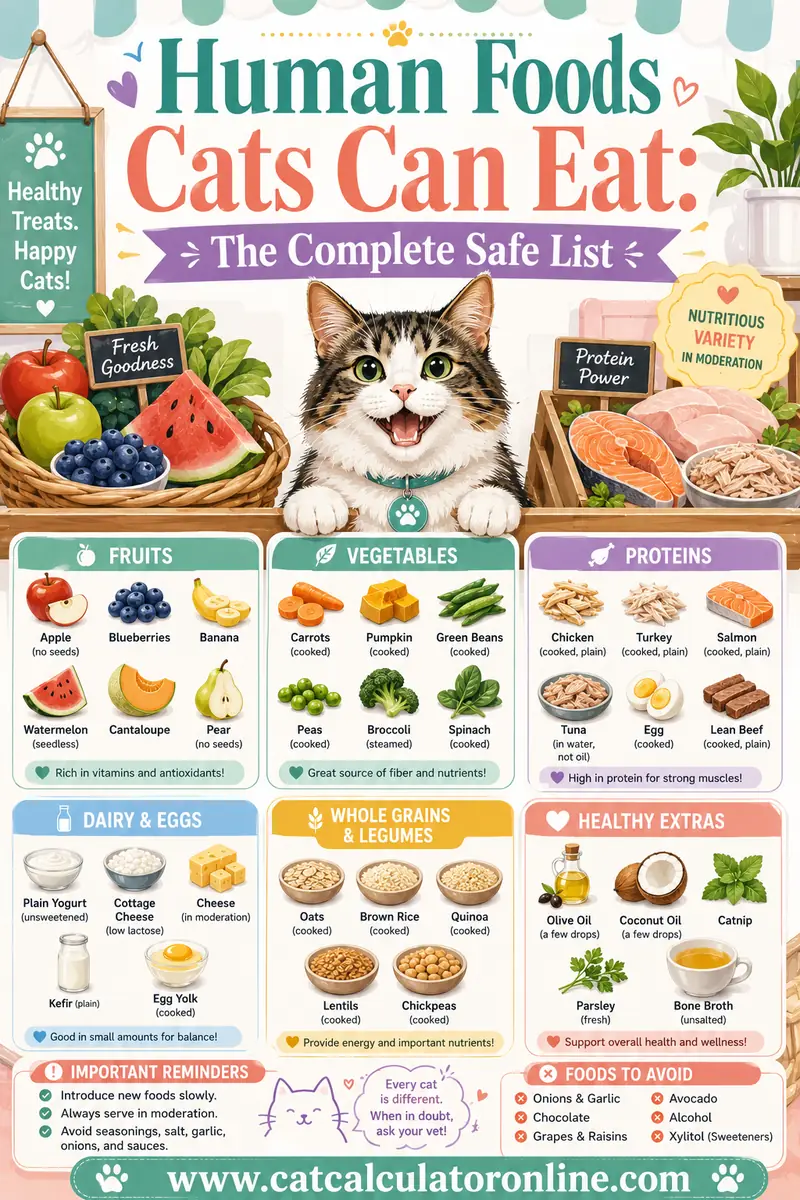
Safe and pointless. Cooked carrot, green beans, peas, zucchini, broccoli, cucumber, sweetcorn, cooked squash and cooked sweet potato. All harmless plain, in small amounts. None supply anything your cat needs.
Safe and occasionally useful. Plain canned pumpkin, essentially. It is the one vegetable that does a real job, and that job is fiber.
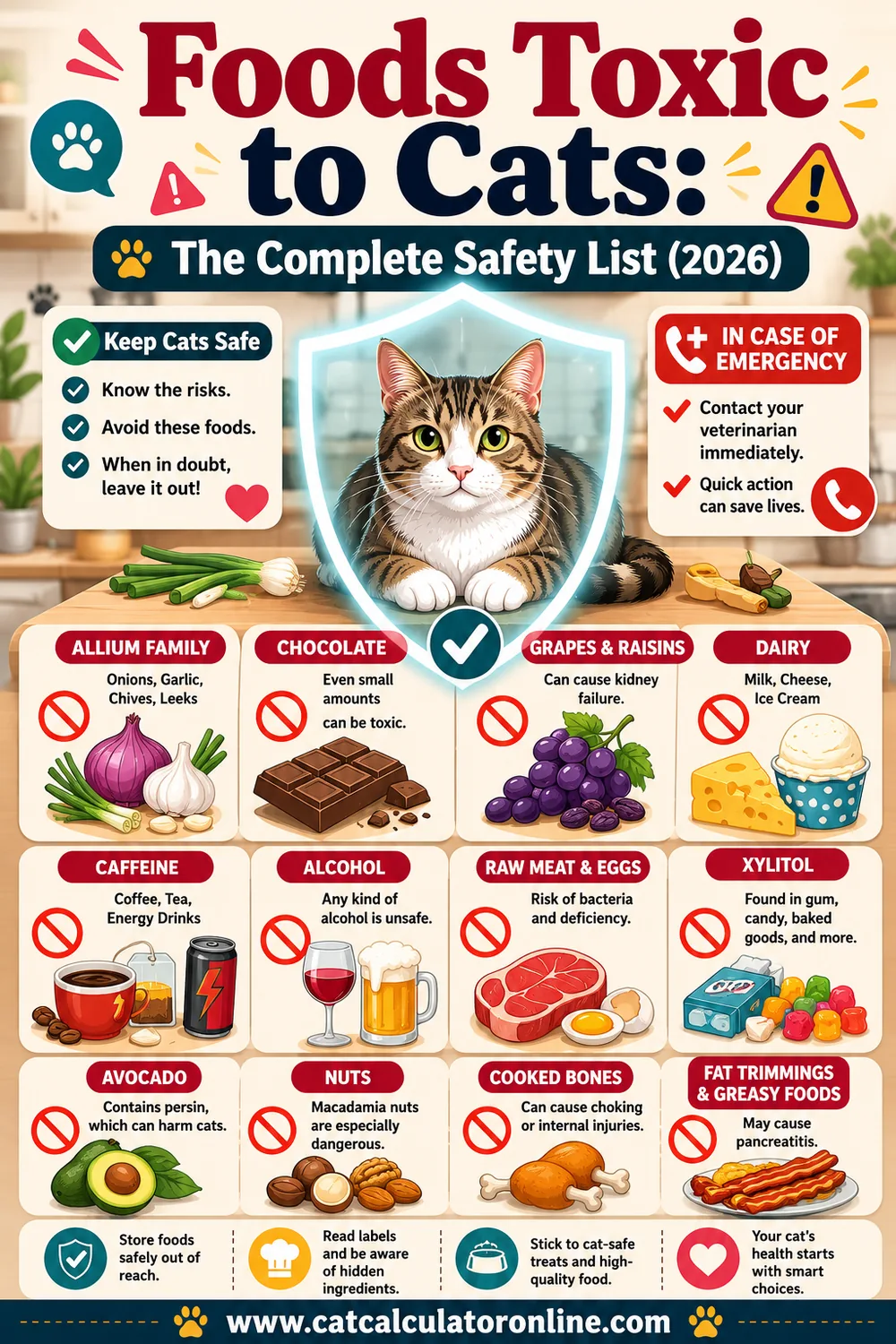
Never. Onion, garlic, chives, leeks, shallots and spring onions. Raw potato and green potato skin. Tomato leaves and stems. Rhubarb leaves. Wild or garden mushrooms. Avocado stone and skin.
Plain and cooked is the rule for everything on the safe list. No butter, oil, salt, seasoning, stock or sauce.
Small means small. A teaspoon is a portion for a cat. Vegetables count against the roughly 10% of daily calories that treats are allowed.
And most cats simply do not want them. Cats have no functional sweet taste receptor and are led by meaty, fatty smells. A cat who ignores your carrot is behaving completely normally.
Why Your Cat Does Not Need Vegetables
This is the mechanism that underpins everything else on the page, and it is worth more than a sentence.
Cats are obligate carnivores. Not "prefer meat" — obligate, meaning several essential nutrients must arrive already formed in animal tissue because feline metabolism cannot manufacture them from plant precursors.
Taurine is the headline one. Dogs and humans can make taurine from other amino acids. Cats make very little, and they lose it continuously in bile. Taurine deficiency causes a weakened, enlarged heart (dilated cardiomyopathy) and degeneration of the retina that can end in blindness.
Arachidonic acid is the second. It is a fatty acid other species build from plant oils. Cats lack enough of the enzyme to do it, so they need it preformed from animal fat.
Preformed vitamin A is the third. Carrots are famous for beta-carotene, and humans convert beta-carotene into vitamin A. Cats cannot do that conversion efficiently. So carrot, for a cat, is not a vitamin A source at all — it is colored fiber.
Vitamin B12 and niacin are likewise supplied far more reliably by animal tissue than by plants.
And her digestive system agrees. Cats produce no salivary amylase, have a shorter gut than omnivores, and run protein metabolism at a constantly high rate they cannot dial down. She is built to eat animals.
None of that makes a green bean harmful. It just means vegetables are decoration, and the calories they occupy would be doing more work as meat. That is also the reasoning behind high protein cat food explained.
The Safe List, With Portions
| Vegetable | How to serve | Portion | Any point? |
|---|---|---|---|
| Plain canned pumpkin | Straight from the tin, 100% pumpkin | 1 tsp | Yes — fiber for mild constipation or hairballs |
| Cooked carrot | Boiled or steamed soft, diced small | 1 tsp | No, but harmless |
| Cooked green beans | Plain, chopped | 2–3 beans | Useful bulk on a weight plan |
| Cooked peas | Plain, mashed slightly | 1 tsp | No |
| Cooked zucchini | Plain, soft, diced | 1 tsp | No |
| Cooked broccoli | Plain florets, soft | 1 small floret | No; can cause wind |
| Cucumber | Raw, peeled, small pieces | A few pieces | No; mostly water |
| Cooked butternut squash | Plain, mashed | 1 tsp | Mild fiber |
| Cooked sweet potato | Plain, mashed, no skin | 1 tsp | Mild fiber; starchy |
| Sweetcorn | Plain kernels, off the cob | A few kernels | No; never the cob |
| Lettuce, spinach (small amounts) | Raw, chopped | A pinch | No; avoid spinach for cats with urinary stones |
| Cat grass, oat or wheat grass | Grown in a pot | Free access | Yes — a safe target for grazing |
Cook everything except cucumber and grass. Cooking softens plant cell walls, which a cat's gut has no efficient way of breaking down, and it removes the choking risk of hard raw chunks.
Chop small. Cats do not chew much. Pieces should be small enough to swallow safely.
Never the corn cob. It is one of the classic causes of intestinal obstruction in pets, and it does not show up on an ordinary x-ray easily.
Introduce one thing at a time, in a tiny amount, and leave 24 hours before offering more. If something disagrees, you will know what it was.
The Vegetables That Are Never Safe
Short list, high stakes.
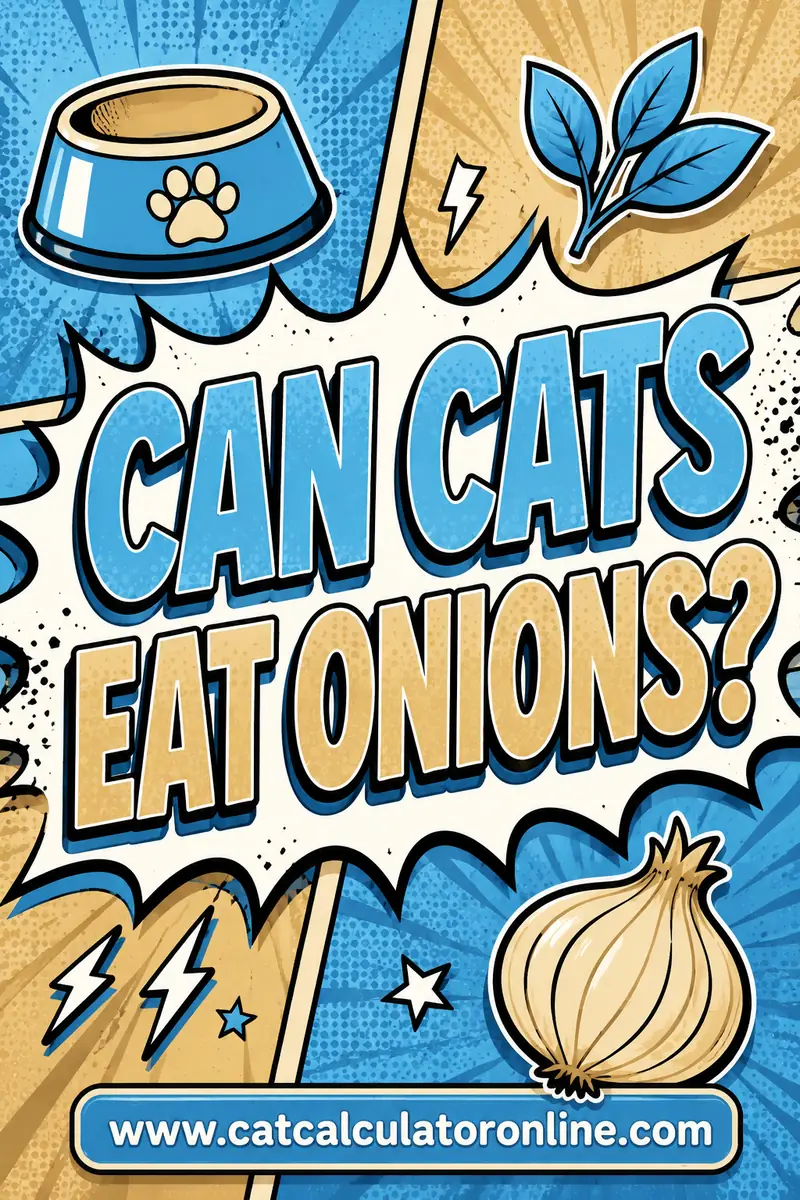
Onion, garlic, chives, leeks, shallots and spring onions. These damage feline red blood cells and can cause anemia. Cooked and powdered forms are more concentrated, not less, which is why stock cubes, gravy, seasoning blends and savory baby food are the commonest real-world route. Signs are delayed by one to five days. The full explanation is in can cats eat onions.
Raw potato and green potato skin. Solanine, the same nightshade compound found in green tomato. Plain cooked white potato flesh is not toxic, just useless.
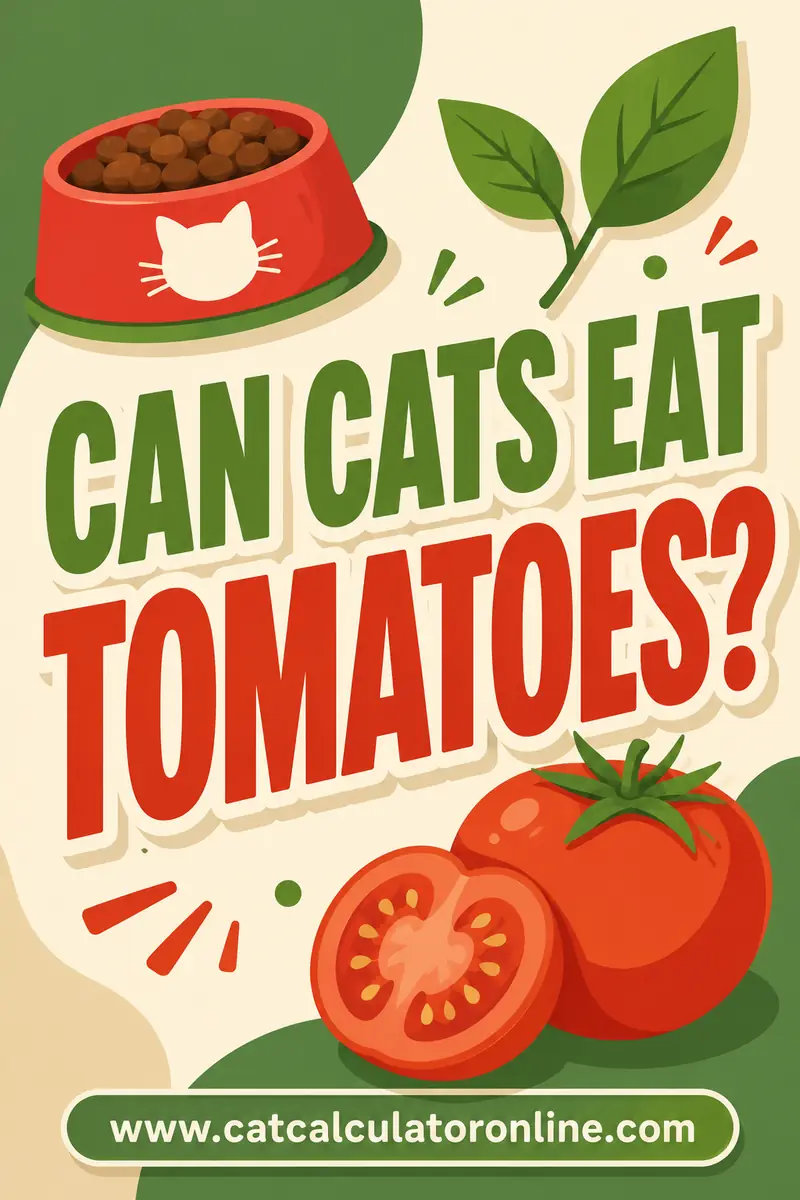
Tomato leaves, stems and unripe fruit. Ripe tomato flesh is not toxic, but the plant is worth keeping away from cats who chew greenery — see can cats eat tomatoes.
Rhubarb leaves. High in oxalates, which bind calcium and can affect the kidneys.
Wild and garden mushrooms. Some species are lethal, identification is difficult, and there is no safe way to guess. Shop-bought plain button mushrooms are not toxic but have no value either.
Avocado. The flesh is low risk in small amounts, but the stone is a choking and obstruction hazard and the plant contains persin.
Anything from a seasoned dish. The vegetable is rarely the problem; the onion, garlic, butter and salt around it usually are. The wider list is in foods toxic to cats.
Where Vegetables Genuinely Help
Three situations where reaching for a vegetable is a reasonable idea rather than a sentimental one.
Mild constipation. A teaspoon of plain canned pumpkin adds soluble fiber that holds water in the stool. It is a well-established home measure, and it is cheap. Use 100% pumpkin, never pumpkin pie filling, which contains sugar and spices.
Hairballs. The same teaspoon of pumpkin can help hair move through rather than come back up. It is not a cure, and a cat bringing up hairballs more than about once a month deserves a vet conversation, because chronic vomiting is often not really about hair.
Weight management. A few plain green beans mixed into a reduced meal add volume without many calories, which can take the edge off a hungry cat on a diet. A proper weight-management food does the job better, because it keeps protein high while cutting calories.
Chewing and grazing. Cats who chew plants are satisfying a real urge. A pot of cat grass, oat grass or wheat grass costs a few dollars and gives them a safe target, which protects your houseplants at the same time.
What vegetables cannot do: replace protein, provide taurine, supply usable vitamin A, or make a home-made diet balanced.
And if constipation is persistent, do not keep managing it with pumpkin. Recurrent constipation in cats has causes worth finding — dehydration, pain, megacolon, kidney disease — and it needs a vet rather than more fiber.
Vegetarian and Vegan Diets: The Serious Part
This is the one section on this page that is not a matter of preference.
A cat cannot be safely fed a vegetarian or vegan diet the way a dog can. Dogs are flexible omnivores. Cats are not, and the difference is biochemical rather than philosophical.
Taurine is the clearest example. Plants contain essentially none. A cat on a plant-based diet without synthetic taurine supplementation develops heart and eye disease — dilated cardiomyopathy and retinal degeneration. Both can progress to irreversible damage.
Arachidonic acid and preformed vitamin A have the same problem: they are not present in plants in a form cats can use.
Some commercial plant-based cat foods add synthetic versions of these nutrients. Whether that fully substitutes for animal tissue over a lifetime is not well established, and independent analyzes have repeatedly found nutrient shortfalls in this category.
Home-made vegetarian cat diets are the highest-risk version by a distance. The failure is silent for months and then arrives as a heart problem.
The deficiencies take time to appear, which is the trap — a cat can look well on an inadequate diet for a long stretch before anything shows.
If your reasons for wanting this are serious, the conversation to have is with a veterinary nutritionist, not with a forum. That is not a brush-off; it is the only version of this that has any safety margin.
Why Peas and Carrots Are in Her Food
A fair question if vegetables are unnecessary, and the answer is mostly mundane.
Fiber. Small amounts of plant fiber support gut motility and stool consistency, and some cats do better with a little.
Structure and texture. Vegetable and grain fractions help bind kibble and give wet food its shape. This is manufacturing, not nutrition.
Cost and calories. Plant ingredients are cheaper per kcal per 100 g than meat, which is one reason cheaper foods contain more of them.
Appearance. Visible peas and carrot pieces in a pouch are there because they look wholesome to the person buying it. Your cat cannot see the point and cannot taste the sweetness.
Grain-free is not the same as plant-free. Grain-free foods usually replace grain with peas, lentils, chickpeas or potato, which are still plant carbohydrate — the whole subject is covered in grain-free cat food explained.
What matters is the finished nutrient profile, not the ingredient list read as a story. A complete food with peas in it that meets a recognized nutrient profile is a better diet than a meat-only home recipe that does not.
Introducing Vegetables, and Who Should Not
If you want to try, here is how to do it without causing a bad night.
One vegetable at a time. A pea-sized amount, cooked plain, offered on its own.
Wait 24 hours and check the litter box before offering any more.
Stop if you see vomiting, loose stools, wind, itching or a drop in appetite.
Count the calories. Everything extra should stay inside 10% of daily intake — for a typical 9 lb (4 kg) adult cat eating around 200–250 kcal a day, that is roughly 20–25 kcal for all treats combined.
Skip vegetables entirely for: kittens, whose calories should all be doing growth work; cats on a prescription or elimination diet; cats with inflammatory bowel disease or chronic diarrhea unless a vet has advised it; and cats with a history of urinary stones, where oxalate-rich vegetables such as spinach are best avoided.
Do not use vegetables to bulk out a diet on your own initiative if your cat needs to lose weight. Cutting calories without cutting protein takes a properly formulated food, and crash weight loss in cats is dangerous — it can trigger a serious liver condition.
And if she is not interested, let it go. The whole safe-food map is in human foods cats can eat, and the equivalent for fruit is in can cats eat fruit. A small piece of plain cooked chicken will always be a better-received offering than a carrot.
Frequently Asked Questions
Can cats eat vegetables safely?
Some, in small plain cooked amounts: carrot, green beans, peas, zucchini, broccoli, squash and plain canned pumpkin are all harmless. None are nutritionally necessary for a cat. Onion, garlic, chives, leeks, raw potato, rhubarb leaves and wild mushrooms are never safe and should be avoided entirely.
Do cats need vegetables in their diet?
No. Cats are obligate carnivores and must obtain taurine, arachidonic acid and preformed vitamin A from animal tissue, none of which plants supply in a usable form. Vegetables provide fiber and bulk at most, and a complete cat food already contains whatever fiber a cat needs.
Can cats be vegetarian or vegan?
Not safely. Plants contain essentially no taurine, and a cat without enough of it develops a weakened, enlarged heart and degeneration of the retina that can cause blindness. Some commercial products add synthetic nutrients, but shortfalls are commonly found, and home-made plant diets are especially risky.
Is pumpkin good for cats?
Plain canned pumpkin is the one genuinely useful vegetable for cats. A teaspoon adds soluble fiber that can ease mild constipation and help hair pass through rather than come back up. Use 100% pumpkin with nothing added — never pumpkin pie filling, which contains sugar and spices.
Can cats eat raw vegetables?
Cooking is better for everything except cucumber and cat grass. Cats have no efficient way of breaking down plant cell walls, so raw vegetables pass through largely undigested, and hard raw pieces are a choking and obstruction risk. Soft-cooked and finely chopped is the safe form.
Why does my cat's food contain peas and carrots?
Mostly for fiber, texture, cost and appearance. Plant ingredients help bind kibble and shape wet food, provide a little fiber, and look wholesome to the person buying the food. What matters is whether the finished product meets a recognized complete nutrient profile, not the ingredient list itself.
Vegetables sit in three groups for cats, and knowing which is which is the whole job. A small amount of plain cooked carrot, green beans, peas, zucchini or squash is harmless; plain canned pumpkin is the one that does a real job, as fiber for mild constipation or hairballs; and the onion family, raw potato, rhubarb leaves and wild mushrooms are never safe at any size. Everything else is decoration, because your cat is an obligate carnivore who needs taurine, arachidonic acid and preformed vitamin A from animal tissue and cannot build them from plants. That is also why a vegetarian or vegan diet is genuinely dangerous for a cat and needs a veterinary nutritionist rather than a recipe. Cook it, keep it plain, keep it to a teaspoon, and give her a pot of cat grass if she likes to chew. Set the real portion with the free cat food calculator.