Can Cats Eat Onions?
**No — and the part that catches people out is that cooked, dried and powdered onion is more dangerous than raw, not less.** Onions and their relatives damage a cat's red blood cells, and once enough cells are destroyed the result is anemia. Cooking does nothing to remove the compounds responsible, and drying simply concentrates them, so a teaspoon of onion powder in gravy or a jar of savory baby food carries far more onion than it looks like. Cats are also more sensitive to this than dogs are. The other trap is timing: a cat can seem completely fine for two or three days and then become ill. If your cat has eaten onion, call your vet. For everything else, the free cat food calculator sets her daily target.
The Straight Answer
The practical position first, in the order you actually need it.
Onions are not safe for cats in any form or quantity. Raw, cooked, caramelised, fried, dried, powdered, in stock, in gravy, in soup, in baby food. There is no version that becomes safe.
The same applies to the whole onion family: garlic, chives, leeks, shallots, spring onions and wild garlic. They all contain the same class of compounds.
If your cat has eaten onion, call your vet or a pet poison line today, even if she looks perfectly well. The illness is delayed, so "she seems fine" is not information you can act on.
Never try to make her vomit at home. There is no safe way to do it in a cat. Salt water causes dangerous sodium levels, and hydrogen peroxide — sometimes used in dogs — causes severe stomach inflammation in cats and has killed them.
Take a photo of the packet or jar before you throw it out, and note roughly how much and when. Those three facts change the advice you get.
Do not withhold food while you wait, unless your vet tells you to. Cats who stop eating for more than about a day are at risk of a serious liver condition, so starving her "to be safe" creates a second problem.
What Onions Actually Do to a Cat's Blood
The mechanism is worth knowing, because it explains both the delay and why cooking does not help.
Onions contain organosulfur compounds, principally N-propyl disulphide and related sulphoxides. These are the same chemistry that makes you cry when you chop one.
Those compounds oxidise hemoglobin, the protein inside red blood cells that carries oxygen. Oxidised hemoglobin clumps together into small damaged bundles inside the cell, visible under a microscope as Heinz bodies.
The spleen removes the damaged cells. The body recognizes them as faulty and destroys them, which is where the anemia comes from — the cells are not being poisoned so much as being scrapped.
Cats are more vulnerable than dogs to this, because feline hemoglobin has more sulfur-containing groups available to be oxidised. Cat red blood cells are simply easier to damage this way.
This is called hemolytic anemia — anemia caused by red blood cells being broken down. The plain version: your cat runs short of the cells that carry oxygen around her body.
And it takes time. Enough cells have to be damaged and cleared before she looks ill, which is typically one to five days after eating. That gap is the single most dangerous feature of onion poisoning, because it makes the first day falsely reassuring.
How Much Is Too Much?
Nobody can give you a precise safe number, and anyone who does is overstating what is known. Here is what the veterinary literature supports, with the scope attached.
Roughly 0.5% of body weight in onion is the figure most often cited as enough to produce clinically important blood changes in cats. For a 9 lb (4 kg) adult cat that works out at about 20 g — around a fifth of a medium onion.
Reported feline cases have followed doses in the region of 5 g per kg of body weight, which is the same ballpark. These are approximations from case reports, not a threshold you should feed up to.
Sensitivity varies between individual cats, and cats with any pre-existing anemia or red-cell disorder have less margin.
Repeated small doses add up. Damage from onion is cumulative across days, so a cat given a spoonful of onion-containing gravy every evening can reach a harmful total without any single meal looking significant.
| Form | Roughly equivalent to | Why it matters |
|---|---|---|
| Raw onion | Baseline | About 89% water |
| Cooked onion | Similar per gram to raw | Cooking does not destroy the compounds |
| Dried onion flakes | Several times stronger per gram | Water removed, compounds concentrated |
| Onion powder | Strongest common form | A teaspoon can equal a substantial amount of fresh onion |
| Garlic, fresh | About five times onion, by weight | Higher concentration of the same chemistry |
| Garlic powder | Stronger again | The most potent thing in most spice racks |
| Stock cubes and gravy granules | Usually onion and garlic powder based | The commonest real-world route |
Treat all these numbers as reasons to ring rather than reasons to calculate. The point of the figures is to show that ordinary kitchen quantities are in range for a small animal, not to help you work out what is acceptable.
Cooked and Powdered Is Worse, Not Better
This is the misconception worth correcting most loudly, because it flips people's instincts the wrong way.
Cooking does not deactivate the toxic compounds. Heat changes the flavor, not the chemistry that matters here. Caramelised onions in a stew are just as much of a problem as raw ones.
Drying concentrates them. A fresh onion is about 89% water. Take the water out and everything left, including the compounds that damage red cells, is packed into a fraction of the weight.
Powder is the most concentrated form most homes contain, and it is also the easiest to overlook, because you cannot see it in the food.
Savory baby food is the classic documented route. It is soft, meaty, smells appealing to a cat, and is frequently seasoned with onion powder. People use it to tempt a sick or elderly cat to eat — which means the cats most likely to receive it are the ones least able to cope. If you want to tempt a cat to eat, use plain cooked chicken instead; the safe preparation is in can cats eat chicken.
Rotisserie chicken and pan drippings are the other big one. The rub, the marinade and the juices in the tray almost always contain onion or garlic powder, even when the meat itself is plain.
So the rule is simple: set a piece of meat aside before it meets any seasoning. That is how a cat shares dinner safely.
Where Onion Hides in an Ordinary Kitchen
Most onion poisoning does not involve a cat eating an onion. It involves a cat eating something an onion went into.
Stock cubes, bouillon, gravy granules and stock pots. Concentrated, salty, meaty and usually onion-and-garlic based.
Savory baby food and meat-based jarred purées.
Soups, curries, pasta sauces, chilli, stews and casseroles — almost all of them start with onion.
Pizza, garlic bread, onion rings, onion bhajis and stuffing.
Seasoning blends: garlic salt, onion salt, all-purpose seasoning, meat rubs, fajita and taco mixes.
Deli meat, sausages, burgers, pâté and processed meat products, which frequently contain onion or garlic powder as well as far too much salt.
Chinese and Indian takeout leftovers, which combine onion, garlic and high fat in a form cats find very appealing.
Garlic supplements sold as natural flea remedies. These are marketed as gentle and are not. Feeding garlic to a cat to deter fleas means dosing her with the most potent allium in the cabinet, repeatedly, over weeks. Use a proper veterinary flea product instead.
The prevention is mostly bin discipline and worktop habits — a lidded, latched bin for onion skins and takeout containers, food put away rather than left out, and the assumption that your cat can reach any surface she wants to. How to cat proof your home covers the rest.
Garlic, Chives, Leeks and Shallots
The whole family behaves the same way, with garlic the strongest of them.
Garlic is roughly five times as potent as onion by weight. A single clove is a meaningful amount for a cat, and garlic powder more so.
Chives are frequently grown on kitchen windowsills, which puts them within reach of exactly the cats most likely to chew a houseplant. Cats who nibble greenery are at real risk here.
Leeks and spring onions count fully, including the green parts.
Shallots and wild garlic are the same story.
Onion and garlic in commercial pet food is not permitted at meaningful levels, but "natural" supplements, homemade diets and human food shared from the plate are all outside that protection.
A cat who chews plants needs a safer target. Cat grass, or a pot of oat or wheat grass, gives her something harmless to graze, which is worth having whether or not chives are the issue. The wider vegetable question is covered in can cats eat vegetables.
Signs, and the Delay That Catches People Out
Onion poisoning has two phases, and only the second one is the dangerous one.
| When | What you might see |
|---|---|
| 0–24 hours | Often nothing. Sometimes vomiting, drooling, diarrhea or abdominal discomfort |
| 1–3 days | Lethargy, reduced appetite, reluctance to move, faster breathing |
| 2–5 days | Pale or yellow-tinged gums, rapid heart rate, weakness, reddish-brown urine |
| 3–7 days | Jaundice (yellow gums, eyes or skin), collapse in severe cases |
Check the gums. Lift her lip: healthy gums are bubblegum pink. Pale, white or yellow gums after a known onion ingestion is an emergency.
Reddish-brown or dark urine means red cell breakdown products are being excreted. That is a same-hour call.
Faster breathing at rest is a compensation for low oxygen-carrying capacity. A resting cat normally breathes about 15 to 30 times a minute; consistently above 40 at rest is abnormal.
Lethargy in a cat is easy to miss, because cats sleep a lot anyway. What you are looking for is a cat who does not get up for things she would normally get up for.
None of these are proof on their own. Plenty of them appear in ordinary illness too — signs your cat is sick covers the general picture. In the context of a known onion ingestion, though, any of them means go now.
What Happens at the Vet
Knowing the shape of it makes the phone call easier to make.
They will want the three facts: what, how much, when. Bring the jar or a photo of the label.
Decontamination if it was recent. Inducing vomiting is done with an injectable drug in the clinic, and only helps within a few hours. Activated charcoal may follow.
Blood tests are the core of it. A packed cell volume shows how anemic she is, and a blood smear shows the Heinz bodies directly. These are often repeated over several days, because the first result can be normal.
Supportive care. Fluids, oxygen if breathing is affected, and in severe cases a blood transfusion.
The outlook is good with early, appropriate care. Red cells regenerate, and most cats recover fully. The bad outcomes come from cases presented late, when the anemia is already severe.
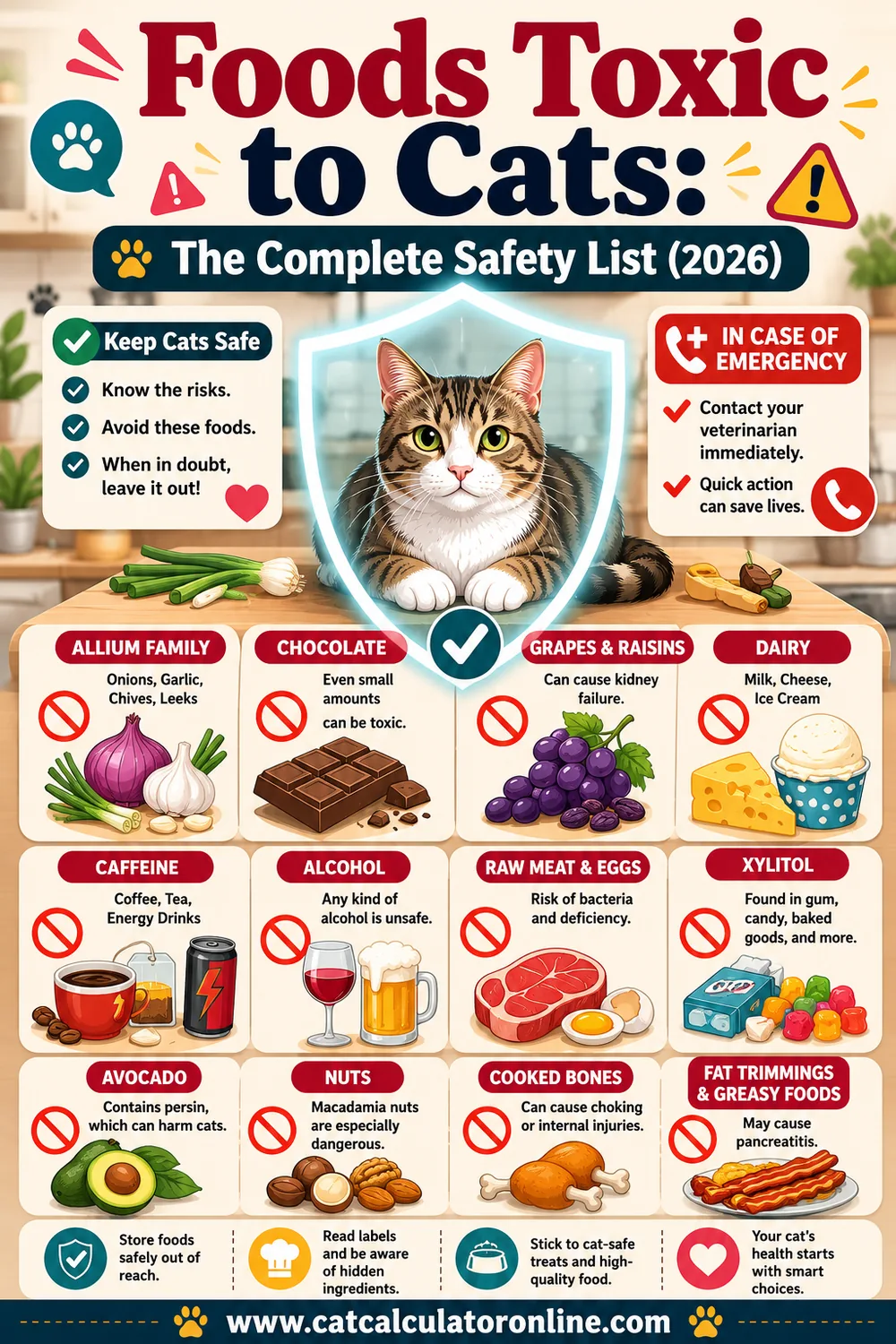
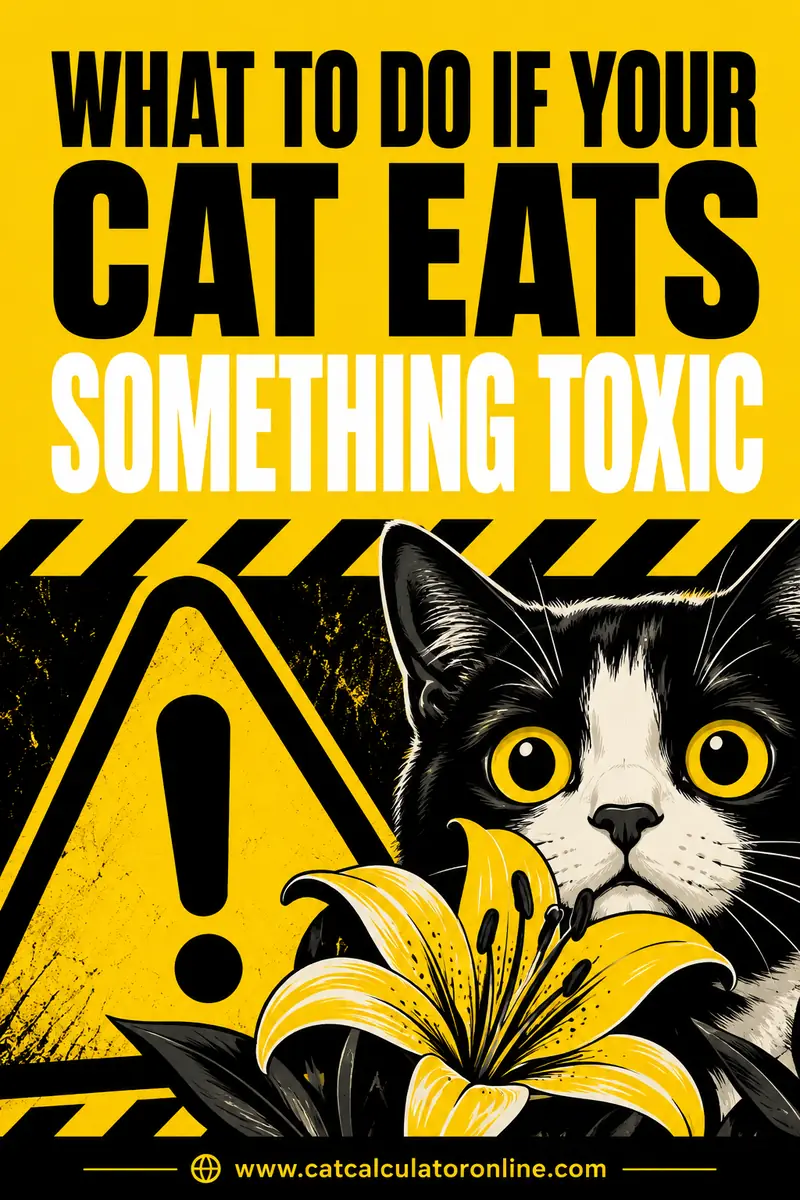
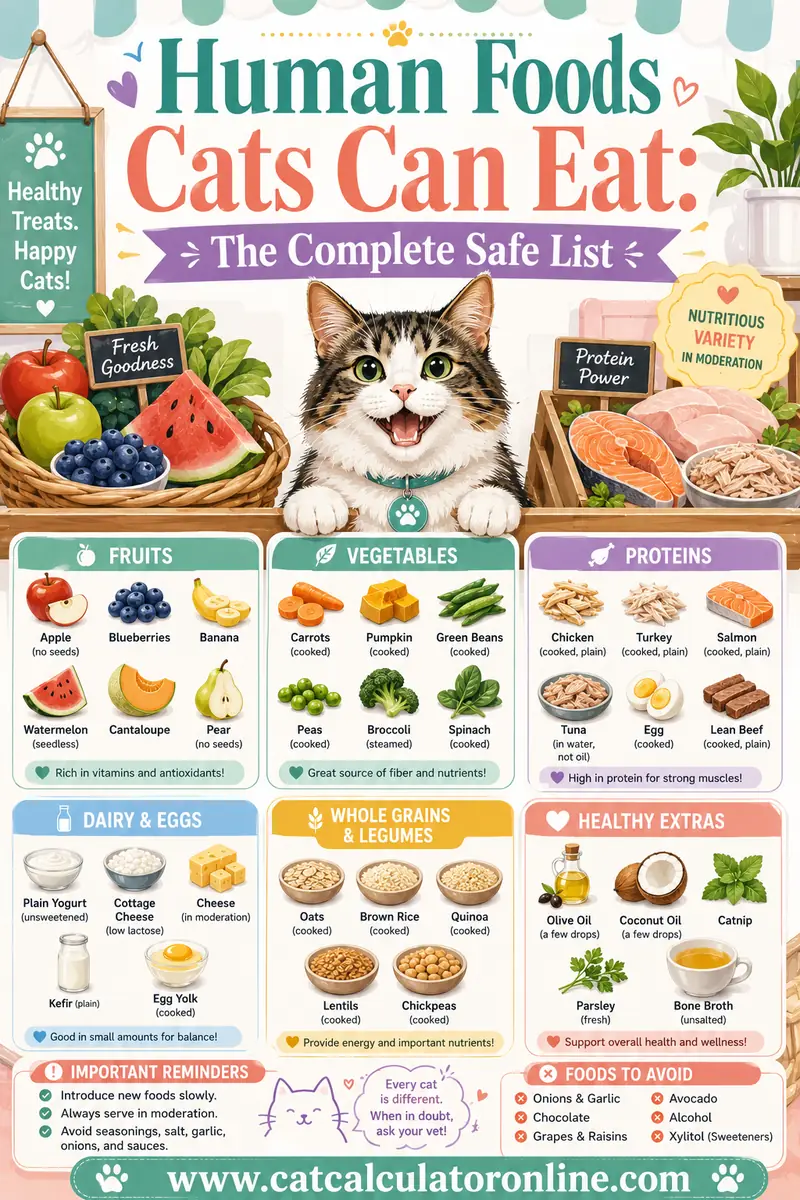
Recheck bloodwork matters even after she looks well, because the anemia can deepen after the initial visit. Follow the discharge instructions rather than assuming a bright cat is a recovered one. The first-hour sequence for any poisoning is in what to do if your cat eats something toxic, the wider list of hazards is in foods toxic to cats, and the safe side of the same question is in human foods cats can eat.
Frequently Asked Questions
Are onions toxic to cats?
Yes. Onions contain organosulfur compounds that oxidise hemoglobin in red blood cells, causing the body to destroy the damaged cells and producing anemia. Cats are more sensitive to this than dogs. All forms count — raw, cooked, dried and powdered — and signs typically appear one to five days after eating.
How much onion is dangerous for a cat?
Around 0.5% of body weight is the figure most often cited as enough to cause meaningful blood changes, which is roughly 20 g for a 9 lb (4 kg) cat, or about a fifth of a medium onion. Repeated small amounts accumulate, and powder is far more concentrated than fresh.
Is cooked onion safer than raw for cats?
No. Cooking does not destroy the compounds that damage red blood cells, and drying or powdering concentrates them by removing the water. Onion powder in gravy, stock cubes, seasoning blends and savory baby food is the commonest real-world route to poisoning in cats.
My cat licked food with onion in it — what should I do?
Call your vet or a pet poison line the same day, even if she seems fine, and tell them what she ate, roughly how much, and when. Never try to make her vomit at home. Watch for pale gums, fast breathing, weakness or dark urine over the next five days.
Is garlic worse than onion for cats?
Yes, roughly five times more potent by weight because it contains a higher concentration of the same compounds. Garlic powder is stronger again. Garlic supplements sold as natural flea remedies are genuinely dangerous for cats and should not be used; ask your vet for a proper flea product.
How long after eating onion would a cat show symptoms?
Stomach upset, if it happens, appears within a day. The anemia itself usually shows between one and five days later, as pale gums, lethargy, faster breathing, weakness or reddish-brown urine. A cat looking well on the first evening does not mean she is in the clear.
Onions, garlic, chives, leeks and shallots all damage a cat's red blood cells, and cooking or drying them makes the problem worse rather than better because the water goes and the harmful compounds stay. The realistic risk in most homes is not a raw onion but onion powder — in stock cubes, gravy, seasoning blends, deli meat and savory baby food, which is exactly what people reach for when tempting an unwell cat to eat. If yours has eaten any, call your vet today rather than waiting, take a photo of the label, and never try to make her sick at home. Then watch the gums for five days, not one. Set a plain piece of meat aside before you season anything, keep the bin lidded, and use the free cat food calculator to work out how much proper food she actually needs.