Can Cats Eat Tomatoes?
The ripe red flesh is not toxic to cats. The green parts are the problem — leaves, stems, vines and unripe fruit all contain solanine and tomatine, which the ripe fruit has largely lost. So a cat who licks a slice of ripe tomato has not been poisoned, and a cat who has been chewing the tomato plant on the windowsill is a different conversation. The bigger everyday risk is neither of those: it is tomato sauce, because pasta sauce, ketchup, pizza topping and tinned soup nearly always contain onion and garlic, which genuinely are toxic to cats. Tomato has no nutritional value for an obligate carnivore either way. Work out what she actually needs with the free cat food calculator.
The Short Answer, Split Three Ways
"Can cats eat tomatoes" is really three different questions with three different answers, which is why the advice online looks contradictory.
Ripe tomato flesh: not toxic. A small piece of ripe red tomato will not poison a cat. Most cats want nothing to do with it — they cannot taste sweetness and the acidity is off-putting — but if yours licks some off a plate, nothing needs to happen.
Unripe green tomato: avoid. It still contains meaningful amounts of the glycoalkaloids that the plant produces to defend itself, and it is the fruit most likely to cause an upset stomach.
Leaves, stems and vines: no. This is where the concentration is highest, and it is the part of the plant a cat is realistically most likely to chew, because it looks like something worth chewing.
Tomato sauce, ketchup, purée and passata: no, and this is the one that actually sends cats to the vet — not because of the tomato but because of the onion and garlic in it.
Nothing about tomato is nutritionally useful to a cat. She is an obligate carnivore who needs taurine, arachidonic acid and preformed vitamin A from animal tissue. Tomato supplies none of them.
If your cat has eaten tomato plant material, call your vet and describe what and how much. Never try to make her vomit at home — there is no safe method in cats.
What Solanine and Tomatine Actually Do
Tomatoes belong to the nightshade family, along with potatoes, aubergines and peppers. That family name does a lot of frightening work in headlines, so here is what is really going on.
The plant makes glycoalkaloids as a defense. Tomatine in tomatoes, solanine in potatoes and green tomato. They deter insects and grazing animals, and they taste bitter, which is the plant's first line of defense.
These compounds interfere with nerve signalling by inhibiting an enzyme called cholinesterase, and they also irritate the lining of the gut directly. That combination produces the classic picture: drooling, vomiting, loose stools, and in larger doses lethargy, wobbliness and a slow heart rate.
Ripening breaks them down. As a tomato reddens, tomatine levels fall dramatically. A fully ripe red tomato contains a small fraction of what an unripe green one does, which is exactly why the ripe fruit is treated differently.
Serious poisoning in cats is uncommon, and it is worth saying so plainly. Most cats who chew a tomato leaf get a sore stomach, not a crisis. The bitterness usually stops them before they eat much.
But "uncommon" is not "impossible", and dose matters. A cat is a small animal, and a cat determined to graze on a tomato plant can eat enough leaf to feel genuinely unwell.
Cats who chew plants are the at-risk group. If yours has never shown any interest in greenery, the tomato plant on your windowsill is a low concern. If she strips your spider plant, it is not.
Ripe, Unripe, Plant and Sauce Compared
| Form | Verdict | What to do |
|---|---|---|
| Ripe red flesh, plain | Not toxic, no benefit | Fine if she licks some; no need to offer it |
| Cherry tomatoes, ripe | Not toxic, but a choking size | Do not offer whole; there is no reason to |
| Unripe green tomato | Avoid | Watch for drooling and stomach upset; ring if she ate much |
| Leaves, stems, vine | Avoid entirely | Call the vet and describe how much |
| Tinned chopped tomatoes | Avoid | Often salted; frequently has added herbs or garlic |
| Passata and purée | Avoid | Concentrated, salty, usually contains garlic |
| Pasta sauce, pizza sauce | No | Onion and garlic; genuinely toxic to cats |
| Ketchup | No | Onion powder, garlic powder, sugar, vinegar, salt |
| Sun-dried tomatoes in oil | No | Very salty, oily, usually with garlic and herbs |
| Tomato soup | No | Onion base, high salt, often cream |
| Green tomato chutney | No | Unripe fruit plus onion, vinegar and sugar |
The pattern is easy to remember: the redder, plainer and fresher it is, the less it matters, and the more processed it is, the more likely it is to contain the thing that actually harms cats.
The Real Risk Is What Is In the Sauce
If a cat is going to be harmed by something tomato-based, this is nearly always how.
Onion and garlic damage feline red blood cells. They contain organosulfur compounds that oxidise hemoglobin, and the damaged cells get destroyed, producing anemia. Cats are more sensitive to this than dogs.
Powdered forms are the concentrated ones. Drying removes the water and leaves the harmful compounds behind, so onion powder in a jar of pasta sauce carries far more onion than the label makes it feel like. The full explanation is in can cats eat onions.
The signs are delayed by one to five days, which is what makes this dangerous. A cat who licked bolognese from a plate on Sunday can look perfectly well until Wednesday.
Salt is a secondary problem. A tablespoon of pasta sauce can carry a meaningful sodium load for a 9 lb (4 kg) animal, and cats with heart or kidney disease have no room for it.
Fat and dairy in creamy tomato sauces add vomiting and diarrhea to the picture, since most adult cats digest lactose poorly.
So the answer to "my cat licked the spaghetti bowl" is not about the tomato. It is: what else was in the sauce, roughly how much did she have, and when. Call your vet with those three facts.
Is There Any Benefit at All?
Short answer: no, and it is worth being honest about why the "superfood" framing does not transfer.
Lycopene, the antioxidant in tomatoes, is genuinely interesting in human nutrition. There is no established requirement or benefit for cats, and no dose anyone can recommend.
Cats cannot taste sweetness. The gene for the sweet taste receptor is non-functional in cats, so the flavor appeal that makes tomatoes pleasant to us is simply absent.
The fiber argument does not hold either. If your cat needs fiber for mild constipation or hairballs, a teaspoon of plain canned pumpkin is the usual suggestion, and it is better tolerated.
Some cat foods list tomato pomace — the dried skins, pulp and seeds left after juicing. It is used as a fiber source at low inclusion and is not the same thing as feeding tomato.
An obligate carnivore's needs come from animal tissue. Taurine, arachidonic acid, preformed vitamin A and vitamin B12 all have to arrive ready-made. No vegetable supplies them, which is the whole subject of can cats eat vegetables.
So there is no reason to offer tomato, and the only useful question is what to do if she has had some.
The Tomato Plant on Your Windowsill
Growing tomatoes and keeping cats is entirely doable. It just needs the plant treated like a plant, not like a salad.
Keep plants out of reach of cats who chew greenery. A high shelf, a greenhouse, a hanging basket, or a room the cat does not use.
Watch out for the growing tips and side shoots you pinch out. They land on the floor, they are the most concentrated part, and they look exactly like something to play with.
Bin the trimmings in a lidded bin, not a compost caddy on the floor.
Give her a legal alternative. Cat grass, or a pot of oat or wheat grass, satisfies the urge to graze and costs a few dollars. Cats who have their own grass bother other plants much less.
A greenhouse or allotment is worth a thought too if your cat goes out. Tomato foliage in quantity is the one realistic route to a meaningful dose.
And check the rest of your plants while you are at it. Tomato is a minor hazard next to lilies, which cause kidney failure in cats and are far more dangerous than anything in this article. How to cat proof your home goes through the room properly.
Signs, and When to Ring
Most tomato incidents in cats resolve with nothing more than a sore stomach. Here is how to tell which one you have.
Within a few hours of eating plant material or green fruit, you may see drooling, lip-smacking, vomiting, loose stools or a cat who is off her food.
Mild and self-limiting is the common outcome. A cat who vomits once, then eats and behaves normally, generally needs watching rather than treating.
Call your vet the same day if she vomits repeatedly, has diarrhea lasting more than a day, will not eat, seems wobbly or unusually flat, or if you know she ate a substantial amount of leaf or stem.
Go straight in if she is weak, collapsed, has a slow heart rate, is breathing oddly, or has pale gums. Pale gums after a sauce containing onion is an emergency, not a wait-and-see.
Never induce vomiting at home. Salt water causes dangerous sodium levels in cats, and hydrogen peroxide causes severe stomach inflammation. This is universal advice for cats, not specific to tomato.
Do not withhold food unless your vet tells you to. Cats who go without food for more than about a day risk a serious liver problem, so fasting her as a precaution creates a new hazard. The wider guidance on vomiting is in why is my cat throwing up, and the first-hour sequence for any suspected poisoning is in what to do if your cat eats something toxic.
Safer Things to Share Instead
If the tomato came up because your cat wants whatever you are eating, here is the version that works.
Set a plain piece aside before you season. Plain cooked chicken, turkey, lean beef, or plain cooked white fish, all unseasoned, boneless and skinless. That is the single best habit in a cat household.
Plain cooked egg — scrambled or boiled with nothing added — is another good one.
A teaspoon of plain canned pumpkin if fiber is the aim. Never pumpkin pie filling, which contains sugar and spices.
Keep it inside 10% of daily calories. For a typical 9 lb (4 kg) adult cat needing around 200–250 kcal a day, that is roughly 20–25 kcal of everything extra combined.
Take those calories out of her meal, rather than adding them on top. Treats on top of full portions is the quiet route to a heavier cat.
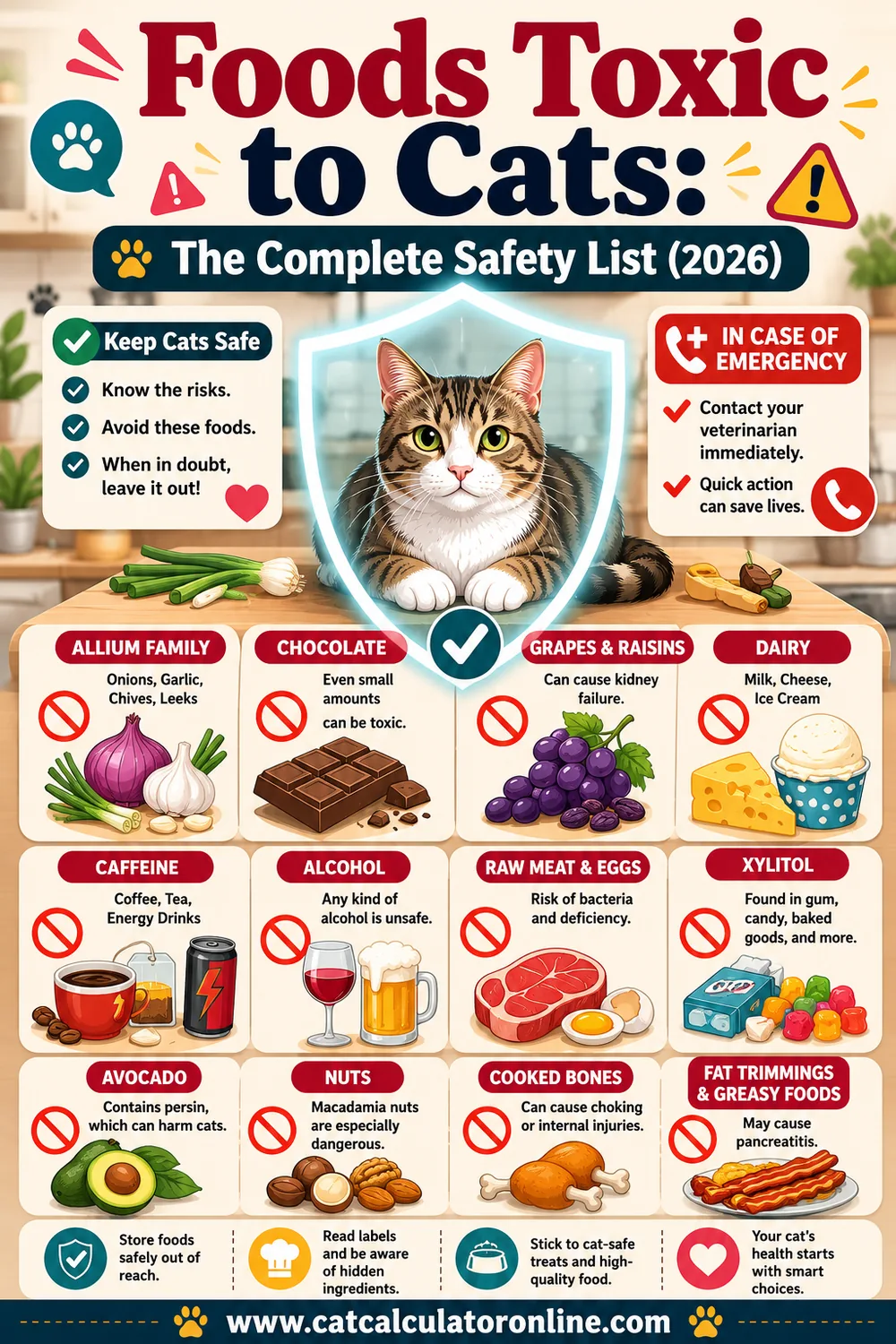
The whole safe-and-unsafe map is in human foods cats can eat and foods toxic to cats, which are worth a read once so you are not searching each time.
Frequently Asked Questions
Are tomatoes toxic to cats?
Ripe tomato flesh is not toxic to cats — it contains only trace amounts of the glycoalkaloids that make the plant a concern. The leaves, stems, vines and unripe green fruit do contain solanine and tomatine, and can cause drooling, vomiting, diarrhea and, in larger amounts, lethargy and wobbliness.
Can cats eat tomato sauce or ketchup?
No. The tomato itself is not the issue: pasta sauce, pizza sauce, ketchup and tinned soup almost always contain onion and garlic, which damage feline red blood cells and can cause anemia. They are also high in salt, and creamy versions add dairy that most adult cats cannot digest.
What happens if my cat eats a tomato leaf?
Most cats get a mild stomach upset — drooling, one or two vomits, or soft stools — and recover on their own. Call your vet the same day if she ate a substantial amount, vomits repeatedly, will not eat, or seems weak or wobbly. Never try to make her vomit at home.
Can cats eat cherry tomatoes?
A ripe cherry tomato is not toxic, but there is no reason to offer one. Whole cherry tomatoes are a choking size for a cat, the acidity puts most cats off, and tomato supplies nothing an obligate carnivore needs. Plain cooked chicken is a far better shared snack.
Is tomato good for cats in any way?
No. Lycopene and vitamin C have established roles in human nutrition, but cats have no dietary requirement for either and no recommended amount exists. Cats need taurine, arachidonic acid and preformed vitamin A from animal tissue, which tomato does not provide in any form.
Why is tomato pomace in my cat's food?
Tomato pomace is the dried skin, pulp and seed left after juicing, and it is used at low levels as a fiber source in some commercial cat foods. It is processed, measured and balanced into a complete diet, which is a different thing from feeding your cat tomato from the kitchen.
Tomatoes are a three-part answer worth remembering as one line: the ripe red flesh is harmless but pointless, everything green on the plant is worth avoiding, and the sauce is the part that actually causes trouble because of the onion and garlic in it. If your cat has chewed a tomato plant, expect a mild stomach upset and call your vet the same day if she ate more than a nibble, vomits repeatedly or seems flat. If she has licked a tomato-based sauce, the question to ask is what else was in it, and the signs of onion toxicity can take up to five days to appear. Never try to make a cat vomit at home, and never fast her as a precaution. Keep tomato plants out of reach, give her cat grass to chew instead, and use the free cat food calculator to work out how much real food she needs.