What to Do If Your Cat Eats Something Toxic
Ring a vet now, before any symptoms appear, and do not try to make her sick at home. Those two sentences cover most of what matters. Waiting for signs is the commonest and costliest mistake, because several of the poisons cats actually encounter cause no visible change for hours or days — by which point the kidneys or liver have already been damaged and the treatment window has closed. The second mistake is inducing vomiting, which is genuinely unsafe in cats however often it is suggested for dogs. What follows is what to do in the first hour, in order. A kitten or an elderly cat has less margin than a healthy adult, so check her age and life stage if you are unsure which you have.
Do These Things, In This Order
Six steps, and the order genuinely matters.
One: ring a vet or an animal poison line immediately. Not in an hour, not once she seems unwell. Out of hours, ring the emergency service — this is exactly what it exists for.
Two: do not induce vomiting. Nothing at home is safe for this in a cat. More on why below, because the advice circulating online is largely written about dogs.
Three: stop further exposure. Move her into a clean, closed room away from the substance, and take whatever it was out of reach of any other animal in the house.
Four: work out what, how much, and when. Those three facts drive the entire treatment plan.
Five: gather the evidence. The packet, the bottle, the plant, the label, or a clear photograph of each.
Six: go in when you are told to. If the advice is to bring her, bring her straight away rather than waiting to see whether she seems unwell first.
Do not give food, milk, water or any home remedy unless a vet specifically tells you to. Milk does not neutralise anything and can complicate matters.
Why You Must Never Make a Cat Vomit at Home
This deserves its own section, because it is the single most repeated piece of bad advice given to cat owners.
Hydrogen peroxide is not safe in cats. It is sometimes used under direction in dogs, but in cats it causes severe haemorrhagic gastritis — ulceration and bleeding of the stomach lining — and it is unreliable at producing vomiting anyway. You can create a second, serious problem while failing to solve the first.
Salt is dangerous too. Giving salt or salt water to induce vomiting can cause life-threatening sodium poisoning. Mustard, oil and the other kitchen remedies do not work either.
Some substances must never come back up. Anything caustic — bleach, drain cleaner, oven cleaner, batteries — burns the oesophagus a second time on the way out. Petroleum products can be inhaled into the lungs during vomiting and cause a severe pneumonia.
Timing limits the value anyway. Emptying the stomach only helps within a fairly short window after ingestion, and by the time most owners realize what has happened, a vet has better options.
Vets can do it safely. Practices have injectable drugs that induce vomiting in cats under controlled conditions, plus activated charcoal, intravenous fluids, and specific antidotes for some poisons. None of that is available in a kitchen.
The same applies to charcoal bought online. Dose, timing and whether it binds the particular toxin at all are all judgement calls, and some poisons are not adsorbed by charcoal.
The Three Facts That Change the Treatment
Every conversation with a vet or poison line starts here, so have the answers ready before you dial.
What, exactly. The active ingredient rather than the brand. "Dog flea treatment" is not enough; "permethrin, 50%, spot-on" is. Read the small print on the back of the box while you are on hold.
How much. Estimate honestly. Count the tablets left in the blister strip, weigh what remains of the packet, look at how much liquid has gone from the bottle. An over-estimate is safer than a guess downward.
When. Ingestion within the last hour or two opens options that ingestion six hours ago does not. If you do not know, give the widest window you can be sure of — "some time between eight and eleven this morning".
Her weight also matters, because toxic doses are calculated per kilogram of body weight. A 7 lb (3 kg) cat and a 13 lb (6 kg) cat are not in the same position after the same tablet.
So does her age and health. Kittens, elderly cats and any cat with existing kidney, liver or heart disease have far less reserve.
And say if she has already vomited, how many times, and what it looked like. That changes what happens next too.
Ring Before You Do Anything Else
Who to call, and what to expect from the call.
Your own practice first, in hours. Out of hours, use whichever emergency provider your practice directs you to — the number is usually on their answerphone message and website.
Animal poison helplines are the specialists. In the UK the Animal PoisonLine is owned by the Veterinary Poisons Information Service; in the US the ASPCA Animal Poison Control Center and the Pet Poison Helpline serve the same role. They hold case databases covering thousands of substances and can often tell you whether the amount ingested is a problem at all.
Yes, they usually charge a fee, and it is worth paying. A modest consultation charge that establishes your cat does not need to be seen saves an emergency visit. When she does need to be seen, the service gives your vet a case number and a treatment protocol, which speeds everything up.
Call even if you think the amount was tiny. Cats are small, and several household toxins have no safe dose in cats at all.
Call even at three in the morning. Delay costs more than the out-of-hours fee, and the fee is predictable — cat vet costs explained sets out the usual range for emergency work.
Stay on the line and write things down. You will be given specific instructions, and it is very easy to lose them in the middle of a stressful hour.
The Poisons That Actually Turn Up
Grouped by what they do rather than as a list, because the mechanism tells you how urgent it is.
| Toxin | What it does | How fast signs appear | Urgency |
|---|---|---|---|
| Lilies (Lilium, Hemerocallis) | Acute kidney failure | 12 to 72 hours; vomiting first | Go now, any exposure |
| Paracetamol / acetaminophen | Destroys red blood cells, liver damage | 1 to 4 hours | Go now, any amount |
| Ethylene glycol (antifreeze) | Crystals destroy the kidneys | Wobbliness in 1 to 3 hours | Go now, minutes matter |
| Permethrin (dog flea spot-on) | Nerve toxin: tremors, seizures | 1 to 12 hours | Go now |
| NSAIDs (ibuprofen, naproxen) | Kidney injury, stomach ulceration | 2 to 12 hours | Go now |
| Onion, garlic, chives | Oxidative damage to red cells | 1 to 5 days, delayed | Ring today |
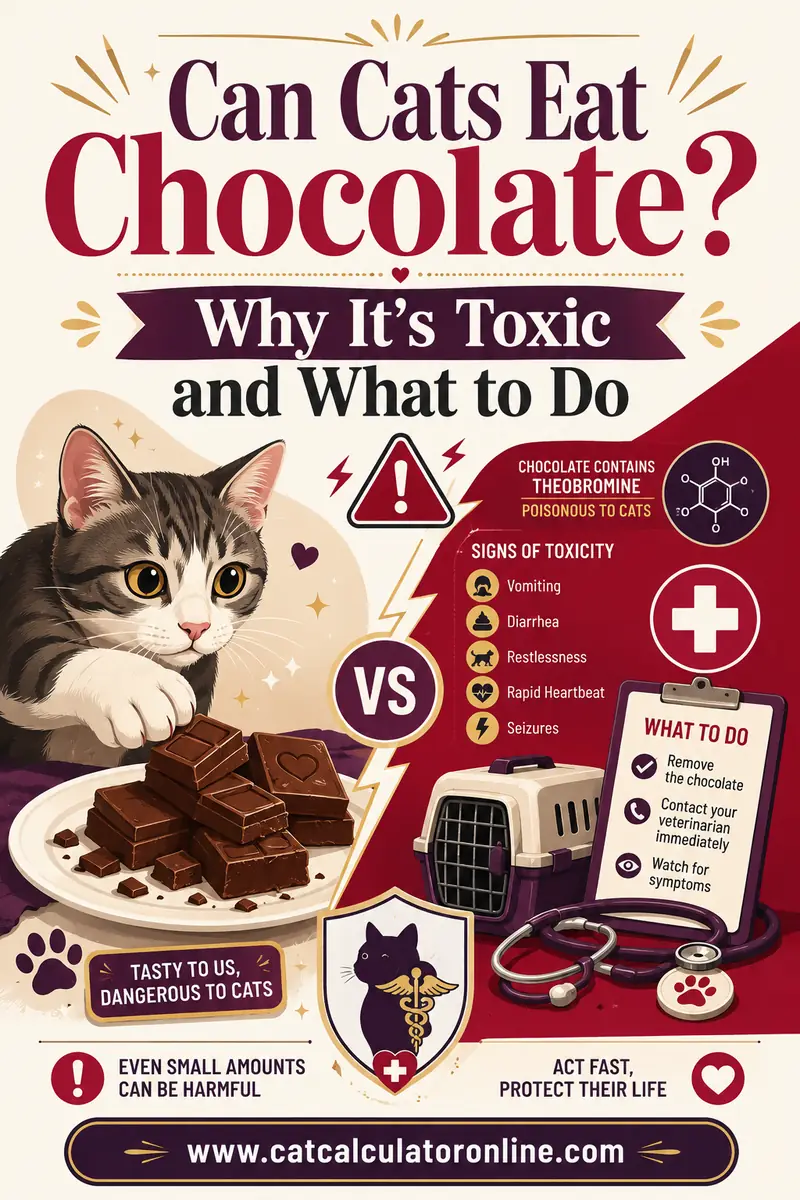
| Chocolate, caffeine | Heart rate and nervous system | 2 to 12 hours | Ring today |
| Rodenticides | Bleeding, or brain swelling | 2 to 5 days for some types | Go now |
| Antidepressants, ADHD medication | Agitation, tremors, high temperature | 1 to 4 hours | Go now |
| Essential oils, tea tree, potpourri | Liver damage, skin and mouth burns | Hours | Ring today |
Delayed signs are the trap. Onion toxicity and some rodenticides look like nothing at all for days while damage accumulates. A cat who seems fine is not evidence that nothing happened.
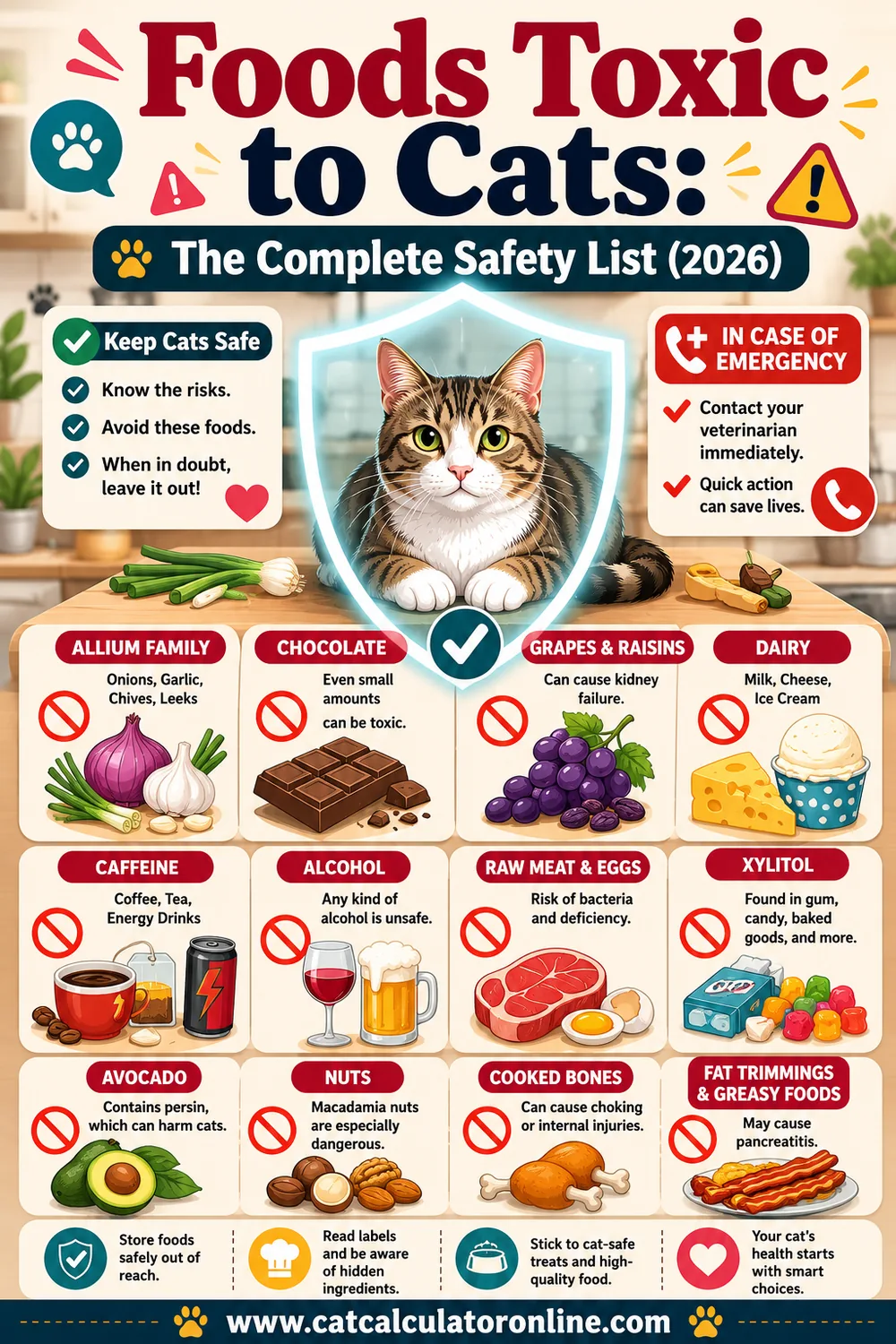
Which foods are dangerous and why is a separate question, covered properly in foods toxic to cats and, for the most-asked one, can cats eat chocolate. This page is about the hour after it has already happened.
Lilies Deserve Their Own Warning
If one thing from this article is worth remembering, it is this, because most cat owners have genuinely never been told.
Every part of the plant is toxic. Petals, leaves, stem, pollen and the water in the vase. A cat does not need to eat a lily to be poisoned by one.
Pollen on the coat is enough. She brushes past the bouquet, pollen lands on her fur, she grooms it off, and she has ingested a toxic dose. Vase water alone has caused fatal poisoning.
The result is acute kidney failure, and it can be fatal within days without treatment.
True lilies and daylilies are the dangerous ones — Lilium and Hemerocallis species, which includes Easter, tiger, Asiatic, stargazer, Oriental and Japanese show lilies. Peace lilies and calla lilies are different plants that cause mouth irritation rather than kidney failure, though they still warrant a call.
Treatment works if it is early. Fluid therapy started within roughly the first six to eighteen hours has a far better outcome than treatment started once the cat is visibly unwell.
So do not wait for symptoms. Vomiting and drooling come first, then apparent recovery, then kidney failure. That deceptive middle phase is why owners delay.
The prevention is absolute: no lilies in a house with a cat. Tell people who send you flowers, and check bouquets before they come indoors. Other household hazards are covered in how to cat proof your home.
The Route Everyone Forgets: Coat and Paws
Cats poison themselves by grooming far more often than by eating, and this changes what you do first.
Anything on the fur will end up inside her. A cat who walks through spilled cleaning fluid, antifreeze on a garage floor, paint, or garden chemicals will lick her paws clean within minutes.
Stop that first. Confine her somewhere clean and prevent grooming if you safely can. An Elizabethan collar, if you happen to have one, buys time.
Do not bathe a distressed or unsteady cat before you ring. Bathing a cat who is tremoring, cold or collapsing is dangerous, and some substances are made worse by water. Ask on the call — the answer is often to wash with lukewarm water and a mild dish soap, but it depends entirely on what it is.
Never use white spirit, gas or solvents to remove a substance from fur. Clip the fur off instead if it is a small area, or let the practice do it.
Dog flea treatment is the classic case. Permethrin spot-ons sold for dogs are severely toxic to cats, and poisoning happens both from misapplication and from a cat grooming or sleeping against a dog treated the day before. Keep them apart for at least 72 hours after treating a dog, and only ever use products labeled for cats.
Signs are neurological, not digestive: twitching, tremoring, unsteadiness, or seizures. It is treatable, and treatable quickly, if she gets there.
Go Now, Do Not Wait
Take her in immediately, symptoms or not, for any of the following.
Any known lily exposure, including pollen on the coat or drinking vase water.
Any amount of paracetamol. A fraction of a single tablet can kill a cat, because cats lack the liver enzyme that processes it. Brown or muddy gums, facial or paw swelling, and labored breathing are late signs.
Any suspected antifreeze. Ethylene glycol tastes sweet, cats will drink it from a driveway puddle, and the antidote works best within a few hours. This is measured in hours, not days.
Any dog flea product applied to or contacted by a cat.
Any human medication at all, including ibuprofen, antidepressants, ADHD medication, sleeping tablets and decongestants.
Any rodent or slug bait.
And go immediately, whatever the substance, if she is having seizures or twitching, unsteady or collapsed, breathing with effort or open-mouthed, drooling heavily or pawing at her mouth, bleeding, very pale or with brown gums, unresponsive, or has a very low body temperature.
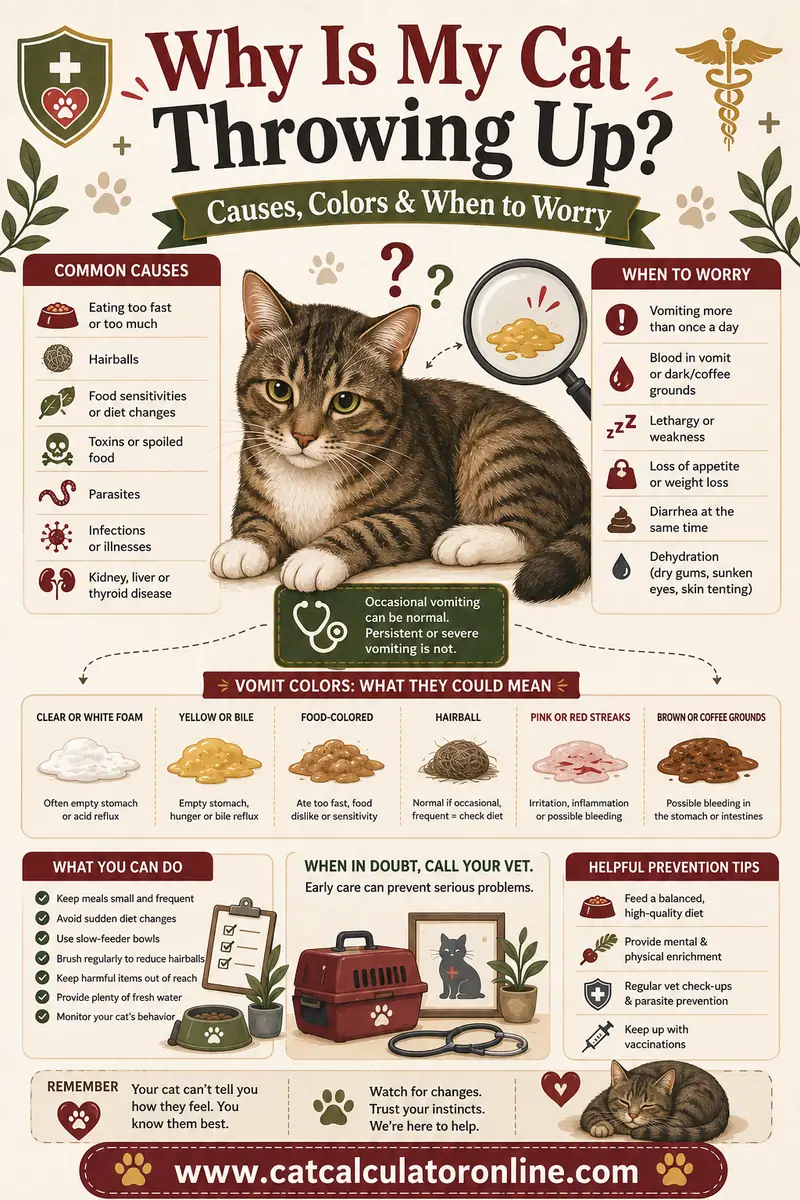
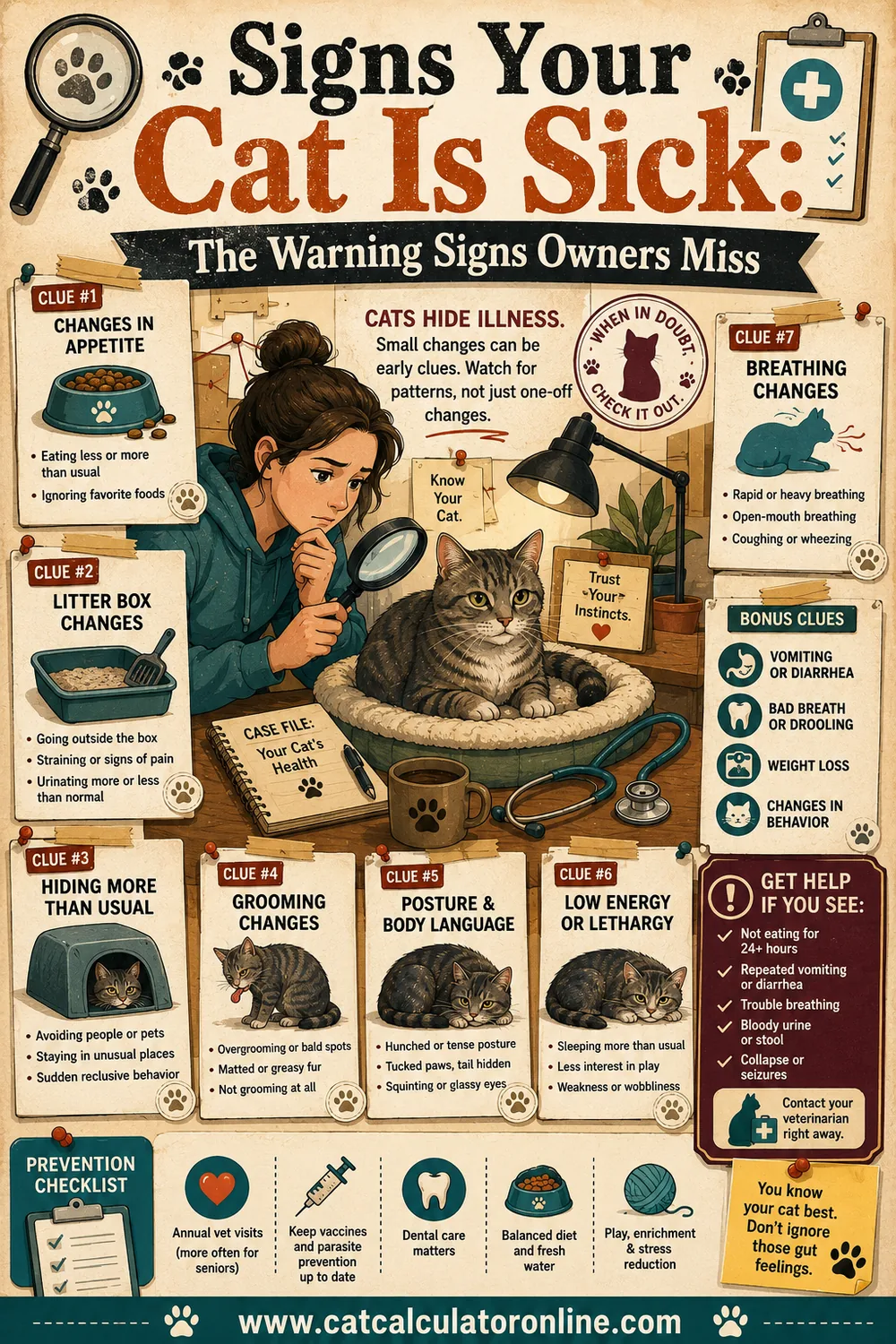
Repeated vomiting is a reason to ring too, and the wider context of that is in why is my cat throwing up. More general changes to watch for are set out in signs your cat is sick.
One more thing that is not a poisoning question but comes up in the aftermath: never withhold food from a cat to settle her stomach unless a vet has told you to. Cats can develop a serious liver condition within a couple of days without calories, so a cat refusing food for 24 hours is its own reason to call.
Frequently Asked Questions
What should I do if my cat eats something toxic?
Ring a vet or an animal poison line immediately, before any symptoms appear. Do not try to make her vomit. Stop further exposure, note what she ate, how much and when, take the packaging with you, and go in if you are told to.
Can I make my cat vomit at home?
No. Hydrogen peroxide causes severe stomach ulceration in cats and is unreliable, and salt can cause life-threatening sodium poisoning. Caustic and petroleum substances are more dangerous coming back up. Vets have safe injectable options instead.
How long does it take for poisoning symptoms to show in cats?
It varies enormously. Paracetamol and antifreeze show within a few hours, lilies take 12 to 72 hours, and onion or some rodenticides take days. A cat who seems fine is not proof that nothing happened, which is why you ring early.
Are lilies really that dangerous to cats?
Yes, and they are widely underestimated. Every part is toxic, including pollen and vase water, and grooming pollen off the coat is enough to cause acute kidney failure. Treatment started within the first several hours has a far better outcome.
Should I bathe my cat if she gets a chemical on her fur?
Ring first. Preventing grooming matters immediately, but bathing a distressed, tremoring or unsteady cat is risky, and water makes some substances worse. Never use solvents or white spirit on fur — clipping is safer.
Is it worth paying for an animal poison helpline?
Usually yes. The fee is modest against an emergency consultation, and the service may confirm your cat does not need to be seen. When she does, your vet gets a case number and a specific protocol, which saves time.
The two decisions that matter most are made in the first few minutes: ring someone straight away rather than waiting for symptoms, and do not attempt to make her vomit, because nothing available at home is safe for that in a cat. Have three facts ready — what, how much, and when — take the packaging or the plant with you, and stop her grooming anything off her coat while you wait. Treat lilies, paracetamol, antifreeze and dog flea spot-ons as go-now situations regardless of how well she looks, because several of these do their damage silently. Confirm her age and stage with the free cat age calculator, since the young and the old have the least margin.