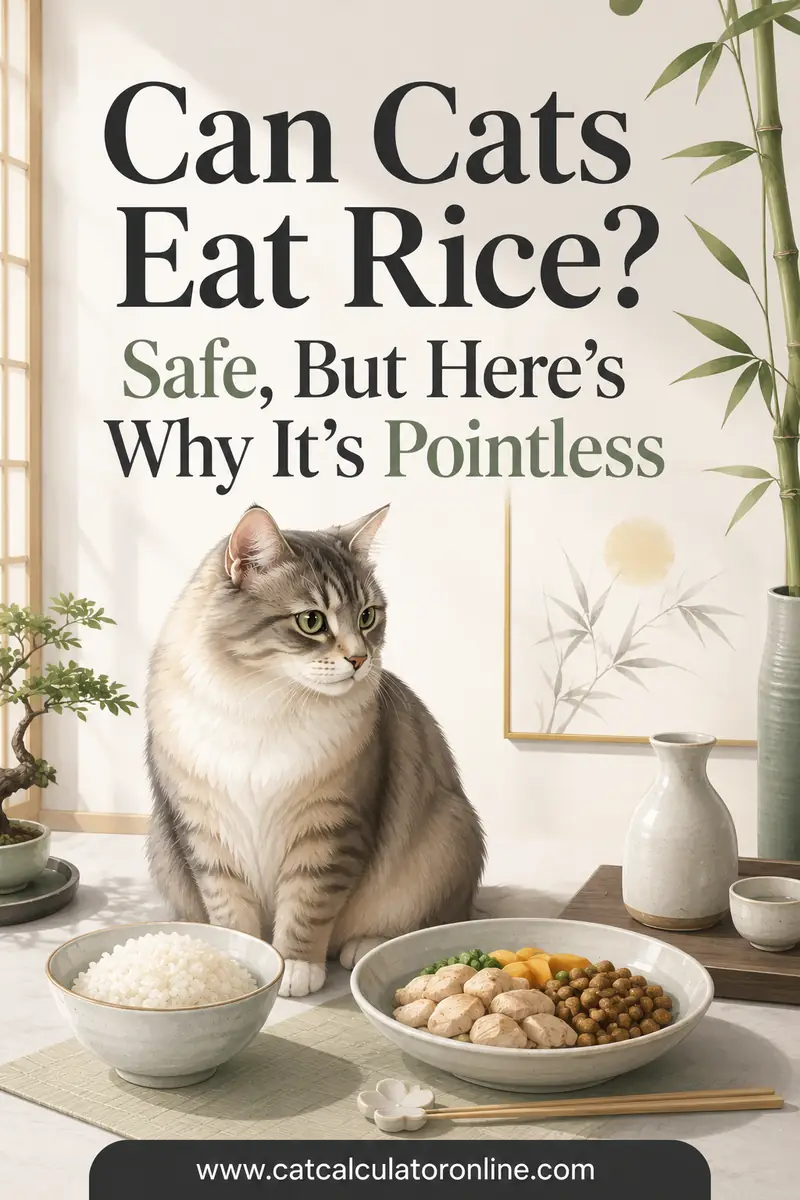
Can Cats Eat Rice? Safe, But Here's Why It's Pointless
Yes, cats can eat plain cooked rice — white or brown — in small amounts, and it won't harm a healthy adult cat. But there's a catch worth knowing before you scoop any into her bowl: rice does essentially nothing for a cat nutritionally, and the seasoned, fried and flavored versions on your plate are a different, riskier story.
So a stolen grain or two off the floor is a non-event. A spoonful of plain rice as a rare extra is fine. A garlic-fried-rice habit is not. And if you're wondering how much actual cat food she needs each day, our free cat food calculator gives you a personalized answer in seconds.
🍚 Is this rice safe for my cat?
Tap a dish to see the verdict:
Tap a rice dish above to see whether it’s safe for a cat.
Is Rice Safe for Cats?
Plain, fully cooked rice — no salt, no butter, no seasoning — is safe for healthy adult cats in small amounts. It's not on any toxic-foods list, it's gentle on the stomach, and it already appears as a minor ingredient in plenty of commercial cat foods, where it's used as a binder and carbohydrate source.
Both white and brown rice pass the safety test, as long as they're cooked soft and served plain. Brown rice brings a little more fiber; white rice is a little easier to digest. For a cat, the difference barely registers, because neither one is doing meaningful nutritional work.
The key word in all of this is plain. The rice most of us actually eat — fried, seasoned, cooked in stock, buttered — fails the test immediately, and usually because of ingredients that are genuinely toxic to cats rather than just unhealthy. More on that below.
Does Rice Actually Do Anything for a Cat?
Not really, and it helps to understand why.
Cats are obligate carnivores. Their bodies run on animal protein and fat, and they have no dietary requirement for carbohydrates — none. Nutrients they can't live without, like taurine and preformed vitamin A, only occur naturally in animal tissue. A cat's digestive system is short, acidic and meat-focused, with a limited toolkit for processing starch.
Rice, meanwhile, is nearly pure carbohydrate. So when a cat eats rice:
- She gets calories with almost none of the nutrients her body is built around.
- Those calories displace room for real food — a cat's stomach is small, and a typical indoor cat only needs around 200 calories a day.
- Fed regularly, those empty calories become the quiet route to weight gain.
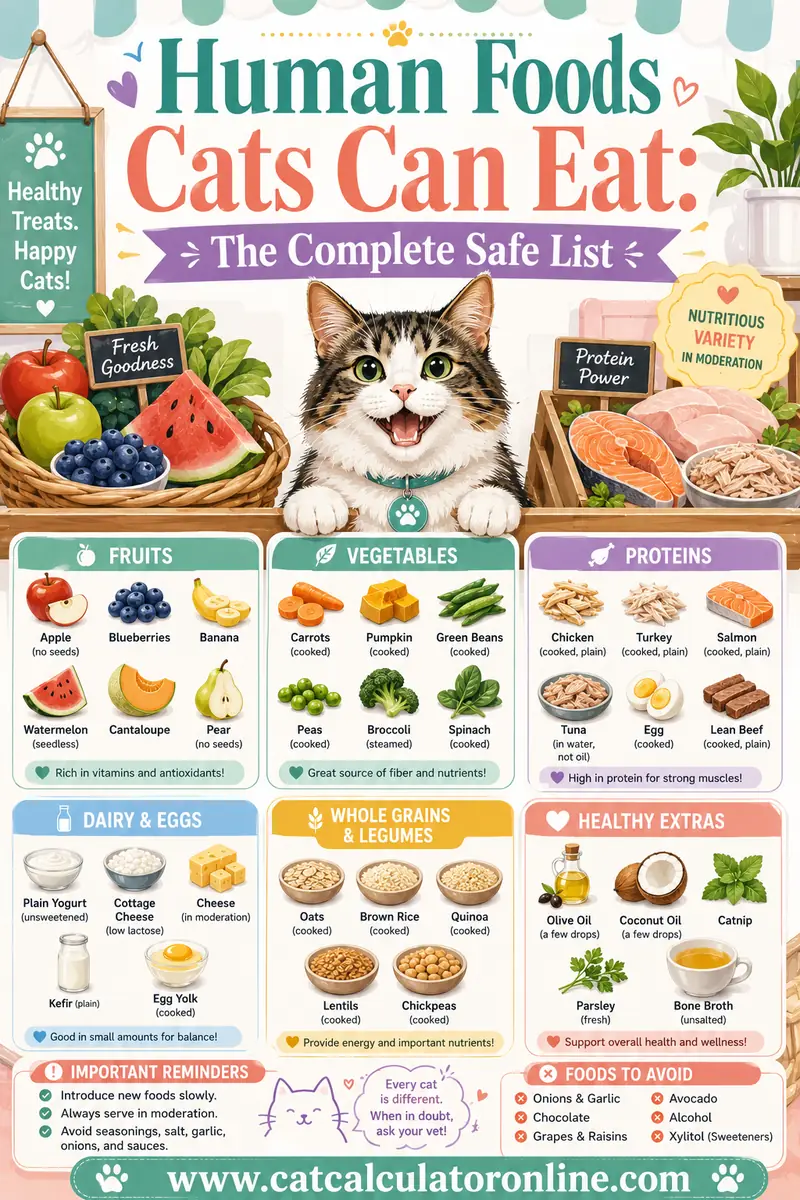
That's why the honest answer to "can cats eat rice?" is yes, but why would you? It's filler. Safe filler, but filler. If you want to share something from your plate, the shareable options that actually suit a carnivore are covered in our guide to human foods cats can eat.
Why Do Vets Sometimes Recommend Rice?
You may have heard of rice as part of a "bland diet" for pets with upset stomachs — usually plain boiled chicken and plain rice for a few days. It's true that vets sometimes direct this for cats with mild digestive upset, because rice is easy to digest and binds loose stools.
But notice the important word: directed. That's a short-term plan a vet prescribes for a specific cat after ruling out anything serious. It is not a home remedy to reach for on your own, and here's why that distinction matters:
- Vomiting and diarrhea in cats have many causes — hairballs, parasites, infections, pancreatitis, kidney disease, a swallowed hair tie. Bland food fixes none of the serious ones, and days spent home-treating are days a real problem goes unexamined.
- Cats crash faster than dogs. A cat that stops eating for even a couple of days risks a dangerous liver complication. "Wait and see with rice" is a dog-owner habit that doesn't transfer safely.
- A bland diet isn't nutritionally complete. Fine for a few vet-supervised days; harmful as a rolling solution.
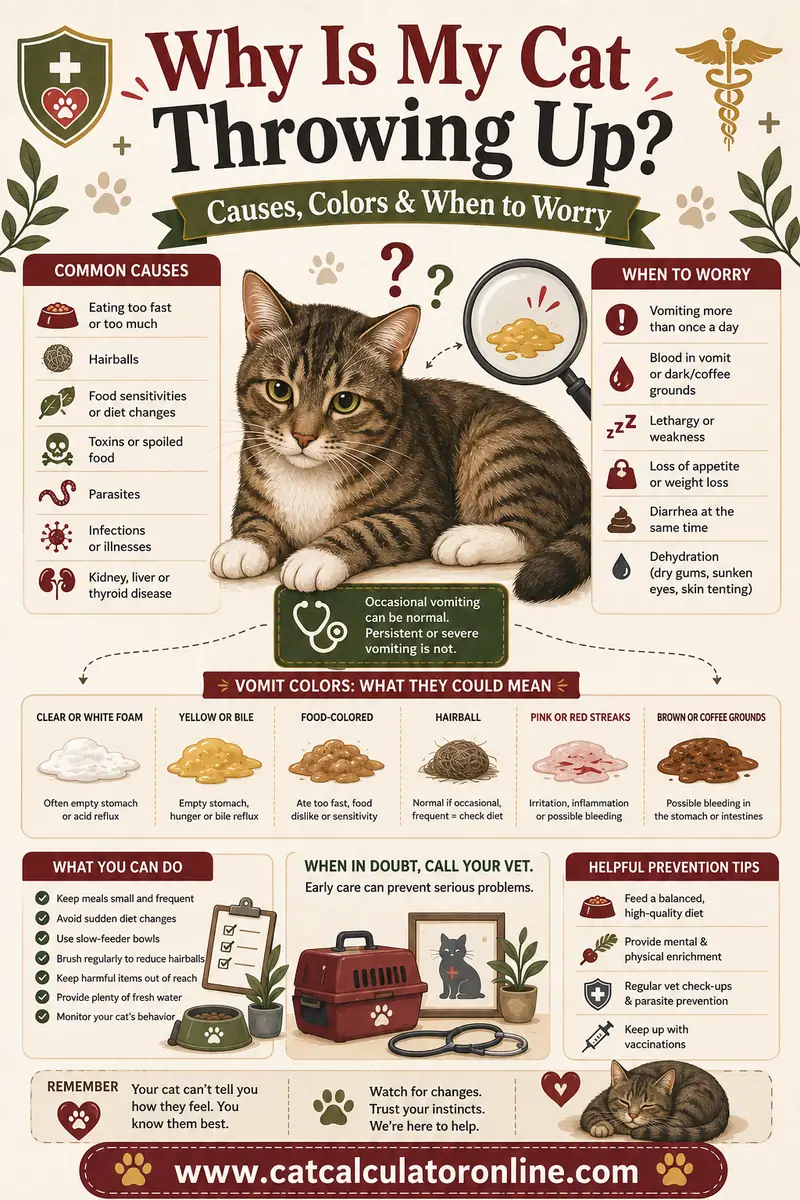
So if your cat is vomiting or has diarrhea, the move is a phone call, not a rice cooker. Your vet may well say "chicken and rice for 48 hours" — but let them say it. Our guide to why your cat is throwing up walks through which kinds of vomiting are wait-and-watch and which need same-day attention.
Which Rice Dishes Are Off-Limits for Cats?
This is where "rice is safe" stops being the headline, because almost every prepared rice dish contains something that isn't.
| Rice dish | Safe for cats? | The problem |
|---|---|---|
| Plain cooked white rice | Small amounts | None — just empty calories |
| Plain cooked brown rice | Small amounts | None — just empty calories |
| Fried rice | No | Onion and garlic (toxic), oil, salt, soy sauce |
| Seasoned rice / pilaf / rice-a-roni | No | Stock cubes and seasoning packets are loaded with onion, garlic and salt |
| Rice cooked in broth or stock | No | Most broths contain onion and garlic; all are salty |
| Curried rice | No | Onion, garlic, salt, and spices that irritate a cat's gut |
| Rice pudding | No | Milk, cream and sugar — most adult cats are lactose intolerant |
| Sushi rice (seasoned) | No | Vinegar, sugar and salt; the raw-fish question is separate |
| Uncooked rice | Skip | Hard and difficult to digest — rough on the stomach |
The repeat offenders are worth naming plainly. Onion and garlic — the allium family — damage a cat's red blood cells and can cause anemia, sometimes with a delay of days. They hide in nearly every savory rice dish, every stock cube, and every seasoning packet, often as powder you can't see. Salt in human-food quantities is more sodium than a small cat should be handling. And dairy plus sugar, the rice-pudding combo, reliably ends in digestive upset.
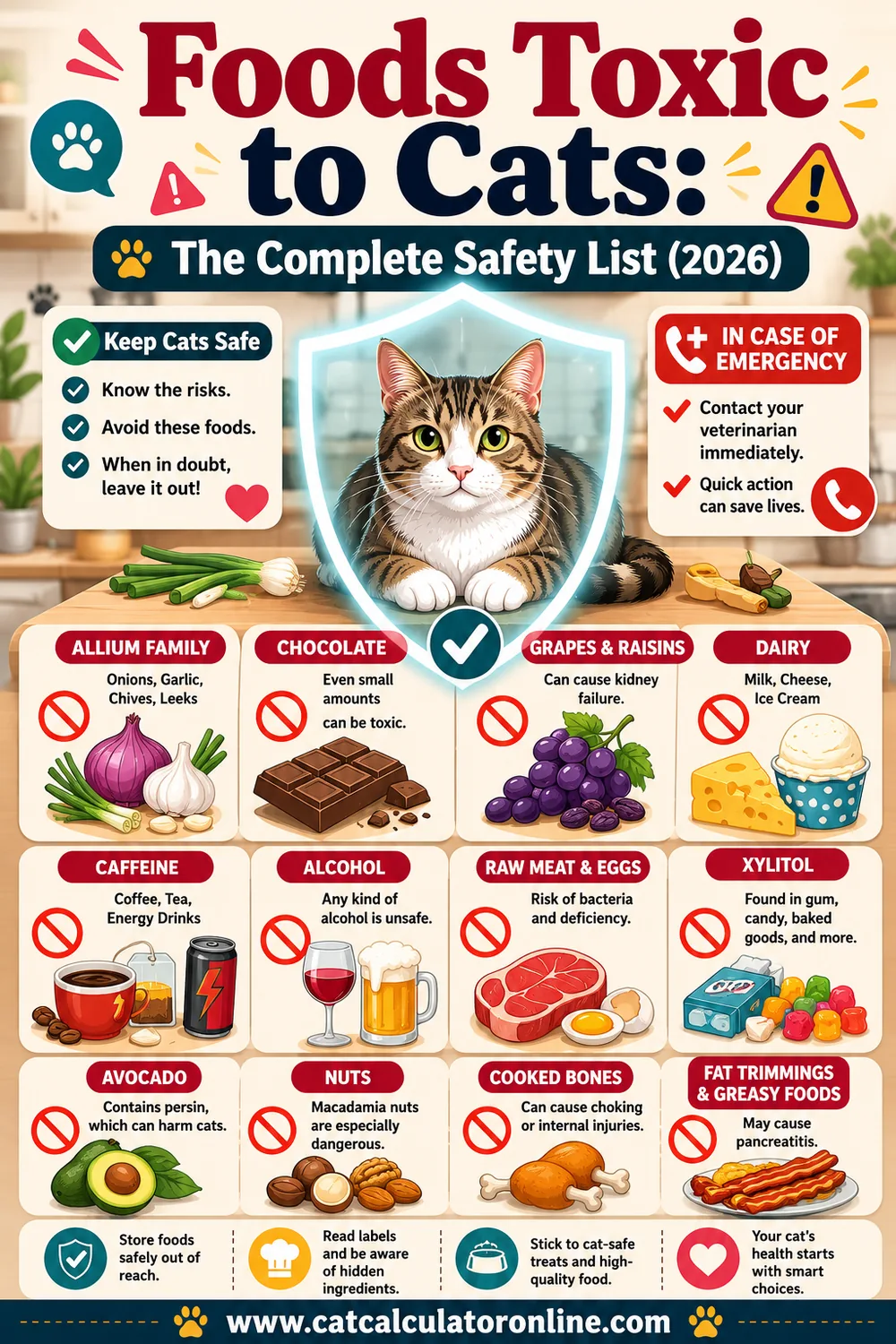
The simple rule: if the rice tastes like anything, it's not for her. The full list of what to keep off her plate — alliums included — is in our guide to foods toxic to cats.
Can Cats Eat Uncooked Rice?
Don't offer it. Uncooked rice is hard, dense and difficult for a cat to digest — it can sit uncomfortably in the stomach and irritate the gut on the way through. It has no upside over cooked rice and a clearly worse downside.
That said, don't panic over an accident. A cat that crunches a few stray raw grains off the kitchen floor during dinner prep is going to be fine. This is a "don't serve it" rule, not a poison-control situation. If she somehow got into a large amount of dry rice, or seems uncomfortable, drooling or straining afterward, call your vet for advice.
The same logic applies to rice water and congee made with seasonings: skip anything that isn't plainly cooked, plainly served rice.
How Should I Serve Rice If I Want To?
If your cat is curious and you'd like to let her try it, here's the safe way:
- Cook it thoroughly and plainly. Soft, fully cooked, in plain water — no salt, butter, oil, stock or seasoning of any kind.
- Let it cool to room temperature.
- Start with a teaspoon or less, mixed into her normal wet food or offered on its own.
- Watch for 24 hours. Any vomiting, diarrhea or refusal to eat means rice isn't for her — no loss, since she never needed it.
- Keep it rare and small. A spoonful now and then, not a daily scoop.
And keep the big frame in view: all treats and extras together — rice included — should stay under 10% of her daily calories, with the other 90% coming from complete cat food. For most cats that whole budget is roughly 20 calories a day, which a tablespoon of cooked rice nearly fills on its own. If you don't know her daily calorie number, our how much should I feed my cat guide will get you there.
Skip rice entirely for diabetic cats (refined carbs are exactly the wrong direction — ask your vet), overweight cats, and kittens, whose growth diet shouldn't be diluted with filler.
What Should I Offer Instead of Rice?
If the goal is a treat, give a carnivore a carnivore's treat:
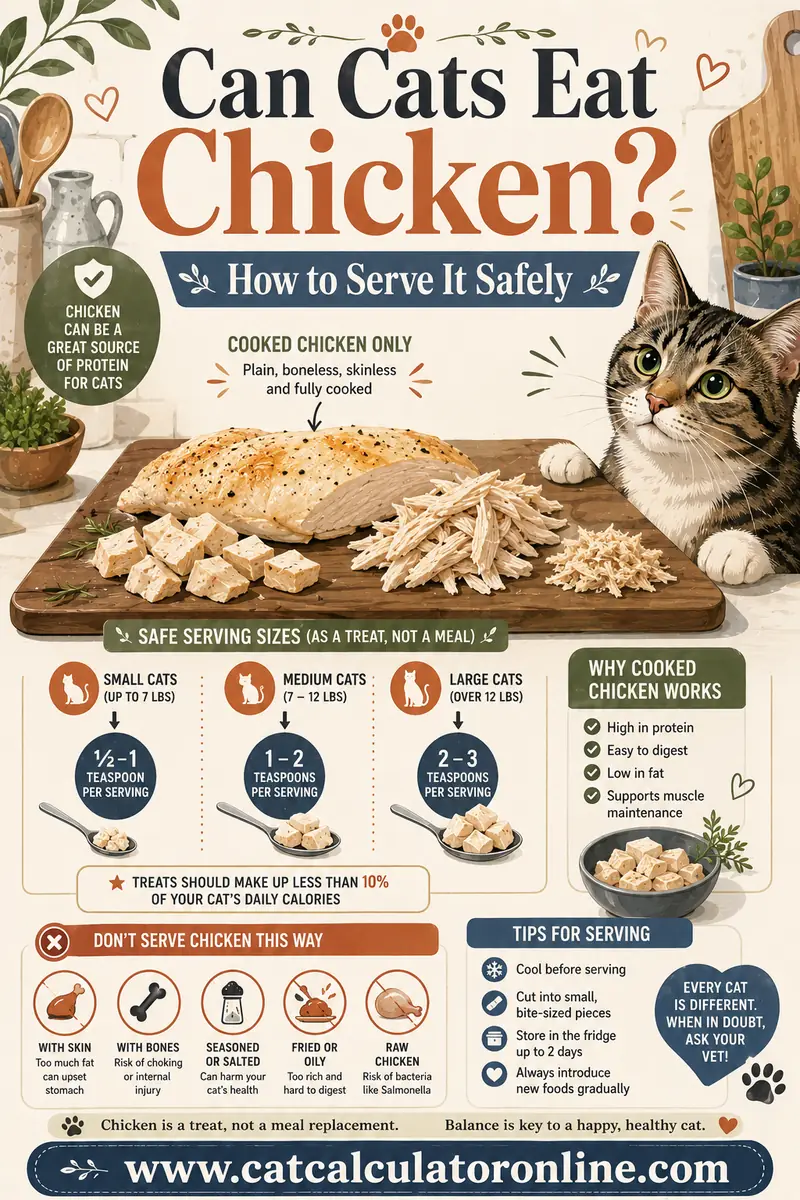
- Plain cooked chicken or turkey — boneless, skinless, unseasoned. The all-purpose winner; here's the full guide to feeding cats chicken.
- Plain cooked white fish — a small flake or two.
- A bit of plain cooked egg — never raw.
- Freeze-dried meat treats — single ingredient, and most cats rate them far above anything starchy.
- A hand-fed spoon of her own wet food — zero extra calories, full treat effect.
Every one of these gives her protein her body can actually use. Rice never will.
FAQ
Can cats eat rice safely?
Yes — plain, fully cooked white or brown rice is safe for healthy adult cats in small amounts. It's nutritionally pointless for a carnivore, though, so keep it to an occasional spoonful at most, and never serve seasoned or fried versions.
Is rice good for cats with diarrhea or an upset stomach?
Only under veterinary direction. Vets do sometimes prescribe a short bland diet that includes rice, but vomiting and diarrhea in cats have many causes, some serious — call your vet first rather than home-treating with rice.
Can cats eat fried rice?
No. Fried rice is almost always made with onion and garlic, both toxic to cats, plus oil, salt and often soy sauce. If your cat ate more than a stray grain of fried rice, call your vet and mention the onion and garlic specifically.
Can cats eat uncooked rice?
Don't offer it — raw rice is hard to digest and rough on a cat's stomach. A few stolen dry grains off the floor are harmless, but if she ate a large amount or seems uncomfortable afterward, check in with your vet.
Is brown rice better than white rice for cats?
Marginally — it has a little more fiber — but neither offers a cat meaningful nutrition, so the difference doesn't really matter. Whichever you share, it must be fully cooked, soft, plain and small.
Why is rice in commercial cat food if cats don't need carbs?
Manufacturers use rice and other grains as binders and affordable calorie sources in kibble. In a complete, balanced food that's fine — the protein requirements are still met. It doesn't mean extra rice at home adds anything useful.
The Bottom Line
Plain cooked rice sits firmly in the "safe but pointless" column: a small spoonful now and then won't hurt a healthy cat, but it gives an obligate carnivore nothing her body actually needs. The real risks live in the versions humans cook — fried rice and seasoned rice carry onion, garlic and salt, rice pudding brings dairy and sugar, and uncooked rice is just hard work for a small stomach. And if you're reaching for rice because her stomach's upset, make the call to your vet first instead.
Want to know exactly how much proper food your cat needs each day — so occasional extras like rice stay a rounding error? Run her numbers through our free cat food calculator. It takes ten seconds and gives her a real daily target.