Can Cats Eat Raw Meat?
**Yes, physically — a cat's gut is built to handle raw meat. Whether she should eat it is genuinely contested, and anyone who tells you the answer is obvious is selling something.** Cats have short digestive tracts and very acidic stomachs, and a healthy cat eats raw prey without incident. What raw feeding adds is a set of real risks: salmonella, campylobacter and listeria in the meat, toxoplasma in some raw flesh, bone injuries, and — with home-made recipes — nutritional gaps that take months to show. It also adds a household risk that gets skipped in most discussions: an infected cat sheds organisms that can reach the people she lives with. Here is both sides honestly, plus what safe handling actually looks like. For portions either way, use the free cat food calculator.
Why This One Has No Tidy Answer
Most food questions for cats have a clean verdict. This one does not, and pretending otherwise does readers a disservice.
The digestion argument is settled in raw feeding's favor. Cats are obligate carnivores with a short gastrointestinal tract, a stomach pH low enough to handle bacterial loads that would trouble us, and no dietary requirement for cooked food. A cat who catches a mouse eats it raw and is fine.
The safety argument is settled the other way. Surveys of commercial raw pet foods repeatedly find salmonella, listeria and campylobacter at rates far higher than in cooked products. That is not disputed by either side; what is disputed is how much it matters.
The professional bodies advise against it. Veterinary and public health organizations generally discourage feeding raw meat to pets, primarily on the grounds of household infection risk rather than harm to the cat.
Advocates argue the risk is manageable with good sourcing, freezing and hygiene, and that healthy cats tolerate bacterial exposure well. There is something to that, and plenty of cats eat raw for years without incident.
What there is not, is strong evidence of benefit. The claimed advantages — better coat, cleaner teeth, smaller stools — are widely reported by owners and thinly supported by controlled research. Smaller stools, at least, are a genuine and predictable effect of a highly digestible low-residue diet.
So the honest framing is a trade-off, not a verdict. Real, quantifiable infection risk against benefits that are mostly anecdotal. Where you land depends partly on who else lives in your house, which is the part most articles skip.
What Raw Feeding Gets Right
Taking the case seriously, because there is one.
Cats really are obligate carnivores. They need taurine, arachidonic acid, preformed vitamin A and vitamin B12 from animal tissue, and they cannot make them from plant precursors the way dogs and humans can. A meat-centered diet is not a fad for a cat; it is the baseline.
Heat does degrade some nutrients, taurine among them. Commercial cooked foods compensate by adding taurine back, which works — but the underlying point is fair.
Highly digestible protein produces less waste. Cats on meat-heavy diets typically produce smaller, less odorous stools. That is real and is the effect owners notice first.
Moisture content is genuinely better than dry food. Cats evolved taking most of their water from prey and are poor voluntary drinkers. Any wet diet, raw or cooked, helps with that.
Some cats with food sensitivities do better on a simple single-protein diet, and a raw diet is often the first simple diet they have eaten. The improvement may be the simplicity rather than the rawness.
And chewing meaty pieces gives some dental benefit, though far less than brushing, and it comes packaged with the bone risks discussed below.
The Four Real Risks
Specific, named and worth understanding rather than fearing vaguely.
Bacterial contamination. Salmonella, campylobacter, listeria, E. coli and clostridia. Most healthy adult cats clear a modest exposure without symptoms. Some do not, and develop vomiting, watery or bloody diarrhea, fever and lethargy. Kittens, seniors and cats with any immune compromise are the vulnerable group.
Toxoplasma gondii. A parasite found in the tissue of infected animals, particularly raw pork, lamb and wild game. Most infected cats show no signs at all. The significance is what happens next, covered in the household section below.
Bone injury. Raw bone is softer than cooked and less likely to splinter, but it still causes broken teeth, pieces lodged across the roof of the mouth or in the throat, obstruction, and — occasionally — perforation of the gut. Cooked bone is never safe for a cat, in any form.
Nutritional imbalance. This is the risk that harms the most cats, quietly. Muscle meat alone is deficient in calcium and unbalanced in phosphorus, and it does not supply enough taurine or vitamin A on its own. A cat fed chicken breast and nothing else for months develops real deficiency disease. Conversely, too much liver causes vitamin A toxicity, which affects bones and joints.
Two smaller ones worth naming. Raw fish contains thiaminase, an enzyme that destroys vitamin B1, and a raw-fish-heavy diet can cause a genuine thiamine deficiency — the detail is in can cats eat fish. Raw egg white contains avidin, which binds biotin.
None of these are reasons to panic about one raw scrap. A cat who licked a piece of raw steak off the counter is very unlikely to come to harm. They are reasons to be deliberate about a raw diet.
The Household Risk Almost Nobody Mentions
This is the part that changes the calculation, and it is not about your cat at all.
An infected cat sheds organisms in her stools. Salmonella and campylobacter can be shed by a cat with no symptoms whatsoever, which means the litter box becomes a source without anything looking wrong.
Toxoplasma is the specific one. A cat infected for the first time sheds oocysts in her stools for roughly one to three weeks. Those oocysts need one to five days in the environment before they become infectious — which is exactly why daily litter box cleaning is the single most effective control.
Toxoplasma infection in a pregnant woman can harm the developing baby. This is the reason pregnant women are advised not to change litter boxes, and it is a serious enough consequence to deserve stating plainly rather than in a footnote.
People with weakened immune systems are also at higher risk, including anyone on chemotherapy or immunosuppressants, transplant recipients and people with HIV.
Contamination is not limited to the tray. Raw food contaminates bowls, worktops, chopping boards, fridge shelves, the cat's fur around her mouth, and anything she then rubs against.
Households with infants, toddlers, pregnant women, older adults or anyone immunosuppressed are the ones where veterinary advice most consistently comes down against raw feeding. That is a reasonable, specific recommendation, not a blanket scare.
Supermarket Meat vs Complete Commercial Raw
If you do feed raw, this table is the most consequential choice you will make.
| Plain supermarket meat | Home-made raw recipe | Complete commercial raw | |
|---|---|---|---|
| Nutritionally complete | No | Only if formulated by a nutritionist | Yes, if labeled complete |
| Taurine guaranteed | No | Depends entirely on recipe | Yes |
| Calcium and phosphorus balanced | No | Commonly wrong | Yes |
| Pathogen control | None beyond retail standards | None | Varies; some use high-pressure processing |
| Suitable as a whole diet | No | Risky | Yes |
| Suitable as an occasional treat | Yes, with handling care | n/a | Yes |
| Typical failure mode | Deficiency over months | Deficiency or excess | Bacterial, if handled poorly |
Plain raw meat is a treat, not a diet. A small piece of raw chicken or beef offered occasionally is a different proposition from feeding it as the daily meal, and it is the version most people actually mean when they ask this question.
"Complete" on the label is the word that matters. It means the product is formulated to meet a recognized nutrient profile. "Complementary" means it is not, and needs to be fed alongside something else — a distinction covered in how to read a cat food label.
Recipes from the internet are the highest-risk option of all. Analyzes of home-prepared cat diets repeatedly find most of them deficient in at least one essential nutrient. If you want to home-prepare, get the recipe formulated by a veterinary nutritionist. It is not expensive relative to the vet bills it prevents.
Some manufacturers use high-pressure processing to reduce pathogens without cooking. It lowers risk meaningfully but does not eliminate it.
Bones: The Rules That Do Not Bend
Bones come attached to most raw feeding discussions, so they deserve their own section.
Cooked bones are never safe. Cooking dries bone out and makes it brittle, so it splinters into sharp fragments. Roast chicken carcasses, chop bones, rib bones — all off limits, in every context.
Raw bone is safer but not risk-free. It bends rather than shatters, which is the whole argument for it. It can still fracture a tooth, wedge across the roof of the mouth, lodge in the throat or esophagus, or cause an obstruction.
Small, soft, edible bones are the ones raw feeders use — chicken necks, wings and similar. Weight-bearing bones from large animals are dense enough to break teeth.
Never leave a cat alone with a bone. Supervision is the actual safety measure.
Constipation is a common side effect of a bone-heavy raw diet, because bone is largely calcium and produces hard, pale, crumbly stools.
Signs of a bone emergency: sudden gagging or retching, drooling, pawing at the mouth, an inability to swallow, repeated unproductive vomiting, or a cat who becomes suddenly quiet and hunched. Any of those means call your vet immediately — and never try to make a cat vomit at home, which risks driving a sharp fragment back up the esophagus. There is no safe household method in cats regardless.
Safe Handling If You Do Feed Raw
Plenty of people will read the risks and still choose raw. That is a legitimate choice, so here is how to do it properly rather than a lecture.
Buy from a supplier with real standards, and choose a complete formulated product over meat from the supermarket counter.
Freeze at −4°F (−20°C) for at least three days before feeding. This reliably kills toxoplasma tissue cysts. It does not reliably kill salmonella, so it is one control, not the control.
Thaw in the fridge, never on the worktop. Overnight in a covered container on the bottom shelf.
Serve at fridge temperature or slightly warmed with hot water from outside the bag. Never microwave raw meat with bone in it.
Give her 20 minutes, then lift the bowl and wash it in hot soapy water or the dishwasher. Raw food left out grows bacteria fast.
Use a separate chopping board and utensils, wash hands before and after, and clean any surface the food touched with a proper disinfectant.
Scoop the litter box at least daily. With toxoplasma this is genuinely protective, because oocysts are not infectious for the first day or so.
Do not let her lick faces, especially children's, and wash hands after handling her around mealtimes.
Transition slowly. A sudden switch causes vomiting and diarrhea in most cats — take seven to ten days, as set out in how to switch cat food.
Who Should Not Be Fed Raw
Some cats and some homes should not be in this experiment at all.
Kittens. Immature immune systems and no margin for a nutritional gap during the fastest growth of their lives.
Cats with FIV, FeLV, or any diagnosed immune suppression, and cats on steroids, chemotherapy or immunosuppressive drugs.
Cats with inflammatory bowel disease or chronic diarrhea, unless a vet has specifically directed it.
Pregnant or nursing queens, where nutritional demands are highest and a deficiency costs the litter.
Senior cats with kidney disease, who need controlled phosphorus rather than a bone-heavy diet.
And any household containing an infant, a pregnant woman, an older adult in poor health, or anyone immunosuppressed. In these homes, cooked is the sensible answer.
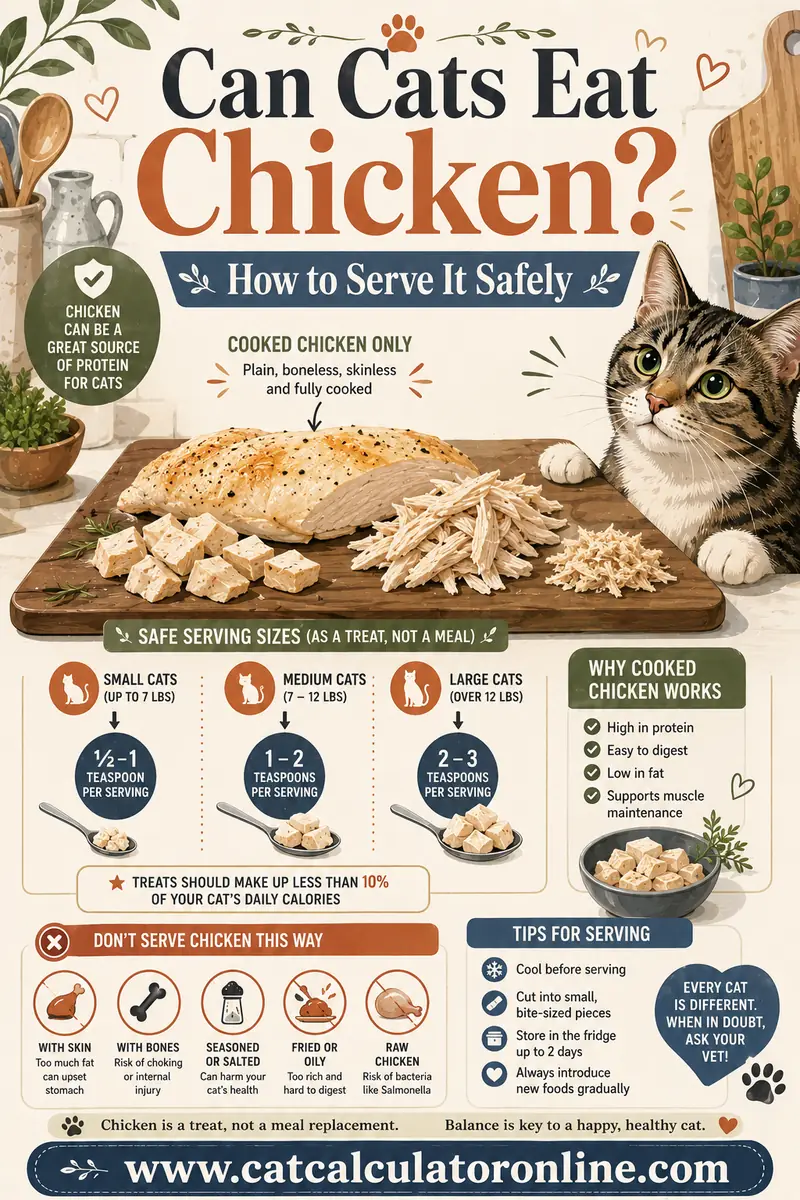
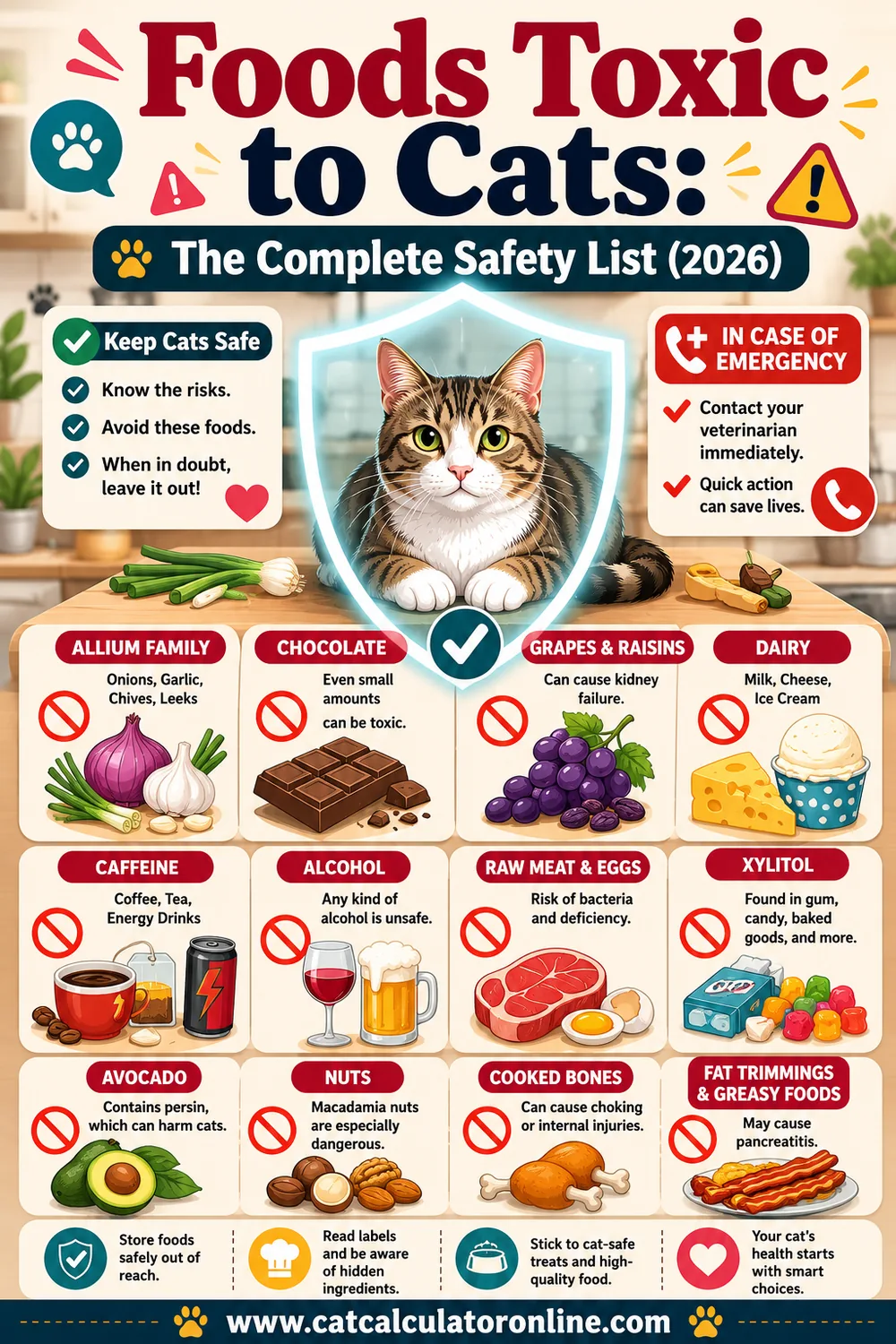
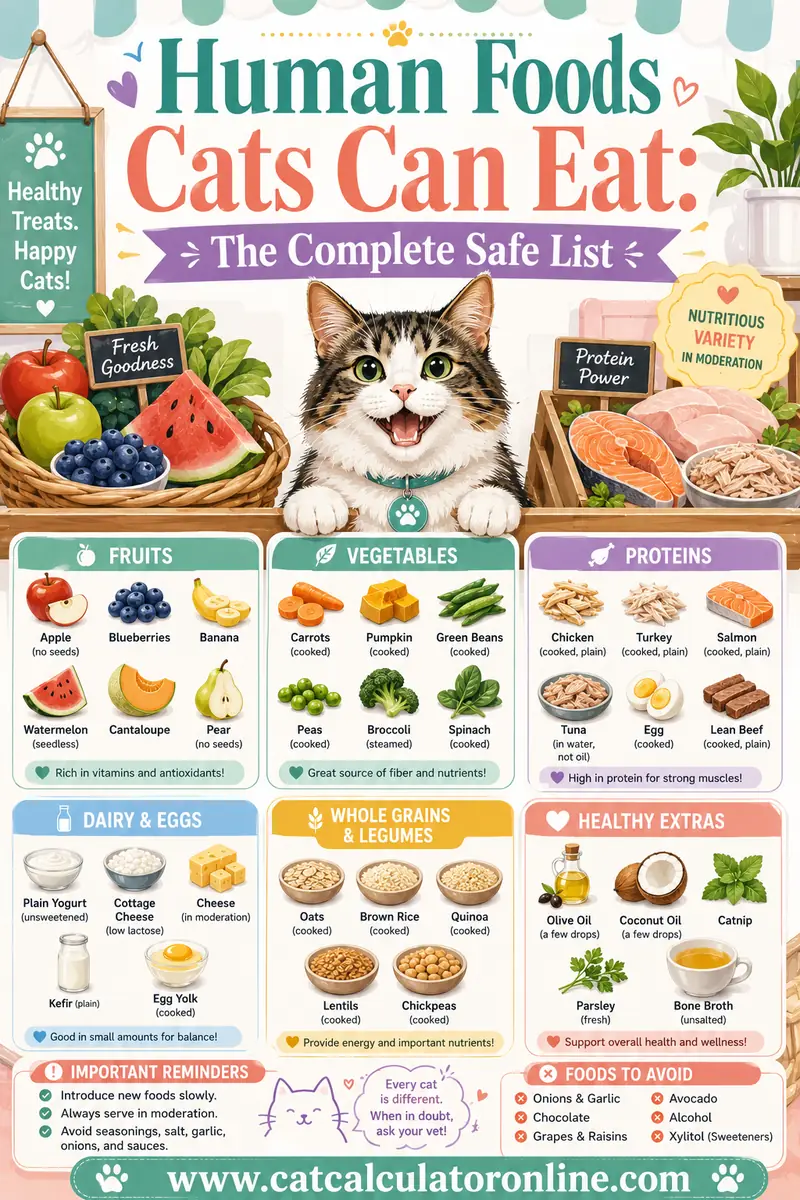
If you want the carnivore benefits without the risks, plain cooked meat gets you most of the way — the preparation is in can cats eat chicken, and the full safe list is in human foods cats can eat. Whatever you feed, avoid the seasonings and alliums covered in foods toxic to cats, and know that vomiting after a diet change is common but not something to keep ignoring — see why is my cat throwing up.
Frequently Asked Questions
Is raw meat safe for cats?
Cats digest raw meat well, but raw feeding carries documented risks: salmonella, campylobacter and listeria contamination, toxoplasma in raw pork, lamb and game, bone injuries, and nutritional gaps in home-made recipes. Most veterinary bodies advise against it, chiefly because infected cats can pass organisms to people in the household.
Can I give my cat raw chicken from the supermarket?
A small piece occasionally is unlikely to harm a healthy adult cat, but supermarket meat is not a complete diet — muscle meat alone lacks enough calcium, taurine and vitamin A. Handle it exactly as you would for yourself: separate board, hands washed, bowl lifted and cleaned after 20 minutes.
Does freezing raw meat make it safe for cats?
Partly. Freezing at −4°F (−20°C) for at least three days reliably kills toxoplasma tissue cysts, which is worth doing. It does not reliably kill salmonella, campylobacter or listeria, so frozen raw meat still needs handling as a contaminated food and should never be left out.
Can cats eat raw bones?
Raw bone is safer than cooked bone because it bends rather than splinters, and small soft bones such as chicken necks are what raw feeders use. It still risks broken teeth, choking, obstruction and constipation, and should always be supervised. Cooked bones are never safe for cats in any form.
Is raw food better for cats than wet food?
There is no strong evidence that it is. Owners commonly report better coats and smaller stools, and smaller stools are a genuine effect of a highly digestible diet. A complete, balanced wet food delivers the same moisture and animal protein without the bacterial and parasite risks.
Who should not feed a cat raw meat?
Avoid raw diets for kittens, pregnant or nursing cats, cats with immune suppression or inflammatory bowel disease, and cats with kidney disease. Avoid them too in any home with an infant, a pregnant woman, an older adult in poor health, or anyone immunosuppressed, because of the household infection risk.
Raw meat is one of the few cat food questions where the honest answer is a trade-off rather than a verdict. Your cat can digest it — that part is not in dispute. What raw feeding adds is bacterial contamination, toxoplasma in some meats, bone injuries and, with home-made recipes, slow nutritional deficiency, and the household side of the risk is the one that most often decides it: infected cats shed organisms that reach children, pregnant women and anyone immunosuppressed. If you choose raw, choose a complete commercial product rather than a recipe, freeze at −4°F for three days, thaw in the fridge, lift the bowl after 20 minutes, and scoop the tray daily. If you would rather not, plain cooked meat gives you nearly all of the same appeal with none of it. Either way, set the amount with the free cat food calculator.