Can Cats Eat Peanut Butter? Why It's a Bad Idea
Technically, plain peanut butter isn't toxic to cats — but it's still a bad treat, and most vets would tell you to skip it. It's a dense brick of fat and calories with zero benefit for an obligate carnivore, its sticky texture is a genuine gagging and choking hazard, and some brands contain xylitol, a sweetener that is toxic. There's no upside here that a better treat doesn't deliver more safely.
If your cat just licked a spoonful of a xylitol-free brand, relax — she'll almost certainly be fine. The rest of this guide covers when peanut butter crosses from "unwise" into "call the vet," and what to hand over instead. For working out how much your cat should actually be eating each day, our free cat food calculator does the math for you.
🥜 Peanut butter scenarios — safe or not?
Tap one to see the verdict:
Tap a scenario above to see whether it’s safe for a cat.
Is Peanut Butter Toxic to Cats?
Plain peanut butter — just peanuts, maybe a little salt — isn't poisonous to cats. If your cat sneaks a lick while you're making a sandwich, nothing dramatic is going to happen. That's the honest starting point, and it's why you'll see "yes, cats can eat peanut butter" floating around online.
But "not toxic" and "good idea" are very different claims. Peanut butter fails as a cat treat on four separate counts:
- It's a calorie bomb. Peanut butter is one of the most energy-dense foods in your kitchen — a single tablespoon carries a huge share of a small cat's entire daily calorie budget.
- It's the wrong kind of food entirely. Cats are obligate carnivores. Their bodies are built for animal protein, not legume fat. There's no nutrient in peanut butter a cat needs that her regular food doesn't already provide better.
- The texture is a hazard. Thick, sticky pastes are hard for a small mouth to manage. Peanut butter can gum to the roof of the mouth, trigger gagging, and in a bad case cause choking.
- Some jars carry a real poison. Xylitol, a sugar substitute, appears in some "no added sugar" and specialty peanut butters — and it's dangerously toxic to pets.
So the verdict isn't "never, it's poison." It's "why would you?" — every job peanut butter could do, a better treat does more safely.
What's the Problem With Xylitol?
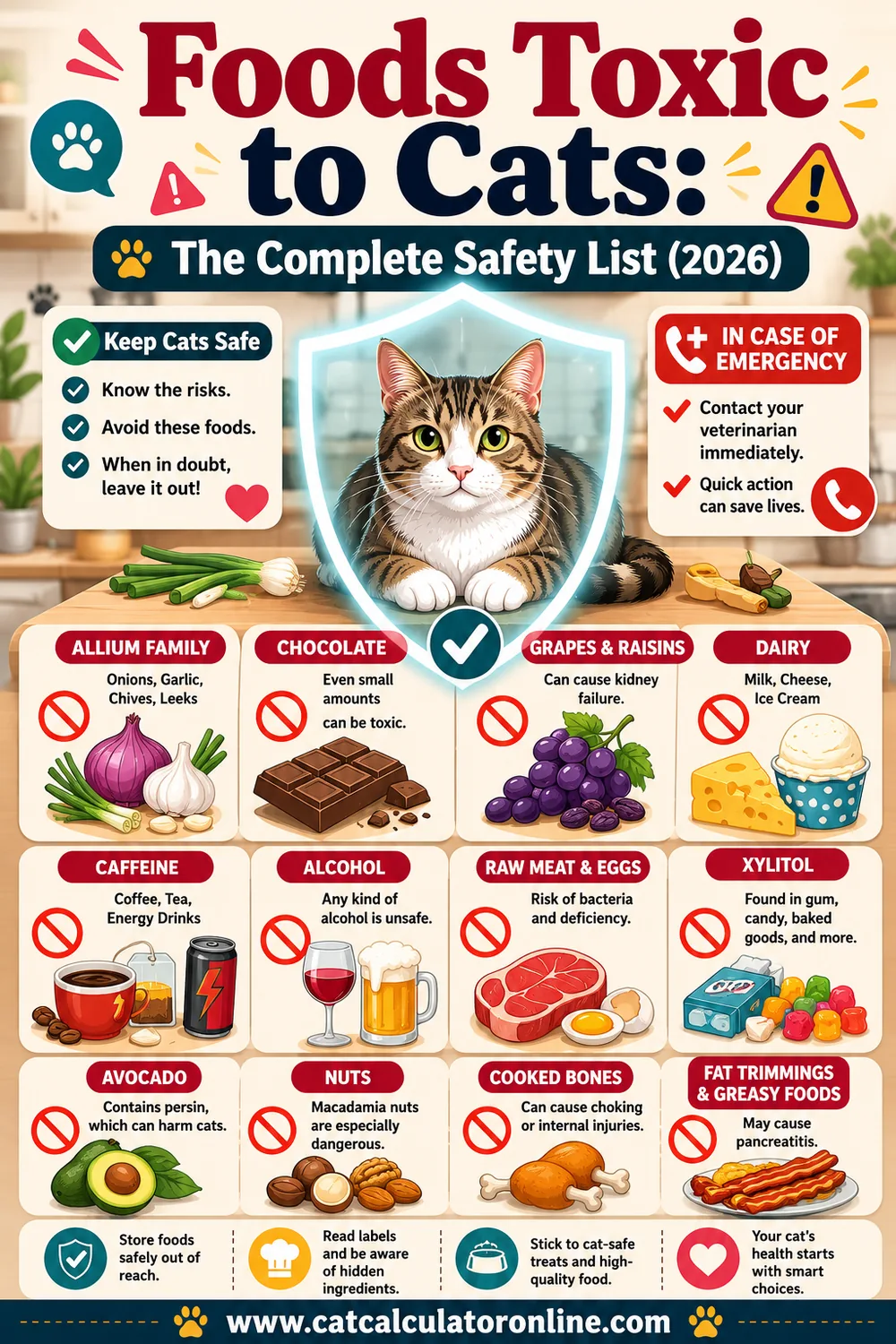
Xylitol is a sugar alcohol used as a sweetener, and it's the one ingredient that turns peanut butter from a bad idea into an emergency. It's well documented as seriously toxic to dogs, where it triggers a dangerous crash in blood sugar and can cause liver damage. The evidence in cats is thinner, but no veterinary source treats it as safe — the universal advice is to keep xylitol away from all pets and to call a vet if any gets eaten.
The label problem is that xylitol doesn't always announce itself. Look for:
- "Xylitol" in the ingredient list
- "Birch sugar" or "birch sap" — alternative names for the same thing
- "Sugar alcohol" on the nutrition panel of a "no sugar added" product — a reason to check the ingredients closely
Xylitol shows up most often in specialty, low-sugar, and "keto" peanut butters, but formulas change without warning. That's why the rule is simple: check the label every time, even on a brand you've bought before.
If your cat ate peanut butter and the jar lists xylitol or birch sugar, call your vet or a pet poison helpline right away — don't wait for symptoms. Bring or read out the label, and if you notice weakness, wobbliness, vomiting, or collapse, treat it as an emergency. Xylitol also keeps company with other hidden dangers in your pantry; our guide to foods toxic to cats covers the full list worth knowing by heart.
Do Cats Even Want Peanut Butter?
Mostly, no — and the reason is one of the stranger facts in cat biology: cats can't taste sweetness. They lack a functioning sweet-taste receptor, so the sugary appeal that makes peanut butter irresistible to dogs (and humans) is invisible to a cat.
What a cat notices about peanut butter is the fat and the roasted smell. Some cats will investigate a lick out of curiosity; plenty will sniff it and walk away unimpressed. That's a useful contrast with dogs, where peanut butter is practically a food group — the classic Kong stuffing, the pill hider, the training reward. None of that transfers to cats, because the motivation isn't there.
This is worth internalizing because it removes the guilt. You're not depriving your cat of a beloved pleasure by keeping the jar closed. She'd trade every peanut butter jar on earth for a shred of plain cooked chicken — that's the treat her biology is actually asking for.
What Happens If a Cat Eats Peanut Butter?
For a healthy adult cat who licked a small amount of a xylitol-free brand: usually nothing. Maybe some lip-smacking as she works the sticky residue off the roof of her mouth. No action needed beyond watching her.
Larger amounts or regular servings are where the problems show up:
| Scenario | Likely outcome | What to do |
|---|---|---|
| Fingertip lick, xylitol-free | Nothing, or brief lip-smacking | Nothing — just don't repeat it often |
| Big glob or spoonful | Gagging, possible vomiting or diarrhea from the fat | Watch her; call the vet if vomiting repeats or she seems off |
| Any amount of a xylitol brand | Potentially serious — treat as poisoning | Call your vet or a poison helpline immediately with the label |
| Choking or frantic pawing at mouth | Sticky blockage or gagging | If she can't clear it and can't breathe normally, this is an emergency vet visit |
| Regular peanut butter habit | Weight gain, stomach trouble, unbalanced diet | Stop the habit; rebalance with proper treats |
The fat content deserves its own mention. A cat's digestive system doesn't handle sudden rich, fatty foods gracefully — vomiting and diarrhea are the common short-term result. Long term, the calories are the quiet danger: an extra fat-dense treat habit is exactly how indoor cats drift into overweight territory, one innocent-looking lick at a time.
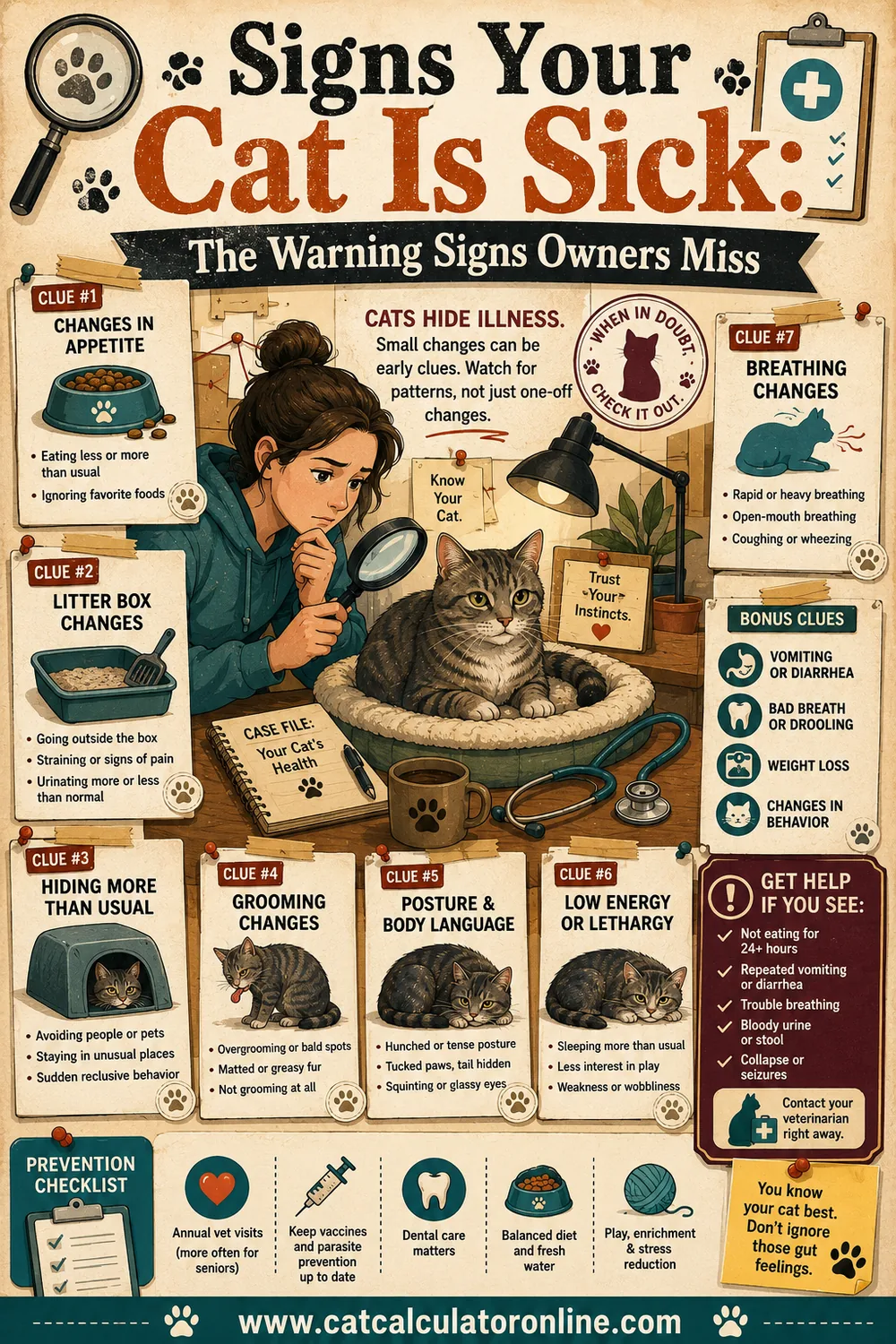
If your cat seems unwell after eating peanut butter and you're not sure whether it's connected, our guide to signs your cat is sick covers the subtle signals cats are so good at hiding.
Can I Use Peanut Butter to Hide My Cat's Pills?
It's tempting, because it works so well for dogs. For cats, it's a poor choice on almost every front.
First, most cats don't want peanut butter, so the core trick — "the treat is so exciting the pill goes unnoticed" — fails at step one. A cat who's suspicious of the medication and indifferent to the disguise is worse off than when you started.
Second, the texture works against you. Peanut butter's stickiness means the pill and the paste tend to get worked around the mouth rather than swallowed cleanly, and cats are expert at eating the coating and spitting out the tablet — or gagging on the sticky mass with the pill inside it.
Better options for pilling a cat:
- Commercial pill pockets made for cats — soft, meaty, designed for exactly this job
- A small piece of soft meaty treat or a smear of squeeze-tube cat treat — strong smell, easy swallow
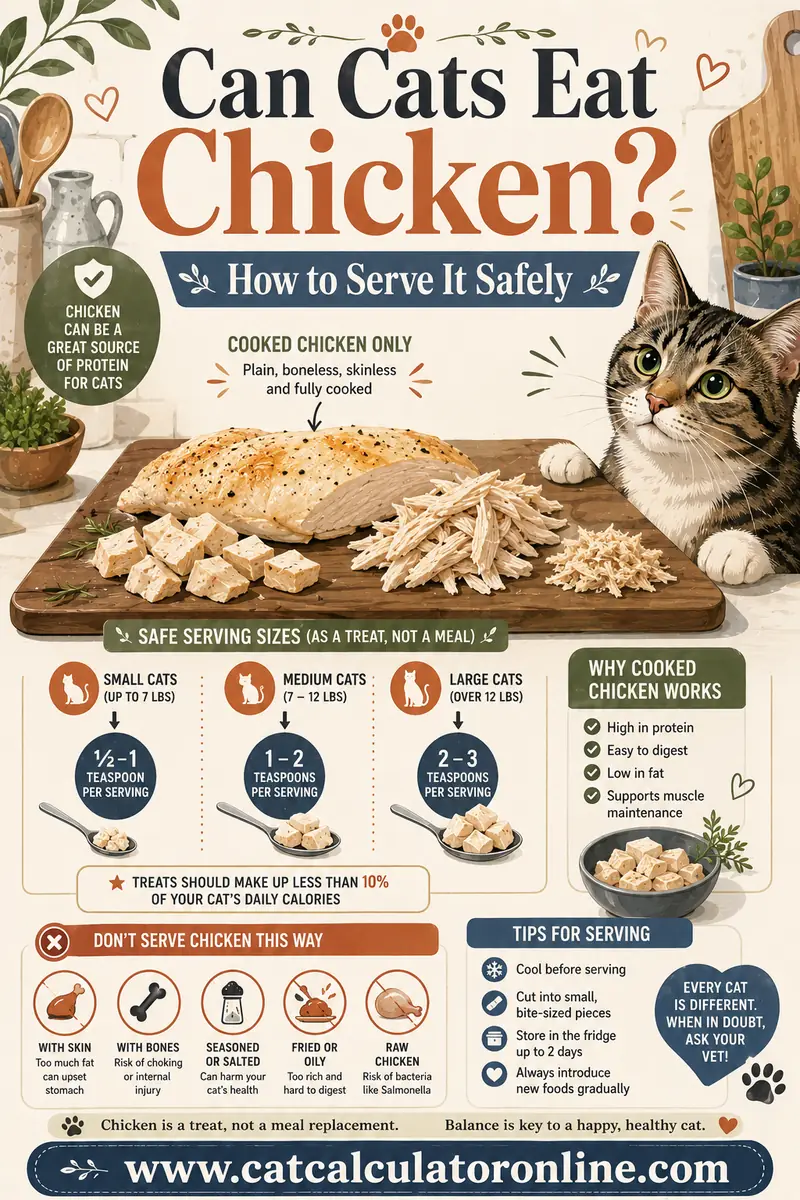
- A little plain cooked chicken wrapped around the pill — the classic that actually suits a carnivore
- Ask your vet or pharmacy about alternatives — some medications come as flavored liquids, transdermal gels, or can be compounded into treat form
If a medication truly must go down and nothing works, your vet team can demonstrate a proper pilling technique in one visit — it's a skill worth learning once.
What Should I Offer Instead of Peanut Butter?
The good news: the treats cats actually love are cheaper, safer, and easier to portion than peanut butter. The golden rule for all of them is the same — treats should stay at or under 10% of your cat's daily calories, with complete cat food making up the rest.
Reach for these instead:
- Plain cooked chicken or turkey — boneless, skinless, unseasoned. The universal favorite.
- Freeze-dried meat treats — single-ingredient, light, easy to budget calories with
- Commercial cat treats — formulated for cats, with feeding guidance on the pack
- A small piece of plain cooked fish — an occasional high-excitement option
- A lick of plain cooked egg — cooked through, never raw
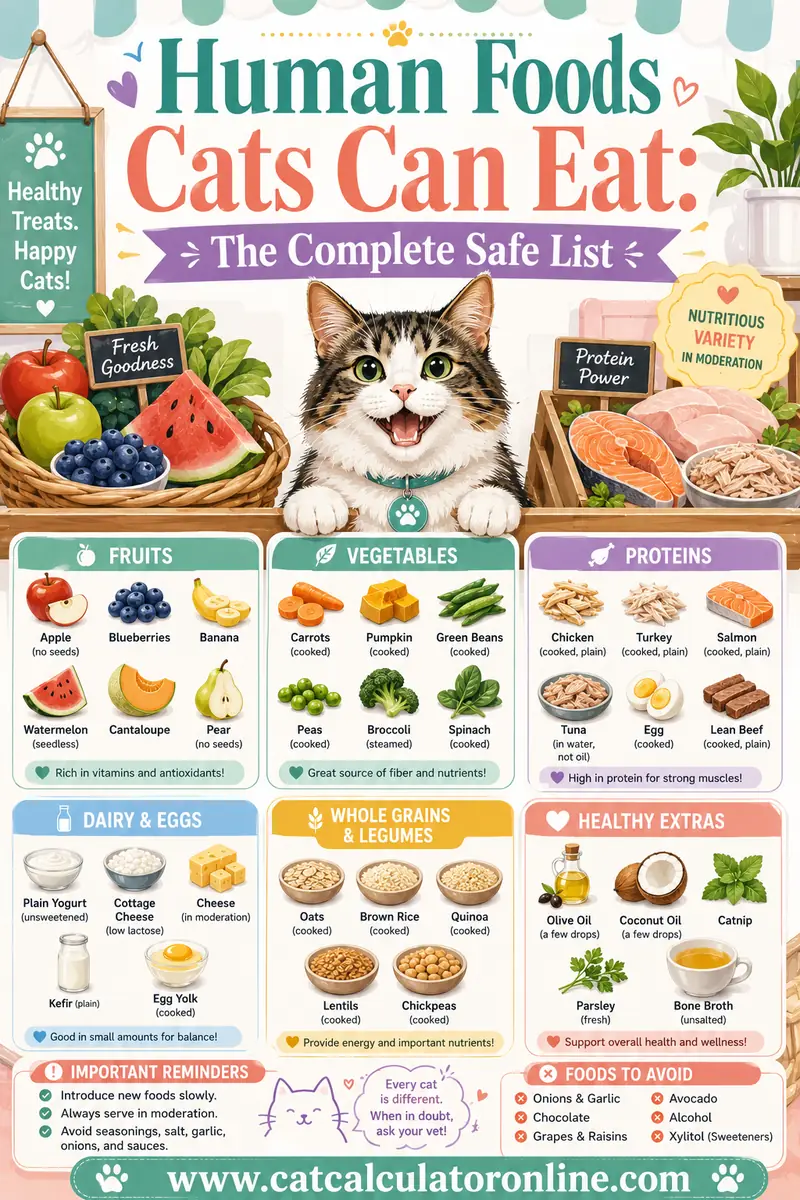
Every one of those delivers what peanut butter can't: actual animal protein that matches what a cat's body runs on. For the full menu of what's shareable from your kitchen — and what isn't — see human foods cats can eat.
And if you don't know what your cat's 10% treat budget actually is in numbers, that's exactly what our cat food calculator is for — enter her weight and life stage, and you'll know her daily calories and how much room that leaves for extras.
FAQ
Is peanut butter poisonous to cats?
Plain, xylitol-free peanut butter isn't poisonous — a small lick won't harm a healthy cat. But some brands contain xylitol (sometimes labeled birch sugar), which is toxic to pets, and the fat, calories, and sticky texture make even safe brands a poor treat.
My cat licked some peanut butter — should I worry?
Check the jar's ingredient list first. If there's no xylitol or birch sugar, a small lick is nothing to worry about; just watch for a bit of stomach upset. If xylitol is listed, call your vet or a pet poison helpline right away, even if she seems fine.
Why do dogs get peanut butter but cats don't?
Dogs enjoy sweet, rich flavors and handle the occasional fatty treat as part of a more omnivorous diet. Cats can't taste sweetness at all, get no nutritional benefit from legume fat, and struggle more with the sticky texture — so the risk-to-reward math simply never works in peanut butter's favor.
Can cats eat whole peanuts?
Plain, unsalted peanuts aren't toxic, but they're a choking hazard for a small mouth, hard to digest, and just as nutritionally pointless for a carnivore as the butter version. Salted, honey-roasted, and flavored nuts add salt and seasonings cats shouldn't have. Skip them.
Is a tiny bit of peanut butter okay as a rare treat?
If the label is xylitol-free and your cat genuinely likes it, a fingertip smear on rare occasions is tolerable for a healthy adult cat. Keep it small, keep it rare, and count it against her treat calories — but know that a piece of plain chicken is the better call every time.
Can kittens have peanut butter?
No — skip it entirely for kittens. Their airways are smaller, so the sticky choking risk is higher, their stomachs handle fat even less gracefully, and every calorie they eat should be doing developmental work. Kitten food and kitten-specific treats cover everything they need.
The Bottom Line
Peanut butter sits in an awkward category: not poisonous, but with nothing going for it. It's dense fat and calories a carnivore doesn't need, a sticky texture a small mouth handles badly, and — in some brands — a hiding place for xylitol, which is genuinely dangerous. Meanwhile your cat, who can't taste sweetness, was never that interested to begin with.
A rare fingertip smear of a xylitol-checked brand won't hurt a healthy adult cat. But as a habit, a pill hider, or a regular treat, there's a better answer every single time, and it's usually plain cooked chicken.
Keep treats under 10% of daily calories, keep the jar for your own toast, and if you want to know exactly what your cat's daily food and treat budget should look like, run her numbers through our free cat food calculator.