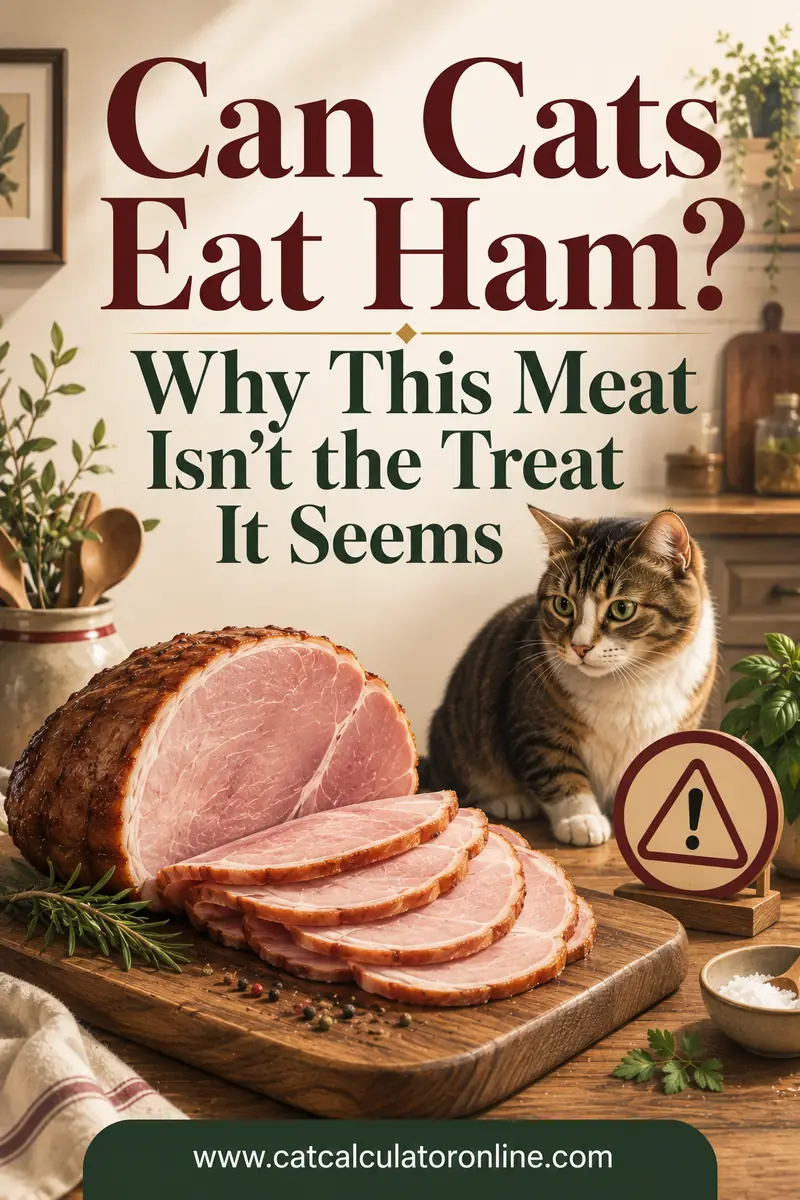
Can Cats Eat Ham? Why This Meat Isn't the Treat It Seems
A tiny piece of plain, fully cooked ham won't hurt most healthy cats — it is meat, after all, and cats are carnivores. But ham is one of the worst regular meat treats you can pick, because it's loaded with sodium, high in fat, and the deli and processed versions add nitrates and seasonings on top. If you want to share meat, plain cooked chicken or turkey beats ham every single time.
So: a stolen shred off your sandwich is almost never an emergency, but a ham habit shouldn't start. If you're figuring out what her daily diet should actually look like, our free cat food calculator works out her portions from her weight and life stage in seconds.
🍖 Is this ham safe for my cat?
Tap a type to see the verdict:
Tap a ham type above to see whether it’s safe for a cat.
Is Ham Safe for Cats to Eat?
In the narrowest sense, yes. Ham is cooked pork, pork is meat, and a small piece of plain cooked ham isn't toxic to a healthy adult cat the way chocolate, onion or grapes are. If your cat grabbed a shred while you were making a sandwich, you don't need to do anything except move the plate.
But "not toxic" and "good treat" are very different claims, and ham fails the second one. The problem isn't the pork — it's everything done to the pork on its way to becoming ham. Curing and processing pump it full of salt. The cuts used are fatty. Deli versions add preservatives and flavorings. By the time it reaches your fridge, ham is less "meat treat" and more "salt and fat delivery system."
That's why the practical answer looks like this: a fingernail-sized piece of plain cooked ham, offered rarely, is fine for most healthy cats. Anything more, anything regular, or anything glazed, cured or seasoned — no.
Why Is Ham So Salty, and Why Does That Matter for Cats?
Salt is the heart of the ham problem, so it's worth understanding.
Ham is preserved meat. Whether it's brined, dry-cured or injected, the process that makes pork into ham drives large amounts of sodium into it — that's what makes it taste like ham. A couple of slices of deli ham can carry more sodium than a whole day's worth of a cat's complete food, and a cat is a small animal with small kidneys doing the filtering.
What too much sodium does to a cat:
- Excessive thirst and urination — the first and most common sign after a salty snack.
- Digestive upset — vomiting and diarrhea as her system tries to cope.
- Strain on the kidneys and heart — a cat's body has to work hard to clear a sodium load, which is trivial once but a real burden as a habit.
- In large amounts, sodium toxicity — tremors, disorientation and worse. This is rare from ham scraps, but it's why "the cat got into the Christmas ham" is a vet call, not a shrug.
One salty shred won't cause a crisis in a healthy cat. But a routine of ham treats means a routine sodium load, and that's a slow problem you never see coming.
For cats with kidney disease or heart conditions, skip ham entirely — not even a shred. Sodium restriction is a core part of managing both conditions, and a salty treat works directly against everything her prescription diet is doing. The same caution applies to cats on blood-pressure medication. When in doubt, ask your vet, and offer a pinch of plain chicken instead.
What About the Fat in Ham?
Fat is ham's second strike. The cuts used for ham — and especially the rind, the trimmings and the juices in the pan — are rich in fat, and a cat's digestive system doesn't handle sudden rich, fatty meals gracefully.
The immediate risk is straightforward: vomiting and diarrhea, usually within hours. The bigger concern is pancreatitis — a painful inflammation of the pancreas that's linked to rich, fatty foods in pets. It can make a cat seriously ill, it often needs hospital care, and holiday leftovers are a classic trigger. The "let the cat have the fatty bits" instinct is exactly the wrong one.
There's also the quiet math problem. Ham is calorie-dense, and a typical indoor cat needs only around 200 calories a day. A modest cube of ham can swallow a big chunk of her whole treat budget while delivering mostly fat and salt. If you're not sure what her daily number is, our how much should I feed my cat guide walks you through it.
Which Types of Ham Are Worst for Cats?
Not all ham is equally bad — it runs from "poor choice" to "never." Here's the ranking:
| Ham type | Verdict | Why |
|---|---|---|
| Plain cooked ham (unseasoned) | Tiny piece, rarely | Not toxic, but high salt and fat make it a poor pick |
| Deli / sandwich ham | Poor choice — skip | Extra sodium, nitrates/nitrites and flavorings in every slice |
| Glazed holiday ham | No | Sugar or honey glaze, mustard, cloves — and often garlic, which is toxic |
| Prosciutto, serrano, other cured hams | No | Curing concentrates salt to extreme levels |
| Smoked ham | No | Heavy salt plus smoke flavorings and seasonings |
| Canned ham / ham spread | No | Among the saltiest, most processed forms; spreads often add onion or garlic |
| Ham fat, rind and pan juices | No | Concentrated fat — digestive upset and pancreatitis risk |
| Ham bone | Never | Cooked bone splinters; can pierce or obstruct the gut |
Two entries deserve a spotlight.
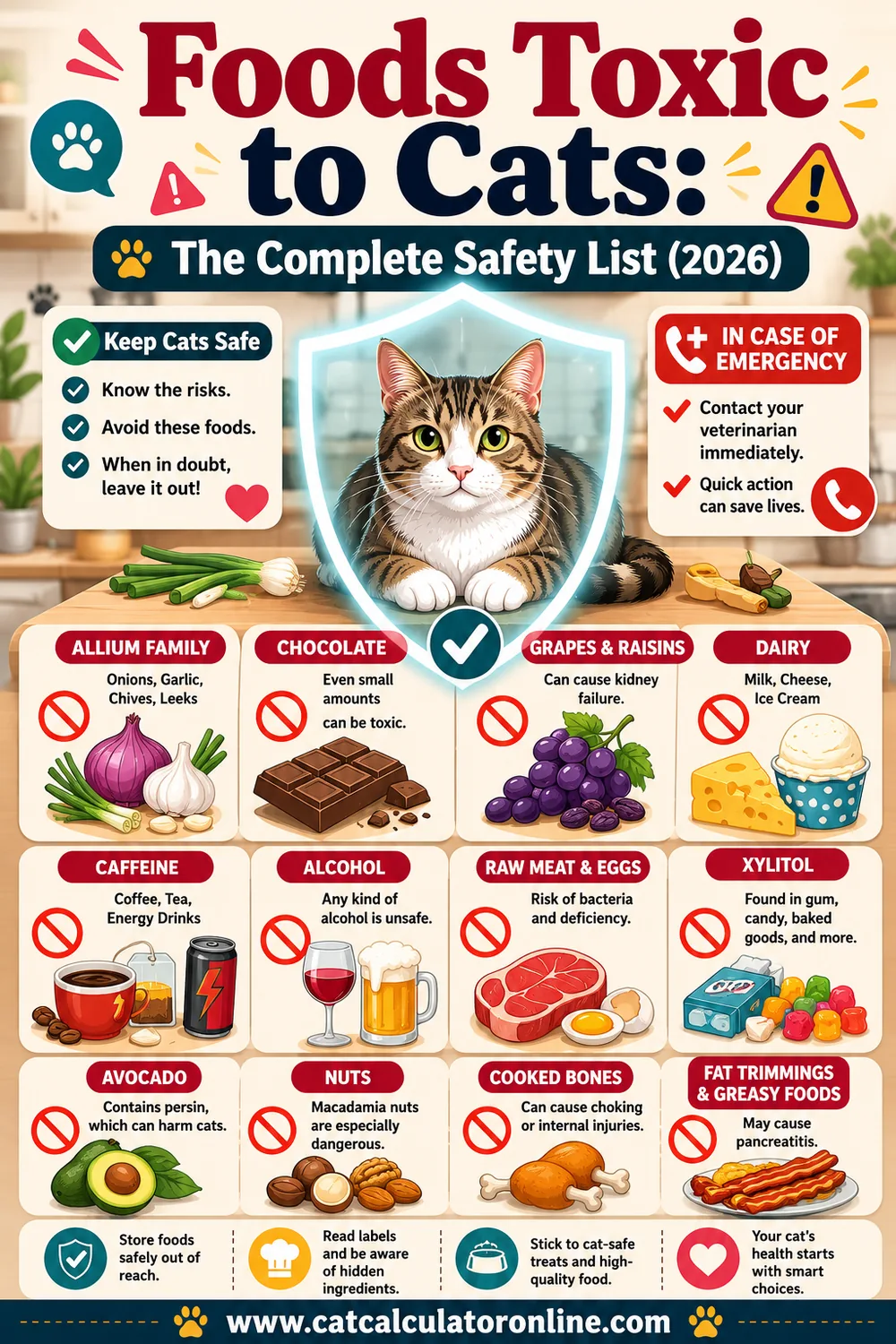
Glazed and seasoned ham is the holiday hazard. The glaze is sugar a cat can't even taste, and the seasoning often includes garlic or onion in some form — both toxic to cats, both capable of damaging red blood cells with symptoms that can lag days behind the meal. If your holiday ham was cooked with garlic and the cat got into it, that's a call to the vet, not a wait-and-see. Our guide to foods toxic to cats covers the whole allium family and where it hides.
The ham bone is the most dangerous object on the platter. Cooked bones become brittle and splinter into sharp fragments that can pierce the mouth, throat or gut, or wedge into an obstruction — and this particular bone comes wrapped in salt and fat. No supervised gnawing, no exceptions. Straight into a latched bin.
My Cat Ate Ham — What Should I Do?
For most situations, nothing dramatic. Here's how to triage it:
- A shred or small piece of plain ham, healthy adult cat: no action needed. Maybe extra thirst for a few hours. Refill the water bowl and move on.
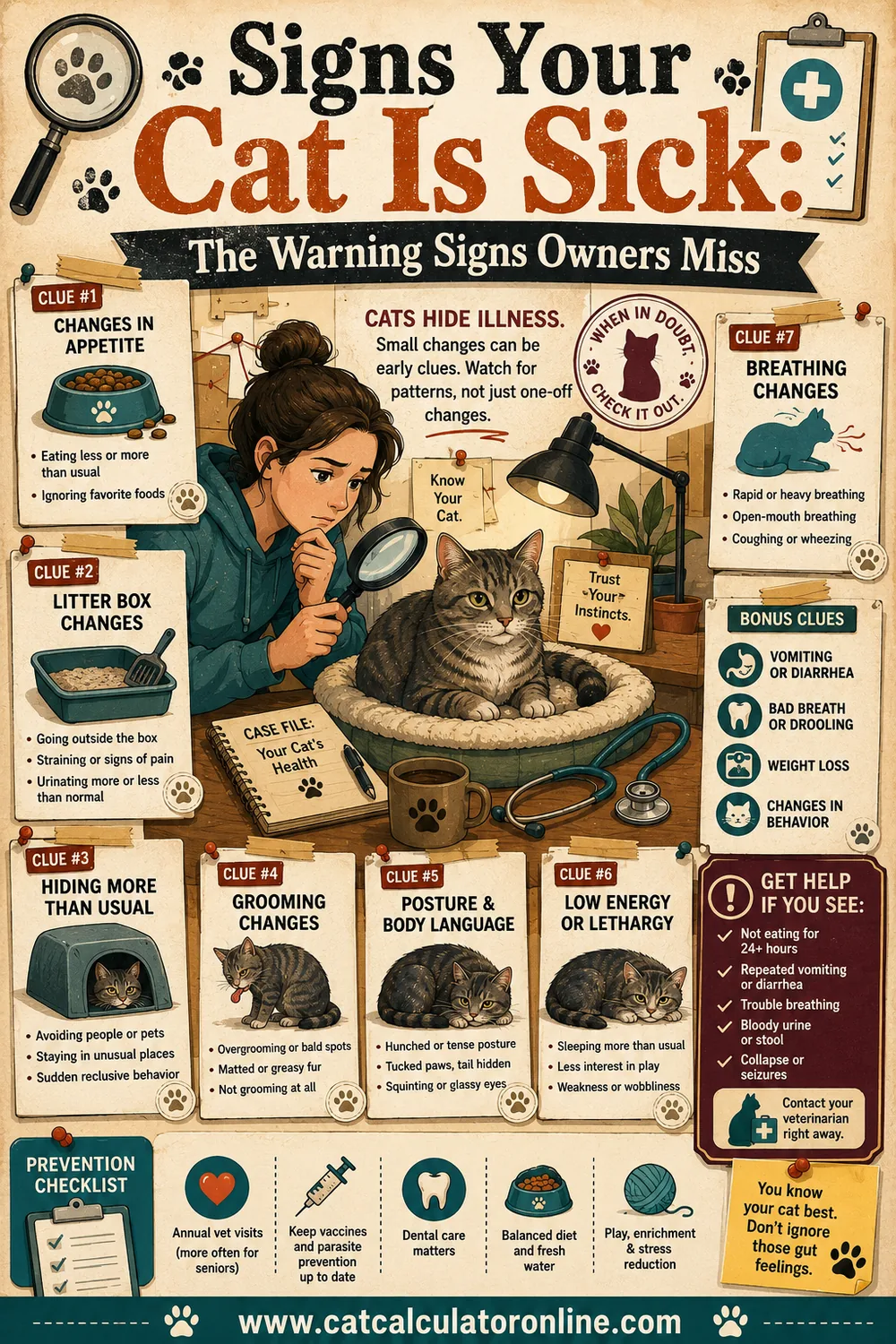
- A larger amount, or fatty trimmings: watch her for the next day or so. Vomiting, diarrhea, a hunched posture, lethargy or refusing food are your cues to call the vet — repeated vomiting or a painful belly can point to pancreatitis, which needs prompt care.
- Glazed or seasoned ham that involved garlic or onion: call your vet and say exactly that. Allium damage can show up days later as weakness, pale gums or dark urine, so early advice beats waiting for symptoms.
- Any amount of ham bone: call your vet now. Don't induce vomiting — splinters are as dangerous coming up as going down. Signs like gagging, drooling, straining, vomiting or a painful abdomen mean you're going in.
- A cat with kidney or heart disease who got into ham: call your vet for guidance even if she seems fine. Her sodium margin is far thinner than a healthy cat's.
Cats are experts at hiding discomfort, so subtle changes — sleeping in odd spots, skipping a meal, going quiet — carry more weight than owners expect. Our guide to signs your cat is sick covers the low-key warnings worth acting on.
How Should I Share Ham If I Really Want To?
If your cat is a ham fanatic and you've decided a rare taste is worth it, keep it inside these lines:
- Plain cooked ham only — never glazed, cured, smoked or deli-sliced.
- A fingernail-sized piece, cut small. That's the serving, not the first serving.
- Rarely — think "a few times a year," not weekly.
- Trim every scrap of fat and rind before it gets anywhere near her.
- No pan juices, no glaze drippings, no "just a lick" of the roasting tray — that's salt and fat in liquid form.
- Count it against the treat budget. Everything that isn't complete cat food should stay under 10% of her daily calories — for most cats, that's roughly 20 calories a day total, shared across every treat she gets.
And honestly? The better version of this ritual is swapping the ham for turkey or chicken. Same meaty moment, same happy cat, none of the sodium problem.
What Are Better Meat Treats Than Ham?
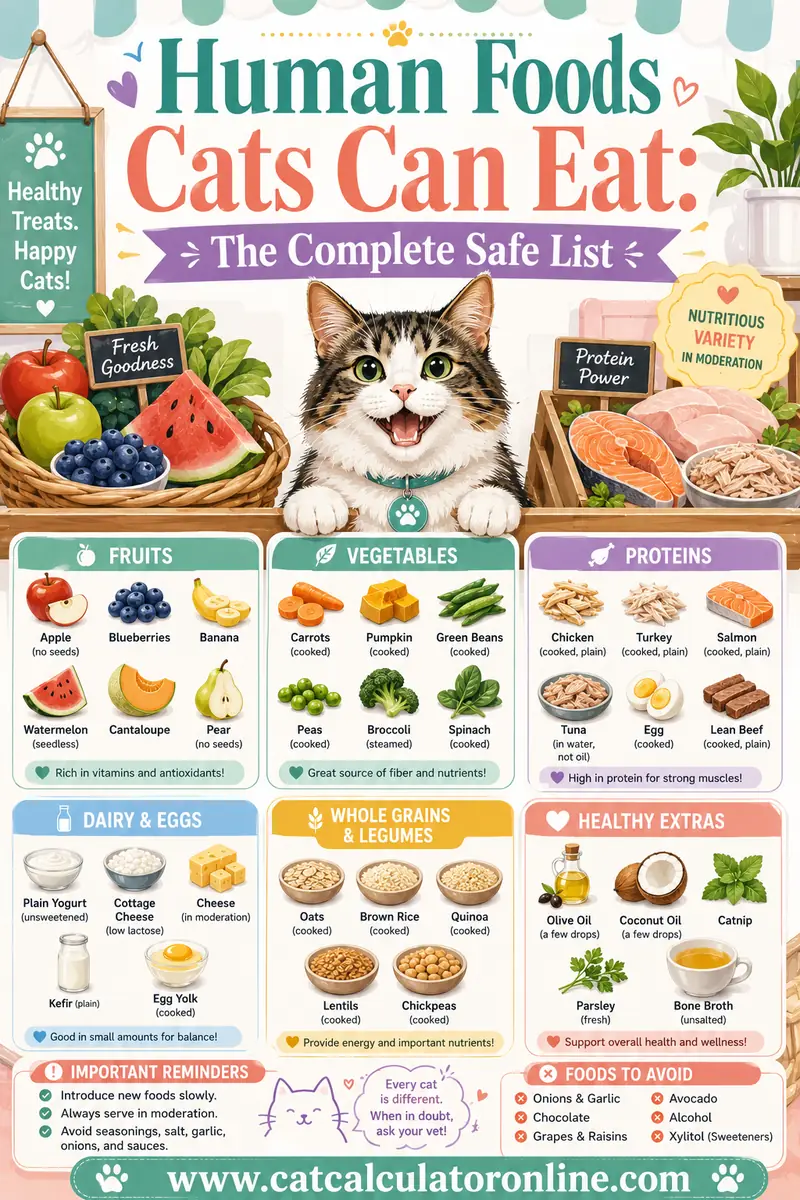
Cats don't love ham because it's ham — they love it because it's meat with a strong savory smell. Every one of these scratches the same itch more safely:
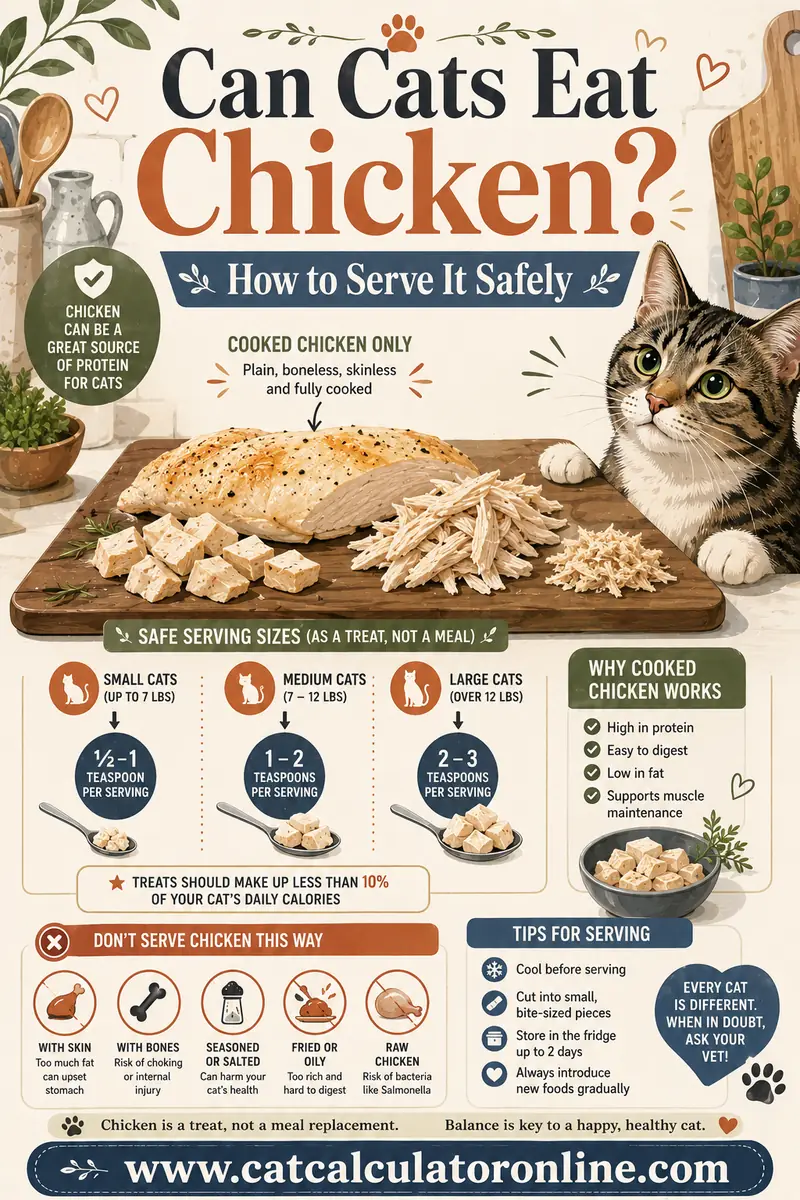
- Plain cooked chicken — boneless, skinless, unseasoned. The benchmark cat treat; here's the full guide to feeding cats chicken.
- Plain cooked turkey — same rules, and the better swap at holiday time when the ham's on the table.
- Plain cooked lean pork — interestingly, unprocessed pork without the curing is a reasonable occasional treat; it's the ham-making that ruins it.
- Plain cooked white fish — a flake or two, unseasoned.
- Freeze-dried meat treats — single-ingredient, intensely savory, and most cats prefer them to table scraps anyway.
For the wider menu of what's genuinely shareable from your plate — and what isn't — see human foods cats can eat.
FAQ
Can cats eat ham safely?
A tiny piece of plain cooked ham occasionally won't hurt most healthy cats — it's meat, not a toxin. But ham's high sodium and fat make it a poor regular treat, and glazed, cured, deli and seasoned hams should be skipped entirely.
Why is ham bad for cats if cats are carnivores?
It's not the pork, it's the processing. Curing and brining load ham with sodium, the cuts are fatty, and deli versions add nitrates and flavorings. Plain cooked chicken or turkey gives a cat the same meaty treat without the salt and fat problem.
Can cats eat deli ham or lunch meat?
Best not. Deli ham is among the most processed forms — extra sodium, preservatives and flavorings in every slice. One stolen shred is no emergency, but don't offer it on purpose.
Can I give my cat a ham bone?
Never. Cooked bones splinter into sharp fragments that can pierce or obstruct a cat's digestive tract, and a ham bone is also coated in salt and fat. Dispose of it in a bin your cat can't open, and call your vet if she's already chewed one.
Can cats with kidney disease eat ham?
No — skip it completely, even a shred. Managing kidney disease (and heart disease) depends partly on restricting sodium, and ham is one of the saltiest things in the kitchen. Offer a pinch of plain cooked chicken instead, and clear treats with your vet.
My cat ate glazed holiday ham — should I worry?
Call your vet if the glaze or cooking involved garlic or onion, both of which are toxic to cats, or if she ate a large or fatty amount. For a small bite of plain-ish ham, watch for vomiting, diarrhea or lethargy over the next day and call if anything appears.
The Bottom Line
Ham sits in an awkward spot: it's meat, so a tiny plain piece now and then won't harm most healthy cats — but the salt and fat that make ham taste like ham also make it one of the weakest choices you can pick as a treat. Deli slices, glazed holiday hams, cured prosciutto and anything seasoned move from "weak choice" to "no," and the ham bone is a flat never. Cats with kidney or heart conditions shouldn't get ham at all.
When the meaty urge to share strikes, reach past the ham for plain cooked chicken or turkey — same joy, none of the sodium.
And to make sure treats stay treats — under 10% of her day, with the rest coming from food built for her — run her numbers through our free cat food calculator. Ten seconds, and you'll know exactly what her bowl should hold.