Can Cats Eat Fruit?
Most fruit is harmless to cats and almost entirely pointless for them — because your cat physically cannot taste sweetness. The gene for the sweet taste receptor is broken in cats, an evolutionary consequence of being a strict meat-eater, so the whole appeal of fruit is invisible to her. A cat licking ice cream is after the fat, not the sugar. That said, a few fruits genuinely matter: grapes and raisins are treated as unsafe at any amount, stone fruit pits contain cyanogenic compounds and block guts, and citrus oils are irritating. Everything else is a small, sticky, calorie-carrying nothing. Here is the safe list, the never list, and the honest reason your cat is unimpressed. For her real calorie budget, use the free cat food calculator.
The Short Answer
Everything most people are actually asking, in six lines.
Safe in small amounts: melon, watermelon, banana, blueberry, strawberry, raspberry, blackberry, peeled apple, pear, peach flesh, mango flesh and pineapple flesh. All plain, all fresh, all with seeds, stones and skin removed.
Never: grapes, raisins, golden raisins and currants. Cherry, peach, plum and apricot stones. Apple pips. Avocado stone and skin. Anything containing xylitol.
Best avoided: citrus of all kinds, because the oils are irritating and cats reliably dislike them anyway. Unripe tomato, which is really a fruit and contains solanine.
No fruit is necessary. Your cat needs taurine, arachidonic acid and preformed vitamin A from animal tissue. Fruit supplies none of them.
Portion is a teaspoon-sized piece, offered occasionally, and it counts against her treat allowance.
And most cats will sniff and walk off, which is not fussiness. It is biology, and the next section explains it.
Why Your Cat Ignores Fruit
The mechanism here is one of the genuinely satisfying facts in feline biology.
Cats cannot taste sweetness. One of the two genes needed to build the sweet taste receptor — Tas1r2 — is non-functional in cats. It exists in the genome as a broken remnant.
This is a consequence of being a strict carnivore. Sweet taste evolved to identify energy-rich plant food. An animal that has eaten nothing but meat for millions of years has no use for it, and the gene degraded.
All cats have this, from your tabby to a lion. It is a family-wide trait, not an individual quirk.
Cats also have far fewer taste buds than we do — around 470, against roughly 9,000 in humans — and they rely much more heavily on smell to decide whether something is food.
What they are sensitive to instead is savory. Cats detect amino acids and nucleotides — the chemistry of meat — very well indeed, and that is what makes a food appealing to them.
So the fruit on your plate is, to her, a wet lump with an odd smell. If she takes an interest, it is usually the texture, the coldness, the novelty or the fact that you are eating it.
The Safe List, With Portions
| Fruit | How to serve | Portion | Notes |
|---|---|---|---|
| Melon, cantaloupe | Flesh only, no rind or seeds | 1–2 small cubes | The fruit cats most often like |
| Watermelon | Seedless flesh only | 1–2 small cubes | Mostly water; harmless |
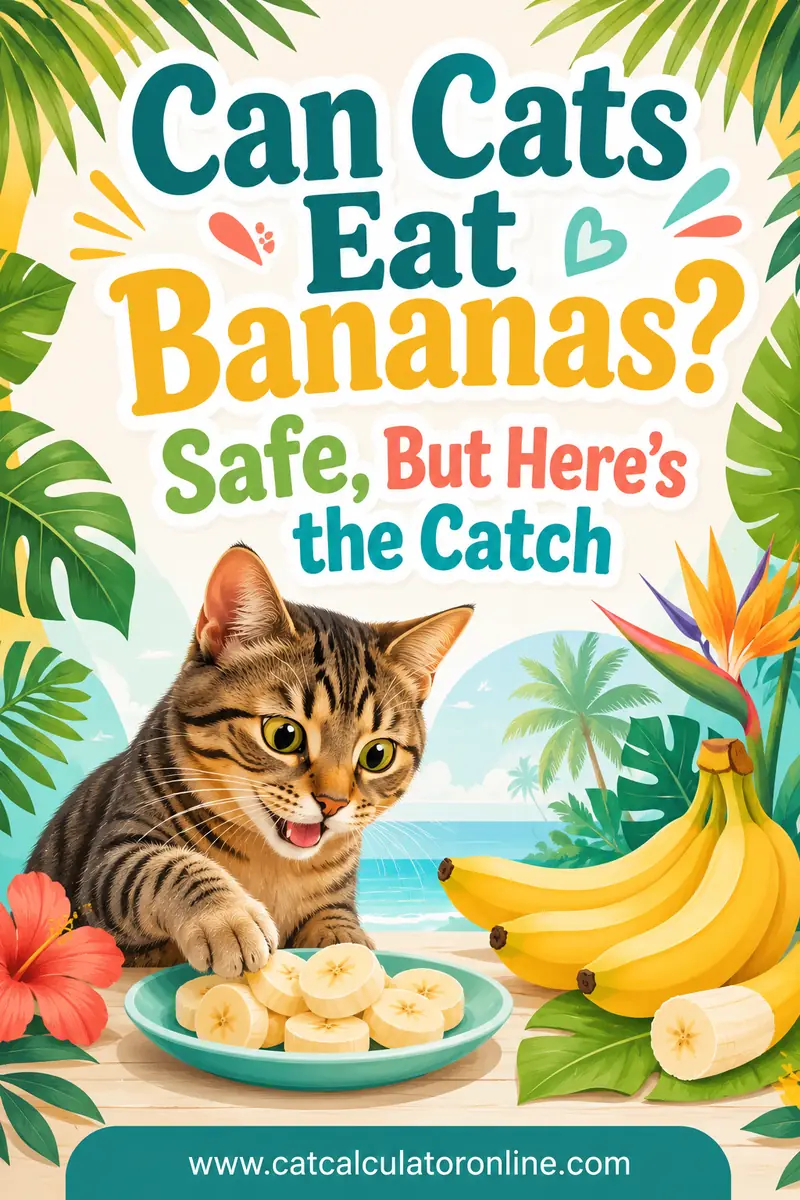
| Banana | Peeled, thin slice | A thin slice | High in sugar; see the full guide |
| Blueberries | Whole or halved | 2–3 berries | Safe; rarely wanted |
| Strawberry | Hulled, sliced | Half a berry | Safe |
| Raspberry, blackberry | Whole | 1–2 berries | Safe |
| Apple | Peeled, no core or pips | A few small pieces | Pips contain cyanogenic compounds |
| Pear | Peeled, no core or pips | A few small pieces | As apple |
| Peach, nectarine | Flesh only, stone removed | A small piece | Stone is a serious hazard |
| Mango | Flesh only, skin and stone removed | A small piece | Very sugary |
| Pineapple | Fresh flesh only, no core or skin | A small piece | Never tinned in syrup |
| Cranberry | Fresh or plain dried, unsweetened | 1–2 | No evidence it treats urinary disease in cats |
| Grapes, raisins, golden raisins, currants | — | None | Treated as unsafe at any amount |
| Citrus (orange, lemon, lime, grapefruit) | — | Avoid | Oils are irritating; cats dislike them |
| Avocado | — | Flesh low risk; stone and skin no | Choking and obstruction hazard |
Fresh, plain and small is the whole method. No syrup, no sugar, no cream, no chocolate.
Remove every seed, pip, stone and piece of skin. These are the parts that cause the actual injuries.
Introduce one fruit at a time and leave 24 hours before offering another, so you know what caused any upset stomach.
Bananas get their own guide because they come up so often and the sugar question is a real one — see can cats eat bananas.
The Never List, and Why
Five specific hazards, each for its own reason.
Grapes, raisins, golden raisins and currants. These cause sudden kidney failure in dogs at doses that make no sense — some dogs eat a lot and are fine, others develop kidney injury after a handful. No safe dose has ever been established, the mechanism is not understood, and reported feline cases exist but are rare. Rare reports are not evidence of safety; cats simply eat far fewer grapes. Treat them as unsafe and call your vet if she has had any. The full picture is in can cats eat grapes.
Stone fruit pits. Cherry, peach, plum, apricot and nectarine stones contain cyanogenic glycosides, which release cyanide when crushed. More practically, a stone is exactly the right size to obstruct a cat's intestine. Apple and pear pips contain the same compounds in smaller amounts.
Xylitol, sometimes labeled birch sugar. It turns up in sugar-free dried fruit snacks, fruit-flavored yoghurts, jams and baked goods. There is no safe amount for a pet, and "sugar-free" on any label should be read as "do not give this".
Citrus oils. The oils in peel and pith are irritating to the mouth and stomach and can cause drooling and vomiting. In practice most cats refuse citrus outright, which is a useful piece of self-protection.
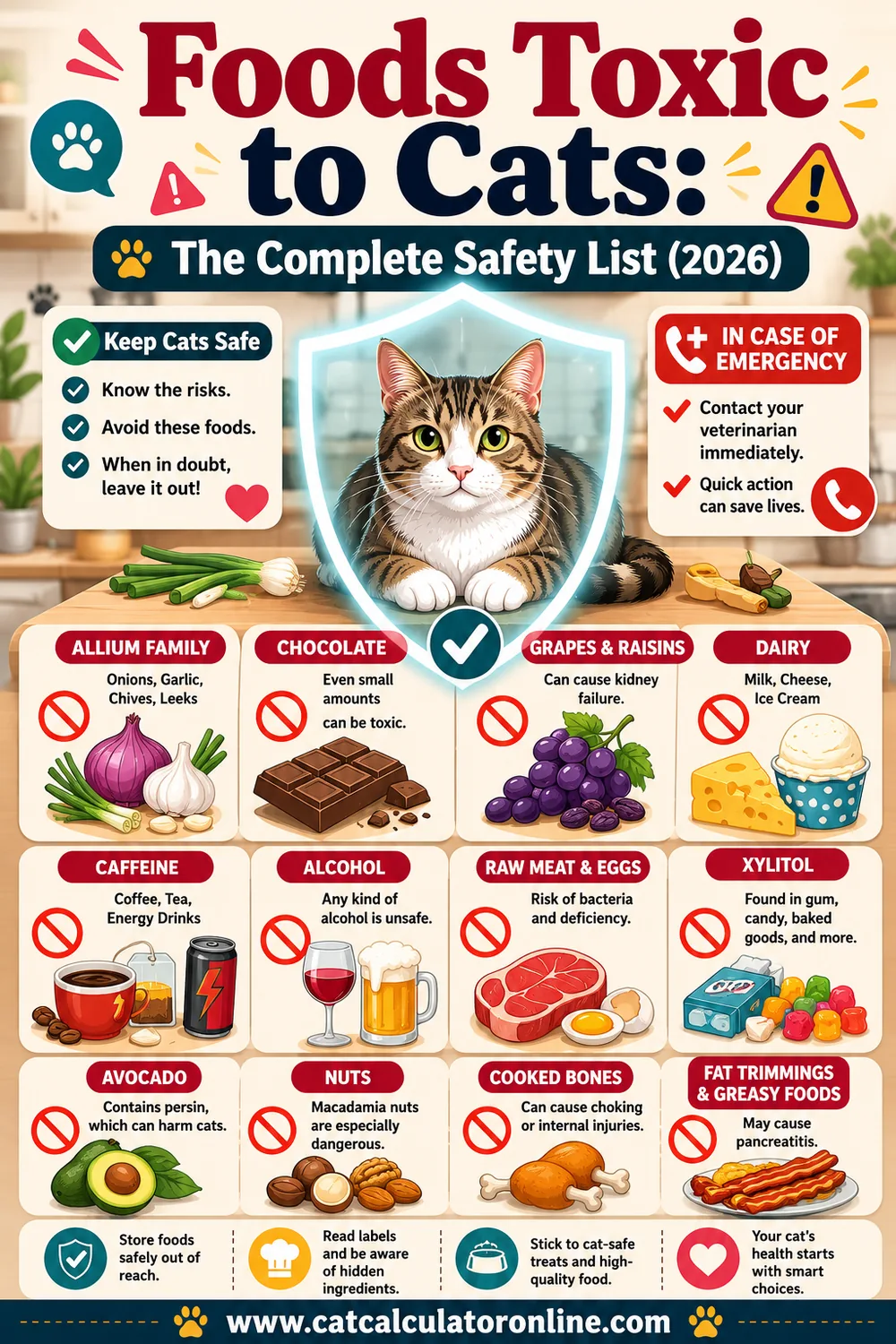
Avocado. The flesh in small amounts is low risk, but the stone is a choking and obstruction hazard and the plant contains persin. Guacamole adds onion and garlic on top, which is a separate and serious problem — see foods toxic to cats.
Sugar, Weight and Diabetic Cats
Fruit is not toxic, but the sugar is not free either, and for some cats it matters.
Cats have no dietary requirement for carbohydrate. They can use it, but their metabolism is built to run on protein and fat.
Fruit sugar is real calories in a very small animal. A 9 lb (4 kg) cat eats around 200–250 kcal a day. A thin slice of banana is a measurable fraction of her treat allowance.
The 10% rule is the control. Everything that is not complete cat food — treats, human food, fruit, dental sticks — should total no more than about 20–25 kcal a day for that cat. The counting method is in cat treats: how many are too many.
Take the calories out of the meal rather than adding them on top. Treats on top of full portions is the quiet route to a heavier cat.
Diabetic cats should not have fruit. Blood glucose control in a diabetic cat depends on consistency, and sugary snacks work against it directly. If your cat is drinking more, urinating more, losing weight while eating well, or has a newly ravenous appetite, that is a vet visit — see diabetes in cats.
Overweight cats do not need extra calories from anything, and a cat losing weight should do it on a properly formulated diet, not by swapping food for fruit.
Dried Fruit, Juice and Fruit-Flavored Anything
The processed end of the aisle is where the real risks concentrate.
Dried fruit is concentrated sugar. Removing the water multiplies everything per gram, including the sugar and, in the case of raisins, whatever causes the kidney harm.
Fruit juice is sugar without the fiber. There is no reason to give it, and water is the only drink a cat needs.
Tinned fruit in syrup adds a large sugar load and sometimes preservatives.
Fruit yoghurts combine sugar, lactose and sometimes xylitol. Most adult cats digest lactose poorly, so this is a bad combination twice over.
Jam, fruit pie filling and fruit-flavored baked goods bring sugar, fat and, frequently, raisins.
Smoothies and fruit purées are easy for a cat to lap up quickly, which removes the natural portion control that a whole piece of fruit provides.
And check any "sugar-free" label carefully. Xylitol is the single most common hidden hazard in this whole category.
The Cat Who Actually Likes Melon
Some cats genuinely go for melon, and it is worth being honest about why we do not fully know.
Melon is the fruit cats most often show interest in, and enough owners report it that it is not a coincidence.
One proposed explanation is that ripe melon releases volatile compounds chemically similar to some of those found in meat, so it may smell faintly like food to a cat. That is a plausible hypothesis rather than an established fact, and it is worth saying so.
Other candidates are simpler: cold, wet, novel texture, and the fact that you are eating it and she wants what you have.
If your cat likes melon, that is fine. One or two small cubes of flesh, no rind, no seeds, occasionally. It is one of the lowest-sugar fruits and mostly water.
Do not build a habit around it, and do not let it displace her proper food.
And do not take an interest in fruit as a sign she needs it. Cats also enjoy plastic bags, warm laptops and the inside of cardboard boxes. Curiosity is not a nutritional signal.
How to Offer Fruit, and Who Should Skip It
The practical version, including the cats who should be left out.
Wash it, peel it, and remove every seed, pip, stone and piece of skin.
Cut it into pieces a cat can swallow safely — pea-sized is about right, and whole grapes-sized objects are a choking risk regardless of the fruit.
Offer it on a saucer, not in her food bowl. Putting novelties in the main bowl teaches her that the bowl is unpredictable, which is how fussiness starts.
One new fruit at a time, and wait a day before offering another.
Stop if you see vomiting, loose stools, itching or a drop in appetite.
Skip fruit entirely for: kittens, whose calories should all be doing growth work; diabetic cats; overweight cats; cats on a prescription or elimination diet; and cats with inflammatory bowel disease or chronic diarrhea unless your vet has said otherwise.
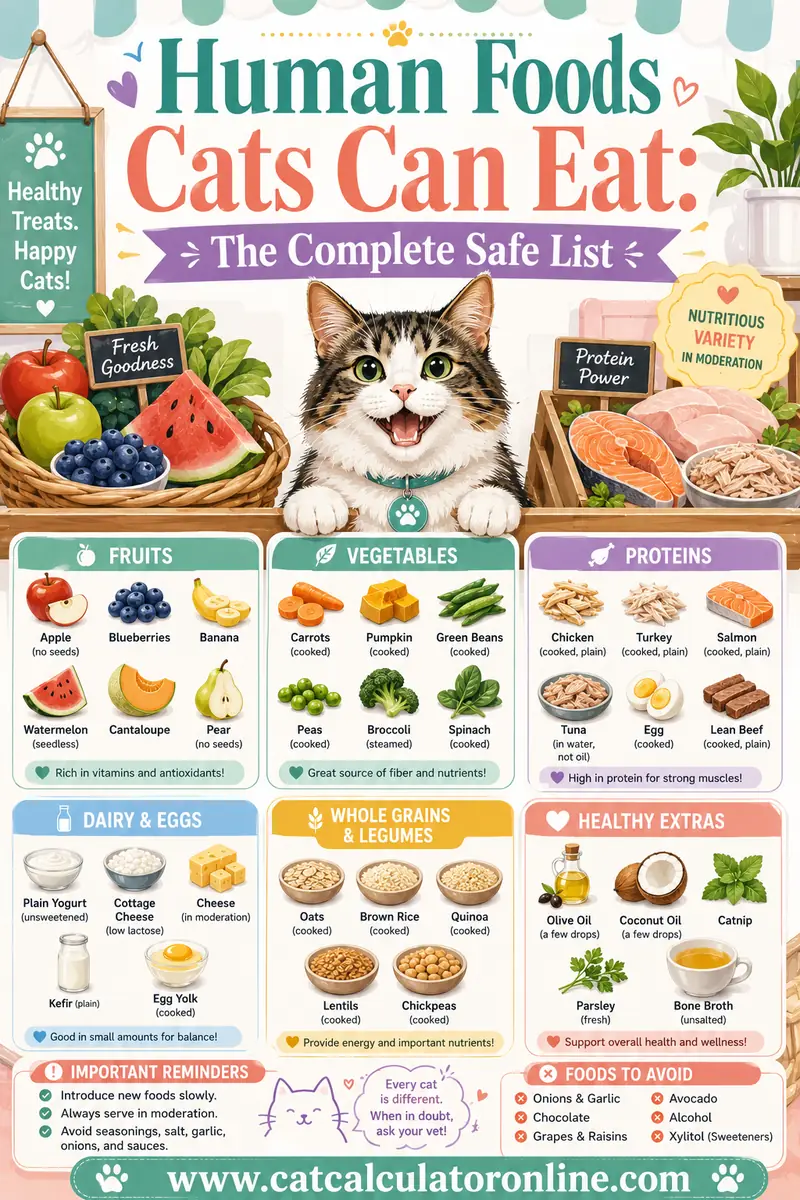
And remember the better offer. A thumbnail-sized piece of plain cooked chicken will be received far more enthusiastically than any fruit, and it is food she is actually built to eat. The full map is in human foods cats can eat, with the vegetable version in can cats eat vegetables.
Frequently Asked Questions
Can cats eat fruit safely?
Most fruit is safe for cats in small plain pieces: melon, watermelon, banana, berries, peeled apple and pear, and the flesh of peach, mango or pineapple. Remove all seeds, pips, stones and skin. Grapes, raisins, stone fruit pits and anything containing xylitol are never safe.
Why do cats not like fruit?
Cats cannot taste sweetness. The gene needed to build the sweet taste receptor is non-functional in all cats, an evolutionary consequence of eating only meat. They also have around 470 taste buds compared with about 9,000 in humans, and rely mainly on smell to identify food.
What fruit is toxic to cats?
Grapes, raisins, golden raisins and currants are treated as unsafe at any amount because of the kidney injury they cause in dogs. Cherry, peach, plum and apricot stones and apple pips contain cyanogenic compounds and can obstruct the gut. Citrus oils irritate, and avocado stones are a choking hazard.
Can cats eat watermelon or melon?
Yes, in small amounts. Melon is the fruit cats most often show interest in, possibly because ripe melon releases compounds that smell faintly meaty, although that remains a hypothesis. Serve one or two small cubes of flesh with no rind or seeds, occasionally rather than daily.
Is fruit good for cats nutritionally?
No. Cats are obligate carnivores who need taurine, arachidonic acid and preformed vitamin A from animal tissue, and fruit provides none of them in a usable form. Fruit supplies sugar, water and a little fiber, all of which a complete cat food already covers.
How much fruit can I give my cat?
A teaspoon-sized piece, occasionally. All treats combined should stay within about 10% of daily calories, which is roughly 20–25 kcal for a typical 9 lb (4 kg) adult cat. Subtract those calories from her meal rather than adding them on top, and skip fruit entirely for diabetic cats.
Fruit is one of the easier categories to get right, because the honest answer is mostly "harmless, and she will not care". Melon, banana, berries, peeled apple and the flesh of stone fruit are all safe in teaspoon-sized pieces with every seed, pip and stone removed. Grapes and raisins are the real exception and should be treated as unsafe at any amount, with a phone call to your vet if she has eaten one. Stone fruit pits, apple pips, citrus oils, avocado stones and anything labeled sugar-free all belong on the never list too. Beyond that, remember that your cat cannot taste sweetness at all — the whole point of fruit is invisible to her — so a thumbnail of plain cooked chicken is a far better offering. Keep every extra inside 10% of her daily calories using the free cat food calculator.