Can Cats Eat Bananas? Safe, But Here's the Catch
Yes — bananas are non-toxic to cats, and a thin slice as a rare treat won't hurt a healthy adult. But that's the whole good news. Bananas are high in sugar and carbs a carnivore has no use for, most cats are completely indifferent to them (cats can't even taste sweetness), and overweight or diabetic cats should skip them entirely.
In other words: if your cat stole a lick of banana, you can stop worrying right now. If you're wondering whether banana should become a regular treat — it shouldn't, and this guide explains why, plus what to offer instead. To see what your cat's daily food should actually look like, our free cat food calculator gives you her numbers in seconds.
🍌 Banana check — safe for my cat?
Tap an option to see the verdict:
Tap an option above to see whether it’s safe for a cat.
Check your cat’s daily food needs with the free calculator →
Are Bananas Safe for Cats?
Bananas don't appear on any list of foods toxic to cats, and that's meaningful — plenty of common fruits do. Grapes and raisins are dangerous, and citrus causes trouble too, so it's genuinely worth checking fruit by fruit. Bananas pass the toxicity test: no compound in the fruit's flesh poisons a cat at treat-sized amounts.
Safe-from-poisoning isn't the same as good-for-her, though. Here's the fuller picture:
- A thin slice, occasionally, for a healthy adult cat: fine. No panic needed, no vet call, no drama.
- As a regular treat: a bad habit. Bananas are among the more sugar-dense fruits, and sugar is exactly what a cat's diet shouldn't be accumulating.
- For some cats: skip entirely. Diabetic cats, overweight cats, and cats with sensitive stomachs get nothing but downside from fruit sugar.
Cats are obligate carnivores. Their digestive systems are tuned for animal protein and fat, with very little machinery for handling plant sugars and starches. A cat can tolerate a bit of banana; her body just has no use for it. That's the honest frame for every fruit question: not "is it forbidden?" but "is there any point?" — and with bananas, there mostly isn't.
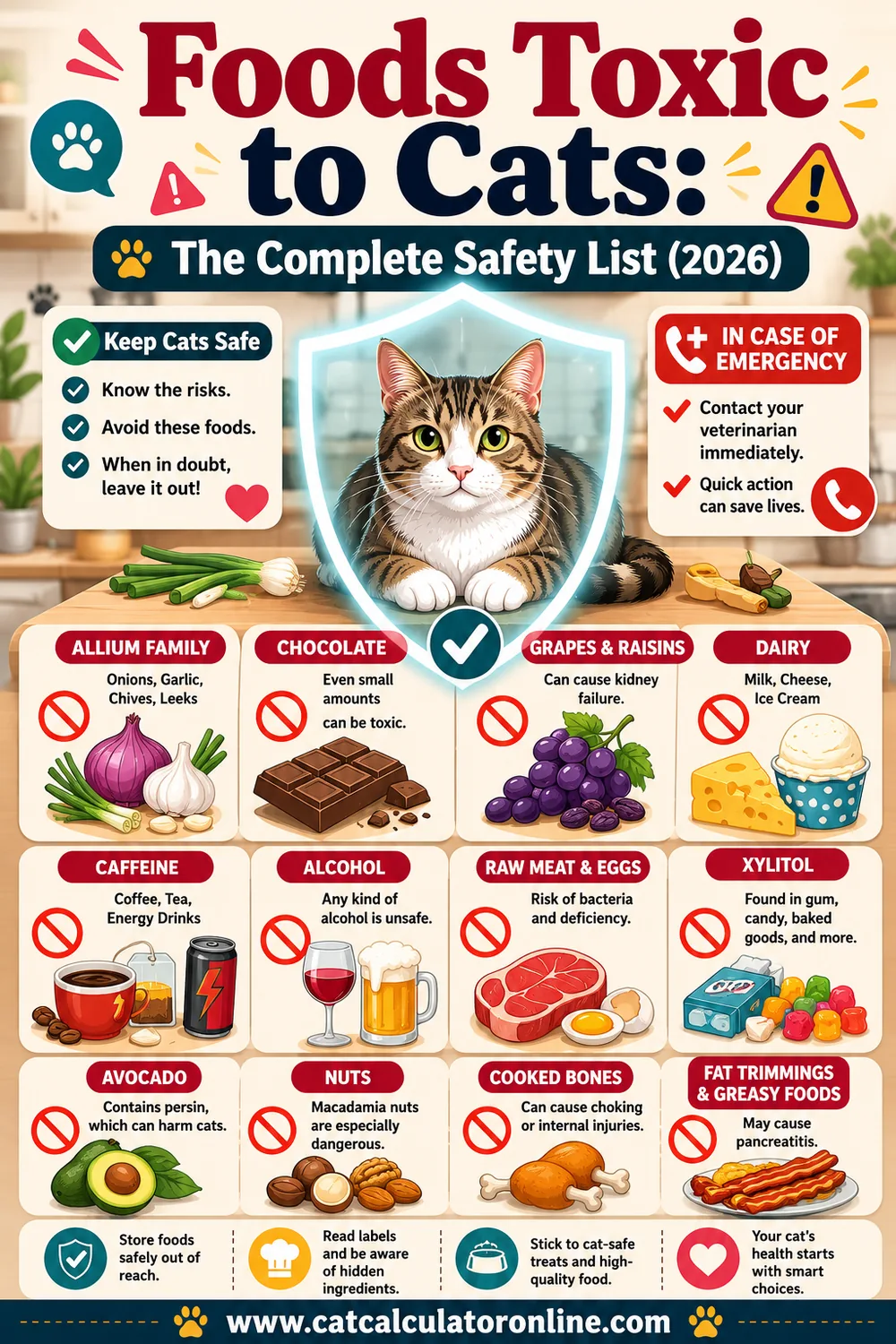
If you keep the foods toxic to cats list bookmarked, you'll notice the pattern: bananas sit in the "harmless but pointless" category, which is a much better place to be than grapes — but still a long way from chicken.
Do Cats Actually Like Bananas?
Almost universally, no — and the biology behind it is one of the best-known quirks in the cat world: cats cannot taste sweetness. Their sweet-taste receptor doesn't work, a side effect of evolving as pure meat-eaters. The single biggest thing a banana has going for it — sweet flavor — is literally undetectable to your cat.
So what's happening when a cat sniffs, licks, or bats at a banana? Usually one of these:
- Curiosity. A new object on the counter is a new object on the counter. Investigation is mandatory.
- Texture interest. Some cats enjoy the soft, dense texture the way they might enjoy chewing plastic — it's about mouthfeel, not flavor.
- Your attention. If licking the banana made you laugh once, some cats file that away forever.
Plenty of cats go the other direction entirely and recoil from the smell of a banana or its peel — the strong scent reads as unpleasant to many of them. Cat owners have noticed for years that some cats avoid bananas the way they avoid citrus.
Either reaction is normal. The takeaway is that you're not withholding a delicacy — a cat who "misses out" on banana is missing out on nothing her senses can even register.
Is There Any Nutritional Benefit for Cats?
For humans, bananas earn their reputation: potassium, vitamin B6, vitamin C, fiber. It's tempting to assume a little of that goodness transfers to a cat. In practice, it doesn't — for two reasons.
First, a complete cat food already covers everything. Commercial cat food is formulated to supply every vitamin and mineral a cat needs, in the amounts and ratios a cat needs them. There's no potassium gap a banana slice is filling.
Second, the package the nutrients come in is wrong. To get a meaningful amount of any nutrient from banana, a cat would have to eat far more sugar and carbohydrate than her system should ever see. It's the wrong delivery vehicle for a carnivore.
Here's how a banana's profile lines up against what a cat's body is asking for:
| What a banana offers | What a cat's diet needs | Match? |
|---|---|---|
| Sugars and starches (most of its calories) | Minimal carbohydrate | No |
| Fiber | A small amount, already in complete food | Marginal |
| Potassium, B6, vitamin C | Supplied by complete cat food; cats make their own vitamin C | Redundant |
| Water content | Cats need hydration — but from water and wet food | Marginal |
| Protein | High animal protein — the core need | No — bananas have almost none |
That last row is the whole story. The one thing a cat's diet is built around is the one thing a banana barely contains.
How Much Banana Can a Cat Eat?
If your healthy adult cat genuinely seems to enjoy banana — a minority position, but these cats exist — here's how to keep it harmless:
- A thin slice or a couple of small pieces. Think fingernail-sized, not a chunk of your breakfast.
- Occasionally, not routinely. Once in a while as a novelty, not a daily or even weekly ritual.
- Fresh and plain. No banana bread, no chips, no smoothie — just plain ripe banana.
- Count it as a treat. All treats together should stay under 10% of daily calories, with complete cat food making up the rest.
- Watch her afterward. Any new food can disagree with an individual cat — soft stool, vomiting, or skipped meals mean banana's off the list for her.
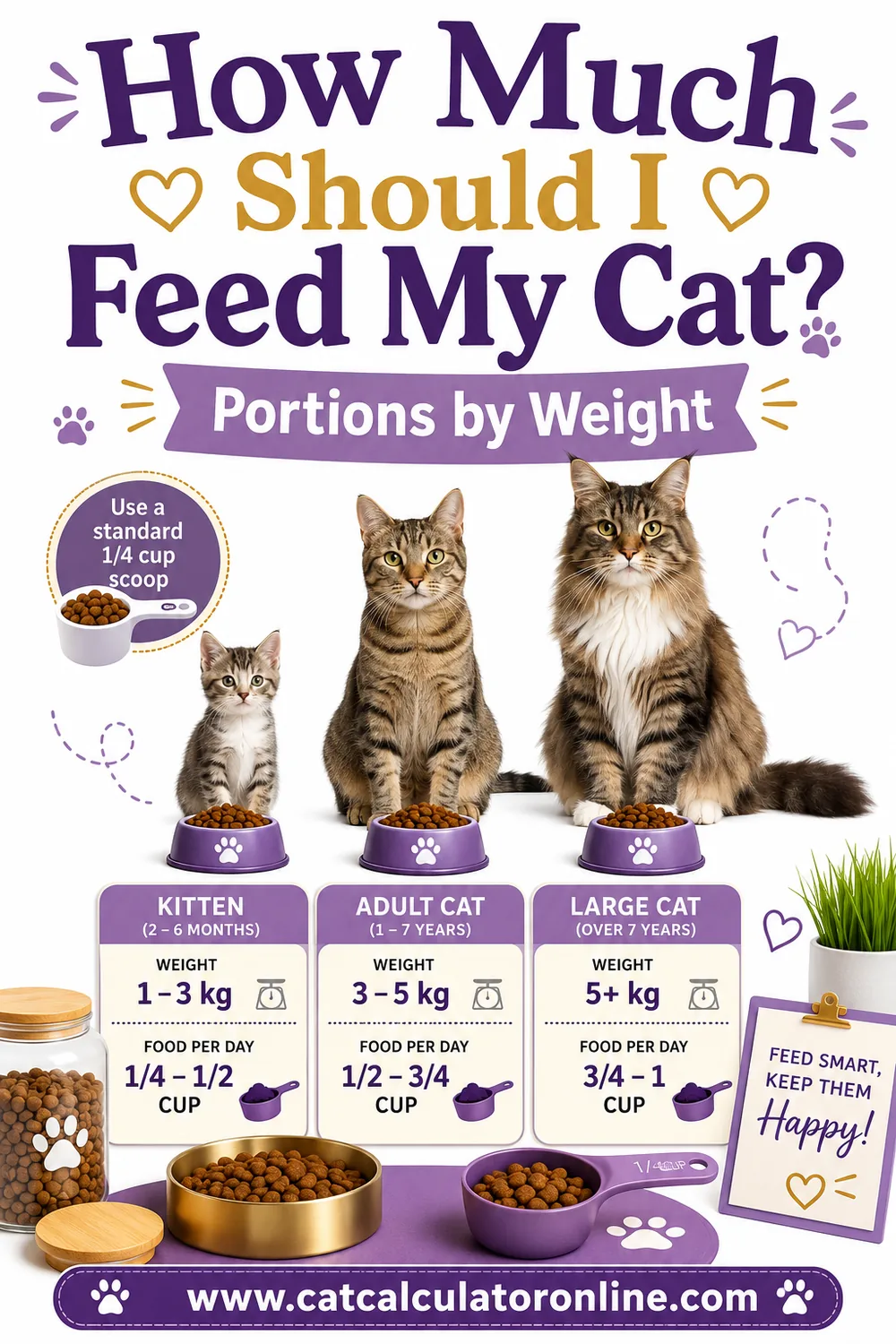
The 10% rule is doing the heavy lifting here. A typical adult cat's entire daily treat budget is small — roughly 20 to 25 calories for many indoor cats — and sugar-dense treats eat through it fast. If you're not sure what your cat's daily intake should even be, our guide to how much you should feed your cat walks through it, and the cat food calculator turns her weight and life stage into an actual number.
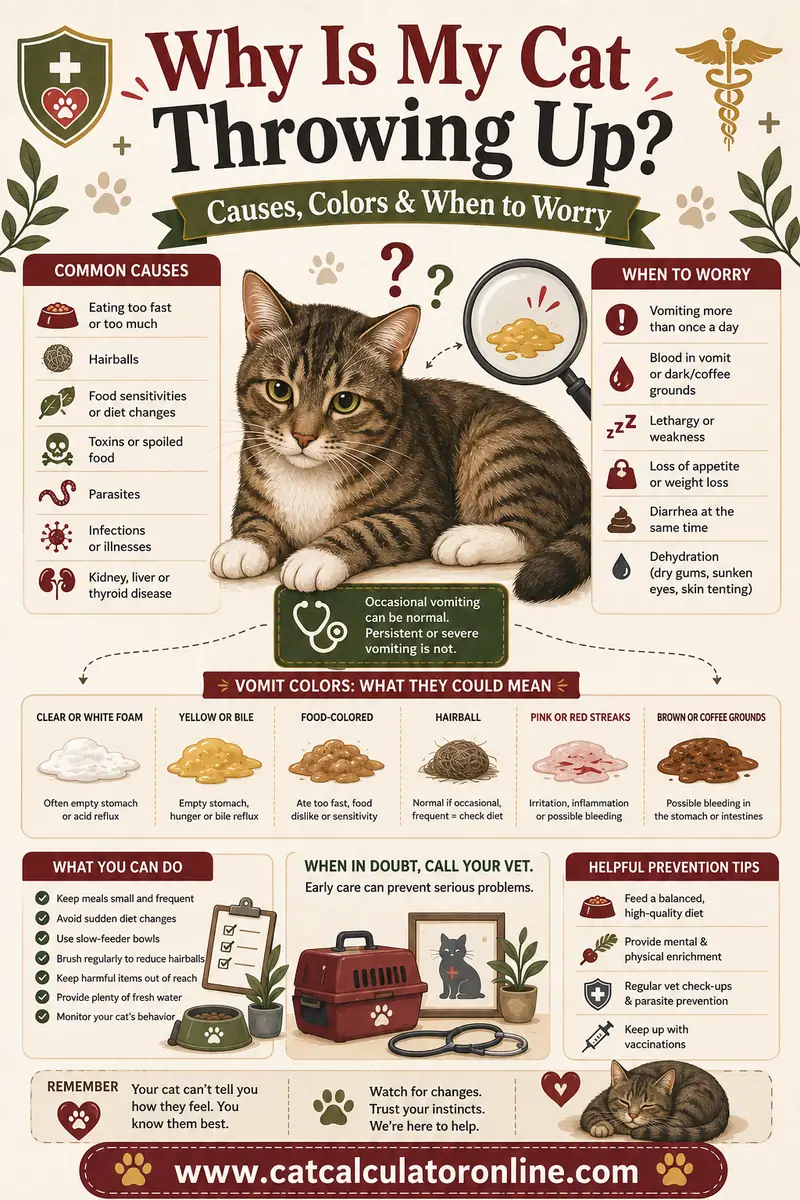
One more practical note: introduce any new food alone, in a tiny amount, on a day you can keep an eye on her. If her stomach objects, you'll know exactly what caused it. And if vomiting does show up, our guide to why your cat is throwing up helps you sort a one-off from something that needs a vet.
Which Cats Should Never Have Banana?
For some cats, "non-toxic" isn't good enough, because the sugar itself is the problem.
Diabetic cats: no banana, ever. Managing feline diabetes is all about keeping blood sugar stable, usually with a low-carbohydrate diet. A sugary fruit treat pushes directly against the treatment plan. If your cat is diabetic, every treat should be cleared with your vet — and the approved list will be meat, not fruit.
Overweight cats: skip it. Extra weight is one of the most common health problems in indoor cats, and it's fed by exactly this kind of "harmless little extra." Empty sugar calories are the last thing a weight-loss plan needs. Put the treat budget toward a few pieces of lean cooked meat instead — more satisfying to the cat, more aligned with her biology.
Cats with sensitive stomachs or IBD. If your cat's digestion is easily upset, an unfamiliar sugary fruit is a pointless gamble. Stick with what her gut already handles well.
Kittens. Nothing about banana is useful to a growing kitten, and their small digestive systems are more easily thrown off. Kitten food and kitten treats cover everything; save the fruit experiments for never.
What About Banana Peels, Chips, Bread, and Smoothies?
The plain fruit is the only form that gets even a cautious pass. The banana-adjacent foods in your kitchen all fail:
- Banana peel: not toxic, but fibrous, tough, and effectively indigestible for a cat. Chewed pieces can cause vomiting or, in a bad case, an intestinal blockage. The peel also carries the strong smell many cats actively dislike.
- Banana chips: typically deep-fried and often coated in sugar or honey — concentrated fat and sugar in a hard, crunchy format that's wrong for a cat's mouth and stomach.
- Banana bread and muffins: butter, sugar, and frequently genuinely dangerous extras — raisins and chocolate chips are both toxic to cats, and nutmeg is a problem too. Never share baked goods.
- Banana milkshakes, smoothies, and ice cream: sugar plus dairy, and most adult cats are lactose intolerant. The likely result is diarrhea, with zero benefit on the other side of the ledger.
- Dried banana: drying concentrates the sugar — a worse version of the fresh fruit.
The pattern is worth remembering for every "can cats eat…" question: processing almost always makes a food worse for cats, because it adds sugar, salt, fat, or dairy to something that was marginal to begin with.
What Are Better Treats Than Banana?
A cat's dream treat list is short and entirely meat-flavored. If the goal is to give her a happy little extra, these beat banana on every axis:
- Plain cooked chicken or turkey — boneless, skinless, unseasoned; the all-time favorite
- A small flake of plain cooked fish — an occasional high-value reward
- Freeze-dried meat treats — single ingredient, easy to portion, hard to overfeed
- Commercial cat treats — formulated for cats, with calorie counts on the pack
- A little plain cooked egg — cooked through, never raw
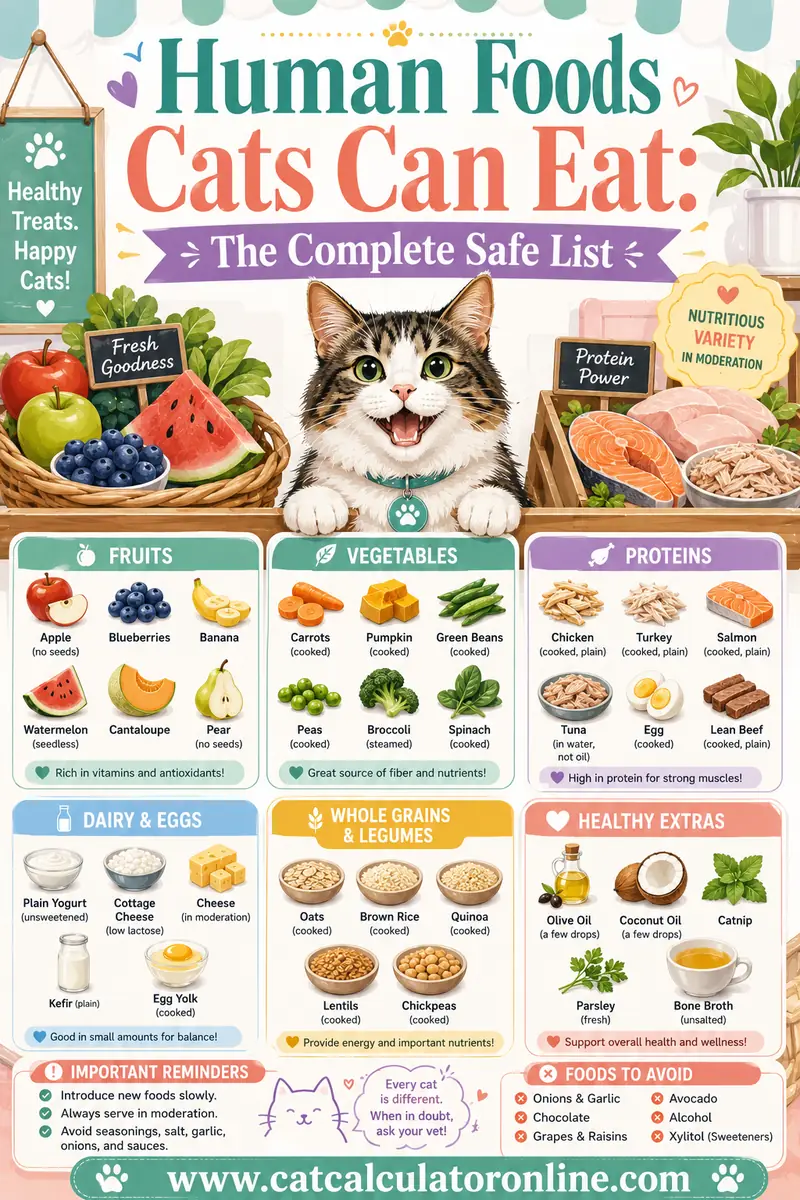
Each of those is built from animal protein, which means your cat can actually taste and enjoy them, and her body can actually use them. For the complete rundown of what's shareable from your plate — fruits, meats, and everything between — see human foods cats can eat.
FAQ
Can cats eat bananas safely?
Yes — bananas are non-toxic to cats, and a thin slice occasionally is fine for a healthy adult. They're high in sugar with no nutritional payoff for a carnivore, though, so keep portions tiny and rare, and skip them for diabetic or overweight cats.
Why doesn't my cat care about bananas?
Cats can't taste sweetness — they lack a working sweet-taste receptor — so a banana's main appeal is invisible to them. Many cats also dislike the strong smell of the fruit and peel. Indifference (or avoidance) is the normal cat response.
Are banana peels toxic to cats?
No, but they're still a problem. The peel is tough and fibrous, essentially indigestible for a cat, and chewed pieces can cause vomiting or even an intestinal blockage. Throw peels away where a playful cat can't fish them out.
Can diabetic cats have a little banana?
No. Feline diabetes is managed by keeping blood sugar stable, typically with a low-carb diet, and fruit sugar works directly against that. Ask your vet for a list of safe treats — it'll be meat-based, not fruit-based.
My cat ate a chunk of banana — should I do anything?
For a healthy adult cat, no — banana isn't toxic, so just keep an eye out for a bit of stomach upset over the next day. Call your vet if she vomits repeatedly, has ongoing diarrhea, or ate banana bread or another baked good that might contain raisins or chocolate.
Is banana better for cats than other fruits?
It's safer than the dangerous ones — grapes, raisins, and citrus should never be offered — but it's not "good," just tolerated. Among cat-safe fruits, banana is on the sugary end, so if you want to offer fruit at all, smaller and rarer is better.
The Bottom Line
Bananas land in the most anticlimactic category of cat foods: perfectly safe in small amounts, and almost perfectly pointless. A thin slice now and then won't hurt a healthy adult cat — but she can't taste the sweetness, her body has no use for the sugar, and diabetic or overweight cats shouldn't have any at all. Peels, chips, banana bread, and smoothies are all off the menu.
If your cat is one of the rare banana enthusiasts, keep it to a tiny fresh piece on rare occasions and count it inside the 10% treat budget. If she's indifferent — which is most cats — you now have permission to eat your banana in peace.
For the numbers behind that treat budget, run her weight and life stage through our free cat food calculator, and keep human foods cats can eat handy for the next time she stares at your plate.