Can Cats Eat Chocolate? Why It's Toxic and What to Do
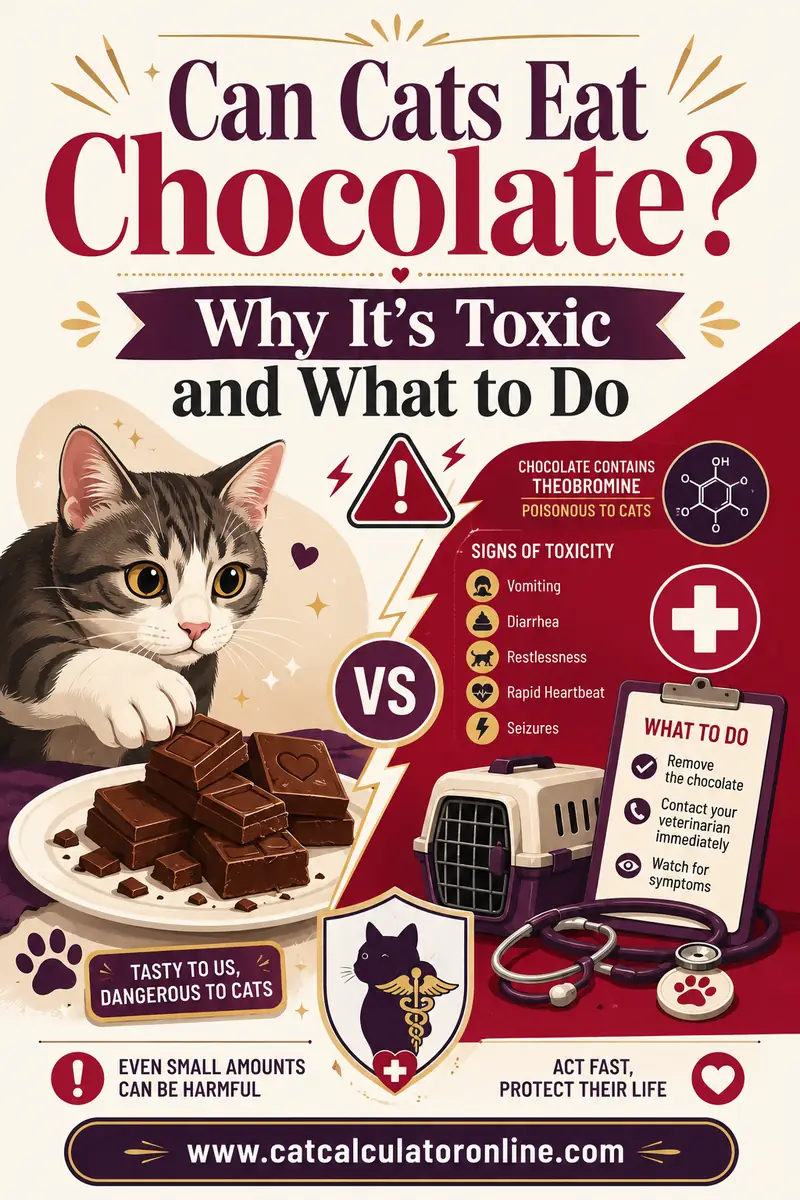
No. Cats cannot eat chocolate. It contains theobromine and caffeine — two stimulants known as methylxanthines — and a cat's body breaks them down extremely slowly, so even a small amount can build up to dangerous levels. There is no safe serving size of chocolate for a cat, and the darker or more concentrated the chocolate, the more dangerous it is.
If your cat has already eaten chocolate, call your vet or a pet poison helpline right now, before symptoms appear. If you're here to check before sharing a square, the answer is a clean no — and our free cat food calculator will show you how much proper cat food she should be getting instead.
🍫 Is this chocolate dangerous for my cat?
Tap a type to see how risky it is:
Tap a chocolate type above to see how dangerous it is for a cat.
Why Is Chocolate Toxic to Cats?
Chocolate comes from cocoa beans, and cocoa beans contain theobromine along with a smaller amount of caffeine. Both belong to a family of stimulants called methylxanthines.
In people, theobromine is cleared from the body within a few hours. Cats process it far more slowly, so it lingers in the bloodstream and keeps acting on the heart, the nervous system and the kidneys. That slow clearance is the whole problem — it's not that a cat eats a huge amount, it's that a small amount hangs around and accumulates.
Methylxanthines do three things a cat's body doesn't cope well with:
- They over-stimulate the nervous system, causing restlessness, tremors and, at high doses, seizures.
- They speed up and destabilise the heart rate, which is dangerous in an animal whose resting heart rate is already 140–220 beats per minute.
- They act as a diuretic, driving fluid loss and dehydration on top of any vomiting.
The fat and sugar in chocolate add a second, separate problem: gastrointestinal upset. That's why even white chocolate, which has barely any theobromine, still makes cats sick.
Do Cats Even Like Chocolate?
Here's the genuinely interesting part: cats cannot taste sweetness. They lack a working sweet-taste receptor, a quirk of being obligate carnivores. A cat licking chocolate ice cream isn't chasing the sugar — she's after the fat and the dairy.
This is why chocolate poisoning is far more common in dogs than in cats. Dogs love sweet things and will hoover a whole box. Cats are pickier, smaller-appetited, and get no reward from the sugar.
But don't let that turn into complacency. Cats still get into chocolate by:
- Licking cream, frosting, mousse, ice cream or hot cocoa left on a counter
- Chewing wrappers and foil that smell of butter and milk
- Playing with, batting around and gnawing a truffle or a chocolate coin
- Grooming melted chocolate off their paws or fur after walking through a spill
And here's the sting in the tail: cats are more sensitive to theobromine per unit of body weight than dogs are. A 4 kg (9 lb) cat eating the same square as a 25 kg dog is getting roughly six times the dose relative to her size. Lower likelihood, higher stakes.
Which Types of Chocolate Are Most Dangerous?
Risk tracks the cocoa solids. The more concentrated the cocoa, the more theobromine per gram, and the smaller the amount it takes to cause trouble.
| Chocolate type | Theobromine level | Risk to cats | Notes |
|---|---|---|---|
| Cocoa powder / cacao nibs | Highest | Extreme | The most concentrated form. Baking spills and open tins are a real hazard |
| Baking / unsweetened chocolate | Very high | Extreme | Unsweetened bars pack cocoa with no dilution |
| Dark chocolate (70%+) | High | High | Risk climbs with the cocoa percentage on the label |
| Semi-sweet chocolate chips | Moderate–high | High | Common in cookies and easy for a cat to nibble |
| Milk chocolate | Moderate | Significant | Diluted with milk and sugar, but cats are tiny |
| White chocolate | Trace | Still not safe | Almost no theobromine, but fat and sugar cause vomiting and diarrhea |
| Chocolate-flavored desserts | Varies | Not safe | Chocolate plus dairy plus sugar plus, sometimes, xylitol |
Two extra dangers hide inside chocolate products:
- Xylitol (birch sugar) turns up in sugar-free chocolate and baked goods. It's a serious toxin in its own right — check the label before you tell a vet what was eaten.
- Coffee and espresso fillings stack caffeine on top of theobromine.
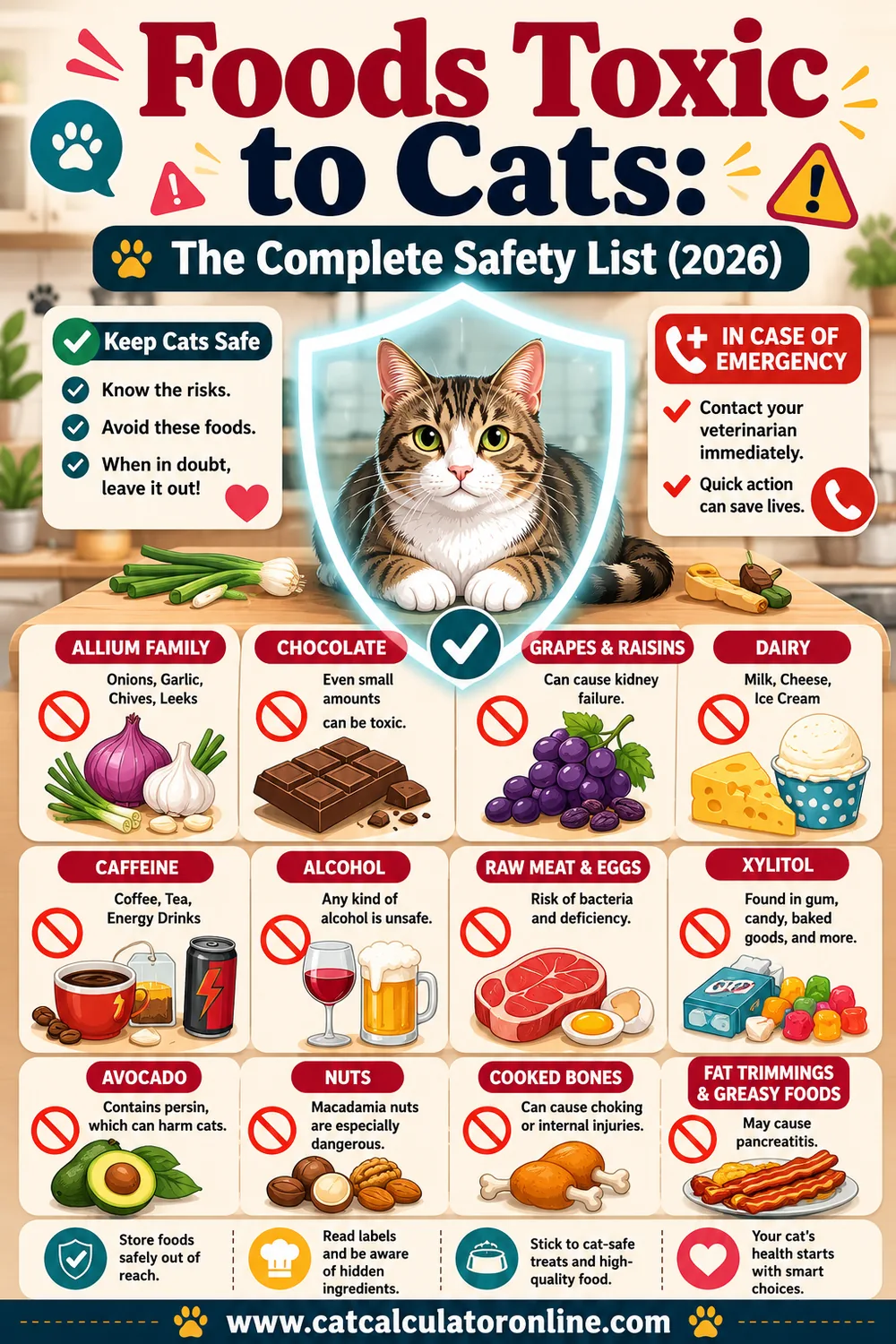
Chocolate is one entry on a longer list — our guide to foods toxic to cats covers the rest, including the alliums that hide in almost every savory leftover.
How Much Chocolate Is Dangerous for a Cat?
There is no established safe amount, and the honest answer is that it depends on three things at once: the type of chocolate, how much was eaten, and how much your cat weighs.
A few pounds of body weight makes a real difference. A 3 kg (6.6 lb) senior cat and a 7 kg (15 lb) Maine Coon eating the same amount are in very different situations. If you don't know your cat's weight, our how much should a cat weigh guide will help you put a number on it — and that number is one of the first things a vet will ask for.
What this means in practice:
- Any amount of cocoa powder, baking chocolate or dark chocolate = call your vet immediately.
- A lick of milk chocolate icing on a small cat = still call. It costs you a phone call.
- Don't try to calculate a "safe dose" yourself from an online chart. Those charts are built for dogs and don't account for a cat's slower metabolism.
Vets treat chocolate ingestion based on an estimated dose per kilogram, and they'd far rather run the numbers themselves with accurate information than have you guess.
What Are the Symptoms of Chocolate Poisoning in Cats?
Signs usually begin within 2 to 4 hours, but they can be delayed by 6 to 12 hours — and that delay is why "she seems fine" is not reassurance.
Early and mild signs:
- Vomiting and diarrhea
- Excessive thirst and drinking more than usual
- Drooling or pawing at the mouth
- Restlessness, pacing, an inability to settle
Moderate to severe signs:
- Rapid breathing and panting
- A racing or irregular heartbeat
- Muscle twitching, trembling or full tremors
- Stiffness, wobbliness or trouble walking
- Increased urination, then dehydration
- Seizures or collapse
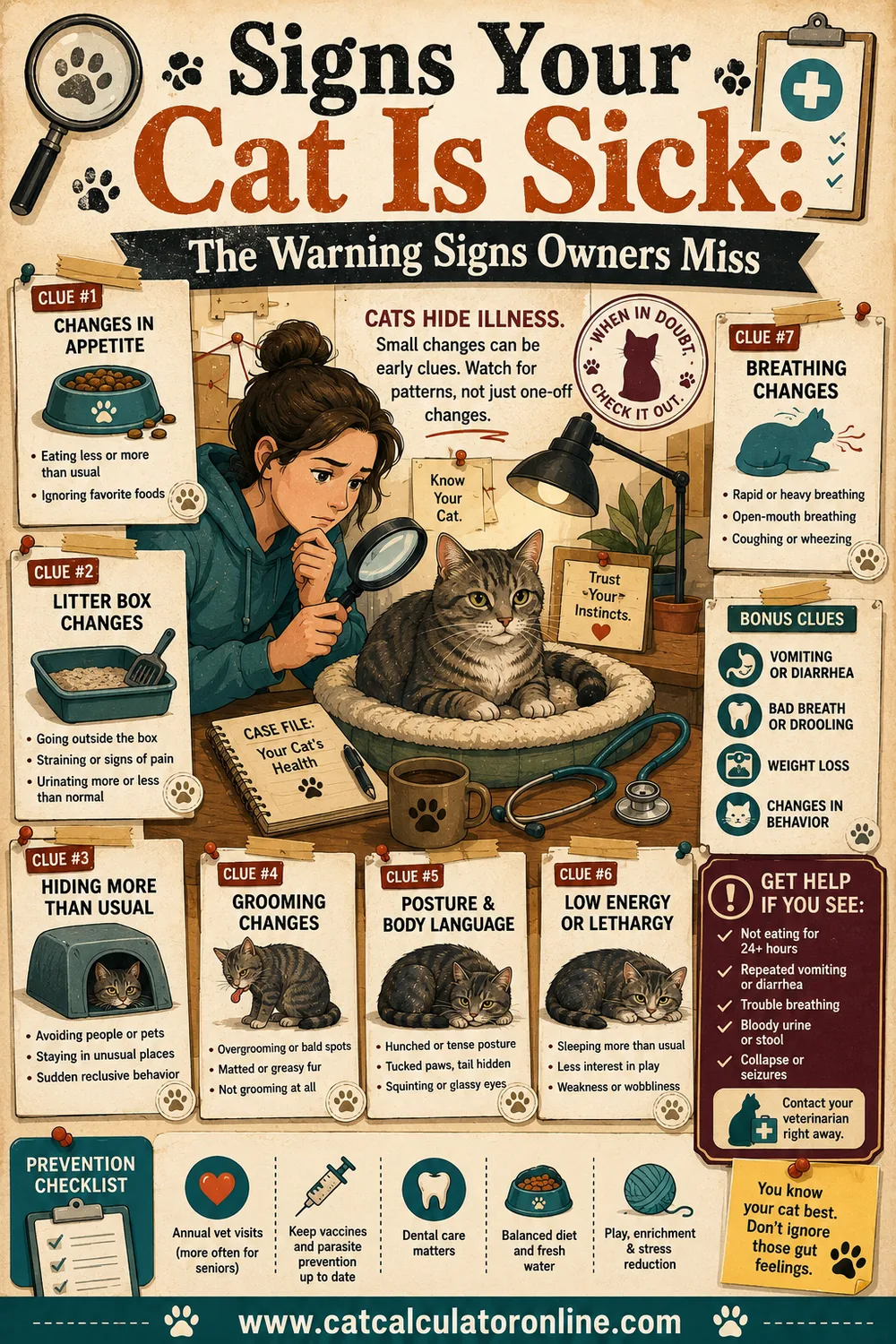
Because methylxanthines clear so slowly, symptoms can persist for a day or more once they start. Cats are also world-class at hiding illness, so subtle changes matter — our guide to signs your cat is sick walks through the quiet ones owners tend to miss.
Seizures, collapse, or labored breathing mean go to an emergency clinic now. Don't phone first — travel and call on the way if someone else can drive.
What Should I Do If My Cat Ate Chocolate?
Move quickly and calmly. Treating a cat before symptoms appear is far easier and far more successful than treating one after.
- Take the chocolate away and secure the room. Remove what's left so she can't go back for more.
- Call your vet or a pet poison helpline immediately. Do this even if she looks completely normal. Waiting for symptoms wastes the window when treatment works best.
- Grab the wrapper or packaging. The cocoa percentage, the total weight, and the ingredient list (xylitol? coffee?) all change the plan. Bring it with you or read it out over the phone.
- Estimate the amount and the time. How much is missing, and roughly when did it happen? "About half a 100 g dark bar, sometime in the last hour" is genuinely useful information.
- Know your cat's weight. Dose is calculated per kilogram, so this matters more than anything except the type of chocolate.
- Do not induce vomiting at home. Home methods that circulate online are dangerous for cats, and hydrogen peroxide in particular can cause serious damage to a cat's stomach. Only a veterinary professional should make that call.
- Don't give milk, salt, human medication or any home remedy. None of them help, and several cause harm.
Save your vet's number and a 24-hour emergency clinic in your phone before you ever need them. Poison helplines usually charge a consultation fee — knowing that in advance stops cost from causing a delay when minutes matter.
How Do Vets Treat Chocolate Poisoning?
Treatment is supportive — there's no antidote for theobromine. Your vet will decide the plan based on the dose, the timing and how your cat is doing.
Depending on the case, that can involve decontamination if the chocolate was eaten very recently, activated charcoal to limit further absorption, intravenous fluids to support the kidneys and flush the stimulants out, and monitoring of heart rate and rhythm. Cats with tremors or seizures need medication and close observation.
Because theobromine hangs around, a cat may stay in the clinic for observation longer than you'd expect from how well she looks in the waiting room. That's normal and it's the right call.
The good news: cats that get to a vet early usually do very well. Outcomes are strongly linked to how quickly treatment starts.
How to Keep Chocolate Away From Your Cat
Cats jump, so "out of reach" isn't a strategy. Access is.
- Store chocolate in a closed cupboard, not a bowl on the counter or a dish on the coffee table.
- Latch the bin. Wrappers, foil and cocoa-dusted paper towels all end up there and all smell interesting.
- Clean up baking spills straight away. Cocoa powder on the floor is the single most concentrated hazard in the house.
- Watch the holidays. Advent calendars, Easter eggs, Valentine's boxes and Halloween haul are the four spikes in pet-poisoning calls every year. Kids' rooms and under the tree are the classic spots.
- Don't leave hot cocoa or chocolate desserts unattended. The dairy is what draws a cat in.
- Tell guests the rule. People who don't live with cats assume a lick is harmless.
- Feed the right amount of proper food. A satisfied cat counter-surfs less. Our cat food calculator gives you a daily starting point based on weight and life stage.
Safe Treats to Offer Instead
Cats are obligate carnivores, so the treats they actually enjoy are protein, not sugar. Keep all treats to no more than 10% of daily calories, with the other 90% coming from complete cat food.
Good options:
- Plain cooked chicken or turkey — boneless, skinless, no seasoning
- Plain cooked white fish, in small amounts
- A little plain cooked egg (never raw)
- Commercial cat treats and freeze-dried meat treats
- A lick of a wet-food topper as a "special" moment
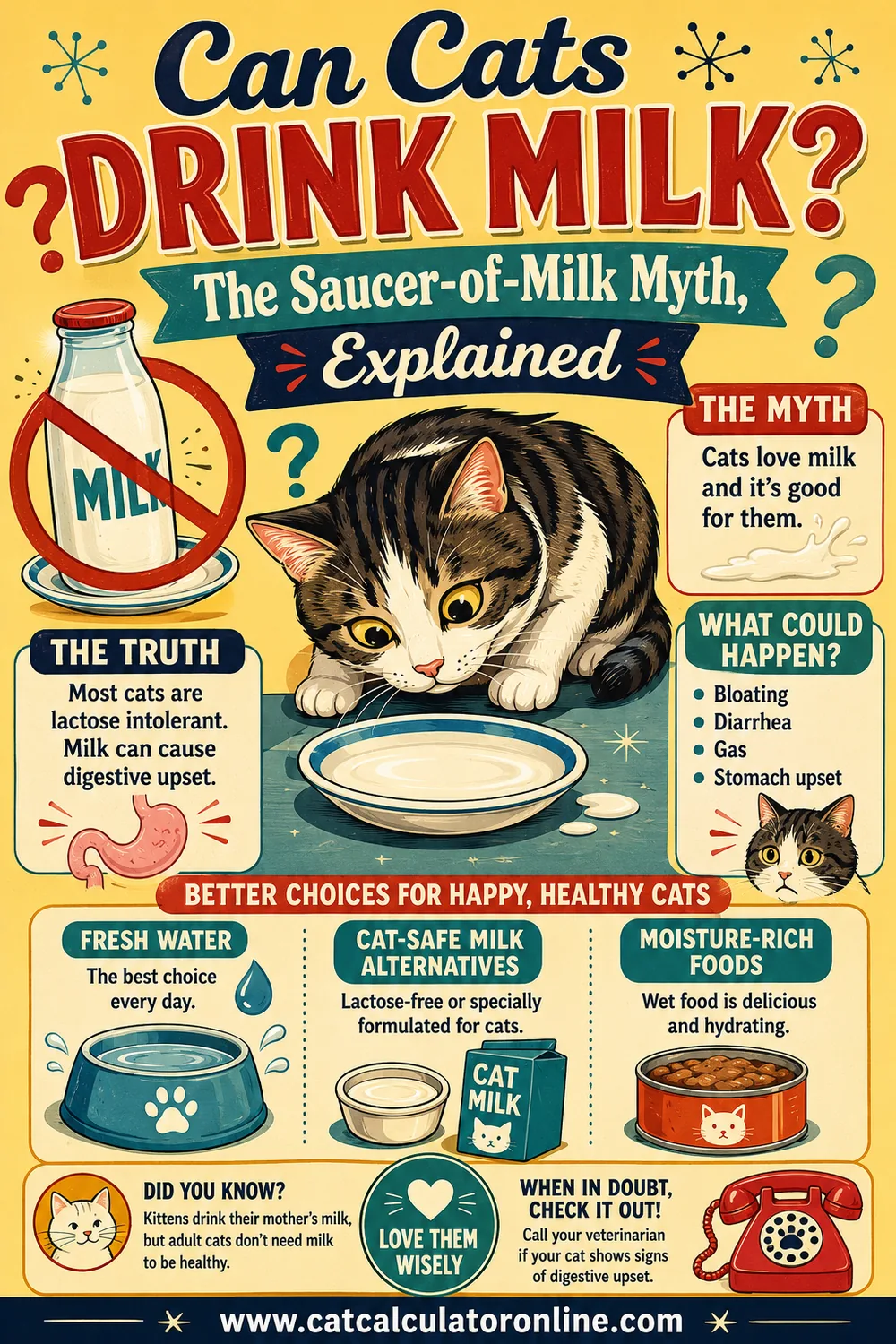
Skip cow's milk, despite the picture-book image — most adult cats are lactose intolerant. Here's why cats and milk don't mix. For a fuller list of what's actually shareable from your plate, see human foods cats can eat.
FAQ
Can cats eat chocolate at all?
No. Chocolate contains theobromine and caffeine, which cats metabolise very slowly, so there's no established safe amount. Even small quantities of dark or baking chocolate can cause vomiting, tremors and heart problems. Call your vet if your cat eats any.
How much chocolate is toxic to a cat?
It depends on the type of chocolate and your cat's weight, and there's no safe threshold you can rely on at home. Cocoa powder, baking chocolate and dark chocolate are dangerous in very small amounts because they're the most concentrated. Contact a vet with the wrapper and your cat's weight rather than guessing.
Is white chocolate safe for cats?
No. White chocolate contains only trace theobromine, so the poisoning risk is much lower, but the high fat and sugar content still commonly causes vomiting and diarrhea. It isn't a safe treat, just a less acutely toxic one.
How long after eating chocolate will a cat show symptoms?
Signs typically appear within 2 to 4 hours but can be delayed by 6 to 12 hours. A cat that seems fine an hour later may still be in trouble, which is why you should call your vet immediately rather than waiting to see what develops.
Should I make my cat vomit if she ate chocolate?
No. Inducing vomiting at home is dangerous for cats, and hydrogen peroxide in particular can seriously damage a cat's stomach lining. Call your vet or a pet poison helpline and let a professional decide on decontamination.
Why do cats eat chocolate if they can't taste sweetness?
Cats lack a working sweet-taste receptor, so the sugar means nothing to them. What draws them in is the fat and dairy in chocolate desserts, ice cream, mousse and frosting — plus plain curiosity about a wrapper that smells like butter.
The Bottom Line
Chocolate is toxic to cats because of theobromine and caffeine, and there's no amount that's known to be safe. Cocoa powder and baking chocolate are the worst, dark and semi-sweet come next, milk chocolate still matters because cats are small, and white chocolate causes stomach upset even without much theobromine.
Cats rarely go looking for chocolate — they can't taste sweetness — but when they do get into it, they're more sensitive per pound than dogs. Keep it in a cupboard, latch the bin, and be extra careful at Easter, Halloween, Christmas and Valentine's Day.
If your cat has eaten chocolate, call your vet or a pet poison helpline immediately, bring the wrapper, and don't try to induce vomiting at home.
For everything that should be in your cat's bowl, run the numbers with our free cat food calculator — and bookmark the full list of foods toxic to cats while you're at it.