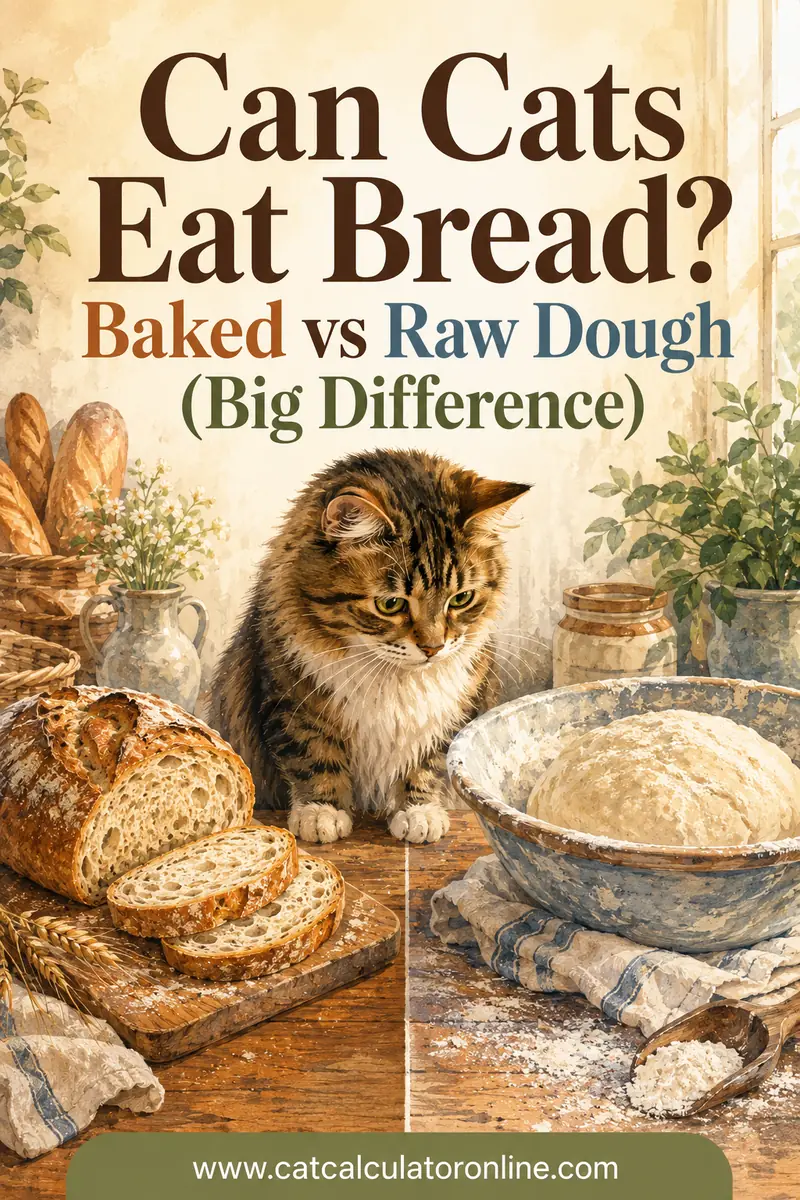
Can Cats Eat Bread? Baked vs Raw Dough (Big Difference)
Yes and no — and the difference matters a lot. A small bite of plain, fully baked bread is non-toxic to cats, so an occasional nibble won't hurt a healthy adult cat, though it's empty carbohydrate a carnivore gets nothing from. Raw yeast dough is a different story entirely: it's a genuine veterinary emergency, because the dough expands inside your cat's warm stomach and the fermenting yeast produces alcohol.
So if your cat snatched a corner of your toast, relax. If she got into rising dough on the counter, call your vet now. And if you're wondering what she should be eating each day, our free cat food calculator works it out from her weight and life stage in seconds.
🍞 Is this bread safe for my cat?
Tap a type to see the verdict:
Tap a bread type above to see whether it’s safe for a cat.
Is Plain Baked Bread Safe for Cats?
A small piece of plain, fully baked bread — white, wheat, or a bit of baguette — is not toxic to cats. If your cat licks a crumb off the floor or steals a nibble from your plate, there's nothing in plain bread that will poison her.
That's the whole good news, though. Bread offers a cat essentially nothing. Cats are obligate carnivores: their bodies are built to run on animal protein and fat, and they have no dietary need for carbohydrates at all. A slice of bread is flour, water, salt and yeast — calories without any of the nutrients a cat's body is actually asking for.
Think of bread the way you'd think of a cat eating a potato chip. Not poisonous. Not a meal. Not something to make a habit of.
There's also a practical problem: bread is calorie-dense for its size. A whole slice can run 70–100 calories, and a typical indoor cat only needs somewhere around 200 calories a day. Half a slice of bread could be a quarter of her entire daily budget spent on something with zero nutritional payoff. If you want to see what her real daily number looks like, our how much should I feed my cat guide breaks it down.
Why Is Raw Bread Dough an Emergency?
This is the part of the answer that genuinely matters, because plenty of home bakers don't know it: raw yeast dough is dangerous to cats, and it's dangerous in two separate ways at once.
Problem one: it keeps rising. Bread dough rises because live yeast produces gas. A cat's stomach is warm and moist — exactly the environment yeast loves. A lump of stolen dough doesn't just sit there; it continues expanding inside her. In a stomach the size of a ping-pong ball, that means painful bloating, pressure on the organs around it, and in serious cases a physical obstruction that may need surgical removal.
Problem two: the yeast makes alcohol. Fermenting yeast produces ethanol as a by-product. That alcohol absorbs straight into the bloodstream, and cats are extremely sensitive to it. Alcohol poisoning in a cat can cause stumbling, disorientation, vomiting, a dangerous drop in blood sugar, blood pressure and body temperature, and in severe cases seizures or worse.
So a cat that eats raw dough is dealing with an expanding mass and a rising blood alcohol level at the same time. Neither one is a wait-and-see situation.
If your cat ate raw dough — any amount — call your vet or a pet poison helpline immediately. Don't wait for symptoms, don't try to make her vomit at home, and don't assume a small piece is fine. The dough was small when she swallowed it; it won't stay small.
This applies to any live yeast dough: bread, pizza dough, cinnamon roll dough, and bubbling sourdough starter on the counter. If it's rising, it's a hazard.
Which Breads Are Dangerous for Cats?
Plain baked bread is the boring, mostly-harmless middle of a spectrum. On either side of it sit some genuinely dangerous variations. Here's the quick map:
| Bread type | Safe for cats? | Why |
|---|---|---|
| Plain white or wheat bread (baked) | Tiny bite, occasionally | Non-toxic but empty carbs a carnivore doesn't need |
| Plain toast | Tiny bite, occasionally | Same as bread — the toppings are the risk, not the toast |
| Raw yeast dough | No — emergency | Expands in the stomach; fermenting yeast produces alcohol |
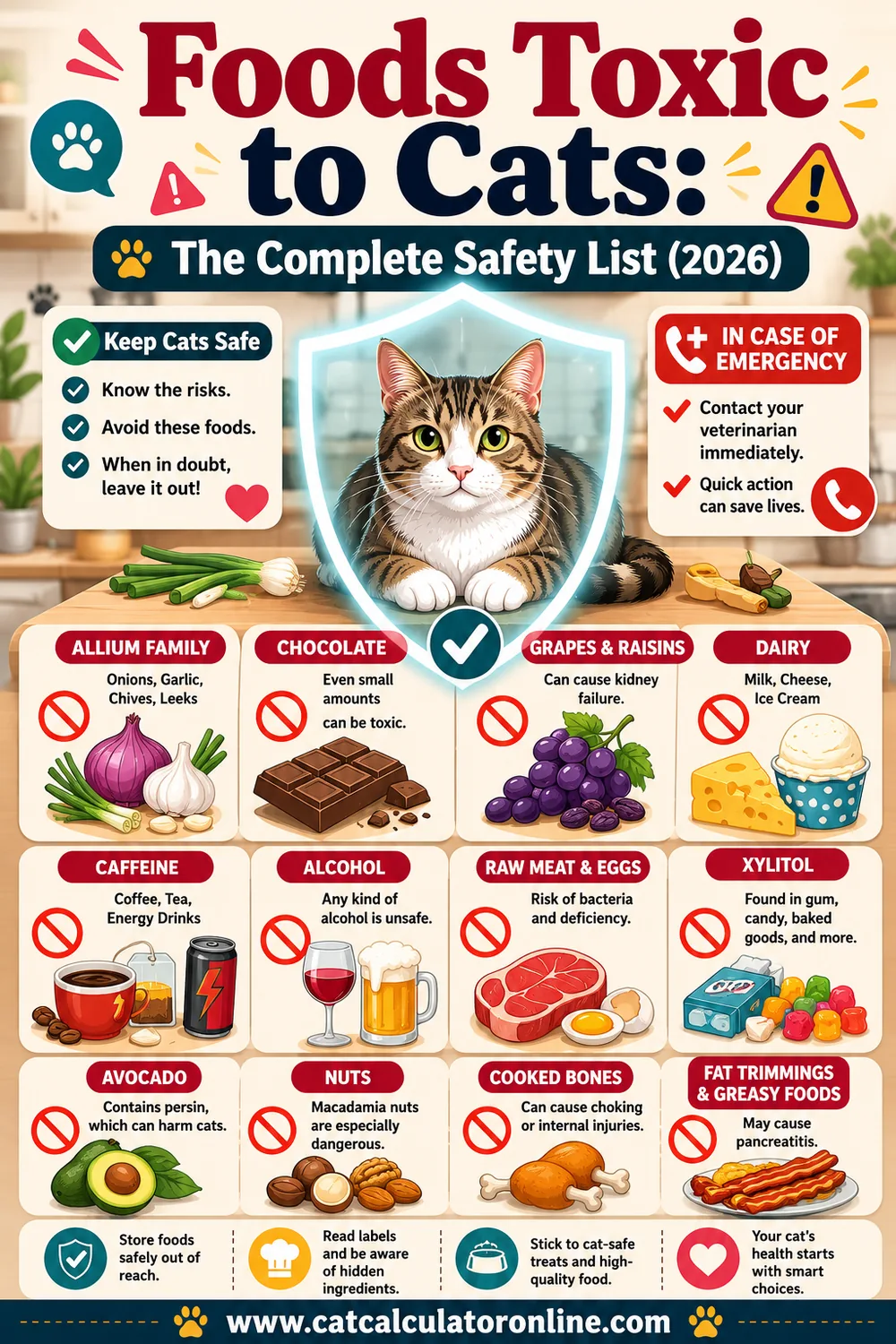
| Garlic bread | No — toxic | Garlic damages red blood cells; onion powder often hides in the butter |
| Onion bread, focaccia with onion | No — toxic | All alliums (onion, garlic, chives, leeks) are toxic to cats |
| Raisin bread, fruit loaf | No — toxic | Raisins and grapes are linked to kidney failure in pets |
| Chocolate babka, chocolate-chip breads | No — toxic | Chocolate contains theobromine, which cats can't clear |
| Sweet breads and muffins | Not recommended | Sugar and fat at best; xylitol at worst — always check the label |
| Sourdough starter (raw) | No — dangerous | Live fermenting yeast, same risks as raw dough |
Two of those deserve a closer look, because they're the ones most likely to be sitting on your table.
Garlic bread is probably the most common "bad bread" cats encounter, and it fails on every count. Garlic and onion belong to the allium family, and alliums damage a cat's red blood cells, which can lead to anemia — sometimes days after the meal, when nobody connects the dots. Add butter and oil on top and you've got digestive upset even before the toxicity. Our full guide to foods toxic to cats covers the allium family in detail, because it hides in a remarkable number of leftovers.
Raisin bread looks innocent and isn't. Grapes and raisins can cause kidney failure in pets, the toxic dose is unpredictable, and there's no way to know in advance which animal will react badly. A slice of fruit toast is a no, full stop.
What About Butter, Jam and Other Toppings?
Here's a pattern worth internalizing: with bread, the topping is almost always more dangerous than the bread.
- Butter — not toxic, but it's concentrated fat, and rich fatty foods commonly cause vomiting and diarrhea in cats. A buttery corner of toast is a stomach-upset lottery ticket.
- Jam and honey — sugar cats can't even taste (they lack sweet-taste receptors) and calories they don't need. Some sugar-free jams contain xylitol — treat those as dangerous and keep them away.
- Chocolate spreads — no. Chocolate is toxic to cats, and spreads add sugar and fat on top. Here's why chocolate and cats don't mix.
- Peanut butter — non-toxic in its plain form, but sticky, fatty, salty, and sometimes sweetened with xylitol, which is a serious toxin for pets. Check the label; better yet, skip it.
- Cream cheese and other spreads — most adult cats are lactose intolerant, so dairy spreads tend to end in diarrhea. Garlic-and-herb varieties add allium toxicity to the mix.
- Avocado toast — avocado contains persin, and while cats are less sensitive to it than some animals, the fat content alone makes it a poor share. Not worth it.
If your cat licked a topping you're not sure about, the two questions to ask are: does it contain any allium (garlic, onion, chives), chocolate, grapes/raisins, or xylitol? And how much did she actually get? Anything on that first list means a call to the vet.
Do Cats Get Anything Out of Bread?
Honestly, no — and it's worth understanding why, because it explains most of what belongs in a cat's bowl.
Cats are obligate carnivores. That's not a preference; it's biology. Their bodies require nutrients that only occur naturally in animal tissue — taurine for the heart and eyes, arachidonic acid, preformed vitamin A — and their digestive systems are short and acidic, designed for processing meat, not grains. Cats even lack a meaningful amount of salivary amylase, the enzyme that starts breaking down starches in most omnivores' mouths.
So when a cat eats bread, she's taking in carbohydrate she has a limited toolkit for, getting none of the amino acids her body is built around, and filling stomach space that should be going to real food.
Why do some cats beg for bread, then? Usually it's not the bread itself. Cats are drawn to the fat aroma of butter, the novelty of whatever you're holding, and the ritual of sharing. Warm, yeasty bread also smells interesting to an animal that explores the world nose-first. She wants in on the moment — the bread is incidental.
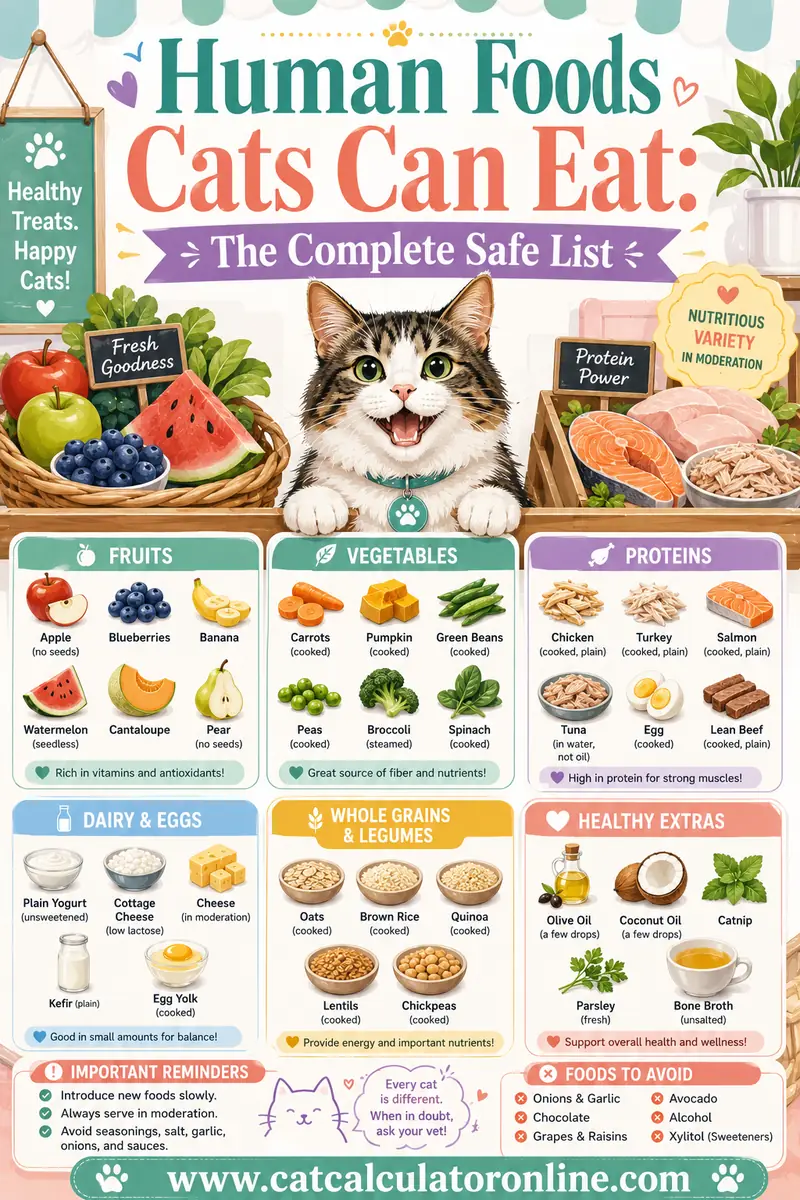
If she loves the ritual of a shared bite, redirect it to something her body can use. Our list of human foods cats can eat has the genuinely shareable options.
What Should I Do If My Cat Ate Raw Dough?
Move fast and stay calm. Here's the sequence:
- Take the rest of the dough away and secure it somewhere she can't reach — cats go back for seconds.
- Call your vet or a pet poison helpline immediately, even if she seems completely fine. The expansion and the fermentation both take time to develop, so "acting normal" right now means very little.
- Estimate the amount and the time. "A golf-ball-sized piece, maybe 20 minutes ago" is exactly the kind of information a vet needs.
- Know her weight if you can. Risk scales with body size, and it's one of the first things the clinic will ask.
- Do not induce vomiting at home. Expanding dough can be sticky and hazardous coming back up, and home methods are dangerous for cats regardless. Let a professional make that call.
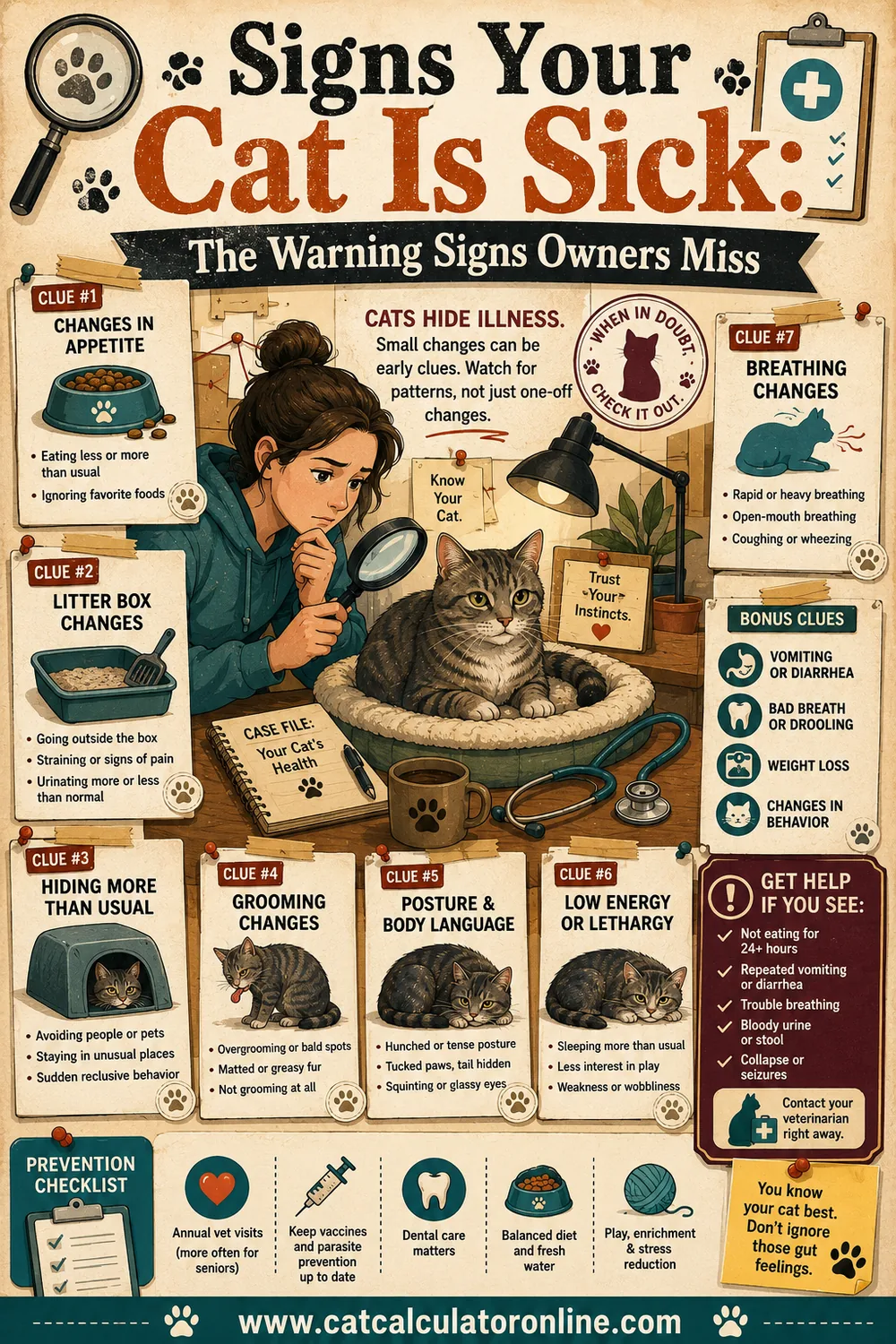
Watch for a swollen or hard belly, retching without producing anything, drooling, restlessness or crying, wobbliness or disorientation, weakness, or collapse. Any of those mean you're going to the clinic now, not phoning first. Cats hide discomfort well, so subtle changes count — our guide to signs your cat is sick covers the quiet warning signs owners tend to miss.
And for prevention: if you bake, proof your dough inside the (turned-off) oven or microwave, not on an open counter. A dish towel over a bowl is not a cat-proof barrier. It's barely a suggestion.
How Much Bread Can a Cat Actually Have?
If your cat genuinely loves bread and you want to share, keep it to a piece about the size of your fingernail, plain, fully baked, and only once in a while — not a daily thing.
The useful frame is the treat rule vets recommend: everything that isn't complete cat food should stay under 10% of her daily calories. For a typical cat, that whole treat budget is around 20 calories a day. A fingernail of bread fits. A strip of crust does too, barely. Half a slice blows the budget on something with no nutritional return.
And that budget is shared — the bread bite, the lick of gravy, the two commercial treats at bedtime all draw from the same 10%. Spending it on bread means spending it on the one option that gives her nothing back.
Skip bread entirely for kittens (their growth diet shouldn't be diluted with filler), overweight cats (empty calories are the last thing needed), diabetic cats (refined carbs are a poor idea — ask your vet before sharing anything), and cats with sensitive stomachs or grain allergies. Bread allergies aren't common in cats, but wheat sensitivities do exist, and an itchy, scratchy cat after a bread habit is worth mentioning to your vet.
What Are Better Treats Than Bread?
If the goal is a shared moment, share something a carnivore actually values:
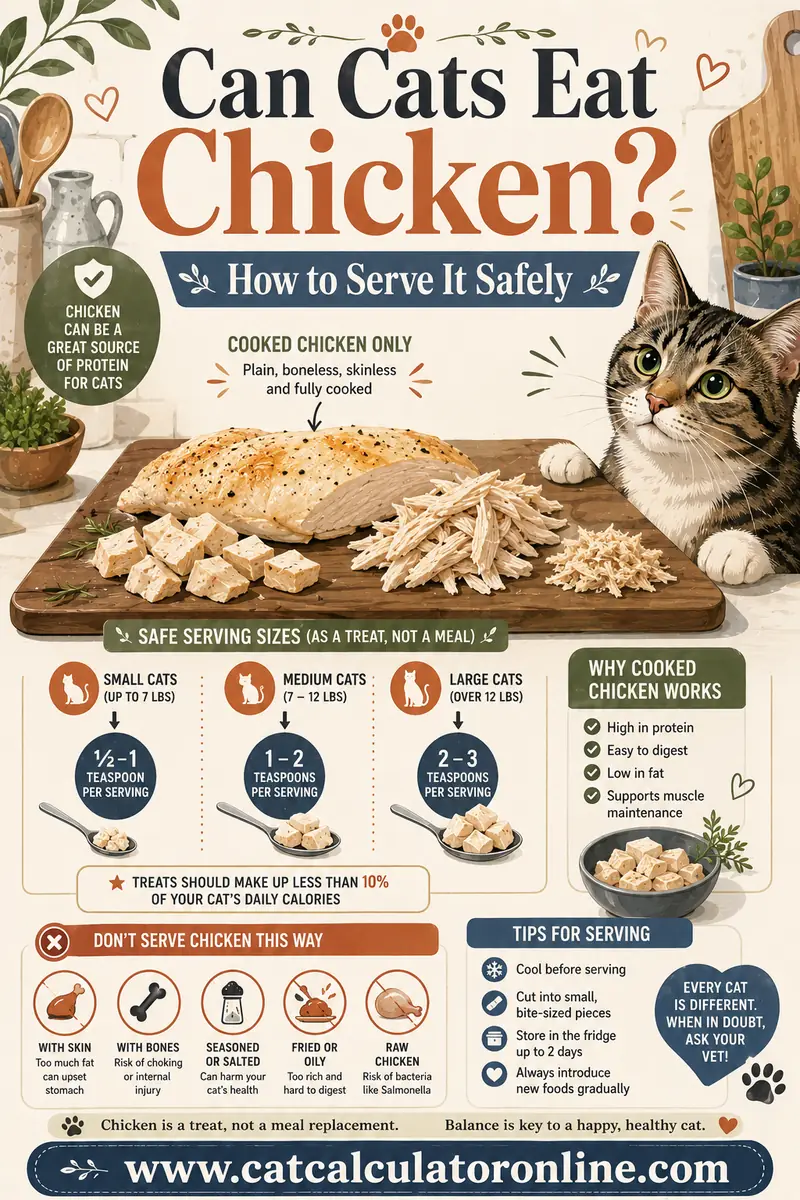
- Plain cooked chicken or turkey — boneless, skinless, unseasoned. The gold standard; here's the full guide to feeding cats chicken.
- Plain cooked white fish — small amounts, no seasoning.
- A little plain cooked egg — scrambled or hard-boiled, never raw.
- Freeze-dried meat treats — single-ingredient, shelf-stable, and most cats find them more exciting than anything from the bakery.
- A spoon of her own wet food offered by hand — cheapest trick in the book, and to her it reads as a treat.
Every one of those delivers protein a cat's body can actually use, which bread never will.
FAQ
Can cats eat bread safely?
A small bite of plain, fully baked bread is non-toxic and won't hurt most healthy adult cats. It has no nutritional value for a carnivore, though, so it should stay an occasional fingernail-sized nibble at most — never a regular snack.
Why is raw bread dough dangerous for cats?
Two reasons at once: the dough continues rising in the warm stomach, causing painful bloating and possible obstruction, and the fermenting yeast produces alcohol, which cats are extremely sensitive to. Any amount of raw dough justifies an immediate call to your vet.
My cat ate a piece of garlic bread — what do I do?
Call your vet. Garlic is toxic to cats and damages red blood cells, and signs of anemia can be delayed by days. Tell the clinic roughly how much she ate and when; don't wait to see whether symptoms show up on their own.
Can cats eat toast?
Plain toast is the same as plain bread — non-toxic in a tiny bite, nutritionally empty otherwise. The real risk is what's on it: butter causes stomach upset, chocolate spreads are toxic, and some jams and peanut butters contain xylitol, which is dangerous to pets.
Is sourdough safe for cats?
A crumb of fully baked sourdough is as safe as any plain bread. Raw sourdough starter is not — it's live fermenting yeast, with the same expansion and alcohol risks as raw dough. Keep starter jars covered and out of reach.
Do cats even like bread?
Some do, but usually it's the butter smell, the novelty, or the ritual of sharing rather than the bread itself — cats can't taste sweetness at all. If yours begs, redirect the moment to a pinch of plain cooked chicken instead.
The Bottom Line
Plain baked bread sits in the "harmless but pointless" category: a rare fingernail-sized bite won't hurt a healthy cat, but it's empty carbohydrate a carnivore has no use for. Raw yeast dough is the opposite — a true emergency that combines an expanding mass in the stomach with alcohol from fermenting yeast. And the flavored breads on your table — garlic, onion, raisin, chocolate — carry real toxins that have nothing to do with the flour.
Keep rising dough behind a closed door, treat toppings as the main hazard, and spend her small treat budget on meat instead of crumbs.
Want to know exactly how much proper food your cat needs each day, so treats stay in their 10% lane? Run her numbers through our free cat food calculator — it takes about ten seconds.