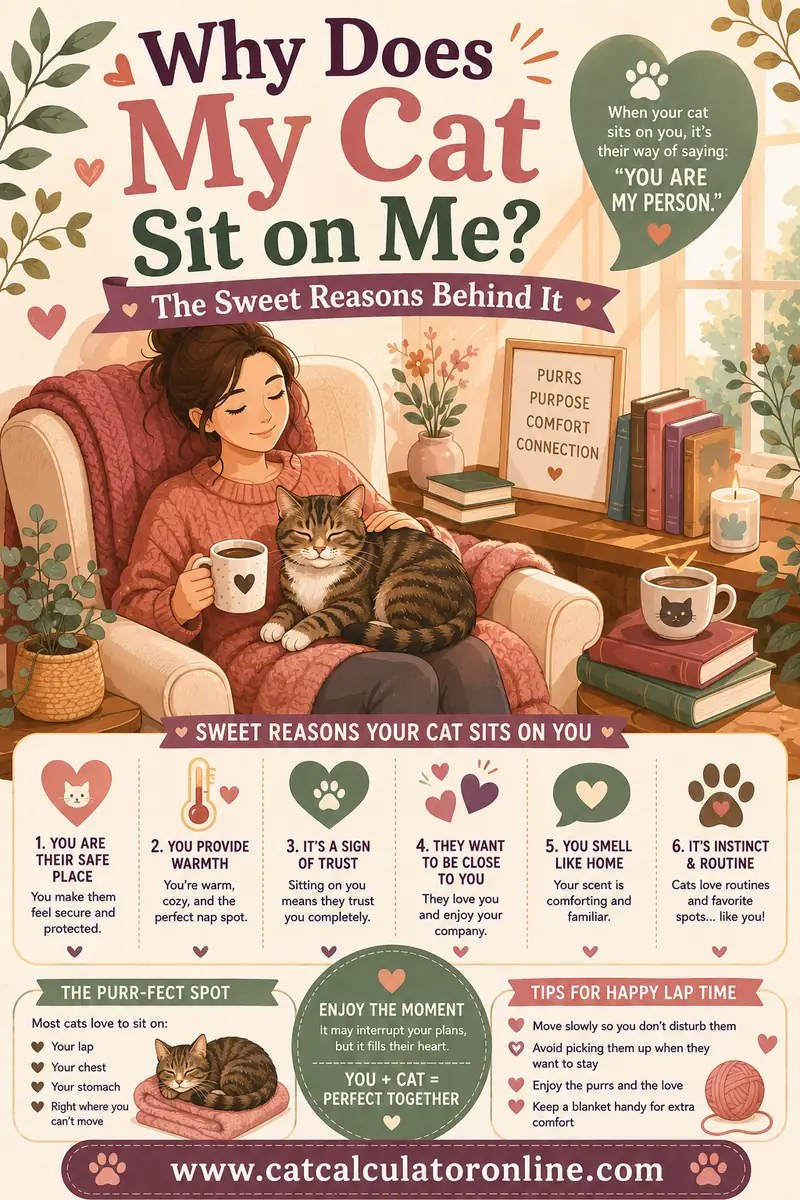
Why Does My Cat Sit on Me? The Sweet Reasons Behind It
Your cat sits on you for a handful of overlapping reasons: you're warm, you're safe, and you smell like home. Cats seek out heat, they rest where they feel most secure, and they mix their scent with yours to mark you as their own. Add in the petting and calm company you give while you sit still, plus genuine affection, and your lap becomes the best spot in the house.
In other words, it's a compliment. A cat choosing to sleep on a much larger animal — you — is telling you it trusts you completely. Curious how old that trusting little companion is in human terms? Our free cat age calculator will tell you in one tap.
🐾 Why is your cat sitting on you right now?
Tap what your cat is doing and see the most likely reason:
Tap what your cat is doing to see the likely reason.
Reason 1: You're Warm — and Cats Love Heat
Here's the simplest reason, and it explains a lot. Cats prefer a much warmer environment than we do. A cat's comfortable ambient temperature sits somewhere around 86 to 100°F (30 to 38°C) — well above the room temperature most people keep. So while you're perfectly cozy at 70°F, your cat is quietly looking for somewhere warmer.
You are that somewhere. A resting human puts out steady body heat, and a lap or a chest is a broad, soft, warm surface. To a heat-seeking animal, settling on you is just good sense.
This is the same instinct behind every "if it fits, I sits" moment — the sunny windowsill, the warm laptop keyboard, the pile of fresh laundry. Your cat isn't only being affectionate when it climbs on. Part of it is pure, practical comfort. And honestly, sharing warmth is one of the oldest forms of animal bonding there is.
Reason 2: They Feel Safe With You (This Is the Big One)
Cats are small predators, but they're also prey. In the wild, sleep is the most vulnerable state an animal can be in. A cat only fully relaxes somewhere it trusts.
So when your cat climbs onto you, tucks in, and drifts off, think about what that actually means. It's chosen to be vulnerable, on top of a creature many times its size, and to switch off. That's not something a wary cat does. It's a vote of confidence in you.
This matters even more because cats sleep a lot — often 12 to 16 hours a day. Where a cat chooses to spend that time says a great deal about who it trusts. If you want the full picture on feline sleep, see how long do cats sleep.
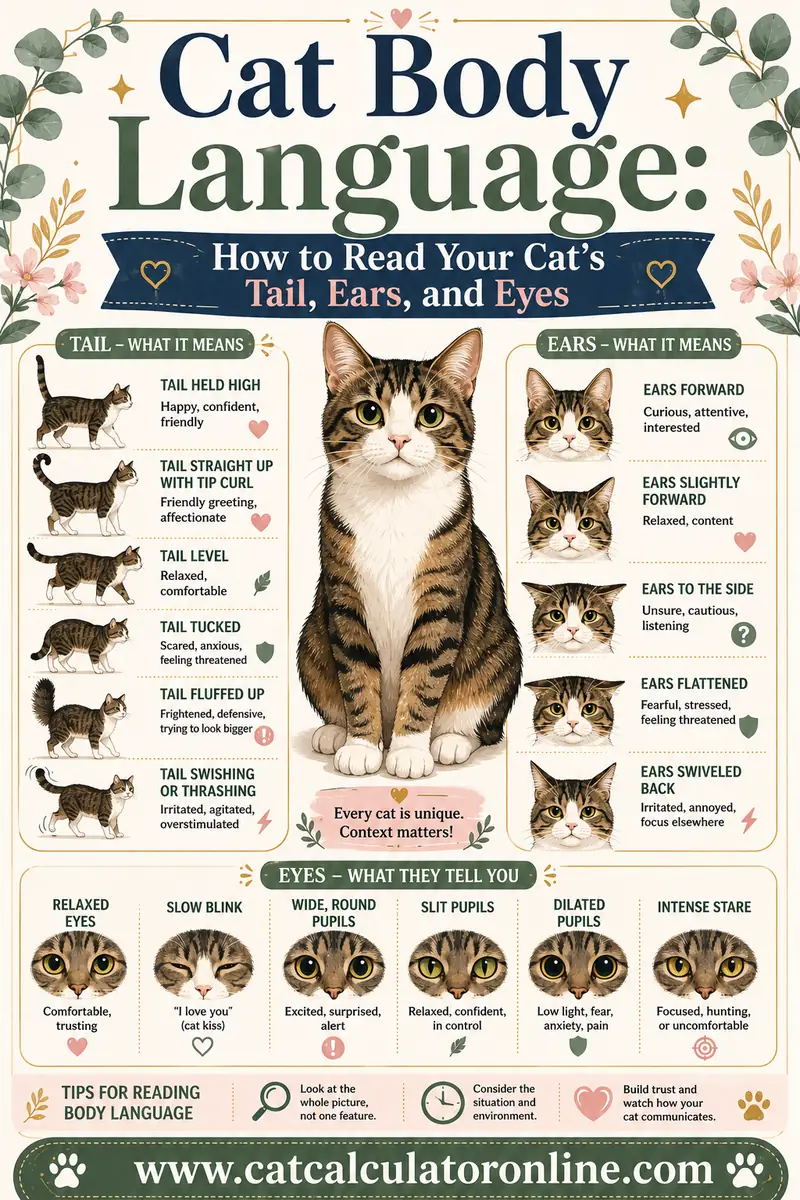
Some cats take this further and want direct contact — chest, lap, shoulder. Others prefer to be just nearby, touching your leg or curled at your side. Both are trust. The "near but not on" cat isn't less bonded; it just shows security a little differently. Our guide to cat body language helps you read the difference.
Reason 3: Scent Bonding — You're Being Claimed
Cats live in a world built on smell, and they use scent to mark what belongs to their world. When your cat rubs its face and body against you, it's depositing scent from glands on its cheeks, chin, and flanks. Sitting on you does the same thing on a bigger scale.
By mixing its scent with yours, your cat is essentially labeling you: this human is mine, part of my group, part of my safe space. It also finds the blended smell reassuring. A person who carries the family scent is a person a cat wants to be close to.
This is why a freshly showered owner sometimes gets extra attention — you've washed off the shared scent, and your cat wants to reapply it. Far from an insult, it's a small daily ritual of belonging.
Reason 4: You Sit Still and the Petting Is Good
Let's be practical. When you sit down, you become predictable and available. You stop moving around, you're at a comfortable height, and there's a decent chance your hand ends up stroking a cat. From your cat's point of view, a seated human is an open invitation.
Cats are quick learners about routine. If sitting on your lap reliably leads to petting, warmth, and calm company, that outcome gets reinforced every single time. Before long, you sitting down becomes the cue, and your cat arrives like clockwork.
Some cats layer a request into it, too — a purr with a little cry mixed in, aimed at getting your attention or your food. That's normal. It's the same clever, learned behavior that gets you out of bed at 5am.
Reason 5: Simple Affection and Attachment
Underneath all the practical reasons is a real one: cats form genuine bonds with their people. The old idea that cats are aloof and indifferent doesn't hold up. Research on cat behavior has shown that many cats form secure attachments to their owners, much like dogs and even young children do.
For an attached cat, being near you is its own reward. Sitting on you combines everything — warmth, safety, familiar scent, gentle touch, and the company of someone it loves. Of course that's where it wants to be.
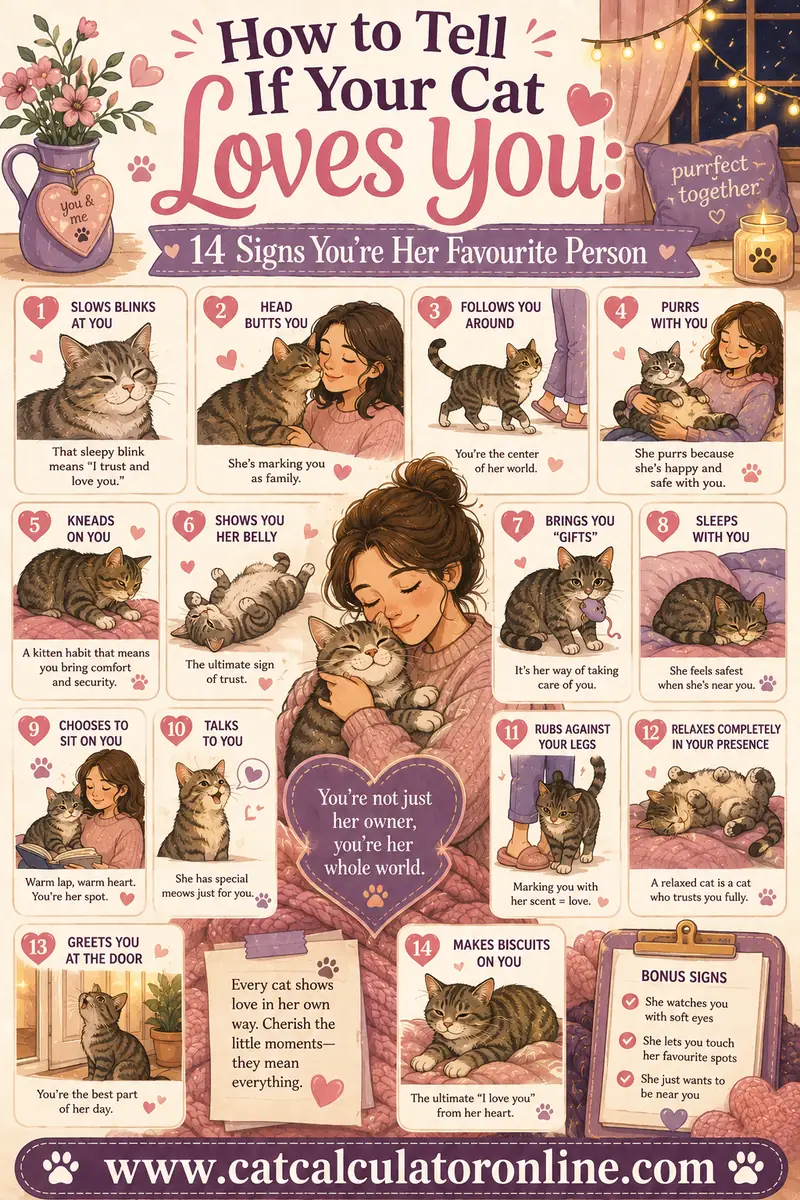
If you want to learn the other signals that your cat is bonded to you — slow blinks, head bumps, following you around, that little upright tail — read how to tell if your cat loves you. Lap-sitting is just one entry on a longer list.
The Reasons at a Glance
| Reason | What's really going on | Tell-tale sign |
|---|---|---|
| Warmth | You're a warm surface for a heat-loving animal | Curls up tight, seeks you out on cold days |
| Safety and trust | You're a secure place to be vulnerable and sleep | Fully relaxes, sleeps deeply on you |
| Scent bonding | Marking you as part of its group and territory | Rubs face and body on you before settling |
| Attention and routine | You sit still, petting and calm follow | Appears the moment you sit down |
| Affection | A genuine attachment bond | Chooses you over other warm, safe spots |
Most of the time, several of these are happening at once. Warmth gets your cat onto your lap; trust and love keep it there.
Is My Cat Sitting on Me a Good Thing?
Yes — it's one of the clearest compliments a cat can pay you. A cat that chooses to rest on you is telling you it feels warm, safe, and bonded. You've earned a level of trust that cats don't hand out easily.
There's really only one time to pay closer attention: when the behavior changes suddenly. A cat that becomes dramatically more clingy overnight, or one that stops seeking you out when it always used to, may just be responding to something small — a change at home, cold weather, a new routine. But a sharp shift in habits can occasionally point to stress or illness.
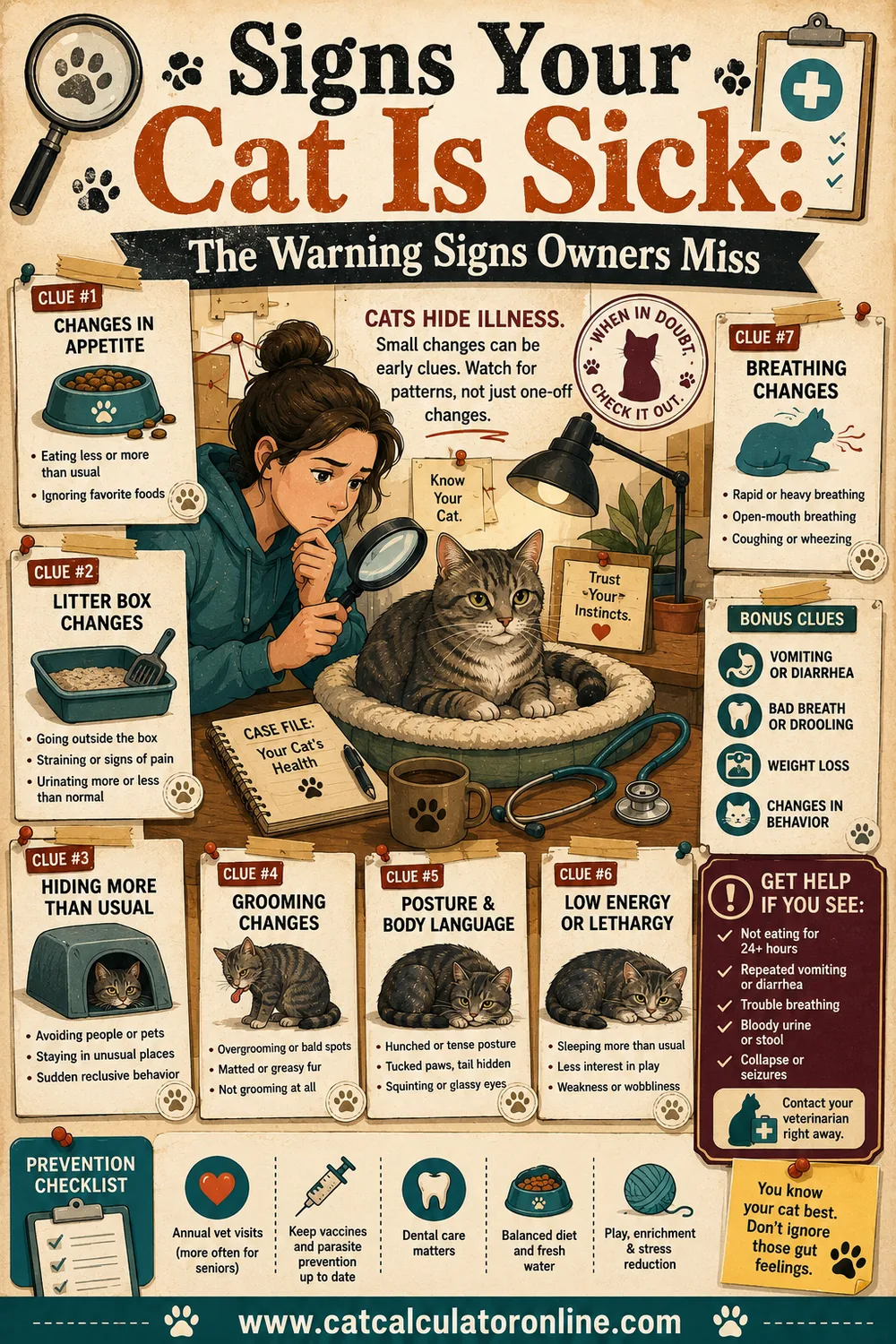
You know your cat's normal better than anyone. If the change comes with other signs — hiding, eating less, low energy, litter box changes — it's worth a look. Our guide to signs your cat is sick walks through what to watch for, and when a vet visit makes sense.
What If I Don't Want My Cat Sitting on Me?
Totally fair. Maybe you're working, maybe you're allergic on some days, maybe you just need to get up. The key rule: don't punish it. Never scold, spray, or shove your cat off. To a cat, sitting on you is a friendly, trusting act, and punishing it only confuses and stresses your cat — it won't understand what it did wrong.
Instead, redirect. Give your cat a better option and it will usually take it, because most of what it wants is warmth and closeness, not your lap specifically.
- Offer a warm bed nearby. Put a soft, cozy bed right next to where you sit — bonus points for a spot in the sun or near a warm appliance. A heated pet bed works wonders for a heat-seeker.
- Add your scent. Drape a worn t-shirt or a blanket you've used over the new bed. The familiar smell makes it far more appealing.
- Reward the alternative. When your cat settles in its own spot, offer calm praise or a treat. You're teaching it that the nearby bed also pays off.
- Give attention on your terms. Set aside a few minutes for petting or play so your cat still gets its fill of closeness. A cat whose social needs are met is less likely to insist on your lap.
Be patient. Redirecting a habit takes a week or two of consistency, but it works — and it keeps the bond intact, which is the whole point.
FAQ
Why does my cat lay on me and not anyone else?
You're probably the person who gives it the most warmth, food, calm company, and one-on-one attention — so you've become its safe, familiar base. Cats often pick a favorite person, usually the one whose scent and routine feel most secure. It's a sign you're the human it trusts most.
Why does my cat sit on my chest specifically?
Your chest is warm, it rises and falls in a soothing rhythm, and it puts your cat close to your face and your scent. Many cats also like the sound and vibration of your heartbeat and voice. It's one of the most affectionate, trusting spots a cat can choose.
Does my cat sitting on me mean it loves me?
It's a strong sign of trust and attachment, yes. Cats rest on people they feel safe and bonded with. Combine it with slow blinks, purring, kneading, and following you around and you've got a cat that's genuinely bonded — see how to tell if your cat loves you.
Why does my cat knead me before lying down?
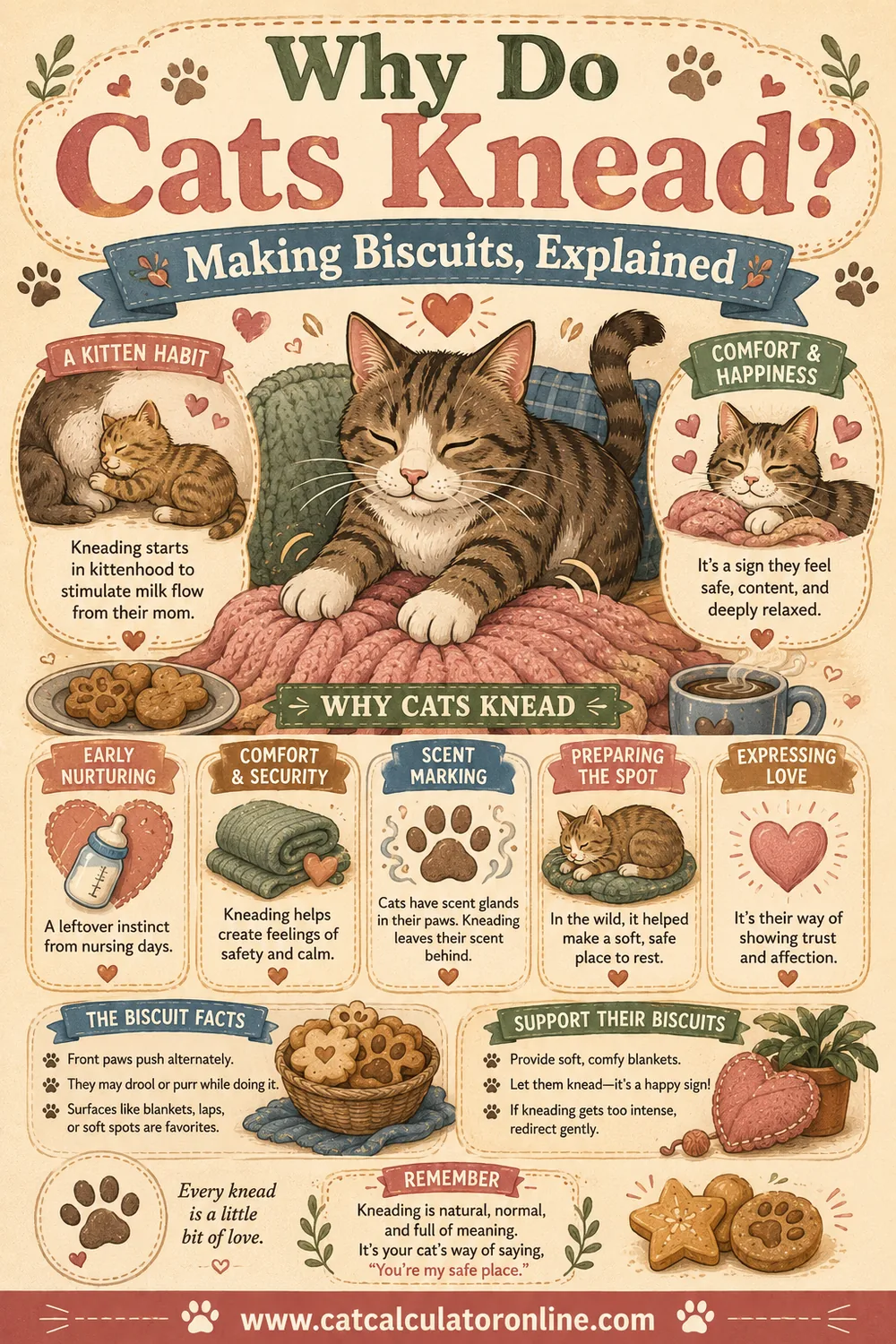
Kneading is a comfort behavior left over from kittenhood, when kittens knead their mother while nursing. When your cat does it on you, it usually signals deep contentment and relaxation. Learn more in why do cats knead.
Is it bad to let my cat sleep on me?
Not at all, for most people. It's good for the bond and many owners love it. The main reasons to set a limit are disrupted sleep, allergies, or a very young kitten you don't want to accidentally roll onto. If you'd rather not, redirect gently to a warm bed nearby rather than punishing.
Why has my cat suddenly started sitting on me all the time?
Common triggers are cold weather, a change at home, or simply a deepening bond as your cat gets more comfortable. It's usually nothing to worry about. But if the clinginess is dramatic and comes with hiding, appetite changes, or low energy, check signs your cat is sick.
The Bottom Line
When your cat sits on you, it's stacking up reasons: you're warm, you're safe, you smell like home, you're good for a petting session, and it loves you. That mix is why your lap beats every other spot in the house. It's a real compliment — cats don't get vulnerable around anyone they don't trust.
Want to understand your cat even better? Start with our free cat age calculator to see its age in human years, then read how to tell if your cat loves you and cat body language to decode the rest of what it's telling you every day.