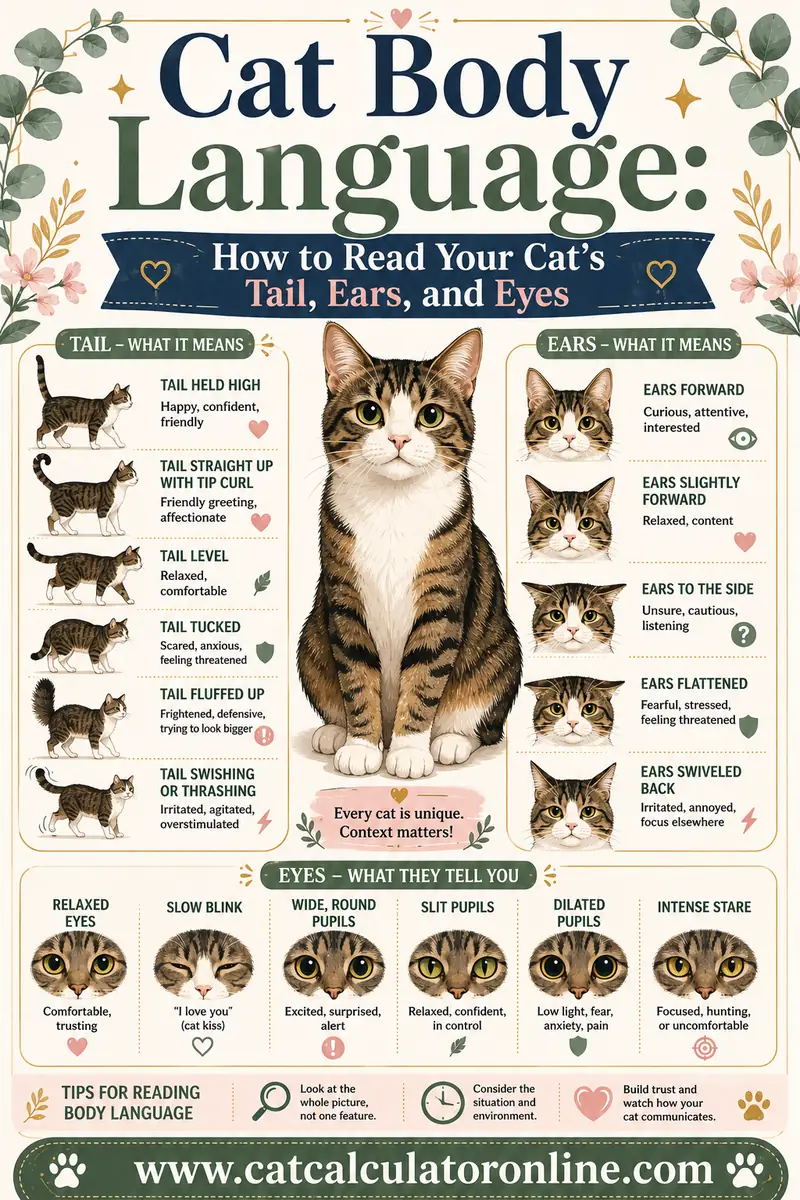
Cat Body Language: How to Read Your Cat's Tail, Ears, and Eyes
Cats talk almost entirely with their bodies. A tail straight up means a confident, friendly greeting; ears swivelled sideways or flat back mean fear or irritation; a slow blink is a genuine sign of trust. And unlike a dog, a cat who's thrashing her tail is agitated, not happy — that one misreading causes more scratched hands than anything else.
Once you can read the signals, your cat stops being mysterious and starts being obvious. If you'd also like to know how old she is in human years — because what's normal changes a lot between a kitten, an adult, and a senior — our free cat age calculator tells you in seconds.
🐾 Cat signal decoder
Tap what your cat is doing right now:
Tap a signal above to see what it means.
The One Rule That Makes Everything Else Work
Never read a single body part on its own.
A cat's body is one connected system. Tail, ears, eyes, whiskers, posture, and the situation all combine into a single message, and any one signal read alone will mislead you regularly. Dilated pupils in a dim room mean nothing. Dilated pupils in bright light, with flat ears and a thrashing tail, mean a great deal.
Think of it the way you'd read a person's face. Raised eyebrows could be surprise, doubt, or amusement — you only know which because of the mouth, the posture, and what just happened. Cats work the same way.
So the practical method is always: tail + ears + eyes + body + context. Four signals and a situation. Get in the habit and you'll be right most of the time.
Cat Tail Meanings: The Most Useful Signal You Have
The tail is the easiest place to start, because it's visible from across a room and it moves constantly.
| Tail position | What it means | What to do |
|---|---|---|
| Straight up, still | Confident, friendly greeting | Greet her back — this is an open invitation |
| Straight up with a hooked or question-mark tip | Playful, happy, curious | Great moment for a wand toy |
| Upright and quivering | Excited greeting (or spraying, if she's backed up to a vertical surface) | Enjoy it; if it's spraying, see your vet about the trigger |
| Held low, roughly level with the body | Neutral, or mildly cautious depending on breed | Nothing needed — read the ears |
| Tucked under the body | Anxious, fearful, or submissive | Reduce pressure, give her space and hiding options |
| Puffed up like a bottle brush | Fear or threat display | Do not approach. Let the situation calm down |
| Slow, small twitch at the tip | Focused, mildly irritated, or hunting | Watch closely — this often precedes a bigger signal |
| Swishing slowly side to side | Concentration or mild agitation | Pause and check the ears before continuing |
| Thrashing or thumping hard | Agitated, over-stimulated, close to snapping | Stop touching her now |
| Wrapped around your leg or another cat | Affection and social bonding | Enjoy it — this is a real compliment |
The tail mistake nearly everyone makes
A wagging tail on a dog is happiness. A thrashing tail on a cat is the opposite: irritation, arousal, and an imminent warning.
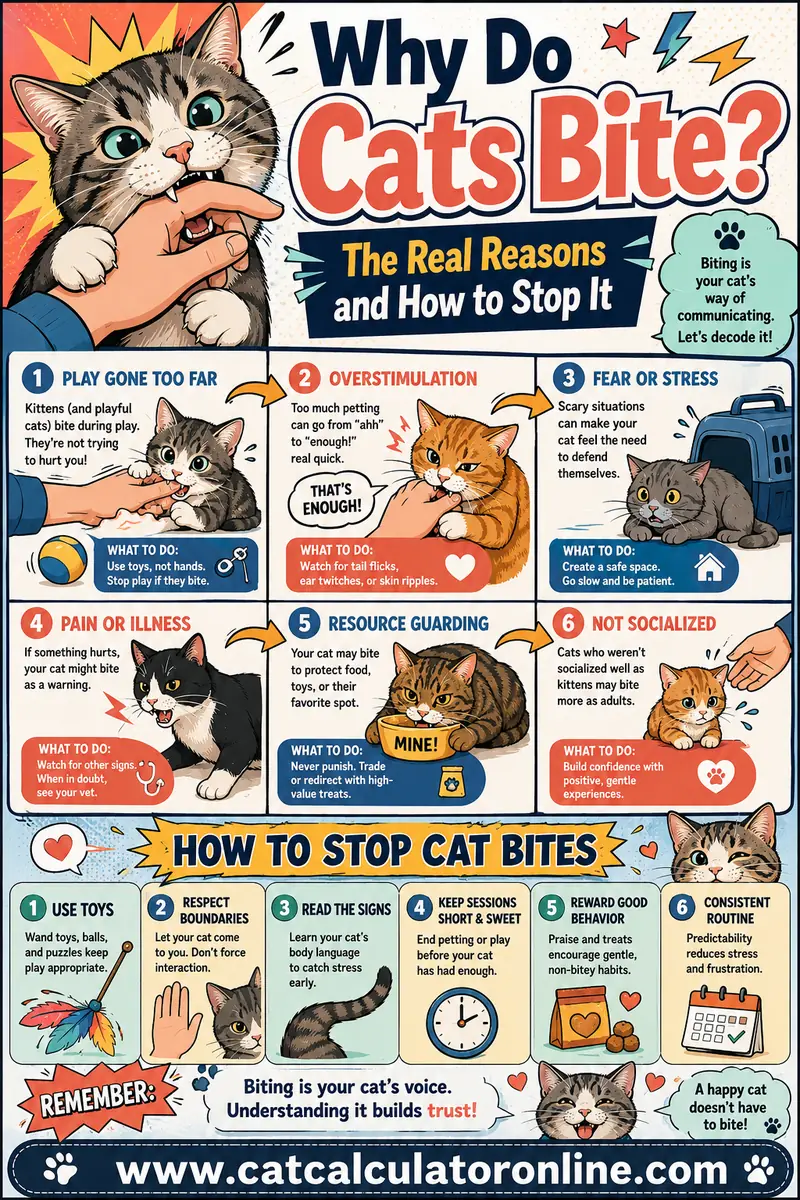
If you're stroking a cat and her tail starts thumping the sofa, that's not enjoyment intensifying. That's her tolerance running out. Stop immediately and you'll avoid the bite that follows about eighty percent of the time. The connection between that signal and the bite that follows is explained in more detail in why do cats bite.
The tail-up greeting
The vertical tail is one of the few social signals researchers have studied closely, and it's a genuinely friendly approach signal that cats use with other cats and with people. A cat who walks toward you with her tail straight up is choosing to interact.
Kittens learn it early, aiming it at their mother. Adult cats keep using it — with cats they like, and with humans they trust. It's one of the cleanest positive signals your cat gives you.
Cat Ear Positions: The Fastest Mood Reader
Ears move faster than tails and change more precisely. If you only learn two things about cat body language, learn tails and ears.
- Forward and upright: alert, interested, relaxed-curious. This is a cat who's engaged with the world.
- Slightly forward with the body loose: contentment. Combine this with a slow blink and you have a genuinely happy cat.
- Swivelling independently: she's tracking sound. Not an emotional signal — just cat radar. One ear can rotate toward a noise while she's still looking at you.
- Rotated out to the sides ("airplane ears"): conflict, irritation, or fear. This is the classic early-warning position and it's easy to spot once you know it.
- Flattened tight to the head: fear, defensiveness, or aggression. She's protecting her ears because she expects a fight.
Airplane ears are the single most useful warning sign in a home with children. Flat-to-the-side ears mean "everyone move away from the cat," and they show up well before anything happens.
Cat Eyes: Pupils, Stares, and the Slow Blink
The slow blink is real
If you look at a cat, slowly close your eyes, hold for a beat, and open them again, many cats will do it back. Research on this behavior found that cats were more likely to slow-blink in return when a human slow-blinked at them, and were more likely to approach a stranger who did it than one who didn't.
In cat terms, holding a soft, half-closed gaze is a statement of non-threat. Predators stare. Relaxed cats don't. Closing your eyes at another animal says "I'm not planning anything."
It's also the easiest trick in this entire article. Try it with a nervous cat, a friend's cat, or a shelter cat and watch what happens.
Pupils
Pupil size is about arousal, not emotion, which is why it needs context.
- Wide, round, dilated pupils: high arousal. That could be excitement before play, fear, surprise, or simply a dark room. Check the light level first — it explains most cases.
- Narrow, slit pupils: bright light most of the time. In bright conditions they're normal; in dim conditions, constricted pupils can indicate tension or focused arousal.
- One pupil bigger than the other, or a sudden persistent change with no light explanation, is a reason to call your vet. Unequal pupils can signal a medical problem.
The stare
A hard, unblinking stare between cats is a challenge. Between you and your cat, a direct stare can feel confrontational — especially to a shy cat.
If you want a nervous cat to relax around you, look slightly away, blink slowly, and turn your body a bit to the side rather than squaring up to her. Making yourself less predator-shaped works remarkably well.
Whiskers: The Signal Almost Nobody Watches
Whiskers are sensory tools first, but their position tells you plenty.
- Fanned forward: curiosity, interest, hunting mode. A cat investigating a new box pushes her whiskers forward to gather information about it.
- Relaxed, sitting out to the sides: neutral and comfortable. This is the default resting position.
- Pulled tight back against the cheeks: fear, or defensiveness. She's protecting them and pulling herself in.
Whiskers rarely contradict the ears — they usually confirm what the ears are already saying. Use them as a second opinion when you're unsure.
Full-Body Postures and What They Say
Individual signals are useful. Whole postures give you the headline.
The loaf. Sitting with paws tucked underneath, tail wrapped, eyes soft. This means comfortable and settled — she isn't planning to move. A tense loaf with wide eyes and flat ears is a different thing entirely: that's a cat braced and unhappy.
Belly up. A cat rolling over and showing you her stomach is displaying trust. The belly is the most vulnerable part of a cat, and exposing it takes real comfort with her surroundings. What it usually is not is a request for a belly rub. Most cats will grab your hand with all four paws if you take it literally — that's not aggression, it's a reflexive defensive grab. Rub the head or cheeks instead and let the belly be a compliment.
The arch. The Halloween-cat pose — arched back, puffed fur, sideways stance — is a threat display designed to make her look as large as possible. This is a frightened cat, not a brave one. Back off and let her de-escalate on her own timeline.
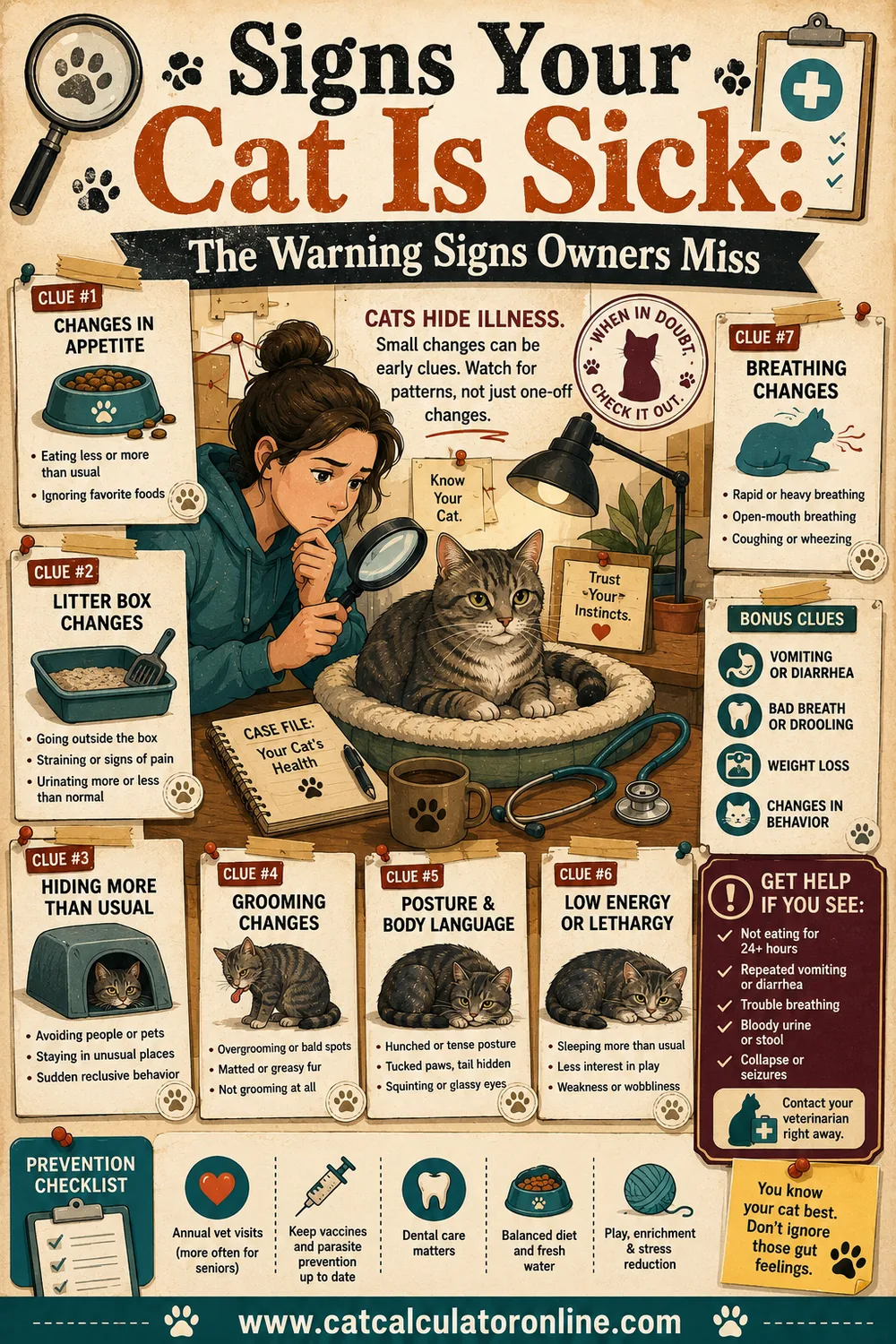
Crouched and low. Body pressed down, legs folded, tail tucked, ready to bolt. This is fear or pain. If your normally confident cat starts doing this regularly, read signs your cat is sick and call your vet — cats hide pain by making themselves small and still.
The play bow and side-hop. Ears forward, pupils big, sudden sideways bouncing, tail up with a question-mark hook. That's pure invitation. Grab a wand toy.
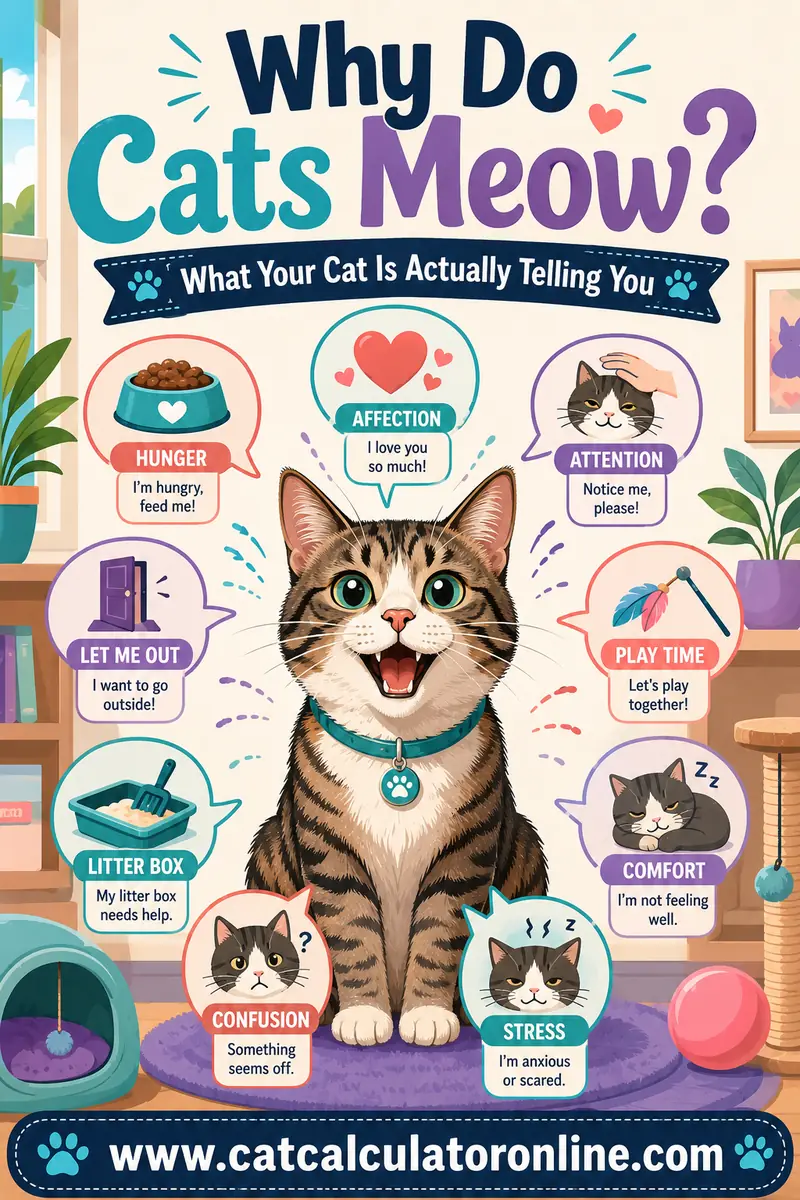
Slow, deliberate approach with tail up and a soft trill. Your cat is coming to say hello and would like you to notice. Cats often trill or chirp during this approach — more on those sounds in why do cats meow.
Reading Two Cats Together
A lot of owner anxiety comes from misreading cat-to-cat interactions.
Signs it's fine: relaxed tails, one cat grooming the other, sleeping in contact, rubbing faces or bodies, tails intertwining. Chasing that swaps direction — first one chases, then the other — is play.
Signs it isn't: one cat consistently blocking access to food, litter, or doorways; stiff bodies and hard stares that go on and on; a low growl or yowl building; one cat always the one being chased; and a cat who's stopped using shared resources.
Cats fight quietly and stare loudly. Two motionless cats locked in a stare across a room is usually more serious than two cats loudly tumbling.
Silent tension matters more than noise. If one cat has stopped using a litter box or eating at her normal spot, there's likely a conflict happening that you're not seeing.
How Body Language Changes With Age
The signals stay the same across a cat's life, but the volume and frequency shift, and knowing what's normal for her stage saves a lot of worry.
Kittens are loud with their bodies. Everything is exaggerated — bigger arches, more sideways hopping, tails up almost constantly, pupils permanently wide. They also misread each other and you, because bite inhibition and social signalling are still being learned. A kitten who ambushes your ankles isn't aggressive; she's practicing.
Adult cats settle into a personal baseline. This is the stage where "her normal" becomes a genuinely useful reference point. Some adults are tail-up-all-day cats; others hold the tail low as a default and mean nothing by it. Learn her baseline in her healthy years and any deviation later becomes obvious.
Senior cats get subtler and stiffer. Tails move less, grooming drops off, and jumping becomes hesitant. Here's the trap: a lot of that gets written off as "she's just getting old" when it's actually arthritis, dental pain, or reduced vision. Age isn't a diagnosis. If her body language quietens down noticeably, that's a conversation with your vet, not just a milestone.
Vision and hearing loss also change the picture. A cat who's going deaf may stop reacting to sounds and startle badly when touched from behind — approach her where she can see you. A cat losing vision may move more cautiously, keep to walls, and dilate her pupils more of the time.
Five Signals People Most Often Misread
Some of these get misinterpreted so consistently that they're worth listing on their own.
- A cat lying down is not automatically relaxed. A tense, crouched cat with wide eyes and flat ears is a cat waiting for something bad. Look at the ears, not the position.
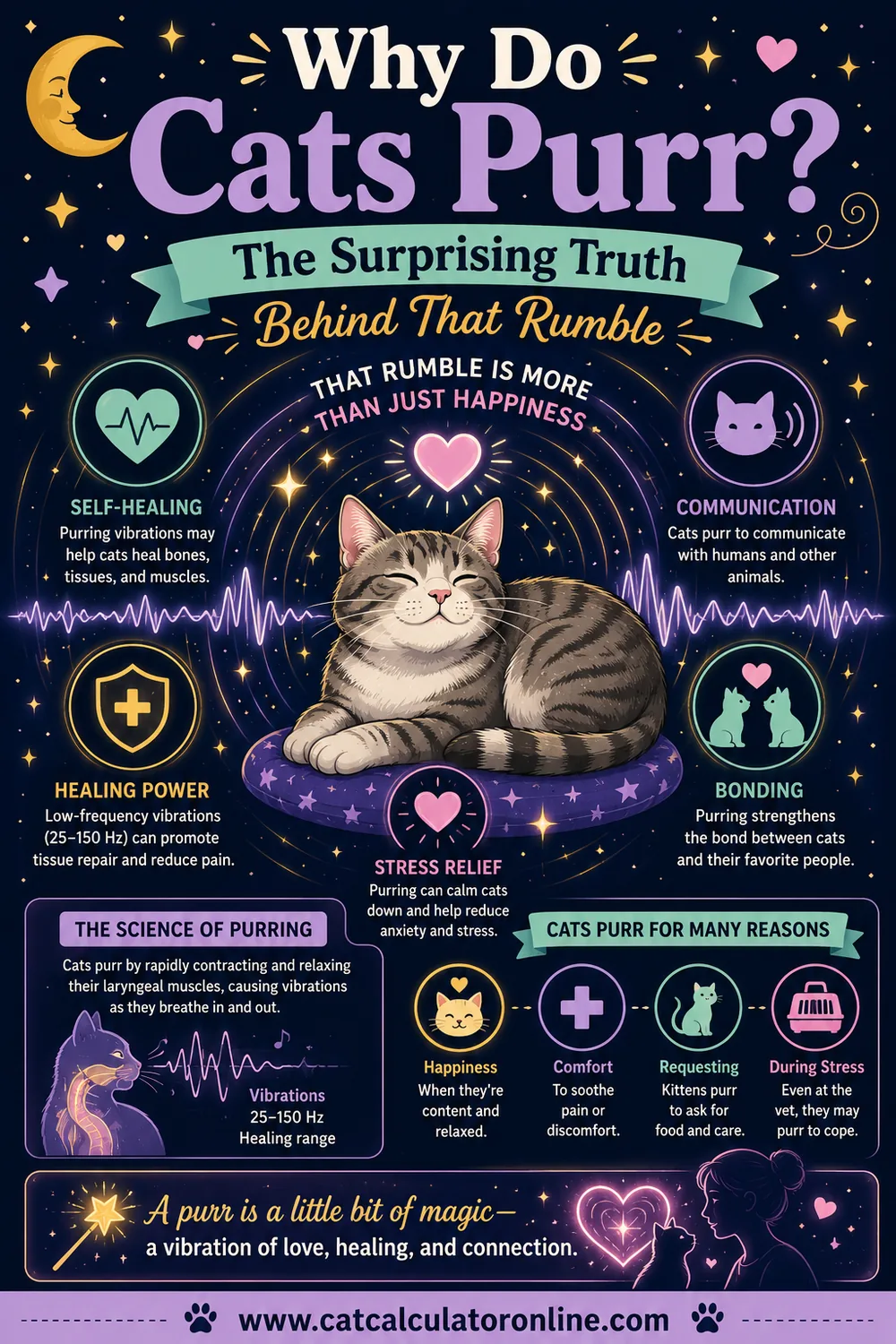
- A purring cat is not automatically happy. Cats purr under stress and pain as well as contentment. Read the body first, the sound second.
- Rubbing against your legs isn't just affection. It's also scent marking — she's depositing her smell and claiming you as part of her territory. It happens to be affectionate too.
- A staring cat isn't admiring you. A hard, unblinking stare is closer to a challenge. Slow-blink and look slightly away.
- A cat who runs when you approach isn't rejecting you. She's telling you the approach was too direct. Sit down, look away, and let her come to you — it works surprisingly often.
When Body Language Means "Something Hurts"
This is the part worth taking seriously. Cats evolved to conceal pain — an obviously unwell animal in the wild is an easy target — so pain shows up as posture changes long before anything dramatic happens.
Watch for:
- A hunched posture with the head lowered and the body tight.
- Squinting or half-closed eyes that aren't the relaxed, soft kind. Tense squinting is a recognized pain expression in cats.
- Ears held slightly flattened and rotated outward as a constant state, not a reaction.
- Sudden hiding, especially in a cat who normally seeks company.
- Sitting still in an unusual place for long stretches.
- Flinching, tail flicking, or hissing when touched in one specific spot.
- Reduced grooming, or over-grooming one area.
- Reluctance to jump onto surfaces she used to reach easily — a very common early sign of arthritis in older cats.
None of these are diagnoses. They're all reasons to book a vet appointment. If your cat is getting on in years, cat life stages explained covers what changes and when.
Putting It All Together: Three Quick Reads
Read one. Tail straight up with a hooked tip, ears forward, pupils moderately wide, body loose, bouncing sideways. Verdict: playful and happy. Action: get the wand toy out.
Read two. Cat on your lap purring, but tail tip twitching, one ear rotating back, and the skin along her back rippling. Verdict: she was enjoying it and has now hit her limit. Action: stop stroking, let her stay. She'll often settle again in a minute. Purring, as covered in why do cats purr, does not override the tail.
Read three. Cat crouched under the bed, pupils huge, ears flat, tail tucked, not eating. Verdict: frightened or unwell. Action: check for an obvious trigger — a visitor, a noise, a new pet. If there isn't one, or it lasts more than a day, call your vet.
FAQ
What does it mean when a cat's tail is straight up?
A vertical tail is a confident, friendly greeting — the main positive approach signal cats use with people and with cats they like. If the tip is hooked into a question-mark shape, she's feeling playful on top of friendly.
Is a cat wagging its tail happy?
No — that's the opposite of a dog. A cat thrashing or thumping her tail is agitated or over-stimulated, and it often comes right before a swat or a bite. A slow tail-tip twitch means focus or mild irritation; hard thrashing means stop.
What does slow blinking at a cat do?
It communicates that you're not a threat. Research has found cats are more likely to slow-blink back at a human who slow-blinks at them, and more likely to approach a stranger who does it. It's the simplest way to make a nervous cat more comfortable.
Why does my cat show her belly but bite when I rub it?
Exposing the belly is a trust display, not a request. The stomach is a vulnerable area, so touching it often triggers a reflexive defensive grab with the front paws and back feet. Take it as a compliment and scratch her cheeks or chin instead.
What do flattened ears mean on a cat?
Ears rotated to the sides or pressed flat mean fear, irritation, or building aggression. It's an early warning signal that appears well before a swat, and the right response is to stop what you're doing and give her space.
How can I tell if my cat is in pain?
Look for posture changes: hunching, tense squinting, sudden hiding, reduced grooming, reluctance to jump, or flinching when touched in one spot. Cats conceal pain instinctively, so these subtle shifts are often the only sign. Any of them justifies a vet visit.
The Bottom Line
Cat body language isn't subtle once you know where to look. Tail up means friendly, tail thrashing means stop, airplane ears mean back off, a slow blink means trust, and a belly display means she feels safe — not that she wants a rub. Read tail, ears, eyes, and posture together with the situation, and your cat becomes remarkably easy to understand.
Body language also shifts with age: kittens are bolder and bouncier, seniors get quieter and stiffer. Find out where your cat is right now with our free cat age calculator, then read cat life stages explained to know what to expect next.