Why Do Cats Meow? What Your Cat Is Actually Telling You
Adult cats meow almost exclusively at humans, not at each other. Kittens meow to their mother, then largely drop the habit with other cats as they grow up — but they keep using it on us, because it works. When cats talk to other cats they rely mostly on scent, body language, and a different set of sounds entirely.
So that meow at 6am isn't cat language. It's a sound your cat developed specifically for you. If you're curious how old your cat is in human terms — which changes a lot about how much and why she talks — our free cat age calculator gives you the answer in one tap.
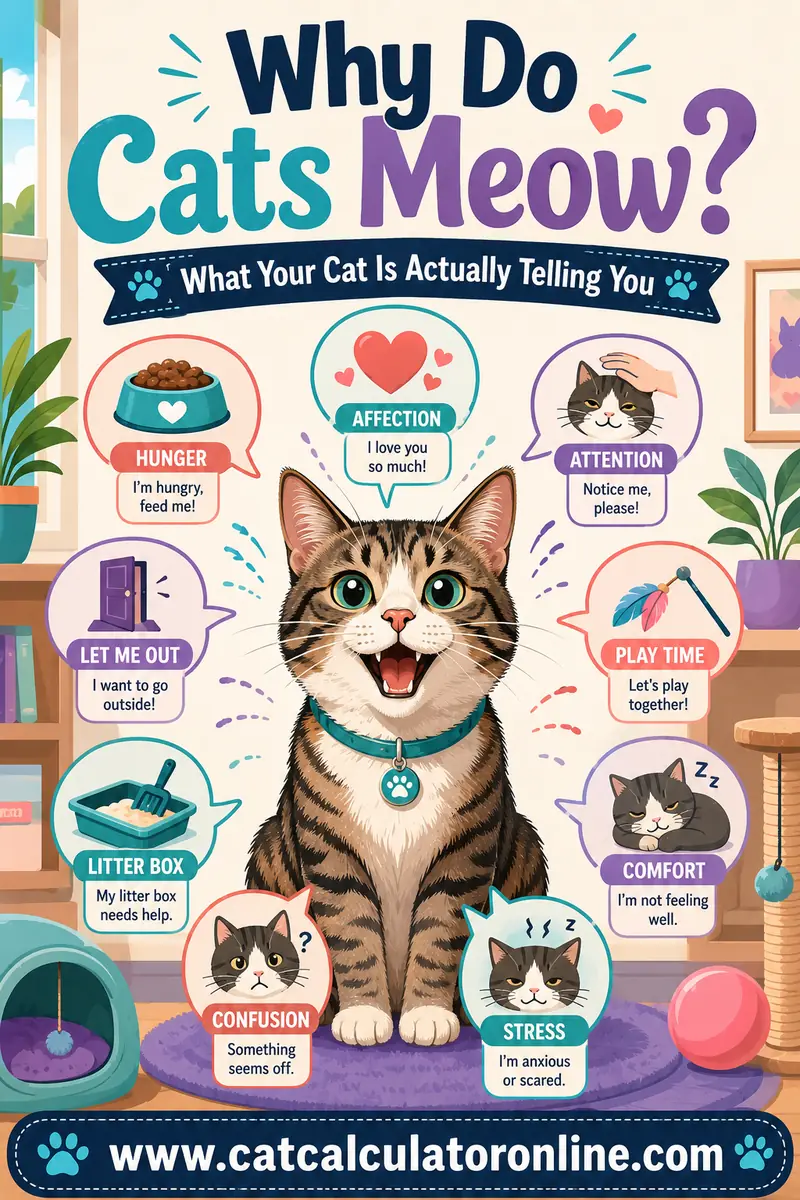
🐾 Decode that meow
Tap the sound you keep hearing:
Tap a meow above to see what it usually means.
The Meow Is a Sound Cats Made for Humans
This is the single most interesting fact about meowing, and most owners have never heard it.
Watch a group of cats living together — a colony, a multi-cat household, feral cats sharing a yard. They interact constantly, and they barely meow at one another. They read each other through scent marking, tail position, ear angle, and pupil size, plus a range of other noises: hisses, growls, yowls, chirrups, and the caterwauling of mating season.
Kittens are different. A tiny kitten meows at its mother — it's a distress and location call, a way of saying "I'm cold, I'm lost, I'm hungry" to the one animal in the world obliged to respond. As kittens mature, they mostly stop aiming that call at other cats.
But cats living with people never fully grow out of it. Over thousands of years alongside us, they kept the kitten call and pointed it at the species that reliably answers. Your cat meows at you for roughly the same reason a kitten meows at its mother: you're the one who fixes things.
The Main Types of Meow and What Each One Means
Cats don't have a fixed dictionary. Individual cats develop individual sounds, and a lot of it is a private language negotiated between one cat and one household. Still, the broad categories are consistent enough to be useful.
| Sound | What it usually means | What to do |
|---|---|---|
| Short, bright meow | Greeting — "hello, you're back" | Say hello back. It's a genuine social exchange |
| Several short meows in a row | Excited greeting, often after you've been out | Give her a minute of attention or a quick play burst |
| Insistent, repeated mid-pitch meow | Demand: food, door, lap, attention | Meet real needs, but don't reward the noise itself |
| Trill or chirrup (mouth closed, rolling sound) | Friendly greeting, mother-to-kitten origin | Follow her — trilling often means "come with me" |
| Chattering or chittering at a window | Excitement and frustration at unreachable prey | Add wand-toy play; she's hunting with nowhere to go |
| Long, low, drawn-out yowl | Mating behavior, distress, or disorientation | Check the cause; see below for when it's a vet issue |
| Soft, almost silent open-mouth "meow" | Very quiet vocalisation, often affectionate | Nothing needed — it's a soft, close-range signal |
| Sudden change in normal voice | Health change, pain, or throat irritation | Book a vet visit |
The key isn't memorising a list. It's noticing your cat's normal — then paying attention when it shifts.
The Greeting Meow: Cats Really Are Saying Hello
If your cat meows the moment you walk through the door, or when you come into a room she's already in, that's a social greeting. It's short, upward-inflected, and usually paired with a tail held straight up.
That tail-up posture is the friendly-approach signal cats use with each other, and pairing it with a meow is essentially a bilingual greeting: cat body language plus a human-directed sound.
Here's the fun part. Cats who get answered talk more. If you reply out loud every time she greets you, you're reinforcing a conversation, and many owners end up with a cat who "talks back" all day. That's not your imagination, and it's not a problem — it's a relationship. For more on how cats signal affection without any sound at all, see cat body language.
Demand Meowing: Why It Never Seems to Stop
The demand meow is the one that wears people down. It's repeated, it's targeted, and it usually happens near a food bowl, a closed door, or a bed at 5am.
It exists because it worked. Some point in the past, your cat meowed and something good happened. Cats are excellent at spotting patterns, and once a behavior pays off intermittently — sometimes you get up, sometimes you don't — it becomes remarkably hard to extinguish. Intermittent rewards make behaviors stronger, not weaker.
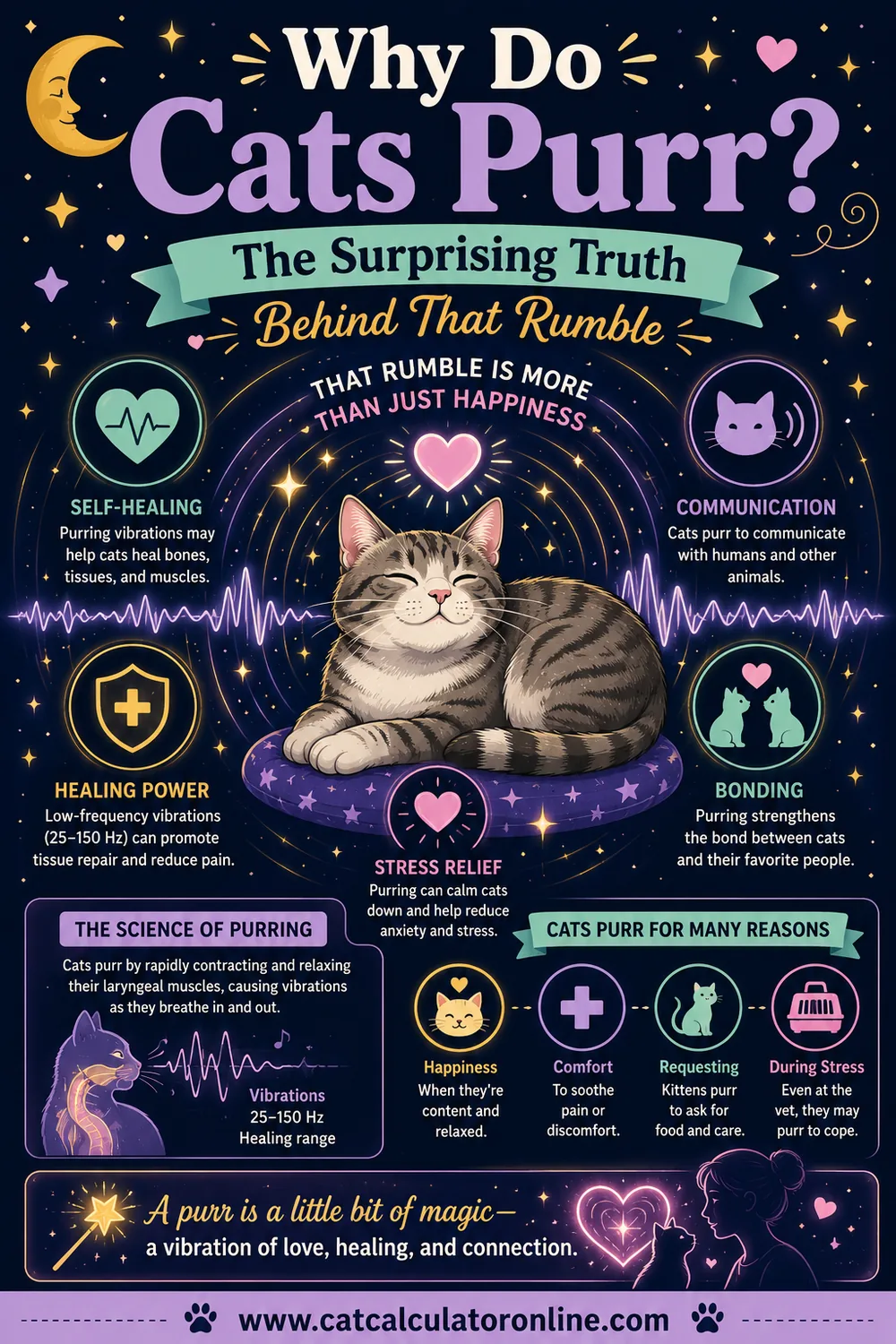
Some cats mix a high-pitched cry into a purr to make it even harder to ignore. That's solicitation purring, and it's covered in detail in why do cats purr.
What actually helps
- Meet the genuine need first. Rule out an empty bowl, an empty water dish, a dirty litter box, or a door she needs opened. Address those.
- Feed on a schedule, not on request. Predictable meals cut food-related meowing dramatically. A timed feeder helps a lot with early-morning cases.
- Don't respond to the meow itself. Wait for a pause — even two seconds of quiet — then do the thing. You're rewarding silence, not noise.
- Add play. Ten to fifteen minutes of wand-toy hunting, twice a day, burns the energy that often comes out as vocalising.
- Expect it to get worse before it gets better. When a behavior that always worked suddenly stops working, cats escalate first. That spike is normal and short-lived if you stay consistent.
Never punish meowing. Yelling, spray bottles, and physical corrections don't teach a cat to be quiet — they teach her that you're unpredictable, and they often increase stress-driven vocalising.
Yowling: The Sound That Means Something Different
A yowl isn't a big meow. It's a distinct, long, low, wavering sound, and it usually points to something specific.
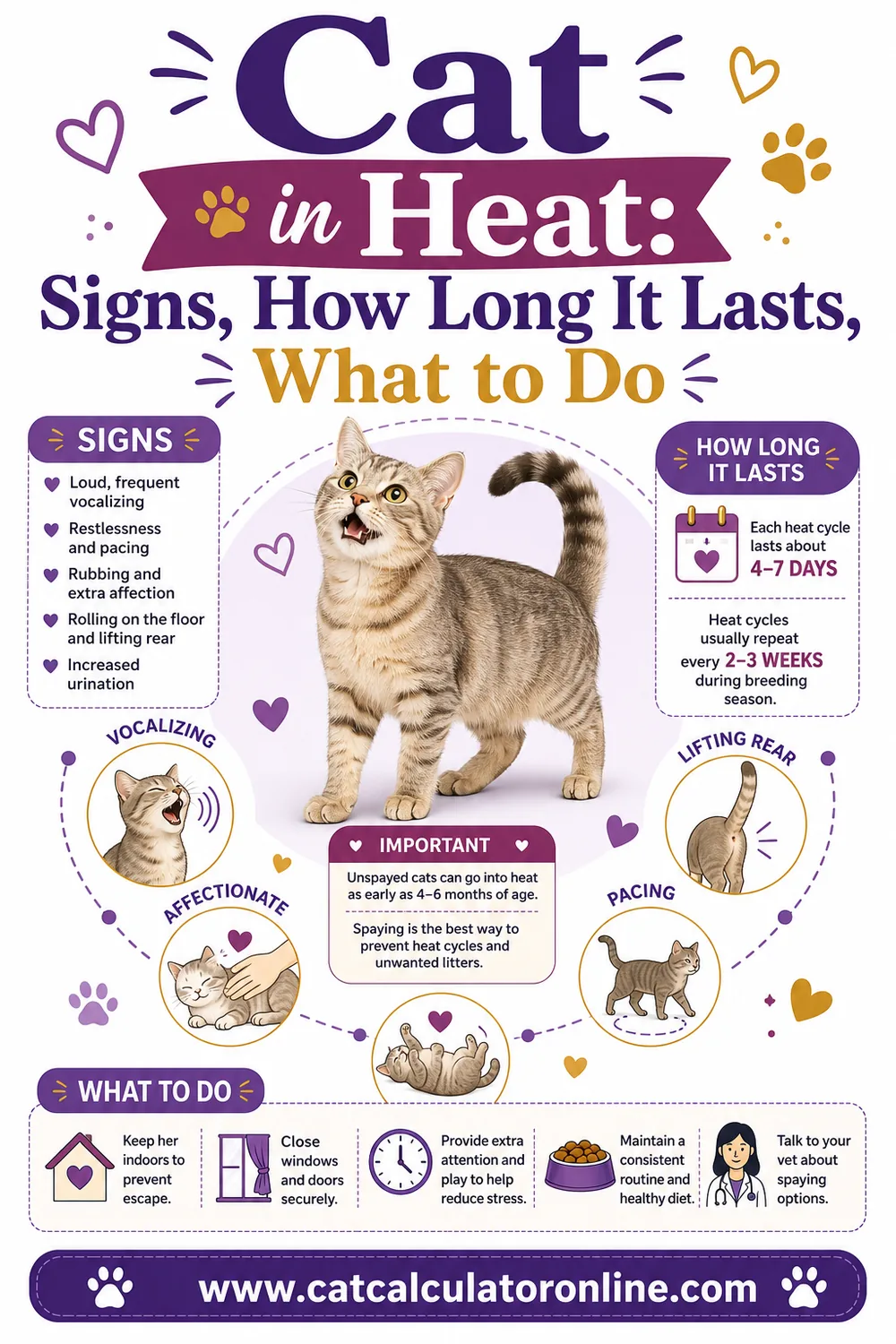
- Mating behavior. An unspayed female in heat yowls loudly, repeatedly, often for days at a time. Intact males yowl in response and when competing with other males. This is by far the most common cause in unaltered cats. Our guide to cats in heat walks through the full picture.
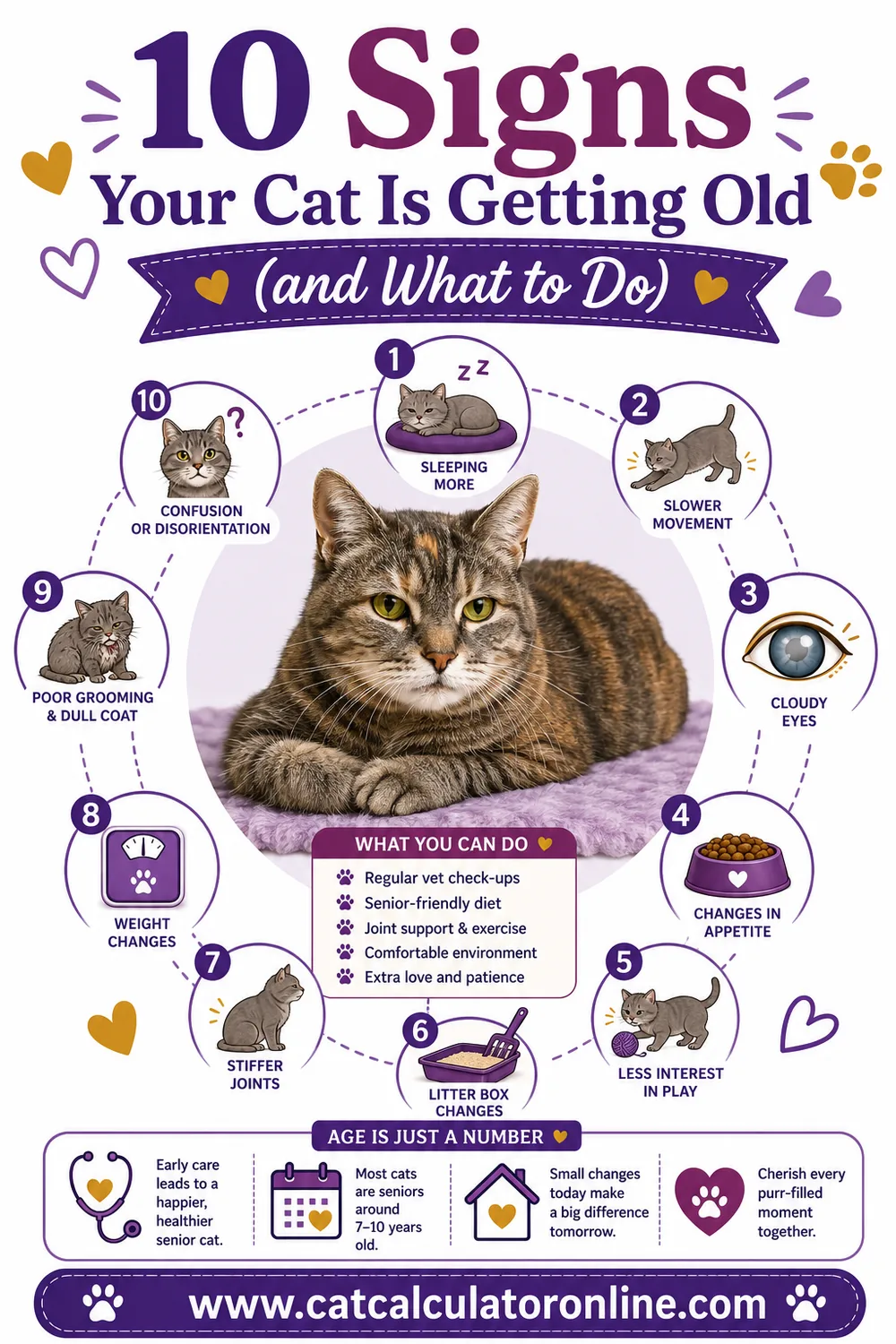
- Disorientation in older cats. Night-time yowling in a senior — standing in a hallway, calling into an empty room — is a recognized sign of feline cognitive dysfunction, the cat version of age-related cognitive decline.
- Confrontation. Two cats sizing each other up, indoors or through a window, produce long yowls before anything physical happens.
- Distress or pain. A cat trapped somewhere, or in acute discomfort, may yowl.
Spaying and neutering eliminates the mating-related yowling almost entirely. The other causes need investigating rather than managing.
Chattering, Trilling, and the Other Noises
Meowing gets the attention, but your cat has a wider vocabulary than that.
Trilling is that rolling, chirping sound made with the mouth closed. It comes from mother cats calling their kittens to follow, and adult cats redirect it at people they're comfortable with. It's one of the clearest friendly signals a cat gives. Many cats trill while walking ahead of you toward a food bowl or a favorite spot.
Chattering happens at windows. Your cat spots a bird, her jaw vibrates, and she produces a fast clicking or stuttering sound. The most common explanation is a mix of excitement and frustration — a hunting sequence that can't complete. Some researchers have wondered whether it mimics prey sounds, but nothing about that is settled.
Hissing and growling are unambiguous. They mean "stop, back off," and they deserve immediate respect. A hissing cat is not being naughty; she's frightened and warning you before she escalates. Which is exactly the pattern behind most bites, covered in why do cats bite.
Some Cats Are Just Chattier
Vocal volume varies enormously between cats, and a lot of it is baked in.
Siamese cats are the classic example — famously loud, famously persistent, and with a distinctive rasping voice that owners either adore or find exhausting. Other Oriental breeds share the trait: Balinese, Oriental Shorthairs, Tonkinese, and Burmese all tend toward the talkative end.
At the other extreme, some breeds and many individual cats barely speak. Persians, Ragdolls, and Russian Blues are generally quieter, though individuals vary far more than breed generalisations suggest.
Personality and history matter too. A cat raised with lots of human interaction usually talks more than one who spent her early months semi-feral. A single cat in a quiet home often becomes more vocal than one in a busy multi-cat household.
A quiet cat isn't unhappy or unbonded. She's just using other channels — proximity, slow blinks, head bumps, following you room to room.
When Meowing Means Call the Vet
Hunger is the assumption most owners jump to, and it's often wrong. A meaningful change in how much your cat vocalises is a genuine clinical sign, and it's worth taking seriously.
Book a vet appointment if you notice:
- A sudden, sustained increase in meowing with no obvious trigger — especially in a middle-aged or older cat.
- Night-time yowling in a senior. Common with cognitive dysfunction, and also seen with hyperthyroidism and high blood pressure.
- Meowing plus weight loss and a big appetite. A classic combination in overactive thyroid disease, which is common in older cats.
- Meowing when touched, jumping, or using the litter box. That's a pain signal, not conversation.
- Straining and vocalising in the litter box. In male cats especially, this can be a urinary blockage — an emergency, same day.
- A voice that changes, goes hoarse, or disappears. Worth checking.
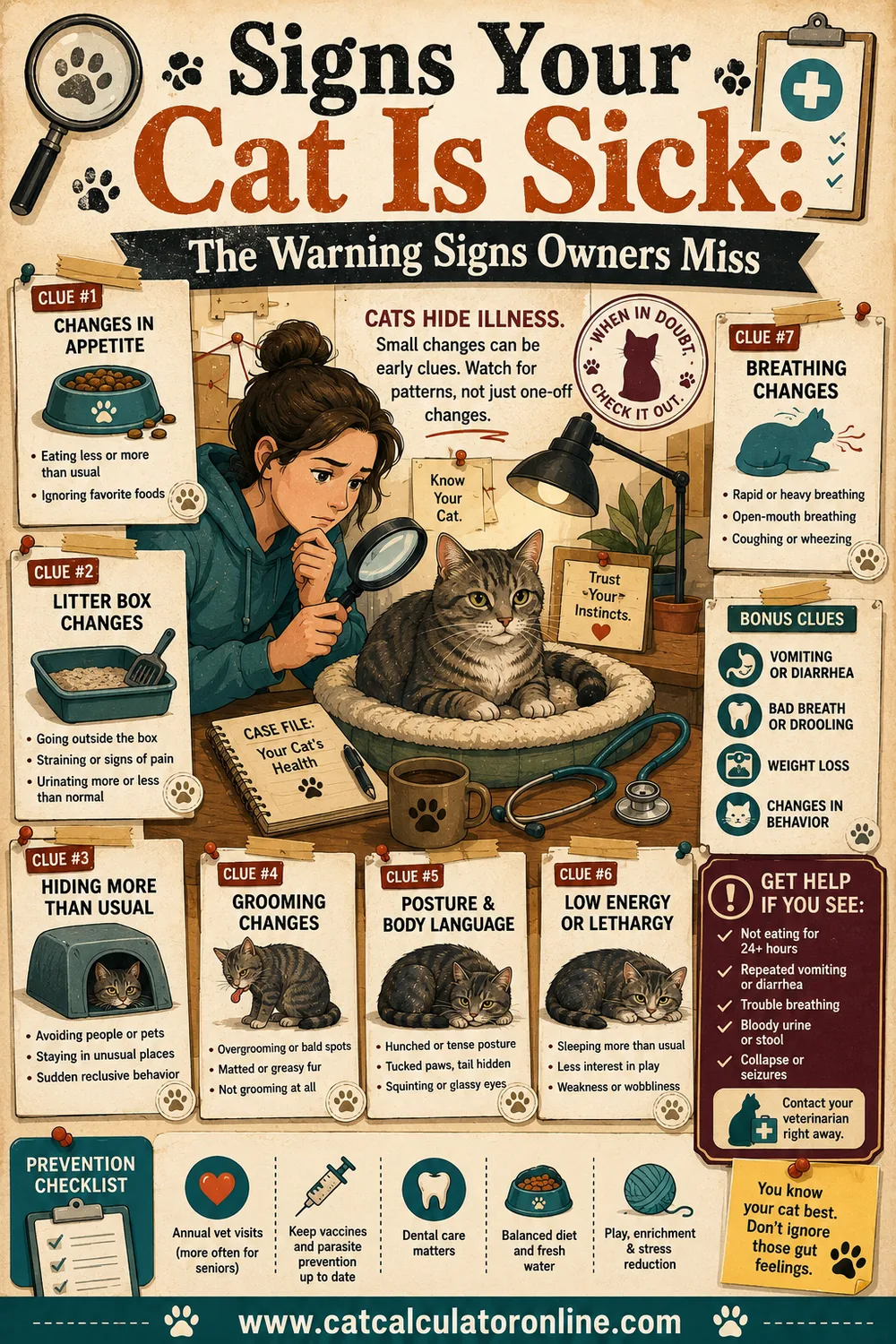
- New vocalising alongside hiding, poor appetite, or lethargy. Read signs your cat is sick and get her seen.
If your cat is over ten, signs your cat is getting old covers what else tends to change around the same time.
FAQ
Do cats meow at each other?
Very rarely. Adult cats communicate with each other mainly through scent, body language, and sounds like hisses, growls, and yowls. Meowing is aimed almost exclusively at humans — kittens use it with their mother, then largely reserve it for people as adults.
Why does my cat meow at me constantly?
Usually because it has worked before. Demand meowing is learned behavior reinforced by food, doors opening, or attention. Feed on a fixed schedule, respond only during pauses in the noise, and add daily play. If the increase is sudden or she's over seven, get a vet check first.
Why does my cat meow at night?
Common causes include boredom, hunger, a cat in heat, or age-related cognitive dysfunction in seniors. A late evening play session plus a small meal before bed helps normal cases. Persistent night yowling in an older cat warrants a vet visit.
What does it mean when a cat trills or chirps?
Trilling is a friendly greeting sound that originates in mother-to-kitten communication. When a cat trills at you, she's usually pleased to see you and often wants you to follow her somewhere.
Are Siamese cats really louder than other cats?
Yes, as a general tendency. Siamese and other Oriental breeds are known for being highly vocal with a distinctive, carrying voice. Individual variation is still large, so a quiet Siamese and a chatty Persian are both entirely possible.
Should I ignore my cat when she meows?
Ignore the demand meow, never the cat. Meet real needs — food, water, clean litter, play — proactively on a schedule, then avoid responding to the noise itself. And never punish meowing; it increases stress and makes vocalising worse.
The Bottom Line
Meowing is a human-directed sound. Cats barely use it with each other, but they've kept and adapted it for us, which is why your cat has a whole vocabulary aimed squarely at your attention. Greeting meows, trills, demand meows, chattering, and yowls all mean different things — and the meaning lives in the context, not the sound alone.
Any real change in how much your cat talks deserves a vet's opinion rather than another scoop of food. To understand what stage of life she's in and what's normal for her right now, try our free cat age calculator, then read cat life stages explained.