Cat in Heat: Signs, How Long It Lasts, and What to Do
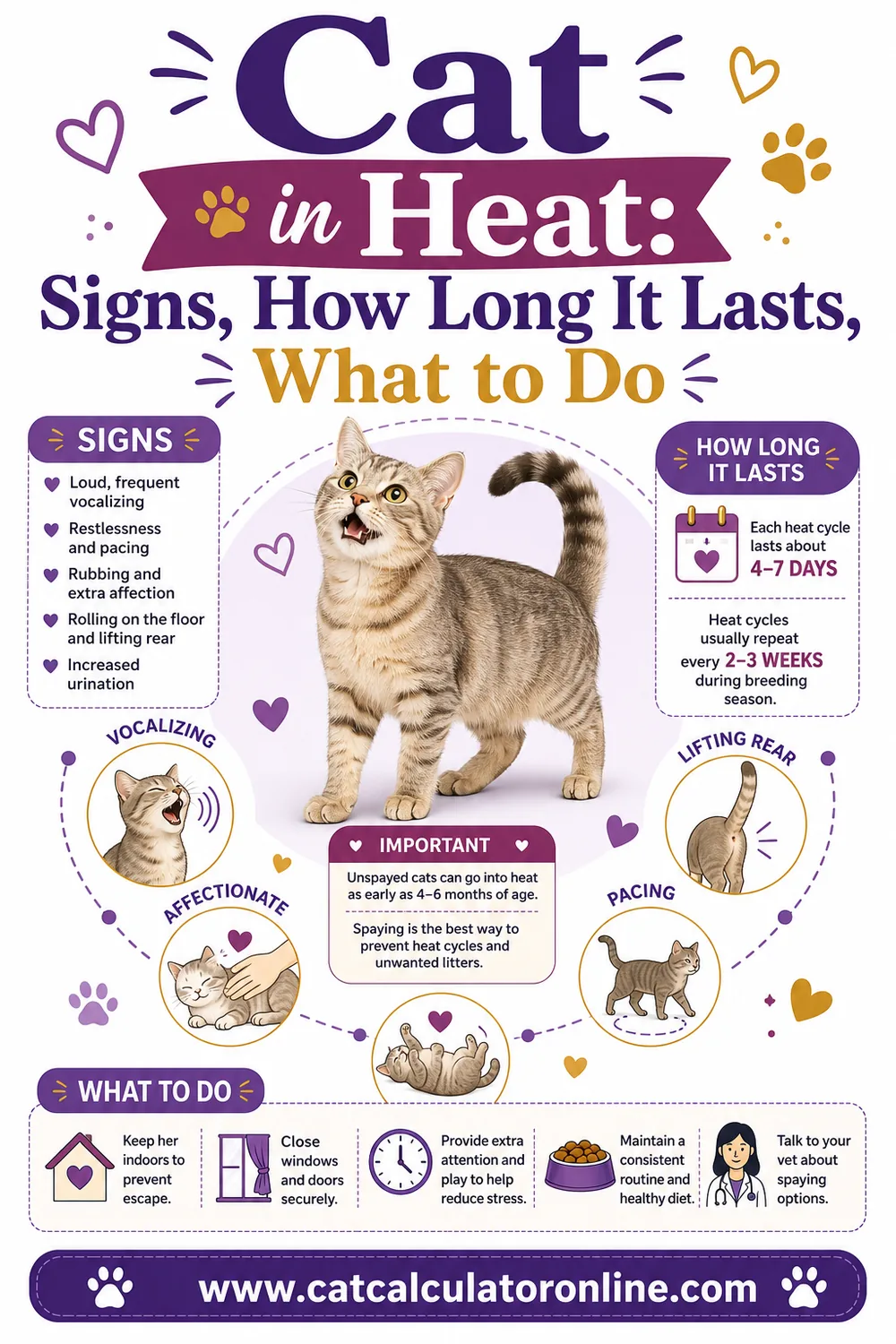
A cat in heat is a female cat that's fertile and ready to mate, and she'll usually let the whole house know it. The classic signs are loud, insistent yowling, rolling on the floor, rubbing on everything, and raising her rear with her tail held to one side. A single heat lasts about 4 to 7 days (sometimes up to 10), and during breeding season it can return every 2 to 3 weeks until she's mated or spayed.
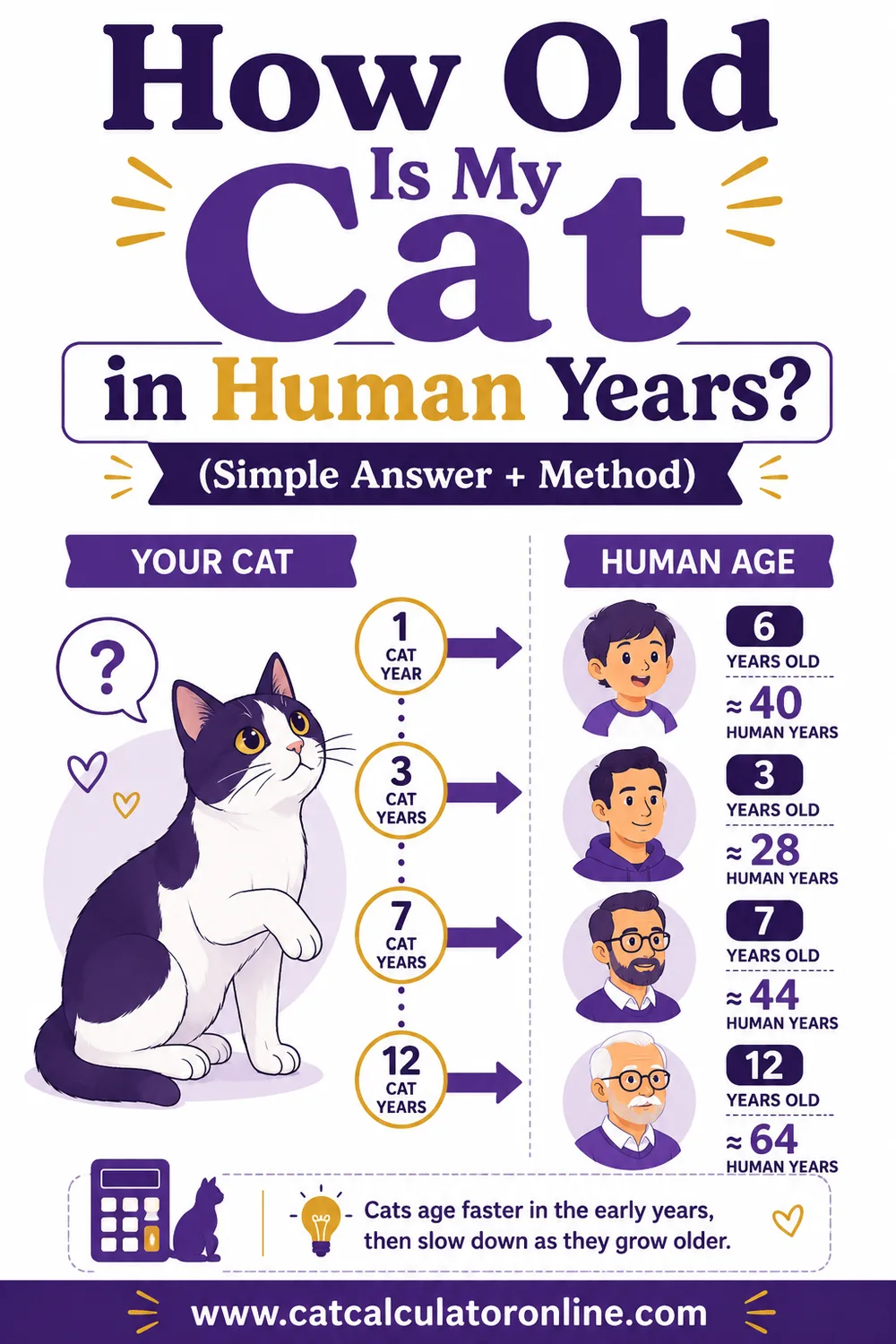
If you're trying to figure out how old your cat is — heat can start as early as 4 to 6 months — our free cat age calculator gives you her age in human years in one tap. Below, we'll walk through every sign, how the cycle works, and exactly what to do (and what to avoid) while she's in heat.
🐱 Signs of heat — tap one to learn more
Not sure if that behavior counts? Tap a sign:
Tap a sign above to see what it means.
What "In Heat" Actually Means
"In heat" — the vet term is estrus — is the phase of a female cat's reproductive cycle when she's fertile and actively looking to mate. Her body is flooded with hormones that drive both the fertility and the loud, unmistakable behavior most owners notice first.
Only unspayed female cats go into heat. Male cats don't have heat cycles, though an intact male will respond intensely to a female in heat nearby. If your cat is spayed, she won't cycle at all — which is a big part of why spaying is recommended.
One thing that surprises a lot of first-time owners: cats do not bleed when they're in heat. That's a dog thing. If you see blood from your cat, that's not a normal heat sign and it's worth a call to your vet.
How Cats Cycle: Seasonally Polyestrous
Cats are what biologists call seasonally polyestrous, which is a fancy way of saying they cycle repeatedly during certain times of year. Here's what that means in practice:
- Season-driven. Heat cycles are triggered largely by daylight. Cats tend to cycle most from spring through early fall, when days are long. Indoor cats exposed to lots of artificial light can cycle nearly year-round.
- Repeating. During breeding season, if a cat isn't mated, her heat will come back roughly every 2 to 3 weeks. So it's not a one-and-done event — it's a cycle that keeps returning.
- Induced ovulation. Cats usually only release eggs when they mate. That's why a cat can keep coming back into heat every couple of weeks: without mating, she doesn't ovulate, so the cycle resets and repeats.
This repeating pattern is why a cat in heat can feel relentless. If she doesn't mate and isn't spayed, you may be looking at cycle after cycle all season long.
How Long Does a Cat Stay in Heat?
A single heat typically lasts 4 to 7 days, though it can run up to about 10 days. If she doesn't mate, she'll come out of heat and then — during breeding season — cycle back into it a couple of weeks later.
Here's the timeline at a glance:
| Question | Answer |
|---|---|
| How long is one heat? | ~4–7 days (up to ~10) |
| How often does it return? | Every ~2–3 weeks in breeding season |
| When does it start? | As young as 4–6 months old |
| Peak breeding season | Spring through early fall (light-dependent) |
| Does she bleed? | No — cats don't bleed like dogs |
At What Age Do Cats Go Into Heat?
Earlier than most people expect. A female kitten can have her first heat as young as 4 to 6 months old — sometimes before she even looks fully grown. That's a big reason vets recommend spaying before this age: a kitten can get pregnant while she's practically still a kitten herself.
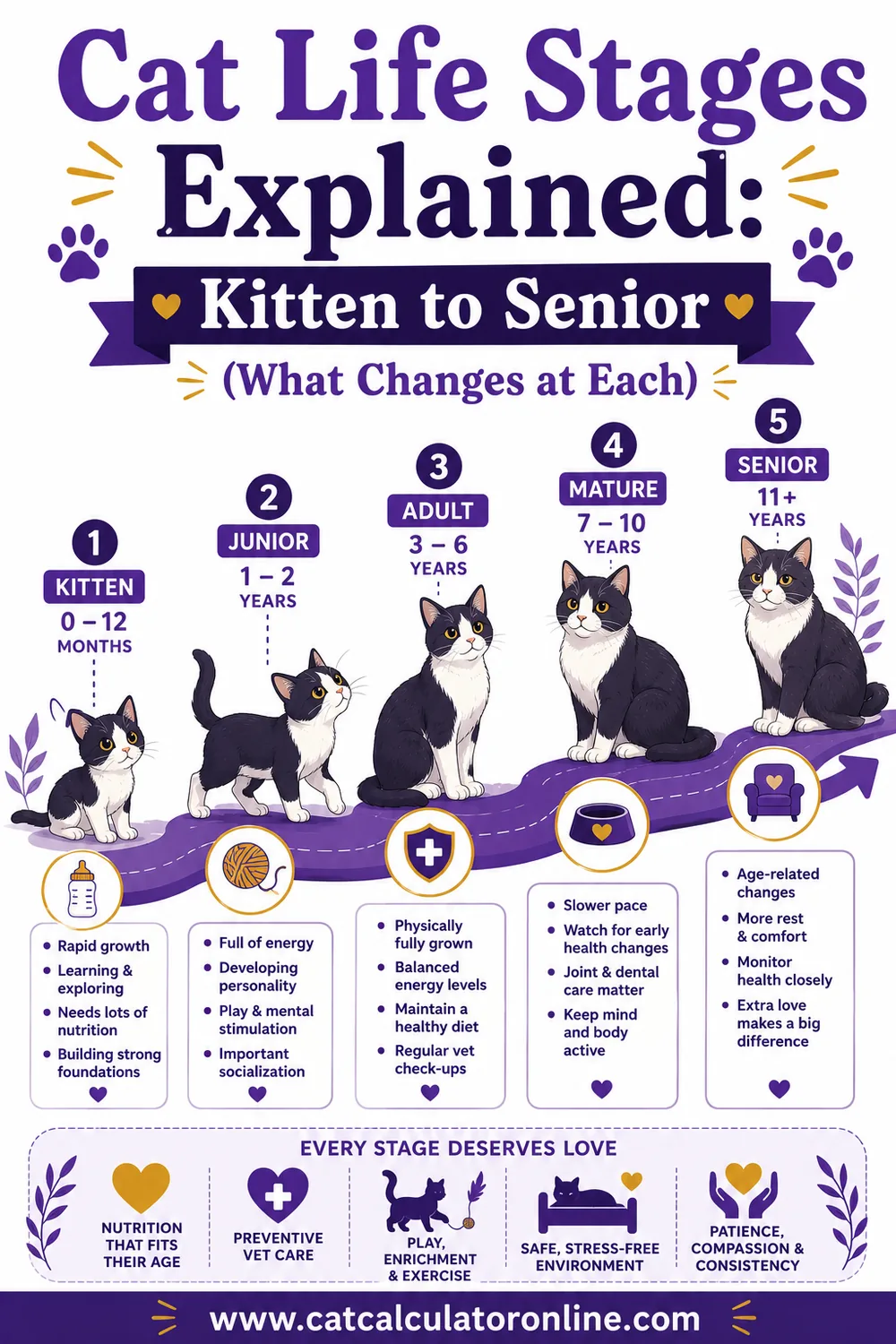
If you're not sure how old your kitten is, our cat age calculator can help you translate her age into human years, and our guide on cat life stages explains what's happening as she moves from kitten to young adult. Sexual maturity is one of the first big milestones of that first year.
What to Do When Your Cat Is in Heat
A cat in heat isn't sick and isn't in pain — she's just driven by hormones and can be genuinely uncomfortable and stressed. Your job is to keep her safe and calm until the heat passes or she's spayed.
Do these things
- Keep her indoors and secure. This is the single most important step. A cat in heat will try hard to get outside to find a mate, and outdoors means a near-certain pregnancy. Watch doors and windows closely.
- Give her comfort and attention. Extra petting, quiet time, and a cozy warm spot can help. Some cats settle with a warm (not hot) bed to curl into.
- Offer distraction. Play sessions, a new toy, or a puzzle feeder can burn off some of that restless energy.
- Keep her litter box spotless. Cats in heat sometimes have changed bathroom habits; a clean box helps.
- Talk to your vet about spaying. Spaying (an ovariohysterectomy) stops heat cycles for good and carries real health benefits — including eliminating the risk of certain reproductive cancers and infections like pyometra.
Don't do these things
- Don't let her outside. Even "just for a minute." An intact male can find her fast, and one escape can mean a litter of kittens.
- Don't punish her. The yowling and spraying are hormonal, not disobedience. Punishment only adds stress and won't stop the behavior.
- Don't breed her casually. There are already far more kittens than homes. Casual breeding adds to that, and pregnancy and birth carry real risks. Leave breeding to responsible, health-tested programs.
- Don't assume it'll just stop. Without mating or spaying, the cycle will keep coming back all season.
Spaying: The Permanent Fix
If you're not deliberately breeding your cat, spaying is the answer almost every vet will recommend. It ends the heat cycles entirely — no more yowling seasons — and comes with meaningful health upsides.
Spaying is commonly done around 4 to 6 months of age, often before a kitten's first heat, though cats can be safely spayed as adults too. Beyond stopping heat, spaying:
- Removes the risk of ovarian and uterine cancers.
- Prevents pyometra, a dangerous uterine infection.
- Greatly lowers the risk of mammary (breast) cancer when done early.
- Ends the stress, escape attempts, and unwanted litters that come with repeated heats.
Your vet is the right person to time the surgery for your individual cat. It's a routine procedure, and most cats bounce back quickly.
Could She Be Pregnant Instead?
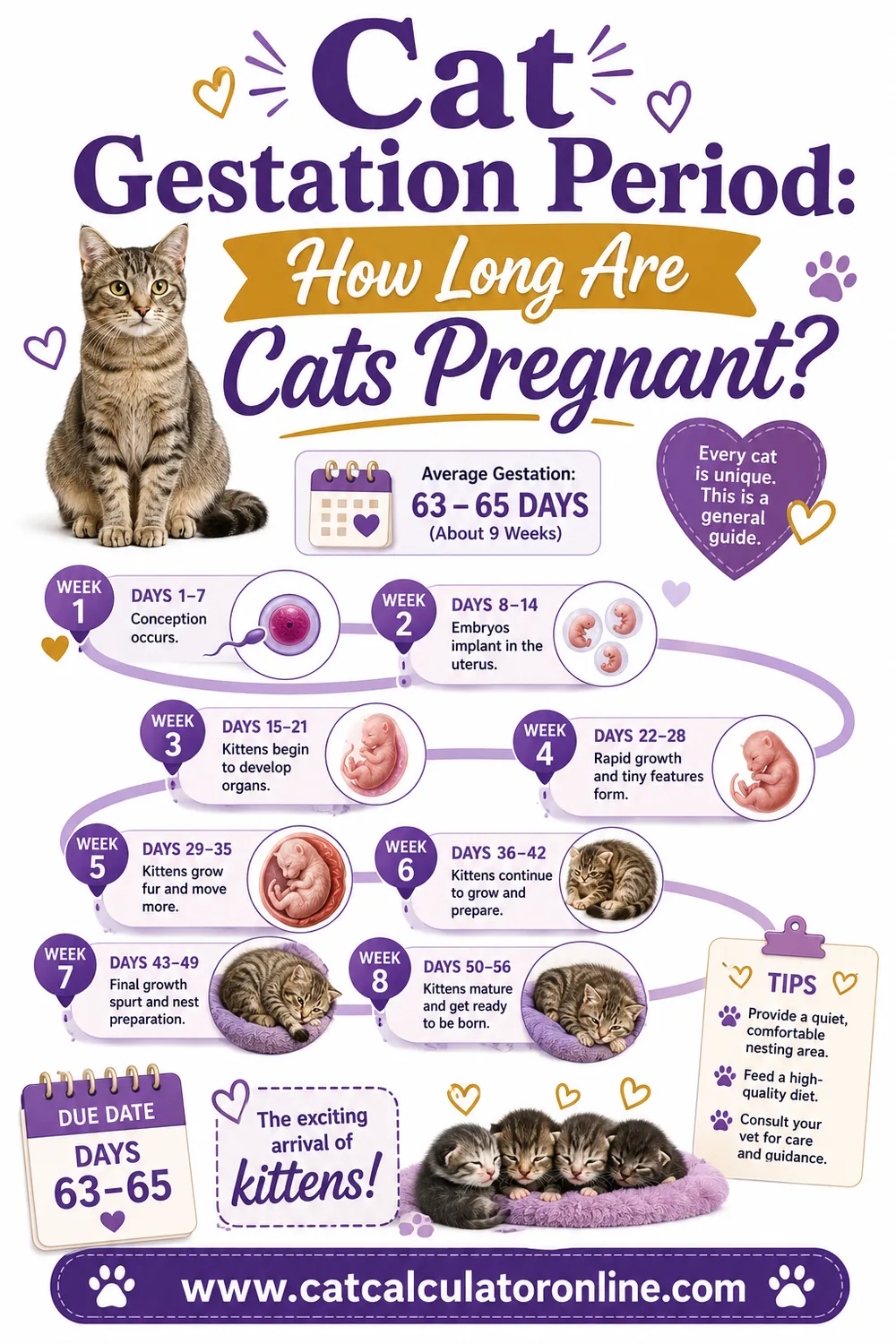
If your cat was in heat, got outside or was around an intact male, and then suddenly stopped showing heat signs, pregnancy is a real possibility. Cat pregnancy lasts about 63 to 67 days — roughly nine weeks. Early signs include a calmer demeanor, a bigger appetite, and "pinking up" of the nipples after a few weeks.
If there's any chance your cat mated, check our full guide on the cat gestation period for a week-by-week rundown, and call your vet — they can confirm a pregnancy and talk through your options.
Is It Heat, or Something Else?
Most yowling-and-restless spells really are heat. But a few things look similar and matter a lot more, so it's worth a quick gut-check:
- Straining in the litter box. A cat in heat may squat and tread, but she shouldn't be straining to pee and producing nothing. That's a urinary problem — and in a male cat it's a genuine emergency. Call your vet the same day.
- Crying with a hunched, tense posture. Heat vocalising is loud and attention-seeking, and she'll usually still want contact. Pain vocalising tends to come with hiding, a tucked belly, or a cat who doesn't want to be touched.
- Any bleeding. Cats don't bleed during heat the way dogs do. Blood is a reason to call your vet, not a normal part of the cycle.
- Heat that never seems to end. If she cycles almost constantly with no real break, mention it — persistent estrus can point to an ovarian problem.
- Heat signs in a cat who's already spayed. That can mean a small piece of ovarian tissue was left behind (vets call it ovarian remnant syndrome). It's fixable, but it needs checking.
And it isn't only about her. Intact males in the neighborhood will absolutely notice — expect yowling at your windows, spraying around doors, and some very determined attempts to get inside. Secure screens and doors protect both of them, and it's the simplest way to avoid an accidental litter.
FAQ
How long does a cat stay in heat?
A single heat lasts about 4 to 7 days, sometimes up to 10. If she doesn't mate, she'll typically cycle back into heat every 2 to 3 weeks during breeding season.
Do cats bleed when they're in heat?
No. Unlike dogs, cats don't have bloody discharge during heat. If you see blood, that's not a normal heat sign — contact your vet.
At what age do cats first go into heat?
As early as 4 to 6 months old — often before a kitten looks fully grown. That's why vets often recommend spaying before this age.
How can I calm a cat in heat?
Keep her safely indoors, give her extra affection and a warm cozy spot, offer play and distraction, and keep her litter box clean. Never punish her — the behavior is hormonal. The only permanent fix is spaying.
How often do cats go into heat?
During breeding season (roughly spring through early fall, driven by daylight), an unspayed, unmated cat cycles back into heat about every 2 to 3 weeks.
Does spaying stop heat cycles?
Yes. Spaying ends heat cycles completely and adds health benefits, including eliminating the risk of certain reproductive cancers and uterine infections.
The Bottom Line
A cat in heat is loud, restless, and determined to find a mate — but she's not sick, and she's not misbehaving. Expect a heat to last about 4 to 7 days and to return every couple of weeks during breeding season until she mates or is spayed. Keep her indoors and comfortable, skip the punishment, and talk to your vet about spaying, which stops the cycles for good and protects her health.
Curious how old your cat is in human years? Our free cat age calculator tells you in a single tap — and our guides on cat life stages and the cat gestation period cover what comes next.