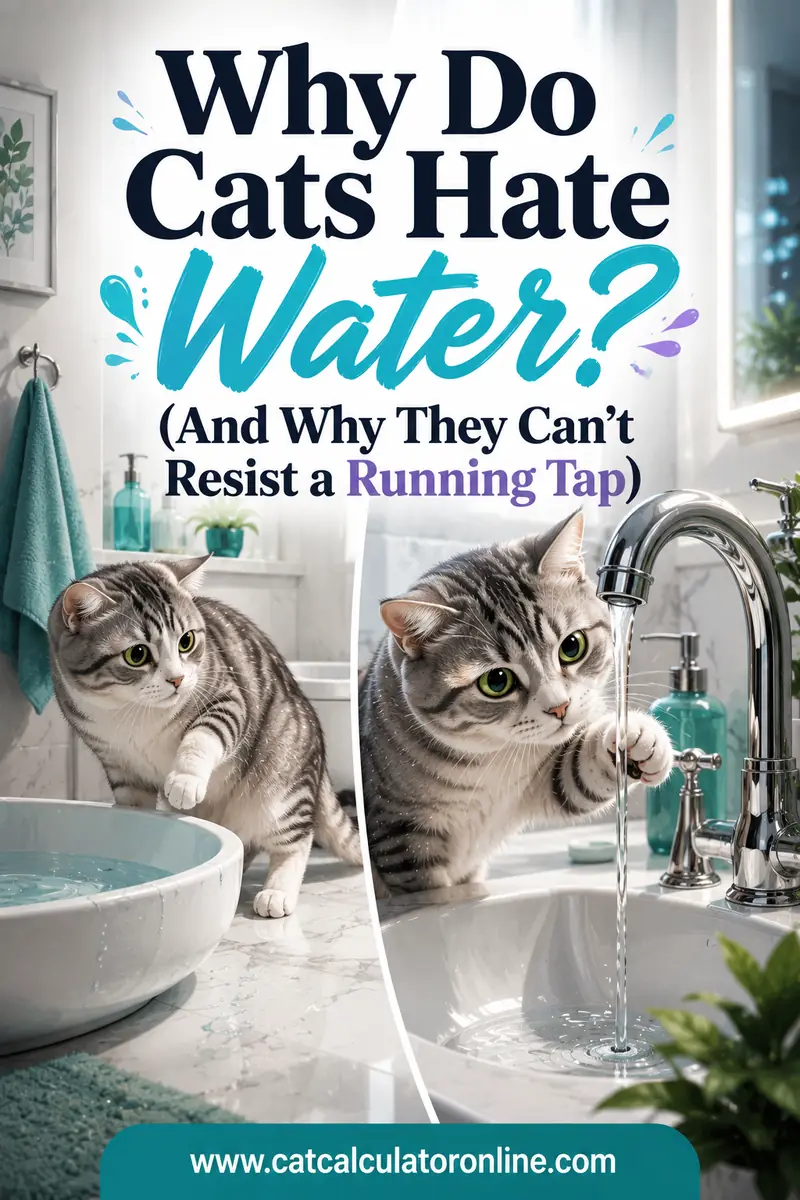
Why Do Cats Hate Water? (And Why They Can't Resist a Running Tap)
Most cats hate water because a soaked coat is genuinely miserable for them — it's heavy, cold, slow to dry, and it robs them of the speed and agility they rely on to feel safe. Add in ancestry (domestic cats descend from desert and semi-arid wildcats that almost never needed to swim) and the sheer loss of control of being dunked, and the bath panic starts to make perfect sense.
And yet the same cat who fights a bath like her life depends on it will happily sit in the sink batting at a dripping tap. Both reactions are real, and both have good explanations — we'll get to the tap mystery below. If you're curious about your cat in general, our free cat age calculator tells you her age in human years in one tap, which is a fun place to start.
💧 What’s going on with your cat and water?
Tap the situation and see the most likely reason behind it:
Tap a situation above to see why your cat reacts that way.
Why Does a Wet Coat Bother Cats So Much?
Start with the physical reality, because it explains most of the drama.
A cat's coat is built for warmth, insulation, and stealth — not for swimming. It traps a layer of air close to the skin that keeps her warm and lets her move silently. Soak that coat and everything goes wrong at once:
- It gets heavy. Wet fur can hold a surprising amount of water. A drenched cat is carrying extra weight on a small, light frame built for jumping and sprinting.
- It gets cold. That insulating air layer collapses when it's waterlogged. Cats chill quickly once wet, and unlike dogs, they can't shake most of the water off in two seconds.
- It dries slowly. A dense double coat can stay damp for a long time. That's hours of feeling cold, heavy, and vulnerable.
- It kills her agility. Cats are escape artists. Their whole sense of safety rests on being able to leap, twist, and bolt at full speed. A soaked coat takes that away, and cats hate anything that takes that away.
So when your cat thrashes at bath time, she isn't being dramatic for the sake of it. From her side of the experience, something is making her cold, slow, and helpless all at once. Her reaction is completely rational.
Did Evolution Set Cats Up to Hate Water?
Very likely, yes — and this is the deeper layer under the wet-coat problem.
Domestic cats descend from wildcats of desert and semi-arid regions, particularly the African wildcat of North Africa and the Near East. Those environments offered very little standing water. No lakes to cross, no rivers to fish, no marshes to wade through. For thousands of generations, a cat's survival almost never depended on swimming.
Compare that with dogs. Many dog breeds were deliberately shaped by humans for water work — retrieving ducks, hauling nets, rescuing swimmers. Cats got no such history. Nobody ever needed a water-loving cat, so the trait was never selected for.
The result is an animal that isn't afraid of water in some deep instinctive way — most cats drink from it happily and play with it constantly — but that has no built-in comfort with being in it. Immersion is simply outside the range of experiences her ancestors handed down. Faced with something that novel and that unpleasant, most cats vote no.
It's worth saying clearly: cats can swim. A cat who falls into water will paddle competently to the edge. Hating water and being unable to survive it are different things.
Why Do Cats Love Running Taps If They Hate Baths?
Here's the contradiction that puzzles every cat owner: the same animal that treats a bath as an emergency will sit in the sink for twenty minutes staring at a dripping faucet, batting the stream, and drinking straight from it.
It stops being a contradiction once you realize the two situations have almost nothing in common from the cat's point of view.
| The bath | The running tap | |
|---|---|---|
| Who's in control? | You are. She's held, lifted, soaked. | She is. She approaches, leaves, and touches it on her terms. |
| How wet does she get? | Completely. Heavy coat, cold, hours to dry. | A damp paw at most. |
| What do her instincts say? | Trapped, slowed down, vulnerable. | Movement! Track it, poke it, investigate it. |
| What does the water signal? | Nothing good. | Moving water reads as fresher and safer to drink. |
| Novelty level | Rare, sudden, alarming. | A daily entertainment fixture. |
Two instincts do most of the work here. First, motion detection: a cat's eyes and brain are exquisitely tuned to small, fast movement — that's prey-detection machinery, and a glittering, moving stream of water trips it beautifully. Second, freshness: many cats prefer running water to still water, and one common explanation is that in the wild, moving water is less likely to be stagnant or contaminated. It's also why cat water fountains work so well for reluctant drinkers.
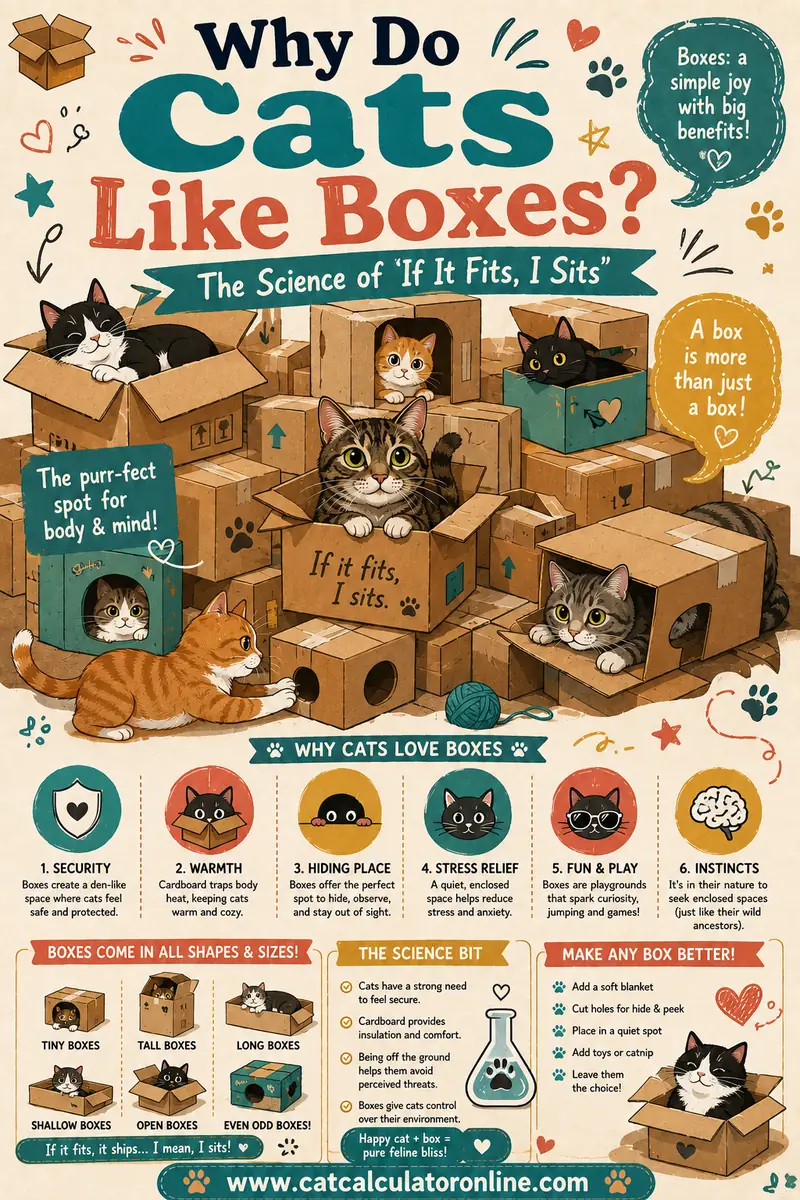
So your cat doesn't hate water. She hates being soaked in it without her consent. Water she can control is one of the best free toys in the house — right up there with a good cardboard box, which has its own fascinating logic we cover in why do cats like boxes.
Which Cat Breeds Actually Like Water?
Plenty of individual cats defy the stereotype, but a few breeds are famous for it:
- Turkish Van — literally nicknamed "the swimming cat." The breed comes from the Lake Van region of Turkey, and Vans are well known for paddling, playing in water, and joining their humans near the bath rather than fleeing it.
- Maine Coon — these big, easygoing cats often dip toys in water bowls, play with taps, and show real curiosity about showers and sinks. Their dense, somewhat water-resistant coat may help.
- Bengal — bred from Asian leopard cat ancestry, Bengals are high-energy and famously water-curious. Many will jump straight into a shower tray or splash a paw through a filled tub.
- Abyssinian — busy, athletic, endlessly curious cats that frequently treat running water as an interactive toy.
If you have one of these breeds, you may already know the other side of this problem: keeping the cat out of the water. And even within these breeds, individuals vary — a Turkish Van who has never met water calmly won't automatically love it.
One important caution: a breed's reputation is never a reason to put a cat in water to "see if she likes it." Let water-curious cats come to water themselves.
Is It the Water — or the Loss of Control?
Mostly the loss of control, and this is the piece owners miss.
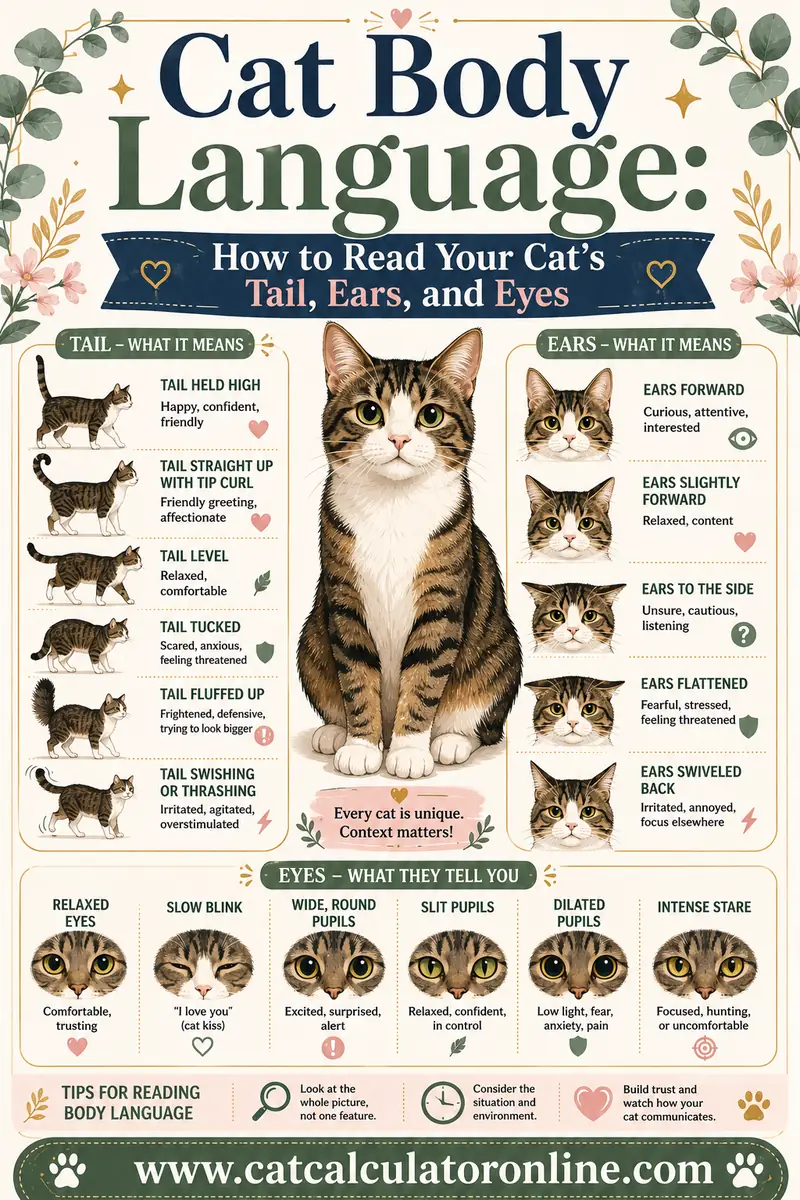
Cats are control-oriented animals. Watch a confident cat enter a new room: she checks exits, sniffs the perimeter, and picks a spot with good sightlines. Being able to leave — anything, anytime — is central to how a cat stays calm. That's a big part of reading feline stress in general, and it's covered in depth in our guide to cat body language.
A bath removes every element of control at once. She's picked up (loss of control), placed in a slippery basin (bad footing — cats hate unstable surfaces), held still (restraint), and doused in an unfamiliar sensation she can't stop (helplessness). Any one of those would stress most cats. Stacked together, they're overwhelming — and the water itself is almost the smallest part.
This is why the same cat who screams through a bath will voluntarily walk into a wet shower tray five minutes after you're done. The tray didn't grab her. She chose it.
The lesson generalises: whenever you can turn "done to the cat" into "chosen by the cat," her tolerance goes up dramatically. That applies to carriers, nail trims, brushing — and water.
Should You Ever Force a Cat Into Water?
No. Not for a routine bath, not to "get her used to it," and not because a video made it look funny.
Forcing a panicking cat into water is a good way to get badly scratched, and a better way to teach her that you're the source of terrifying experiences — damage to trust that takes a long time to undo. A frightened, soaked cat thrashing in a tub can also injure herself.
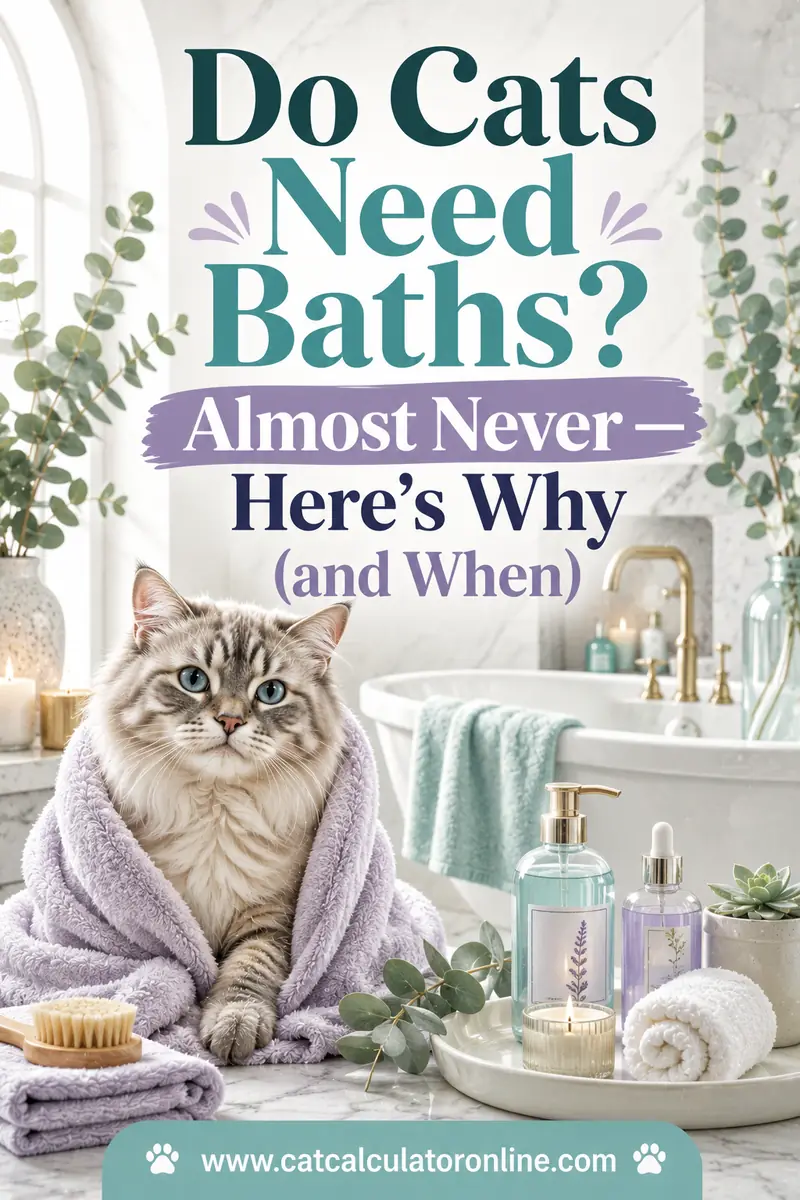
Here's the good news that makes the whole question mostly moot: healthy adult cats almost never need baths. Cats are self-cleaning to a degree dogs can only dream of, spending a big chunk of their waking hours grooming. The main exceptions are genuine messes (something toxic or sticky on the coat), certain skin conditions your vet is treating, hairless breeds like the Sphynx, and elderly or overweight cats who can't groom properly anymore. We walk through all of it — including how to bathe safely when you truly must — in do cats need baths.
If a vet-required bath is in your future, go slow: a few centimeters of warm water, a non-slip mat, a jug instead of a sprayer, treats throughout, and the shortest session you can manage.
How Can You Help a Cat Get Comfortable Around Water?
You can't turn a water-hater into a swimmer, and you shouldn't try. But you can lower the stakes so that water stops being an enemy:
- Let the tap be a toy. If she likes watching a trickle, let her. It builds positive associations at zero cost.
- Try a water fountain. Many cats drink more from moving water, which is genuinely good for their kidneys and urinary health.
- Play near water, never in it. A wand toy near the (dry) empty tub teaches her the bathroom isn't an ambush site.
- Reward calm, ignore drama. Treats for sniffing a damp washcloth. Nothing for fleeing — no chasing, no cornering.
- Handle paws and coat regularly. A cat used to being gently handled copes far better on the rare day water is unavoidable.
- Use damp-cloth wipes instead of baths. For a mildly grubby cat, a warm damp cloth along the coat does the job with none of the panic.
Notice that every step preserves her choice. That's the whole trick. A cat who trusts that you won't trap her is a cat who can afford to be curious — and curiosity is where all cat-and-water friendships start. It's also, not coincidentally, one of the clearest signs of a secure bond, which we cover in how to tell if your cat loves you.
FAQ
Why do cats hate water so much?
A soaked coat is heavy, cold, and slow to dry, and it strips away the agility cats depend on to feel safe. Their desert-dwelling ancestors also gave them almost no evolutionary experience with swimming, so full immersion is both unpleasant and deeply unfamiliar.
Why does my cat hate baths but love the faucet?
Because they're completely different experiences to her. A bath soaks her whole body and removes her control; a tap wets one paw at most, on her terms. Moving water also triggers her motion-detection instincts and reads as fresher to drink than still water.
Can cats swim?
Yes. Cats are capable swimmers and a cat who falls into water will typically paddle to safety. Disliking water and being unable to swim are two different things — most cats simply see no reason to get in voluntarily.
Which cat breeds like water?
The Turkish Van is the famous one — it's nicknamed "the swimming cat." Maine Coons, Bengals, and Abyssinians are also frequently water-curious. Individuals vary, though, and no breed reputation makes it okay to force a cat into water.
Do cats ever need baths?
Rarely. Healthy adult cats keep themselves clean through grooming. Baths are mainly for genuine messes, vet-directed skin treatments, hairless breeds, and senior or overweight cats who can't groom well. When in doubt, ask your vet before reaching for the tub.
Is it cruel to bathe a cat?
A necessary, calm, well-managed bath isn't cruel — but forcing a panicking cat into water for no real reason is stressful for her and risky for you. If a bath is truly needed, keep it short, warm, and gentle, and skip it entirely whenever a damp cloth will do.
The Bottom Line
Cats hate water for solid, practical reasons: a soaked coat is heavy, cold, slow to dry, and it steals the agility their confidence is built on — and their desert ancestry never gave them a reason to feel otherwise. The tap obsession isn't a contradiction; it's the same cat enjoying water on the one condition that matters to her: control. Respect that, skip the unnecessary baths, and let the sink be a toy.
Want to know more about the cat glaring at you from the edge of the tub? Start with our free cat age calculator to see her age in human years, then decode the rest of her signals with cat body language.