Do Cats Need Baths? Almost Never — Here's Why (and When)
No — healthy cats almost never need baths. A cat's barbed tongue and meticulous daily grooming routine keep her coat clean, and bathing actually works against her by stripping natural oils and causing real stress. The exceptions are specific: something toxic or sticky on the coat, a vet-directed flea treatment, hairless breeds like the Sphynx, and older or overweight cats who physically can't groom themselves anymore.
So if you've been feeling guilty about never bathing your cat — stop. She's been handling it. This guide covers the handful of situations where a bath genuinely is the right call, how to do it safely when it is, which products can hurt her, and the brushing routine that actually matters. Grooming needs shift with age, by the way — a kitten and a fifteen-year-old have very different coats — so it's worth knowing her life stage, which our free cat age calculator works out in seconds.
🛁 Bath or no bath?
Tap your situation for a straight answer:
Tap a situation above for the verdict.
Why Don't Cats Need Baths Like Dogs Do?
Because cats run a professional cleaning operation on themselves, every single day.
A cat spends a serious chunk of her waking hours grooming. Her tongue is covered in tiny backward-facing barbs that work like a fine-toothed comb — lifting away loose fur, dirt, and debris while distributing natural skin oils along each hair. Those oils are the point: they keep the coat water-resistant, glossy, and healthy. Grooming also helps cats regulate temperature and, not incidentally, it's how they self-soothe.
Bathing interferes with all of it. Shampoo strips the oils she's spent days distributing, water soaks a coat that isn't built to get drenched — part of why most cats hate water in the first place — and the experience itself is genuinely stressful for an animal with no say in the matter. A routine bath doesn't make a healthy cat cleaner. It makes her oily-coat system start over, and it makes her trust you a little less near the bathroom.
The honest rule: a healthy cat with a functioning grooming routine needs zero baths across her whole life. Your job is brushing, not bathing.
When Does a Cat Actually Need a Bath?
The real exceptions are few, and two of them start with a phone call rather than a faucet.
- Something toxic on the coat. Paint, motor oil, antifreeze, household chemicals, or anything you wouldn't want licked and swallowed — because that's exactly what she'll do. Call your vet first. Some substances are dangerous enough that the vet will want to handle decontamination, and some need specific handling rather than a soap-and-water improvisation. If the vet says wash at home, they'll tell you how.
- Something sticky or gross. Sap, food mess, litter box misadventures on a long-haired rear. If it's harmless and small, spot-clean it. If it's extensive, a partial bath of just the affected area beats a full dunk.
- Severe flea situations — vet-directed. Modern prescription flea treatments have largely retired the flea bath. If fleas are bad enough that bathing seems necessary (heavy infestations on young kittens, for example), that's a vet conversation, because product choice and timing matter and several over-the-counter options are unsafe.
- Hairless breeds. Sphynx and other hairless cats genuinely do need regular baths — more on that below.
- Cats who can't groom themselves. Seniors with arthritis, overweight cats who can't reach, and cats recovering from illness. Even here, a full bath is often the wrong tool — spot-cleaning and brushing usually do the job with a tenth of the stress.
Notice what's not on the list: "she smells a bit," "it's been a year," "the dog gets one." A cat isn't a small dog, and there is no bathing schedule for a healthy cat.
Which Cats Are the Exception to the Rule?
Sphynx and hairless breeds are the one group with a genuine bathing routine. The oils that would normally travel up the hair shaft have nowhere to go on a hairless cat, so they build up on the skin — leaving greasy residue on your sofa and, left long enough, causing skin problems. Regular baths (typically somewhere between weekly and monthly — your breeder or vet will calibrate) are simply part of owning one. The upside: a Sphynx bathed from kittenhood usually tolerates it remarkably well.
Senior cats often groom less because arthritis makes twisting painful, and their coats go scruffy or greasy as a result. The kind response is usually not a bath — being wrestled into water is hard on an old body — but a daily gentle brushing and a warm damp-cloth wipe of the spots she can't reach. And mention it at her checkup: reduced grooming in a senior is frequently a sign of treatable pain.
Overweight cats literally can't reach parts of themselves, most obviously the back and hindquarters. Same approach: brushing, spot-cleaning, and — the real fix — a weight plan with your vet.
Long-haired cats don't need baths either, but they do need serious brushing several times a week to prevent mats. A badly matted coat is a groomer or vet job — never scissors at home; it's shockingly easy to cut skin hidden in a mat.
How Do You Bathe a Cat Safely?
When one of the real exceptions applies, here's how to keep it calm, quick, and safe.
- Prep everything first. Cat-safe shampoo, two or three towels, a cup or gentle sprayer, a non-slip mat in the sink or tub. Once she's wet, you can't leave to fetch things.
- Trim sharp claw tips a day earlier if she tolerates it — for your sake.
- Brush before wetting to remove loose fur and any small tangles (wet mats tighten).
- Use warm, shallow water — a few inches in a sink is easier than a bathtub. Comfortably warm to your wrist, never hot.
- Wet from the neck down using the cup. Keep her head, face, and ears completely dry — water in a cat's ears is a real problem, and a soaked face guarantees panic. Face grime gets a damp cloth, nothing more.
- Lather a small amount of cat shampoo, work quickly and gently, and talk to her the whole time in a normal voice.
- Rinse thoroughly. Leftover shampoo irritates skin and gets licked off later. Rinsing takes longer than you think it should.
- Towel-dry firmly but gently, swap to a second dry towel, and let her finish in a warm, draft-free room. Skip the hair dryer unless she's one of the rare cats who tolerates one on low — most find the noise terrifying.
- End with a treat and let her go. She'll re-groom everything afterward. That's normal — she's re-oiling and reasserting that she cleans herself, thank you.
Two people make it easier: one holds, one washes. Keep the whole thing under ten minutes. If she panics and fights hard, stop — a half-finished bath is better than scratches and a cat who's traumatized about the bathroom.
What Products Are Safe — and Which Are Dangerous?
This part matters more than technique, because the wrong bottle can poison her.
| Product | Safe for cats? | Why |
|---|---|---|
| Cat-specific shampoo | ✅ Yes | Formulated for feline skin pH — the only correct choice |
| Kitten shampoo (for kittens) | ✅ Yes | Gentler formula for young skin |
| Human shampoo or baby shampoo | ❌ No | Wrong pH; dries and irritates feline skin |
| Dog shampoo | ❌ No | Some contain permethrin, which is highly toxic to cats |
| Dog flea products | ❌ Absolutely not | Permethrin flea products can be fatal to cats |
| Essential oils / tea tree oil | ❌ Absolutely not | Toxic to cats even in small amounts, including in "natural" shampoos |
| Dish soap | ⚠️ Vet-directed only | Occasionally used in specific decontamination cases — on a vet's instruction, not as routine |
The two worth burning into memory: dog flea treatments containing permethrin can kill a cat, and essential oils — tea tree especially — are toxic to cats, including when they show up in "natural" or "gentle" grooming products. Read labels, and when in doubt, buy the boring cat shampoo from the pet shop.
What Should You Do Instead of Bathing?
Brushing. That's the whole answer, and it's a much better deal for both of you.
Regular brushing removes loose fur before it becomes hairballs or sofa fuzz, spreads those healthy skin oils, keeps long coats mat-free, and doubles as a bonding routine most cats actively enjoy. It's also your early-warning system: hands moving over her weekly will find lumps, scabs, fleas, and weight changes months before eyes alone would.
A simple routine that covers nearly every cat:
- Short-haired cats: a rubber brush or grooming mitt once or twice a week.
- Long-haired cats: a slicker brush and comb several times a week, minimum.
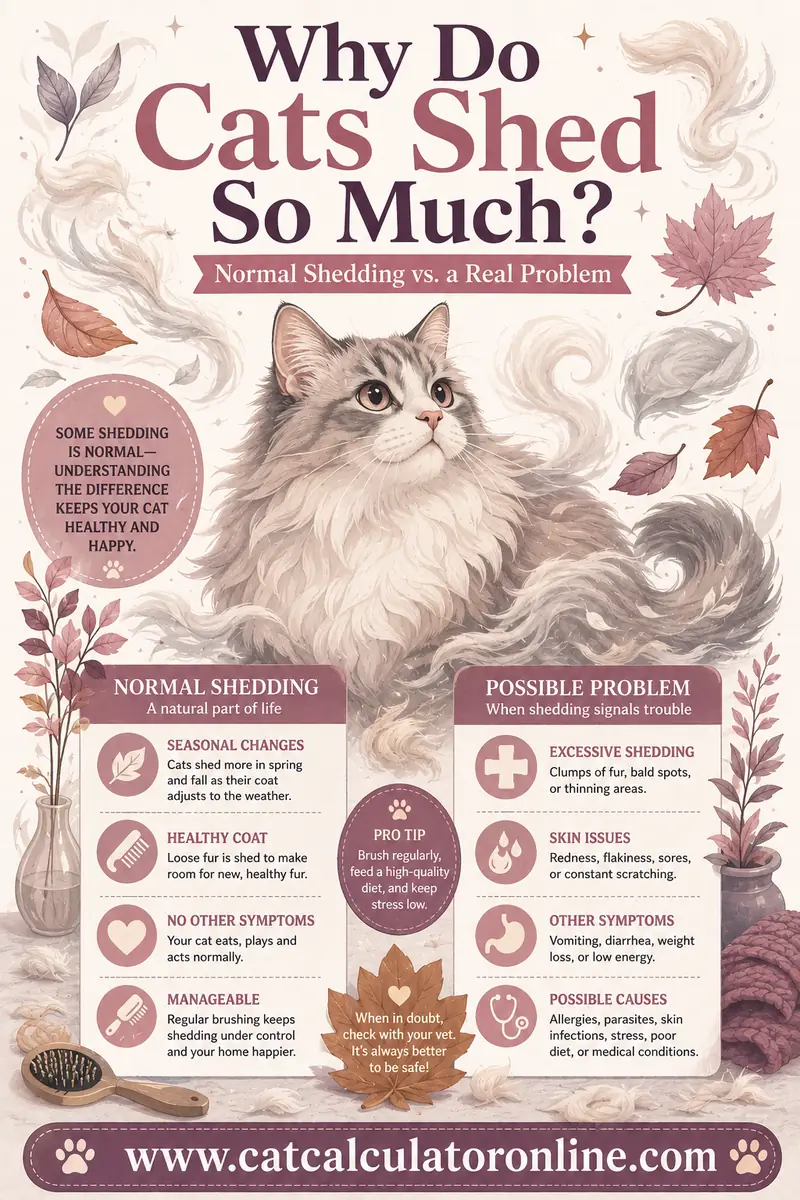
- Shedding season: step up the frequency — there's more on managing the fur blizzard in why do cats shed so much.
- Kittens: start gentle brushing early so it's normal for life. It's an easy line item on a new kitten checklist.
- All cats: finish with a treat. You're building an association she'll cash in for the next fifteen years.
When Is a Dirty Coat a Sign of Something Wrong?
Here's the twist that makes this topic more important than it looks: a cat whose coat suddenly goes downhill usually doesn't need a bath — she needs a vet.
Grooming is one of the first things cats drop when they feel unwell. A coat that turns greasy, dull, dandruffy, or smelly without an obvious cause, or a cat who's visibly stopped grooming, is a classic early signal of illness or pain — dental disease, arthritis, kidney trouble, and more all show up this way. Over-grooming (bald patches, usually on the belly or legs) is the same signal pointing the other direction.
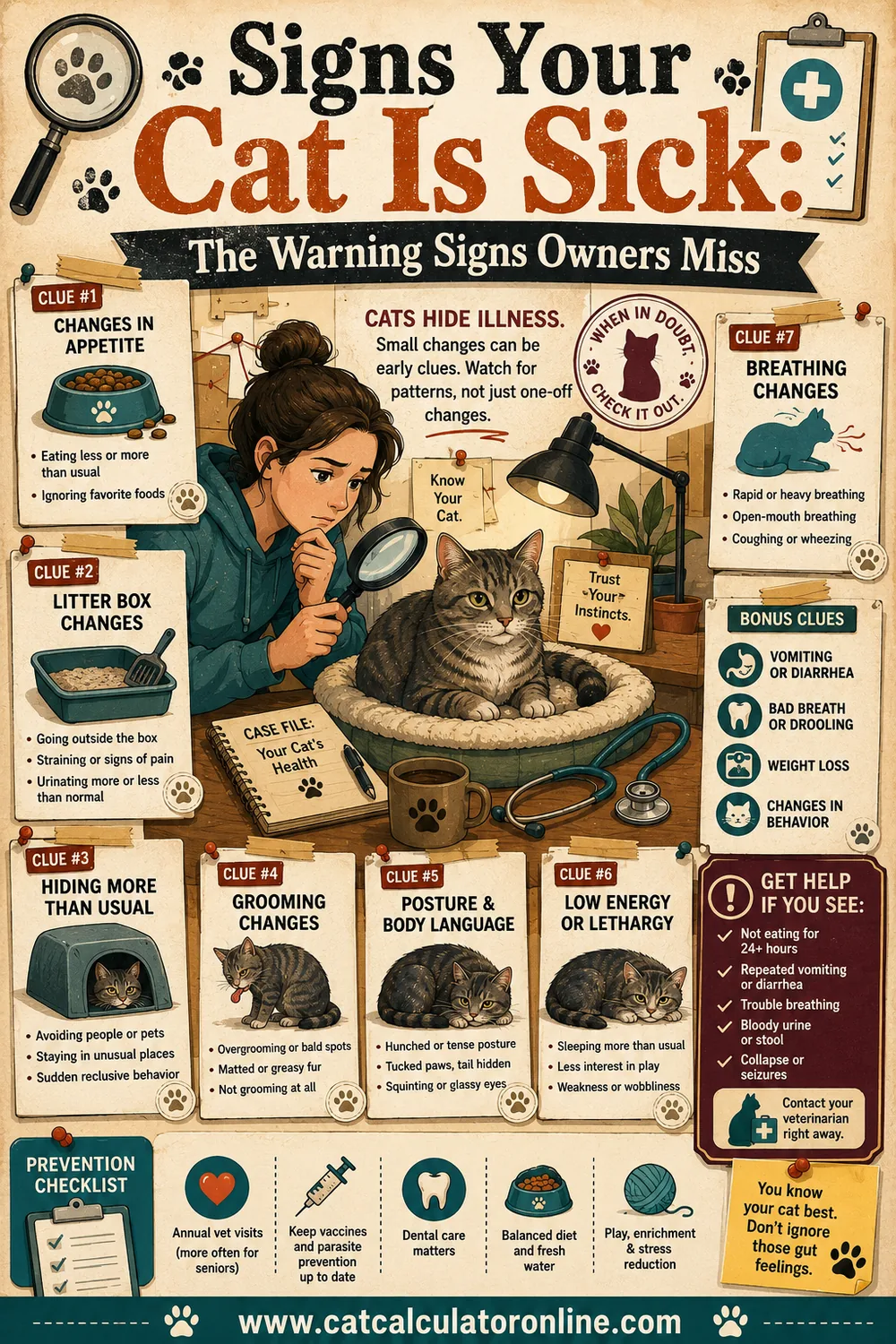
Bathing a cat in that situation washes the evidence without touching the cause. If her coat has changed and nothing external explains it, book a checkup and run through signs your cat is sick — coat changes rarely travel alone, and the earlier the pattern is spotted, the better.
FAQ
How often should I bathe my indoor cat?
Essentially never. A healthy indoor cat grooms herself thoroughly every day, and routine baths strip coat oils and cause needless stress. Save baths for genuine emergencies — something toxic or sticky on the fur — and put the effort into weekly brushing instead.
Do kittens need baths?
Not routinely, no. Healthy kittens learn to groom themselves early. If a kitten gets into a mess, spot-clean with a warm damp cloth, and if a bath is truly unavoidable, use kitten-safe shampoo, shallow warm water, and dry her quickly and thoroughly — young kittens chill easily.
My cat smells bad — should I give her a bath?
Check for a cause first. If she rolled in something, spot-clean or bathe the affected area. But a smell with no obvious source — or a coat that's gone greasy or unkempt on its own — is a reason to see the vet, not the bathtub. Odor and coat decline are common early signs of dental disease and other illness.
Can I use baby shampoo on my cat?
No. Baby shampoo is formulated for human skin pH and can dry and irritate a cat's skin, and she'll ingest residue when she grooms afterward. Use only shampoo labeled for cats — and never dog products or anything containing essential oils, which can be toxic to cats.
Do Sphynx cats really need weekly baths?
Hairless cats do need regular bathing — without fur, skin oils accumulate instead of spreading along the coat. The exact schedule varies by cat, anywhere from weekly to monthly, so let skin condition (and your vet or breeder's advice) set the rhythm rather than the calendar alone.
How do vets get flea baths done — should I try one at home?
Mostly, they don't — modern prescription flea treatments have replaced flea baths in nearly all cases. If your cat has fleas, call your vet for the right product for her age and weight. Never use a dog flea product on a cat; permethrin-based dog treatments can be fatal to cats.
The Bottom Line
Cats come with the cleaning built in. A healthy cat never needs a routine bath — just regular brushing, which does everything a bath pretends to do minus the stress and the stripped oils. Real baths are for real reasons: toxins on the coat (vet first), vet-directed flea care, hairless breeds, and cats who physically can't groom — and even then, warm shallow water, cat-only shampoo, dry ears and face, quick and calm. And if her coat has gone wrong on its own, skip the tub and call the vet, because a scruffy coat is a message.
Grooming needs change as she ages — seniors need more help from you, not more water. See exactly where your cat is in her life with our free cat age calculator, and keep the brush, not the shampoo, within easy reach.