Why Do Cats Get the Zoomies? The Science of the 2am Sprint
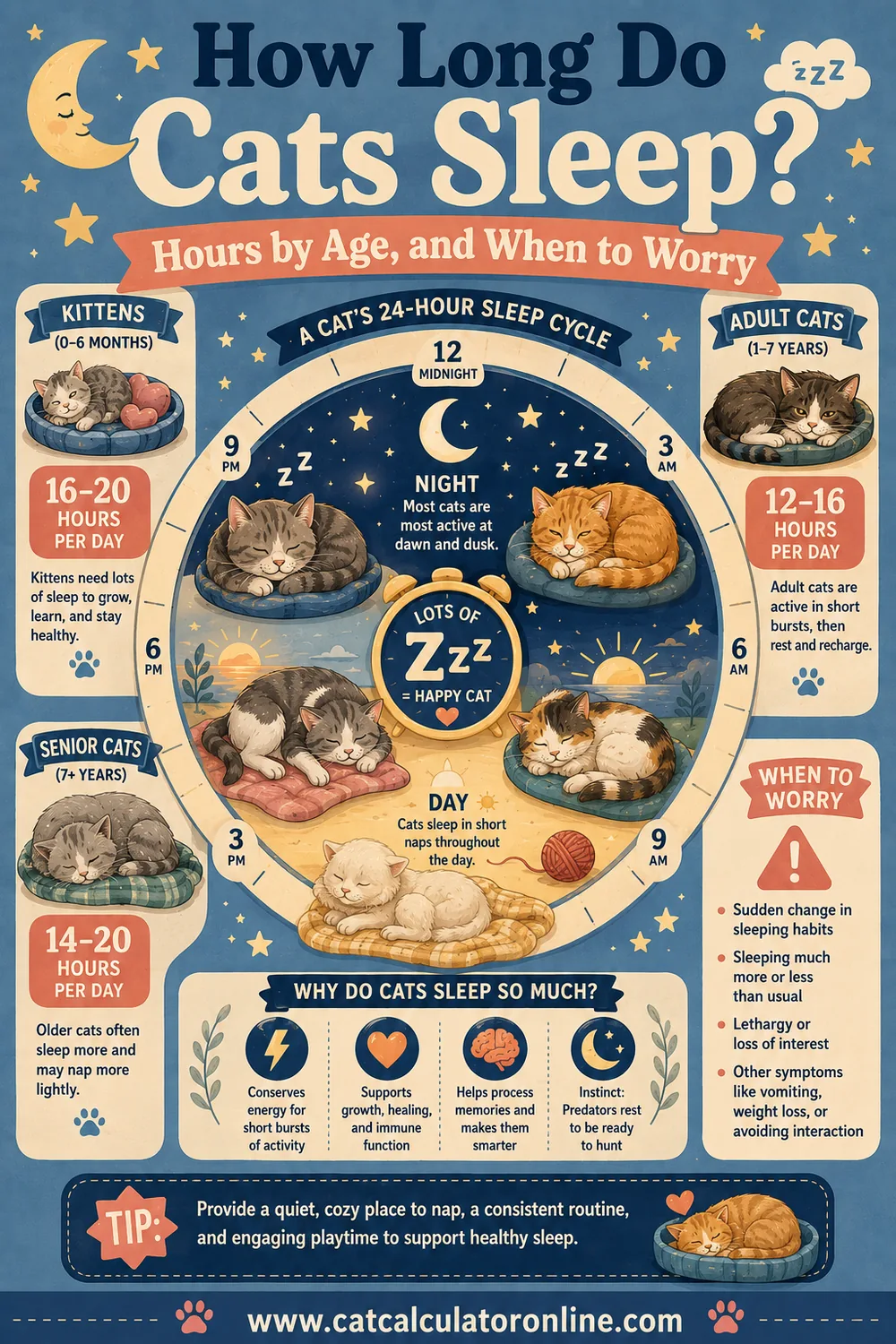
The zoomies — those sudden, wild sprints around the house — are a normal burst of stored-up energy. Behaviourists call them FRAPs: frenetic random activity periods. Cats sleep 12 to 16 hours a day, they're naturally most active at dawn and dusk, and all that rested hunting energy has to go somewhere. A healthy zoomie session is short, silly, and completely harmless.
So if your cat just rocketed off the sofa, ricocheted down the hallway, and skidded to a stop staring at nothing — congratulations, that's a cat working as designed. Zoomie frequency also changes a lot with age, and if you're wondering whether your sprinter is still in her wild-kitten phase, our free cat age calculator will translate her age into human years in one tap.
🐾 Zoomie decoder
Tap when the zoomies happen and see what’s probably behind them:
Tap a situation above to see the likely reason.
What Exactly Are the Zoomies?
The proper name is FRAP — frenetic random activity period. It's a recognized, documented behavior in cats, dogs, and plenty of other animals: a brief, intense burst of movement that seems to come out of nowhere and vanish just as fast.
A typical cat FRAP looks like some mix of:
- A dead sprint from one end of the home to the other, often with a skidding turn
- Bouncing on and off furniture, up cat trees, along the back of the sofa
- A puffed tail, sideways "crab" hops, and wide eyes
- Sudden freezing mid-run, staring intently at nothing, then launching again
- The whole show ending within a minute or two, followed by casual grooming as if nothing happened
The key word in FRAP is random. There's no target and no goal — it's energy discharge, closer to a kid sprinting around a playground than to any kind of problem behavior. Zoomies are not a sign of a badly behaved cat, and they're nothing to correct or punish.
Why Does a Sleepy Animal Have So Much Energy?
It seems contradictory: cats famously sleep 12 to 16 hours a day, yet they still explode down your hallway. The sleep is actually the explanation.
Cats are predators built for the ambush lifestyle: long stretches of rest and energy conservation, punctuated by short, explosive bursts of hunting. A wild cat spends that stored energy on stalking, chasing, and pouncing several times a day. A house cat with a full food bowl has the same engine and nowhere to race it.
So the energy accumulates through all those naps — and eventually the pressure valve opens. That's the FRAP. The better your cat's day is stocked with play and hunting-style activity, the fewer wall-of-death sessions your hallway hosts at night.
Why Do the Zoomies Always Hit at Dawn and Dusk?
Cats aren't nocturnal, despite their reputation. They're crepuscular — wired to be most active at sunrise and sunset, the hours when their natural prey is moving and the light favors an ambush hunter.
That schedule survives entirely intact in your living room. It's why the classic zoomie windows are early morning (often just before your alarm) and the evening, and why a cat who dozed all afternoon comes alive right as you're winding down. Your cat isn't being difficult; she's running ancient software on modern hardware.
You can't delete the instinct, but you can shift it. A high-energy play session in the late evening, followed by a meal, mimics the hunt-eat-groom-sleep cycle cats naturally follow — and tilts the biggest energy burn into hours you're awake for.
Why Does My Cat Get the Zoomies After Pooping?
The post-litter-box victory lap is real, extremely common, and one of the funnier things cats do. Nobody can ask cats why, so the honest answer is that we have good theories rather than proof:
- Relief and celebration. Elimination is a vulnerable moment for a prey-aware animal. Finishing may bring a genuine sense of relief — sprint-worthy, apparently.
- Vagus nerve stimulation. Passing stool can stimulate the vagus nerve, which in humans is associated with a brief drop in heart rate and a lightheaded, slightly euphoric feeling. The idea is that cats may get a similar little buzz. It's a plausible theory, not a settled fact.
- Distance from the scene. In the wild, waste advertises your location to predators. Leaving the area briskly is sensible instinct; leaving it at 30 miles per hour is your cat over-delivering.
Whatever the mechanism, post-poop zoomies on their own are nothing to worry about. The exception is covered below — zoomies plus signs of litter box trouble deserve attention.
What's Triggering My Cat's Zoomies?
Here's the quick-reference version — the trigger, what it means, and what (if anything) to do about it.
| What you're seeing | What it means | What to do |
|---|---|---|
| Zoomies at dawn or dusk | Normal crepuscular energy peak | Nothing — or schedule play then to burn it with you |
| Zoomies after a long nap | Classic FRAP; stored energy discharge | Enjoy the show |
| Victory lap after the litter box | Relief / a brief post-poop buzz — normal | Nothing, unless straining or crying comes with it |
| Nightly rampages that wake you | Under-stimulated indoor cat with unspent hunting energy | Vigorous evening play, then a meal; add daytime enrichment |
| Zoomies right after play or catnip | Excitement spillover | Totally normal; let it run its course |
| Sudden new hyperactivity in a senior | Possible medical cause, often thyroid | Book a vet check |
| Zoomies with straining, crying, or over-grooming underneath | Possible urinary issue | Call your vet promptly |
When Should the Zoomies Worry Me?
Almost never — but there are three specific patterns worth taking seriously, and all three involve zoomies plus something else.
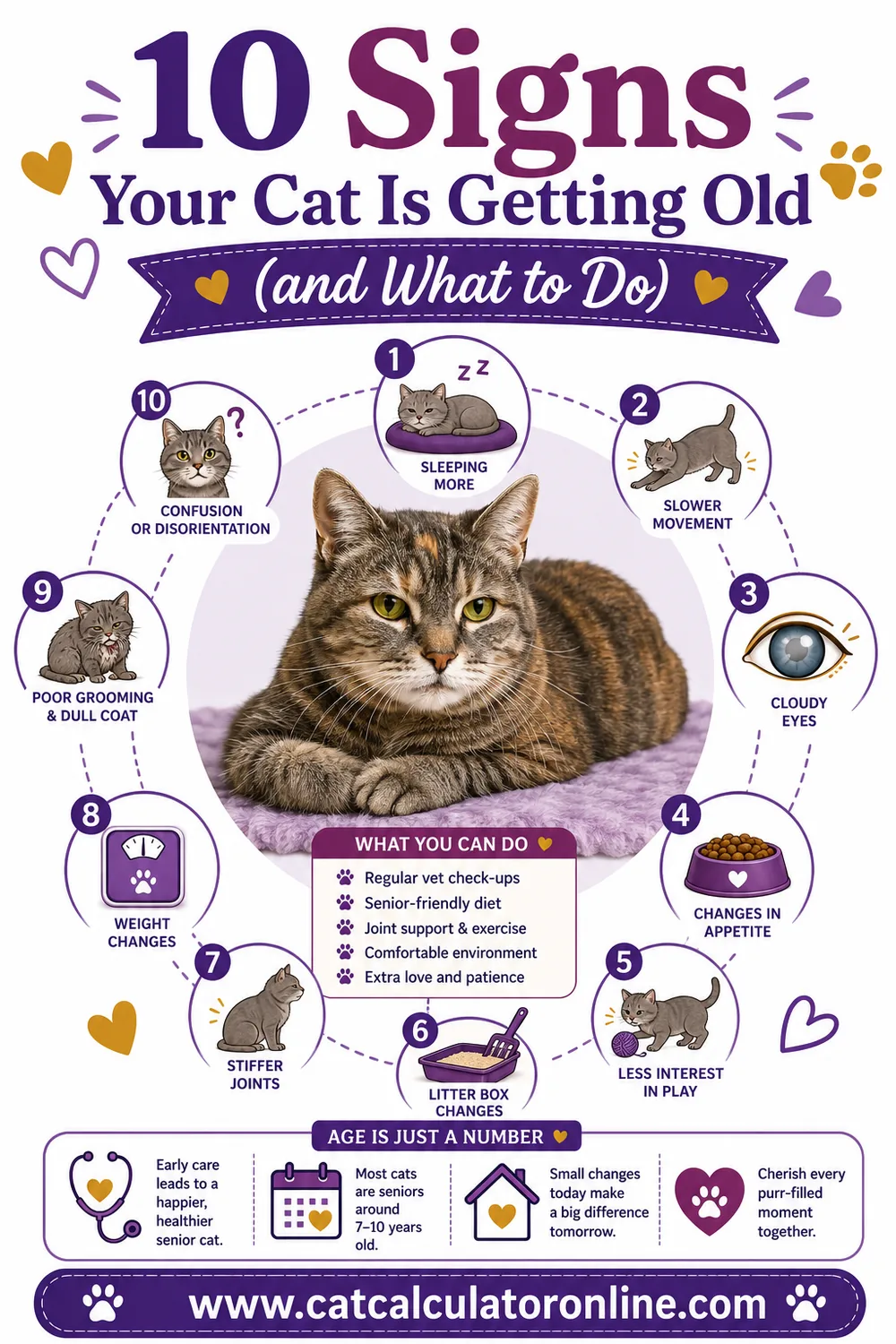
New frantic energy in an older cat. If a settled senior suddenly develops kitten-level hyperactivity — especially with weight loss despite a big appetite, more vocalising, or restlessness at night — that's not a second childhood. It's a classic presentation of hyperthyroidism, an overactive thyroid gland that's common in older cats and very treatable once diagnosed. A blood test settles it. Our guide to signs your cat is getting old covers what else changes with age, and what shouldn't.
Zoomies that look like fleeing, plus pain signs. A cat who bolts while yowling, repeatedly bites or licks at one spot on her body, or races off every time she's touched somewhere specific may be reacting to pain or skin irritation rather than burning energy. Twitchy, rippling skin along the back plus frantic sprinting deserves a vet conversation too.
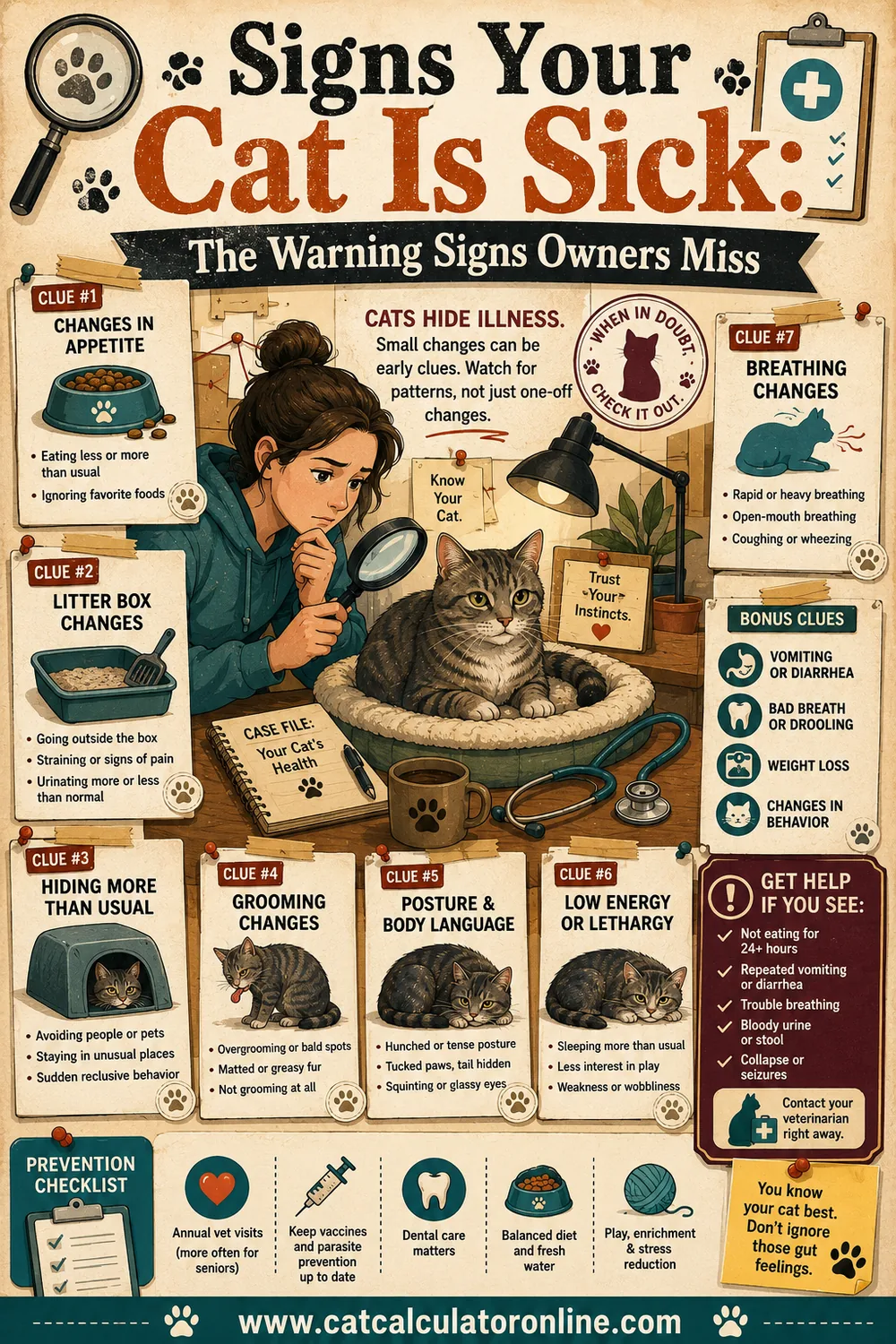
Litter box zoomies with straining. If the post-box sprint comes with straining, repeated unproductive trips, crying in the box, or licking underneath, treat it as urgent — especially in male cats, where a urinary blockage can become an emergency fast. The zoomie isn't the problem; it's the discomfort traveling with it. More warning signs are in signs your cat is sick.
The common thread: zoomies alone are fine. Zoomies with a change in appetite, weight, litter habits, vocalising, or personality are a symptom hitching a ride on a normal behavior.
How Do I Help My Cat Burn All That Energy?
You don't want to stop the zoomies — you want to spend the energy on your schedule, in ways that satisfy the hunter underneath.
- Play like prey. Wand toys are the gold standard. Make the toy dart, hide, and freeze like a real animal. Two or three sessions of 10–15 minutes beats one marathon.
- Finish with a "kill" and a meal. Let her catch the toy at the end, then feed her. Hunt → catch → eat → groom → sleep is the natural sequence, and it's the single best trick for quieter nights.
- Make the house hunt-friendly. Food puzzles, treats hidden around the house, cat trees, window perches, and boxes give an indoor cat problems to solve between naps.
- Clear a runway. If zoomies are happening anyway, make them safe: stabilize wobbly shelves, keep breakables off the racetrack, and put a rug on slippery corners.
- Never punish a FRAP. Yelling or spraying water doesn't remove the energy — it just adds stress, which cats often burn off with, yes, more frantic running. Redirect into play instead.
A bored cat has zoomies and 3am meowing and curtain-climbing. A well-exercised cat mostly has the fun kind of zoomies, at reasonable hours.
FAQ
Are zoomies a sign my cat is happy?
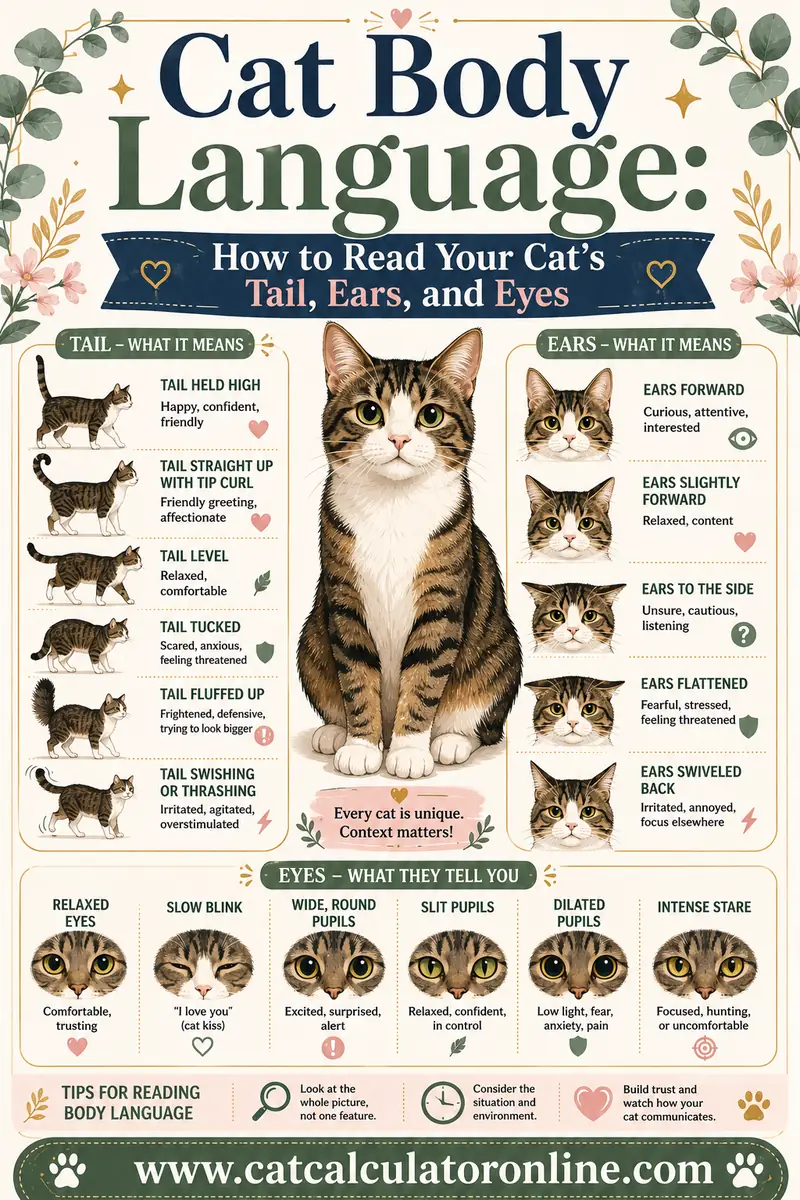
Generally, yes — a comfortable cat letting off steam is a good sign, and many cats zoom out of sheer excitement or playfulness. Just read the whole cat: loose, bouncy body and playful eyes mean fun; flattened ears and frantic fleeing suggest fear or irritation. Our cat body language guide helps you tell them apart.
Why does my cat get the zoomies at night?
Cats are crepuscular, so their energy naturally peaks around dawn and dusk — and an indoor cat who napped all day has extra fuel for the night shift. An energetic play session before bed, followed by a meal, shifts most of that burn earlier and helps everyone sleep.
Do cats grow out of the zoomies?
They taper rather than vanish. Kittens and young cats FRAP the most, adults settle into occasional bursts, and many seniors still surprise you now and then. The important thing in an older cat is a sudden increase in frantic energy, which is worth a vet check rather than a celebration.
Why does my cat stare at me after the zoomies?
She's usually just resetting — coming down from the burst and checking in on her environment, which includes you. Some cats also learn that zoomies get a reaction, so the stare can be an invitation: that was fun, want to play?
Are zoomies bad for older cats?
The running itself is fine if she's healthy. Make the environment forgiving — rugs on slick floors, easy routes down from furniture — since senior joints handle skids less gracefully. If a senior's zoomies are brand new or come with weight loss or night yowling, book a vet visit.
Can catnip cause the zoomies?
Absolutely. Catnip triggers a short burst of euphoric, often manic behavior in cats sensitive to it — rolling, flipping, and sprinting are all standard. It wears off within around 10 to 15 minutes and is completely harmless.
The Bottom Line
Zoomies are a healthy cat's pressure valve: 12-plus hours of sleep, a hunter's engine, and a safe house with no prey in it add up to the occasional glorious hallway sprint. Let them happen, spend the energy with real play, and only get curious when the zoomies arrive with company — straining in the litter box, pain signals, or brand-new mania in a senior cat.
Wondering if your cat's energy level fits her age? Our free cat age calculator shows where she is in human years, and how long do cats sleep explains what all that recharging is really for.