Siamese Cat Lifespan: How Long Do Siamese Cats Live?
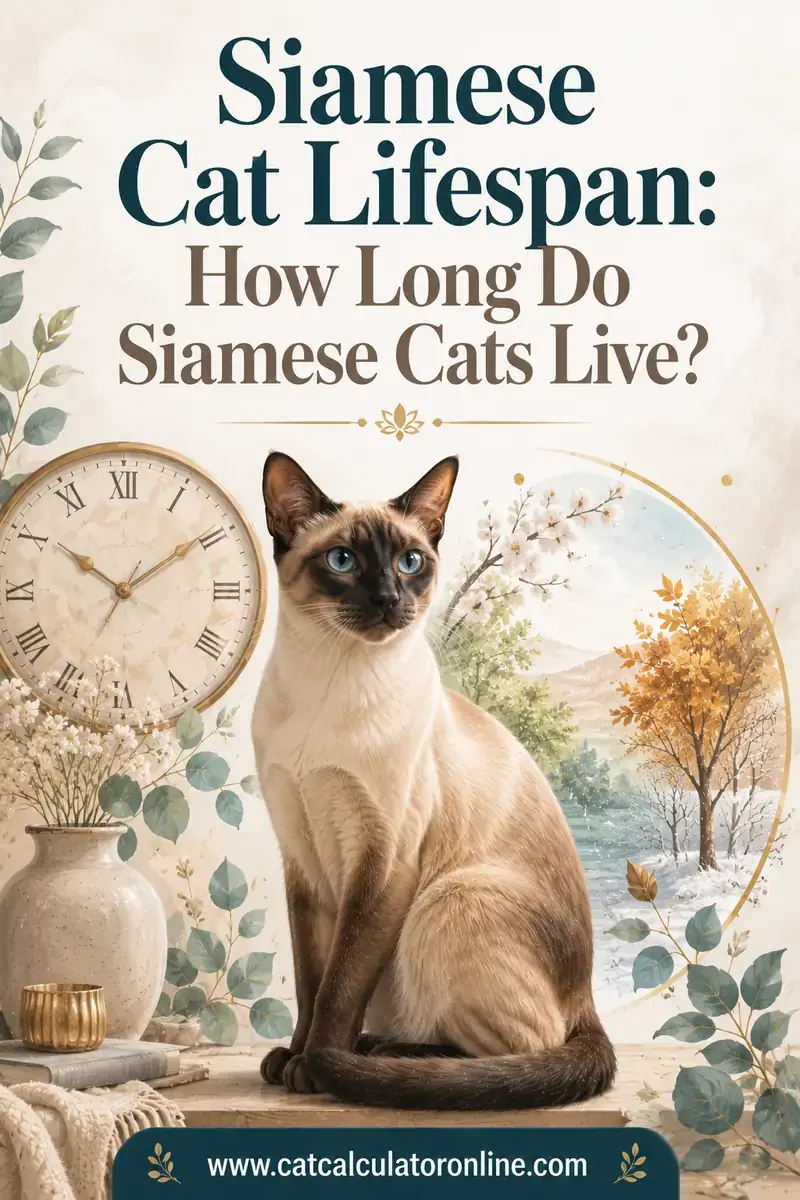
Siamese cats commonly live 15–20 years, and it's not unusual for one to sail past 20. That makes them one of the longest-lived cat breeds — a well-cared-for indoor Siamese has a genuinely good shot at spending two full decades with you. The breed's lean build and long, robust genetic history do some of the work, but as with every cat, the biggest levers are the ones you control: indoor living, healthy weight, and regular vet care.
Wondering where your Siamese sits on her timeline right now? Our free cat age calculator converts her age into human years and tells you her life stage in a couple of seconds.
🐱 Siamese age check
Tap your Siamese’s age to see what it means:
Tap an age above to see the human-year equivalent.
How Long Do Siamese Cats Live?
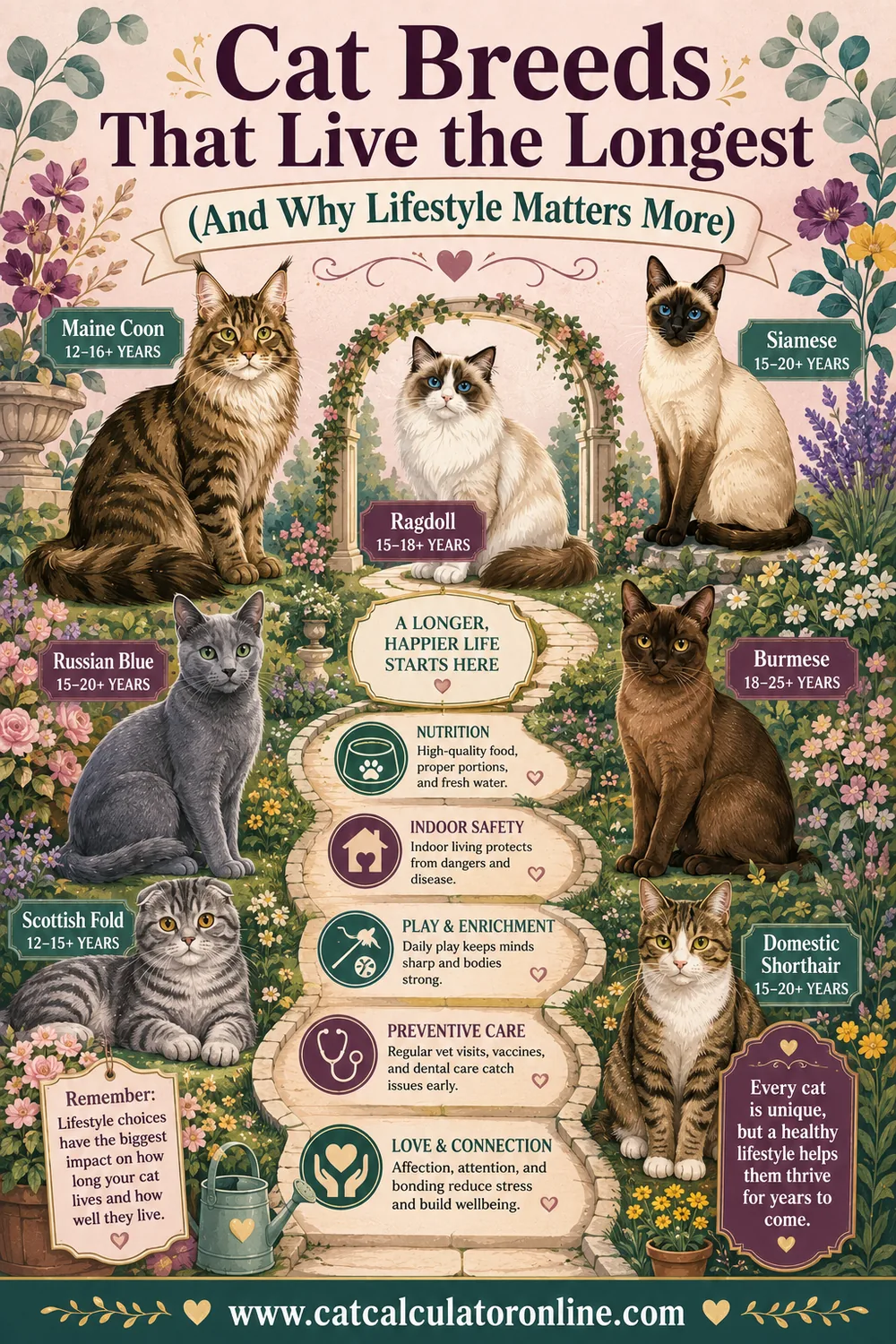
The short answer: longer than most. Typical published ranges for the Siamese cluster around 15–20 years, with individual cats regularly beating the top of that range. For comparison, ordinary domestic cats average 13–17 years indoors, and many breeds sit at 12–15.
There's no central registry tracking every cat's lifespan, so breed figures come from breeder records, insurance data and owner surveys — treat them as well-supported ranges rather than guarantees. But the Siamese's reputation is consistent across sources: alongside the Burmese, it's one of the two breeds most often cited at the very top of the longevity tables. You can see how it stacks up against the rest of the field in our full guide to cat breeds that live the longest.
One framing that helps: a Siamese adopted as a kitten is plausibly a 20-year commitment. That's a child through college. It's worth knowing before you fall for the blue eyes.
Why Do Siamese Cats Live So Long?
A few things stack in the breed's favor.
It's an old, natural breed. The Siamese has centuries of history in Thailand and roughly 150 years in the West. Long-established natural breeds tend to have deeper gene pools than recently invented ones, which means fewer concentrated inherited problems. The breed's longevity is, in part, the compound interest of a very long history.
The build is lean. Siamese are slim, muscular, athletic cats, and obesity is one of the strongest negative predictors of feline lifespan. A breed that tends naturally toward leanness starts every year of its life with an advantage. (That's not a free pass — a Siamese absolutely can get fat on overfeeding — but the baseline helps.)
They're glued to their people. Siamese are famously vocal, social, velcro cats. They follow you between rooms, comment loudly on your activities, and sleep on you rather than near you. That temperament has a quiet health benefit: cats hide illness by instinct, and a cat who's constantly underfoot is a cat whose changes get noticed early. An owner who realizes on day two — not week three — that her cat has stopped eating is a genuine survival advantage.
They tend to live indoors. People don't acquire a talkative, people-obsessed pedigree cat to leave in the yard. Breed populations that skew indoor will skew long-lived, because indoor living is the single biggest lifespan factor there is.
What Shapes an Individual Siamese's Lifespan?
Breed sets the stage; daily life writes the script. Here's how the major factors rank.
| Factor | Effect on a Siamese's lifespan |
|---|---|
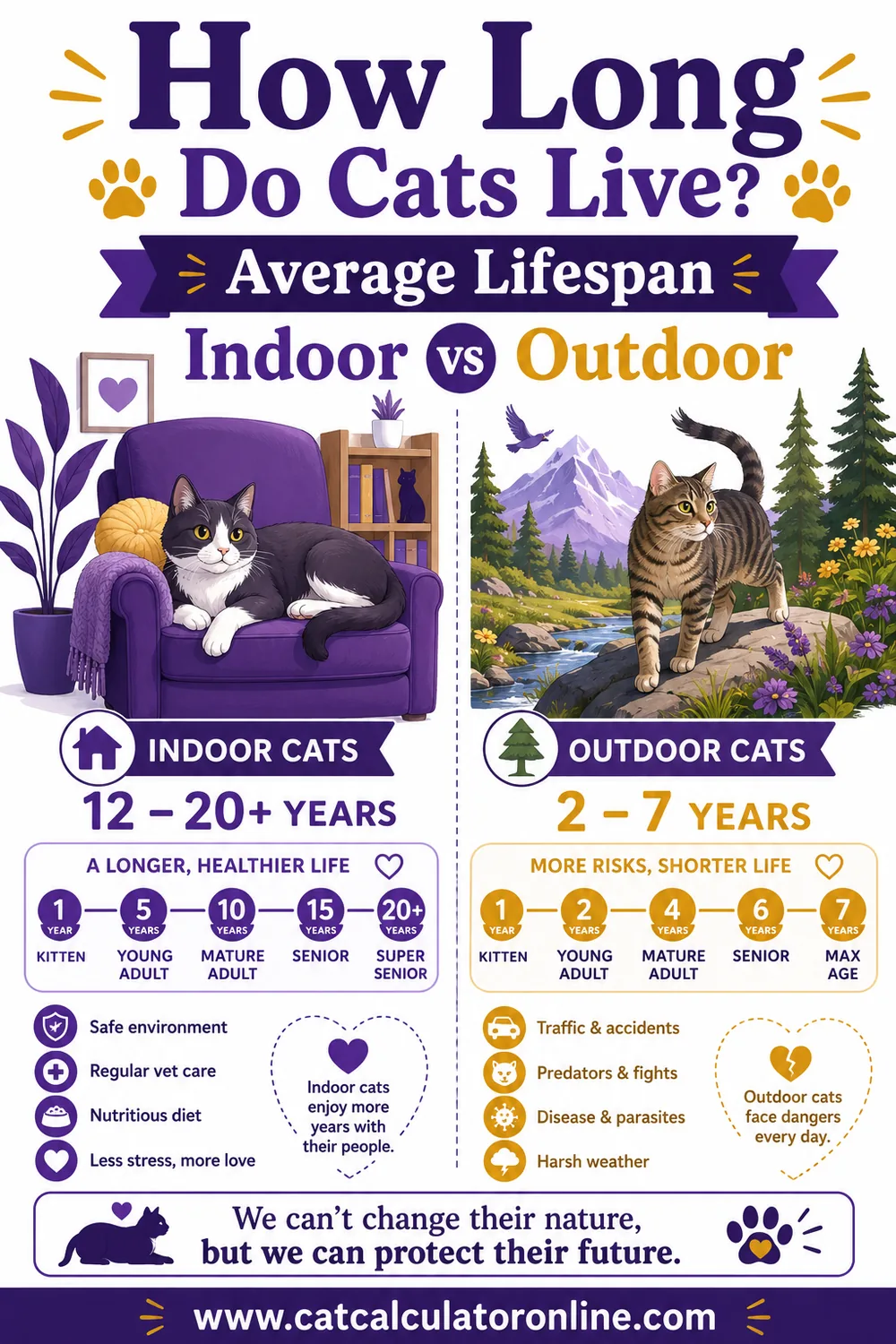
| Indoor vs. outdoor living | Enormous — indoor cats average 13–17+ years, outdoor cats 2–5 |
| Body weight | Very large; lean cats live measurably longer, and the breed's slim build only helps if you keep it |
| Regular vet care | Large; early detection of kidney, thyroid and dental disease changes outcomes |
| Dental care | Meaningful — and worth extra attention in this breed (see below) |
| Spay / neuter | Meaningful; cuts several cancer and infection risks |
| Genetics and breeding line | Real but smaller; ask your breeder about health testing in the line |
Look at the top row for a moment. The gap between an indoor and outdoor life is bigger than the gap between the longest- and shortest-lived breeds in existence. A Siamese who roams outdoors gives up every year her genetics gifted her, and then some. If you want a 20-year cat, the decision that matters most isn't which breeder you choose — it's where the cat sleeps.
For the full picture of what drives feline longevity generally, see how long do cats live.
What Health Issues Are Linked to the Breed?
No breed is issue-free, and an honest owner's guide should name the ones associated with the Siamese. None of these change the headline — this is a long-lived, generally robust breed — but knowing them tells you what to watch and what to ask.
- Dental disease. Siamese are frequently flagged as more prone to dental problems than average. Gum disease is common in all cats and easy to miss; in this breed it deserves active attention. Ask your vet to check the teeth at every visit, and take bad breath seriously — it's not normal.
- Amyloidosis. A condition in which abnormal protein deposits build up in organs, most often the liver in Siamese lines, has been documented in the breed. It's uncommon, and there's no routine screening test, but it's worth knowing the name — and worth asking a breeder whether it's appeared in their lines.
- Respiratory sensitivity. Some sources note the breed shows a bit more asthma and upper-respiratory trouble than average. A Siamese who coughs or wheezes should see a vet rather than wait it out.
- The historical quirks are mostly gone. The crossed eyes and kinked tails that once defined the breed were bred out decades ago; you'll rarely see either in a modern Siamese, and when they do appear they're cosmetic, not harmful.
The practical takeaway is two conversations. If you're buying a kitten, ask the breeder what health issues have appeared in their lines and what testing they do — a good breeder answers without flinching. If you already share a couch with a Siamese, tell your vet the breed and let them tailor the checkup. Specific screening decisions belong with your vet, not a website.
What Does a Siamese's Life Look Like in Human Years?
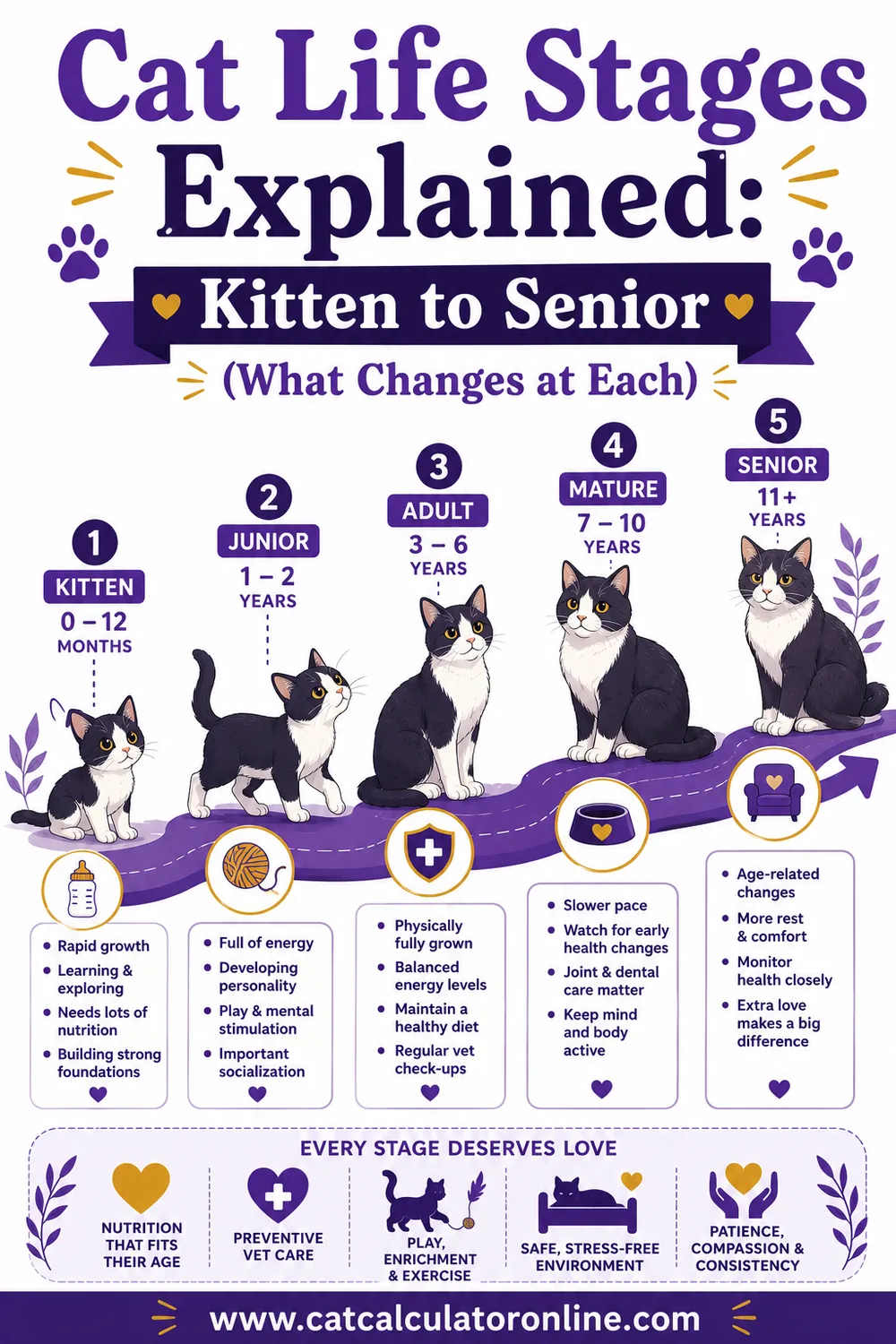
The old "multiply by seven" rule doesn't fit cats at all. The accepted conversion: the first year of a cat's life is worth about 15 human years, the second adds roughly 9, and every year after that adds about 4. Because Siamese so often reach the far end of the feline range, their conversions get impressive.
| Siamese age | Human equivalent | Life stage |
|---|---|---|
| 1 year | ~15 | Junior — fully grown, still a teenager at heart |
| 5 years | ~36 | Prime adult |
| 10 years | ~56 | Mature — the yearly checkup starts earning its keep |
| 15 years | ~76 | Senior — normal territory for this breed |
| 18 years | ~88 | Super senior, and not rare among Siamese |
| 20+ years | ~96+ | The milestone this breed genuinely reaches |
A 20-year-old Siamese is, in human terms, a 96-year-old who still yells at you for dinner. For the full conversion table and the math behind it, see cat years to human years, and for what changes at each stage of life, cat life stages explained breaks it down stage by stage.
How Can You Help Your Siamese Reach 20?
None of this is exotic. The breed hands you good odds; here's how you keep them.
- Keep her indoors. The single biggest decision, worth more than everything else on this list combined. Balcony netting, a catio or harness walks scratch the outdoor itch safely.
- Guard the lean build. You should feel ribs easily under a light layer of padding and see a waist from above. Measured meals, not a bottomless bowl — our guide to how much should a cat weigh shows you how to check her body condition in under a minute.
- Take teeth seriously. Given the breed's dental reputation, this is the Siamese-specific item. Vet dental checks at every visit; brushing if she'll tolerate it (start young and she might).
- Keep the vet schedule. Yearly exams through adulthood, twice-yearly from around age 10. Kidney and thyroid disease — the classic old-cat conditions — are far more manageable caught early on bloodwork than late on symptoms.
- Feed the brain too. Siamese are busy, clever, demanding cats. Play sessions, puzzle feeders, climbing space and — honestly — conversation keep them engaged. A bored Siamese gets loud and gets round, and neither helps her age well.
- Know her baseline. This breed talks constantly and shadows you everywhere, so you'll know her normal better than most owners. Trust that knowledge. When something's off — appetite, litter box, volume, energy — call the vet rather than wait.
FAQ
What is the average lifespan of a Siamese cat?
Commonly 15–20 years for an indoor Siamese, with individuals regularly passing 20. That places the breed at or near the top of feline longevity tables, alongside the Burmese.
Can a Siamese cat live to 25?
Some do. It's uncommon, but the breed is overrepresented among extremely old cats. Reaching the mid-20s takes good genes, lifelong indoor living, a lean weight and consistent vet care — and a share of plain luck.
Do Siamese cats live longer than other breeds?
Longer than most, yes. Typical mixed-breed indoor cats average 13–17 years and many pedigree breeds average 12–15, so a 15–20 year Siamese range sits clearly above the pack. The Burmese is its main rival for the top spot.
How long do Siamese cats live indoors vs. outdoors?
Indoors, 15–20 years is normal for the breed. Outdoors, all breed advantages evaporate — outdoor cats in general average just 2–5 years due to traffic, predators, disease and misadventure. No breed out-breeds those odds.
What do Siamese cats usually die of?
The same conditions as elderly cats generally: kidney disease, cancer and heart disease lead the list, which is exactly why twice-yearly senior checkups matter. Breed-associated issues like amyloidosis are documented but much less common — discuss any breed-specific concerns with your vet.
How old is a 15-year-old Siamese in human years?
About 76. The first year counts as roughly 15 human years, the second adds 9, and each year after adds about 4. Run any age through our cat age calculator for the exact figure.
The Bottom Line
Siamese cats are one of the safest bets in the cat world for a long life together: 15–20 years is the normal range, and 20+ happens often enough that you should half-plan for it. The breed brings lean genes and a long history; you bring the indoor life, the portion control, the dental care and the vet visits. Do your half, and the loudest cat in the house may be announcing dinner well into her twenties.
Curious what her age means right now? Run it through the free cat age calculator — and if you're comparing breeds before bringing one home, start with cat breeds that live the longest.