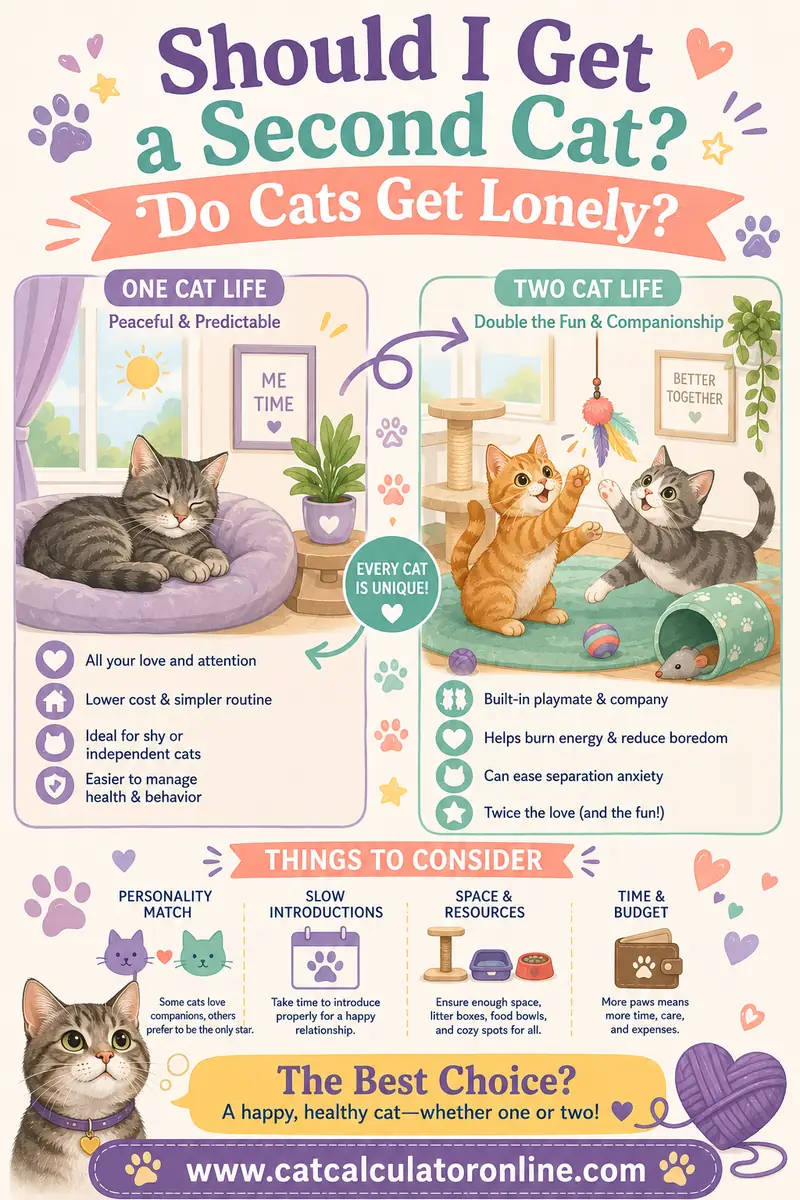
Should I Get a Second Cat? Do Cats Get Lonely?
Cats are more social than their aloof reputation suggests, and many do better in pairs — especially young, high-energy cats and kittens, who thrive with a playmate their own age. But it isn't universal: some adult cats are territorial and genuinely prefer to be the only cat in the house. The right answer depends on your current cat's age, energy, and temperament, plus whether you can double the resources and manage a careful introduction. This guide walks through both sides so you can decide with clear eyes.
The Short Answer
Get a second cat if your current cat is young, playful, or shows signs of boredom, and you can afford to double the running costs and do a slow introduction. Cats are a social species — feral cats form colonies, and littermates often stay bonded for life — so companionship can genuinely improve a cat's day, particularly one left alone while you work.
Hold off if your cat is an older, territorial "only cat" that's clearly content, or if space and budget are already tight. Some cats truly prefer solitude, and forcing a companion on them creates the exact stress you were trying to prevent. The goal isn't more cats — it's a happier cat, and sometimes that's a household of one.
Do Cats Actually Get Lonely?
Yes, some do — the "cats are loners" cliché is only half true. Cats aren't pack animals like dogs, but they're not natural hermits either. In the wild they form loose social groups, and cats raised together frequently groom, sleep, and play as a bonded unit for years.
The loneliness risk is highest for young, energetic, indoor-only cats left alone for long workdays. With no outlet for play and no companion, that pent-up energy has to go somewhere — and it often comes out as trouble. Older, independent cats and those who've always lived solo are far less likely to feel the gap.
An important caveat: many behaviors that look like loneliness are actually medical. Before you read a change as "my cat needs a friend," rule out illness with a vet — the fix might be treatment, not a second cat.
Signs Your Cat Might Be Lonely or Bored
Watch for a cluster of these, especially if they're new:
- Excessive sleeping even by cat standards, with little interest in play.
- Over-grooming to the point of thin patches or bald spots.
- Destructive behavior — scratching furniture, knocking things off shelves, getting into everything.
- Clinginess or velcro-cat behavior, following you room to room and crying when you leave.
- Withdrawal — hiding more, less interested in you or their surroundings.
- The zoomies — sudden frantic laps around the house from pent-up energy.
- Excessive vocalizing, especially when you're about to leave or just got home.
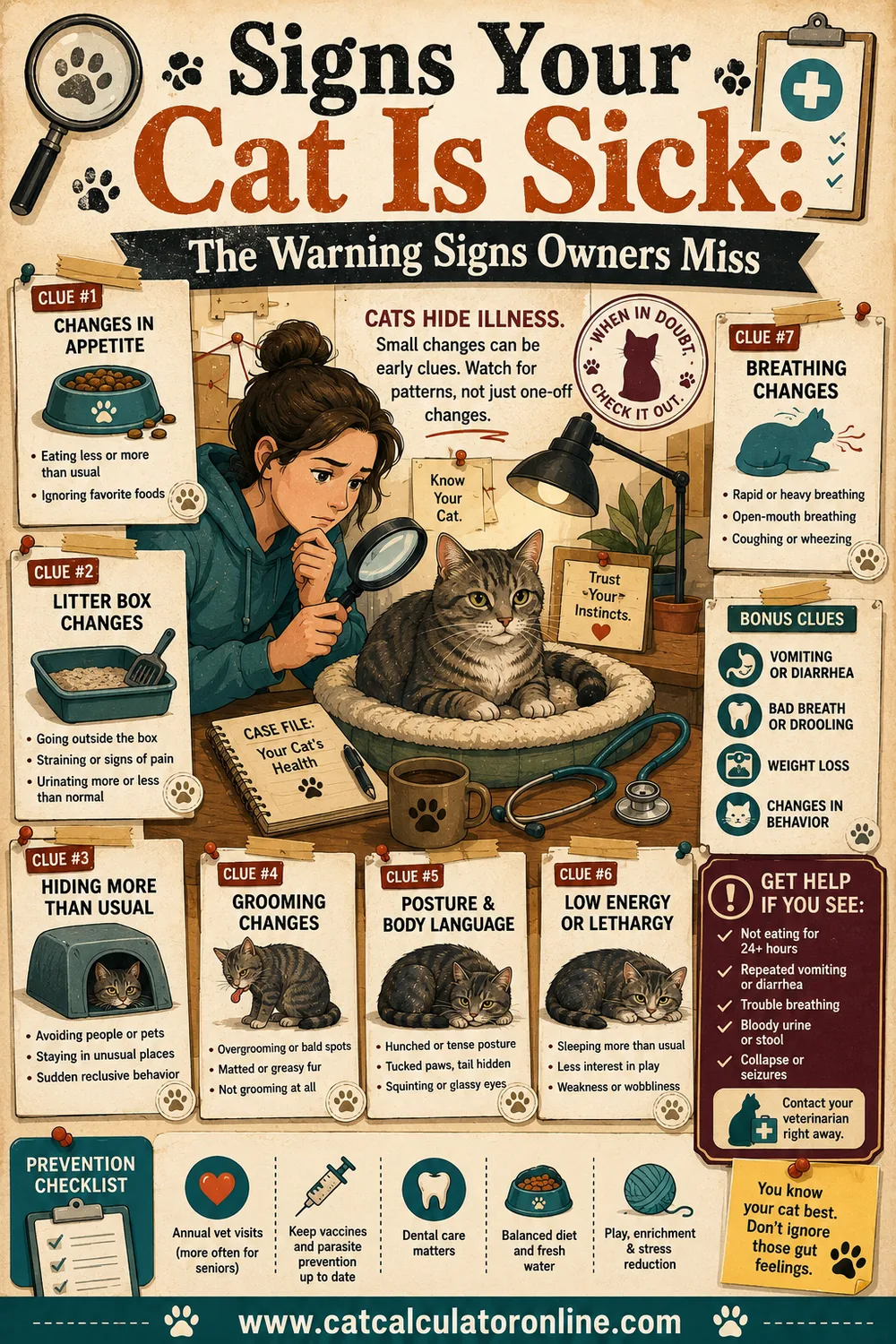
Here's the crucial catch: every one of these can also be a symptom of illness or pain. Over-grooming can signal skin problems or stress; hiding and withdrawal can mean a cat feels unwell; appetite and vocal changes can be medical. A new second cat won't fix a thyroid problem. Rule out health issues first — our guide to signs your cat is sick covers what to watch for, and cat body language helps you read the difference between bored and unwell.
Who Benefits Most From a Companion
Some cats are far better candidates than others. A second cat tends to work best when your current cat is:
- Young or a kitten. Kittens have boundless energy and adapt fast. Two kittens — or a bonded adult pair — will wear each other out with play you'd never keep up with.
- High-energy. A playful cat that's clearly under-stimulated often blossoms with a companion who matches its pace.
- Sociable with other cats. If your cat has been relaxed around cats before — at a foster home, a friend's house, a shelter — that's a strong green light.
- Home alone a lot. A companion fills the empty hours when you're at work far better than an empty house does.
And it's least likely to help when your cat is an older, confident, territorial animal that clearly rules the house and shows no signs of boredom. For that cat, a newcomer is often an intrusion, not a gift.
Matching a Second Cat Well
If you decide to add one, the match matters as much as the decision. Aim to pair on:
- Age and energy. Kitten-with-kitten or young-with-young is the easiest pairing. A bouncy kitten with a mellow senior is a classic mismatch — the kitten pesters, the senior seethes. Match the pace.
- Temperament. A confident cat and a shy one can balance nicely; two dominant cats may clash. Bonded pairs already living together (littermates or shelter friends) come pre-matched and are the gold standard.
- Sex — less than you'd think. With both cats spayed or neutered, the sex combination matters far less than personality and a good introduction. Fixing both is non-negotiable for a peaceful home.
Adopting an already-bonded pair sidesteps the introduction gamble entirely, since they're proven to get along. Many shelters actively look for homes that'll take two.
The Resources Rule: Set Up for Two
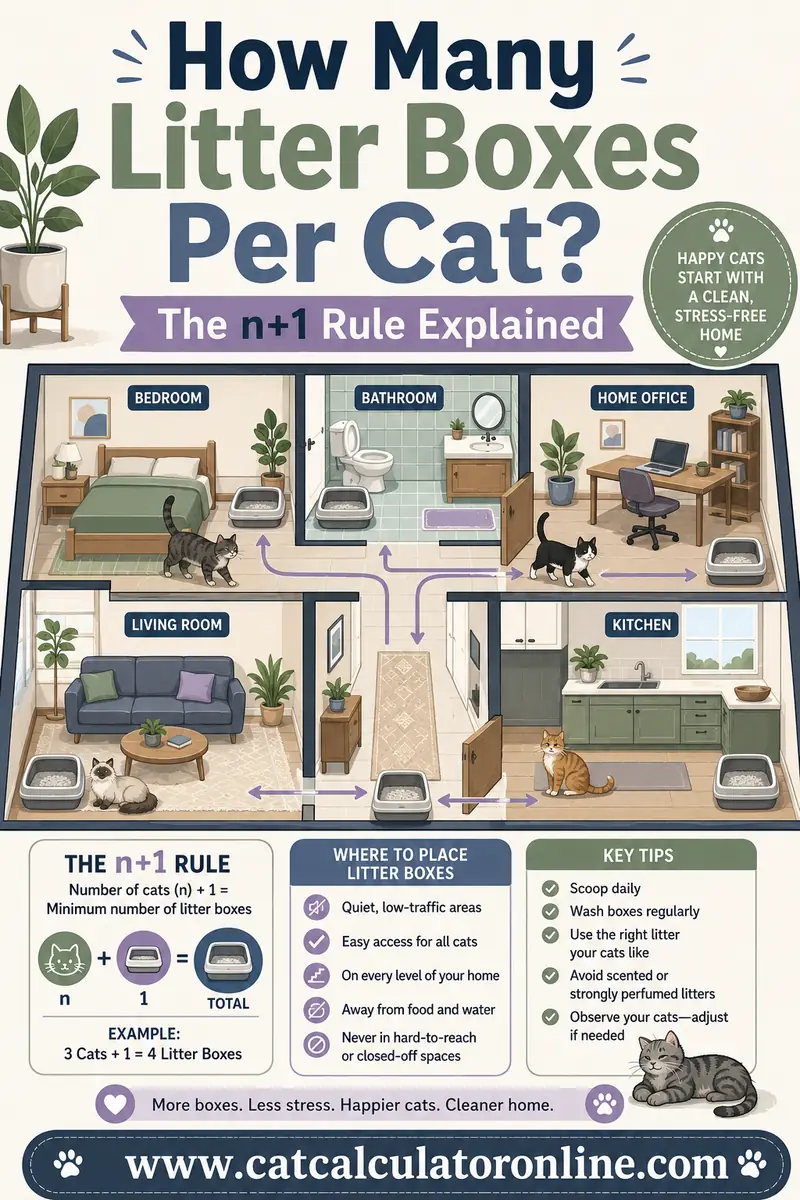
Most cat conflict isn't about personality — it's about competition for resources. Get the setup right and you prevent most problems before they start. The golden rule is n+1: one more of each key resource than you have cats.
| Resource | Rule for two cats | Why it matters |
|---|---|---|
| Litter boxes | 3 (n+1) | Prevents guarding and litter-box avoidance |
| Feeding stations | 2+, spaced apart | Stops one cat blocking the other's food |
| Water bowls | 2+, separate from food | Encourages drinking; avoids monopolizing |
| Vertical space | Cat trees, shelves, perches | Lets cats share a room by using height |
| Hiding spots | Several | Gives a nervous cat a retreat, which lowers tension |
| Scratching posts | 2+ | Reduces competition and furniture damage |
That litter-box math trips up a lot of new multi-cat homes — our guide to how many litter boxes per cat explains why three boxes for two cats really is the number. Vertical space is the secret weapon: cats that would clash on the floor happily coexist when one can claim a high perch.
The Introduction Makes or Breaks It
Here's a truth worth sitting with: a bad introduction causes more stress than solitude ever would. Throw two strange cats together on day one and you can create a rivalry that takes months to undo — or never fully heals. Done slowly and correctly, most introductions succeed.
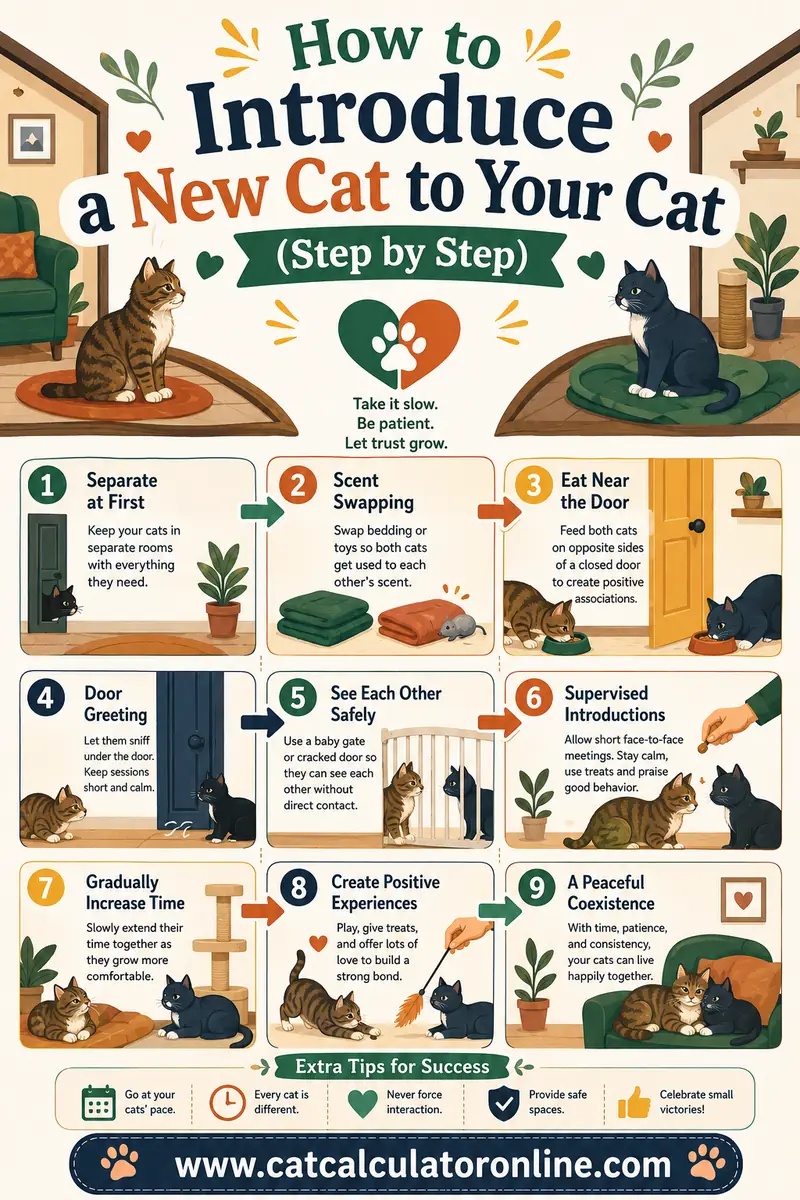
The proven approach is gradual: keep the new cat in a separate room at first, swap scents by exchanging bedding, let them smell each other under the door, then feed on opposite sides of a closed door so they associate each other with good things, then brief supervised meetings, only expanding as both stay calm. It can take days or weeks — patience is everything. Our full how to introduce a new cat guide walks through every step.
Second Cat: The Balanced Pros and Cons
Weigh the whole picture before you commit:
| Pros of a second cat | Cons of a second cat |
|---|---|
| Constant companionship when you're out | Costs roughly double — food, litter, vet |
| A playmate burns off energy and boredom | Vet bills and insurance double too |
| Mutual grooming and warmth | More litter boxes and daily scooping |
| Enrichment reduces destructive behavior | Risk of conflict if the match is wrong |
| Two cats to love | Less one-on-one human time for each |
| A bonded pair keeps each other company for life | A rushed intro can stress both cats |
The costs are real and recurring — a second cat isn't just twice the cuddles, it's twice the vet visits, litter, and food for 15+ years. But for the right cat, in the right home, the enrichment a companion provides is hard to match any other way.
FAQ
Do cats get lonely if left alone?
Some do, especially young, high-energy indoor cats left alone for long workdays. Signs include destructive behavior, excessive vocalizing, clinginess, or withdrawal — though these can also be medical, so rule out illness first. Older, independent cats and lifelong solo cats are much less likely to feel lonely.
Is it better to have one cat or two?
It depends on the individual cat. Young, playful, sociable cats often thrive with a companion, while older, territorial "only cats" may prefer solitude. Two cats mean double the cost and care but constant companionship for each other — there's no universal right answer, only the right answer for your cat and household.
Will my cat be jealous of a new cat?
Cats can react with stress, hiding, or aggression to a newcomer — it's less "jealousy" than a disrupted sense of territory. A slow, staged introduction and plenty of separate resources (n+1 litter boxes, multiple feeding stations) prevent most of it. Keep giving your first cat individual attention so the new arrival doesn't feel like a loss.
What's the best age gap for a second cat?
Close in age and energy is easiest — two kittens or two young cats pair most smoothly. A bouncy kitten with a calm senior is a common mismatch, since the kitten's energy exhausts the older cat. If you have a senior, a calmer adult is usually a better fit than a kitten.
How long does it take for cats to get along?
Anywhere from a few days to several weeks, sometimes a couple of months for tougher pairings. Patience during the introduction is the biggest predictor of success — rushing it is the most common reason cats never settle. Some cats become close friends; others reach a peaceful coexistence, which is a perfectly good outcome.
The Bottom Line
A second cat can be one of the best things you do for a young, social, or bored cat — companionship, play, and enrichment that a human alone can't fully provide. But it's not right for every cat: some genuinely prefer to reign alone, and forcing the issue backfires. Rule out medical causes for any behavior change first, match on age and energy, set up n+1 resources, and take the introduction slowly. Get those right and you're not just adding a cat — you're building a friendship. Explore more about your cat's needs with our free cat calculators, and learn to read the signs of a happy cat in how to tell if your cat loves you.